Japanese shrines are not just tourist attractions — they are living places of worship where people have prayed for centuries. From the vermillion torii gates of Fushimi Inari to the serene forests of Meiji Jingu, these sacred spaces carry traditions that stretch back over a thousand years.
Don’t worry about getting everything perfect. Even many Japanese people don’t know every detail of shrine etiquette. What matters most is showing genuine respect. This guide covers the 10 essential things every visitor should know.
First Things First: Shrine vs. Temple
You’ll encounter two types of religious sites in Japan, and they’re easy to mix up.
| Shrine (Jinja) | Temple (Tera/Ji) | |
|---|---|---|
| Religion | Shinto | Buddhism |
| Entrance marker | Torii gate (red/vermillion gate) | Sanmon (large wooden gate) |
| How to pray | Bow, clap, bow (with hand claps) | Silent prayer with palms together (no clapping) |
| Clergy | Kannushi (priest), Miko (shrine maiden) | Monks, Head priest |
| Name endings | -jinja, -jingu, -taisha, -gu | -ji, -dera, -in |
Quick tip: See a red gate? It’s a shrine. See a large roofed wooden gate? It’s a temple. This guide focuses on shrine etiquette.
1. The Torii Gate — Entering Sacred Ground
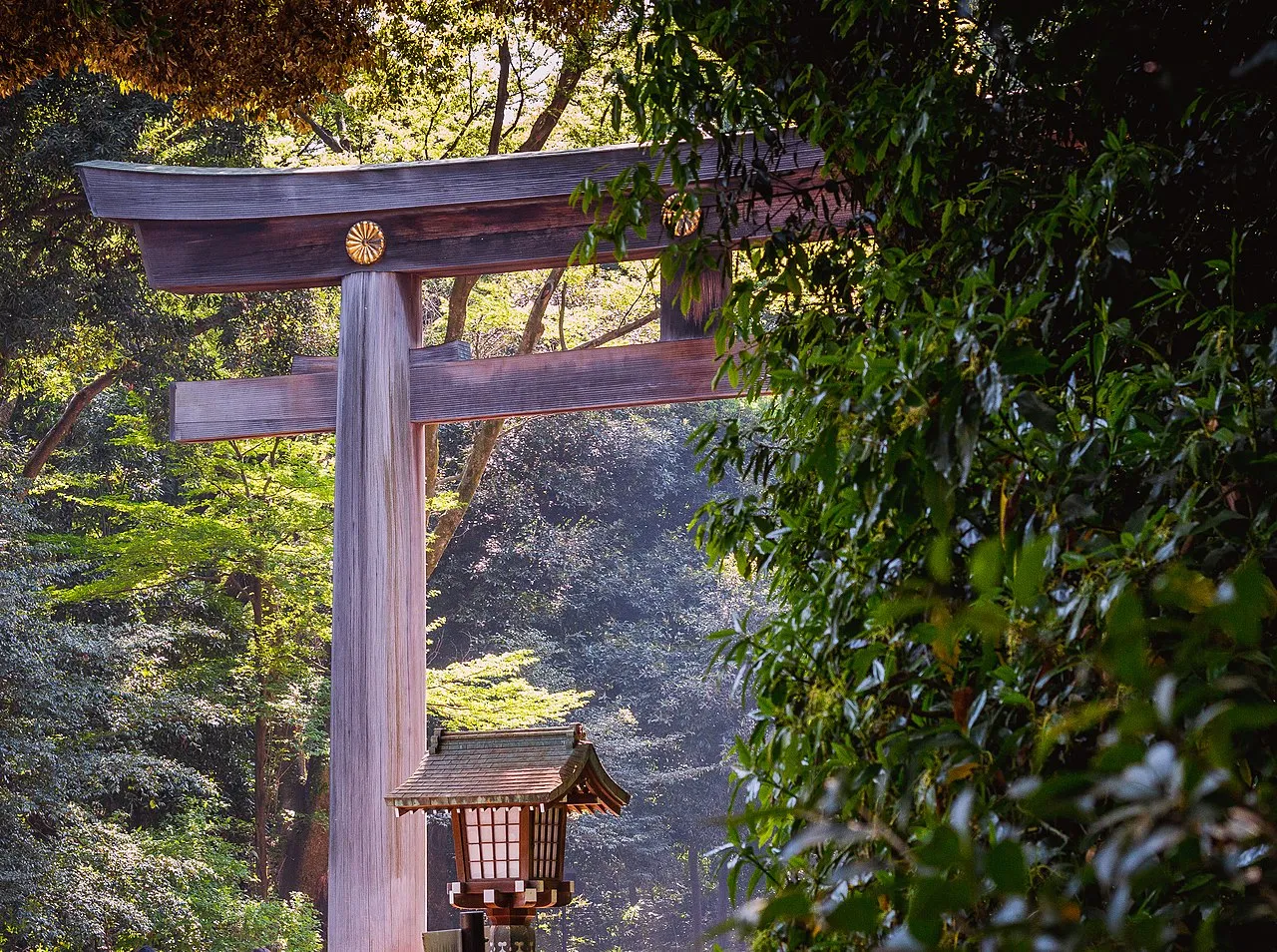
The torii gate marks the boundary between the everyday world and the realm of the gods (kami). It’s not decorative — it’s a spiritual threshold.
What to do
- Bow slightly before passing through
- Walk along the sides, not the center (the center path, called seichu, is reserved for the gods)
- When leaving, turn back and bow before exiting through the torii
Common mistakes
- Standing in the center of the torii for a photo (you’re blocking the gods’ path)
- Walking straight through without acknowledging the gate
Cultural note: The word “torii” literally contains the character for “bird.” One theory traces its origin to the mythological tale of Amaterasu, the sun goddess, when roosting perches were used to lure her out of a cave.
2. Temizuya — The Purification Ritual
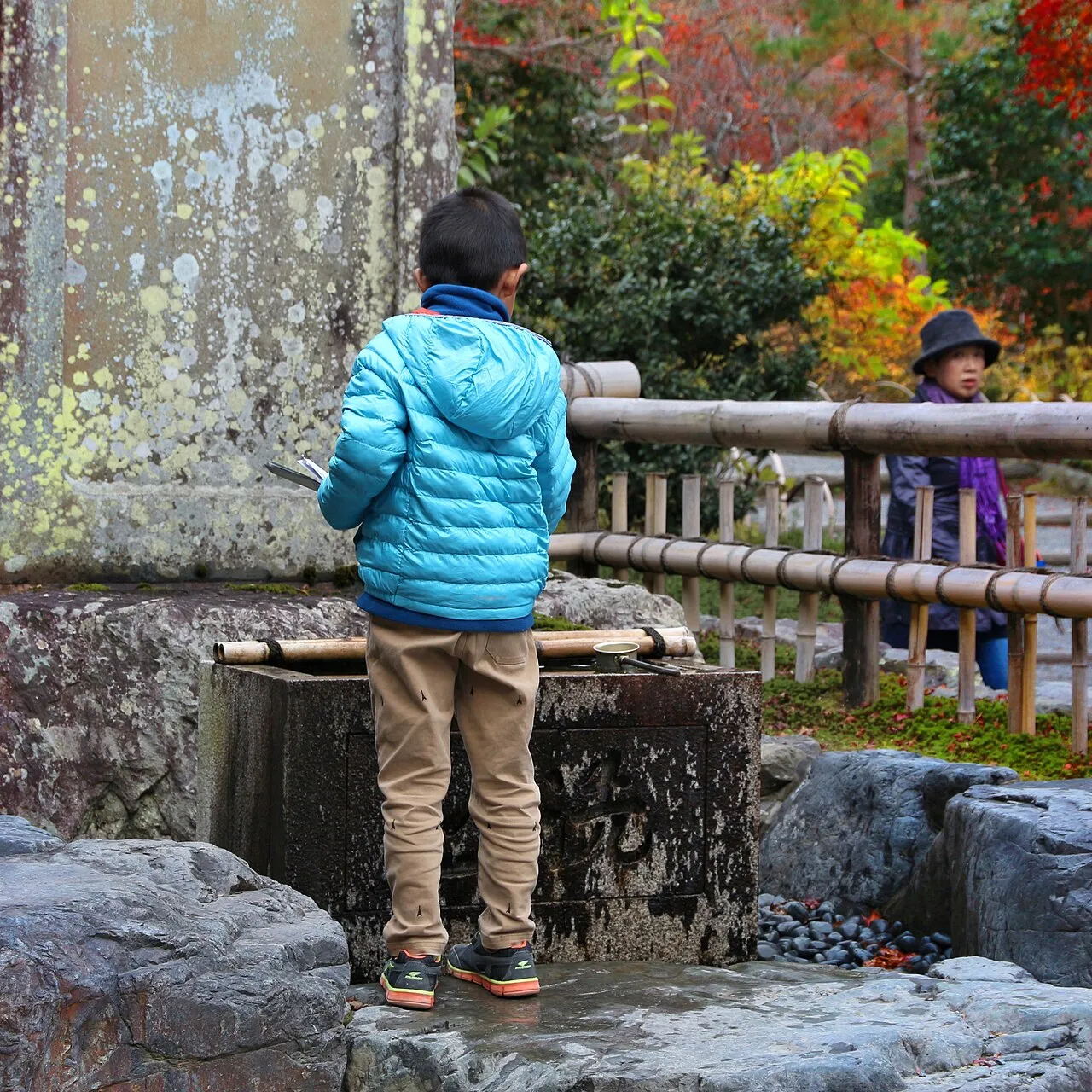
Before approaching the main hall, you’ll find a stone water basin called a temizuya (or chozuya). This isn’t just hand-washing — it’s a symbolic purification of body and spirit.
Step by step
- Pick up the ladle (hishaku) with your right hand and scoop water
- Pour water over your left hand
- Switch the ladle to your left hand and rinse your right hand
- Switch back to your right hand, cup water in your left palm, and rinse your mouth (don’t drink from the ladle directly)
- Rinse your left hand once more
- Tilt the ladle vertically so remaining water runs down the handle, then return it
Key points
- Do it all with one scoop — that’s the elegant way
- Spit the water downward quietly — don’t swallow it
- Many shrines replaced ladles with flowing water after COVID. If there’s no ladle, simply rinse your hands under the running water
3. The Sando — Walking the Approach
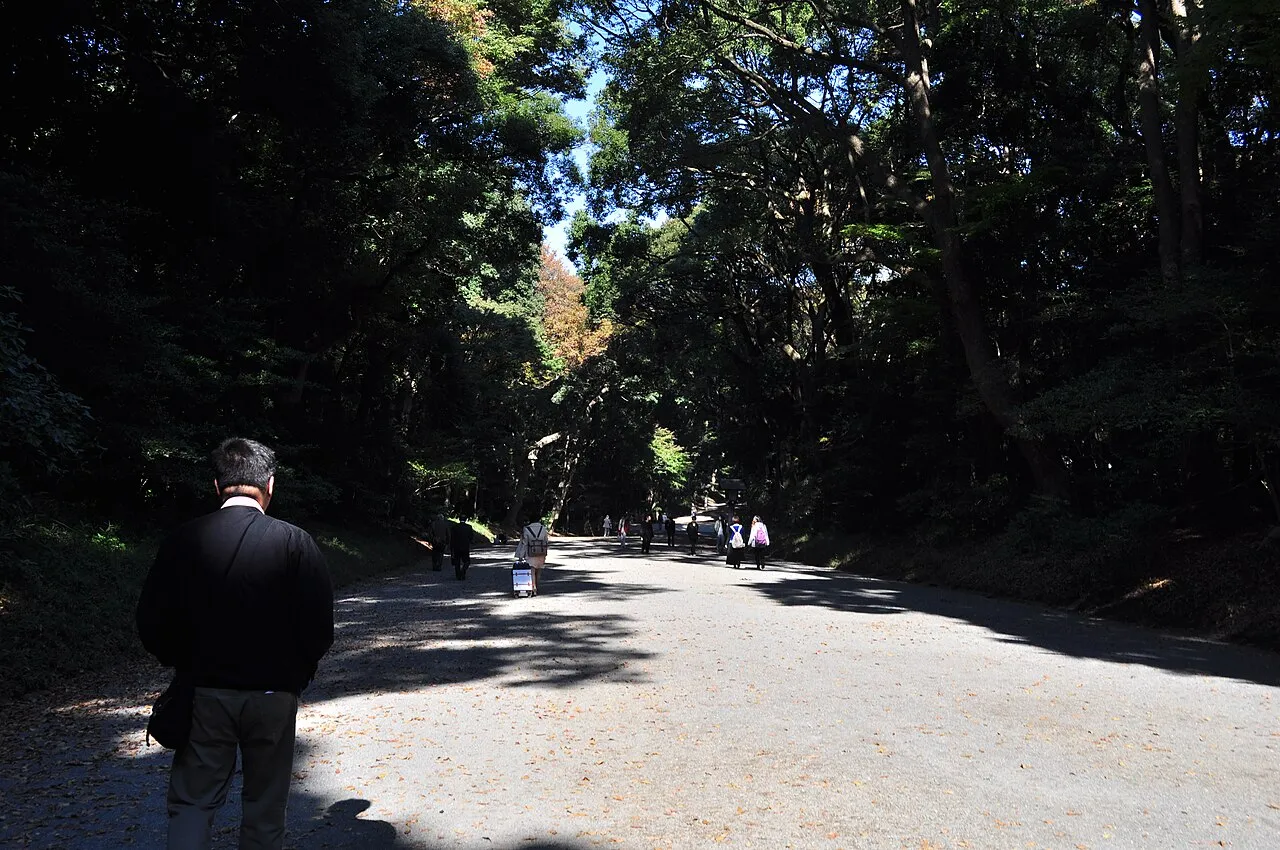
The path from the torii to the main hall is called the sando (approach path).
- Stay to the sides — the center belongs to the kami
- Walk calmly — no rushing
- Keep your voice low — this is a place of reverence
Fun fact: Many sando paths are covered in gravel. The crunching sound as you walk is said to purify your spirit. It also serves the practical purpose of drainage.
4. Osaisen — Making an Offering
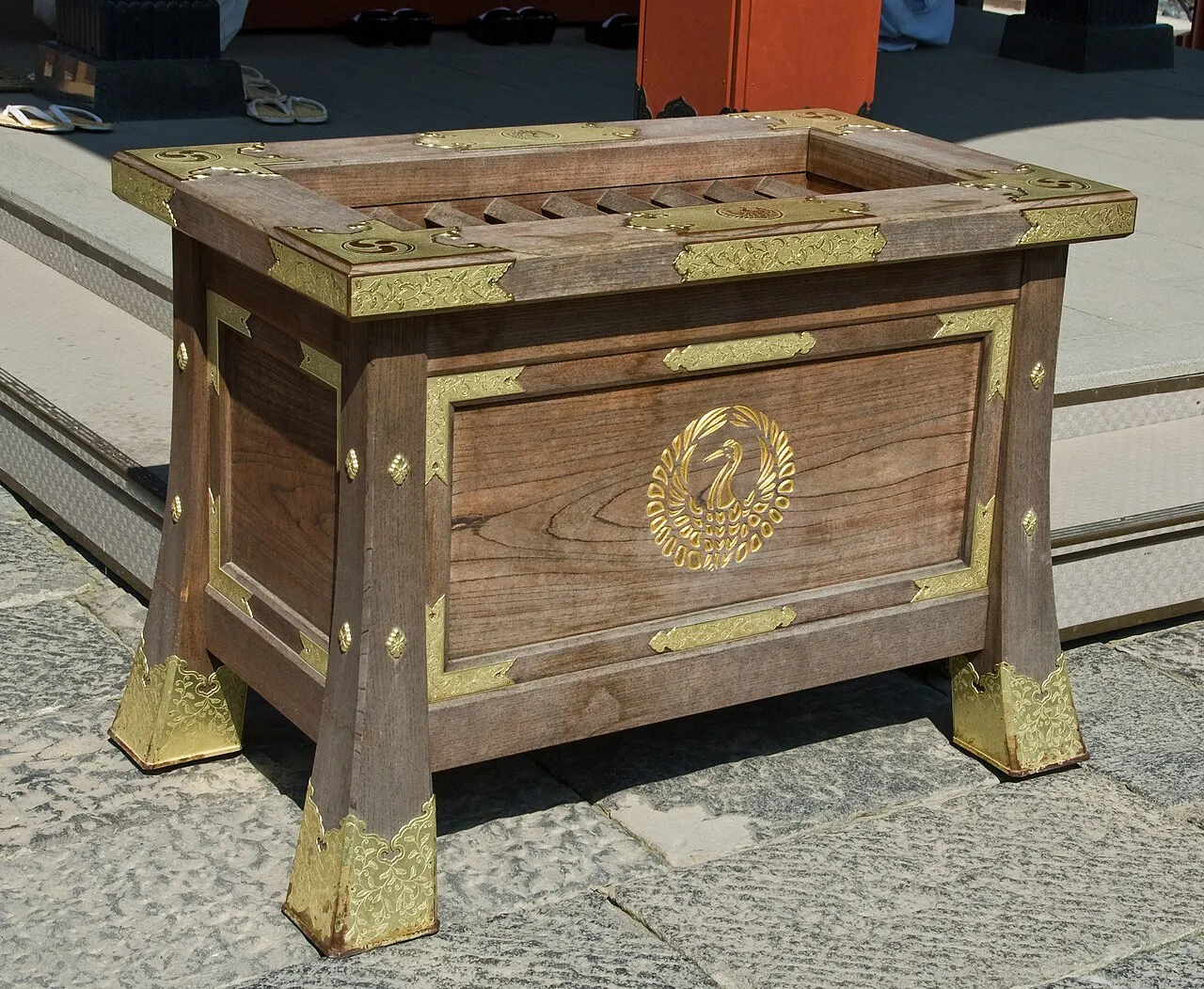
You’ll find an offering box (saisen-bako) in front of the main hall. Toss in a coin as an offering before praying.
How to do it
- Gently place or toss the coin — don’t throw it hard
- Any amount is fine. 5-yen coins are considered lucky because go-en (5 yen) sounds like go-en (good fortune/connection)
- Don’t stress about the amount — sincerity matters more than the sum
Fun wordplay: 5 yen = “go-en” = good connection. 15 yen = “jūgoen” = plenty of good connections. Meanwhile, 10 yen = “tō-en” = distant connection (bad luck!). It’s all playful superstition, but fun to know.
5. Nihai-Nihakushu-Ichihai — The Sacred Prayer Ritual
This is the heart of shrine worship. The rhythm is simple: two bows, two claps, one bow.
Step by step
- Stand up straight in front of the offering box
- Ring the bell if there’s a rope hanging (this announces your presence to the kami)
- Drop your offering into the box
- Bow deeply twice (about 90 degrees — a real bow, not a nod)
- Clap your hands twice at chest height (make a clear, crisp sound)
- With hands still together, pray silently — express gratitude or make a wish
- Bow deeply once more
Common mistakes
- Bowing too shallowly (commit to it — this is a deep bow from the waist)
- Clapping too softly (don’t be shy — a clear clap clap is proper)
- Clapping at a Buddhist temple (temples require silent prayer with palms pressed together — no clapping!)
Exception: Izumo Taisha uses “two bows, four claps, one bow.” Some shrines have their own variations. Look for instruction signs near the main hall.
6. Goshuin — Sacred Seal Calligraphy
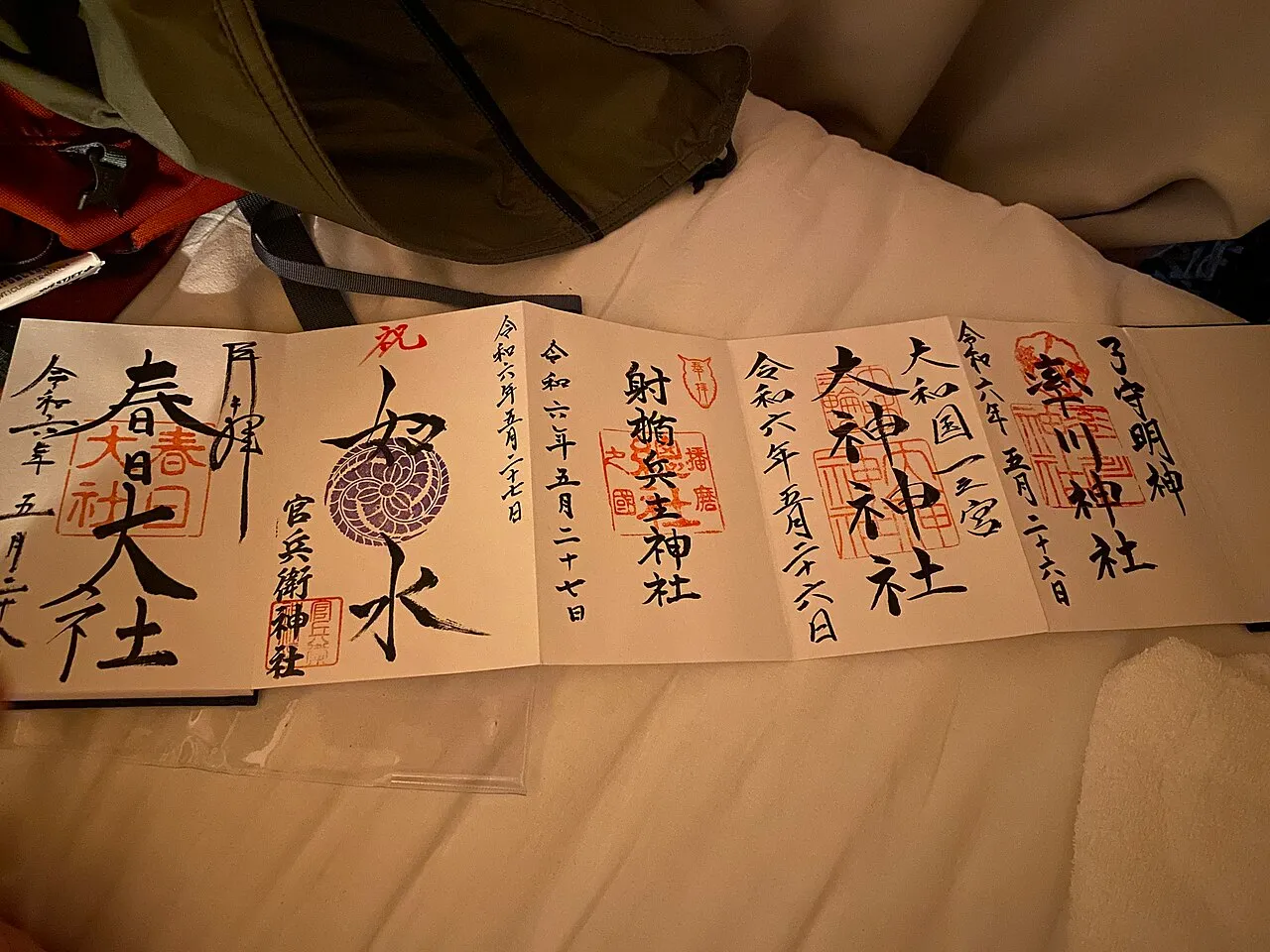
A goshuin is a hand-brushed calligraphy seal you receive as proof of your shrine visit. Unlike a stamp, each one is individually handwritten by the shrine’s priest — a living piece of art.
How to get one
- Pray first — getting a goshuin without praying is considered rude
- Go to the juyosho (reception office) and say “Goshuin o onegaishimasu”
- Hand over your goshuincho (seal book) opened to the next blank page
- Pay the fee (typically 300–500 yen)
- Wait quietly while it’s being written
Tips for foreign visitors
- Buy a goshuincho at any shrine (around 1,500–2,000 yen)
- You don’t need to speak Japanese — showing your goshuincho and saying “Goshuin, please” usually works
- Some shrines offer pre-written goshuin on paper (kakioki) during busy periods
- Regular notebooks won’t work — you need a proper goshuincho
Go digital: The “Goshuin Meguri” app lets you photograph and catalog your goshuin collection, track visited shrines on a map, and discover new ones nearby. Perfect for organizing your pilgrimage memories.
7. Photography Etiquette
Shrines are incredibly photogenic, but there are boundaries to respect.
Generally OK
- Torii gates, the approach path, exterior architecture
- Selfie sticks (but be mindful of crowds)
Generally NOT OK
- Areas marked “撮影禁止” (satsue kinshi = no photography)
- Inside the main hall (prohibited at most shrines)
- Shrine priests and maidens without permission
- People in prayer — never point a camera at someone worshipping
- Tripods that block walkways or paths
Pro tip
- “No photography” signs are often in Japanese only. Learn to recognize: 撮影禁止 (photography prohibited) and 撮影ご遠慮ください (please refrain from photography)
- When in doubt, watch what Japanese visitors around you are doing
8. What to Wear and How to Behave
There’s no strict dress code, but remember — you’re entering sacred ground.
Clothing
- Casual is fine (T-shirts, jeans, sneakers — all OK)
- Avoid: Very revealing clothes, flip-flops, overly flashy outfits
- Wear comfortable shoes for hillside shrines
- Winter morning visits can be surprisingly cold — layer up
Behavior
- Keep quiet — no loud conversations, phone calls, or music
- Eat only in designated areas (food stalls along the approach are fair game)
- Take your trash with you — most shrines don’t have public trash cans
- Pets are usually not allowed (a few shrines permit leashed dogs, but check first)
9. Omikuji and Omamori
Omikuji (Fortune Slips)
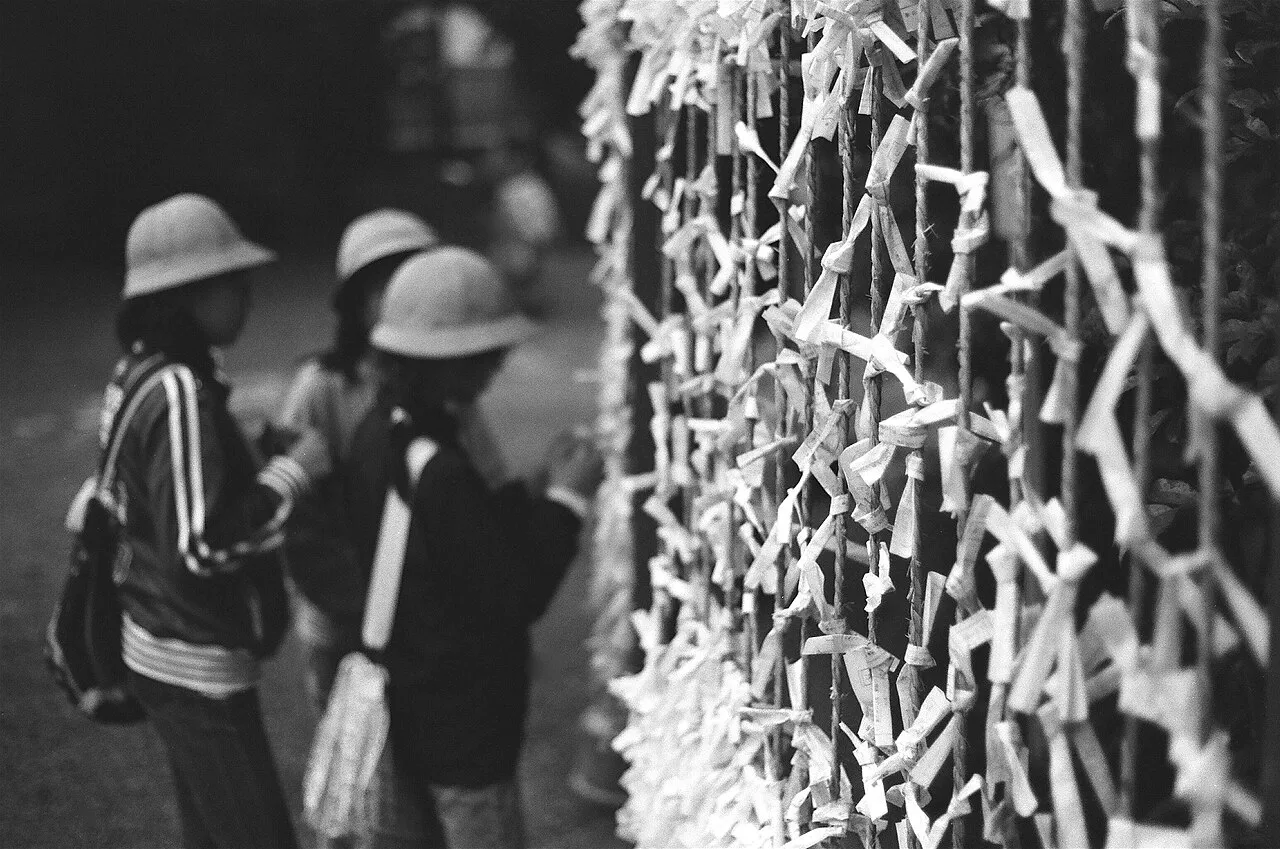
These paper fortunes (100–300 yen) predict your luck. If the result is bad, tie it to the designated rack at the shrine — this leaves the bad luck behind for the gods to handle. Good fortune? Take it home!
- 大吉 (dai-kichi) = Great blessing (best)
- 吉 (kichi) = Good blessing
- 末吉 (sue-kichi) = Future blessing
- 凶 (kyō) = Bad luck (tie it up and leave it!)
- Many shrines now offer English-language omikuji
Omamori (Charms)
These beautiful fabric pouches contain prayers and are believed to offer protection for one year. After a year, return them to a shrine for proper disposal.
- Different types for different purposes: academic success, love, safe travel, health
- Never open the pouch — the spiritual power inside will escape
- They make wonderful souvenirs
10. Practical Information
Opening hours
- Shrine grounds are often open 24/7
- The reception office (for goshuin and charms) is typically open 9:00 AM – 5:00 PM
- Special extended hours during New Year’s
Restrooms
- Larger shrines have restrooms on the grounds
- Smaller shrines may not — use the nearest train station facilities before visiting
Useful phrases
| English | Japanese | Pronunciation |
|---|---|---|
| May I have a goshuin? | 御朱印をお願いします | Go-shuin o onegai shimasu |
| I’d like a charm, please | お守りをください | O-mamori o kudasai |
| May I take a photo? | 写真を撮ってもいいですか? | Shashin o tottemo ii desu ka? |
Finding shrines
- Search “shrine near me” on Google Maps
- Use the Goshuin Meguri app to discover shrines with goshuin on an interactive map
Quick Reference: Shrine Visit Flow
A handy cheat sheet to save on your phone:
| Step | What to do |
|---|---|
| 1. Torii gate | Bow before entering, walk on the side |
| 2. Sando path | Walk calmly along the edges |
| 3. Temizuya | Left hand → Right hand → Mouth → Left hand → Handle |
| 4. Main hall | Ring the bell → Drop offering |
| 5. Prayer | 2 bows → 2 claps → Pray → 1 bow |
| 6. Goshuin | Visit the reception office with your goshuincho |
| 7. Exit | Turn back at the torii and bow |
You Don’t Have to Be Perfect
Getting the etiquette exactly right matters far less than showing genuine respect for the sacred space you’re entering. If you make a mistake, no one will judge you — and someone nearby might even kindly show you the way.
Japanese shrines have been welcoming visitors for hundreds, sometimes thousands of years. When you stand before the main hall, clap your hands, and close your eyes in a moment of quiet reflection — you’re connecting with a tradition that runs deep in the soul of Japan.
That’s something no guidebook can fully prepare you for. You just have to experience it.
Image credits: Meiji Jingu torii gate - Ray in Manila (CC BY 2.0) / Temizuya - Marek Ślusarczyk (CC BY 3.0) / Meiji Shrine approach - Joe Mabel (CC BY-SA 3.0) / Saisen box - Urashimataro (Public domain) / Goshuincho - Immanuelle (CC BY 4.0) / Omikuji - Jim Epler (CC BY 2.0). All images from Wikimedia Commons.
Disclaimer: Some shrines have unique customs or rules that differ from the general etiquette described here. Always follow any posted signs or instructions from shrine staff.