You open your goshuincho and look at the page — bold black calligraphy, a vermillion seal pressed slightly off-center, the date in a format you can barely read. It took the priest about ninety seconds to create.
Behind those ninety seconds is roughly a thousand years of history.
Goshuin didn’t start as shrine stamps for tourists. They began as proof that a pilgrim had hand-copied an entire Buddhist sutra and presented it at a temple. The journey from that ancient ritual to the art goshuin of today is a story of religious evolution, political upheaval, and the quiet persistence of tradition.
Here’s how it happened.
The Origin: Sutra Copying and Nōkyō
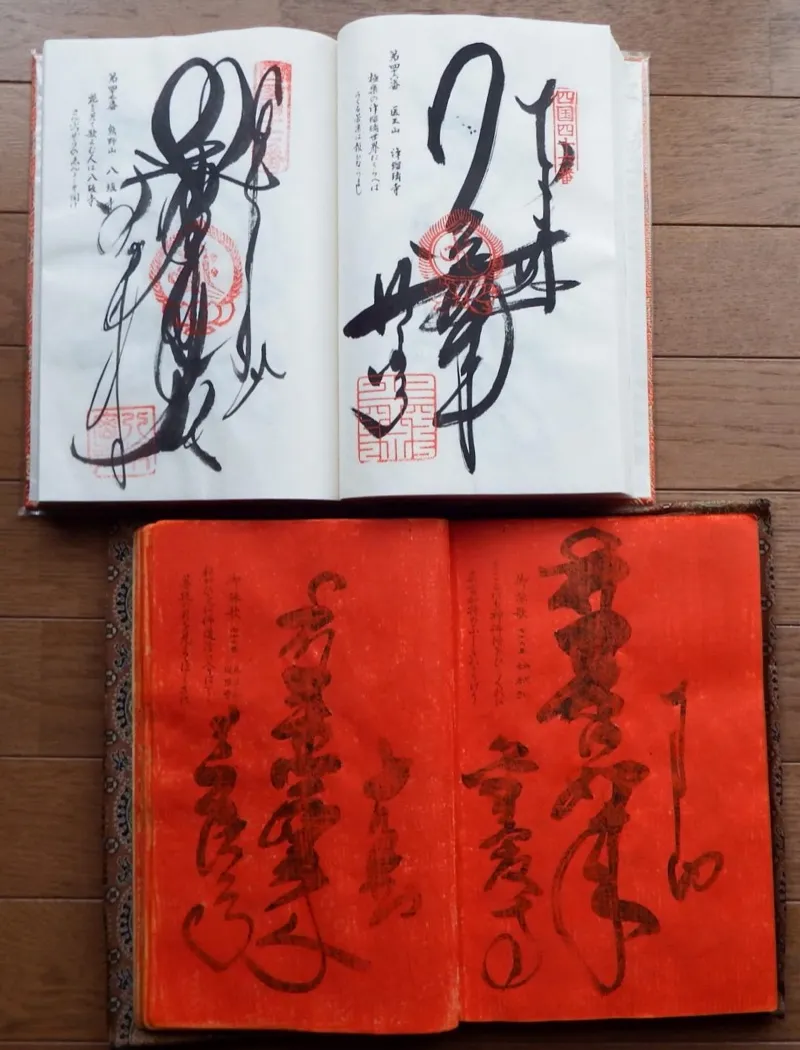
The earliest ancestor of goshuin is nōkyō (納経) — the act of copying a Buddhist sutra by hand and submitting it to a temple.
In Japan’s Heian period (794–1185), devout Buddhists undertook long pilgrimages across the country, visiting sacred temples in sequence. At each stop, the pilgrim would present a hand-copied sutra as an offering. The temple would then stamp the pilgrim’s book or certificate as proof of the submission.
This wasn’t casual. Copying a sutra by hand was an act of devotion that could take hours or days. The stamp wasn’t a souvenir — it was a receipt for spiritual labor.
The practice was closely tied to specific pilgrimage routes. The most famous, the Shikoku 88 Temple Pilgrimage (Shikoku Hachijūhakkasho), still exists today. Pilgrims walking the full 1,200-kilometer circuit would collect stamps at each of the 88 temples as evidence of their journey.
From Sutra to Prayer: The Practice Simplifies
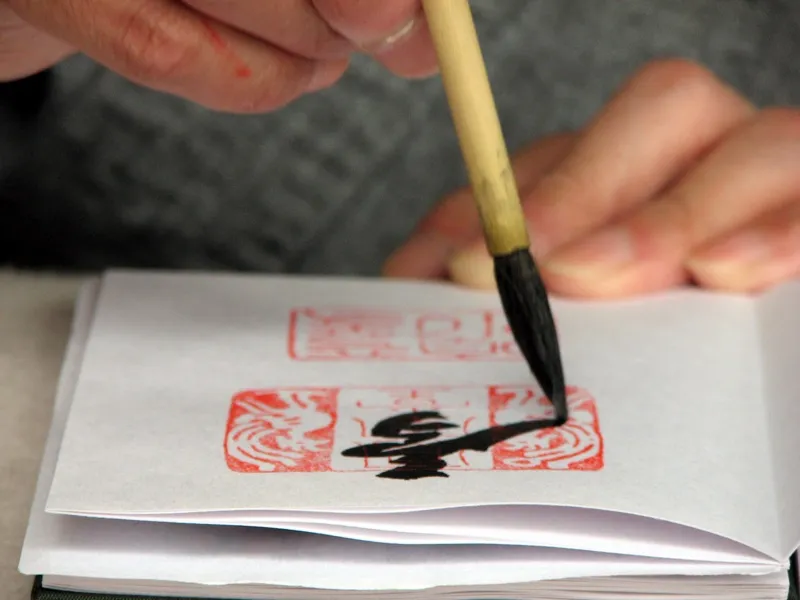
Over the centuries, sutra-copying became impractical for most people. Not everyone could read classical Chinese, not everyone had weeks to spare, and not everyone had the calligraphic skill to produce a proper copy.
Temples adapted. By the Muromachi period (1336–1573), many began accepting a prayer and a small monetary offering in place of the handwritten sutra. The pilgrim still received a stamp — but the entry cost had dropped from an entire sutra to a spoken prayer and a few coins.
This was a pivotal shift. It opened the practice to ordinary people — farmers, merchants, townspeople — who couldn’t devote their lives to scripture but still wanted to walk the pilgrim roads and collect proof of their devotion.
The stamps themselves evolved too. What started as a simple temple seal became more elaborate, incorporating the temple name, the date, and brushed calligraphy alongside the vermillion ink.
Shinto Shrines Join In
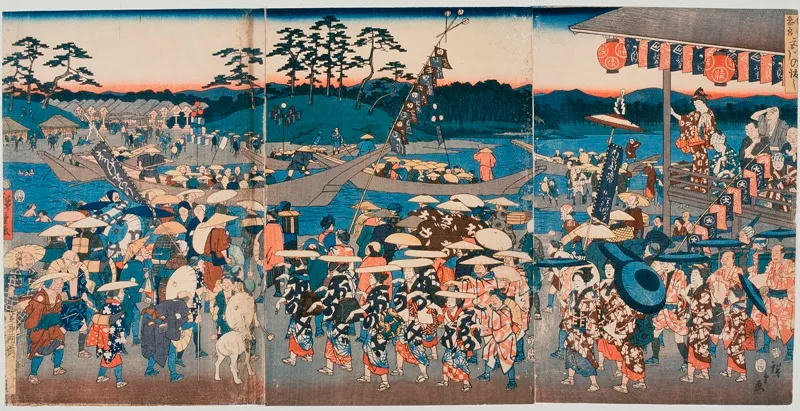
For most of their history, goshuin were a purely Buddhist affair. Shinto shrines had their own traditions — ofuda (paper talismans), omamori (protective charms) — but not stamp books.
That changed during the Edo period (1603–1868), when pilgrimage became a form of mass tourism. The Tokugawa shogunate enforced strict travel restrictions, but pilgrimages to major religious sites were one of the few acceptable reasons to leave your home domain. Millions of Japanese people took advantage of this loophole, flooding the roads to Ise Grand Shrine, Kumano, and other sacred sites.
Shinto shrines along these routes saw the Buddhist stamp-collecting system and adopted it. If temples could offer pilgrims a record of their visit, so could shrines. The practice spread quickly, and by the late Edo period, both shrines and temples were issuing what we now recognize as goshuin.
This dual adoption is why, to this day, you can collect goshuin at both Shinto shrines and Buddhist temples — and why some collectors keep separate books for each.
The Meiji Disruption
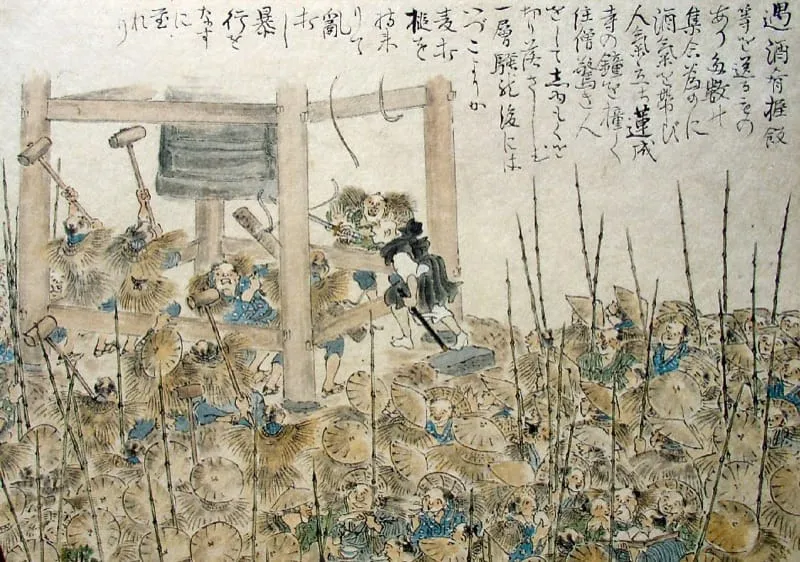
The Meiji Restoration of 1868 brought a sudden and violent rupture.
The new government, seeking to build a modern nation-state around the Emperor and Shinto, issued the Shinbutsu Bunri (神仏分離) decree — the forced separation of Shinto and Buddhism. For over a thousand years, the two religions had coexisted and blended freely. Now they were pulled apart.
Temples were closed, Buddhist statues were destroyed, and monks were forced to secularize. The pilgrimage culture that had sustained goshuin for centuries was disrupted.
But goshuin survived. Shinto shrines continued issuing them as a purely Shinto practice. Buddhist temples, once the immediate crisis passed, resumed the tradition as well. The practice was too deeply rooted to erase.
Quiet Decades and the Modern Revival
Through the early and mid-twentieth century — war, industrialization, urbanization — goshuin collecting faded to a niche activity. It never disappeared, but it was largely the domain of elderly pilgrims and serious religious practitioners.
The revival began in the 2000s and accelerated in the 2010s, driven by several converging forces:
Social media. Instagram and Twitter made goshuin visible to millions of people who had never visited a shrine. The visual beauty of brush calligraphy and red seals turned out to be perfectly suited to photo-sharing platforms.
The “power spot” boom. In the late 2000s, Japanese media popularized the idea of power spots — places said to radiate spiritual energy. Shrines and temples topped every list, and a new generation began visiting them not out of religious obligation but for personal wellness and curiosity.
Art goshuin. A small number of shrines and temples began experimenting with elaborate, colorful designs — illustrations, gold leaf, seasonal themes, cut-paper techniques. These limited-edition goshuin created urgency and excitement. Collectors would line up for hours, follow seasonal calendars, and travel across the country to complete sets.
The result: goshuin went from a fading religious custom to a nationwide hobby in less than a decade.
Art Goshuin: Tradition Meets Creativity
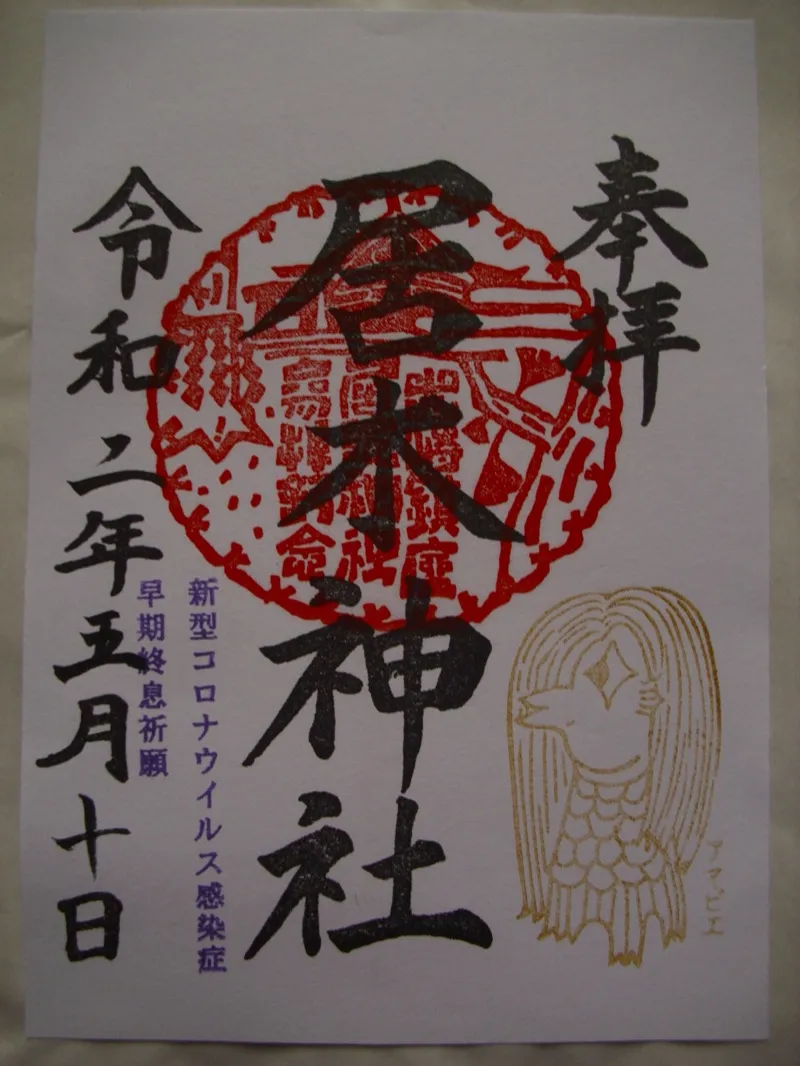
The rise of art goshuin is the most visible change in recent years — and the most debated.
Traditional goshuin follow a standard format: shrine or temple name, deity name, the word hōhai (奉拝, “humbly worshipped”), the date, and one or more vermillion seals. The beauty is in the calligrapher’s hand — the weight of the brush, the speed of the stroke, the imperfections that make each one unique.
Art goshuin break from this template. Some feature full-color illustrations of mythological scenes. Others incorporate seasonal motifs — cherry blossoms in spring, autumn leaves in fall, snowflakes in winter. Some use gold or silver ink, embossing, or transparent paper overlays.
Purists argue that art goshuin dilute the spiritual meaning — that they turn a sacred record into a collectible card. Supporters counter that art goshuin bring new visitors to shrines, generate revenue for small rural sites that might otherwise close, and introduce a younger generation to Shinto and Buddhist traditions they would never encounter otherwise.
Both sides have a point. The tension between tradition and innovation is itself a very old story in Japanese religion.
What the History Tells You
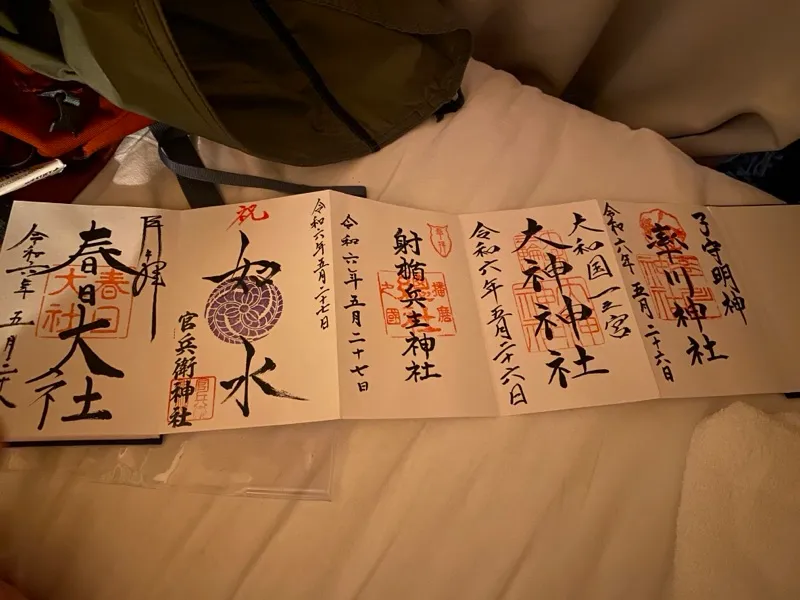
Knowing the history of goshuin changes how you experience them. Here’s what it means in practice:
Pray first. The original pilgrim copied an entire sutra before receiving a stamp. You’re asked to offer a prayer. That’s the deal — goshuin are not free stamps. They are a record of devotion, however brief.
Respect the calligrapher. The person writing your goshuin is continuing a practice that stretches back centuries. Wait quietly. Don’t rush them. Don’t film over their shoulder.
Don’t treat your goshuincho as a scrapbook. It’s a sacred object with a religious lineage. Store it respectfully — traditionally, it would be kept on a home altar (kamidana). You don’t need to go that far, but don’t toss it in a pile of magazines.
Understand the Buddhist connection. Even at a Shinto shrine, the goshuin you receive is descended from a Buddhist pilgrimage tradition. The two religions shaped each other for a millennium. Your goshuincho carries echoes of both.
Appreciate the evolution. The art goshuin at a small countryside shrine and the austere calligraphy at Ise Grand Shrine are both legitimate expressions of the same tradition. Goshuin have always changed with the times. That’s how they survived.
A Timeline of Goshuin History
| Era | Period | What Happened |
|---|---|---|
| Heian | 794–1185 | Sutra-copying pilgrims receive temple stamps (nōkyō) |
| Kamakura | 1185–1333 | Pilgrimage routes formalize; Shikoku 88 temples established |
| Muromachi | 1336–1573 | Prayer + donation replaces sutra-copying at many temples |
| Edo | 1603–1868 | Mass pilgrimage boom; Shinto shrines adopt the goshuin system |
| Meiji | 1868–1912 | Shinbutsu Bunri separates Shinto and Buddhism; goshuin survive |
| Shōwa–Heisei | 1926–2019 | Quiet persistence, then explosive revival via social media |
| Reiwa | 2019–present | Art goshuin, digital collections, and international interest |
The Next Chapter
Goshuin are now more popular than at any point in modern history. International visitors are collecting them. Digital tools are making it easier to organize and preserve collections. And shrines are finding new ways to express ancient traditions through art and design.
But the core hasn’t changed. A person visits a sacred place. They offer a prayer. A calligrapher picks up a brush. Ink meets paper. A seal is pressed.
That sequence has repeated millions of times over a thousand years. The next time it happens for you, you’ll know what you’re part of.
Want to preserve your goshuin collection digitally? Goshuin Meguri lets you photograph, organize, and map every goshuin you receive — building a visual record of your own pilgrimage, however it unfolds.
Image credits: Hero & nōkyō — Nōkyōchō of Shikoku 88 by Dokudami (CC BY-SA 4.0), via Wikimedia Commons. Calligrapher — Monk at Byōdō-in by Chris Gladis (CC BY 2.0), via Wikimedia Commons. Edo pilgrimage — Miyagawa no Watashi by Utagawa Hiroshige (public domain), via Wikimedia Commons. Haibutsu kishaku — by Tanaka Nagane (public domain), via Wikimedia Commons. Art goshuin — Amabie goshuin of Irugi Shrine by Indiana jo (CC BY-SA 4.0), via Wikimedia Commons. Goshuincho spread — by Immanuelle (CC BY 4.0), via Wikimedia Commons.