The Shinbutsu Bunri Decree (神仏分離令) of 1868 marked one of the most dramatic religious transformations in Japanese history. This Meiji government policy ended over a millennium of Shinbutsu-shūgō (神仏習合) - the syncretic blending of Shinto and Buddhism - and fundamentally rewrote Japan’s religious landscape in a matter of years.
The End of Thousand-Year Fusion
When Gods and Buddhas Were One
Since the Nara period (710-794), Shinto kami and Buddhist deities had been worshipped as manifestations of the same divine essence. Most shrines had affiliated bettō-ji (別当寺) temples, and jingū-ji (神宮寺) shrine-temples where Buddhist monks served Shinto deities were commonplace.
Even Ise Jingu, Japan’s most sacred Shinto shrine, had Buddhist temples within its precincts - the Naiku and Geku each had their own jingū-ji where monks conducted rituals for the kami.
The 1868 Separation Decree
On March 28, 1868, the Meiji government issued what became known as the Shinbutsu Hanzen Rei (神仏判然令) - literally, the “order to clarify the distinction between kami and buddhas.” This wasn’t merely administrative reorganization; it was ideological revolution.
Key provisions included:
- Prohibition of Buddhist clergy at shrines: Monks serving as shrine attendants must return to lay life or leave
- Removal of Buddhist artifacts: Statues, bells, sutras, and ritual implements must be cleared from shrines
- Renaming of syncretic deities: “Hachiman Daibosatsu” became “Hachiman Ōkami”
- Dissolution of shrine-temples: Buddhist temples affiliated with shrines were forced to become independent or close
The Haibutsu Kishaku Storm
From Policy to Popular Iconoclasm
While the government intended “separation,” at the grassroots level the movement became Haibutsu Kishaku (廃仏毀釈) - literally “abolish Buddhism, destroy Buddhist objects.” What began as administrative reform devolved into violent iconoclasm, particularly in domains like Satsuma, Naegi, and Toyama.
The scale of destruction:
- Temples: From ~260,000 to ~80,000 (two-thirds destroyed)
- Buddhist clergy: From ~300,000 to ~100,000 monks
- Cultural artifacts: Countless Buddhist statues, paintings, manuscripts, and architectural treasures lost forever
Regional Variations in Destruction
The intensity of Haibutsu Kishaku varied dramatically by region:
Severe destruction: Satsuma Domain (Kagoshima), Naegi Domain (Gifu), Toyama Domain, Tsugaru Domain (Aomori)
Moderate impact: Edo (Tokyo), Kyoto, Nara, areas around Mt. Hiei
In Satsuma Domain, over 1,600 temples were reduced to fewer than 30. At Nara’s Kofuku-ji Temple, the five-story pagoda was put up for sale for just 25 yen (equivalent to about $500 today) - with no buyers found, it barely survived.
Building State Shinto
Emperor Worship and Religious Control
The true goal of the Meiji government wasn’t mere separation but the establishment of State Shinto (国家神道) as the spiritual foundation of the emperor-centered modern state.
This transformation involved:
- Shrine nationalization: Shrines became state institutions rather than independent religious sites
- Imperial mythology: Amaterasu Ōmikami was elevated as the supreme deity and imperial ancestor
- Educational integration: Shinto values were embedded in the Imperial Rescript on Education
The Modern Shrine Ranking System
The 1871 kindai shakaku seido (近代社格制度) classified all shrines into a rigid hierarchy: kanpei-sha (官幣社), kokuheisha (国幣社), and various local categories. This system transformed the “purified” post-separation shrines into administrative units of state control.
What Was Lost, What Was Born
Cultural Devastation
Haibutsu Kishaku’s losses extended far beyond physical artifacts:
- Religious diversity: The unique Japanese synthesis of Shinto-Buddhist belief
- Folk traditions: Festival elements and local customs with Buddhist components
- Educational institutions: Many temples served as schools and centers of learning
- Artistic heritage: Buddhist art, architecture, and craftsmanship representing centuries of cultural development
Modern Shrine System Foundations
Yet this traumatic period also established the foundations of Japan’s contemporary shrine system:
- Jinja Honchō: The postwar umbrella organization has its roots in Meiji centralization
- Professional priesthood: Transition from hereditary to qualification-based clergy
- Standardized ritual: Unified shrine ceremonies and practices
Impact on Contemporary Japan
Goshuin Culture and Religious Separation
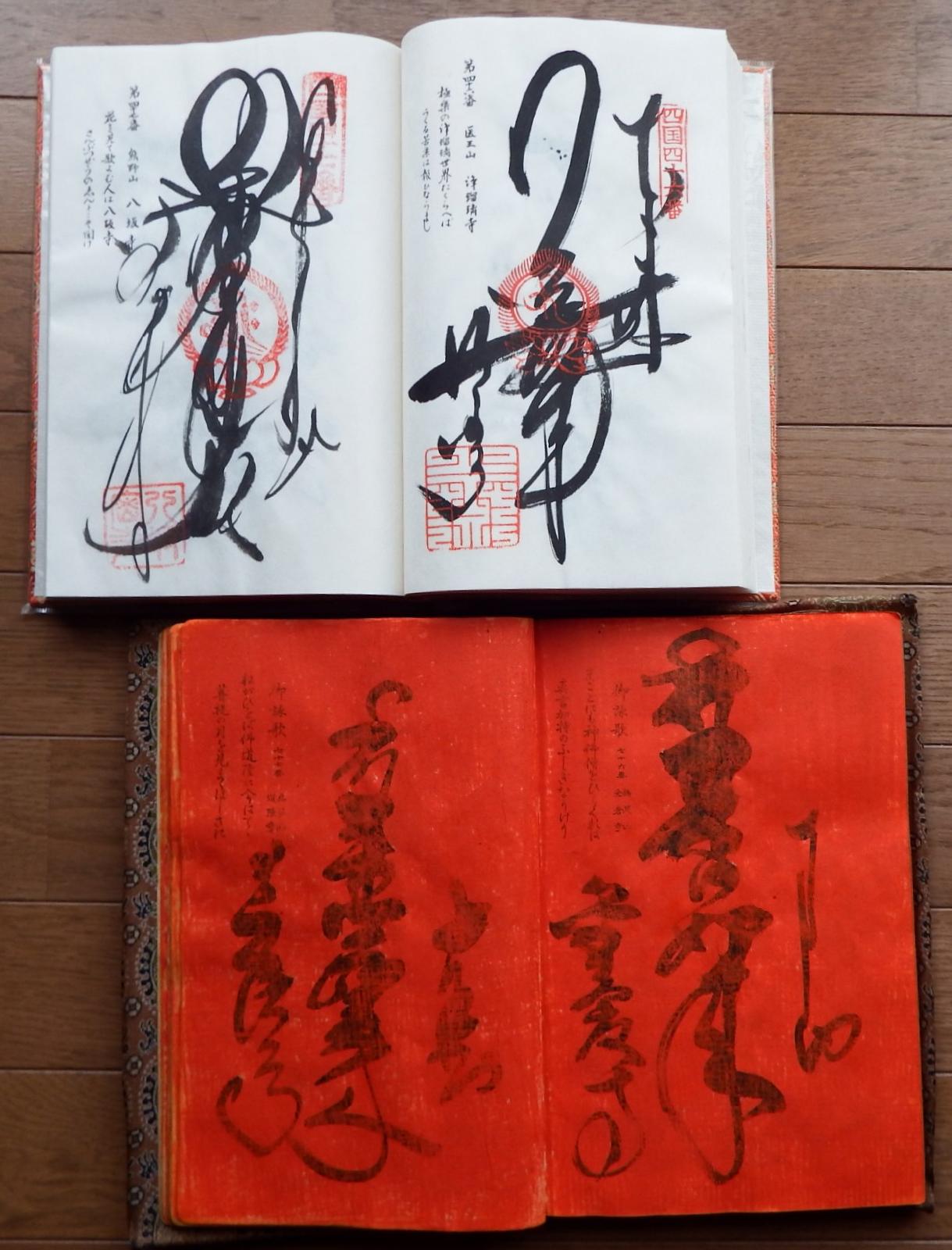
Today’s goshuin (御朱印) culture still bears the marks of Shinbutsu Bunri:
- Clear shrine-temple distinction: Different styles and authorization methods for goshuin
- Shrine goshuin: Focus on kami names and shrine titles with cleaner designs
- Temple goshuin: Complex layouts featuring Buddhist deities and sutra passages
The Return of Syncretism
Ironically, some modern shrines have quietly restored Buddhist elements:
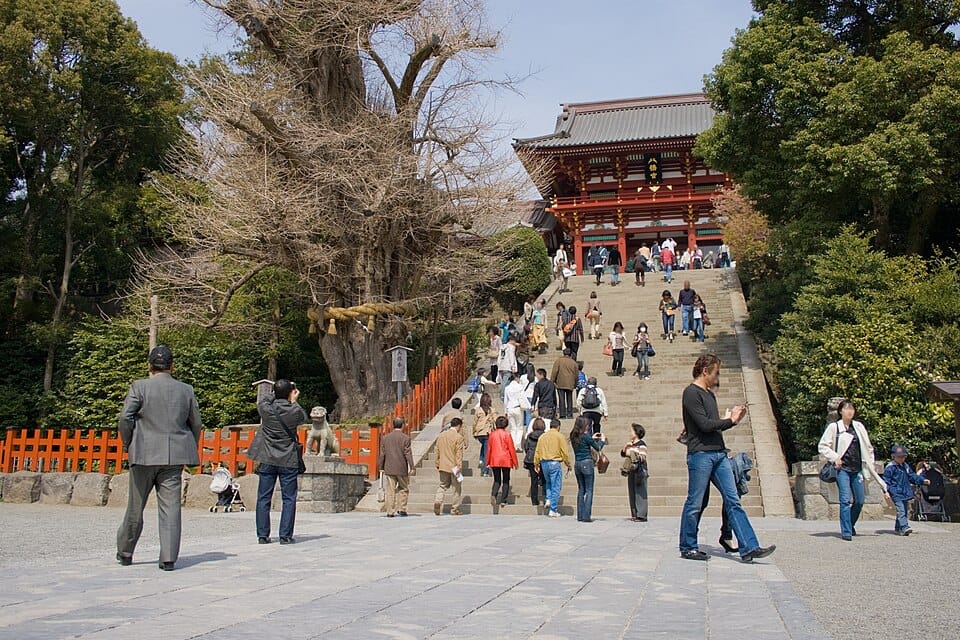
- Tsurugaoka Hachimangū: Rebuilt its Great Buddha statue in 1988
- Local festivals: Many regional celebrations continue to honor both kami and Buddhist deities
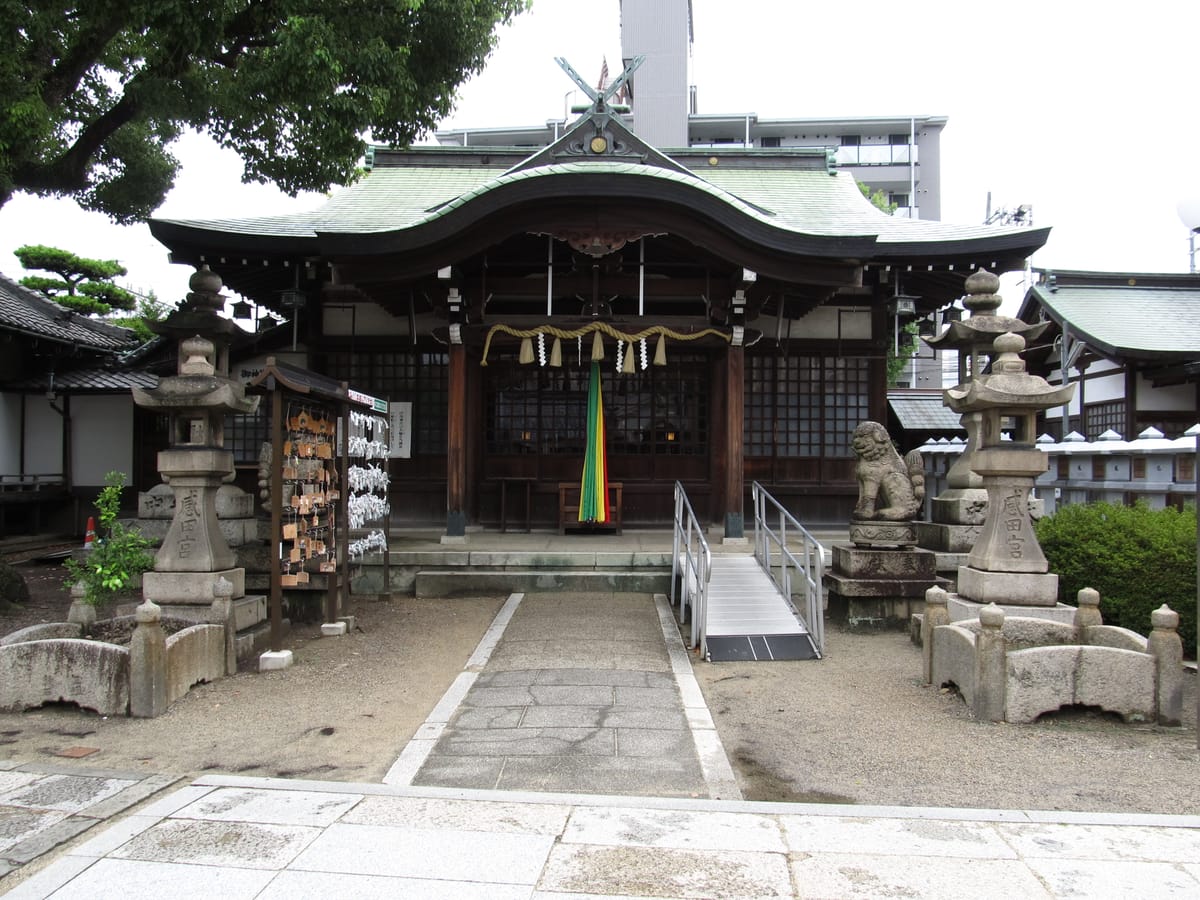
- Architectural elements: Stone lanterns and komainu lions often retain subtle Buddhist influences
Lessons from Religious Revolution
The Shinbutsu Bunri decree and subsequent Haibutsu Kishaku movement serve as a powerful historical lesson about the dangers of politically motivated religious intervention. The speed with which millennium-old traditions could be dismantled - often in a matter of months - demonstrates both the power of state authority and the fragility of cultural heritage.
When modern visitors collect goshuin and explore shrine grounds today, they sometimes encounter stone lanterns, guardian statues, or architectural details that hint at the Buddhist past. These are silent witnesses to the dramatic religious transformation of Meiji Japan - survivors of a time when politics and religion collided with world-changing force.
Understanding this history helps us appreciate not only what was lost, but also how contemporary Japanese religious culture emerged from one of the most dramatic spiritual upheavals in human history.
Image Sources
- Main image: “Shinbutsu Bunri Illustration” (Artist unknown, Meiji period) / Public Domain / Wikimedia Commons
- https://commons.wikimedia.org/wiki/File:Shinbutsu_bunri.jpg