Walking through a Shinto shrine, you might encounter a massive tree encircled by thick rope.
As you approach, a sense of awe washes over you. This ancient being has stood in place for hundreds, sometimes over a thousand years, silently watching over countless worshippers. This is a sacred tree (goshinboku).
Why are trees considered sacred? Why are they wrapped in rope? The answers to these questions touch the very core of Japanese spirituality and the relationship between humans and nature.
What Are Sacred Trees?
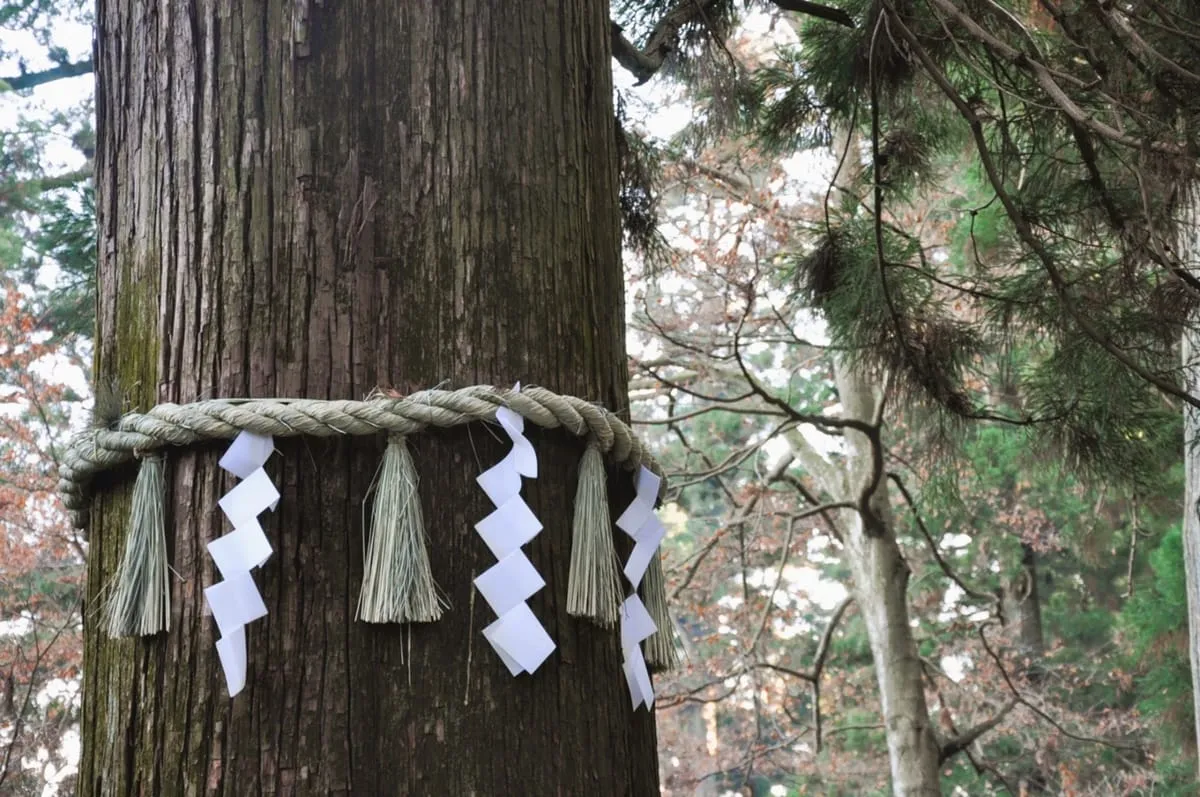
Sacred trees (goshinboku 御神木) are trees venerated at Shinto shrines. They’re also written as “shinboku” (神木) or “shinju” (神樹).
These aren’t simply old or large trees. They are trees where kami (gods) reside or where deities descend to earth. In ancient Shintoism, such divine vessels were called himorogi (神籬) — sacred spaces where spirits dwell.
Sacred trees fall into three main categories:
- Trees as divine bodies: The tree itself is worshipped as a deity
- Trees as yorishiro: Vessels where kami descend and temporarily reside
- Protective trees: Symbolic guardians of the sacred precinct
These distinctions aren’t rigid — one sacred tree often embodies multiple meanings.
How Trees Are Chosen as Sacred
What makes a tree sacred? While there’s no official criteria, several patterns emerge:
- Giant/ancient trees: Possessing life force that far exceeds human lifespan
- Evergreen species: Symbolizing permanence through year-round green leaves
- Rarity: Species uncommon in the local area
- Location: Standing at significant spots like the shrine center or along the approach
- Legend: Connected to myths or local folklore
Scientifically speaking, giant trees require proper soil and water sources. Ancient peoples intuitively understood that places where great trees flourished were sacred lands blessed with water and fertility.
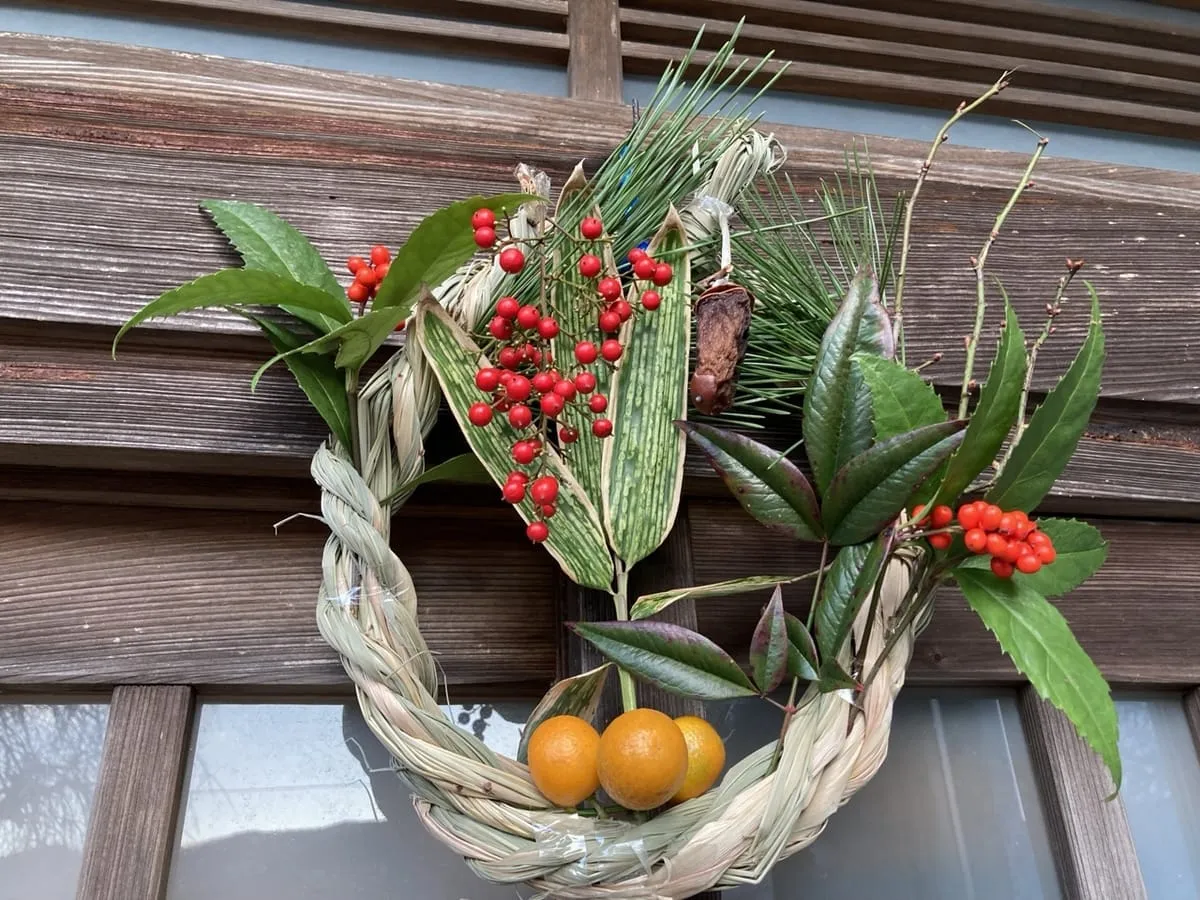
The Meaning and Origin of Shimenawa
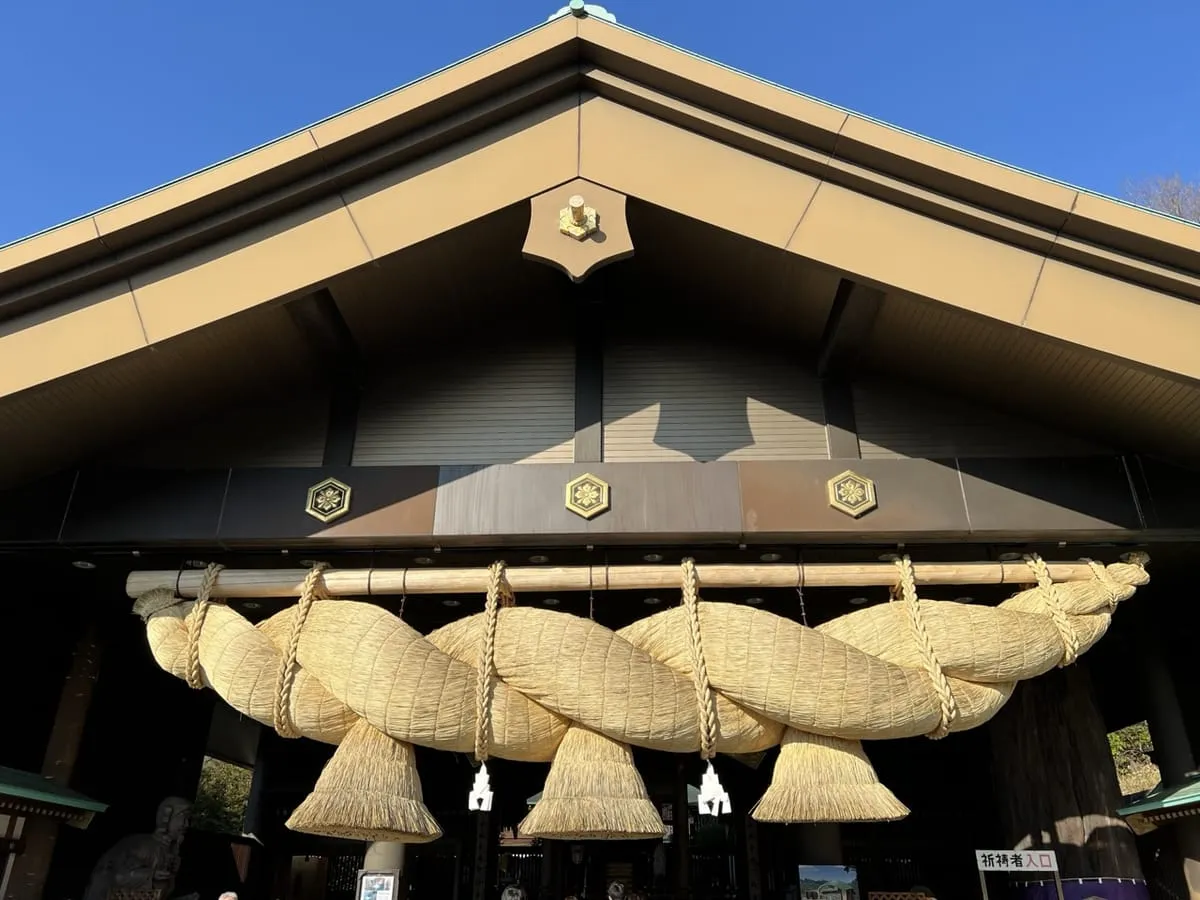
The thick rope wrapped around sacred trees is called shimenawa (注連縄). It can also be written as “shichinawa” (七五三縄) or “hyōnawa” (標縄).
The shimenawa serves as a barrier — marking the boundary between the sacred realm and the mundane world. Inside the rope is the divine domain; outside is the human world. Crossing this line helps worshippers transition from ordinary to extraordinary consciousness.
Origins of Shimenawa
The origin of shimenawa dates back to the Amaterasu cave myth in the Kojiki (Record of Ancient Matters).
When the sun goddess Amaterasu hid in a cave after being angered by her brother Susanoo’s violence, the world fell into darkness. The other kami devised a plan to lure her out. When they finally succeeded, they stretched a rope across the cave entrance to prevent Amaterasu from hiding again. This was the first shimenawa.
Thus, shimenawa originally meant “a barrier protecting the sacred”.
Materials and Construction
Traditional shimenawa are made from rice straw. Rice being the source of life for Japanese people, ropes braided from its straw were believed to contain powers of abundance and purification.
Modern shimenawa sometimes use wheat straw or hemp due to material availability. The key is using natural materials.
The braiding method also carries meaning. Right-twisted (migi-nai) — clockwise braiding — is standard. This follows the sun’s movement and is considered the sacred direction.
Shimenawa Decorations
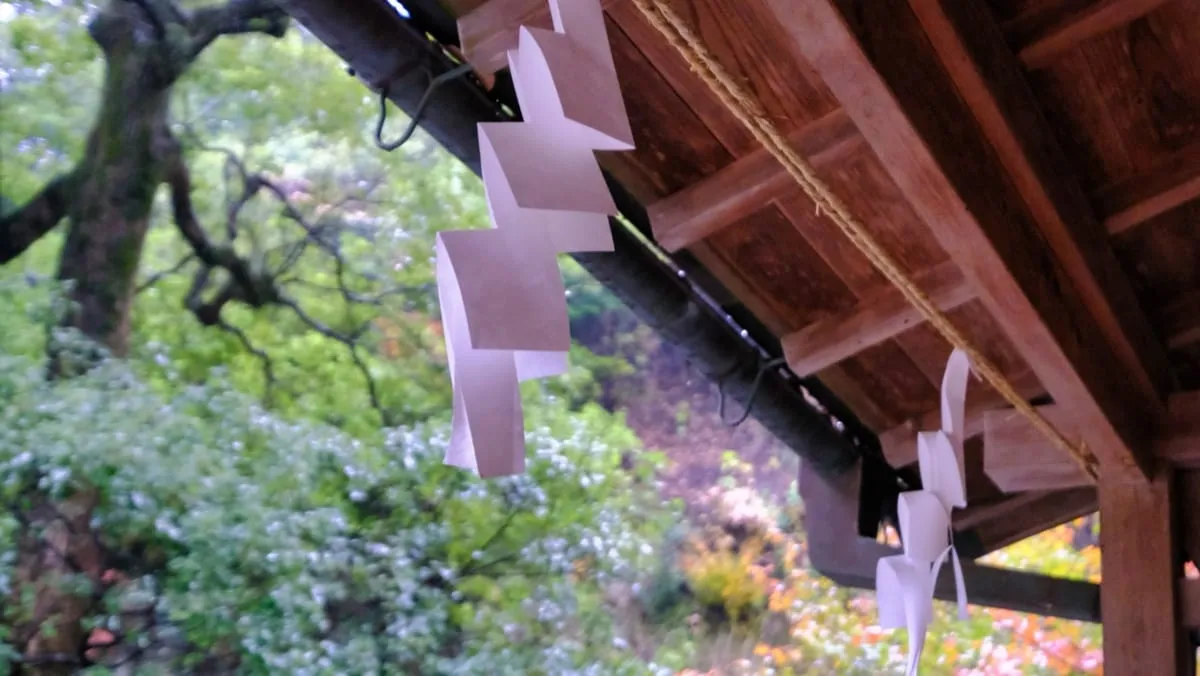
Shide (Paper Streamers)
The zigzag white paper strips hanging from shimenawa are called shide (紙垂). Some say they represent lightning; others believe they mark divine descent.
The number of shide has meaning:
- 4 strips: Representing the four seasons
- 8 strips: The eight directions or infinity
- Other numbers: Determined by shrine history or enshrined deity
Gohei (Paper Offerings)
Larger, more elaborately cut white paper offerings. These are presented to kami and often attached to the center of shimenawa.
Bells
Bells that chime in the wind, calling to the gods and purifying the area of negative energy.
Types of Sacred Trees
Certain tree species dominate as sacred trees in Japan. Each carries specific symbolic meaning.
Cedar (Sugi)
The most common sacred tree. Its straight vertical growth symbolizes the axis connecting heaven and earth. Cedars live long and can reach heights over 50 meters.
Notable examples:
- Yakusugi (Yakushima Island, Kagoshima): Estimated over 2,000 years old
- Kinomiya Shrine’s Great Camphor (Atami, Shizuoka): 2,000 years old, 24m circumference
Sakaki (Japanese Cleyera)
The quintessential tree for Shinto rituals. The character “榊” combines “tree” (木) and “god” (神) — literally meaning “divine tree.” Though smaller than other sacred trees, its spiritual significance is unparalleled.
Camphor (Kusu)
Giant trees common in western Japan. Specimens with circumferences exceeding 10 meters aren’t rare. The camphor scent was valued for repelling evil spirits.
Pine (Matsu)
Considered sacred through wordplay — “matsu” means both “pine” and “to wait,” so pines were seen as trees that wait for gods. Common at coastal shrines.
Ginkgo (Icho)
Though originally from China, ginkgos became popular shrine trees after introduction to Japan. Their beautiful autumn colors and unique male/female tree distinction caught attention.
Famous Sacred Trees
Meiji Shrine’s Married Camphor Trees
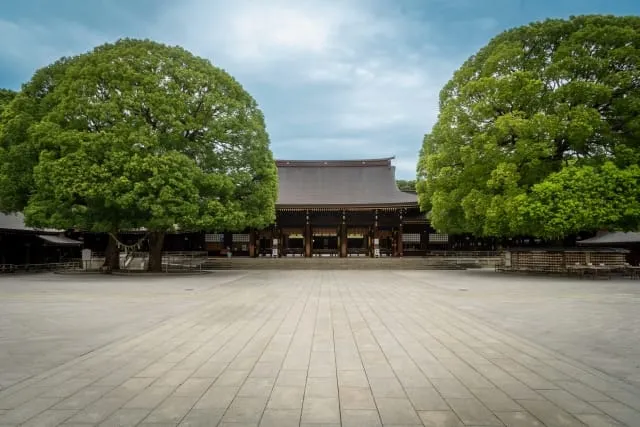
Two camphor trees at Meiji Shrine in Tokyo’s Shibuya district. Called the “married trees” (meoto-kusu), they’re famous for blessings in matchmaking. Fitting sacred trees for a shrine dedicated to Emperor Meiji and Empress Shoken.
Kinomiya Shrine’s Great Camphor
The sacred tree at Kinomiya Shrine in Atami, Shizuoka Prefecture, is one of Honshu’s largest trees. Approximately 2,000 years old, 23.9 meters in circumference, and 26 meters tall. Legend says walking around this tree extends your lifespan.
Izumo Taisha’s Sacred Trees
Izumo Taisha in Shimane Prefecture has multiple sacred trees. The pine sacred tree in front of the worship hall is particularly revered as embodying the power of Okuninushi, the deity of matchmaking.
Kumano Hongu Taisha’s Sacred Forest
The area around Kumano Hongu Taisha in Wakayama Prefecture has been called the “sacred tree forest” since ancient times. Giant cedar groves embrace the entire sacred precinct, welcoming Kumano pilgrims throughout history.
Proper Worship at Sacred Trees
Sacred trees have specific etiquette different from general shrine worship.
Basic Procedure
- Bow: Make a light bow before the sacred tree
- Check the shimenawa: Never enter inside the rope boundary
- Prayer: Clasp hands and pray silently
- Gratitude: Bow again with appreciation for the tree’s life force
What NOT to Do
- Enter inside shimenawa: This violates the sacred boundary
- Touch the tree: May damage the bark
- Break branches: An act of desecration
- Make loud noises: Disturbs the peaceful atmosphere
- Litter: Pollutes the sacred space
Special Practices
Some shrines have unique worship customs:
- Walking around the tree: Like at Kinomiya Shrine’s great camphor
- Praying from specific directions: Follow shrine guidance
- Making offerings: Only when permitted
Shimenawa Replacement Rituals
Shimenawa aren’t permanent. Exposed to wind and rain, they deteriorate and must be regularly replaced.
Replacement Timing
- New Year: Renewed for the start of the year
- Annual festivals: During the shrine’s main yearly celebration
- When deteriorated: When ropes break or become severely weathered
The Sacred Ritual
This isn’t mere maintenance work but a solemn religious ceremony.
- Purification: Cleansing ritual before removing old shimenawa
- Removal: Carefully taking down the old rope
- Installation: Shrine priests attach new shimenawa
- Offering prayers: Reporting the completion to the kami
These rituals often include participation from parishioners and believers, strengthening community bonds.
Sacred Tree Faith in Modern Times
Even in the 21st century, faith in sacred trees remains strong. In fact, as urbanization progresses, their value may be increasing.
Environmental Protection
Sacred trees often receive legal protection as Natural Monuments. Their sacred status protects them from development, allowing them to function as precious urban green spaces.
Spiritual Healing
In our stress-filled modern society, sacred trees gain attention as power spots. Scientifically, the phytoncides released by trees are known to provide relaxation benefits.
Cultural Identity
Sacred trees symbolize Japanese views of nature and religion. Their protection and preservation helps maintain cultural identity.
Goshuin and Sacred Trees
When receiving goshuin (shrine stamps), you might see sacred tree motifs in the design. Shrines famous for their sacred trees sometimes offer goshuin featuring tree designs.
Worshipping at sacred trees also provides a deeper spiritual experience. You can feel the divine power imbued in your goshuin more intimately.
On your next shrine visit, don’t just go to the main hall — seek out the sacred trees. Standing before these ancient giants wrapped in shimenawa, you’ll touch the form of prayer that has continued for over a thousand years in Japan.
Ready to manage your goshuin collection digitally? With Goshuin Meguri, you can photograph and record your goshuin stamps, organize them on a map, and save photos of the sacred trees you encounter along your spiritual journey.
Image Credits: Shimenawa with shide — Photo by BATACHAN (CC BY-SA 4.0), Wikimedia Commons | Meiji Shrine paired camphor trees — Photo by Ocdp (CC0 1.0), Wikimedia Commons