When walking through the grounds of Japanese shrines, you’ll often encounter stone structures that stand silently along the pathways and within the sacred spaces. These are stone lanterns (石灯籠, ishi-dōrō), and they represent far more than simple lighting fixtures.
These ancient guardians have illuminated sacred spaces and guided worshippers for over a millennium. Each type tells a story—from the majestic Kasuga lanterns lining the pathways of Nara’s most famous shrine, to the snow-viewing lanterns that capture winter’s poetry in Japanese gardens, to the uniquely designed Oribe lanterns that embody the tea ceremony’s aesthetic philosophy.
For visitors collecting goshuin and exploring Japanese shrine culture, understanding these stone lanterns opens a new dimension of appreciation for Japan’s spiritual and artistic heritage.
Origins of Stone Lanterns | Arriving with Buddhism
The history of stone lanterns in Japan traces back to the Nara period (710-794 CE), arriving from continental Asia via the Korean Peninsula along with Buddhist culture.
Originally, lanterns served a purely religious function—illuminating Buddhist statues and sacred spaces within temple complexes. The oldest surviving stone lanterns date to the late Nara period, traditionally placed along the central axis of temple compounds, usually one lantern per major structure.
During the Heian period (794-1185 CE), the practice of shinbutsu-shūgō (syncretism of Shintoism and Buddhism) led to the adoption of stone lanterns in Shinto shrines as well. They began serving as offerings of sacred light (mitakashi) before the kami, while also functioning as decorative elements within shrine grounds.
Structure of Stone Lanterns
Stone lanterns typically consist of several distinct components, each with symbolic meaning:
- Hōju (宝珠): The jewel-shaped ornament at the top
- Kasa (笠): The umbrella-like roof that protects from rain
- Hibukuro (火袋): The fire chamber containing decorative windows
- Chūdai (中台): The platform supporting the fire chamber
- Sao (竿): The post or pillar section
- Kiso (基礎): The base foundation
This structure mirrors Buddhist pagodas, representing the five elements (空風火水地) from top to bottom: void, wind, fire, water, and earth.
Initially, these were practical lighting devices. Rapeseed oil or candles provided illumination for nighttime religious ceremonies and guided worshippers along dark pathways. Over time, their decorative and symbolic functions became equally important, eventually making them indispensable elements of Japanese garden design.
Kasuga Lanterns | Nara’s Iconic Standard
Among all stone lantern types, Kasuga lanterns (春日灯籠, Kasuga-dōrō) are perhaps the most recognizable and influential.
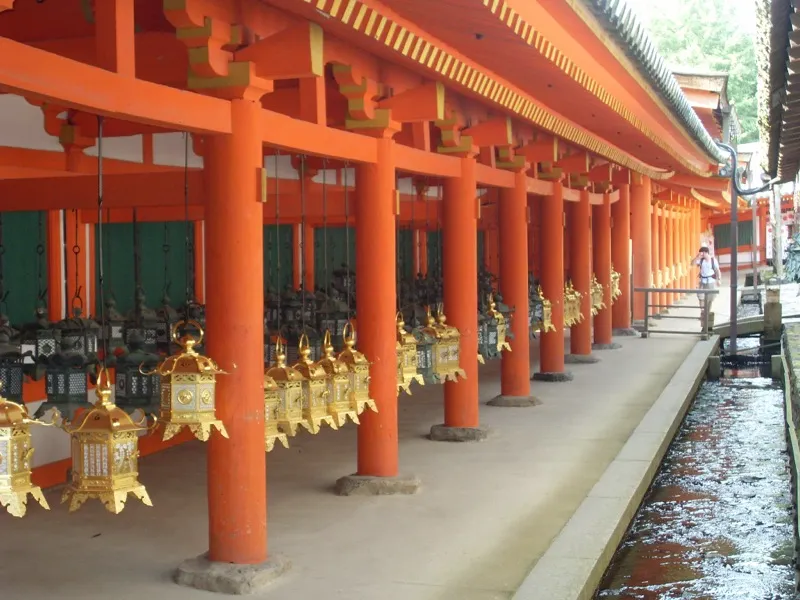
Named after Kasuga Taisha in Nara Prefecture, where approximately 3,000 stone and hanging lanterns create one of Japan’s most spectacular lantern displays, this style became the prototype for shrine lanterns throughout Japan.
Characteristics of Kasuga Lanterns
- Hexagonal fire chamber: Distinctive six-sided hibukuro
- Deer carvings: Sacred deer (messengers of Kasuga Taisha) carved on two faces
- Cloud-shaped sun and moon motifs: Remaining two faces feature stylized celestial elements
- Upright post design: Tall sao (post) supporting the fire chamber
- Formal base structure: Solid octagonal or circular foundation (kiso)
Kasuga lanterns represent the standard form for shrine stone lanterns and can be found at Shinto shrines across Japan. However, regional variations exist, reflecting local stone-working traditions and aesthetic preferences.
The Ethereal Beauty of Mantō-rō
Kasuga Taisha holds two annual Mantō-rō (万燈籠) ceremonies—during Setsubun in February and on August 14-15 during Obon. During these events, all 3,000 lanterns are simultaneously lit, creating an otherworldly atmosphere that has remained unchanged since the Heian period.
The sight of thousands of flickering flames in the darkness represents one of Japan’s most moving religious spectacles, embodying over a thousand years of continuous devotion and prayer.
Points of Interest for Visitors
When visiting Kasuga Taisha or other shrines with Kasuga-style lanterns, pay attention to:
- Carved details: Each deer’s expression and the artistic rendering of sun and moon motifs
- Stone quality and aging: How time has weathered the lanterns differently
- Individual variations: Subtle differences reflecting different periods and craftsmen
- Inscriptions: Donor names and dedication dates that reveal historical connections
Many lanterns bear inscriptions showing dedication dates from the Edo period through modern times, creating a tangible timeline of faith and community support.
Yukimi Lanterns | Snow-Viewing Poetry in Stone
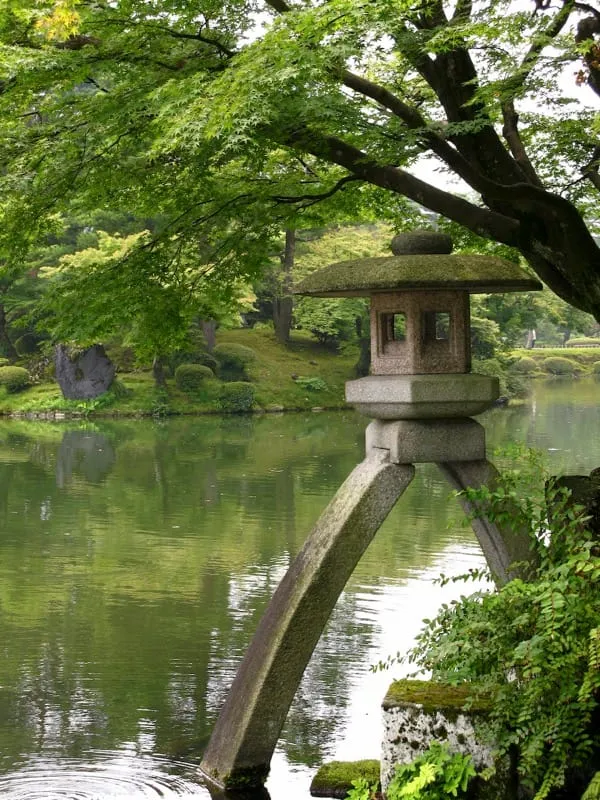
Yukimi lanterns (雪見灯籠, yukimi-dōrō), literally “snow-viewing lanterns,” represent the refinement of stone lanterns for Japanese garden use.
These distinctively designed lanterns were created specifically to enhance the aesthetic experience of gardens, particularly the poetic beauty of snow accumulating on their broad, flat roofs. Typically placed near water features—ponds, streams, or on small islands—they serve both functional and artistic purposes.
Characteristics of Yukimi Lanterns
- Low profile design: Shorter and more compact than shrine lanterns
- Wide, flat roof: Designed to beautifully collect and display snow
- Multiple legs: Usually supported by 2-4 legs rather than a central post
- Water placement focus: Designed for positioning near or over water
- Simplified decoration: Less ornate than shrine lanterns, emphasizing clean lines
Yukimi lanterns come in two main varieties: tachi-yukimi (standing snow-viewing) with a post, and oki-yukimi (placed snow-viewing) without a post. The latter type, also called misaki-dōrō (cape lanterns), are often positioned on stone peninsulas extending into ponds.
Famous Example: Kenroku-en’s Kotoji Lantern
The Kotoji lantern (琴柱灯籠) in Kanazawa’s Kenroku-en Garden represents one of Japan’s most photographed yukimi lanterns. Its distinctive two-legged design, resembling the bridge (kotoji) of a koto (Japanese harp), has become an iconic symbol of both Kenroku-en and Japanese garden design.
Seasonal Beauty Transformations
The true magic of yukimi lanterns lies in their ability to enhance seasonal beauty:
- Winter: Snow-covered roofs create the classic “yukimi” effect
- Spring: Cherry blossoms create delicate contrasts
- Summer: Green foliage provides cooling shade
- Autumn: Maple leaves complement the stone’s natural tones
The reflection of lanterns in still water adds another dimension, creating symmetric beauty that doubles the visual impact.
Oribe Lanterns | Tea Master’s Innovative Design
Oribe lanterns (織部灯籠, Oribe-dōrō) stand apart from other stone lanterns as uniquely Japanese innovations born from tea ceremony culture.
Named after the early Edo period tea master Furuta Oribe (古田織部, 1544-1615), these distinctive lanterns embody the aesthetic principles of wabi-sabi—finding beauty in simplicity, imperfection, and functionality over ornamentation.
Characteristics of Oribe Lanterns
- Square fire chamber: Unlike the hexagonal Kasuga or circular designs of other types
- Buried installation: Designed to be partially embedded in the ground (ikekomi-style)
- Adjustable height: Can be positioned at various depths depending on need
- Tea garden specific: Created specifically for use near tsukubai (stone water basins)
- Unique decorative elements: Features Christian cross motifs and crescent moon openings
The most intriguing aspect of Oribe lanterns is their Christian cross motif. Furuta Oribe was a Christian convert during the period when Christianity was initially tolerated in Japan, and these subtle religious symbols represent a fascinating blend of Japanese aesthetics and hidden Christian faith.
Tea Ceremony Aesthetics
Understanding Oribe lanterns requires appreciating tea ceremony philosophy. Rather than grand decoration, tea masters valued:
- Functional beauty: Form following function perfectly
- Understated elegance: Beauty through restraint and subtlety
- Harmony with nature: Integration into the roji (tea garden path)
- Seasonal awareness: Enhancing the experience of seasonal change
Oribe lanterns provide gentle illumination for evening tea ceremonies while creating atmosphere along the roji—the path that prepares guests mentally and spiritually for the tea ceremony experience.
Cultural and Religious Significance
Furuta Oribe was not only a tea master but also a daimyo (feudal lord) and student of the legendary Sen no Rikyū. His lanterns reflect the complex cultural moment when Japanese aesthetics, Christian faith, and warrior culture intersected during the late 16th century.
The presence of Christian symbols in these lanterns makes them historical artifacts of Japan’s brief Christian century, before the faith was banned and driven underground.
Other Stone Lantern Varieties | Regional Diversity
Beyond the three main types, Japan features numerous regional and specialized lantern varieties.
Hexagonal Yukimi Lanterns (Rokkaku Yukimi)
Combining yukimi proportions with hexagonal fire chambers, these lanterns bridge shrine and garden aesthetics. Popular in formal Japanese gardens that incorporate both religious and secular elements.
Cape Lanterns (Misaki-dōrō)
Essentially yukimi lanterns without legs, designed to sit directly on stone surfaces extending into water. Originally served lighthouse functions at coastal shrines while maintaining decorative purposes.
Pagoda-style Lanterns (Hōkyōintō-gata)
Modeled after Buddhist pagodas, these lanterns emphasize religious symbolism. Most commonly found at temples or shrines with strong Buddhist historical connections.
Sleeve Lanterns (Sode-dōrō)
Smaller lanterns positioned alongside main buildings like “sleeves” extending from the structure. Often used in pairs flanking shrine or temple entrances.
Regional Specialties
Different regions developed unique characteristics:
- Izumo style: Features unique proportions specific to Shimane Prefecture
- Satsuma style: Southern Kyushu variations with distinctive decorative elements
- Echizen style: Heavy, robust designs from the Japan Sea coast regions
Local stone types, climate conditions, and cultural preferences all influenced regional lantern development, creating rich diversity across Japan.
Modern Stone Lanterns | Tradition Meets Innovation
Contemporary Japan continues the stone lantern tradition while adapting to modern needs and opportunities.
Modern Technological Integration
- LED lighting systems: Energy-efficient, long-lasting illumination
- Timer controls: Automatic dawn and dusk operation
- Enhanced durability: Modern stone treatment preventing weathering damage
- Simplified maintenance: Designs enabling easier cleaning and bulb replacement
- Seismic considerations: Improved foundation methods for earthquake resistance
Preservation of Traditional Crafts
Master stone carvers maintain traditional techniques passed down through generations:
- Hand-carving methods: Preserving ancient stone-working skills
- Traditional materials: Using historically appropriate stone types
- Classical proportions: Maintaining authentic aesthetic relationships
- Regional techniques: Continuing local crafting traditions
Particularly in Nara and Kyoto, stone craftsmen preserve techniques dating back over a thousand years, creating new lanterns using identical methods to their ancestors.
International Cultural Exchange
Japanese stone lanterns have become global symbols of Japanese aesthetic principles:
- Overseas Japanese gardens: Authentic lanterns exported worldwide
- Cultural diplomatic gifts: Lanterns donated to international friendship gardens
- Educational installations: Lanterns explaining Japanese culture in foreign museums
- Zen garden integration: Modern installations incorporating traditional elements
This international presence helps preserve and share Japanese cultural values while inspiring new generations of craftspeople both domestically and internationally.
Appreciating Stone Lanterns During Shrine Visits
When collecting goshuin and exploring Japanese shrines, stone lanterns offer rich opportunities for deeper cultural understanding.
Observation Guidelines
Structural Analysis
- Fire chamber shape: Hexagonal (Kasuga-style), square (Oribe-style), or circular
- Roof design: Angular and formal, or curved and naturalistic
- Support structure: Central post (tachi-style) or multiple legs (oki-style)
- Base foundation: Size and formality indicating the lantern’s importance
Decorative Elements
- Carved motifs: Animals, celestial symbols, geometric patterns, or religious imagery
- Family crests: Donor identification through heraldic symbols
- Inscriptions: Dedication dates, donor names, and prayer intentions
- Wear patterns: How time and weather have affected different areas
Contextual Placement
- Pathway positioning: Guiding worshippers toward sacred spaces
- Sacred area placement: Specific positions relative to main buildings
- Garden integration: How lanterns enhance overall landscape design
- Functional purpose: Lighting needs versus decorative intentions
Regional Characteristics
Different regions exhibit subtle but meaningful variations:
- Kansai region: Following Kasuga Taisha influences with formal, classical proportions
- Kantō region: Reflecting Edo period merchant culture with slightly more decorative elements
- Kyushu: Showing continental Asian influences through unique pattern work
Reading Historical Inscriptions
Many older stone lanterns contain valuable historical information:
- Edo period donations: Often from merchant guilds or craft associations
- Meiji era dedications: Frequently from community leaders during modernization
- Postwar reconstructions: Memorial donations during national recovery
- Contemporary offerings: Corporate or individual commemorative donations
Understanding these inscriptions provides insights into community history, economic development, and changing social structures.
Photography Opportunities
Stone lanterns offer excellent photographic subjects representing Japanese aesthetic principles:
- Dawn lighting: Soft morning light revealing texture and form
- Seasonal contrasts: Lanterns with cherry blossoms, autumn leaves, or snow
- Reflection effects: Lanterns mirrored in water features
- Architectural context: Lanterns complementing shrine building design
Cultural and Spiritual Significance
Stone lanterns embody multiple layers of meaning within Japanese culture, representing the intersection of religious faith, aesthetic philosophy, and community identity.
Light as Sacred Symbol
In Japanese spiritual traditions, light carries profound significance:
- Shinto beliefs: Light represents divine presence and purification
- Buddhist concepts: Illumination symbolizes wisdom dispelling ignorance
- Community values: Shared light representing collective spiritual commitment
- Seasonal cycles: Lanterns marking natural rhythm changes
Aesthetic Philosophy
Japanese lantern design reflects core cultural values:
- Mono no aware: Appreciation of impermanence through weathering and seasonal change
- Wabi-sabi: Finding beauty in simplicity and natural imperfection
- Ma (間): Using space and placement to create aesthetic harmony
- Kaizen: Continuous refinement of traditional designs
Community Connection
Stone lanterns serve as tangible links between past and present:
- Ancestral memory: Physical connections to previous generations’ faith
- Social continuity: Ongoing community maintenance and care
- Cultural education: Teaching younger generations about tradition
- Shared responsibility: Collective stewardship of cultural heritage
Conclusion | Illuminating Cultural Understanding
Stone lanterns represent one of Japan’s most successful integrations of practical function, aesthetic beauty, and spiritual meaning. Whether encountered at major shrines like Kasuga Taisha or discovered in quiet garden corners, these stone guardians offer windows into Japanese cultural values that have remained constant across centuries.
For international visitors exploring Japanese shrine culture, stone lanterns provide accessible entry points for understanding deeper cultural concepts. Their visual beauty attracts immediate attention, while their historical and spiritual significance rewards deeper study.
The next time you visit a Japanese shrine or garden, take a moment to truly observe the stone lanterns. Notice their proportions, decorative elements, and positioning. Consider the hands that carved them, the faith that inspired their creation, and the communities that have maintained them across generations.
In our modern world of electric illumination, we rarely think about the significance of providing light. Yet these stone lanterns remind us that the act of creating and maintaining light for others represents one of humanity’s most fundamental expressions of care, faith, and community spirit.
The light that once flickered within these stone chambers may now be electric or LED, but the human intentions they represent—offering guidance, beauty, and spiritual illumination—remain as relevant today as they were over a thousand years ago.
Through understanding stone lanterns, we gain insight not only into Japanese aesthetics and religious practices, but into universal human values of beauty, devotion, and community care that transcend cultural boundaries.
References and Image Sources:
- Kasuga Taisha Stone Lanterns by 663highland, licensed under CC BY-SA 2.5
- Kenroku-en Kotoji Lantern by OiMax, licensed under CC BY-SA 3.0
- Additional images sourced from Wikimedia Commons under appropriate Creative Commons licenses