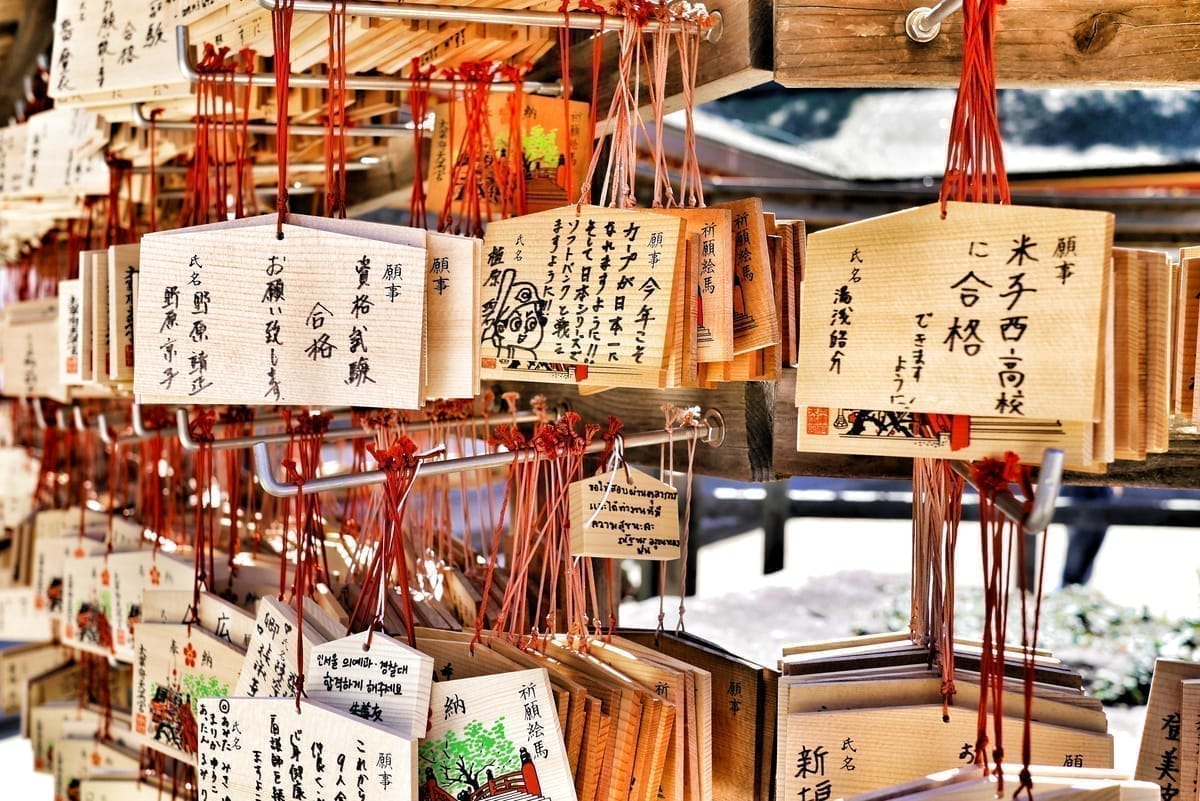
Walk through any Japanese shrine precinct and you’ll find a wall, rack, or dedicated structure covered in small wooden tablets — each one inscribed with someone’s handwritten wish. Exam success. Recovery from illness. A safe delivery. A person they love.
These tablets are called ema (絵馬). The building that holds them is the ema-do (絵馬堂) — the votive tablet hall. Together, they represent one of the oldest unbroken traditions of personal prayer in Japan.
”Picture Horse”: The Name Means What It Says
The kanji in ema — 絵 (picture) and 馬 (horse) — aren’t decorative. The original offering wasn’t a wooden tablet at all. It was a living horse.
In ancient Japan, horses were sacred. They were understood as vehicles of the divine — the mounts on which kami traversed the heavens, conjured storms, and brought rain. For an agricultural people entirely dependent on seasonal rainfall, this was not a metaphor. Rain meant crops; crops meant survival.
When a community prayed for rain or protection from drought, the most powerful offering available was the horse itself. Ancient records, including entries from the Nara period (8th century), describe the practice explicitly: black horses were offered when praying for rain; white horses when praying for clear weather. Shrines with strong associations to water — Niukawakami Shrine in Nara Prefecture, Kifune Shrine in Kyoto — maintained dedicated stabling areas (baba) for these living offerings.
Horses, however, were expensive. Not every petitioner could afford one. So they found substitutes.
From Clay to Board
The substitution began early. Archaeological excavations at Asuka-period (7th-century) sites have uncovered clay horses (tsuchima) — small fired-clay figures placed at sacred locations as stand-ins for the real animal. Wooden horses followed in the Nara period.
The flat wooden board painted with a horse image — the form we recognize today — is believed to have become established by the Heian period (10th–12th centuries). An 11th-century source mentions “standing board horses” (itatachima) as offerings. By the Kamakura period (13th century), the practice had spread from the aristocracy and warrior class to commoners, and the production of ema became widespread.
The Evolving Design
Early ema depicted only horses. The distinctive five-sided shape — with a pointed peak — is thought to represent the roofline of a stable (umaya), the building associated with the animals that ema replaced.
Over time, the imagery expanded.
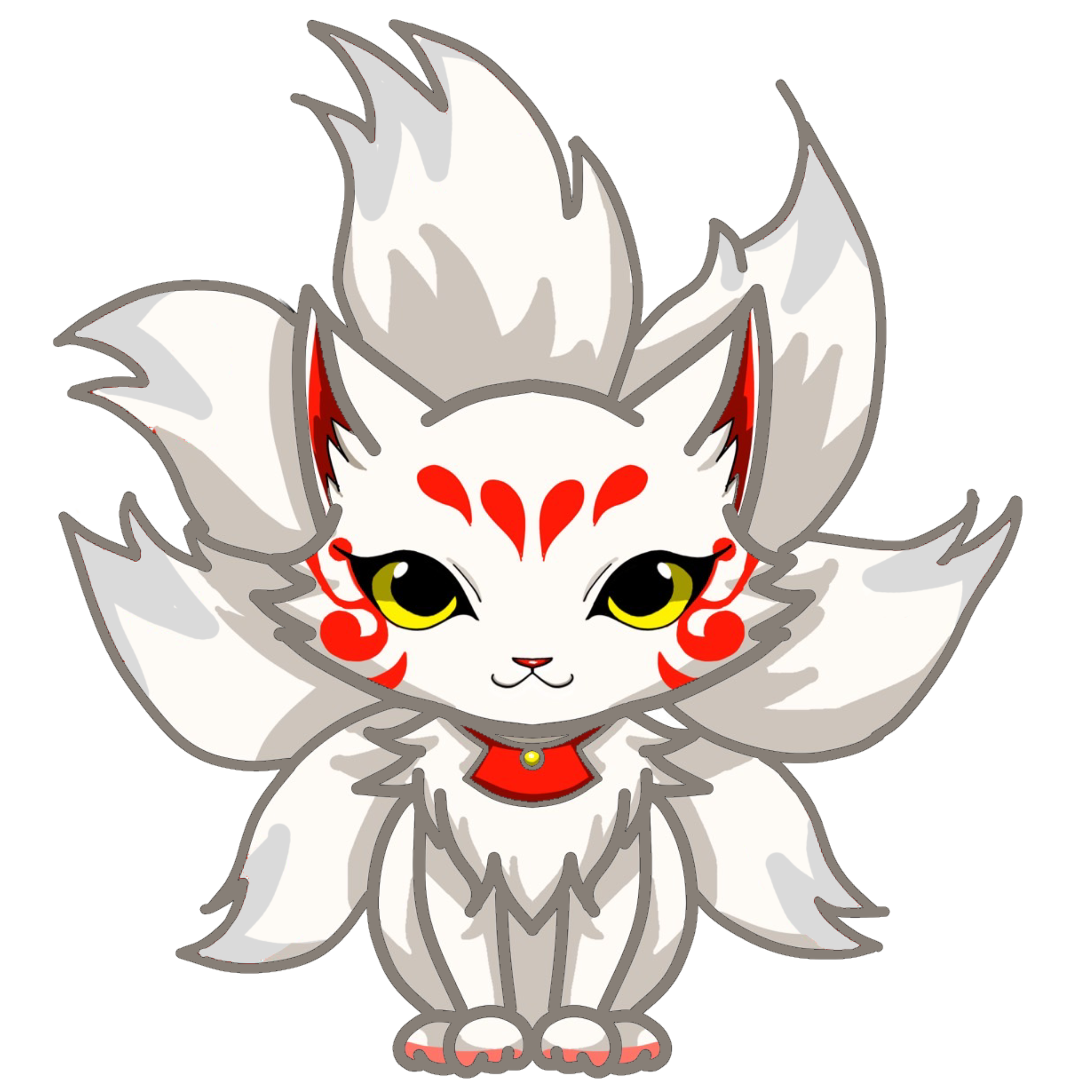
From the medieval period onward, ema designs began to reflect the specific character of individual shrines and their enshrined kami. Inari shrines featured foxes. Tenmangu shrines (dedicated to Sugawara no Michizane, the deified scholar) featured oxen or plum blossoms — both associated with his legend. Shrines known for matchmaking depicted cranes, hearts, or tangled thread.
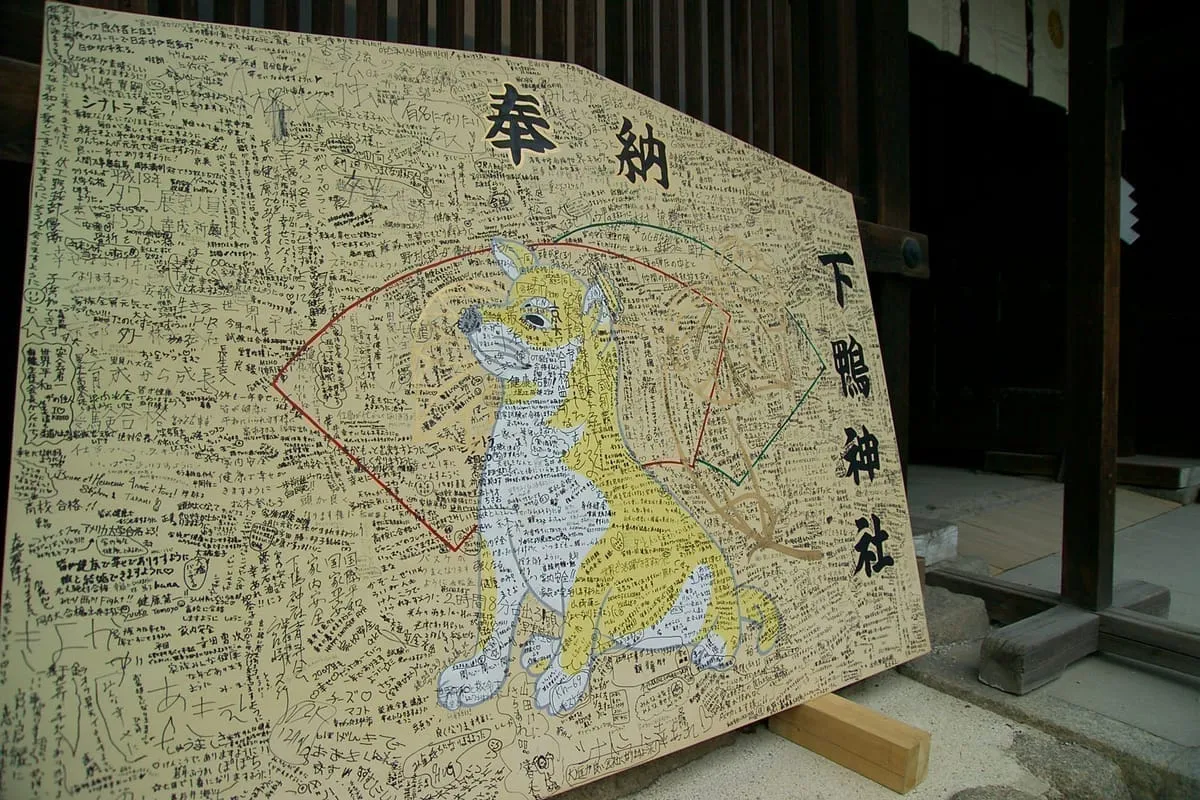
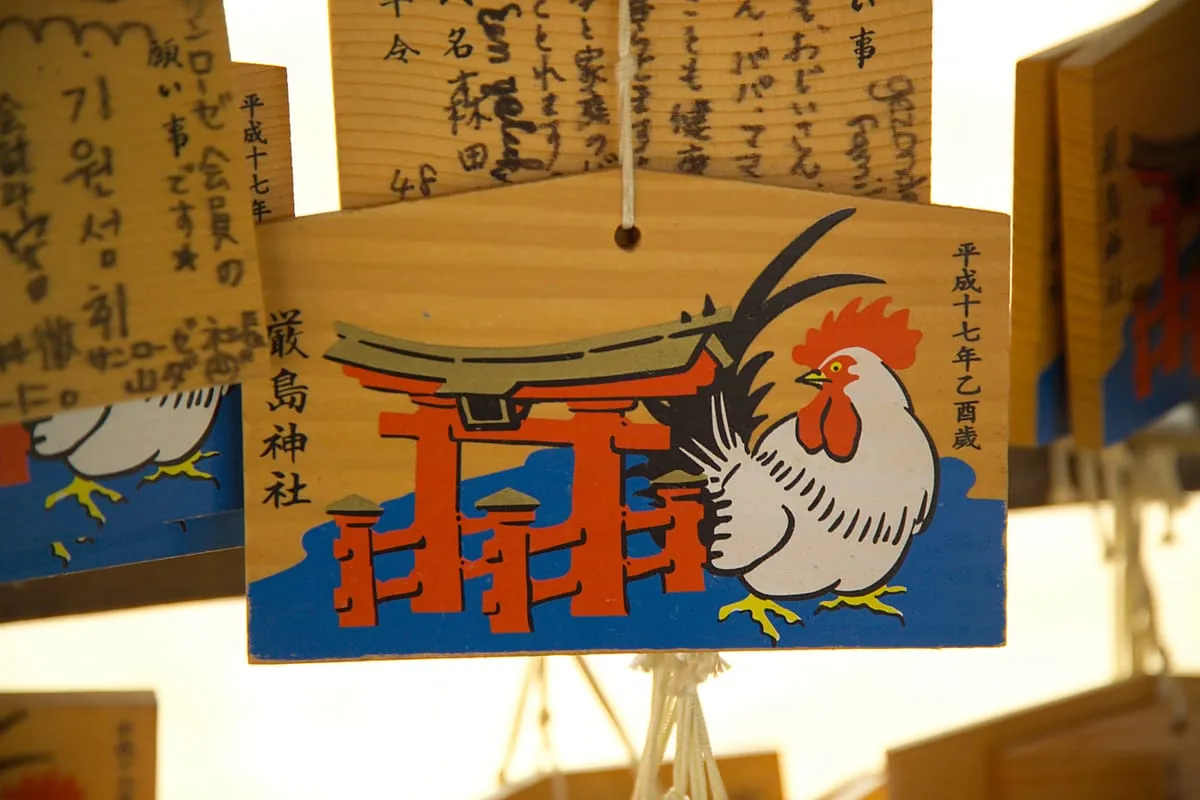
The annual zodiac cycle created a natural rotation of ema designs: each New Year, shrines release ema depicting that year’s animal. Collecting the zodiac ema across twelve years — or hunting for the current year’s animal at different shrines — became its own practice within shrine culture.
Large Ema: Votive Paintings
Separate from the small personal tablets is a tradition of monumental votive offerings: large ema (ōema, 大絵馬).
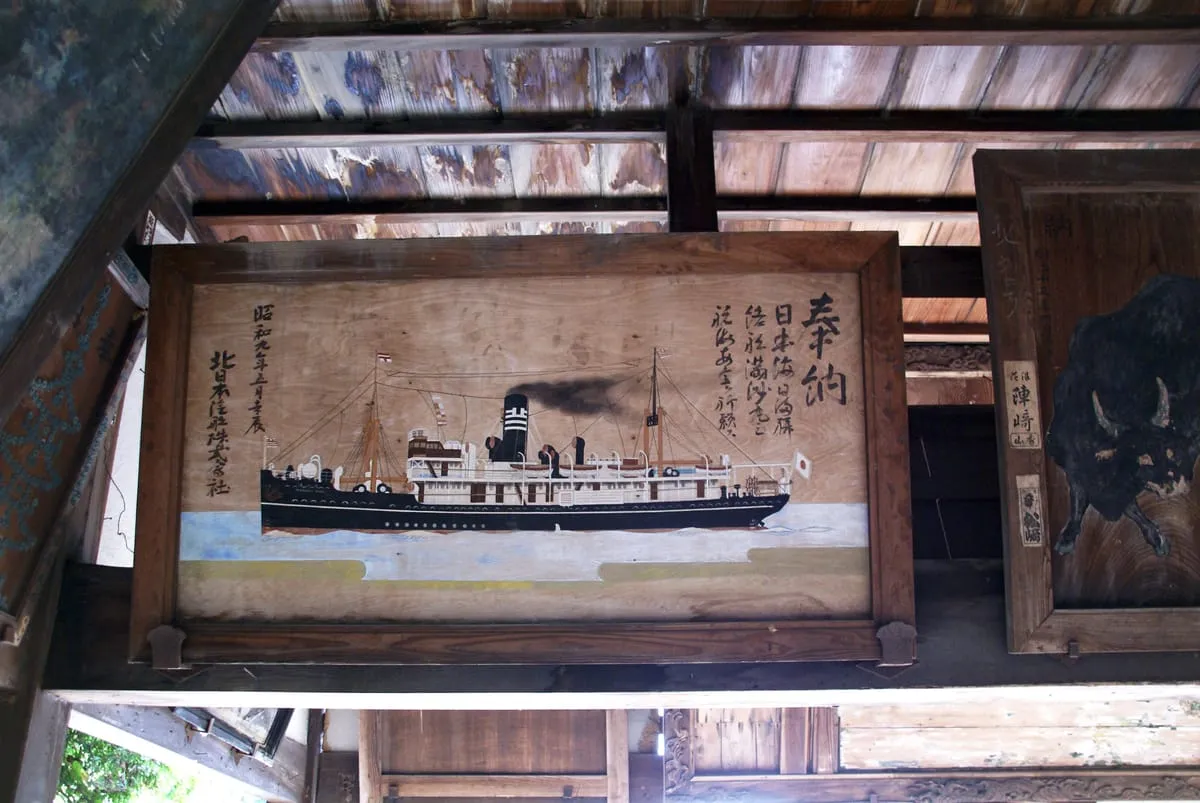
These are full paintings — on wood panels, silk, or paper — donated to shrines as acts of gratitude or petition by individuals, guilds, and communities of means. A medieval warlord thanking the gods for a victory in battle. A merchant family offering a painted horse following a son’s recovery from illness. A neighborhood association commissioning a scene from local mythology.
Some of these works are significant as art objects. Shrines such as Fujisan Hongu Sengen Taisha in Shizuoka and Kibitsu Shrine in Okayama hold collections of large ema spanning several centuries, representing the work of regional painters working across generations. Periodic exhibitions of shrine ema collections are a distinct category of Japanese cultural events.
The Ema-do: An Architectural Form
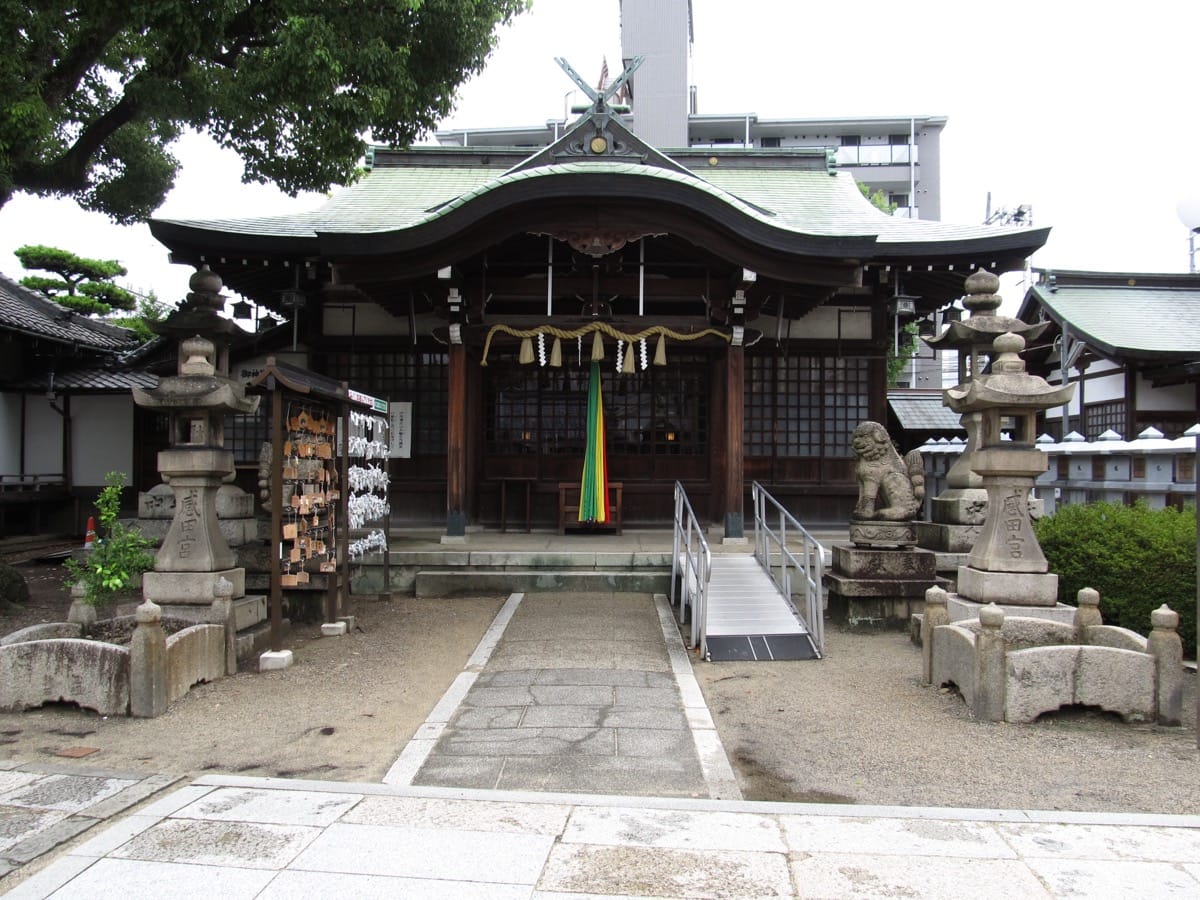
The building that houses ema — particularly large ema — is the ema-do (絵馬堂), also called ema-den (絵馬殿).
Two main types exist.
Open-Frame Structures
The most common type is an open timber colonnade or shed — roofed but open on the sides — with horizontal rails from which small ema can be hung. This allows visitors to read the wishes of others and add their own. It offers partial protection from rain and direct sun without restricting access.
At smaller shrines, this may be nothing more than a simple wooden rack beside the main hall. At larger shrines, the ema-do can be a substantial timber structure, architecturally harmonized with the other shrine buildings.
Enclosed Storage Halls
Where large ema or fragile votive works are stored, enclosed buildings are used — often constructed with thick walls or earthen warehouse (kura) techniques to protect against humidity, insects, and fire.
These buildings resemble small storehouses or treasuries. Inside, the walls may be covered floor-to-ceiling with painted panels, creating an effect closer to a gallery than a shrine structure.
How to Write and Hang an Ema
For visitors new to the practice:
- Obtain an ema — available at the shamusho (shrine office) or juyujo (authorized goods counter). Typical price: ¥300–¥1,000. The front face usually carries a printed design; the back is left blank.
- Write your wish — use a permanent marker on the blank side. Include your name and address if you like, but neither is required. Many people write anonymously.
- Hang it — place it on the rack in the ema-do or on designated pegs near the shrine’s main hall.
The grammatical form of the wish varies. Most people write in the optative mood: “May I pass my entrance exams.” Some write as declaration: “I will pass.” Neither form is prescribed by doctrine.
Ema and Goshuin
Ema and goshuin are often issued from the same counter at the same shrine — and the aesthetic sensibility that goes into one tends to show up in the other. A shrine with beautifully designed zodiac ema typically produces beautifully designed seasonal goshuin.
Some shrines explicitly tie the two: during examination season (autumn through winter), shrines associated with scholarship — Yushima Tenmangu in Tokyo, Kitano Tenmangu in Kyoto — issue exam-prayer ema alongside corresponding goshuin. The ema expresses the wish; the goshuin marks the pilgrimage.
If you visit a shrine during a major seasonal ceremony, check both the ema-do and the goshuin counter. The limited designs often echo each other, and the combination makes for a more complete record of the visit.
Related Articles
- Shrine Layout: A Map of the Sacred Precinct
- Sessha and Massha: The Small Shrines Within the Shrine
- Goshuin as Art: The Collector’s Eye
Image Credits
- Ema at the ema-do of Kehi-jingu Shrine, Tsuruga, Fukui: 663highland, CC BY-SA 3.0, via Wikimedia Commons
- New Year jumbo ema at Shimogamo Shrine, Kyoto: Fg2, Public Domain, via Wikimedia Commons
- Ema at Itsukushima Shrine, Miyajima, Hiroshima: Fg2, Public Domain, via Wikimedia Commons