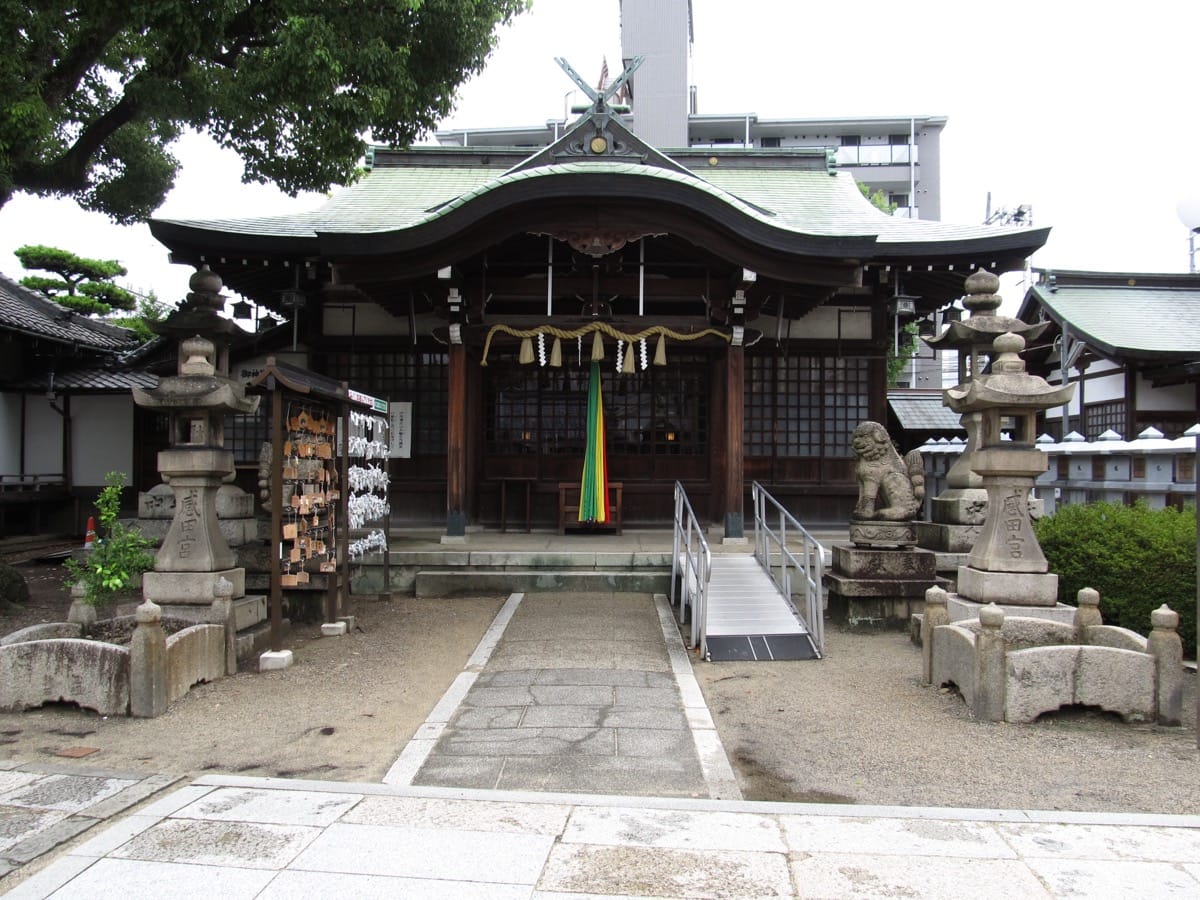
Walking through the grounds of a Japanese shrine, you may notice a roofed stage-like structure standing apart from the main hall. Its pillars frame open air on all sides. A wooden sign above reads kaguraden (神楽殿). Most visitors pass it without stopping.
This building is worth a second look. The kaguraden is where music and dance are offered to the gods — not for human entertainment, but as a form of devotion that predates Japan’s written history.
What Is a Kaguraden?
A kaguraden (神楽殿) is a purpose-built structure for the performance of kagura (神楽) — the sacred music, song, and dance of Shinto. The name combines kagura with den (殿), the same suffix used for main shrine halls, signaling that this space has ritual significance on par with the shrine’s primary buildings.
Within the shrine precinct, roles are distributed this way: the honden (本殿) is where the deity resides; the haiden (拝殿) is where worshippers pray; the kaguraden is where the arts are offered to the gods.
The building goes by different names at different shrines: maidono (舞殿, “dance hall”), kagurashō (神楽所), or simply butai (舞台, “stage”). The function is the same regardless of name.
Architecture of the Kaguraden
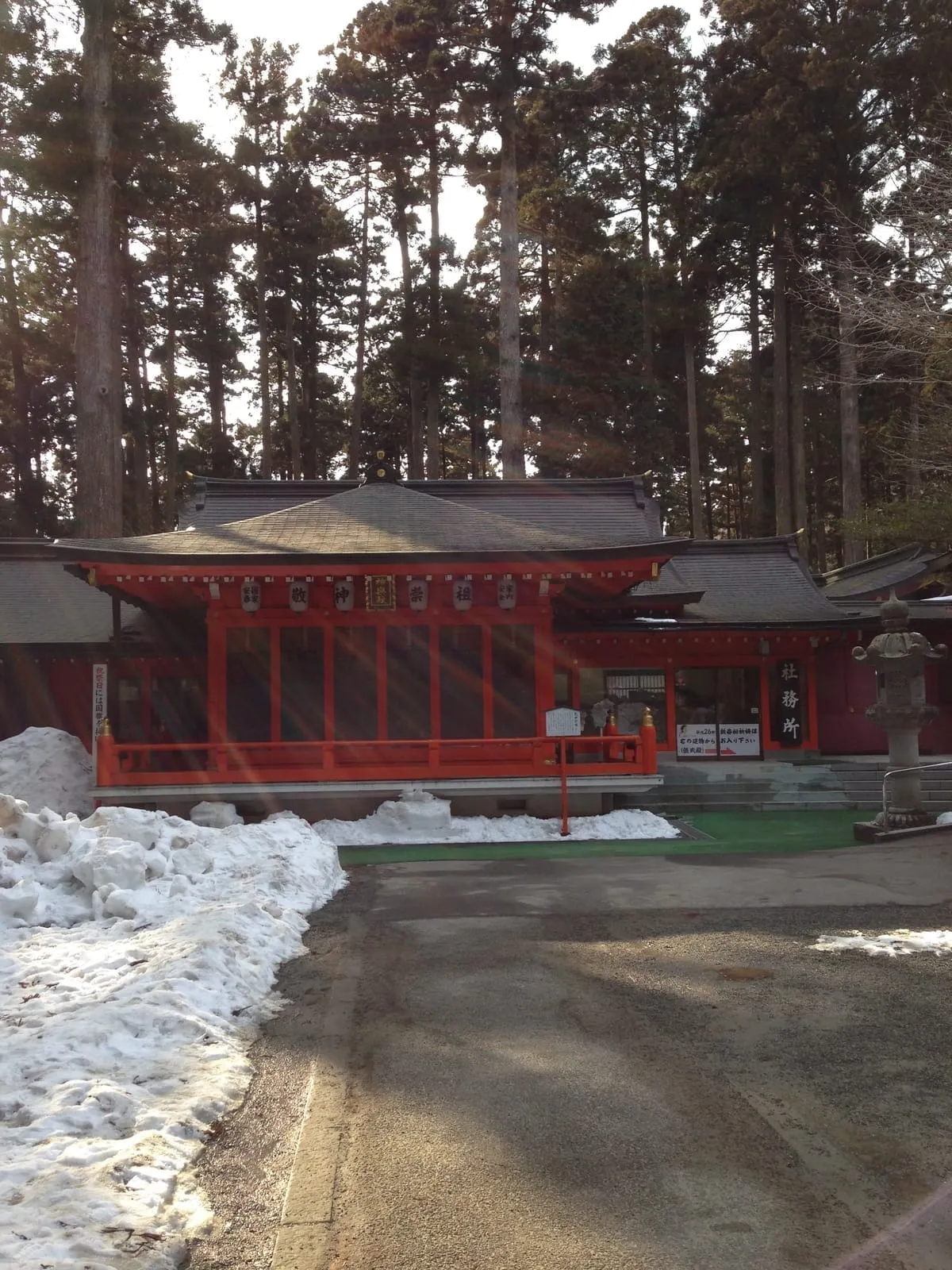
The kaguraden’s architecture follows directly from its function: a space where performers move, musicians play, and onlookers — human and divine — can witness without obstruction.
The Open Structure
The defining feature of a kaguraden is its open, wall-less design. The roof is supported by pillars, but the sides are left open to the air. This arrangement allows the performance to be seen from all directions and ensures the sound of instruments and percussion carries through the precinct.
The stage floor is raised slightly above ground level — enough to frame the performance visually, and enough to create resonance when dancers stamp their feet.
Roof and Decoration
- Roof style: Commonly hip-and-gable (irimoya-zukuri) or hip roof (yosemune-zukuri)
- Roof ornaments: The forked finials (chigi) and log-shaped ridgepole ornaments (katsuogi) typical of main shrine halls are less pronounced or absent on kaguraden
- Scale: Varies widely — from a simple platform of a few square meters at a small neighborhood shrine to the vast hall at Izumo Taisha, which spans hundreds of square meters
Kaguraden vs. Haiden vs. Heiden
These three building types are sometimes confused:
| Building | Primary Function |
|---|---|
| Kaguraden (神楽殿) | Performance of kagura and sacred arts |
| Haiden (拝殿) | Worship hall where visitors pray |
| Heiden (幣殿) | Offering hall connecting honden and haiden; site of ritual offerings |
In practice, many shrines use the kaguraden for gokitō (prayer ceremonies and blessings) as well, effectively combining the kaguraden with a prayer reception hall.
Types of Kagura
Kagura divides into two broad streams: mikagura (御神楽, court kagura) and satokagura (里神楽, folk kagura).
Mikagura — Court Kagura
The original, aristocratic form performed in the imperial court and at government-sponsored shrines. The style has been preserved largely unchanged since the Heian period (794–1185). The Imperial Household still performs mikagura each December at the Imperial Palace. Ordinary visitors rarely encounter it directly.
Satokagura — Folk Kagura
The form that developed at local shrines across Japan, absorbing regional folk traditions, mythology, and theatrical elements over centuries. This is the kagura you are most likely to see at shrine festivals.
| Type | Characteristics |
|---|---|
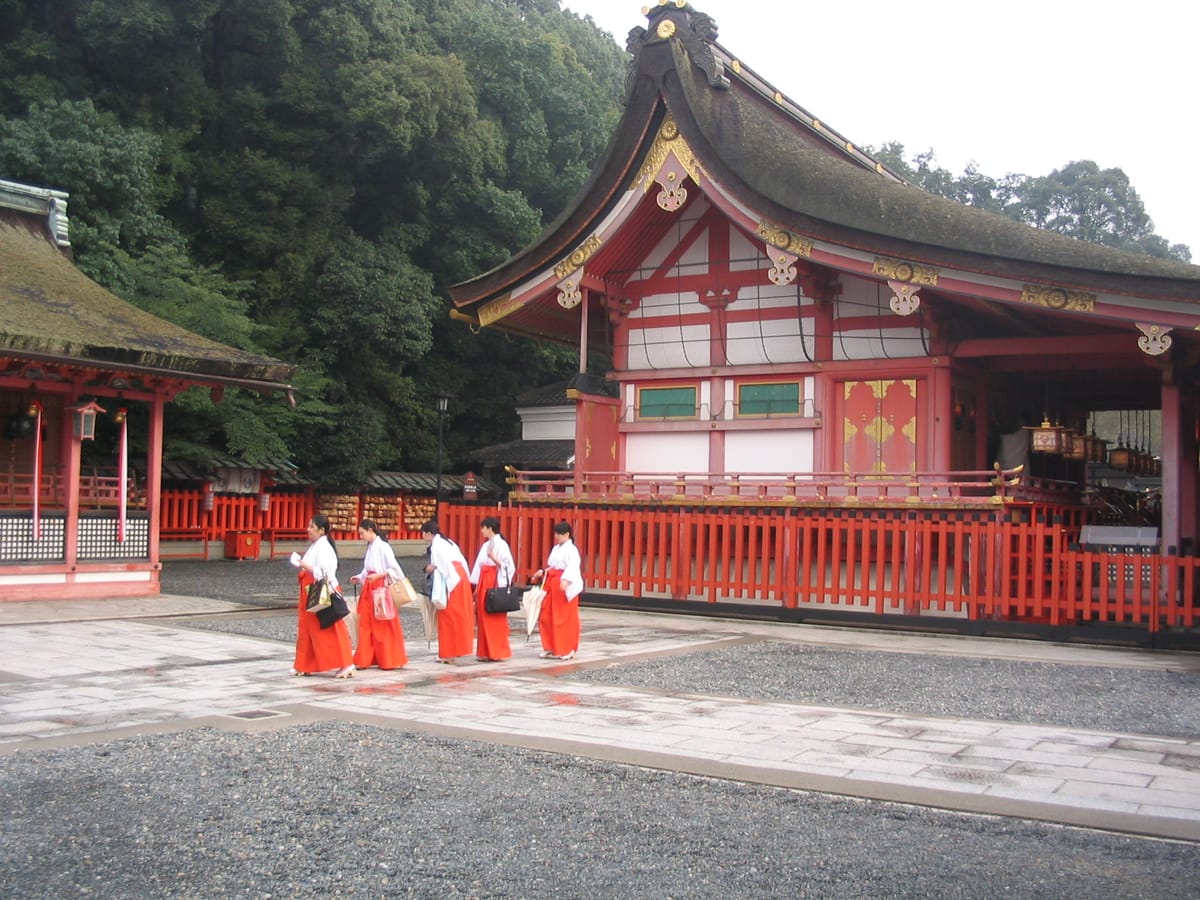
| Miko kagura (巫女神楽) | Performed by shrine maidens (miko) using fans, bells, or ritual wands |
| Izumo kagura (出雲神楽) | From Shimane Prefecture; centered on mythological narratives |
| Iwami kagura (石見神楽) | From western Shimane; known for elaborate costumes, masks, and fast tempo |
| Iwato kagura (岩戸神楽) | Depicts the myth of Amaterasu hiding in the cave; found across Japan in different local versions |
| Yutate kagura (湯立神楽) | Combined with a purification rite involving boiling water |
Urayasu no Mai
One of the most widely performed forms of miko kagura today is Urayasu no Mai (浦安の舞, “Dance of the Peaceful Shore”). Despite looking ancient, it was composed in 1940 based on a poem by Emperor Shōwa.
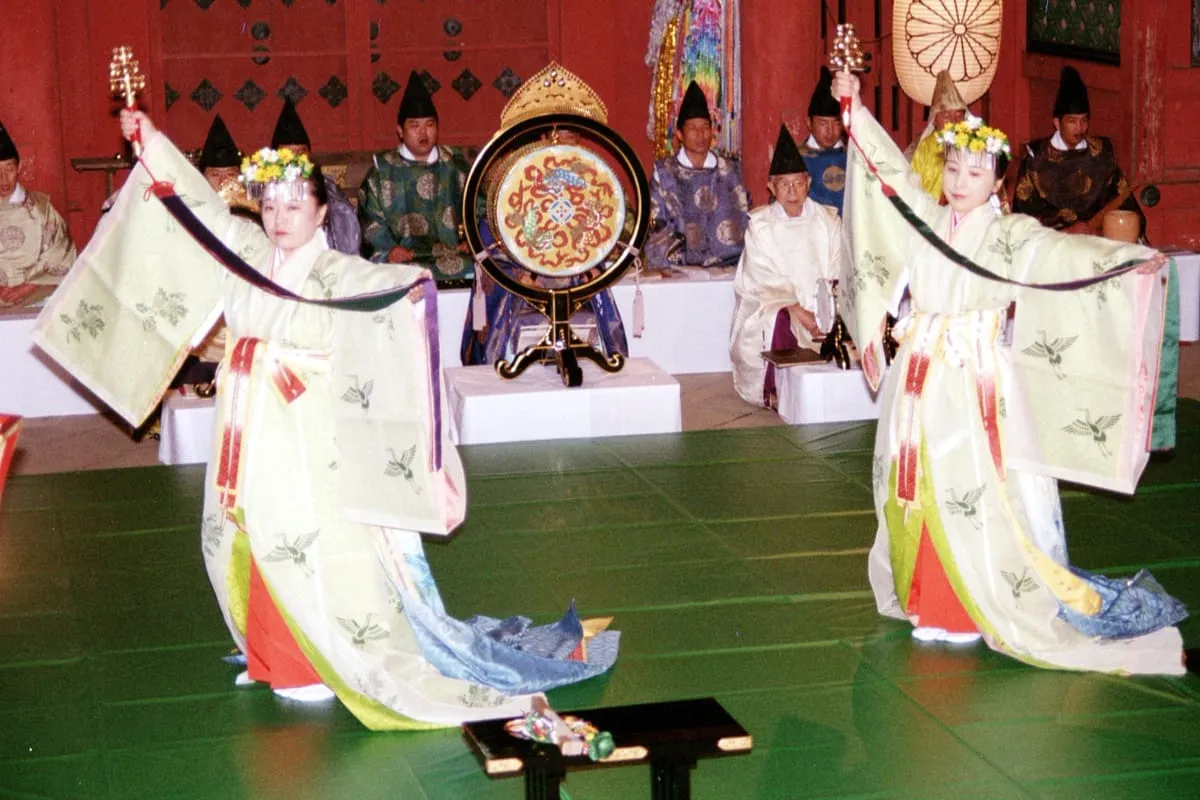
The dance is performed in two sections: a fan dance and a bell-wand dance. Its choreography was standardized nationwide and is now performed at New Year and other major festivals at shrines across Japan. If you visit a shrine during a festival period, there is a good chance the miko performance you see is Urayasu no Mai.
Notable Kaguraden
Izumo Taisha Kaguraden (Shimane)
The kaguraden of Izumo Taisha is arguably Japan’s most recognizable example of the building type — not for its architecture, but for the enormous shimenawa (sacred rope) that hangs across its front façade: approximately 13.5 meters long and weighing around 5.2 tons.
The building itself was reconstructed in 1981 and uses an irimoya roof in a grand, horizontal composition quite different from the main shrine’s ancient taisha-zukuri style. In addition to kagura performances, the hall hosts shrine weddings and formal ceremonies.
Gekū and Naikū Kaguraden at Ise Jingū (Mie)
Both the Outer Shrine (Gekū) and Inner Shrine (Naikū) of Ise Jingū maintain kaguraden buildings where visitors can commission hōnō kagura — formal kagura offered on their behalf. Several tiers are available, each with different repertoires of sacred music and dance. The experience is conducted by priests and shrine maidens in full formal dress and takes place inside the kaguraden building, which is otherwise closed to the public.
Kasuga Taisha — Dance and Music at the Naoraiden (Nara)
Kasuga Taisha’s ritual hall (naoraiden) serves a function similar to a kaguraden during major festivals. The shrine’s annual Kasuga Festival (春日祭, March) and the December Kasuga Wakamiya On-Matsuri both feature performances of bugaku (court dance) and gagaku (court music) on the outdoor stage. These are among the oldest continuous performing arts traditions in Japan.
Visiting and Participating
Etiquette
When passing in front of a kaguraden, a brief bow is appropriate. The space is considered sacred, and the building may be actively used for prayers or preparations even when no performance is underway.
Commissioning a Kagura Offering
At most major shrines, visitors can commission a kagura offering on behalf of themselves, their family, or a specific intention:
- Large shrines: Dedicated reception windows, multiple performance tiers, printed prayer slips presented to the altar
- Smaller shrines: Kagura offerings typically available during major festivals only
- Cost: Generally ¥5,000–¥30,000+ depending on the shrine and the scale of the ceremony
The experience is often memorable for visitors unfamiliar with Shinto ritual — a chance to step into a ceremony rather than simply observe a building.
Kagura and Goshuin
Some shrines incorporate kagura imagery — a miko figure, a ritual bell (suzu), a ceremonial fan (ōgi) — into their goshuin designs. During festivals when kagura is performed, special limited-edition goshuin with seasonal or event-specific designs are sometimes available. Check the shrine’s official social media before visiting if this interests you.
Reading a Kaguraden
Once you start noticing kaguraden, you will find them at nearly every shrine you visit. How much attention to pay them:
- Orientation: Does the open front face the honden, or the main approach? The former signals god-centric; the latter signals community-centric.
- Stage height: Higher platforms emphasize the sacred nature of the performance; lower platforms invite closer participation.
- Ropes and curtains: A shimenawa or formal curtain (tobari) across the entrance signals the building is actively used for ritual, not merely decorative.
- Modern additions: Lighting rigs and sound equipment on an otherwise traditional structure are common — kagura is a living practice, not a museum piece.
The kaguraden is not background architecture. It marks the point where the sacred and the sensory meet — where worship takes the form of movement, sound, and breath.
Related Articles
- A Complete Map of Shrine Grounds: Buildings, Names, and Functions
- Shimenawa and Architecture: From Izumo’s Giant Rope to Home Decorations
- Sessha and Massha: The Smaller Shrines Within a Shrine
Image Credits
- Kaguraden at Hakone Shrine: そらみみ (Soramimi), CC BY-SA 3.0, via Wikimedia Commons
- Urayasu no Mai — miko kagura: Mikomaid, CC BY-SA 3.0, via Wikimedia Commons