The moment you pass through a torii gate, a path appears before you. That path — the sandō (参道) — carries you from the ordinary world into sacred space. Long or short, straight or bent, gravel or stone: every aspect of the sandō is a design decision, not an accident.
Understanding sandō design changes how you walk — and what you feel when you arrive.
What Is a Sandō?
Sandō (参道) literally means “approach road” — the path connecting the shrine’s entrance (usually a torii gate) to its main hall. San (参) means to visit or worship; dō (道) means road.
But a sandō is more than a walkway. In Shinto spatial philosophy, the act of walking the approach is part of the ritual. As you move from the gate inward, you transition from the secular world (ke, 褻) to sacred space (hare, 晴). The sandō makes that transition gradual, conscious, and physical.
Types of Sandō
Straight Approach (Choku-sandō, 直参道)
The most iconic form: a single unbroken line from the torii to the main hall.
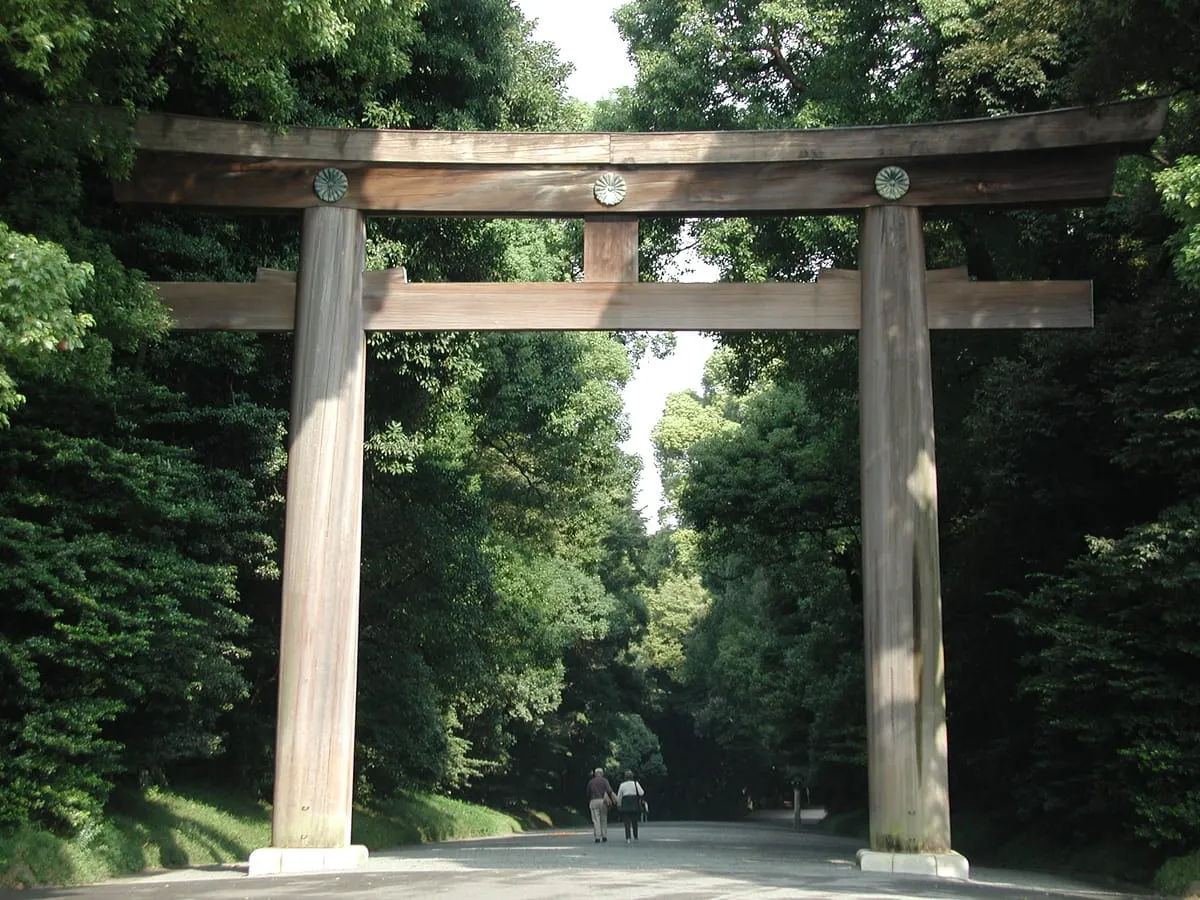
Meiji Jingu in Tokyo exemplifies the straight sandō at its most majestic. The approach stretches approximately 700 meters through a dense urban forest of 100,000 trees donated from across Japan after Emperor Meiji’s death in 1912. The forest — largely artificial — creates a corridor that mutes city sound and invites slowing down.
The straight design reflects a belief that sacred energy (ki, 気) flows in a direct line from the divine to the earthly. A long, unobstructed approach amplifies that connection.
Bent Approach (Ore-magari-sandō, 折れ曲がり参道)
Many shrine paths change direction once or twice between gate and hall. These L-shaped or Z-shaped approaches are not a space constraint — they are intentional.
Two main interpretations exist:
- Deflecting malevolent spirits — evil was believed to travel in straight lines. A bend creates a barrier that keeps harmful forces from penetrating the inner sanctuary.
- Progressive sanctification — each turn marks a threshold. The pilgrim’s mindset shifts at each bend, arriving at the hall with attention fully gathered.
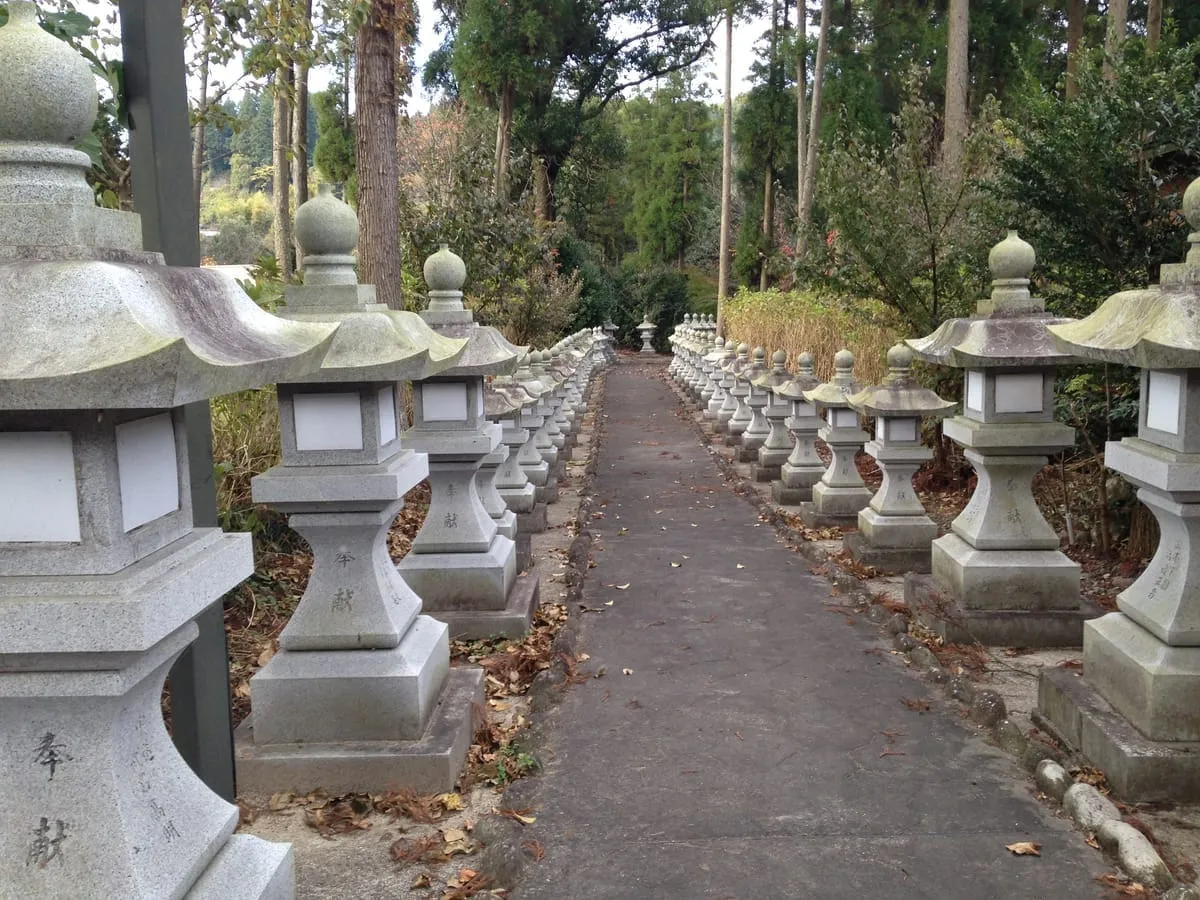
Kasuga Taisha in Nara uses a gently curving approach lined with hundreds of stone lanterns, many donated centuries ago by samurai clans. The gradual turn means you never see the main hall until you are almost upon it — a reveal that lands differently than a long straight approach.
Raised Central Path (Dankazura, 段葛)
At Tsurugaoka Hachimangu in Kamakura, a raised stone-paved path runs for 500 meters down the center of a broad boulevard — elevated above the surrounding road level, flanked by seasonal plantings.
Legend attributes the dankazura’s construction to Minamoto no Yoritomo (the shogun who founded Kamakura) around 1182 CE, built in prayer for his wife Masako’s safe delivery. The symbolism of walking on elevated ground — literally closer to the sky — gives the approach a processional weight that flat paths lack.
In spring, the dankazura becomes a tunnel of cherry blossoms. The combination of architecture and nature is precisely why seasonal goshuin featuring the cherry-lined path become the most sought-after at the shrine.
Path Materials: What You Walk On Matters
Shiratama-jari (White Gravel, 玉砂利)
The most common sandō surface. Fine, rounded white or pale grey stones underfoot.
The crunch of gravel underfoot is not incidental noise — it slows you down, announces your presence to the kami, and connects to the Shinto concept of misogi (禊), ritual purification. Walking on white gravel is itself a form of purification.
Ishidatami (Stone Paving, 石畳)
Cut stone fitted into a paved surface. Associated with higher-ranking shrines and major pilgrimage routes, including the Kumano Kodō.
Stone paving required significant resources to install and maintain, making it historically a marker of a shrine’s status and patronage.
Soil and Earthen Paths
Mountain shrines and ancient sacred sites often preserve bare earth or root-laced paths. These approach paths carry a different quality — the irregularity of the terrain demands physical attention, making the walk itself a form of ascetic practice.
Path Width and Shrine Rank
The width of a sandō has historically correlated with shrine rank:
| Path Width | General Rank | Examples |
|---|---|---|
| 10 m or more | National shrines (Kanpei-taisha) | Meiji Jingu, Kashihara Jingu |
| 5–10 m | Regional major shrines | Tsurugaoka Hachimangu, Sumiyoshi Taisha |
| 1–5 m | Village and district shrines | Local tutelary shrines |
| Under 1 m | Sub-shrines (sessha/massha) | Precincts within larger shrines |
Mountain terrain often overrides rank — some of Japan’s oldest and highest-status shrines have narrow approaches simply because the terrain allows nothing wider.
The Three-Lane Sandō
At larger shrines, the sandō is implicitly — or explicitly — divided into three lanes:
- Seichu (正中) — the exact center line. This is the path of the kami. Visitors are expected to walk to the left or right of it.
- Visitor lanes — the left and right sides, used by worshippers.
- Ritual paths — some shrines maintain separate routes used by priests during ceremonies.
This is why you will see observant visitors step to one side before passing through a torii gate, rather than walking through the center. The gesture acknowledges the kami’s path without being instructed to.
Sandō and Goshuin: The Walk Before the Seal
For goshuin collectors, the sandō is not a preliminary step before the real purpose — it is part of the purpose.
Goshuin are granted as a record of worship (参拝の証), not a souvenir. The walk that precedes it matters. A long gravel approach, a lantern-lined curve, a dankazura rising toward the main hall — these shape the quality of attention you bring to the hall.
Shrine designers know this. That is why the sandō’s design is reflected in goshuin motifs at many prominent shrines:
- Meiji Jingu — the great torii gate silhouette appears in its goshuin
- Kasuga Taisha — stone lanterns and deer appear in seasonal designs
- Tsurugaoka Hachimangu — cherry-lined dankazura in spring limited editions
When the goshuin you receive matches the image of the path you just walked, the seal becomes a record of place — not just an ink stamp.
How to Read a Sandō on Your Next Visit
- Pause at the gate — before stepping through, look down the full length of the approach. How far does it run? Does it bend?
- Feel the surface — gravel, stone, or soil? Which foot moves more carefully?
- Walk to one side — avoid the center path as you enter.
- Stop at each bend — if the path turns, pause at the turn. Look back at where you came from. The world you left is still visible there.
- Find the reveal — the moment the main hall first comes into view. Straight paths show it from the gate. Bent paths hide it until the last moment. The design is calculating that experience.
Related Articles
- Shrine Precinct Map: The Names and Roles of Every Building
- Torii Gate Types: How to Tell a Myōjin from a Shinmei Torii
Image Credits
- Entrance torii at Meiji Jingu, Tokyo: Teddy Yoshida, Public Domain, via Wikimedia Commons
- Sandō and stone lanterns at Arashiyama Taki Shrine: そらみみ (Soramimi), CC BY-SA 4.0, via Wikimedia Commons