
Traveling in Japan, you’ll see shrines and temples everywhere. But which is which? And do you pray the same way at both?
Here’s the surprising part: shrines and temples were only separated about 150 years ago. For over a millennium, they were fused together — gods and buddhas sharing the same buildings, worshipped by the same people. Then the Meiji government ordered them split apart.
This guide covers the practical differences first — how to tell them apart, how to pray correctly — then dives into the fascinating history of why they became separate at all.
At a Glance: Shrines vs Temples
| Shrine (神社 jinja) | Temple (お寺 otera) | |
|---|---|---|
| Religion | Shinto | Buddhism |
| Enshrines | Kami (gods, nature spirits) | Buddha, bodhisattvas |
| Entrance marker | ⛩ Torii gate | Sanmon gate / Niō-mon |
| Guardian figures | Komainu (lion-dogs) | Niō (muscular guardians) |
| Clergy | Kannushi (priests), miko | Monks, abbots |
| How to pray | Two bows, two claps, one bow | Silent palms together, one bow |
| Graves | Rarely | Yes (temple-parish system) |
| Building names | Honden, haiden, shaden | Hondō, kondō, kōdō |
How to Tell Them Apart
1. Look at the Entrance — Torii vs Sanmon
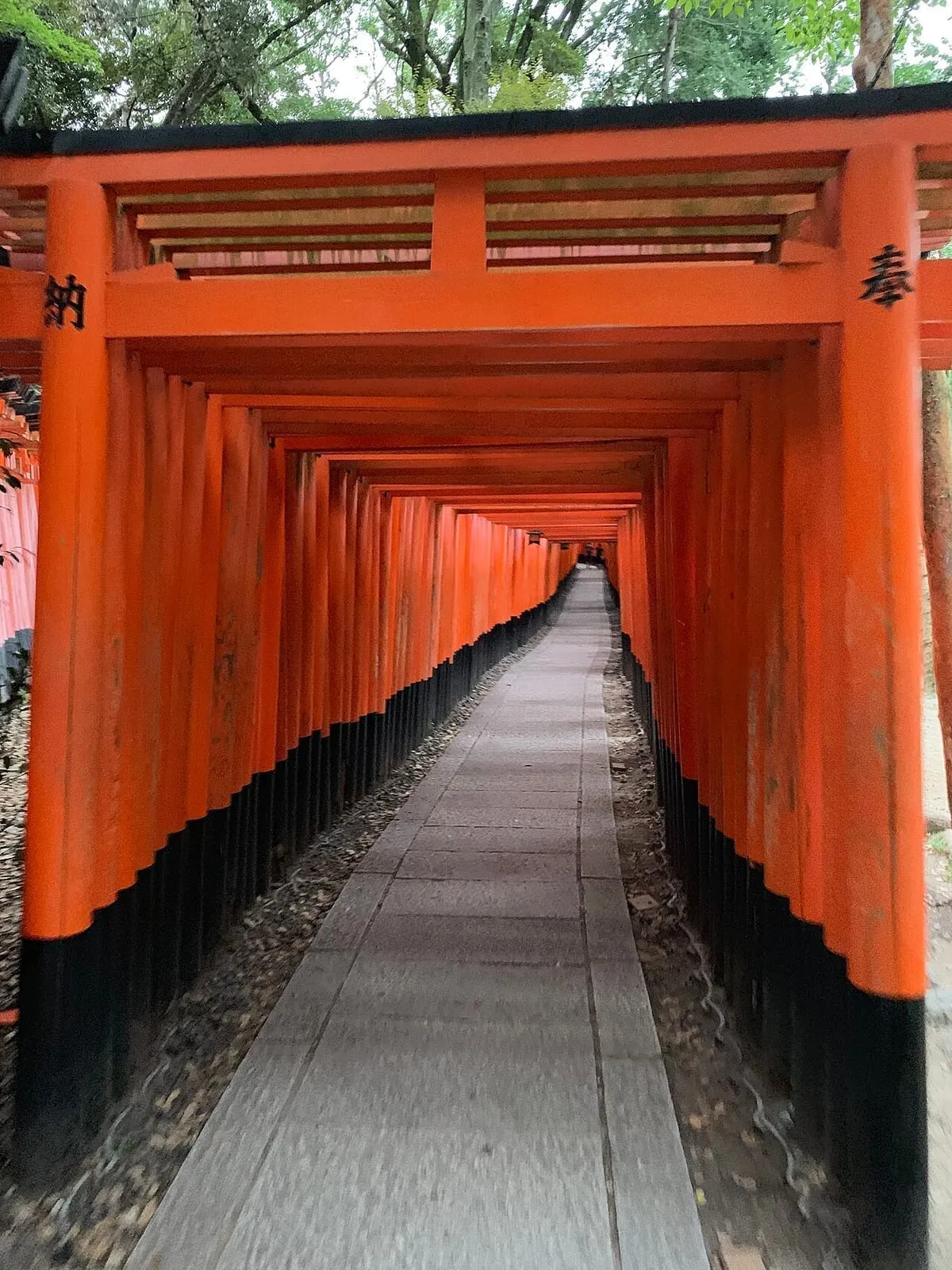
The torii gate is the universal symbol of a shrine. It marks the boundary between the everyday world and sacred space. Most are vermilion, but you’ll also find stone and bare-wood torii.
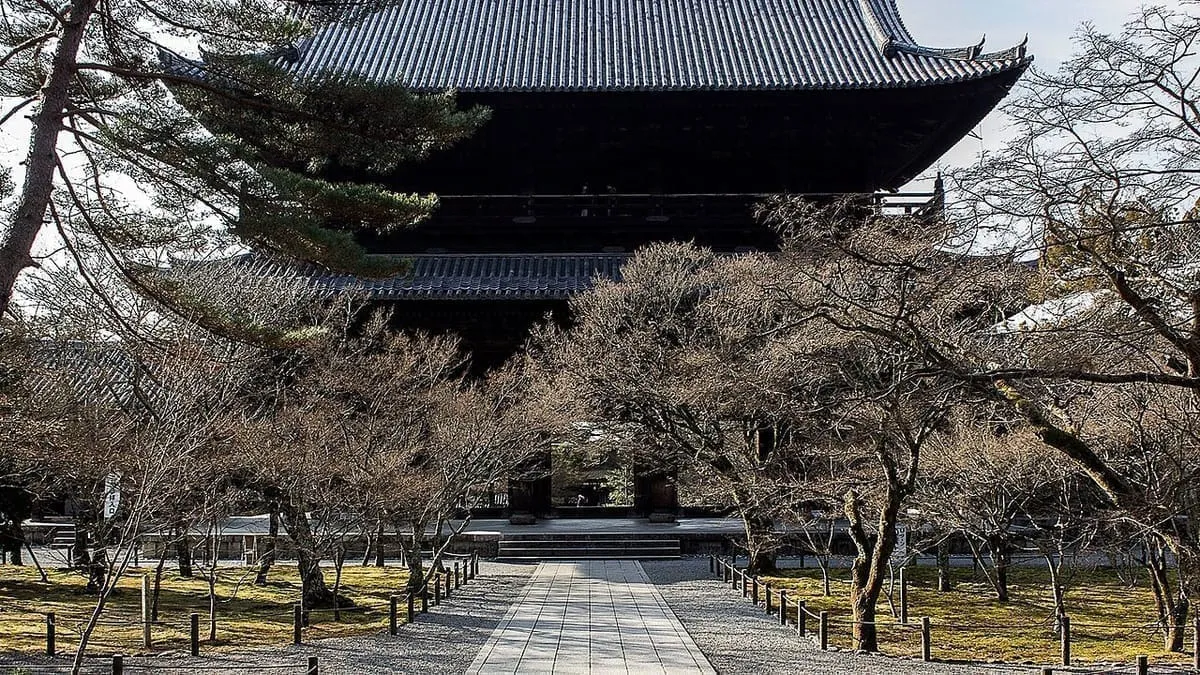
Temples have sanmon gates — imposing, often two-story structures flanked by guardian statues. Passing through a sanmon symbolizes leaving worldly attachments behind and entering the realm of Buddha.
2. Check the Guardians — Komainu vs Niō
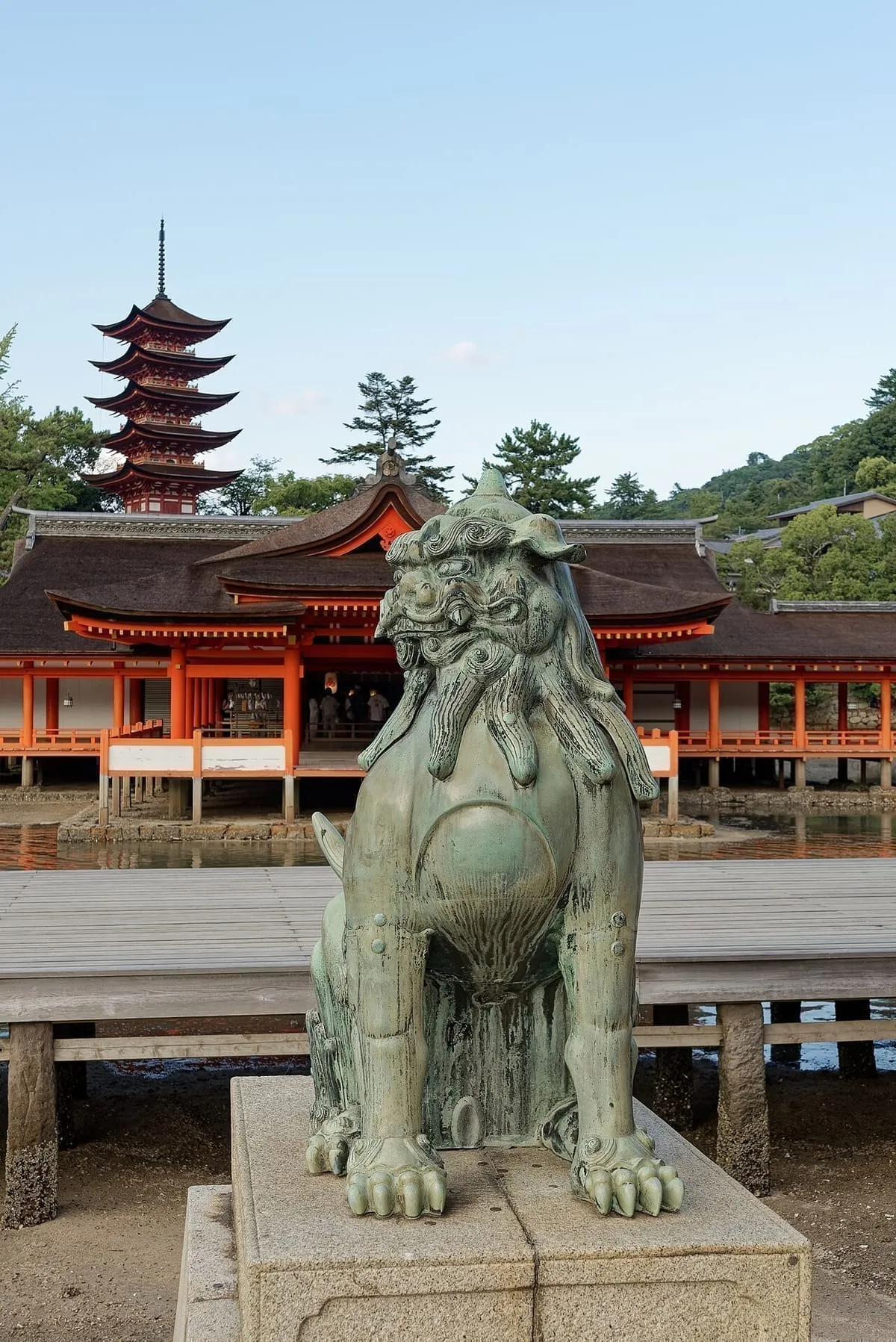
Shrine approaches are guarded by komainu — a pair of lion-dog statues, one with mouth open (“a” — beginning) and one closed (“un” — ending), representing the cycle of the universe. At Inari shrines, foxes stand guard instead. At Tenjin shrines, it’s oxen.
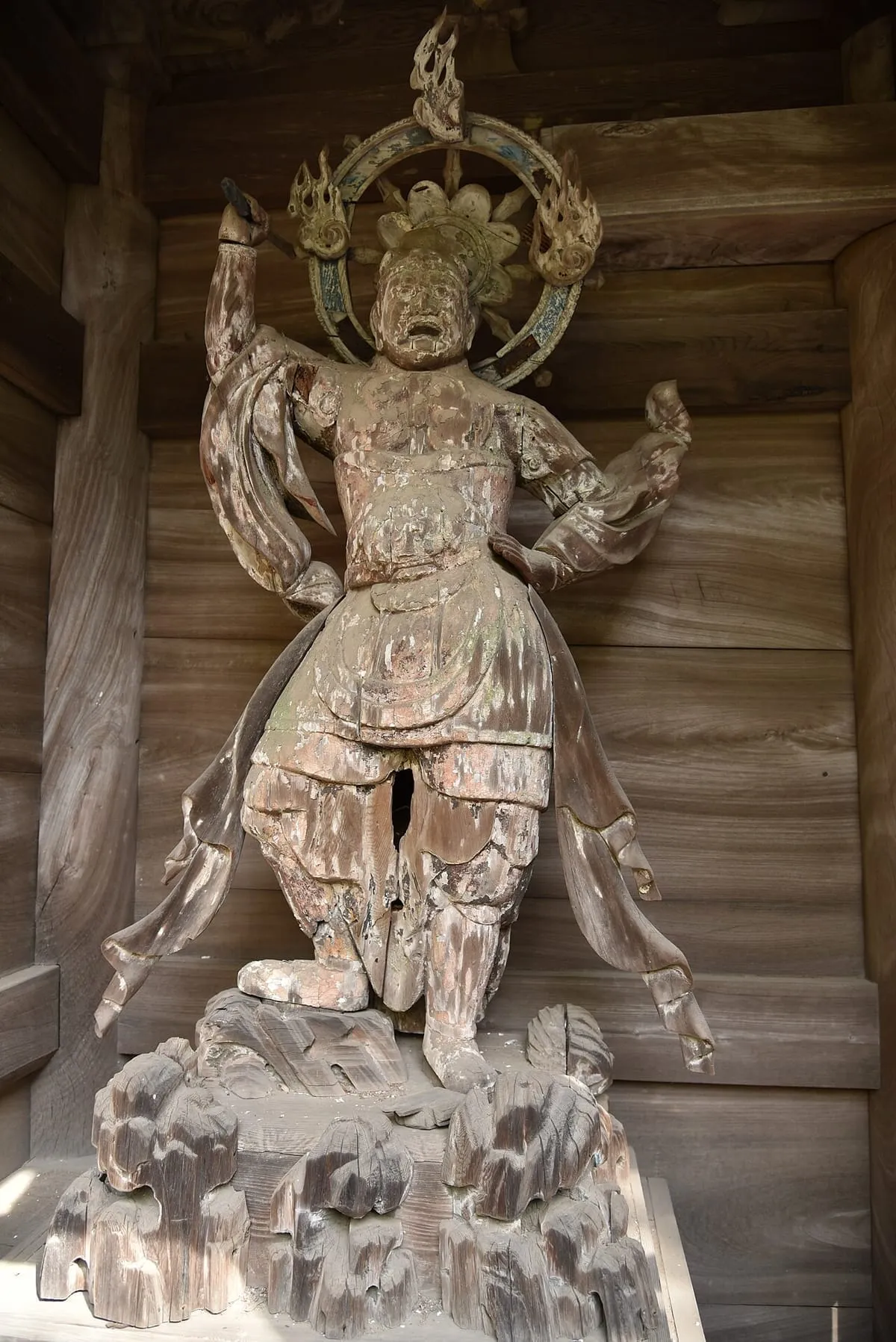
Temples are protected by Niō (Kongō Rikishi) — two towering, muscular figures flanking the gate. They too come in an a-un pair, but where komainu are stoic, Niō are explosive with visible rage and power.
3. The Buildings
- Shrines: Natural wood, minimal decoration. Look for chigi (crossed roof beams) and katsuogi (horizontal roof logs) — unique to Shinto architecture
- Temples: Often ornate with gold leaf, painted details, tile roofs, and Buddhist statuary
4. The Clergy
- Shrine priests (kannushi) and miko: White robes with hakama. Miko wear distinctive red hakama
- Buddhist monks: Robes with kesa (surplice). Often with shaved heads
How to Pray: The Key Difference
At a Shrine — Two Bows, Two Claps, One Bow
- Bow once at the torii before entering
- Walk along the side of the path (the center is the gods’ path)
- Purify hands and mouth at the chōzuya (water pavilion)
- Drop a coin in the offering box and ring the bell
- Bow deeply twice
- Clap your hands twice
- Pray silently
- Bow deeply once
⚠️ Some shrines differ: Izumo Taisha uses four claps; Ise Jingū has eight bows and eight claps.
At a Temple — Silent Palms Together
- Bow once at the sanmon before entering
- Purify hands and mouth if a chōzuya is available
- Light incense or candles if offered
- Drop a coin in the offering box
- Press your palms together silently and bow once
- Pray silently
The biggest difference: no clapping. Clapping at a temple is a common mistake for visitors. Keep it silent — just press your palms together.
Goshuin (Seal Stamps): How They Differ
You can receive goshuin at both shrines and temples, but they have distinct characteristics.
| Shrine goshuin | Temple goshuin | |
|---|---|---|
| Central stamp | Shrine’s crest (shinmon) | Sanskrit seed syllable (bonji) |
| Calligraphy | Shrine name, enshrined deity | Mountain name, temple name, main buddha |
| Style | Clean, regular script (kaisho) | Bold, flowing cursive (gyōsho/sōsho) |
| Common wording | 参拝 (sanpai — “worship”) | 奉拝 (hōhai — “reverent worship”) |
| Cost | ¥300–500 | ¥300–500 |
Temple goshuin can often be collected for each principal image — some temples offer five or more. Pilgrimage circuits like the 33 Kannon temples of western Japan have their own goshuin series. Shrine goshuin increasingly feature seasonal and festival-limited designs.
Why They Became “Different” — 1000 Years of Fusion, 150 Years of Separation
Now for the history. Understanding why shrines and temples were separated makes every visit richer.
Before Buddhism: Gods Without Names
Before the 6th century, the people of Japan worshipped forces without systematic theology. Mountains, rivers, thunder, ancient trees. They marked places of power with sacred ropes and prayed.
Around 538 CE, Buddhist statues and sutras arrived from the Korean kingdom of Baekje. The Soga clan embraced Buddhism; the Mononobe clan fought it. The Soga won.
But the truly fascinating part came after the fighting stopped.
When Gods Asked Buddha for Help
During the Nara period (710–794), records show something extraordinary: kami — Japanese gods — declared they were suffering and needed Buddhist salvation.
This concept, shinjin ridatsu, framed Japan’s gods as unenlightened beings trapped in the cycle of rebirth. To save them, Buddhist temples were built inside shrine grounds — called jingū-ji (shrine-temples).
Around 725, Usa Hachiman Shrine received a Buddhist temple. The deity Hachiman declared himself a protector of Buddhism. A god was converting to Buddhism. Not conquest — two systems creating space for each other.
Honji Suijaku: “Gods Are Disguised Buddhas”
By the Heian period (794–1185), the theology was complete. Honji suijaku: buddhas and bodhisattvas (the true form) manifested as Japanese gods (the local trace) to save Japan’s people.
Amaterasu was an avatar of Dainichi Nyōrai. Hachiman was a manifestation of Amida Buddha.
This made Buddhist statues inside shrines not just acceptable but logical.
- Iwashimizu Hachiman Shrine housed a temple with Yakushi Nyōrai
- The Kumano Sanzan were pilgrimage sites mixing gods and buddhas
- Nikkō Tōshōgū enshrines a gongen — a buddha appearing as a god
Buddha statues in shrines. Torii gates at temples. Normal. For over 1,000 years.
1868: “Separate Them”
The Meiji government issued the shinbutsu bunri rei — the order to separate gods and buddhas. Remove Buddhist elements from shrines. The goal: State Shinto centered on the emperor, requiring Shinto to be “purely indigenous.”
The law ordered separation, not destruction. But destruction is what happened.
Haibutsu Kishaku: What Was Lost
Anti-Buddhist violence swept Japan:
- Kōfuku-ji (Nara): The five-story pagoda was listed for ¥5. Over 2,000 statues destroyed
- Tsurugaoka Hachiman-gū (Kamakura): Pagoda, Niō gate, and tahōtō demolished
- Satsuma Domain: All 1,600+ temples completely abolished
Japan’s religious landscape was irreversibly altered in just a few years.
Traces of the Mix That Remain
A thousand years of fusion couldn’t be fully undone:
- The Seven Lucky Gods: Ebisu (Shinto), Daikokuten and Benzaiten (Buddhist), Fukurokuju (Taoist) — they were never separated
- Hatsumōde (New Year’s visit): Some go to shrines, some to temples. Most don’t think about which is which — and that indifference is closer to Japan’s original religious sensibility
- Jingū-ji Temple (Obama, Fukui): Houses a Buddhist image but visitors clap in prayer — gods and buddhas literally sharing space
Summary
Today’s shrine-temple distinction is real: different entrances, guardians, rituals, and goshuin. But it wasn’t always this way.
Next time you visit a shrine, imagine Buddhist statues once standing where you pray. At a temple, look for where a torii might have been.
Beneath the clean categories of today lies a geological layer a millennium deep, where gods and buddhas melted into each other. Experiencing that layer is the real way to appreciate Japan’s sacred spaces.
Goshuin can be received at both shrines and temples. Each one may carry a memory from before the separation.
References: Shikaya Isao, Bukkyō Massatsu (Bunshun Shinsho, 2018) / Wikipedia: “Shinbutsu-shūgō,” “Haibutsu kishaku”
Image credits:
- Fushimi Inari Shrine: Sizableframe, CC0, Wikimedia Commons
- Nanzen-ji Sanmon: Marc Costa Carcereny, CC BY-SA 4.0, Wikimedia Commons
- Komainu at Itsukushima: Jakub Hałun, CC BY 4.0, Wikimedia Commons
- Niō guardian at Matsuodera: PumpkinKing, CC BY-SA 4.0, Wikimedia Commons


.jpg)

,_main_gate_of_Matsuodera_Temple_(Izumi_city,_Osaka,_Japan).jpg)