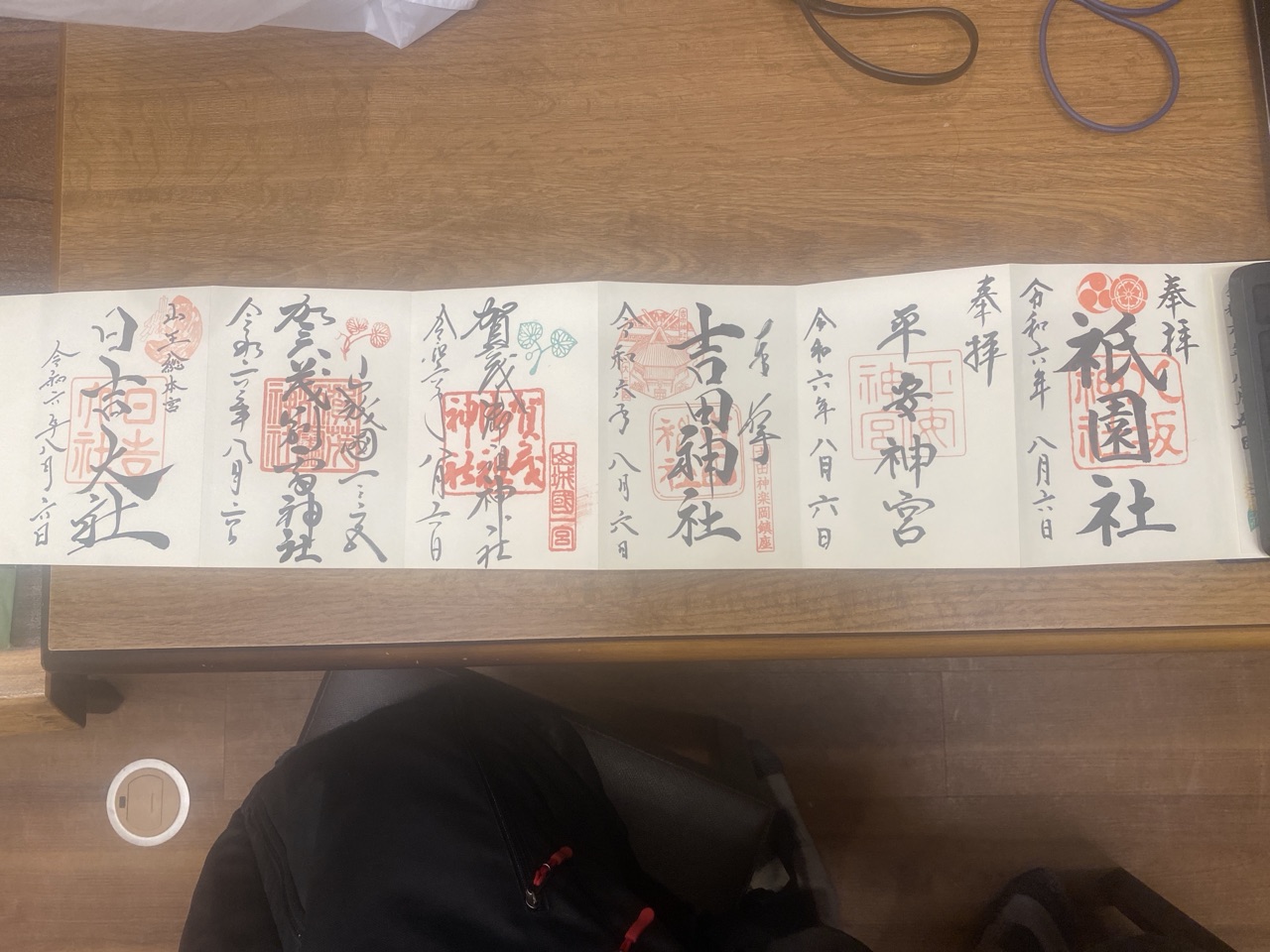
A goshuincho is not a souvenir. It’s a record of every place you’ve stood, every prayer you’ve offered, every shrine and temple that left its mark on your journey.
Treated well, a goshuincho can last for generations. Treated carelessly, the ink fades, the vermilion bleeds, the pages warp, and all of that becomes harder to read — harder to remember.
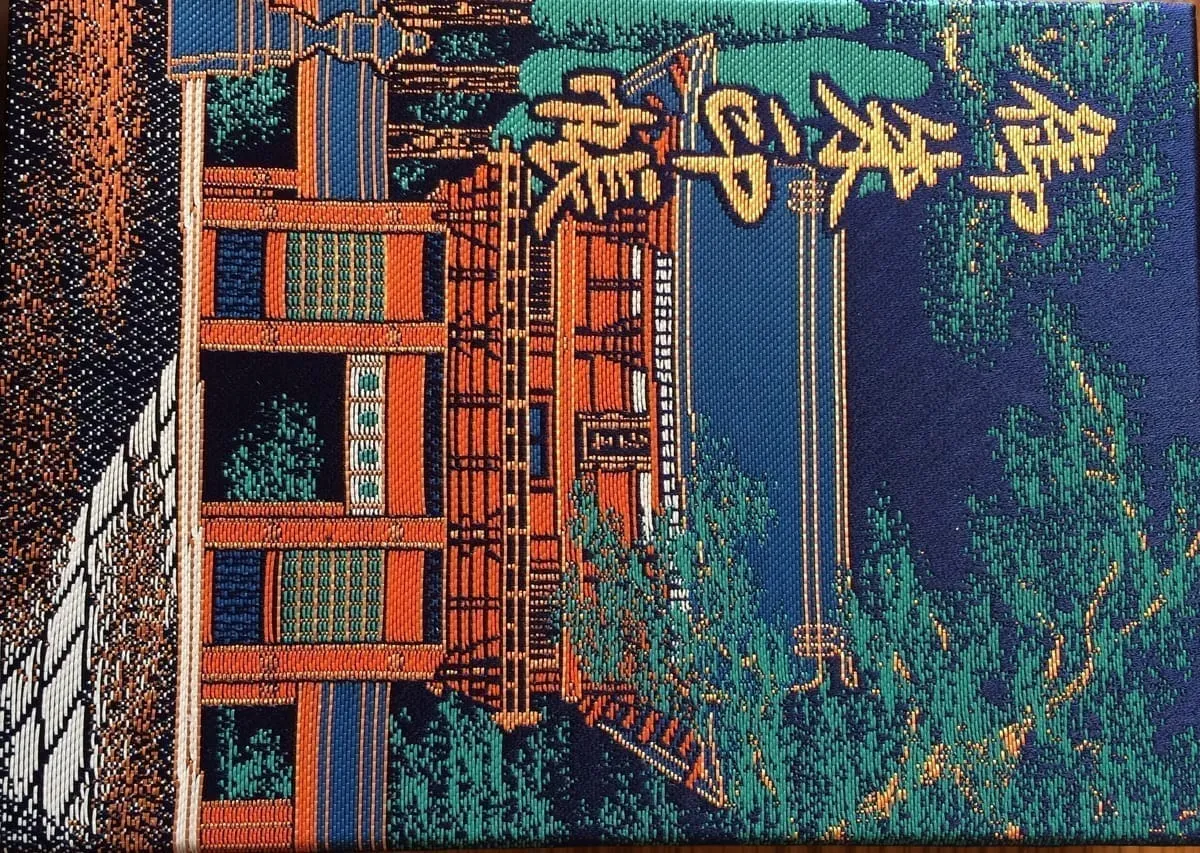
This guide covers everything: how to store a goshuincho properly, how to manage a growing collection, what to do when a book is full, and how digital tools can help preserve what matters.
What Damages a Goshuincho
Before getting into storage methods, it’s worth understanding what actually causes deterioration.
Humidity
Japan’s summers are hot and humid — and humidity is the number one enemy of paper and ink. High moisture causes pages to warp, ink to blur, and in extreme cases, mold to form. Closets, storage rooms near bathrooms, and poorly ventilated drawers are all risk zones.
UV Light and Direct Sunlight
Even indirect sunlight causes ink to fade over time. A goshuincho left on a sunny shelf — beautiful as it looks — will show visible color loss within a few years. Ultraviolet exposure affects both the calligraphic ink and the vermilion stamp pigment.
Vermilion Transfer (Utsuri)
The red color in goshuin comes from vermilion paste (shunikku), a pigment made from cinnabar. Under heat and pressure, it can transfer to adjacent pages or to other goshuincho stored against it. This is especially common during summer months when temperatures inside storage spaces climb.
The Five Fundamentals of Goshuincho Storage
1. Control Humidity
The ideal storage environment is 40–60% relative humidity.
Practical steps:
- Place silica gel packets inside any box or drawer where you store goshuincho
- Avoid storing books in damp closets, basements, or spaces near water sources
- Paulownia (kiri) wood boxes regulate humidity naturally — traditionally used in Japan to preserve precious objects, they’re an excellent choice for goshuincho storage
Airtight plastic containers work for keeping moisture out, but make sure the interior is dry before sealing. A silica gel packet inside helps.
2. Avoid Direct Sunlight
A goshuincho displayed on an open shelf can look beautiful — but position matters.
If the shelf is near a window or receives direct light for part of the day, consider moving the books to a shadowed wall or a UV-filtering display case. For north-facing walls or interior shelves away from windows, display is fine.
3. Prevent Vermilion Transfer
Vermilion transfer is easy to prevent with two habits:
- Store goshuincho upright (like books on a shelf) rather than stacked flat — this prevents face-to-face contact between pages
- If flat stacking is unavoidable, place a sheet of thin washi paper or acid-free tissue between each book
- Never leave goshuincho in a hot car, particularly in summer — interior temperatures can exceed 60°C, which accelerates transfer significantly
4. Use a Cloth Bag or Wrapping
Most goshuincho come with a drawstring pouch or cloth sleeve. Use it. This simple step protects against dust, friction, and incidental light exposure during storage.
If your goshuincho didn’t come with a bag, a cotton or washi paper sleeve works equally well. Avoid plastic bags — they trap moisture and don’t breathe.
5. Designate a Specific Storage Place
This sounds simple, but it’s perhaps the most important habit: give your goshuincho a fixed home.
When books have a consistent, designated storage location, they’re less likely to be moved casually, left in the wrong conditions, or damaged by accident. It also makes it easier to check on them periodically and catch any early signs of deterioration.
Organizing Multiple Goshuincho
Once you’ve been collecting for a few years, books accumulate quickly. Managing ten, twenty, or more goshuincho requires a bit of system.
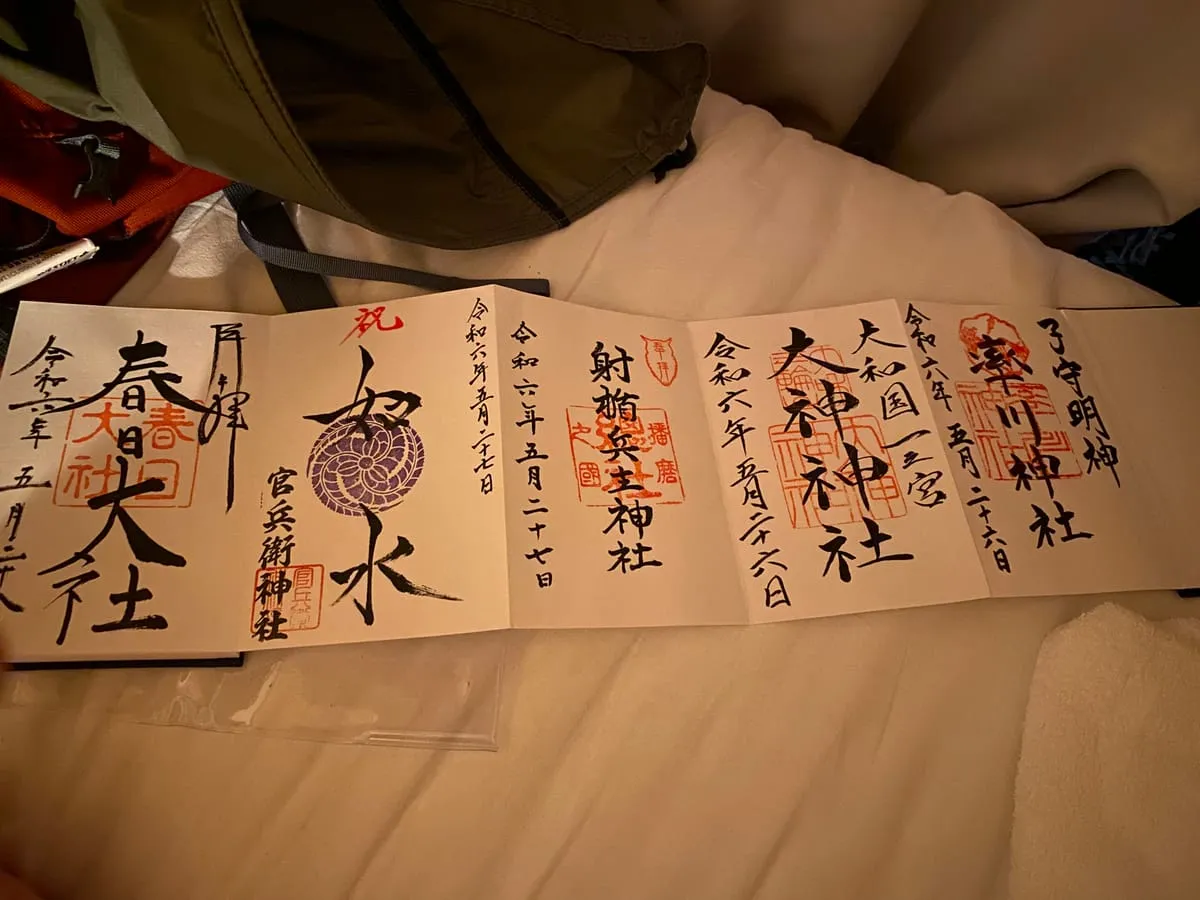
Label the Outside
When goshuincho are stored spine-out on a shelf, there’s no way to tell them apart. Solve this with simple labeling:
Useful information to note on each book:
- Date range (e.g., April 2023 – March 2024)
- Region or theme (e.g., Kyushu shrines, Shikoku pilgrimage)
- Sequential number (e.g., Vol. 4)
Use washi paper labels or soft adhesive tags that won’t damage the cover. A small tag tucked inside the sleeve works equally well.
Keep a Master List
As your collection grows, a simple log — notebook, spreadsheet, or dedicated app — helps you remember which stamps are in which book without pulling them all out.
A basic list might include: book number, date range, notable shrines or regions covered, and any special or limited-edition stamps inside.
Back Up Digitally
The most durable way to preserve a goshuin collection is to also have a digital record.
Photographing or scanning each goshuin page takes time upfront, but the benefits are significant:
- Physical deterioration doesn’t affect the digital archive
- Searching for a specific shrine becomes instant
- In case of loss, fire, or flood, the record survives
A goshuin management app makes this practical — photograph each stamp as you receive it, and the record builds itself over time.
When a Goshuincho Is Full
Filling a goshuincho completely is a genuine milestone. What comes next?
Keep It, and Keep It Well
The simplest and most meaningful choice: preserve it. A completed goshuincho is a finished record — a specific chapter of your pilgrimage life. Store it using the methods above and return to it occasionally.
Years from now, reading through a full goshuincho is like reading a detailed diary you didn’t know you were keeping.
Return It at a Shrine or Temple (Goshuincho Osame)
Some shrines and temples accept completed goshuincho for respectful handling — a practice called goshuincho osame (御朱印帳納め). The book is received with gratitude and either preserved or ritually returned to the earth in a ceremony.
This isn’t a requirement, but for collectors who feel a book has served its purpose and want to give it a proper conclusion, osame provides a meaningful option. Contact individual shrines or temples to ask whether they offer this service; some accept by mail.
Pass It Down
A goshuincho in good condition can outlast its collector by generations. Stored properly, a book from the 1980s looks nearly the same today.
Leaving a completed goshuincho for family — with a note about when and where the stamps were collected — transforms a personal record into a family artifact.
Caring for Different Cover Materials
Goshuincho covers vary widely in material, and each needs slightly different handling.
Fabric (Nishijin-ori, Yuzen, etc.)
Fabric covers attract dust and can stain. If a stain occurs, blot immediately with a dry cloth — don’t rub. For persistent stains, consult a specialist; rubbing risks spreading the damage or pushing the stain deeper into the fabric.
Washi Paper Covers
Paper covers are beautiful but vulnerable to moisture. On rainy days, protect the book in a waterproof sleeve before heading to the shrine. After any exposure to dampness, let the book air-dry in a shaded, ventilated space before returning it to storage.
Leather Covers
Leather goshuincho are durable, but leather dries out over time and can crack. Apply a small amount of leather conditioner once or twice a year to keep the material supple. Avoid silicone-based products, which can leave residue.
The Takeaway
Protecting a goshuincho doesn’t require elaborate equipment — just five consistent habits:
- Control humidity (silica gel, proper storage location)
- Block UV light (away from direct sun)
- Prevent vermilion transfer (store upright or with washi paper between books)
- Use a cloth sleeve
- Give it a designated home
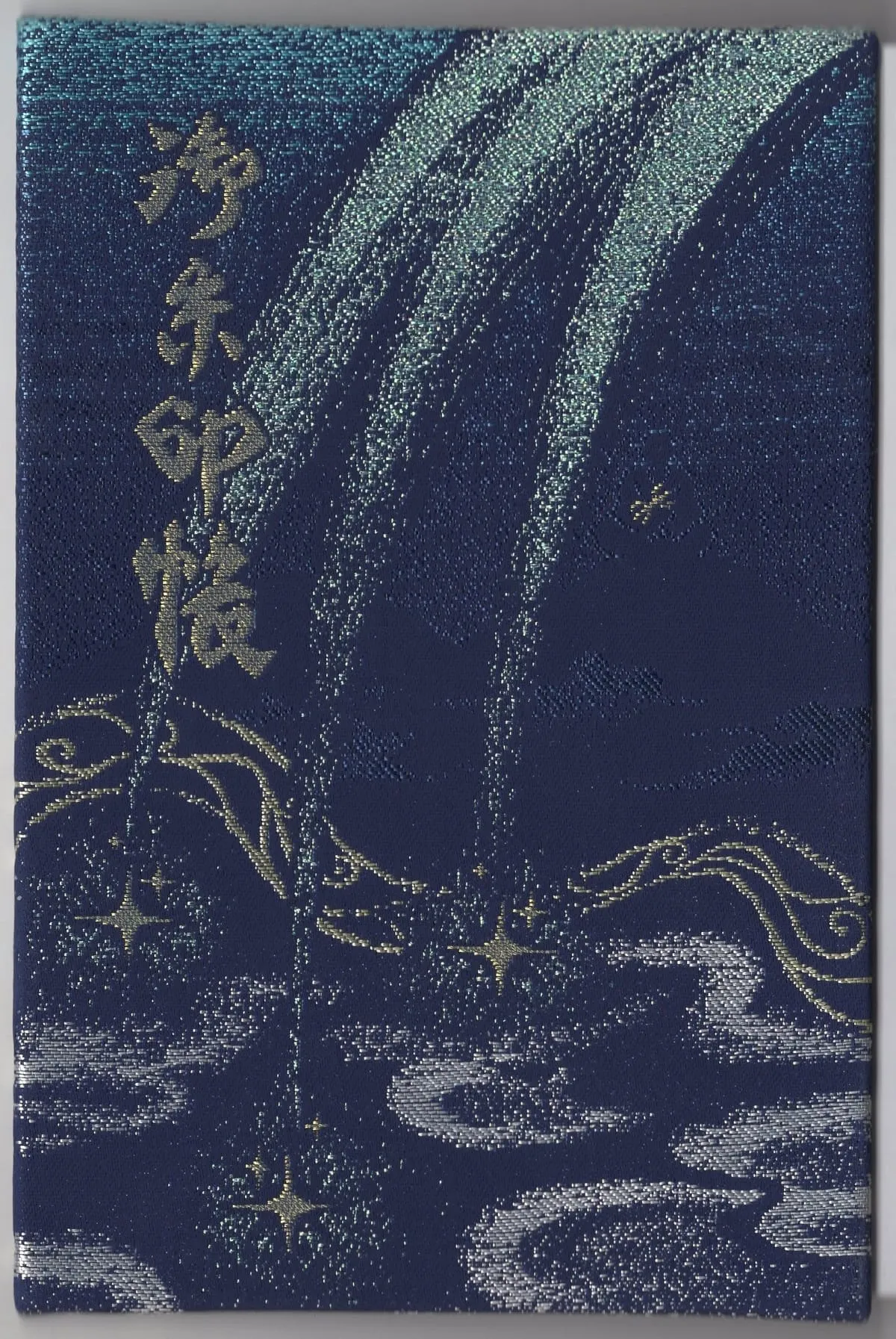
A goshuin is a record of presence — proof that you were at a particular place on a particular day, and that you offered something. It deserves to last.
These habits take almost no time to build. The goshuincho you care for today will still be readable decades from now.
Image Credits
- kashima-goshuincho.jpg: “鹿島神宮・御朱印帳” by Alpharigid, CC BY-SA 4.0, via Wikimedia Commons
- goshuincho-stamps.jpg: “Goshuincho with five shuin” by Immanuelle, CC BY 4.0, via Wikimedia Commons
- goshuincho-cover.jpg: “Emma H. Leonhart’s Goshuinchō 01” by Immanuelle, CC BY 4.0, via Wikimedia Commons