Goshuin were never meant to be art.
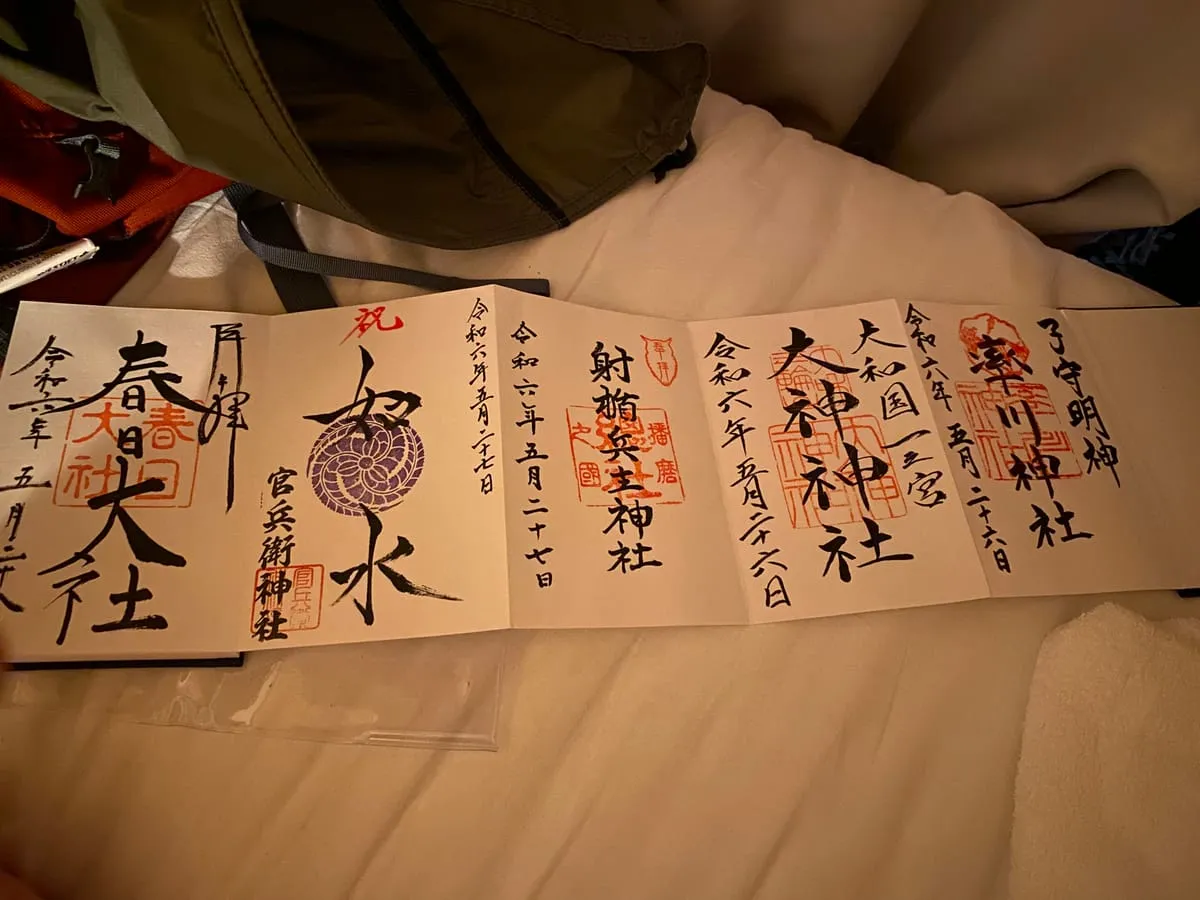
Their origin is bureaucratic: a receipt, stamped and signed by a temple or shrine to confirm that a pilgrim had delivered a handwritten sutra. No more, no less. Ink, a seal, a date. That was the formula for centuries.
Then something changed.
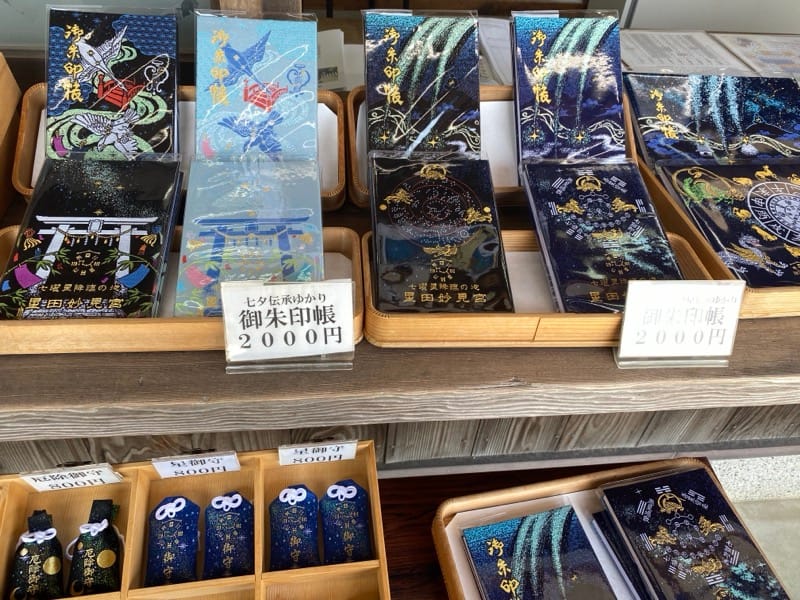
Today, goshuin come lacquered in gold and silver foil. Decorated with intricate paper-cut silhouettes. Stitched in silk thread. Illustrated with mythological creatures in vivid ink. Issued for three days only, once a year, at a specific festival that draws visitors from across the country.
Collecting goshuin has become, for many people, something closer to collecting original art than keeping a travel diary. This article traces how that happened — and what to look for when you collect.
The Anatomy of a Goshuin
To appreciate how goshuin have evolved, it helps to understand what a traditional one contains.
The Three Core Elements
| Element | Description |
|---|---|
| Hōhai (奉拝) | “Offered visit” — a phrase written in brush ink, typically at the upper left, indicating you have paid your respects |
| Shrine or temple name | The central, dominant text — the name of the deity enshrined or the institution itself |
| Date | Written in Japanese era format (e.g., Reiwa 7), recording the day of your visit |
| Red seal (shuin) | The vermilion stamp that gives goshuin their name — pressed once or several times in overlapping layers |
These four elements form the skeleton of every goshuin. But the flesh around that skeleton has become increasingly elaborate.
The First Beauty: Calligraphy
Before discussing modern design, it’s worth sitting with the original aesthetic.
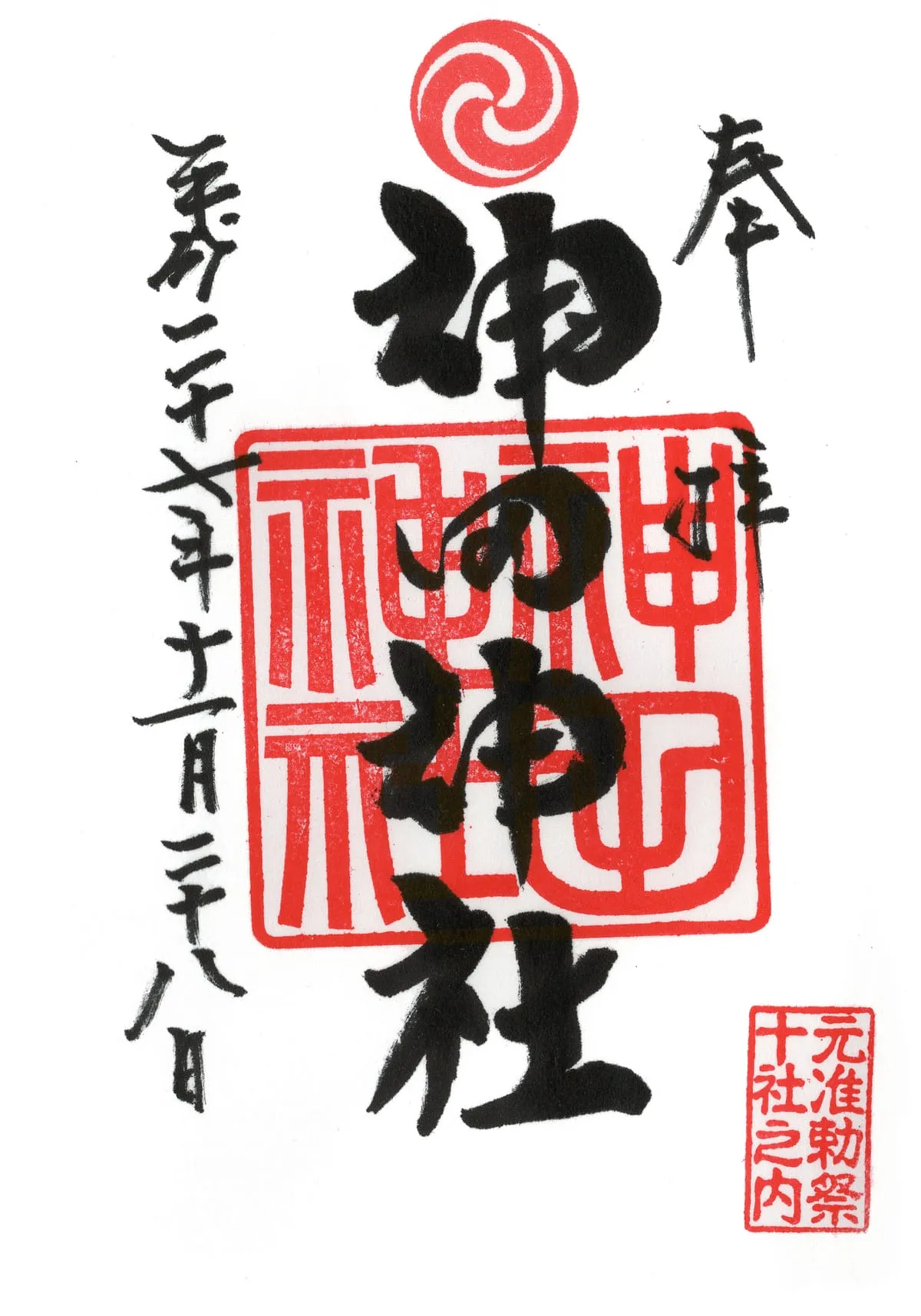
When a shrine priest or miko (shrine maiden) writes your goshuin, they do it by hand, in front of you, with a brush. The stroke order, the weight, the speed of the brush — all of this varies slightly with each person who writes.
Handwriting as identity
Two people at the same shrine will produce noticeably different goshuin. One may write with bold, expansive strokes; another with restrained precision. Some shrines are known for a particular calligraphic style that collectors seek out specifically.
This is something mass-produced stamps cannot replicate: every goshuin is, technically, a unique handmade object.
The seal’s design
The red seal itself deserves attention. Shrine seals are carved — typically from wood or stone — and each one is specific to the institution.
Common seal designs include:
- The shrine’s divine crest (shinmon), analogous to a family crest
- Animals associated with the deity — foxes for Inari shrines, doves for Hachiman shrines, deer for Kasuga Taisha
- Architectural forms — the silhouette of a torii gate, or the shape of the main hall
The slight irregularities of ink spread, pressure variation, and placement make each impression its own.
Modern Evolution: How Goshuin Became Collectible Art
The transformation accelerated in the 2010s, when goshuin collecting moved from a niche pilgrimage practice to a mainstream hobby — particularly among younger Japanese women, a demographic that traditionally had little connection to shrine culture.
Seasonal and event-limited editions
Many shrines now release different goshuin designs throughout the year. The summer festival version differs from the autumn leaves version. The new year design features the zodiac animal for that year. The sakura season design scatters pink petals across the page.
This seasonal rotation creates a pull: to get the spring design, you have to visit in spring. It turns a single shrine into a destination you return to repeatedly.
Kirie goshuin (切り絵御朱印)
Among the most visually striking developments is the kirie goshuin — a goshuin incorporating paper-cutting art. Intricate silhouettes of torii gates, dragons, maple leaves, or deities are cut from washi paper and incorporated into the design.
Unfolded against a light source, they reveal negative space that looks almost lace-like. Placed in a goshuincho, they command the entire spread.
Embroidered goshuin (刺繍御朱印)
Some shrines — particularly those with textile-producing regions nearby — issue goshuin stitched in silk thread onto fabric. The texture is entirely unlike paper, and the visual depth of embroidery is impossible to achieve in print.
Many people receive these and choose to frame them rather than paste them into a goshuincho.
Illustrated goshuin: mythology and folklore
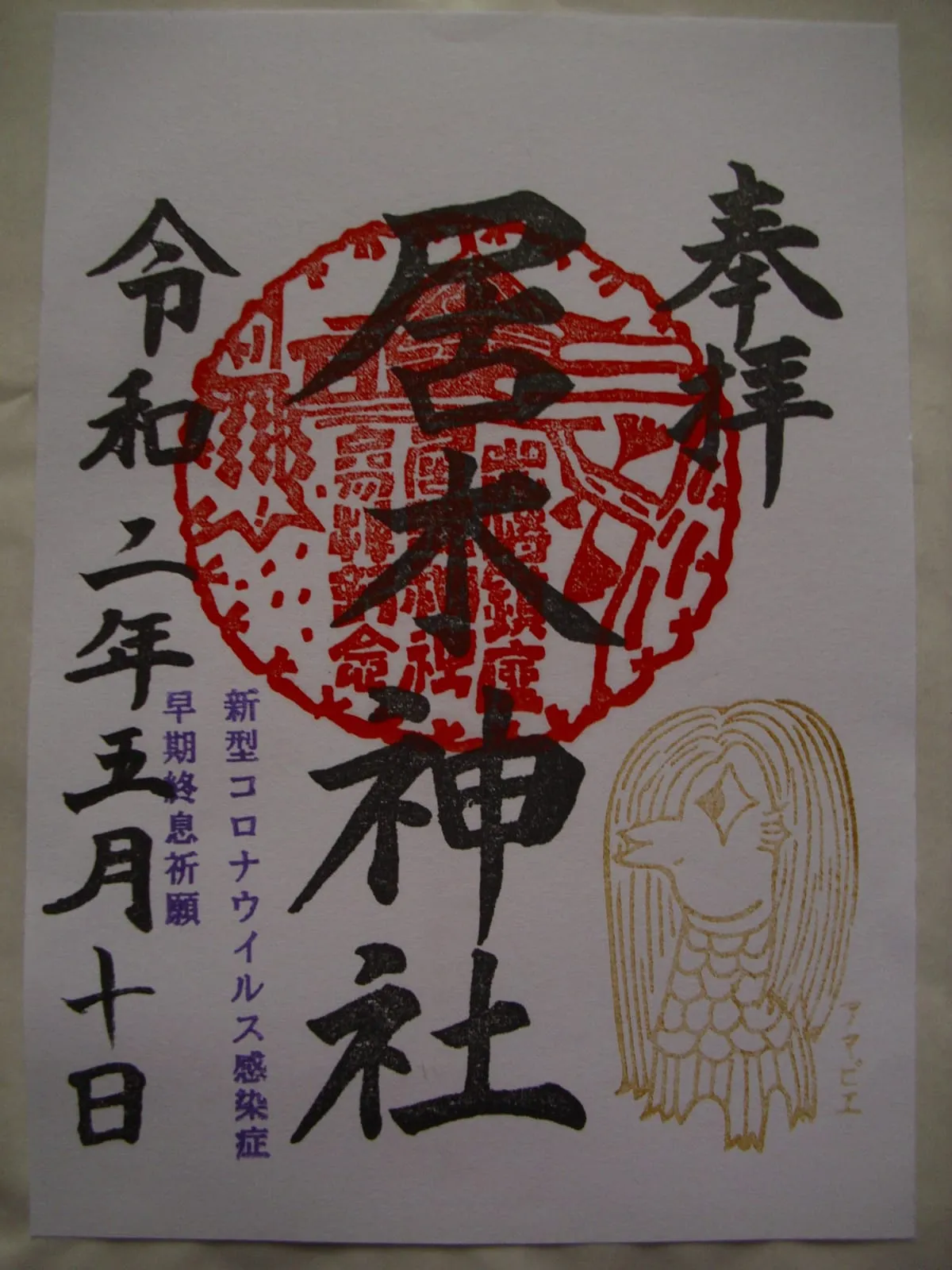
One of the more striking modern forms involves illustrations drawn directly alongside or within the traditional elements. Gods, yokai (supernatural creatures), guardian animals — rendered in colored ink, gold leaf, or brushed gradient washes.
The amabie goshuin became emblematic of this trend during the COVID-19 pandemic. The amabie is a folkloric creature said to ward off epidemics. As the pandemic spread in 2020, shrines across Japan began issuing amabie-themed goshuin, and images of them spread rapidly on social media. It was a moment when ancient protective mythology and contemporary visual culture intersected in a single stamp.
How to “Read” a Goshuin
Even as designs grow more complex, goshuin retain layers of meaning that reward close reading.
Identify the deity
The central text names the god enshrined or the temple’s lineage. Looking up the deity connects a goshuin to the broader world of Shinto mythology.
- Susanoo no Mikoto — god of storms and the sea; the hero who slew the eight-headed serpent Yamata no Orochi
- Amaterasu Omikami — goddess of the sun; the supreme deity of the Ise Grand Shrine
- Inari Okami — deity of rice, agriculture, industry, and commerce; associated with fox messengers
A goshuin becomes a point of entry into a mythology that spans thousands of years.
Decode the seal
The design carved into the red seal often contains the shrine’s shinmon, or divine crest. Learning these crests is like learning a visual alphabet:
- Mitsudomoe (three spirals) — common at Hachiman shrines
- Umebachi (plum blossom pattern) — found at Tenmangu shrines dedicated to the scholar-god Tenjin
- Ken hanabishi (sword and flower diamond) — associated with martial deities
Once you begin to recognize these, you can identify shrine affiliations across the country from a glance at the seal.
What Hasn’t Changed
Amid all the aesthetic evolution, one thing remains constant.
Goshuin are still given only to people who visit and pray. They are not sold as merchandise. They are not available by mail order (with very limited exceptions for those unable to travel). They are not meant to be resold.
This is not merely tradition — it’s what gives them meaning. A goshuin is a record of presence. The design can be extraordinary, the paper rare, the ink precious. But at its core, it testifies that you stood in that place, at that time, and offered your respect.
Three Ways to Deepen Your Goshuin Experience
1. Notice what makes each one singular
The handwriting of the person who wrote it. The ink density of the seal. The way the brush pressure varied across a single stroke. Each goshuin exists once. It was made for your goshuincho, on that day, by that person. No identical copy exists anywhere.
2. Collect thematically
Instead of collecting broadly, try focusing: all Inari shrines in a single region, or all shrines dedicated to the same deity, or all shrines listed in a particular era’s imperial register. Comparison reveals patterns and differences that random collection obscures.
3. Record with context
Memory fades. A goshuin photographed next to its location on a map, with the date and weather noted, stays vivid in a way that a goshuin filed away in a box does not. Digital tools — apps specifically designed for goshuin collectors — make this effortless.
Closing
Goshuin began as receipts and became something closer to art. But they are art embedded in devotion — which is what makes them unlike any other collectible.
The design might be breathtaking. The technique might be flawless. But the goshuin exists because someone went to a specific place, on a specific day, and stood before something they considered worth standing before.
That’s the part that no amount of design evolution can replace.
Image Credits
- goshuincho-five-shuin.jpg: “Goshuincho with five shuin” by Immanuelle, CC BY 4.0, via Wikimedia Commons
- kanda-myojin-goshuin.jpg: “Kanda-Myojin 501” by Ocdp, CC BY-SA 4.0, via Wikimedia Commons
- amabie-goshuin.jpg: “Amabie Goshuin of Irugi Shrine” by Indiana jo, CC BY-SA 4.0, via Wikimedia Commons