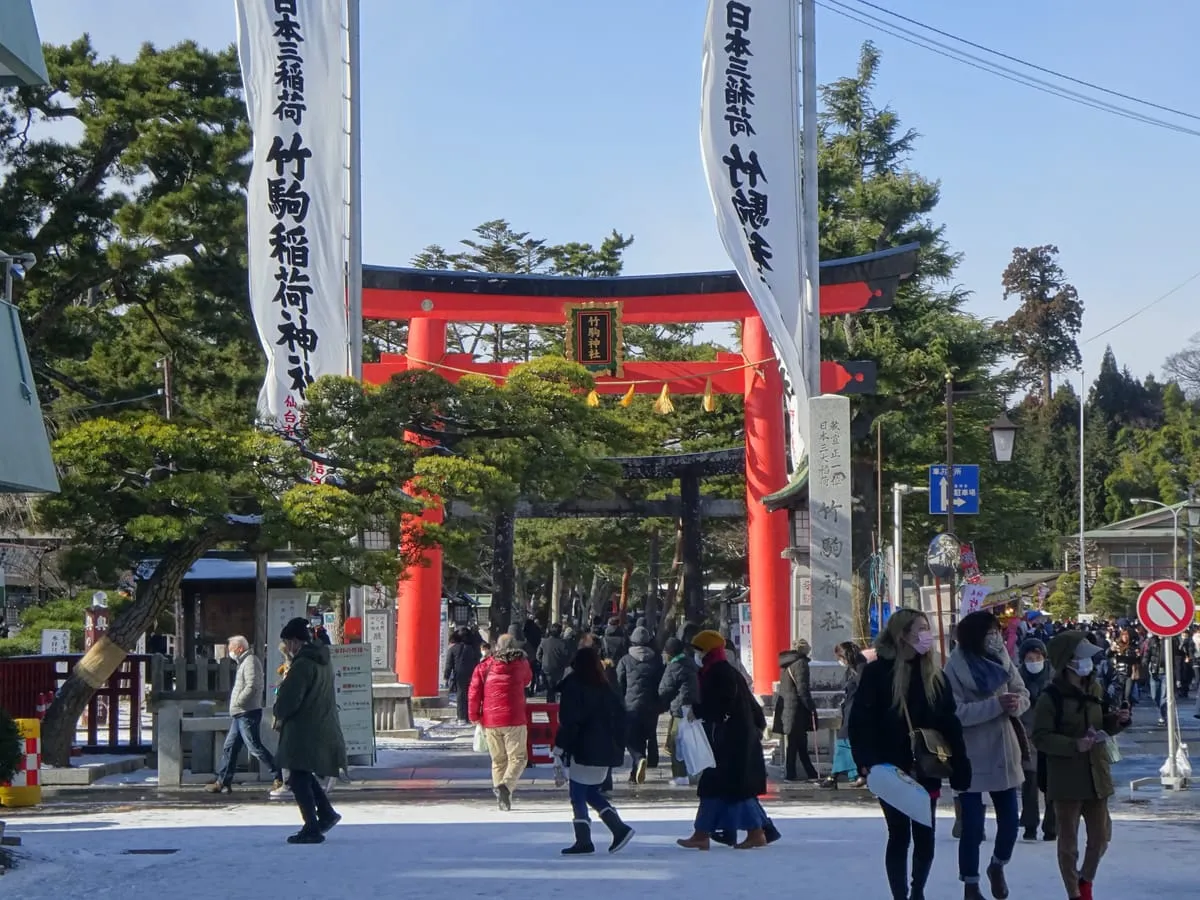
Every year at the turn of January, tens of millions of people across Japan make their way to a shrine or temple. The tradition is called hatsumode (初詣) — the first visit of the new year — and it is, by participation, the largest religious event in Japan. Over 80 million people are estimated to attend during the first three days of January alone.
If you are visiting Japan around New Year, or simply curious about this tradition, this guide covers everything: the history, the etiquette, goshuin during the new year season, and how to make the most of the visit.
What Is Hatsumode?
Hatsumode (初詣) literally means “first shrine visit.” Hatsu means “first” or “initial”; mode (詣) means “to worship at a shrine or temple.”
The modern form of hatsumode — visiting a famous shrine or temple in the first days of January — became widespread during the Meiji era (1868–1912), largely helped by Japan’s expanding rail network. Railway companies promoted the idea that any direction of travel was equally auspicious, effectively opening up the destination to any major shrine rather than requiring a visit to one specific location based on the year’s lucky direction (a practice called ehō-mairi, 恵方参り).
The result is the mass pilgrimage Japan sees today: some shrines receive millions of visitors in the first three days of January.
When to Go
Sangan-nichi (January 1–3)
The first three days of January — called sangan-nichi (三が日) — are the busiest period. Crowds are at their peak, but so is the atmosphere: bonfires, food stalls, people in kimono, special new year decorations hanging from shrine gates, and the collective mood of a fresh start.
New Year’s Eve midnight is the most intense moment: the transition from December 31 to January 1 draws the largest midnight crowds, with some people queuing for hours to be among the first to pray in the new year.
Matsu-no-uchi (Until January 7 or 15)
Matsu-no-uchi (松の内) — the period when new year decorations (kadomatsu) are displayed — runs until January 7 in the Kantō region and until January 15 in the Kansai region. Visiting within this window still counts as a proper new year visit and typically means significantly smaller crowds than the first three days.
For most visitors, January 4–7 offers a good balance: still a new year feel, without the worst of the congestion.
Is There a Deadline?
There is no strict deadline. Some hold that any first-month visit counts; others extend the window to Setsubun (February 3). Special new year goshuin designs are usually offered only through early January, so if that is your goal, check the specific shrine’s schedule in advance.
How to Visit: The Basics
Temizuya — Ritual Hand Purification
Before approaching the main hall, purify your hands at the temizuya (手水舎) or chōzuya, a stone water basin near the entrance.
The traditional sequence:
- Take the ladle with your right hand. Pour water over your left hand.
- Switch the ladle to your left hand. Pour water over your right hand.
- Switch back to your right hand. Cup some water in your left palm and rinse your mouth from that water (without putting the ladle to your lips).
- Pour water to rinse the left hand again. Return the ladle clean.
Since the pandemic, many shrines have paused or removed the water and replaced it with flower arrangements (hana-chōzuya, 花手水) or sanitizer stations. It’s fine to adapt when the traditional version is unavailable.
Saisen — The Offering
Toss or gently place a coin into the offering box (saisen-bako, 賽銭箱). There is no prescribed amount. A 5-yen coin (go-en, ご縁) is traditional due to a pun on the Japanese word for “connection” or “fate,” but any coin is fine.
Avoid throwing coins forcefully — a gentle placement or toss is more appropriate.
Nirei Nihakushu Ichirei — The Prayer Sequence
At the main hall, the standard sequence is:
- Two deep bows (nirei, 二礼)
- Two claps (nihakushu, 二拍手) — bring your hands together and clap twice
- Hold hands together and pray — take a moment to state your intention or simply give thanks
- One final deep bow (ichirei, 一礼)
Exception: At Izumo Taisha in Shimane (one of Japan’s most important shrines), four claps (shihakushu) are the correct form. When in doubt, observe what locals are doing.
Goshuin During New Year
Hatsumode is one of the best times to receive a goshuin (御朱印) — the hand-written and stamped seal that serves as a record of your visit.
Many shrines offer special new year goshuin designs featuring seasonal motifs: the zodiac animal of the incoming year, snow, plum blossoms, or traditional new year decorations. These are typically available only during the first week or two of January.
What to Expect During Sangan-nichi
During the first three days:
- Most shrines switch to pre-written (kakioki) goshuin rather than live calligraphy, due to the volume of visitors
- Direct writing (chokugaki) — where a priest writes in your book on the spot — is often suspended or involves extremely long waits
- If direct writing matters to you, plan to visit after January 7, when lines are shorter and direct writing usually resumes
Tips for Goshuin Collectors
- Bring your goshuin notebook in an easy-to-access spot — fumbling through a bag in a crowd is awkward
- Many collectors start a new goshuin book for the new year, making the first stamp of the year a meaningful opening page
- Some shrines offer a special new year goshuinchō (御朱印帳) — a notebook pre-designed with new year artwork — available only in January
Omikuji and New Year Charms
Omikuji — Fortune Slips
Drawing an omikuji (おみくじ) fortune slip is one of the most recognizable hatsumode rituals. The typical fortune levels, from best to worst:
Daikichi (大吉) → Kichi (吉) → Chūkichi (中吉) → Shōkichi (小吉) → Suekichi (末吉) → Kyō (凶) → Daikyō (大凶)
The ranking varies between shrines. More important than the result is the written content of the slip, which includes guidance on areas like love, work, health, and travel. Even a bad-luck fortune comes with advice on how to address the situation.
Custom: tie an unfavorable fortune to the kubi-kake (結び処), a designated tying rack in the precinct, to leave the bad luck behind. A good fortune can be carried home as a charm, or also tied at the shrine. Both approaches are accepted.
New Year Charms
| Item | Japanese | Purpose |
|---|---|---|
| Hamaya | 破魔矢 | A ritual arrow to drive away evil. Placed at home, replaced each year. |
| Kumade | 熊手 | A decorative rake to “rake in” good fortune. Popular for business luck. |
| Omamori | お守り | A fabric charm for protection, health, exams, or other specific intentions. |
| Ema | 絵馬 | A wooden votive plaque. Write your new year wish and hang it at the shrine. |
Returning old charms: The previous year’s hamaya and omamori should be returned to the shrine where they were received (or to your nearest shrine) for ritual burning (otakiage, お焚き上げ). Look for the designated return box (kofuda-osame-sho, 古札納所) near the entrance.
Recommended Shrines for Hatsumode
Meiji Jingu (Tokyo)
Consistently among the top three in Japan by visitor count — upwards of 3 million visitors in the first three days. Set in an urban forest, the long forested approach (sandō) creates a striking contrast to the surrounding city. Arrive very early on January 1 if you want to experience it without the densest crowds.
Naritasan Shinshōji (Chiba)
A major Shingon Buddhist temple (not a Shinto shrine) that consistently ranks among the top for hatsumode attendance nationwide. Known for exorcism prayers and a lively festival atmosphere around the temple grounds.
Kawasaki Daishi (Kanagawa)
A Shingon temple famous for yakuyoke — protection against misfortune. Among the top three nationally for New Year visitor numbers. Known for its vibrant street stalls and the striking red temple gate.
Atsuta Jingu (Nagoya)
One of Japan’s most important shrines, housing the sacred sword Kusanagi-no-Tsurugi (草薙の剣) — one of the Three Imperial Treasures. Over 2 million visitors come for hatsumode each year. Quieter than Tokyo’s top shrines but deeply significant.
Sumiyoshi Taisha (Osaka)
The head shrine of approximately 2,300 Sumiyoshi shrines across Japan. The arched drum bridge (soribashi, 反橋) is the signature image: seeing it packed with new year pilgrims in kimono is one of Kansai’s iconic new year sights.
Dazaifu Tenmangu (Fukuoka)
Dedicated to Sugawara Michizane, the deity of scholarship. Hatsumode here coincides with exam season, drawing students and parents from across Kyushu and beyond. The approach lined with plum trees (ume, Michizane’s favorite flower) adds a special seasonal quality.
How to Avoid the Worst Crowds
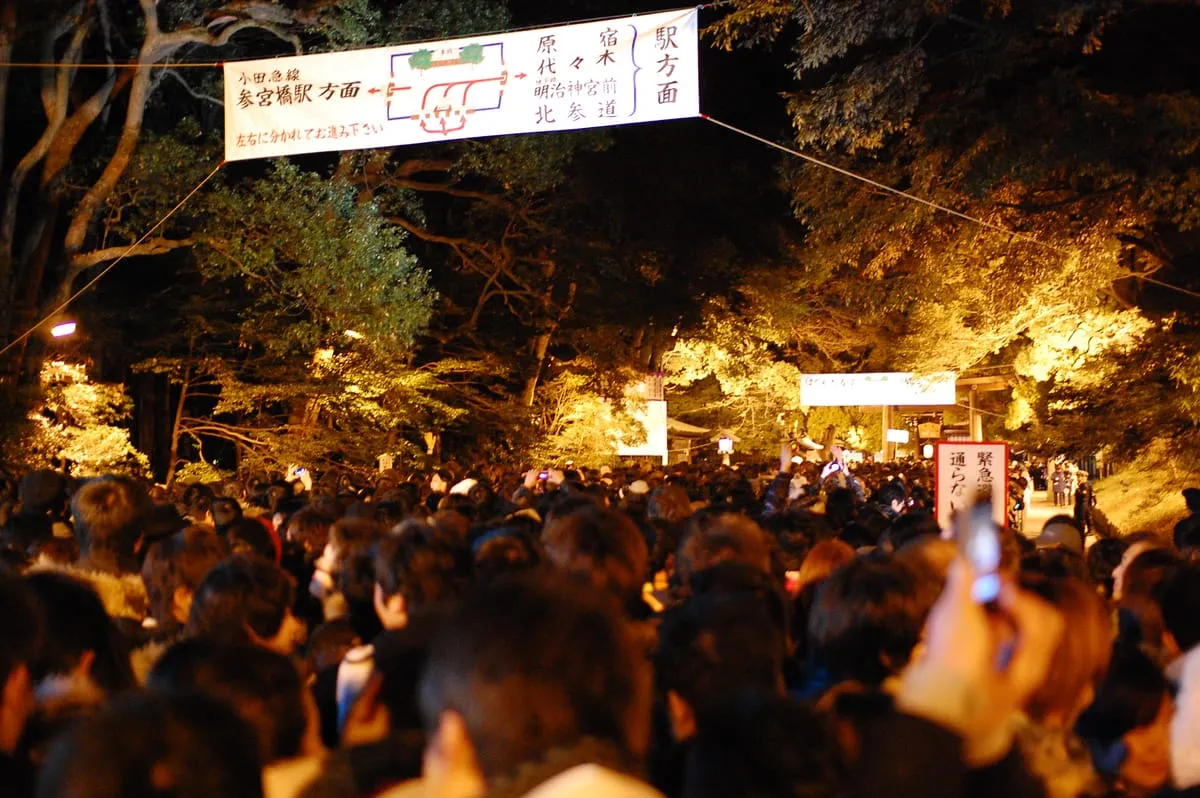
- Go early morning or late evening on sangan-nichi — arrival before 7am or after 6pm is significantly calmer than midday
- Shift to January 4–7 — crowds drop sharply after the third day
- Visit your local ujigami shrine — the neighborhood shrine that traditionally has jurisdiction over where you live. Praying there is just as valid as visiting a famous national shrine, and the experience is often more intimate
- Use public transport — large shrine districts often have traffic restrictions and parking fills quickly. Train and subway are almost always faster
- Separate the visit from the goshuin — pray during sangan-nichi if you want the atmosphere; come back on January 8 or later for the goshuin when direct writing resumes and lines are short
The Meaning Behind the Visit
Hatsumode is more than a tourist event. At its core, it is an act of gratitude — thanking the kami (divine forces) for the year just passed and asking for guidance in the year ahead.
The distinction between Shinto shrines and Buddhist temples blurs slightly during hatsumode: both receive large numbers of new year visitors and both are considered valid destinations. Many Japanese people visit both, sometimes on the same day. There is no contradiction in this — Japan’s religious landscape has historically accommodated both traditions with ease.
Whether you are a first-time visitor to Japan, a long-time resident, or someone interested in collecting goshuin, hatsumode offers one of the most direct ways to participate in something genuinely Japanese — standing in a quiet forest precinct on a cold January morning, the smell of incense drifting past, the sound of a bell struck before prayer.
Related Articles
- What Is Goshuin? A Beginner’s Guide
- Shrine Etiquette for Visitors: From Torii to Main Hall
- Seasonal Goshuin: A Year-Round Calendar
Image Credits
- Queue for hatsumode at Takekoma Inari Shrine, Miyagi: 七厩拓, CC BY-SA 4.0, via Wikimedia Commons
- New Year crowd at Meiji Shrine, Tokyo: Adam Kent, CC BY 2.0, via Wikimedia Commons