You walk through a torii gate into a shrine. You purify your hands at a water basin. You pray at a worship hall. Most visitors follow this flow naturally, but there’s actually a thousand-year-old sacred spatial design at work.
Every building in a shrine’s grounds has a clear role and meaning. Understanding this transforms your visit from simple wish-making into a dialogue with the divine.
Basic Structure of Shrine Grounds
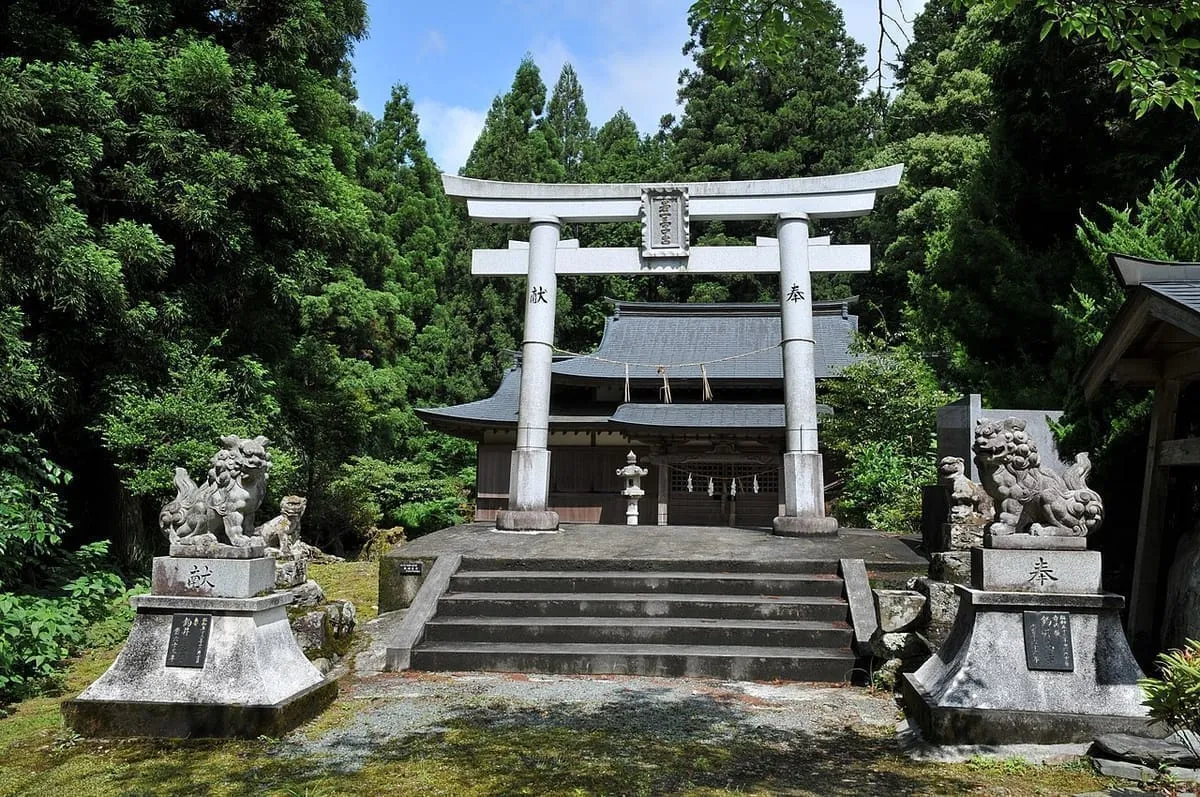
Shrine grounds represent a gradual transition from the mundane to the sacred. From the entrance torii gate to the innermost main hall, visitors progress step by step closer to the divine.
The basic layout follows this order:
- Torii (鳥居) — Gateway to the sacred realm
- Sandō (参道) — The approach path to the divine
- Temizuya (手水舎) — Purification basin
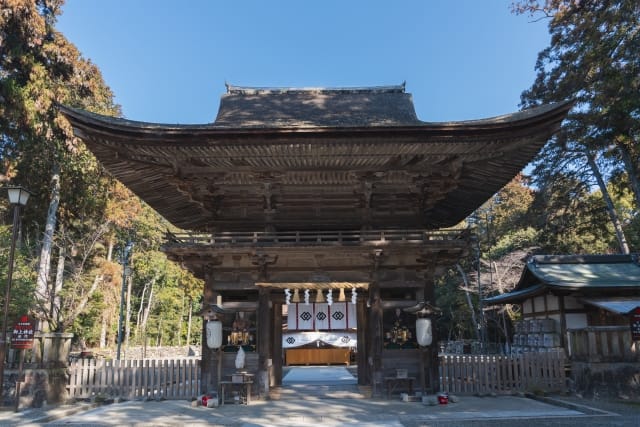
- Haiden (拝殿) — Worship hall for prayer
- Honden (本殿) — Main hall where the deity resides
This arrangement embodies Shinto cosmology. You cross the boundary between secular and sacred at the torii, prepare your heart on the sandō, cleanse impurities at the temizuya, offer prayers at the haiden, and connect with the divine at the honden. The entire sequence is designed as a unified religious experience.
Torii: Gateway to the Divine Realm
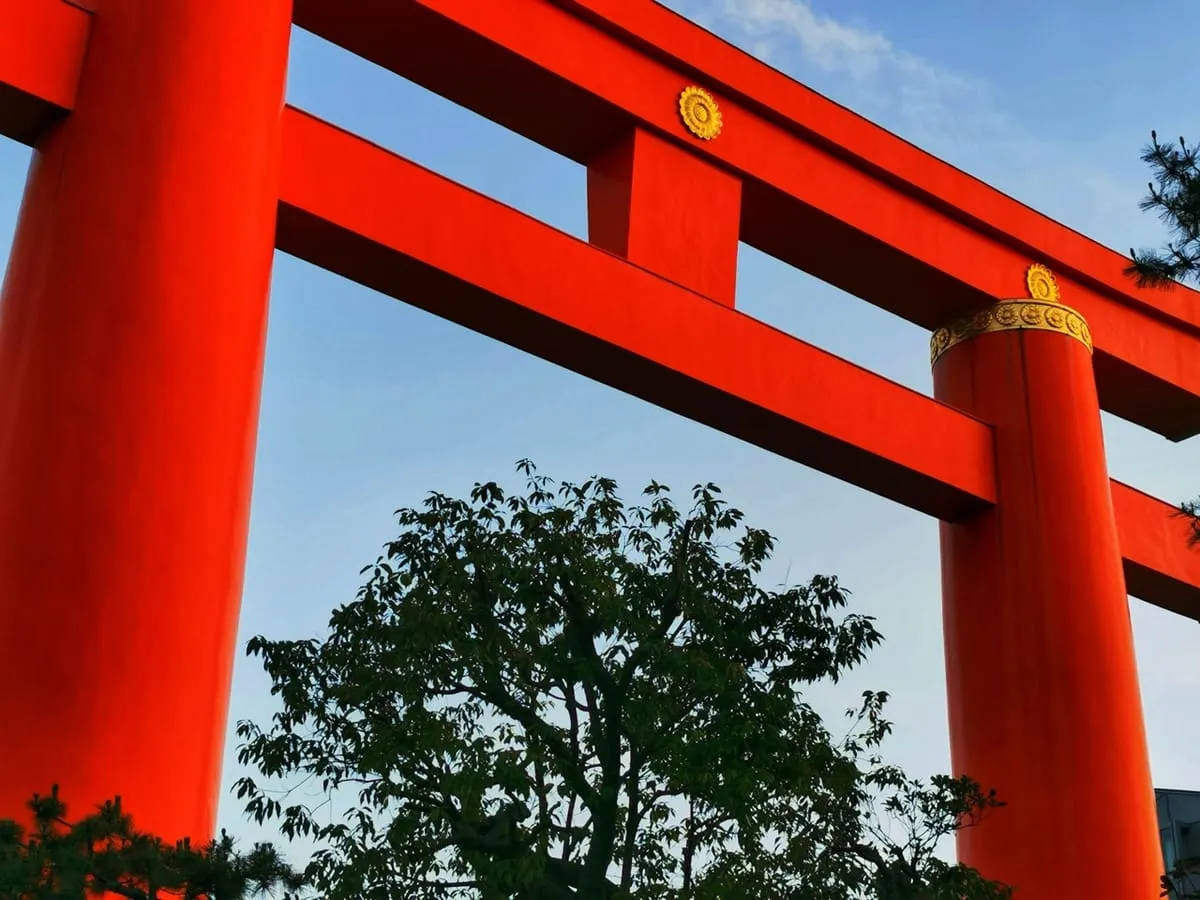
The torii is the face of a shrine and the first sacred sign you encounter. It marks that everything beyond belongs to the realm of the gods.
Types of Torii
There are several basic forms of torii:
- Shinmei-style: Represented by Ise Grand Shrine, featuring straight lines and simple forms. An ancient style.
- Myōjin-style: The most common form with curved upper beams. Often painted vermillion.
- Ryōbu-style: Ornate forms influenced by Buddhism.
Many torii are painted vermillion (red) because this color is believed to have protective power against evil. Vermillion also symbolizes life force and the sun, making it a sacred color.
Proper Etiquette at Torii
Bow once before passing through the torii. This is a greeting to the deity, meaning “excuse me for entering.” When leaving, turn around after exiting the torii and bow again.
Walk to the side of the approach path rather than down the center (seichū), which is considered the path of the gods. However, this isn’t an absolute rule—follow natural flow during crowded times.
Sandō: The Approach to the Divine
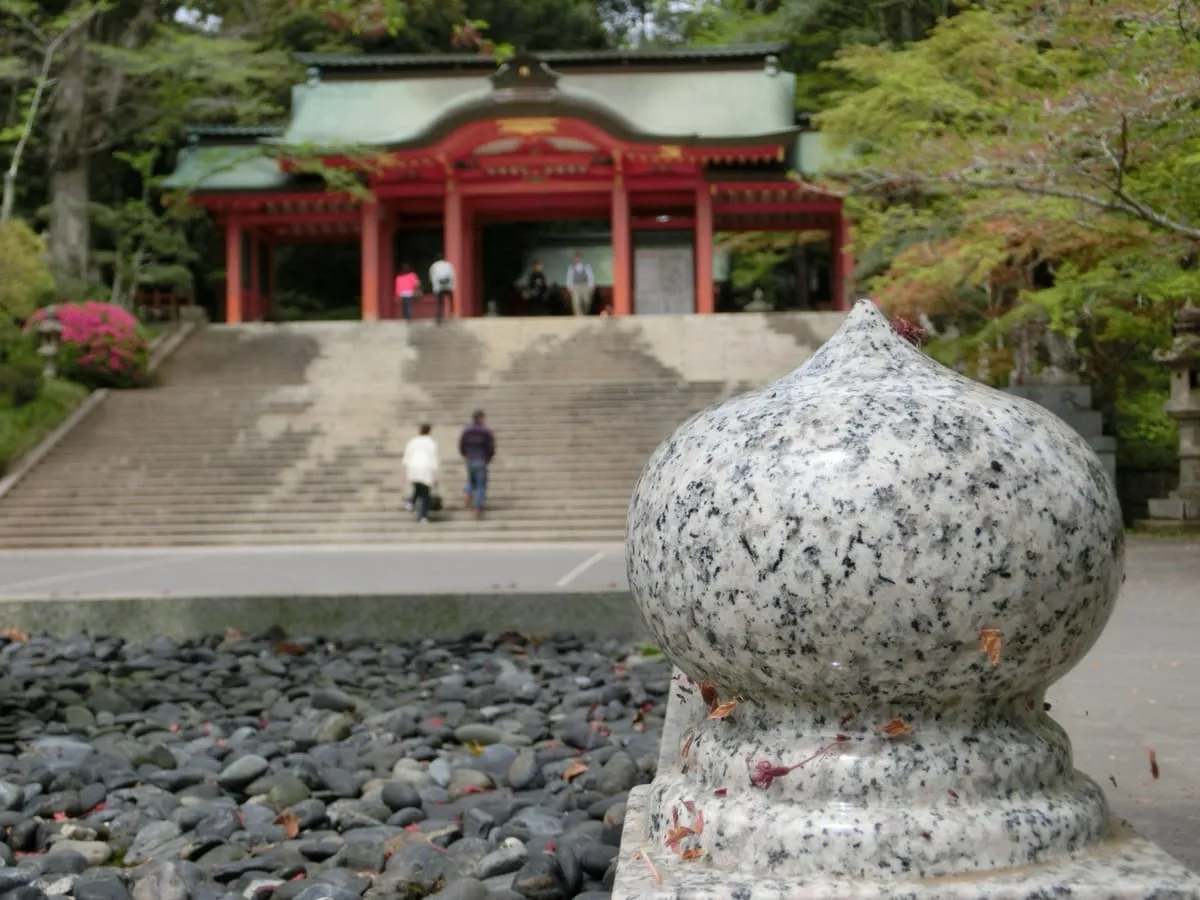
The path from the torii to the worship hall is called the sandō (approach path). It’s not merely a walkway but a preparatory space for turning your heart toward the divine.
Design Philosophy of the Sandō
In many shrines, the sandō doesn’t run straight. It’s often deliberately curved or angled. There are reasons for this:
- Deflecting evil spirits: The belief that malevolent forces can only travel in straight lines
- Time for mental preparation: Walking allows you to shed worldly thoughts and cultivate a sacred mindset
- Scenic staging: The main hall doesn’t appear all at once but is gradually revealed
The gravel (tamasari) laid on approach paths also has meaning. The “crunch” sound with each step is said to ward off evil spirits. Walking on gravel also naturally slows your pace and calms the mind.
Stone Lanterns and Monuments
Approach paths often feature stone lanterns (jōyatō). These offer light as an offering to the deity—they once burned all night long. They’re now electric but remain as symbols maintaining sanctity.
Shrine name monuments (shagōhyō) are stone markers carved with the shrine’s official name. These stones reading ”○○ Shrine” serve this purpose.
Temizuya: Sacred Waters of Purification
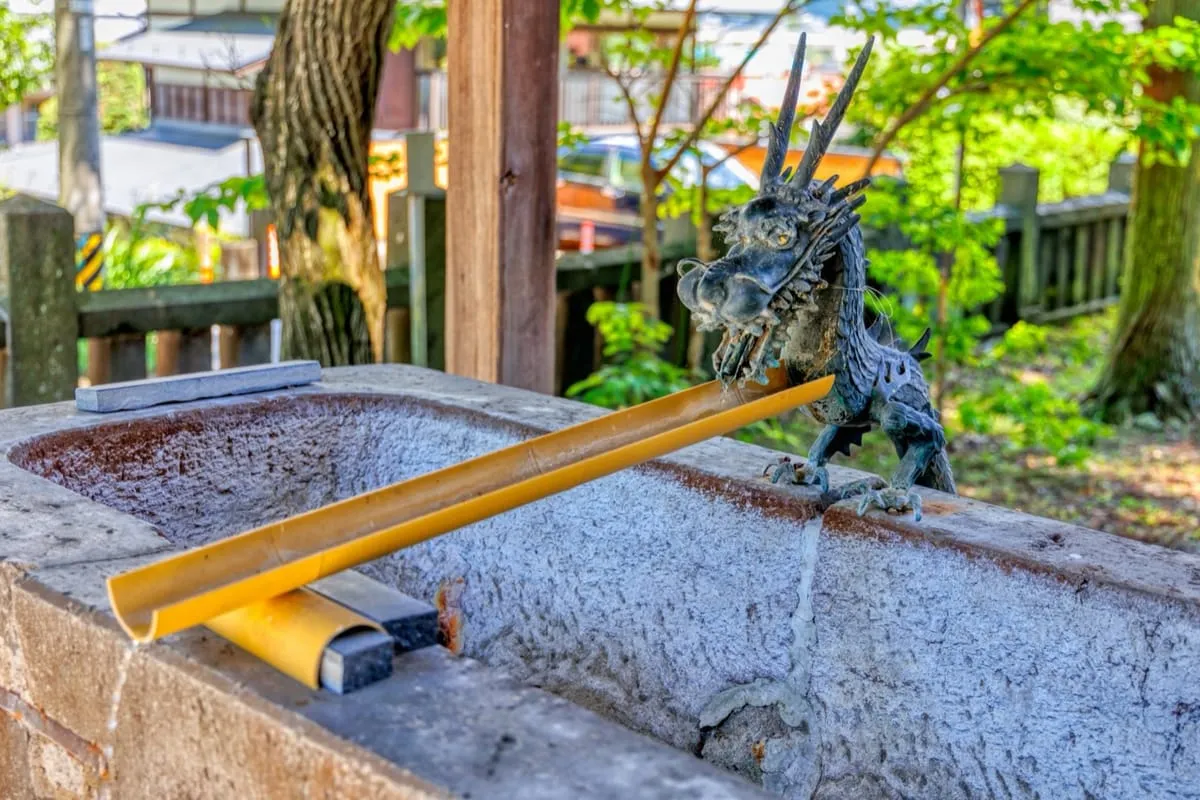
Before approaching the worship hall, you must stop at the temizuya (purification basin). Here you cleanse your hands and mouth.
Purification Ritual Steps
The correct procedure is:
- Take the ladle in your right hand and wash your left hand
- Switch the ladle to your left hand and wash your right hand
- Return the ladle to your right hand, pour water into your left palm, and rinse your mouth
- Wash your left hand once more
- Hold the ladle upright to let water flow down the handle, then return it to its place
Never put your mouth directly to the ladle when rinsing. This is both hygienic and considerate of other visitors.
Water and Dragons at the Temizuya
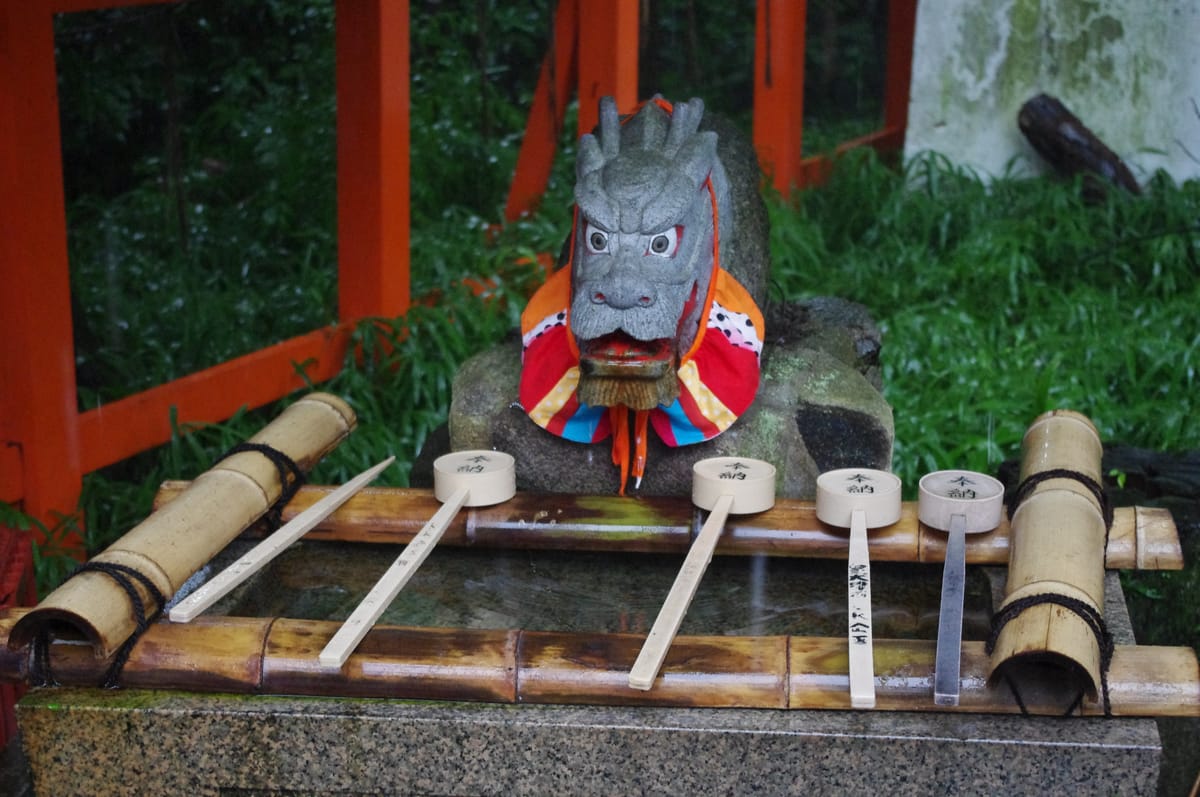
Water at purification basins often flows from a dragon’s mouth. Dragons are divine beasts that govern water and symbolize purifying power. Dragons are also positioned as messengers of the gods.
Recently, due to the COVID pandemic, many shrines have begun creating “flower temizuya” by floating seasonal flowers on the water’s surface. This creates new beauty with flowers adorning the water.
Haiden: Center of Worship
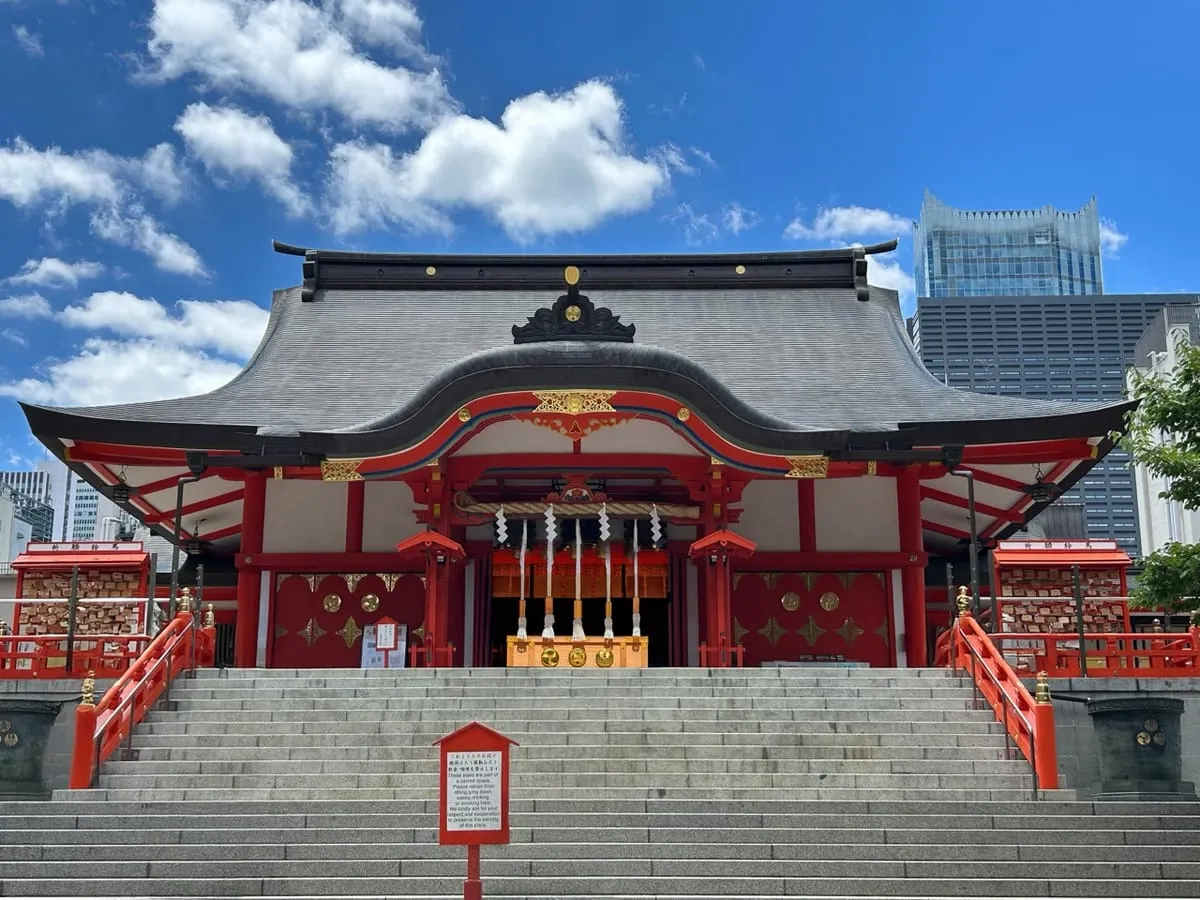
The haiden (worship hall) is where visitors offer prayers. This is where you perform the “two bows, two claps, one bow” ritual.
Structure of the Haiden
Characteristics of worship halls:
- Open structure: Generally without walls, allowing the interior to be seen from outside
- Offering box: A box for monetary offerings to the deity. Originally for rice, cloth, and other goods
- Bell rope (suzuo): A rope for ringing bells. The sound calls the deity and wards off evil spirits
- Sacred rope (shimenawa): Marks the sacred space
Worship Ritual: “Two Bows, Two Claps, One Bow”
- Quietly place your offering — Don’t throw it; place it gently
- Ring the bell — About 2-3 times
- Two bows — Two deep bows
- Two claps — Two claps at chest level
- Pray — Speak to the deity in your heart
- One bow — One final deep bow
There are no rules about prayer content. Express gratitude, make a request, or simply share your current feelings honestly.
Honden: The Deity’s Dwelling
The honden (main hall) is the shrine’s most sacred building. This is where the deity actually resides, and general visitors usually cannot enter.
Main Hall Architectural Styles
Main hall architectural styles include several major types:
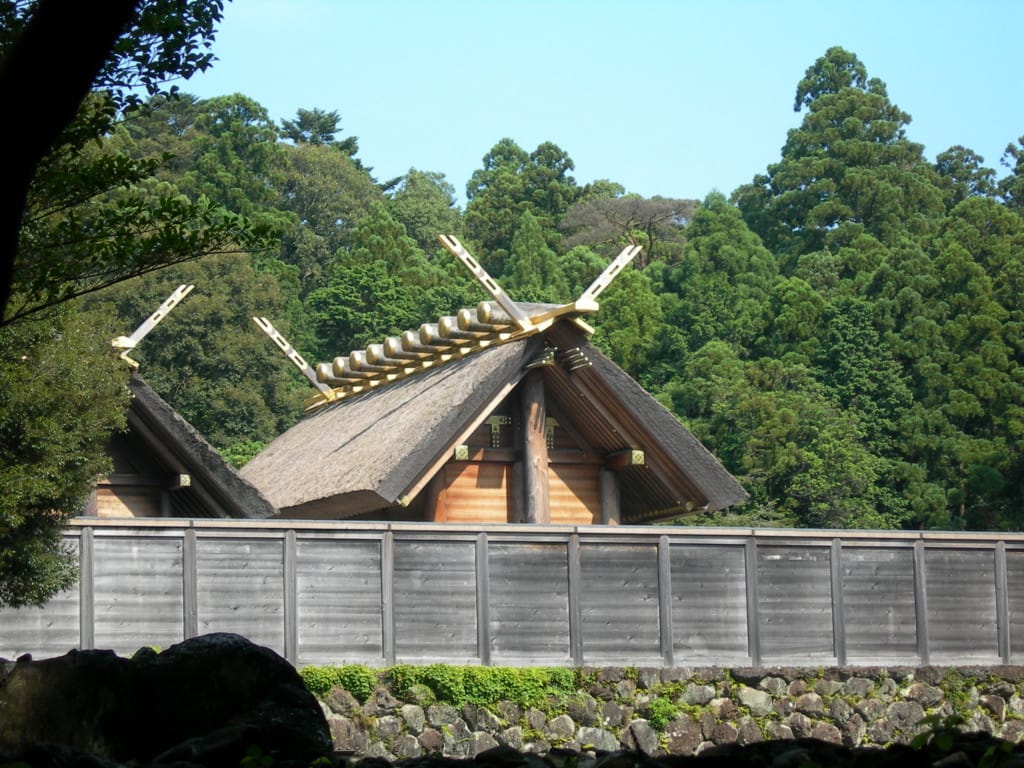
- Shinmei-zukuri: The style of Ise Grand Shrine. Gabled roof in ancient form
- Taisha-zukuri: The style of Izumo Grand Shrine. Raised floor with front stairs
- Sumiyoshi-zukuri: The style of Sumiyoshi Grand Shrine. Linear and powerful
- Kasuga-zukuri: The style of Kasuga Grand Shrine. Small-scale and elegant
Sacred Objects and Divine Vessels
Sacred objects (shintai) are enshrined in the depths of the main hall. These may be natural objects like mountains or rocks, or sacred implements like mirrors or swords. In Shinto, deities are believed to dwell in specific “vessels (yorishiro).”
Some shrines enshrine sacred implements closely related to the imperial family, such as the Eight-Sided Mirror (Yata-no-Kagami) at Ise Grand Shrine or the Grass-Cutting Sword (Kusanagi-no-Tsurugi) at Atsuta Shrine.
Why the Main Hall is Hidden
In many shrines, the main hall sits behind the worship hall and cannot be directly seen by visitors. This represents Shinto’s aesthetic of concealment—the belief that the most sacred things should be hidden.
Other Shrine Buildings
Shrines contain various buildings beyond the main structures.
Shrine Office
The shamusho (shrine office) is the shrine’s administrative center. This is also where you receive goshuin and purchase omamori. Shrine priests reside here and manage shrine operations.
Auxiliary Shrines
Small shrines dedicated to deities other than the main deity are called sessha (auxiliary shrines) or massha (branch shrines). Auxiliary shrines house deities closely related to the main deity, while branch shrines house other deities.
For example, when Inari shrines known for matchmaking are found within shrine grounds, they are often enshrined as branch shrines.
Kagura Hall
The kaguraden (kagura hall) is where kagura (music and dance offered to deities) is performed. These are sometimes used as wedding venues today.
Komainu Guardian Lions
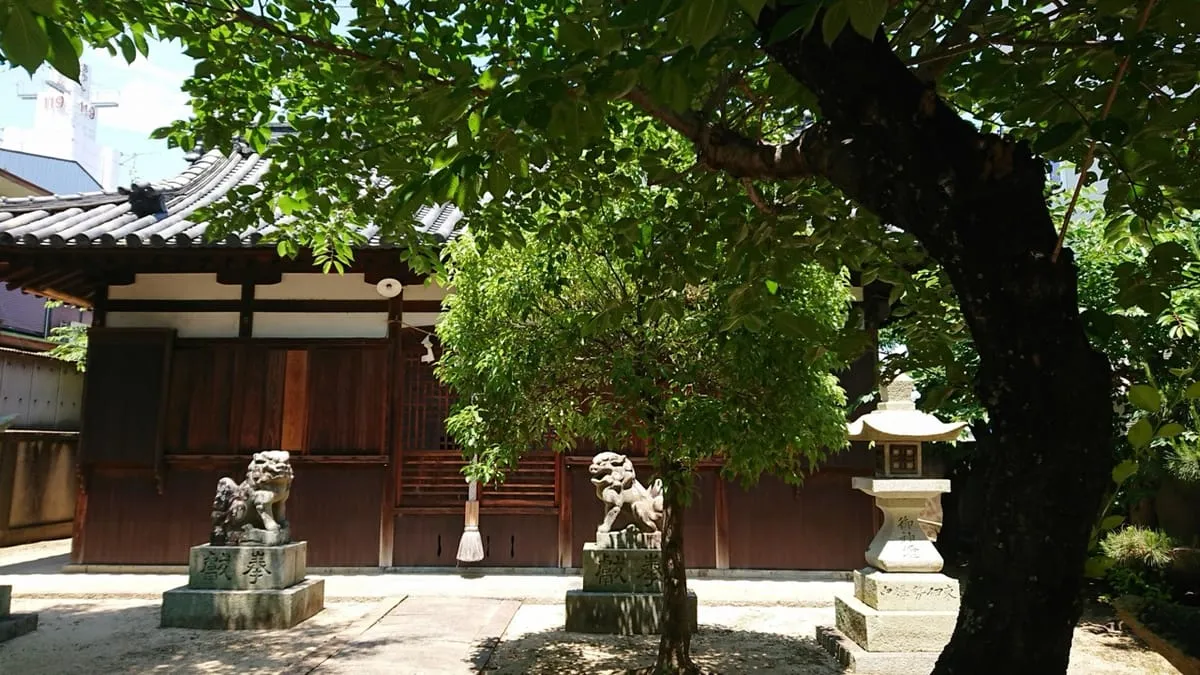
Komainu guardian lions are placed in pairs along approach paths and in front of worship halls. The pair includes an “a-gyō (mouth open)” and “un-gyō (mouth closed)” figure, serving to ward off evil.
Aesthetics of Shrine Architecture
Shrine architecture has distinctive aesthetics.
Use of Natural Materials
Shrines are fundamentally wooden structures. As a forested nation, wood is Japan’s most familiar and sacred building material. Hinoki cypress is especially prized as the finest construction material.
Symmetrical Beauty
Many shrine buildings are designed with bilateral symmetry. This symbolizes harmony and stability—one way of expressing sanctity.
Restrained Ornamentation
Shrine architecture is generally restrained in decoration. Compared to Buddhist temples, there is less gold leaf and coloring, with construction that emphasizes the beauty of materials themselves. This reflects Shinto’s emphasis on “purity.”
Regional Characteristics of Shrine Grounds
Shrines exist throughout Japan, but shrine grounds have different characteristics by region.
Urban Shrines
Shrines in cities like Tokyo and Osaka feature compact grounds that efficiently use limited land. The distance from torii to main hall is short, with buildings clustered together.
Mountain Shrines
Shrines in mountainous areas feature grounds integrated with nature. Long stone stairway approaches and halls surrounded by forest showcase layouts that utilize natural topography.
Coastal Shrines
Shrines facing the sea sometimes have torii standing over water. Famous examples include Itsukushima Shrine in Hiroshima and Oarai Isosaki Shrine in Ibaraki. These dynamic grounds change scenery with the tides.
How to Walk Shrine Grounds for Deeper Experience
Understanding the structure and meaning of shrine grounds enables deeper experiences.
Enjoying Seasonal Changes
Even the same shrine shows different expressions by season:
- Spring: Cherry blossoms adorn the grounds, conveying the power of new life
- Summer: Cool shade along approach paths thick with green leaves
- Autumn: Autumn colors add vibrancy to sanctity
- Winter: Snow-covered grounds emphasize stillness and purity
Recommendation for Early Morning Visits
Early morning shrine grounds are exceptional. With fewer people and clearer air, the sacred atmosphere feels stronger. You might also see shrine priests conducting morning cleaning, glimpsing daily shrine life.
Attention to Architectural Details
As you become more experienced, pay attention to architectural details:
- Joinery techniques
- Beauty of roof curves
- Meaning of carvings
- Metal fittings ornamentation
Shrine architecture incorporates the finest traditional Japanese craftsmanship techniques.
Goshuin and Shrine Ground Exploration
Understanding shrine structure multiplies the enjoyment when collecting goshuin.
Motifs Drawn in Goshuin
Goshuin often feature distinctive buildings and elements of that shrine:
- Characteristic torii shapes
- Shrine crests (shinmon) (the shrine’s family crest)
- Tree species of sacred trees
- Komainu and divine messenger animals
Walking the grounds to see the actual objects before receiving goshuin helps you understand the meaning of what’s depicted.
Seasonal Limited Goshuin
Many shrines prepare seasonal limited goshuin that match seasonal changes in the grounds. You can receive special editions only available during cherry blossom season, autumn foliage season, etc.
Shrine grounds aren’t just collections of buildings. From torii to main hall, the entire space weaves one religious narrative. Understanding this narrative while visiting makes shrines more accessible and profound places.
The next time you pass through a torii gate, pause to feel the meaning of the sacred space that unfolds beyond it.
Want to organize your goshuin collection digitally? Goshuin Meguri lets you manage photos of visited shrines and goshuin on a map, recording memories of shrine grounds together.
Image credit: Shrine grounds overview — Author unknown (CC BY-SA 4.0), via Wikimedia Commons. Please confirm photography-permitted areas before taking photos at each shrine.