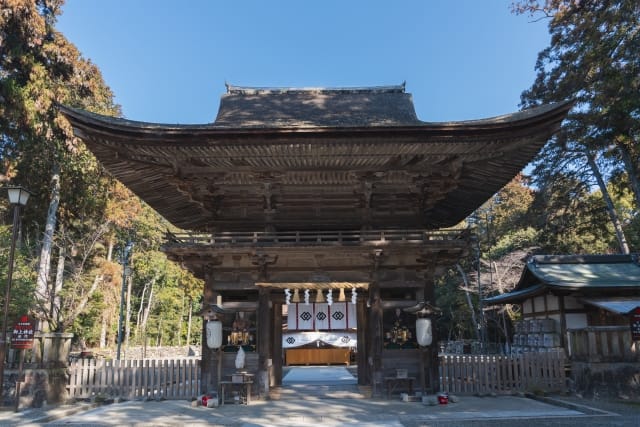
When wandering through shrine grounds, you might find yourself gazing upward at the distinctive rooflines.
There, you’ll notice architectural elements that exist nowhere else in Japanese construction: chigi and katsuogi. These are the X-shaped crossed timbers at the roof edges and the cylindrical logs lined up along the ridgeline.
These aren’t mere decorations. They’re remnants of ancient Japanese building techniques and powerful symbols of shrine sanctity. Some claim these elements can reveal whether the enshrined kami (deity) is male or female.
What secrets do shrine roofs actually hold?
What is Chigi? Ancient Architecture Preserved
Chigi refers to the crossed, X-shaped timber elements found at the ends of shrine roofs.
In ancient Japanese dwellings, builders would cross two rafters and bind them together to support the roof, then place a ridgepole on top. The protruding ends of these crossed rafters, left uncut, became the prototype for chigi.
Chigi is essentially a fossil of ancient building technology. What began as a necessary structural element evolved into decorative symbolism, now found almost exclusively in shrine architecture.
History of Chigi
The earliest literary reference appears in the Kojiki (Records of Ancient Matters), describing Izumo Taisha’s construction with “higi” (ice wood). The Nihon Shoki (Chronicles of Japan) also mentions “higi” in the Emperor Jimmu chronicles. The character “千木” (chigi) appears in the Engishiki (Procedures of the Engi Era), suggesting it was pronounced “chigi” by the mid-Heian period.
The name’s etymology includes several theories:
- “Fire prevention”: Protection against fire
- “Wind wood”: Wind resistance function
- “Thatched house wood”: Component of thatched roofing
- “Crossed wood”: Reference to intersecting timbers
Structurally, wind holes are incorporated, confirming their actual function as wind breaks.
What is Katsuogi? Ancient Wisdom for Securing Roofs
Katsuogi are the cylindrical timber elements placed perpendicular to the ridgeline on shrine roofs.
In ancient thatched architecture, heavy wooden logs were laid across rooftops to prevent thatch from blowing away in strong winds. This practice evolved into katsuogi. The name derives from their resemblance to bonito fish (katsuo) when dried into hard blocks.
Various Names for Katsuogi
Beyond “鰹木” (bonito wood), katsuogi are written with different characters:
- 堅緒木: Firmly bound wood
- 堅魚木: Hard fish wood
- 勝男木: Victorious male wood
Each variation carries different wishes and meanings embedded in the characters.
Can You Identify Deity Gender? The Truth About Folk Beliefs
You may have heard that “chigi and katsuogi can reveal whether the enshrined deity is male or female.”
Common Folk Claims
- Chigi end cuts: Vertical cuts (soto-sogi) indicate male deities, horizontal cuts (uchi-sogi) indicate female deities
- Katsuogi numbers: Odd numbers signify male deities, even numbers signify female deities
This folk belief stems from Ise Jingu, where the Inner Shrine (Naiku, dedicated to the female deity Amaterasu) uses uchi-sogi cuts, while the Outer Shrine (Geku, dedicated to the male deity Toyouke) uses soto-sogi cuts.
The Academic Reality
However, this belief is academically discredited.
According to research by the National Diet Library, “this theory is folkloric, and actual shrine architecture determines chigi and katsuogi forms based on region, period, and architectural style, regardless of deity gender.”
The differences between Ise Jingu’s Inner and Outer Shrines likely reflect their distinct historical architectural traditions rather than deity gender distinctions.
What Chigi and Katsuogi Actually Reveal: Shrine Status
While gender identification is questionable, chigi and katsuogi certainly reveal the shrine’s prestige and history.
Presence or Absence
Not all shrines feature chigi and katsuogi. Some architectural styles, like Hiyoshi-zukuri, omit these elements entirely.
Shrines with chigi and katsuogi demonstrate venerable classical dignity through their presence alone.
Material and Decorative Luxury
- Wood: Most ancient form
- Copper covering: Luxurious specification from early modern times
- Metal fittings: Found in powerful contemporary shrines
Material quality and decorative richness reflect the shrine’s economic power and regional status.
Number of Katsuogi
While katsuogi quantity doesn’t indicate deity gender, it often demonstrates shrine prestige. Imperial-related shrines and those listed in the Engishiki tend to have more katsuogi.
Ancient Aesthetics Inherited by Modern Times
Chigi and katsuogi continue to be carefully preserved in contemporary shrine architecture.
Even in New Shrines
Many post-war shrines adopt chigi and katsuogi. This isn’t merely traditionalism but recognition of these elements as symbols of shrine-ness beloved by people.
Restoration Project Reproduction
When renovating ancient shrines, chigi and katsuogi are faithfully reproduced. Craftsmen reference historical records and old photographs to restore forms as close to the original as possible.
The Joy of Looking Up During Goshuin Collection
When receiving goshuin, please look up at the roof.
Regional Variations
Even within the same prefecture, chigi and katsuogi forms and numbers vary by shrine. Older shrines often preserve unique local architectural styles.
Changes Through Time
Shrines renovated after the Meiji Restoration’s separation of Buddhism and Shintoism sometimes had chigi and katsuogi newly added or modified. These changes offer clues to the shrine’s history.
Photographing Significance
Capturing shrine roofs alongside goshuin photos helps preserve visit memories more vividly. Chigi and katsuogi forms embody each shrine’s unique character.
Divine Devotion Dwelling in Roofs
Chigi and katsuogi represent the crystallization of architectural aesthetics our ancestors crafted with reverence for the kami from ancient times to today.
While their ability to indicate deity gender remains uncertain, one thing is definite: beneath these roofs, people’s prayers and faith have accumulated for hundreds, even thousands of years.
Next time you visit a shrine, before receiving goshuin, please look up at the roof. There, invisible threads connect us to our ancient ancestors across the centuries.
Image Credit: Chigi-Katsuogi by あじさか, licensed under CC BY-SA 4.0