When visiting Japanese shrines, you’ll often encounter stone lanterns (石灯籠, ishi-dōrō) throughout the grounds. These lanterns, which cast warm light in the evening, are far more than simple lighting fixtures. Each type has deep historical significance and meaning, with careful classifications based on their shape and purpose.
This guide explores the types and history of stone lanterns commonly found in Japanese shrines and gardens.
History and Meaning of Stone Lanterns
Ancient Origins
Stone lanterns have ancient roots dating back to the Nara period (710-794). Originally introduced from continental Asia, they were first used in Buddhist temples to illuminate Buddhist statues and sacred spaces.
The oldest surviving stone lanterns date to the late Nara period. During the Heian period (794-1185), with the rise of shinbutsu-shūgō (syncretism of Shintoism and Buddhism), these lanterns began appearing in Shinto shrines as well.
Significance in Shrines
According to the Jinja Honchō (Association of Shinto Shrines), stone lanterns are “dedicated by worshippers with the purpose of lighting sacred flames before the kami to pray for divine protection.”
According to Shinto priests, fire holds sacred meaning with several purposes:
- Symbol of sanctity - Fire itself is considered sacred
- Marker of sacred space - Designates the realm of the kami
- Protection from evil - Repels malevolent forces
- Practical illumination - Serves functional lighting and security purposes
Major Types of Stone Lanterns
Kasuga Lanterns (春日灯籠, Kasuga-dōrō)
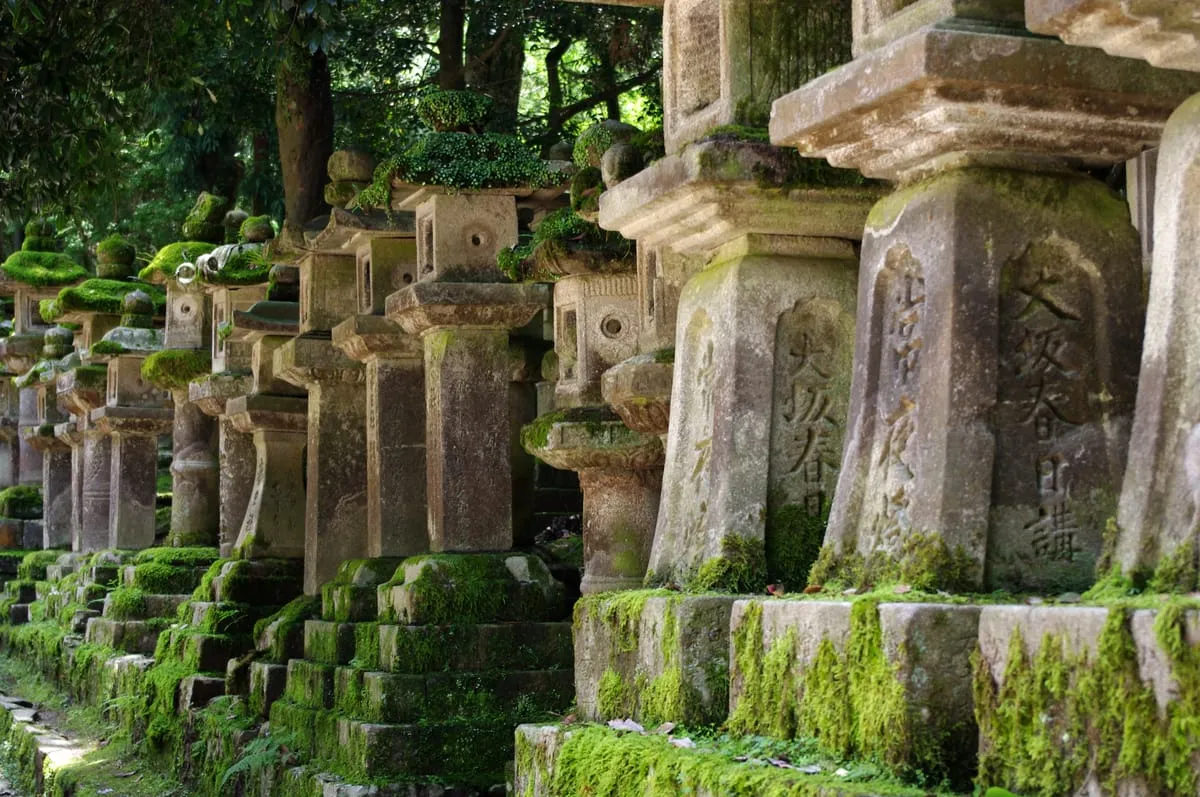
Characteristics:
- Distinctive hexagonal fire chamber (hibukuro)
- Solid foundation structure
- Fire chamber faces carved with deer, cloud-shaped sun and moon motifs
- Most common type found throughout Japan’s shrines
History: Named after Kasuga Taisha in Nara Prefecture, this style became the standard form for shrine architecture. Kasuga Taisha’s approach pathways feature approximately 3,000 stone lanterns, creating one of Japan’s most spectacular lantern displays.
Notable Features:
- Fire chamber carvings: Male and female deer, cloud-shaped sun and moon patterns
- Dignified, formal aesthetic
- Size variations reflecting the shrine’s status
Yukimi Lanterns (雪見灯籠, Yukimi-dōrō)
Characteristics:
- Low, sturdy build
- Large, flat roof (kasa)
- Short or sometimes absent foundation
- Commonly placed near water features or in gardens
History: This style developed from the late Muromachi period (1336-1573) through the Azuchi-Momoyama period (1573-1603). As the name suggests (“snow-viewing lantern”), they were designed to be appreciated with snow accumulated on their roofs.
Purpose:
- Japanese garden decoration
- Tea garden ambiance
- Placement beside ponds and streams
- Enhancing moon-viewing and snow-viewing experiences
Variations:
- Maru-yukimi: Circular roof type
- Kaku-yukimi: Square roof type
- Sankyaku-yukimi: Three-legged support type
Oribe Lanterns (織部灯籠, Oribe-dōrō)
Characteristics:
- Square fire chamber
- Different shaped openings on each face
- Often placed near tsukubai (stone water basins)
- Low height with rustic, understated design
History: Created during the late Azuchi-Momoyama to early Edo periods, these lanterns reflect the aesthetic preferences of tea master Furuta Oribe (1544-1615). They embody the “wabi-sabi” spirit of tea ceremony—finding beauty in simplicity and imperfection.
Role in Tea Gardens:
- Illumination for tsukubai
- Lighting for evening tea ceremonies
- Creating atmosphere in the roji (tea garden path)
- Seasonal ambiance enhancement
Other Stone Lantern Types
Yama Lanterns (山灯籠, Mountain Lanterns)
Commonly found at mountain shrines, these lanterns utilize natural stone with minimal artificial processing, emphasizing harmony with the natural environment.
Misaki Lanterns (岬灯籠, Cape Lanterns)
Installed at seaside shrines, these lanterns also function like lighthouses and carry prayers for maritime safety.
Ikekomi Lanterns (活込み灯籠, Embedded Lanterns)
Buried directly into the ground without a foundation, these lanterns allow height adjustment and are used to complement garden landscapes.
Stone Lantern Structure
Stone lanterns typically consist of these components:
- Foundation (Kiso) - Base platform at the bottom
- Post (Sao) - Central supporting column
- Fire Chamber (Hibukuro) - Section containing the light, with decorative openings
- Roof (Kasa) - Top covering that protects from rain
- Jewel (Hōju) - Uppermost ornamental element, modeled after Buddhist pagoda finials
Regional Characteristics
Kansai Region
Influenced by Kasuga Taisha, featuring many Kasuga-style lanterns with formal, dignified construction.
Kantō Region
Influenced by Edo period merchant culture, showing somewhat more decorative elements.
Kyūshū Region
Unique designs influenced by cultural exchanges with China and the Korean Peninsula.
Modern Stone Lanterns
Stone lanterns continue to be created and installed today. Traditional techniques are preserved by master stone craftsmen who hand-carve each lantern, with these skills protected as intangible cultural properties in some regions.
Modern innovations include LED-integrated stone lanterns, representing a fusion of tradition and contemporary technology.
Appreciating Stone Lanterns
When observing stone lanterns at shrines and gardens, consider these aspects:
- Style identification - Distinguish between Kasuga, Yukimi, and other basic forms
- Carved motifs - Examine the openwork patterns in the fire chamber
- Placement intention - Consider why the lantern was positioned in that specific location
- Historical context - When was it made and what prayers were invested in it
- Materials and techniques - Note the stone types and craftsmanship methods used
Conclusion
Stone lanterns represent artistic achievements born from Japan’s religious architecture and garden culture. The formal beauty of Kasuga lanterns, the atmospheric presence of Yukimi lanterns, and the tea ceremony spirituality expressed in Oribe lanterns—each offers distinct charm.
On your next shrine visit, take time to appreciate these stone lanterns. They embody the aesthetic sensibilities and faith of previous generations, continuing to illuminate Japan’s sacred and cultural spaces.
Images used in this article are sourced from Wikimedia Commons and used under appropriate licenses.