Walk through any large shrine in Japan and you’ll pass through an impressive gate between the torii and the main hall. Most visitors walk right through without a second glance — but these gates have names, histories, and stories built into their beams.
Romon, zuijinmon, shinmon — different names, different structures, different purposes. Once you know the differences, you’ll start noticing them everywhere.
Torii vs. Gates — What’s the Difference?
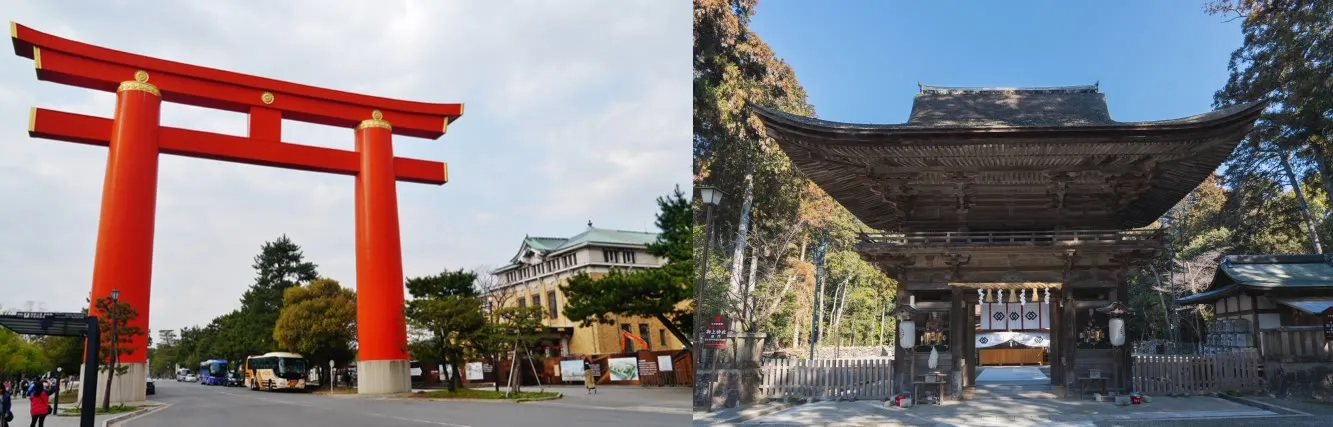
Torii and gates serve fundamentally different purposes.
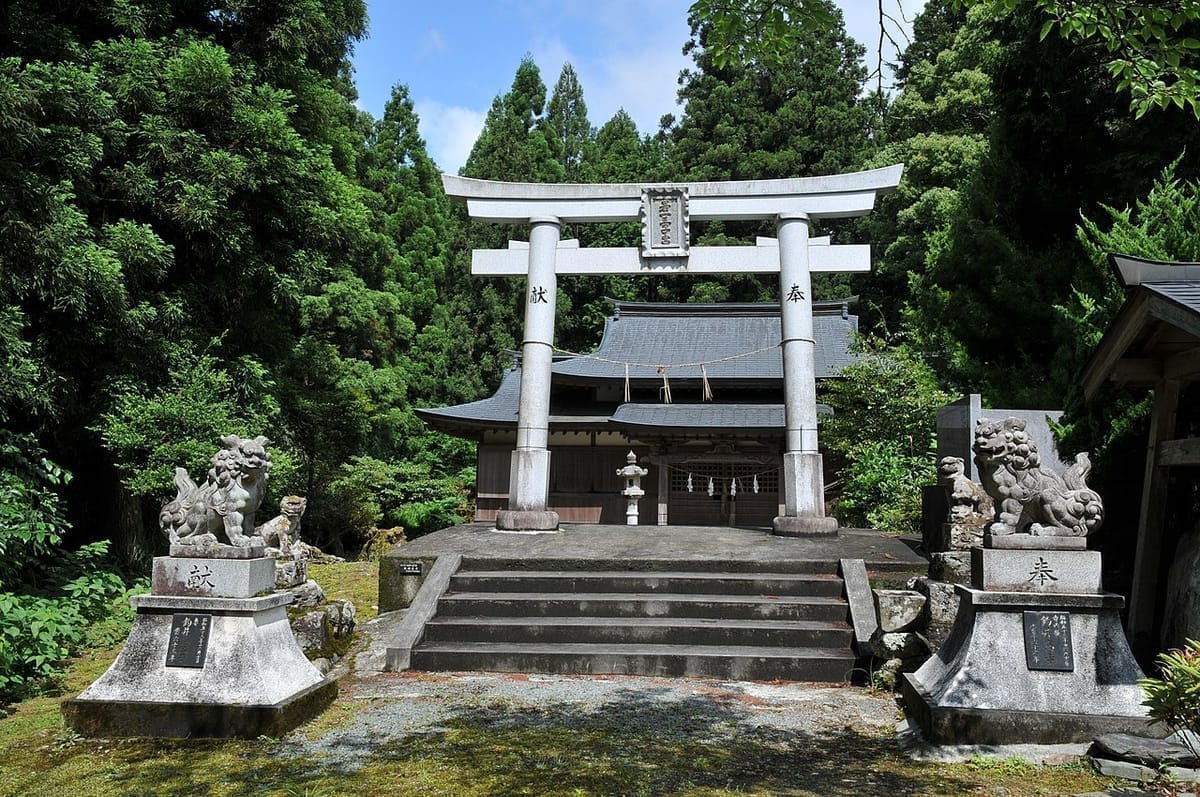
A torii is just pillars and a crossbeam. No roof, no walls, no doors. It’s a symbolic marker — “you’re entering sacred space now” — but it can’t actually stop anyone from entering.
A gate (mon) has a roof and can have doors. It physically closes. If the torii is a symbolic boundary, the gate is an actual one.
Types of Shrine Gates
The five main types you’ll encounter:
- Romon (楼門) — Two-story tower gate. The most prestigious
- Zuijinmon (随神門) — Houses guardian deity statues on both sides
- Shinmon (神門) — Simple gate without guardian statues
- Shikyakumon (四脚門) — “Four-legged gate” with stabilizing subsidiary pillars
- Hakkyakumon (八脚門) — “Eight-legged gate,” a grander version of the above
These categories overlap freely. A gate can be a romon and a zuijinmon at the same time. The names describe structure and function independently.
Romon | The Two-Story Statement
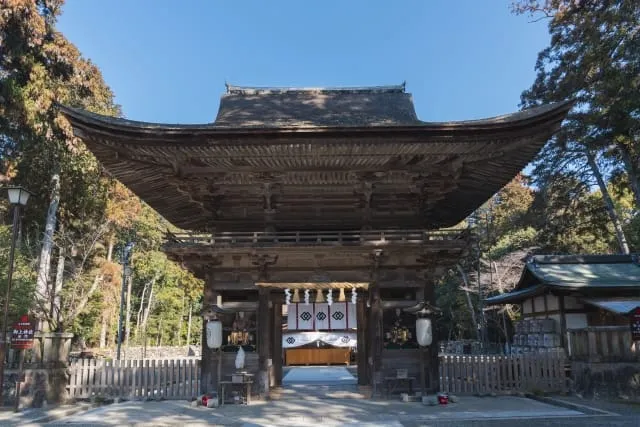
A romon is the most imposing gate in shrine architecture. It has two tiers — looks like a two-story building — but here’s the thing: you can’t actually go upstairs. The upper level is purely decorative, with a veranda and railing (en and kōran) that nobody walks on.
What to Look For
- Lower level — The passage you walk through
- Upper level — Decorative platform with railings. Sometimes houses statues or sacred objects
- Roof style — Usually irimoya-zukuri (hipped-gable). The fancier the roof, the wealthier the shrine was
The size of a romon was a direct statement of power. Building one required serious resources. That’s why “Japan’s Three Great Romon” became a thing — gate size was the ranking system.
Romon vs. Nijūmon (True Two-Story Gate)
They look almost identical, but a nijūmon has actual stairs to the upper level. Romon = decorative second floor. Nijūmon = functional second floor. Buddhist temples tend to have nijūmon; shrines almost always have romon.
Zuijinmon | The Gatekeeper is a Nobleman
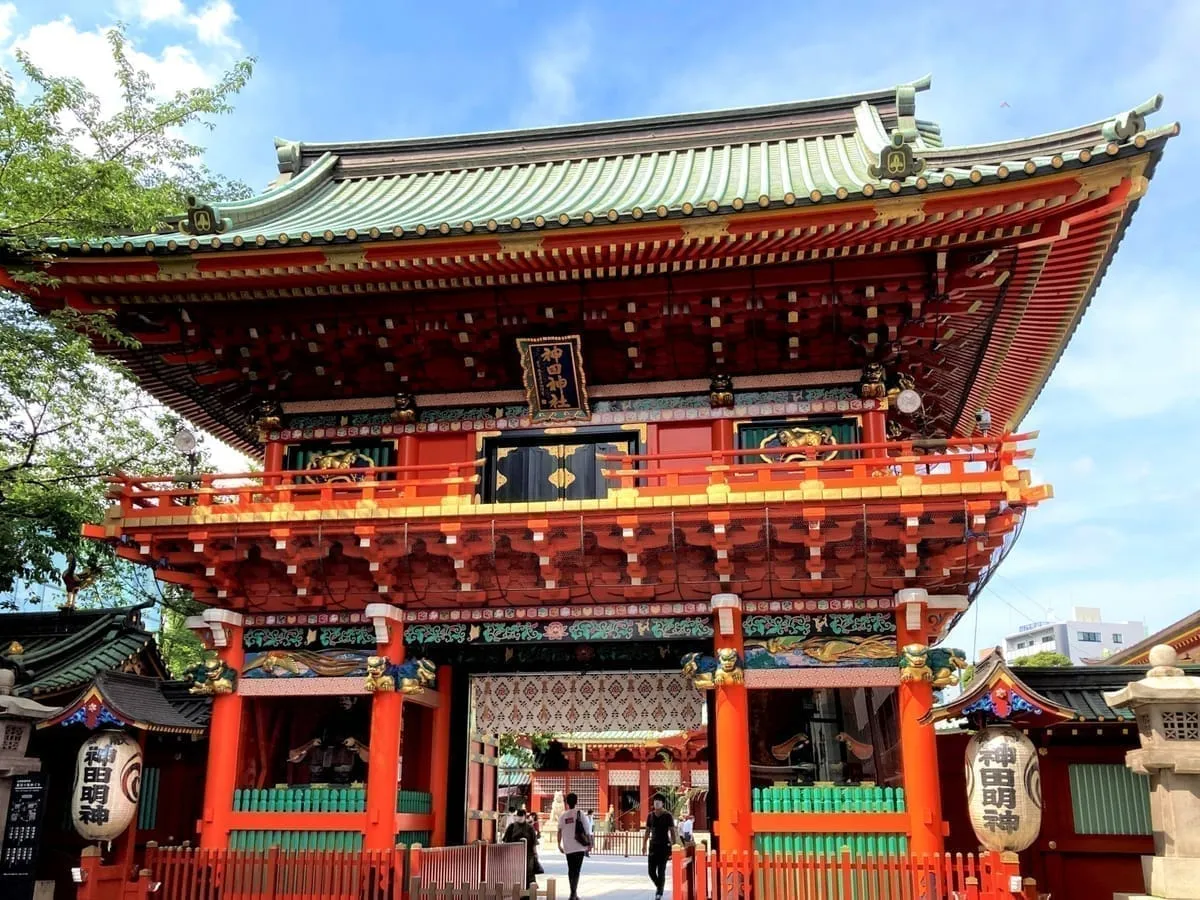
A zuijinmon has a pair of zuijin statues — divine guardians standing on either side of the entrance, watching everyone who passes through.
If you’ve been to a Buddhist temple, you’ve probably seen the niō (Deva Kings) — those muscular, fierce, half-naked guardian figures. Zuijin are the Shinto equivalent, but they couldn’t look more different.
The Two Guardians
- Right Minister (Ya-daijin) — On your right as you face the gate. Usually holds a bow and arrows
- Left Minister (Sa-daijin) — On your left. Often carries a sword
Both wear sokutai — the full formal court dress of Heian-period aristocracy. Not a bare chest in sight. Where niō intimidate through raw physical power, zuijin project authority through composure. Think less “bouncer” and more “armed diplomat.”
Why They Look Like Buddhist Temple Guardians (But Different)
Before 1868, Buddhism and Shinto were deeply intertwined in Japan. Many shrine gates actually housed niō statues, not zuijin. When the Meiji government forcibly separated Buddhism from Shinto, those muscular niō were removed and replaced with aristocratic zuijin.
Some zuijinmon you see today started their lives as niō gates. The building stayed; only the guardians changed. It’s a physical reminder of one of the most dramatic religious policy shifts in Japanese history.
Gate Structures by Pillar Count
Gates are also classified by how many pillars hold them up.
Shikyakumon — Four-Legged Gate
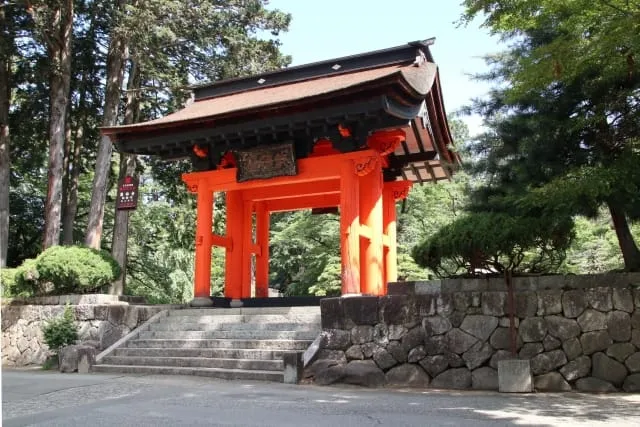
Two main pillars plus subsidiary pillars in front and behind — four pillars visible from the front. The extra supports allow for a larger, heavier roof. Often used as chokushimon (imperial envoy gates) — gates reserved exclusively for the emperor’s messengers. These are usually kept closed, and regular visitors never pass through them.
Hakkyakumon — Eight-Legged Gate
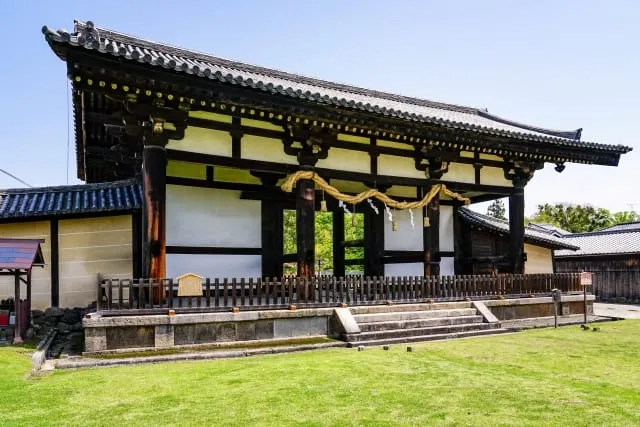
The shikyakumon taken to the next level — eight pillars supporting an even grander structure. Sumiyoshi Taisha in Osaka has a famous example. When you see one, you know you’re at a major shrine.
Munaemon — Ridge Gate
Two pillars, one roof. That’s it. The most basic gate form. Found at smaller shrines and sub-shrines within larger compounds. Don’t dismiss them — a clean, well-proportioned munaemon has its own kind of beauty.
Famous Gates to Visit
Kashima Jingū Romon (Ibaraki)
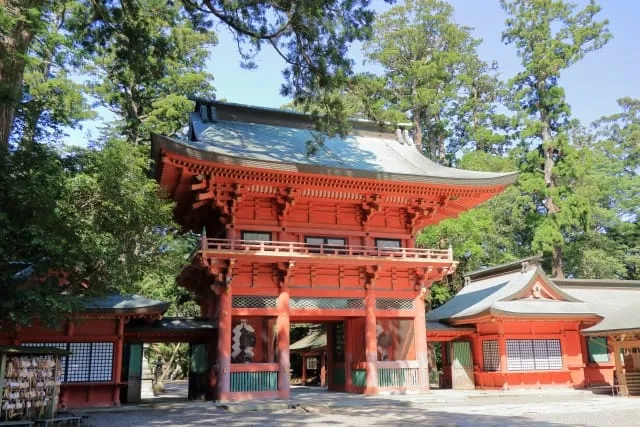
One of Japan’s Three Great Romon. This vermilion tower stands about 13 meters tall and dominates the approach through ancient cedar forest. The current gate dates to 1634, donated by Tokugawa Yorifusa, the first lord of the Mito domain.
The other “Three Great Romon” are typically listed as Aso Shrine (Kumamoto) and Hakozaki-gū (Fukuoka), though opinions vary.
Ikisu Shrine Shinmon (Ibaraki)
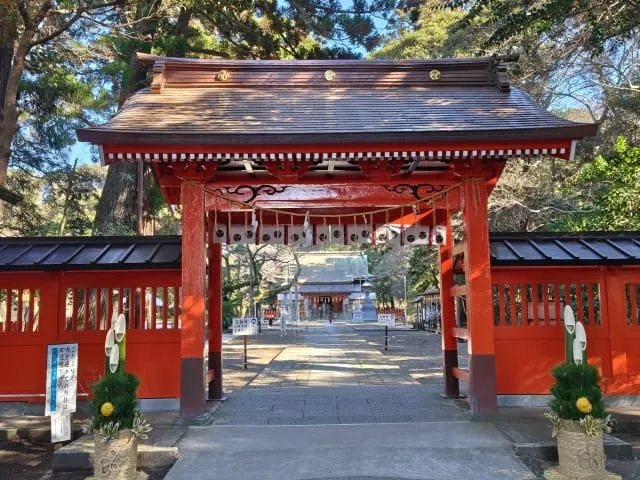
Part of the Three Great Shrines of the East (Tōgoku Sansha) alongside Kashima Jingū and Katori Jingū. Quieter and less famous than its two partners, but the vermilion shinmon framing the main hall is genuinely beautiful.
The Three Eastern Shrines pilgrimage was a popular route during the Edo period — considered comparable in prestige to the Ise pilgrimage. Comparing the gates at each shrine makes for a natural architectural tour.
Kasuga Taisha South Gate (Nara)
The south gate (Nandaimon) of Kasuga Taisha stands 12 meters tall and is designated an Important Cultural Property. Beyond it, vermilion corridors extend in both directions, leading to the main sanctuaries.
Kasuga Taisha has multiple gates — the Keiga-mon, Seijō-mon, Naishi-mon — each with its own history and function. It’s the kind of shrine where gates alone could fill an afternoon.
Gate Etiquette
Stay Off Center
The center of a gate, like the center of a torii, is the deity’s path (sei-chū). Walk slightly to one side.
Bow Before Entering
A small bow as you pass through. Not performative — just a moment of awareness that you’re crossing into sacred space.
Don’t Block the Passage
Resist the urge to stop under the gate for photos. Pass through first, then turn around.
Study the Zuijin
If the gate has guardian statues, look at them. Really look. Their facial expressions, their clothing, what they’re holding. Every shrine’s zuijin is different — shaped by the era and the hands that carved them. Some are stern, some look almost gentle. Each pair tells a story.
See the Gate, See the Shrine
Most people rush through gates without noticing them. That’s a missed opportunity.
A romon tells you the shrine had serious political and financial backing. Zuijin statues carry centuries of religious history in their carved wooden faces. A closed shikyakumon means there’s a door reserved for the emperor’s envoy — and has been for a thousand years.
Next time you visit a shrine, give the gate five seconds. Look at the roof, count the pillars, check for guardian statues. It takes almost no extra time, but it changes what you see.