When you enter any Shinto shrine grounds, there’s one place most people visit first: the chozuya (手水舎) — sometimes called temizuya — the purification fountain.
This small building with flowing water isn’t just your first stop; it’s where your shrine visit officially begins. The act of washing hands and mouth here isn’t about hygiene alone. Water purification represents the foundation of Japanese spirituality and aesthetics.
Chozuya architecture has evolved dramatically over time, from ancient simple water basins to today’s elaborate flower displays. This evolution reveals how Japanese concepts of the divine have changed while the core purification ritual remains constant.
The Meaning of Temizu | Why Water Purifies
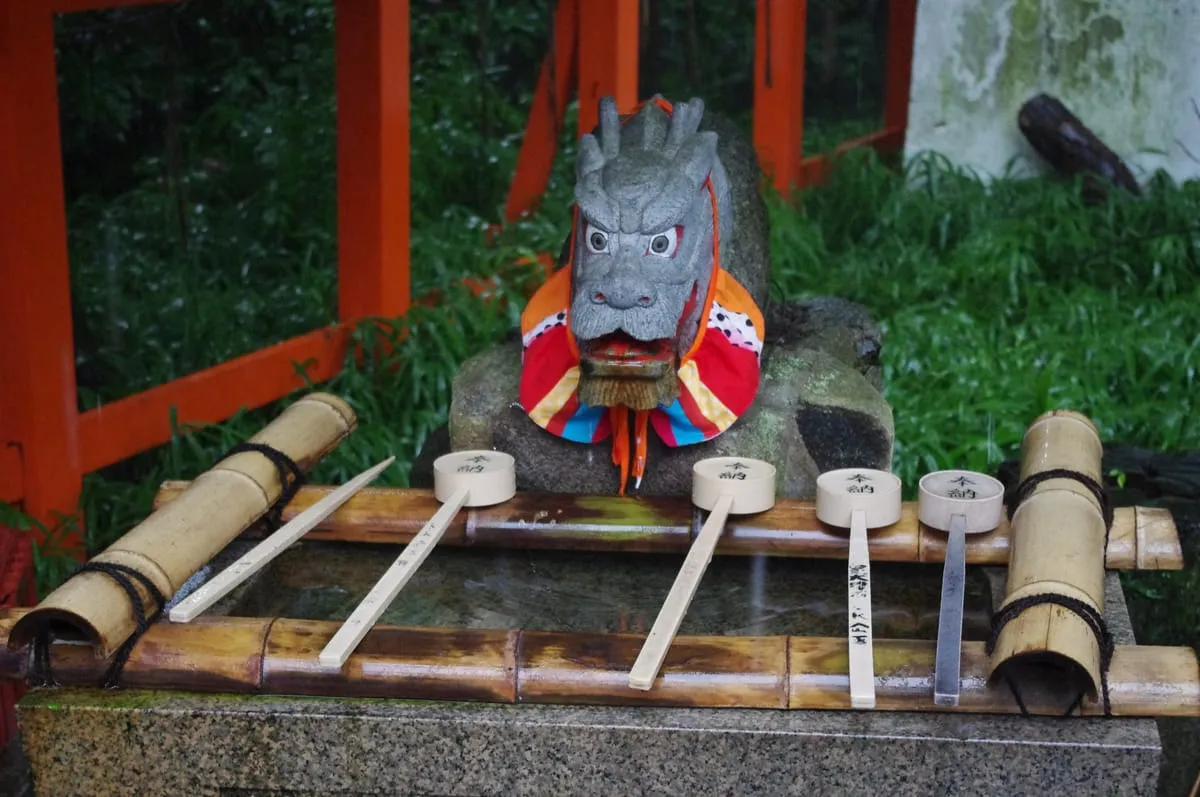
The temizu habit emerges from Shinto’s fundamental worldview: removing “kegare” (spiritual impurity) to achieve “seijō” (purity) before approaching the divine. This forms the bedrock of Japanese religious sensibility.
Connection to Ancient Misogi
Originally, proper preparation for meeting deities required full-body purification (misogi) in rivers or the ocean. The Kojiki chronicles Izanagi’s purification, and Heian-period aristocrats regularly performed misogi. Water-based purification runs deep in Japanese culture.
The chozuya represents a simplified version of this full ritual. As shrines developed in urban areas without nearby rivers, they created on-site water facilities so visitors could easily perform purification.
Beyond Physical Cleanliness
Temizu doesn’t just wash away literal dirt. It cleanses mental fog, daily distractions, and worldly energy. The water flows away these impediments, creating a sacred state of mind.
That’s why temizu follows specific steps, not casual handwashing. Each movement has purpose.
Proper Temizu Procedure | The 6 Steps
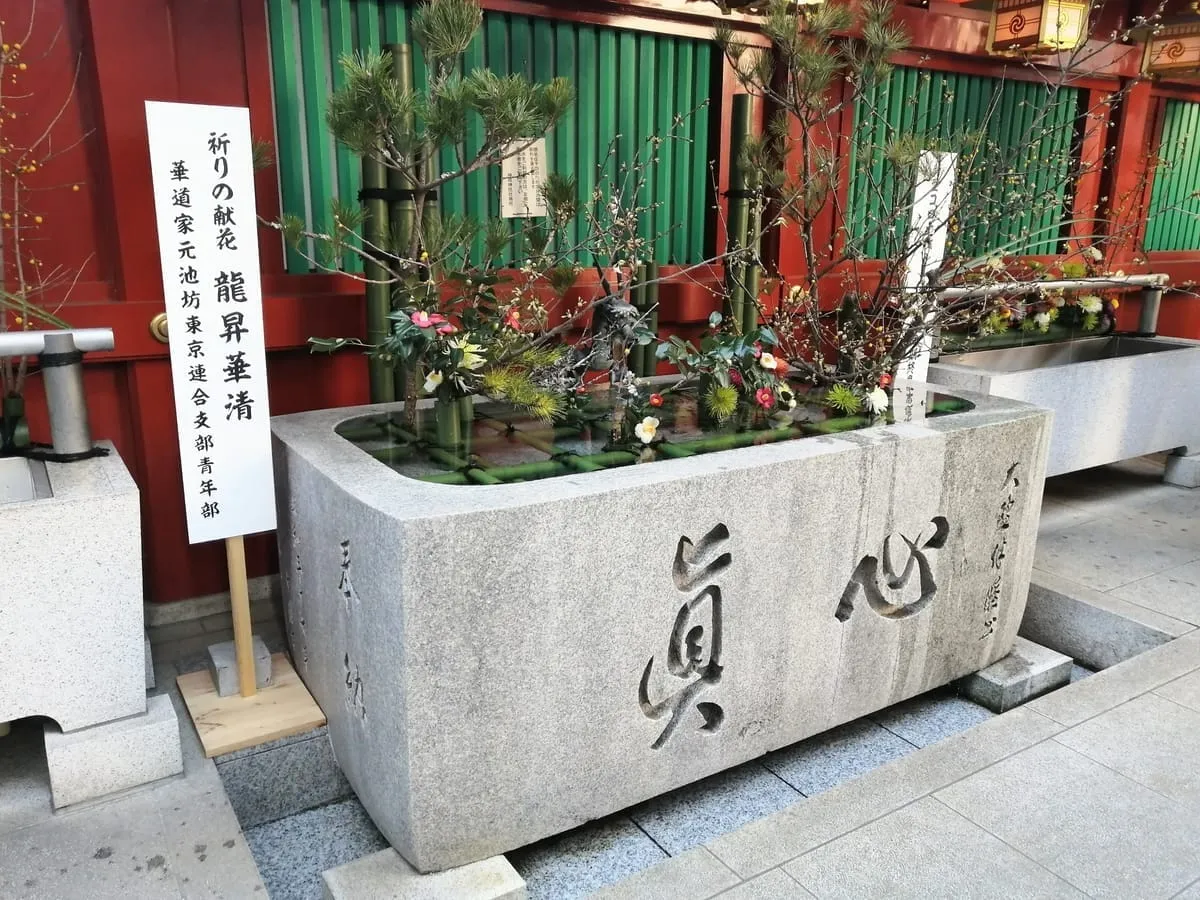
The temizu procedure is essentially identical at shrines across Japan. While simple once learned, each step carries deep significance.
1. Take the Ladle with Right Hand, Cleanse Left Hand
Begin by holding the ladle (hishaku) in your right hand, scoop water, and pour over your left hand. Starting with the right reflects its status as the “yang” hand. Wash thoroughly from back to palm to fingertips.
2. Switch Ladle to Left Hand, Cleanse Right Hand
Now transfer the ladle to your left hand and cleanse your right hand the same way. Purifying both hands removes physical and spiritual impurities.
3. Return Ladle to Right Hand, Cup Water in Left Palm for Mouth Rinsing
Hold the ladle in your right hand again, cup water in your left palm, and rinse your mouth. Never drink directly from the ladle. Using your hand as an intermediary adds another purification stage.
4. Cleanse Left Hand Again
Wash your left hand once more since it touched your mouth and absorbed oral impurities.
5. Hold Ladle Vertically, Cleanse the Handle
Finally, tip the ladle vertical and use remaining water to wash the handle. This ensures the next person receives a clean ladle.
6. Place Ladle Face-Down
Set the ladle face-down to prevent water accumulation and maintain cleanliness.
Chozuya Architectural Styles | Changing Aesthetics Through Time
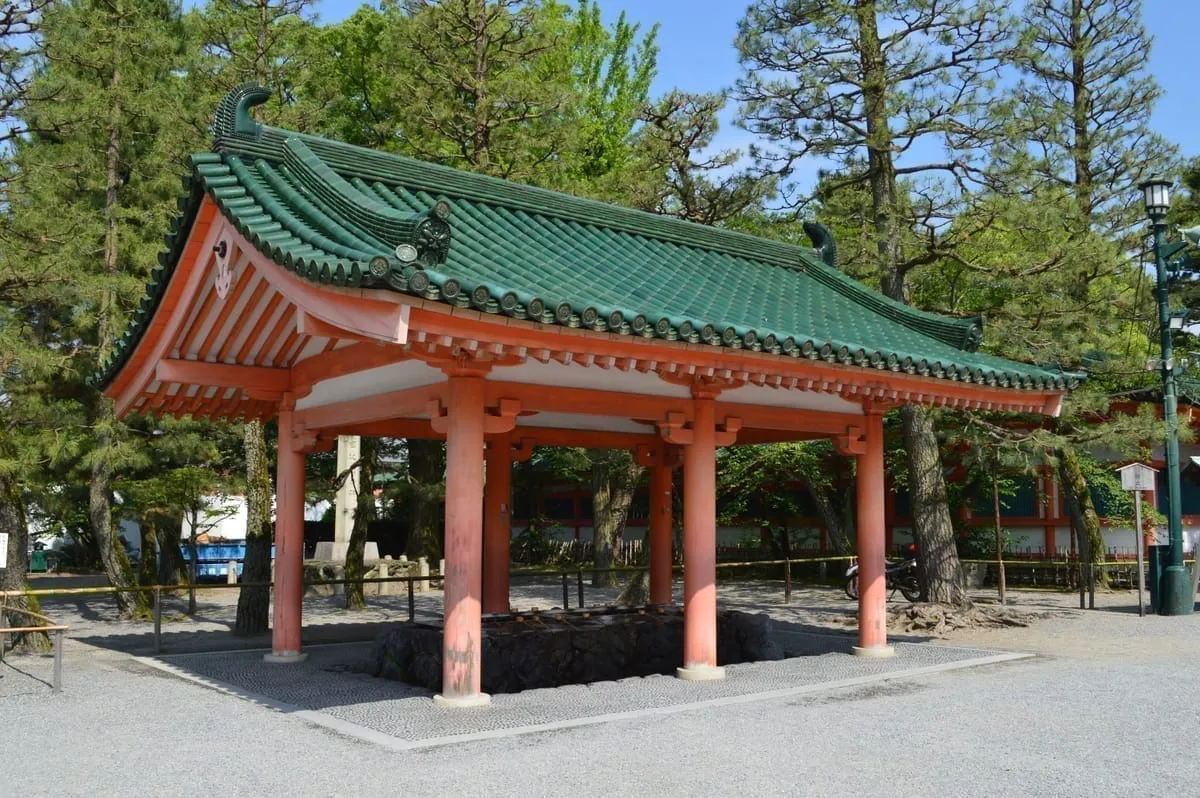
Chozuya architecture broadly divides into classical and contemporary styles, each reflecting the technology and aesthetics of its era.
Classical Chozuya Features
Four-Pillar Hip-and-Gable (Yonhonbashira Kiritsuma-zukuri)
The most traditional form: four pillars supporting a gable roof. This simple, dignified style appears at prestigious shrines like Fushimi Inari Taisha and Heian Shrine.
- Harmonizes with wooden architecture
- Natural materials (wood, stone, tile)
- Bilateral symmetry with beautiful proportions
Hexagonal & Octagonal Halls
Chozuya with polygonal floor plans. The water pavilion near Todaiji’s Nigatsu-do exemplifies this approach. These show Buddhist influence with more decorative styling.
Curved Gable (Karahafu-zukuri)
Featuring curved rooflines, this ornate style developed during the Momoyama and Edo periods. Examples can be found around Nikko Toshogu’s grounds.
Contemporary Chozuya Features
Minimal Design
Influenced by modern architecture, these simple, functional chozuya eliminate unnecessary decoration, prioritizing cleanliness and usability.
Universal Access
Designs accommodate wheelchair users with appropriate heights and slip-resistant flooring. These adapt to social changes ensuring all visitors can participate.
Environmental Consideration
Features include water recycling systems, LED lighting, and solar panels, reducing environmental impact for sustainable shrine operations.
Hana-Chozu | The New Shrine Experience
Recent years have seen many shrines adopting hana-chozu — floating seasonal flowers on chozuya water surfaces to create beautiful displays.
How Hana-Chozu Began
Hana-chozu spread during COVID-19 as shrines removed shared ladles for infection control. What began as a health measure became popular for its beauty, spreading nationwide.
The Meaning of Hana-Chozu
This isn’t mere decoration. It embodies Japanese seasonal aesthetics, harmony with nature, and thoughtfulness toward visitors.
Enjoying Hana-Chozu
- Appreciate seasonal changes
- Beautiful photography opportunities
- Some shrines offer limited goshuin designs
Note that hana-chozu is for viewing. Actual hand-washing facilities are usually provided separately.
Regional Chozuya Characteristics
Chozuya across Japan reflect their regions’ climate, culture, and available materials.
Kanto & Kansai Chozuya
- Primarily wooden construction
- Tile roofs are standard
- Sometimes feature bamboo spouts
Kyushu Chozuya
- Many stone constructions
- Incorporate subtropical plants
- Volcanic rock creates powerful designs
Hokkaido & Tohoku Chozuya
- Snow-resistant design considerations
- Freeze-prevention measures
- Steep roof angles for snow shedding
Okinawa Chozuya
- Ryukyu architectural influences
- Coral stone usage
- Low typhoon-resistant construction
The Secret of Chozuya Water | Where Does It Come From?
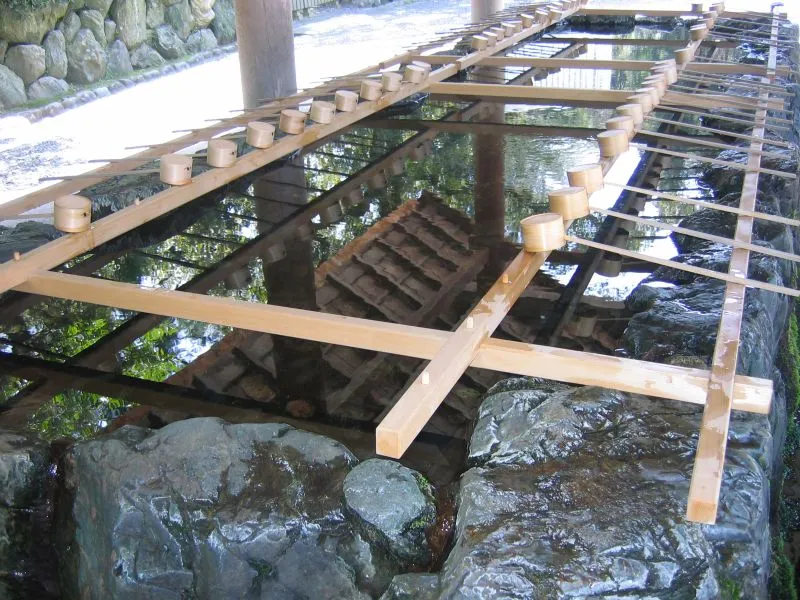
The water source varies significantly between shrines, adding deeper meaning to purification based on its origin.
Spring Water & Mountain Streams
The most prestigious water source. Established shrines often have springs on or near their grounds. This water represents divine blessing itself.
- Meiji Shrine (Kiyomasa’s Well water)
- Kumano Hongu Taisha (Kumano River system)
- Kamigamo Shrine (Nara-no-ogawa stream)
Well Water
Common at urban shrines. Pure groundwater pumped up. Some shrines maintain traditional hand pumps.
Tap Water
Modern shrines or urban locations without natural sources. With proper intention, tap water serves purification purposes adequately.
Recirculating Systems
Environmental awareness drives water recycling systems. Filters maintain continuous cleanliness.
Chozuya Photography Etiquette
Hana-chozu popularity has made chozuya popular photo spots. However, remember these are worship facilities first.
Photography Mindset
- Worshippers have priority. Don’t obstruct people performing purification
- Avoid long occupation of the space
- No flash photography
- Tripod use requires shrine permission
Recommended Photo Times
- Early morning — fewer people, cleaner water
- Evening — sunset reflections on water
- Night illumination — at participating shrines
Post-Photography Manners
Don’t just photograph — actually worship too. Shrines are sacred spaces, not tourist attractions.
Enjoying Chozuya During Goshuin Collecting
Visiting multiple shrines for goshuin collection reveals chozuya’s diversity and beauty. Even sharing the same “purification” function, each has distinct character.
Chozuya Checklist
- Architectural style — Classical or contemporary?
- Water sound — What type of flow?
- Surrounding plants — Seasonal elements?
- Stone and wood materials — Regional characteristics?
- Hana-chozu presence — Seasonal specials?
Chozuya-Themed Goshuin
Recent trends include chozuya-motif goshuin designs. Shrines famous for hana-chozu sometimes offer special limited designs.
Four-Season Enjoyment
- Spring — Cherry blossom hana-chozu
- Summer — Cool blue flowers
- Autumn — Maple leaves and chrysanthemum displays
- Winter — Camellia and pine greenery
The Purifying Heart | Japanese Aesthetics in Water
Chozuya represent masterful Japanese architecture combining function with beauty. Performing religious purification in beautiful spaces exemplifies distinctive Japanese cultural sensibility.
Fusion of Architecture and Faith
The chozuya’s roof curves, pillar proportions, and stone arrangements all function as devices guiding visitors toward pure states of mind.
Harmony with Nature
Water sounds, surrounding plants, and seasonal changes make chozuya spaces where nature and architecture merge. Urban locations that still provide connection to natural energy.
Hospitality Spirit
Hana-chozu expresses the desire to show visitors beautiful things — the spirit of omotenashi. Contemporary aesthetic expression created jointly by shrines and local communities.
Summary | Shrine Visits Begin with Purification
Chozuya purification serves as the prologue to shrine worship. Here you cleanse body and mind, preparing for the sacred realm.
From ancient to modern times, the unchanging heart of “purification.” Continually evolving architecture and aesthetics. Both are embedded in chozuya.
Next time you visit a shrine, pause at the chozuya. Listen to the water sounds, observe the building’s beauty, and perform the purification steps mindfully.
The goshuin you receive afterward carries proof of approaching the divine with a purified heart. Goshuin collecting begins with these small accumulations of purification.
Image Licenses
- Fushimi Inari Taisha Chozuya: 663highland, CC BY-SA 3.0, Wikimedia Commons
- Temizu Steps Diagram: Tomomarusan, CC BY-SA 3.0, Wikimedia Commons
- Heian Shrine Chozuya: Mc681, CC BY-SA 3.0, Wikimedia Commons
- Kanda Myojin Hana-chozu: Yahoobuta, CC BY-SA 4.0, Wikimedia Commons