The last page of your goshuincho is filled. Every accordion fold holds a stamp, every spread shows a shrine’s ink and seal. This moment has a name in Japanese: manganrei (満願).
The word comes from pilgrimage tradition — the completion of a vow, the fulfillment of a circuit. When the last temple in a 88-site route is visited, that’s manganrei. When your stamp book has no empty pages left, the same word applies. Not a grand ending, but a real one: one book of your life as a pilgrim, now complete.
The question, then, is what to do next.
What “Retiring” a Goshuincho Means
In Japanese, the relevant verb is osameru (納める) — a word that means to store, to put away, and to offer or dedicate, all at once. When a goshuincho reaches manganrei, you osameru it. The exact form that takes depends on you.
There are three main paths:
- Keep it at home
- Donate it to a shrine or temple
- Have it ritually burned (otaki-age)
None of these is more correct than the others. The one consistent principle is that a goshuincho shouldn’t be treated carelessly — it holds impressions made by shrine priests and temple monks, ink and seal pressed onto paper in sacred spaces. How you handle it afterward reflects that.
Keeping It at Home
The most common choice, and the simplest: put it somewhere safe and keep it.
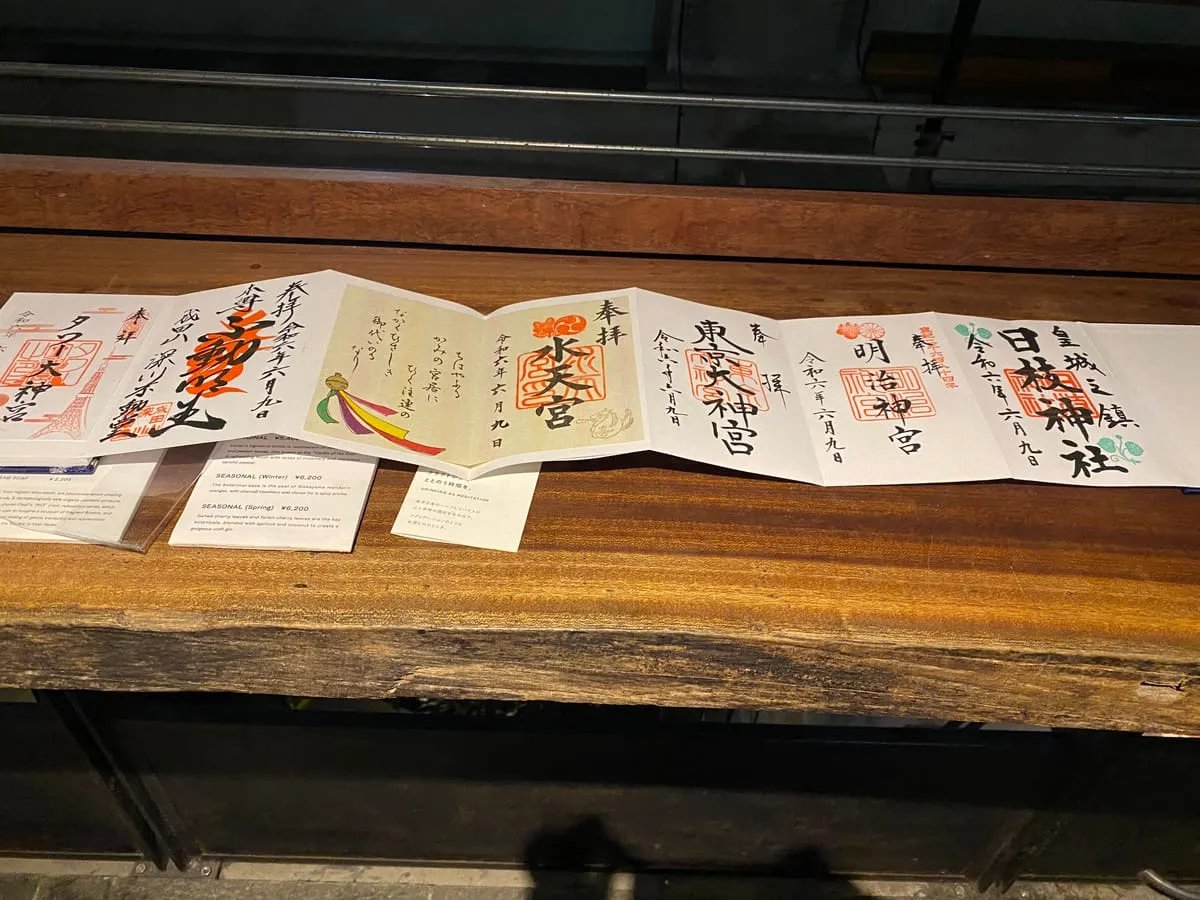
A goshuincho is essentially a handmade accordion book of washi paper. Like any handcrafted paper object, it benefits from being kept away from direct sunlight, humidity, and heat. If you have multiple books accumulating, a paulownia wood box (kiri bako, 桐箱) or acid-free archival storage is ideal.
Where to keep it is a matter of both practicality and sensibility. Many Japanese households place retired goshuincho near the household altar (butsudan) or the family god shelf (kamidana) — treating them as objects with sacred associations rather than ordinary souvenirs. Storing them on a high shelf, rather than the floor, reflects the same instinct.
One practical tip: write the dates and locations on the cover or spine before putting a book away. “March 2023 – October 2024” or “Ise and Kumano pilgrimage” will mean far more in ten years than a blank cover.
Donating to a Shrine or Temple
Some people prefer to return a completed goshuincho to a sacred place — donating (honou, 奉納) it as an offering.
Donation is a deep-rooted practice in Shinto and Buddhist tradition. Votive plaques (ema), ritual offerings, musical performances — all of these are forms of honou, gifts offered in gratitude or completion. A goshuincho can be offered in the same spirit: a record of visits, returned to the divine as a thank-you.
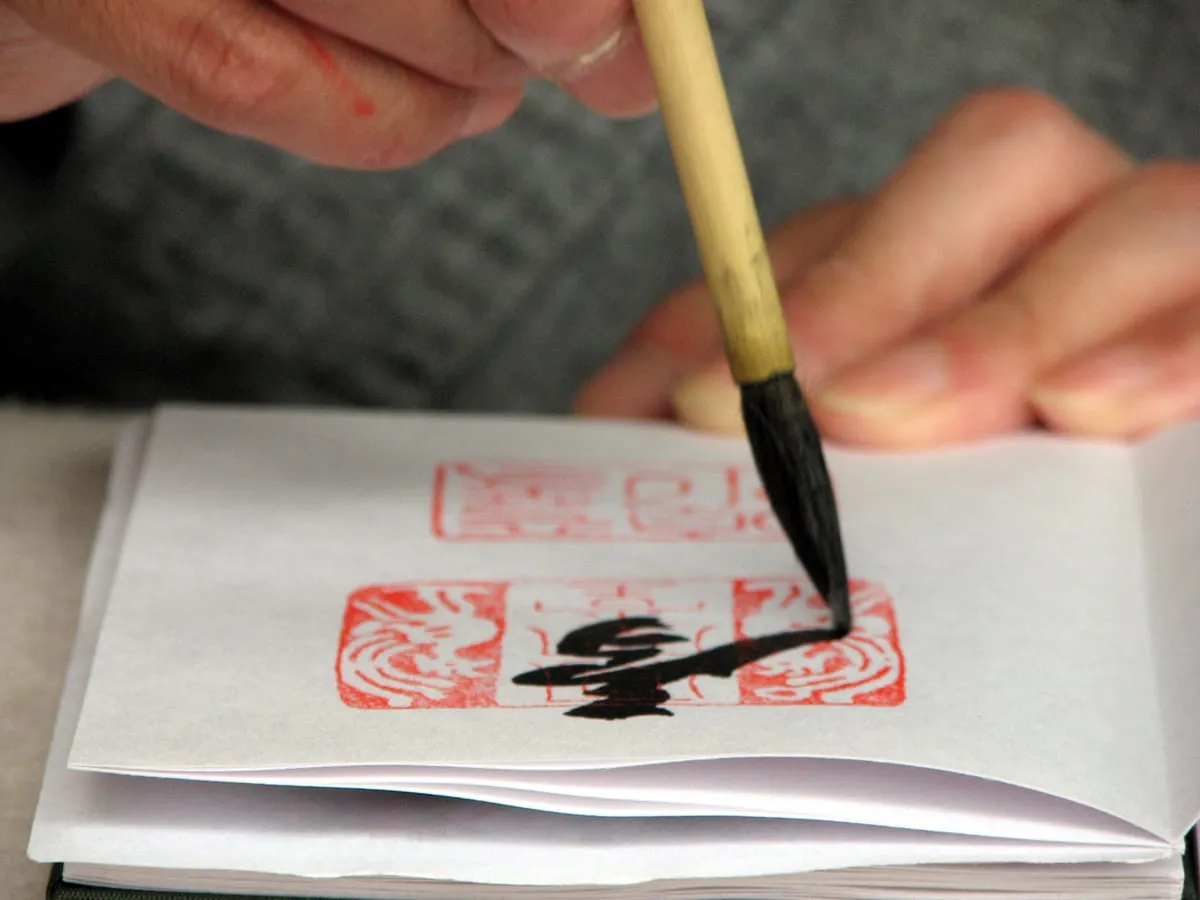
Not every shrine or temple accepts them, so it’s worth calling ahead. The straightforward question is: “Manganrei ni natta goshuincho wo honou dekimasu ka?” (“Can I donate a completed goshuincho?”) If they accept it, the book is typically preserved in the shrine or temple’s care.
Good candidates for donation include the shrine or temple where you received your first stamp, the place where you received your last stamp, or a site with which you have a long personal history. Offering the book there carries the sense of completing a circle.
Otaki-age: Ritual Burning
The third option is otaki-age (お焚き上げ) — a purification ceremony in which sacred or meaningful objects are burned as an offering.
Many shrines and temples hold otaki-age for items like old protective amulets (omamori), votive plaques, and new year’s decorations. A retired goshuincho can often be included. The ceremony transforms the object through fire, a form of return rather than disposal.
Otaki-age is typically held around January 15 (when new year’s items are burned, in a tradition called dondo-yaki, どんど焼き) and during the Oharae purification ceremonies in June and December. Some shrines accept otaki-age items year-round; call ahead to ask.
For people who feel uncomfortable simply throwing a goshuincho in the trash — and many do — otaki-age offers a way to mark the end properly.
Starting Your Next Book
Once your completed goshuincho is settled, the next question arrives: what do you want your new one to look like?
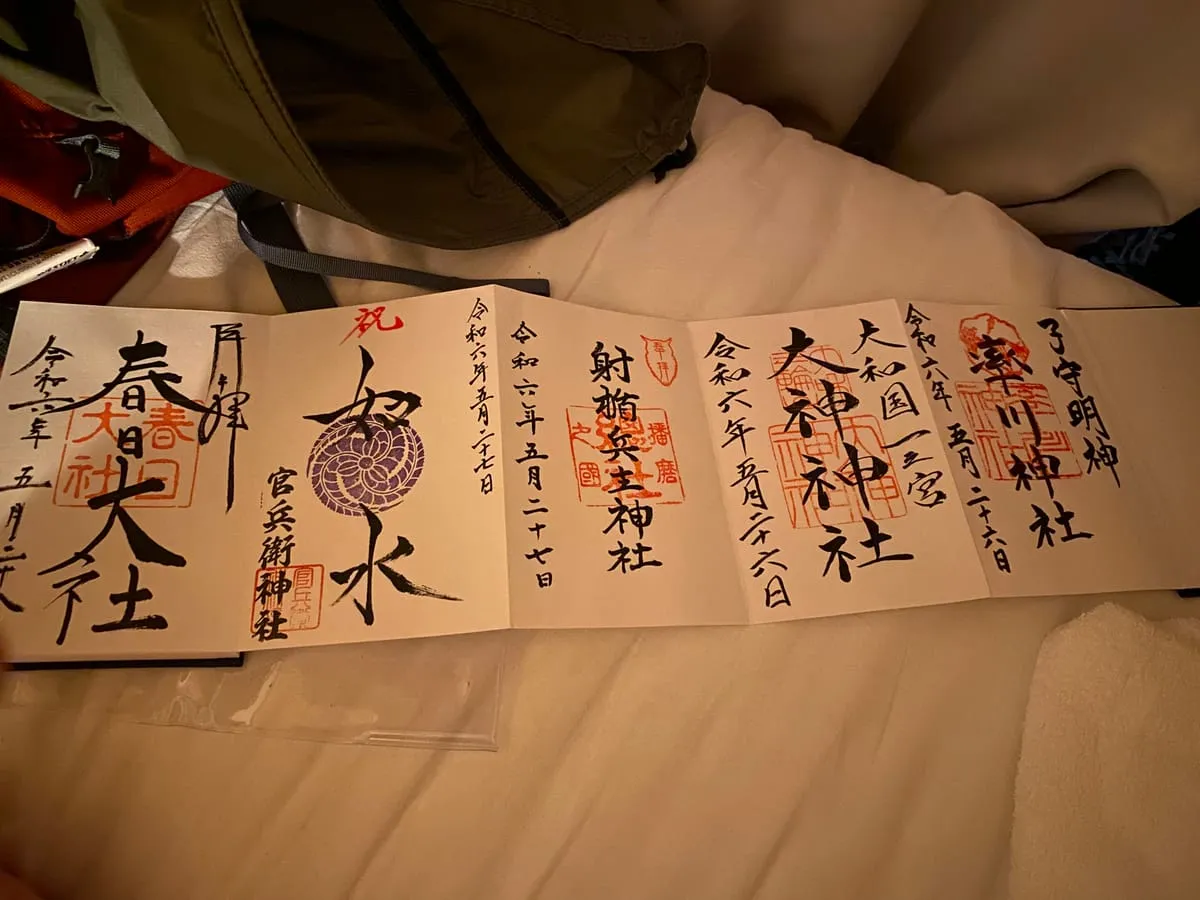
There are no rules about the next book. But a few considerations are worth thinking through before you buy.
Size
Most goshuincho come in two standard sizes: a smaller format (roughly 11 × 16 cm) and a larger format (roughly 12 × 18 cm). The larger size gives stamps more room to breathe and suits elaborate, artistic designs well. The smaller size fits more easily in a bag or pocket. After a few books, most people develop a clear preference.
Paper quality
The washi used in goshuincho varies significantly. Thicker paper prevents ink from bleeding through to the back side, which matters if you plan to have stamps written on both sides of each fold. Asking at the counter about paper quality, or checking reviews if buying online, is worth the effort.
Separate books for shrines and temples
As your collection grows, you may find it useful to keep separate goshuincho for Shinto shrines and Buddhist temples. Their visual styles and stamp conventions differ, and a mixed book can feel cluttered. Some collectors also separate by region or by pilgrimage route. None of this is required — it’s purely a matter of how you want to organize your relationship with the practice.
The Book as Record
A goshuincho is a pilgrimage log. Not just a record of which stamps you collected, but of where you were, what the weather was, who you were traveling with, what you were hoping for.
Leafing through an old book years later, the memory of each shrine comes back with it. That’s the reason to keep them carefully — not reverence for the object itself, but for what the object holds.
Manganrei is a pause, not a conclusion. One book ends; the next one starts empty and ready. That rhythm — filling and beginning again — is the actual shape of a life as a pilgrim.