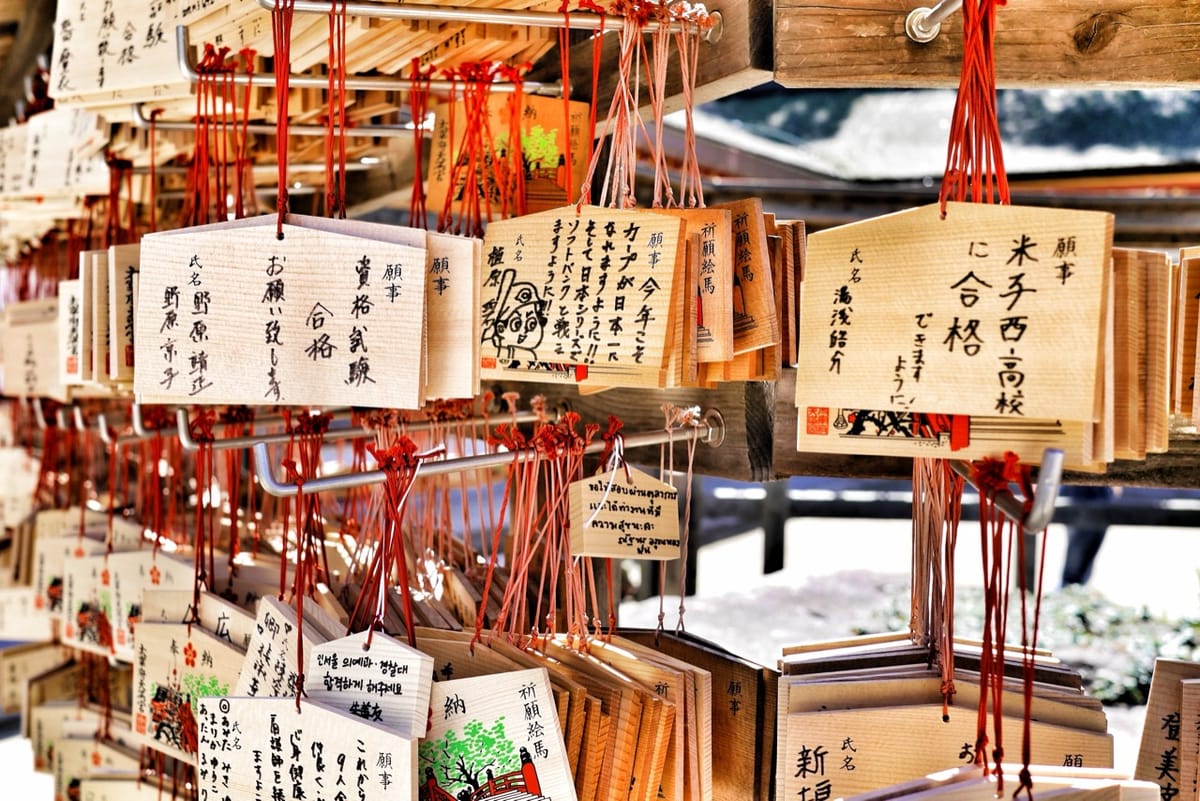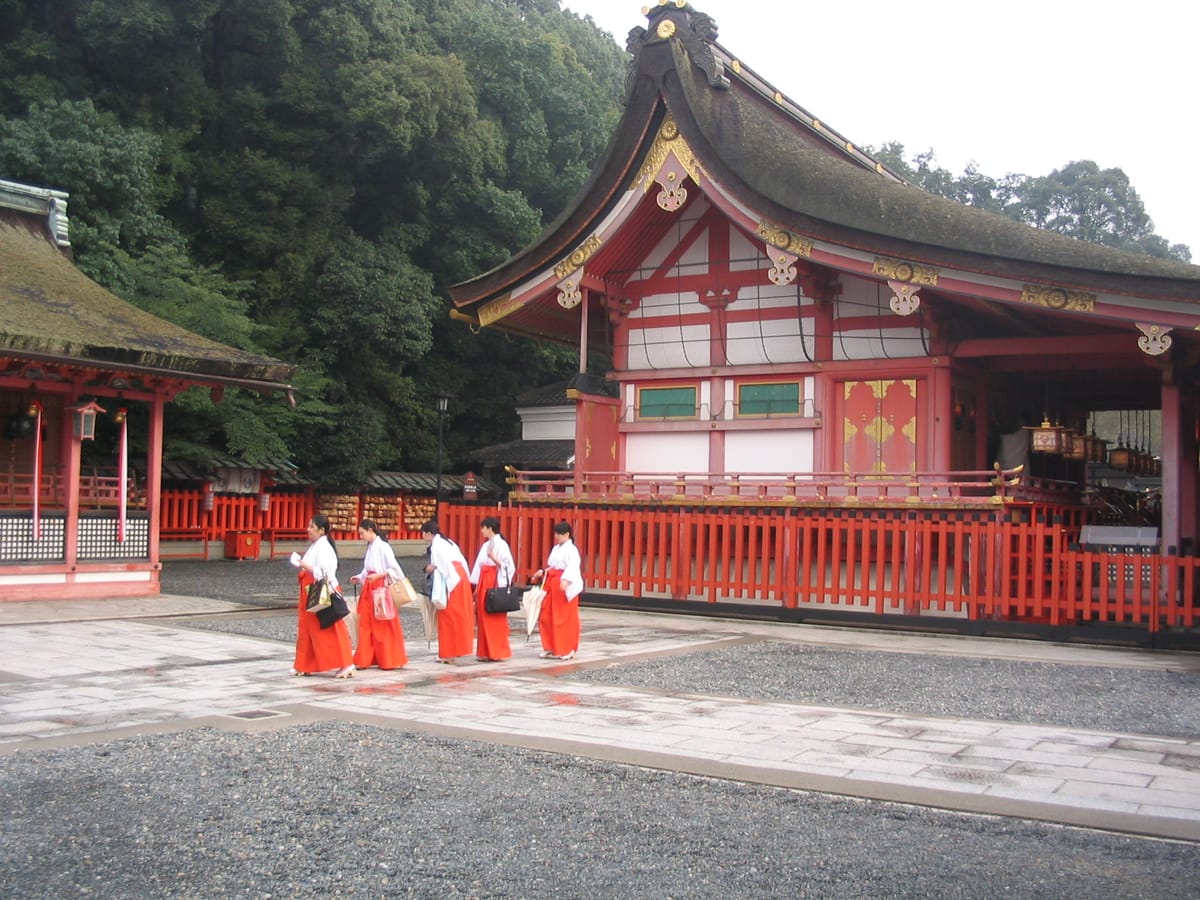
Every Shinto shrine has a jushojo — a counter where visitors can receive goshuin stamps, ema votive tablets, and a rainbow of small fabric pouches. Those pouches are omamori (お守り): Japanese protective amulets.
For foreign visitors, omamori are often the first physical thing they take away from a shrine — a small, tactile encounter with Japanese religious culture. But their variety goes far beyond “lucky charm.” Each type carries a distinct meaning, a specific deity’s blessing, and a different role in the daily life of the person who carries it.
What Is an Omamori?
The word omamori (お守り) derives from the verb mamoru (守る), meaning “to protect” or “to guard.” It is, at its most literal, something that protects you.
Structure
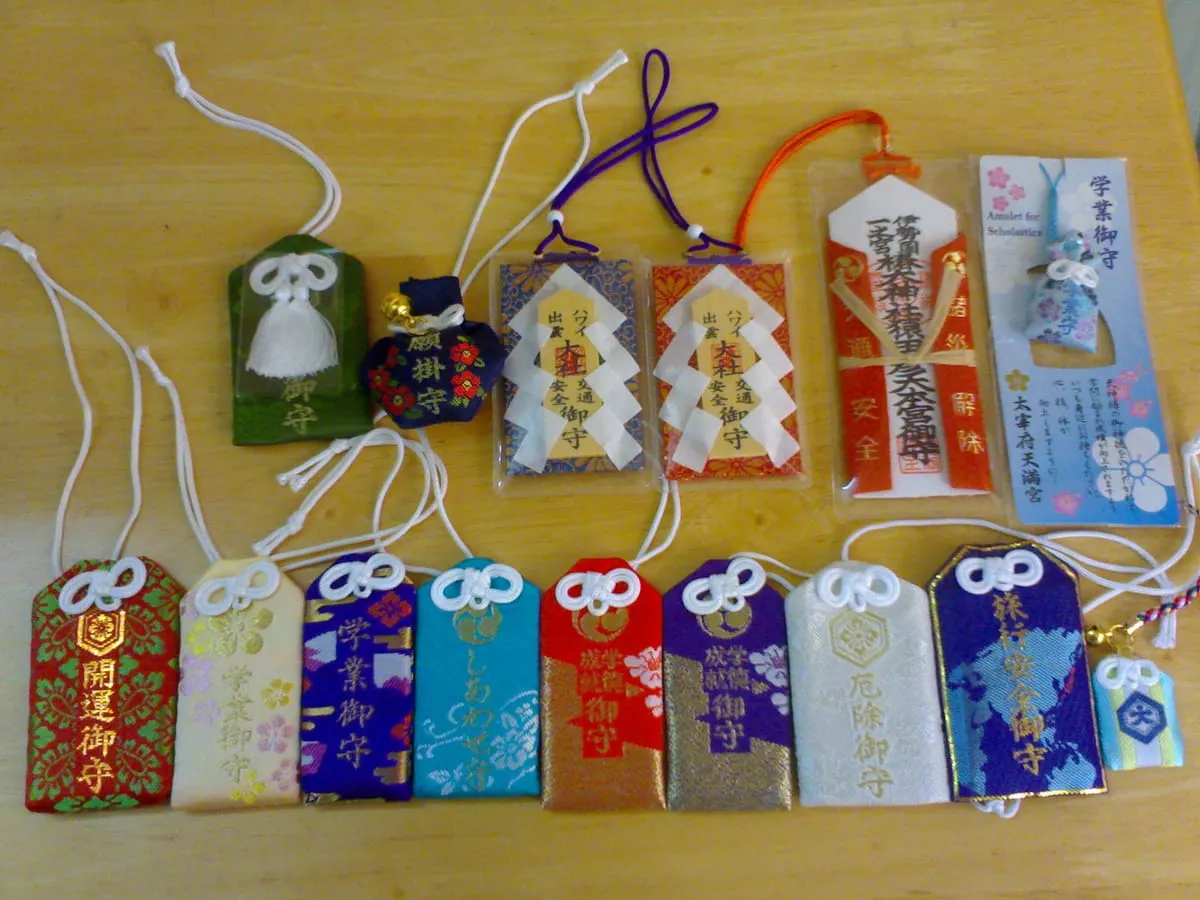
A typical shrine omamori consists of a small fabric pouch (mamori-bukuro) enclosing a sacred paper or wooden tablet (shinsatsu) that has been blessed through formal Shinto ritual. The inner tablet is the actual sacred object; the outer pouch is its container.
In Shinto theology, the ritual purification and prayer performed by the kannagi (shrine priests) infuses the inner object with shinki — divine spiritual power. This is why an omamori is not merely a lucky souvenir. It functions as a yorishiro: a vessel in which divine energy is understood to reside.
The fabric pouch is typically embroidered or printed with the name of the shrine and the specific blessing it carries.
A Brief History
The practice of carrying sacred objects for protection predates Buddhism’s arrival in Japan. Archaeological evidence shows that ancient Japanese communities carried stones, bones, and wooden fragments believed to hold spiritual power. When Buddhism arrived in the 6th century, it brought the concept of gofu — written protective talismans — which merged with existing practices.
By the Heian period (794–1185), the aristocracy had adopted the custom of wearing sacred objects on their persons. During the Edo period (1603–1868), the practice spread to commoners, and the fabric pouch format — compact, portable, personally wearable — became standard. This is roughly the form we recognize today.
The Main Types of Omamori
Japanese omamori are organized by their goriyaku — the specific divine benefit they provide. Here are the major categories:
En-musubi (縁結び) — Love and Relationships
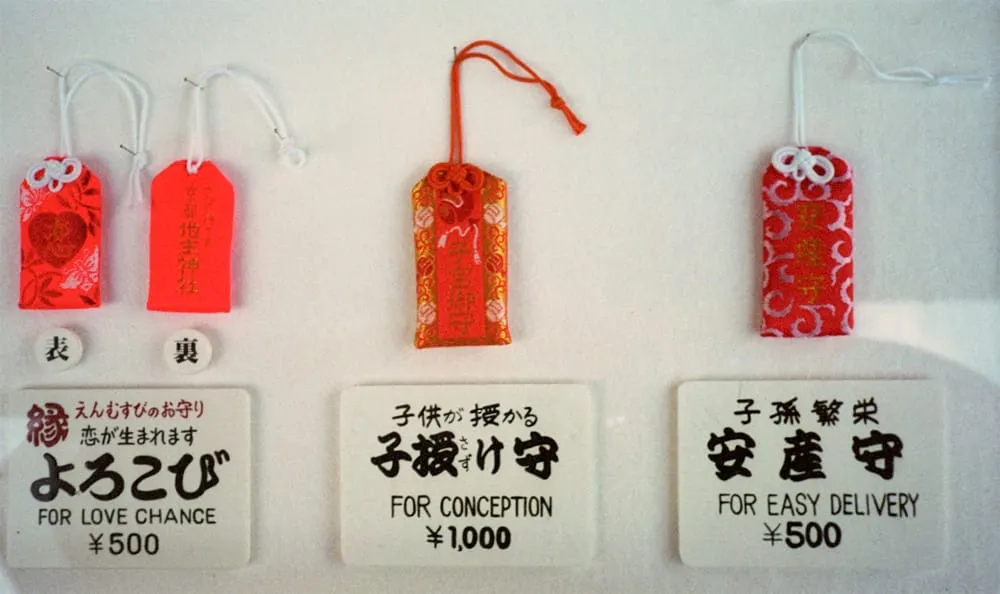
En-musubi literally means “tying bonds.” While popularly understood as a love charm, the concept extends to any meaningful connection: career relationships, friendships, chance encounters that change your life.
Shrines famous for en-musubi include Izumo Taisha (Shimane) — where the kami Ōkuninushi presides over all relationships — and Tokyo Daijingu, known as the “Meiji Jingu of Harajuku” and popular with young women seeking marriage. Jishu Shrine in Kyoto, located within the Kiyomizudera temple complex, specializes entirely in love and relationships.
Gakugyō-jōju (学業成就) — Academic Success
Exam season drives an enormous demand for gakugyō-jōju omamori, which carry blessings for academic achievement and passing tests. These are most commonly found at shrines dedicated to Tenjin — the deified spirit of the scholar-statesman Sugawara no Michizane, who has been venerated as the kami of learning since the 10th century.
Major Tenjin shrines include Dazaifu Tenmangu (Fukuoka), Yushima Tenman-gu (Tokyo), and Kitano Tenman-gu (Kyoto). Their omamori often incorporate plum blossom motifs — Michizane’s signature symbol — along with imagery of writing brushes and ink.
Kōtsū-anzen (交通安全) — Traffic Safety
One of the most practical modern categories, kōtsū-anzen omamori protect against accidents during travel. They proliferated alongside the rise of automobile ownership in postwar Japan and are now among the most universally available omamori, offered at virtually every shrine in the country.
They come in two main forms: a large plate format designed to mount inside a vehicle’s dashboard, and the standard small pouch carried on your person or attached to a bag.
Yakuyoke / Mayoke (厄除け / 魔除け) — Warding Off Evil
Yakuyoke (厄除け) specifically addresses yakudoshi — the “unlucky years” that occur at specific ages in traditional Japanese reckoning (ages 25 and 42 for men, 19 and 33 for women, by the traditional count). Visiting a shrine during a yakudoshi year and receiving an omamori is a major driver of shrine attendance among adults.
More generally, mayoke (魔除け) wards off evil influences, malevolent spirits, and general misfortune. These omamori tend toward darker, more austere colors — black, white, deep purple.
Naritasan Shinshoji Temple (Chiba), Kawasaki Daishi (Kanagawa), and Kanda Myojin (Tokyo) are particularly known for yakuyoke blessings.
Anzan (安産) — Safe Childbirth
Anzan omamori carry prayers for a safe delivery and healthy pregnancy. The tradition is tied to the inunohi mairi custom — visiting a shrine on the Day of the Dog (inu no hi) in the fifth month of pregnancy, since dogs were believed to give birth easily and without complication.
Shrines that specialize in this blessing include Sumiyoshi Taisha (Osaka) and Koyanogi Shrine networks across the country.
Kenkou / Byōki Heiyū (健康 / 病気平癒) — Health and Recovery
These omamori carry blessings for maintaining good health or recovering from illness. They are often purchased not by the patient themselves, but by family members on their behalf. Shrines associated with Ōkuninushi no Mikoto — who in mythological accounts developed healing arts — frequently offer this type.
Kaiun / Kin-un (開運 / 金運) — General Fortune and Wealth
Kaiun (opening luck) and kin-un (money luck) omamori are broad-purpose charms for improving overall fortune and financial prospects. They are especially popular at shrines associated with the Shichifukujin (Seven Lucky Gods) and at takara shrines with historical associations with wealth and treasure. The designs frequently use gold or yellow tones.
Enkiri (縁切り) — Severing Bad Bonds
Less commonly discussed, but genuinely present: some shrines offer enkiri omamori designed to cut unwanted ties — bad relationships, harmful habits, toxic situations. Yasui Konpiragu in Kyoto is perhaps the most famous example, drawing visitors specifically seeking to end destructive bonds.
Shrine-Specific Variations
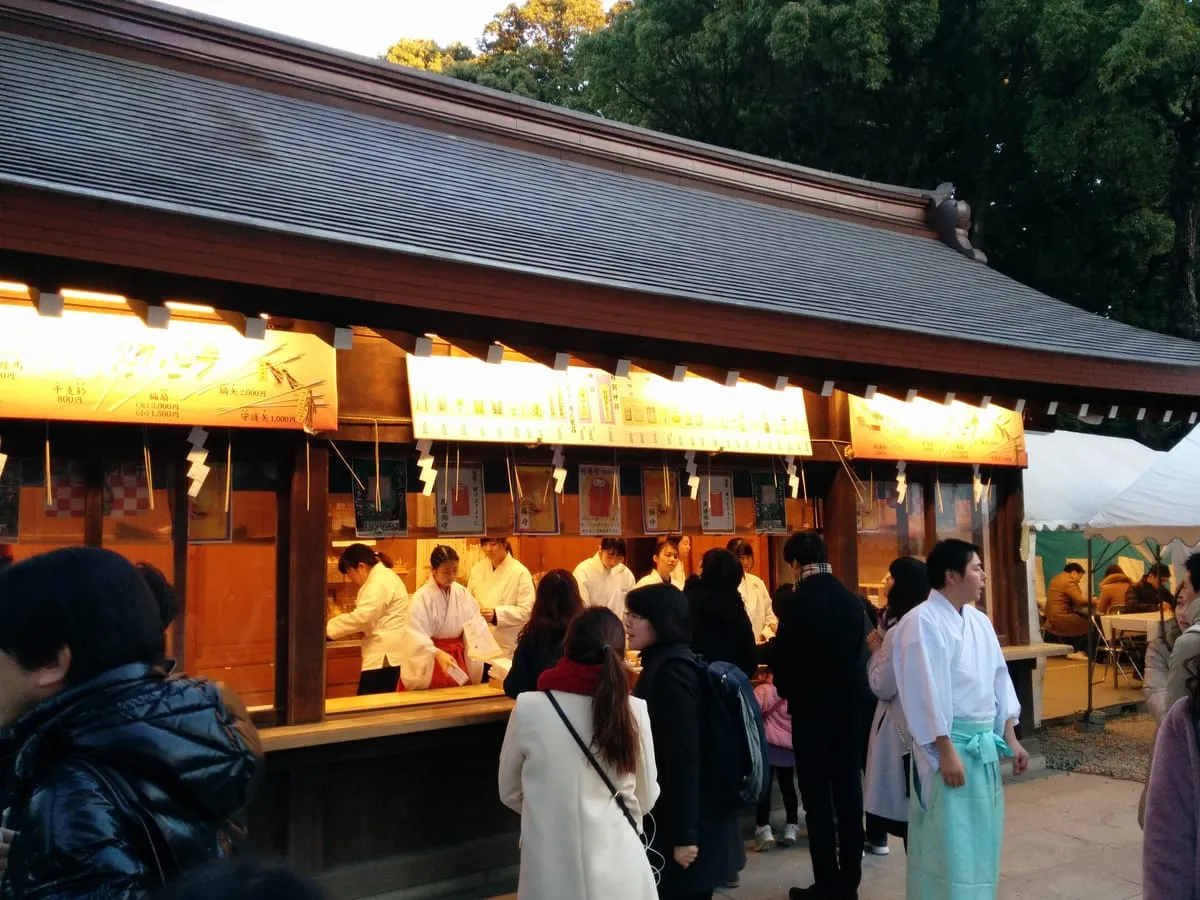
The diversity of Japanese shrine culture means that omamori vary dramatically by location and deity.
- Fushimi Inari Taisha (Kyoto): Known for shōbai-hanjō (商売繁昌 — business prosperity) omamori featuring fox and key motifs, tied to Inari’s role as the kami of agriculture and commerce
- Meiji Jingu (Tokyo): Clean, dignified designs in black and white, emphasizing national virtue and inner strength (tsuyoku iku: “go strongly”)
- Izumo Taisha (Shimane): The en-musubi omamori here carry particular weight, as Izumo’s deity is understood to determine all human relationships during the tenth lunar month
- Atsuta Jingu (Nagoya): The kachimamori (勝守 — victory charm), named for the Kusanagi sword enshrined here, is sought by athletes and competitors
- Fuji Sengen Taisha (Shizuoka): Offers a distinctive tozan-mamori (登山守り — mountain climbing amulet) for those ascending Mt. Fuji
Seasonal and limited-edition omamori have grown increasingly popular. Shrines release special designs for New Year (hatsumode), Shichigosan (November children’s ceremony), and other key dates — driving collector behavior that parallels the enthusiasm around limited goshuin stamps.
How to Use an Omamori
Carrying It
- You can carry multiple omamori from different shrines simultaneously. The folk belief that different shrine deities will “argue” with each other has no basis in Shinto theology.
- Keep it close. Traditionally, omamori are carried near the body — inside a breast pocket, in a wallet, attached to a bag — rather than stored away.
- Treat it with care. Omamori are sacred objects. Don’t toss them loose in a bag with keys and coins.
The One-Year Cycle
Omamori are typically understood to be effective for one year. After that, the conventional practice is to return the old omamori to a shrine — not necessarily the one where you received it — for ritual disposal, and receive a fresh one.
The return process is called o-tagiage (お焚き上げ): the shrine burns the returned items in a sacred fire, releasing the divine energy back to the kami. Most shrines maintain a designated kofuda-nōsho (古札納所 — old talisman return box) for this purpose, available year-round rather than only at New Year.
Do not simply throw an omamori in the garbage. It is a sacred object that has held divine power; disposing of it as ordinary waste is considered disrespectful.
Omamori and Goshuin
When you receive a goshuin at a shrine, you’re often standing at the same counter where omamori are distributed. This is not coincidence — both are forms of taking the shrine’s blessing into the world beyond its gates.
- Goshuin documents that you were there and received the blessing
- Omamori carries the blessing with you in physical form, continuing to act on your behalf
Some visitors collect both for every shrine they visit — the stamp in the goshuincho, the amulet on the bag. It’s a natural pairing, and increasingly, shrines design their seasonal goshuin and seasonal omamori to share visual motifs, making the matched set an attractive collectible.
If you’re just beginning to explore shrine culture, receiving your first goshuin and your first omamori on the same visit is a meaningful way to start.
Related Articles
- Goshuin, Omamori, and Ema: What’s the Difference?
- An Introduction to the Kami of Shinto: Amaterasu, Susanoo, Inari, and More
- The Seven Lucky Gods: A Pilgrimage Guide
Image Credits
- Various omamori at a shrine: Leongboy1, Public Domain, via Wikimedia Commons
- Omamori from Jishu Shrine, Kyoto (c. 1995): Fg2, Public Domain, via Wikimedia Commons
- Omamori on display at Meiji Jingu, Tokyo: Pocsywe, CC0 1.0 Universal, via Wikimedia Commons