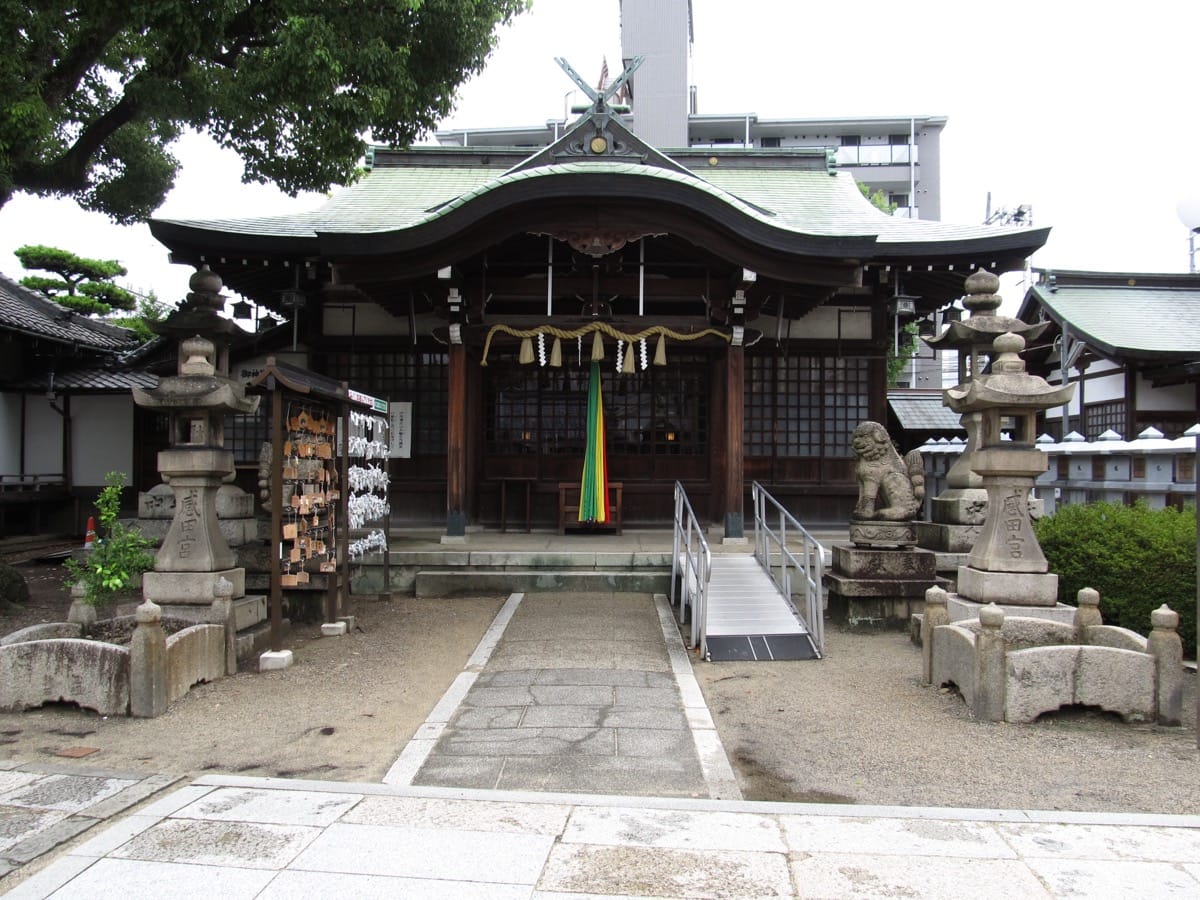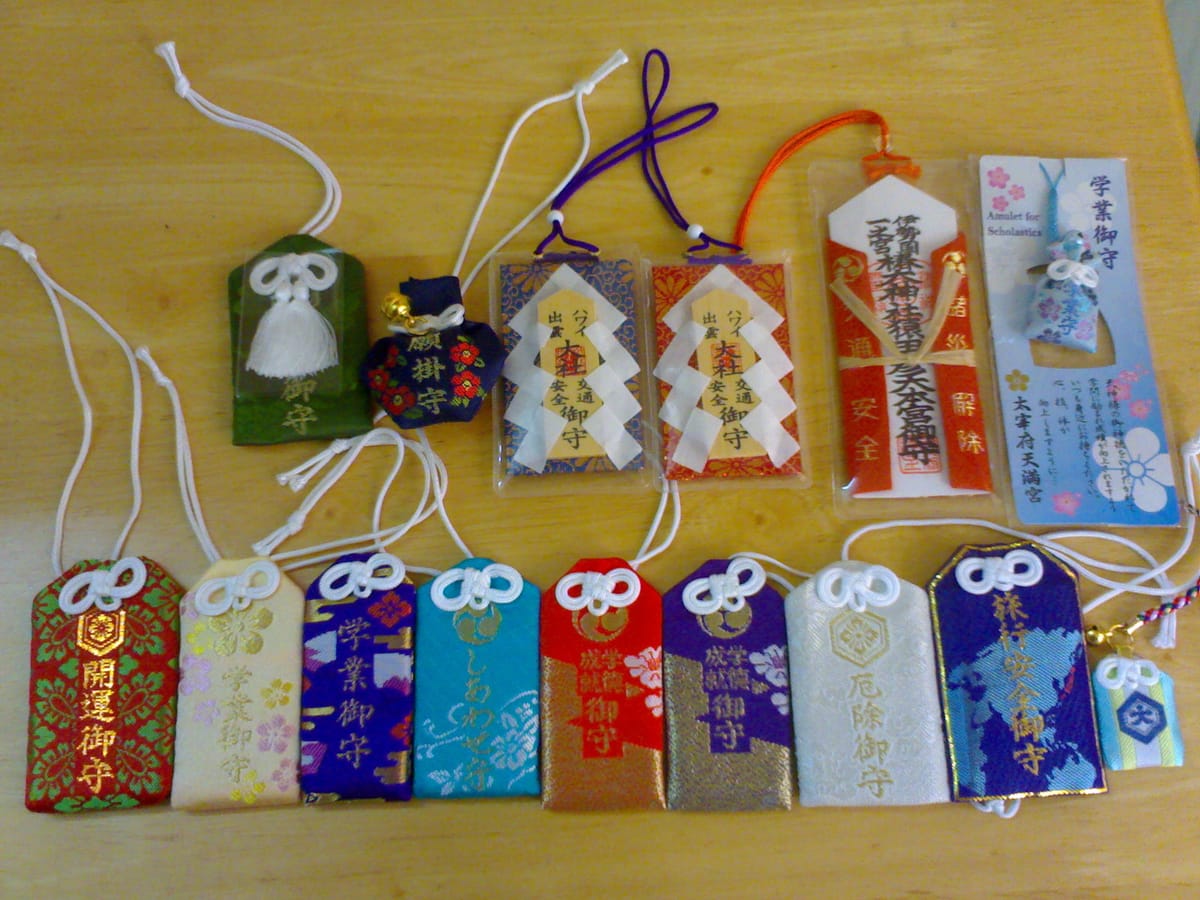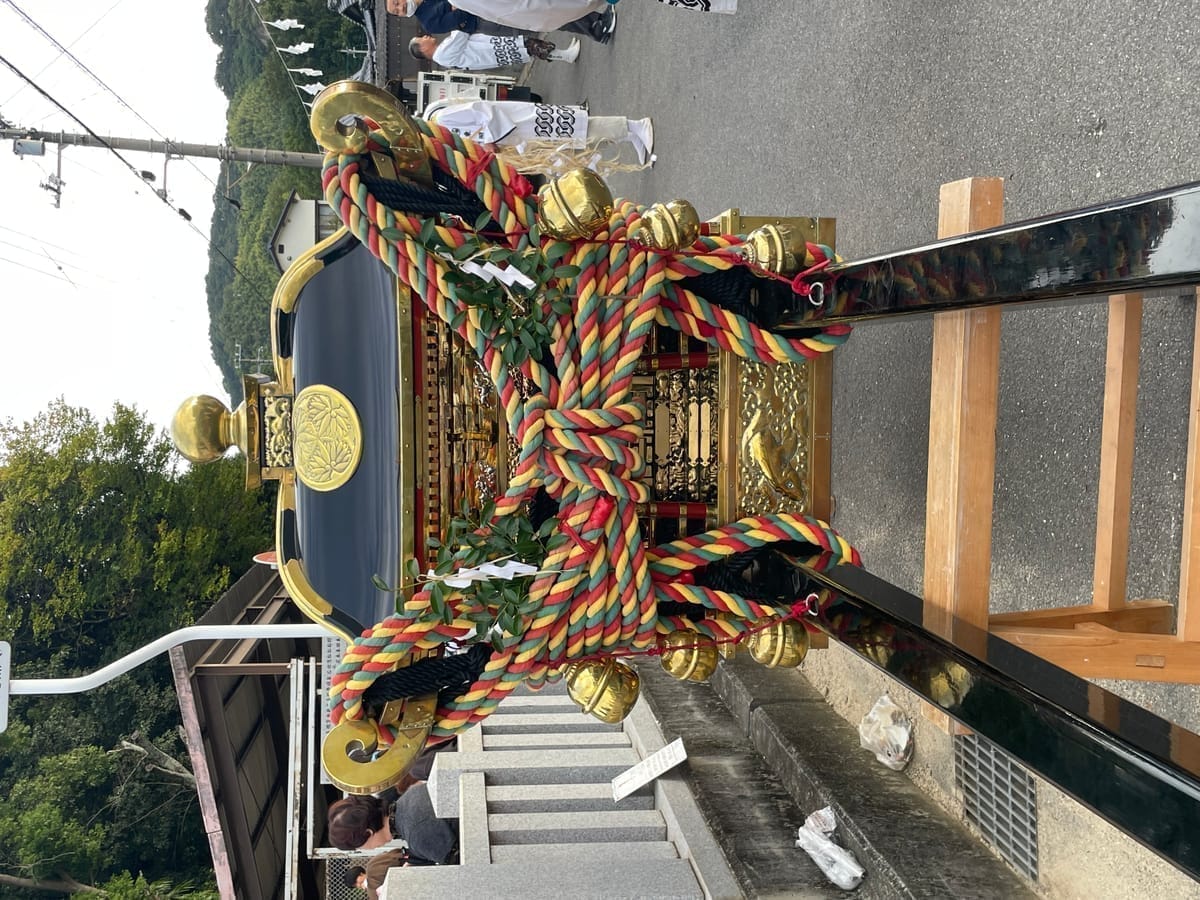
Most visitors to a Shinto shrine focus on the outer architecture — the torii gate, the stone lanterns, the haiden (worship hall) where they bow and clap. What they rarely see, or think about, is what lies in the innermost chamber behind the haiden.
In every Shinto shrine, beyond the worship hall and through successive layers of sacred space, sits the shintai (御神体) — the “body of the kami.” It is the object in which a divine spirit is believed to dwell. And almost without exception, no one ever sees it.
What Is a Shintai?
The word shintai (御神体) breaks down as shin (god, divine) + tai (body, form). It refers to the sacred object placed within the inner sanctuary of a shrine as the physical receptacle for the kami.
In Shinto thought, kami are not omnipresent in the way the Abrahamic God is — they are dynamic presences that can be invited to dwell within specific objects or places. The ritual object that receives this divine presence is called a yorishiro (依代): literally, a “substitute body” or “leaning-on-object.”
The shintai is the supreme yorishiro of a shrine. When a priest performs rites before the inner sanctuary, they are not worshipping the object itself — they are addressing the kami believed to inhabit it.
Shintai are typically sealed within a wooden chest or lacquered cabinet inside the innermost shrine building (the honden). They are not displayed to worshippers. Even most shrine priests have never seen the shintai of their own shrine. This concealment is not secrecy for its own sake — it is understood as essential to the sanctity of the object. Something infinitely sacred requires infinite protection.
Three Classic Forms
While a shintai can theoretically be almost any object, three categories appear most frequently across Japan’s roughly 80,000 shrines.
The Mirror (Kagami)
The bronze or polished metal mirror is the most common form of shintai.
Its primacy comes from one of Shinto’s central myths. When Amaterasu Ōmikami (the Sun Goddess) withdrew into a cave — plunging the world into darkness — the assembled gods devised a plan to lure her out. Among the sacred objects they prepared was the Yata-no-Kagami (八咫鏡), the “Eight-Span Mirror.”
When Amaterasu peered out at the commotion, she saw her own radiant face reflected in the mirror. Startled by the brilliance, she stepped further out — and light returned to the world.
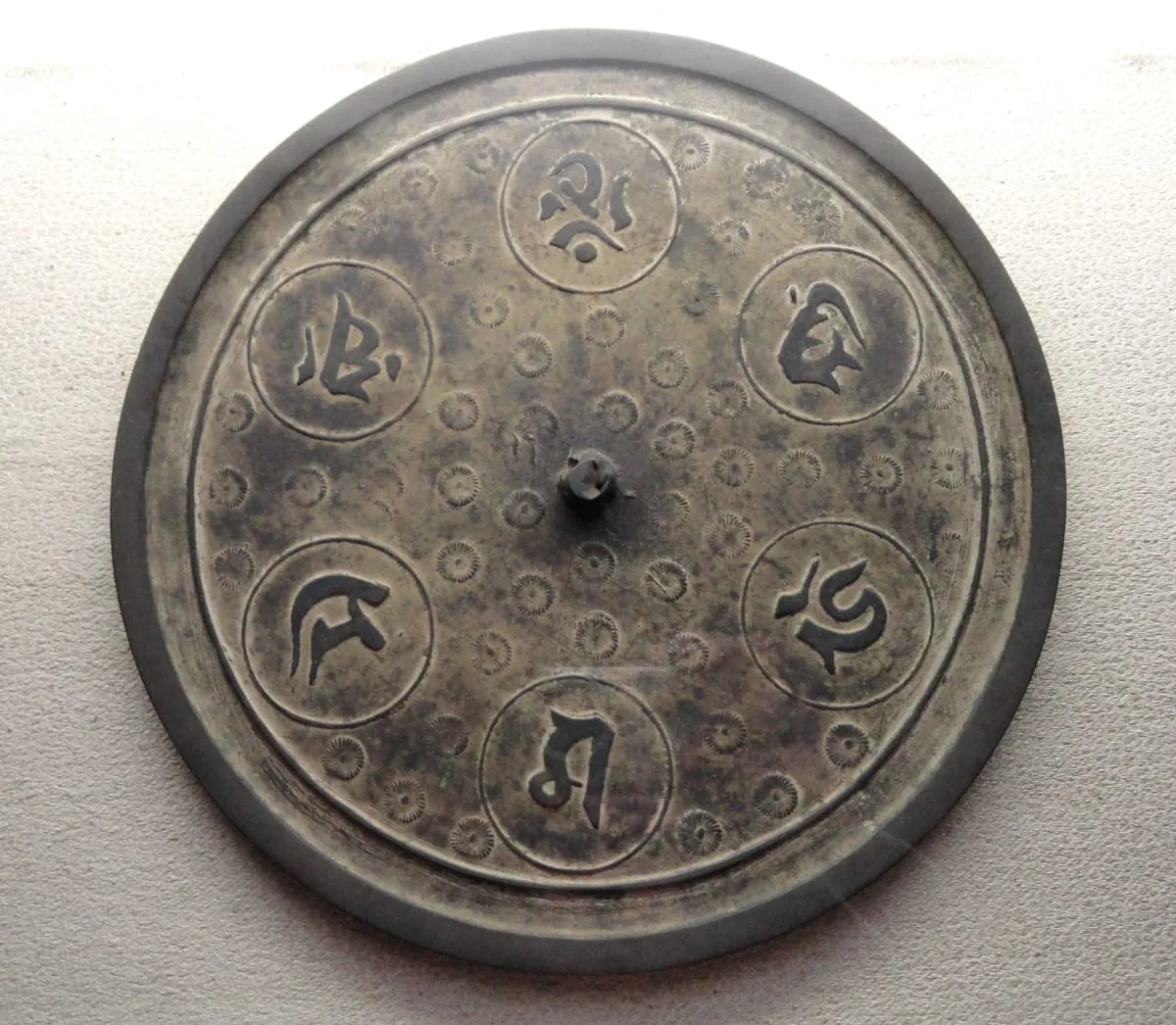
This myth established the sacred mirror as the preeminent symbol of the sun goddess. Shrines across Japan enshrine replica mirrors as stand-ins for the Yata-no-Kagami (which resides with the imperial family at Ise). The mirror symbolizes the kami’s truthfulness — a perfectly polished surface reflects reality without distortion.
The three imperial regalia (sanshu no jingi) of Japan — the objects that legitimize the emperor’s authority — include the sacred mirror as the most important piece. Amaterasu herself is said to have given it to her grandson Ninigi-no-Mikoto before he descended to earth.
The Sword (Tsurugi)
Shrines associated with martial deities or protective functions often enshrine a sacred sword.
The most famous example is the Kusanagi-no-Tsurugi (草薙剣) — “the grass-cutting sword” — enshrined at Atsuta Shrine in Nagoya. According to mythology, this blade was discovered inside the body of the eight-headed serpent Yamata-no-Orochi when the storm god Susanoo slew it. Later, it was given to the warrior Yamato Takeru, who used it to beat back a wildfire by cutting the surrounding grass. The sword is considered one of the three imperial regalia and has never been publicly displayed in recorded history.
More broadly, swords as shintai embody boundary, force, and the capacity to cut away impurity. They serve as the kami’s concentrated power — always present, never wielded.
The Jewel (Magatama)
The magatama (勾玉) is a curved, comma-shaped bead unique to ancient Japan, made from jade, jasper, or other stones.
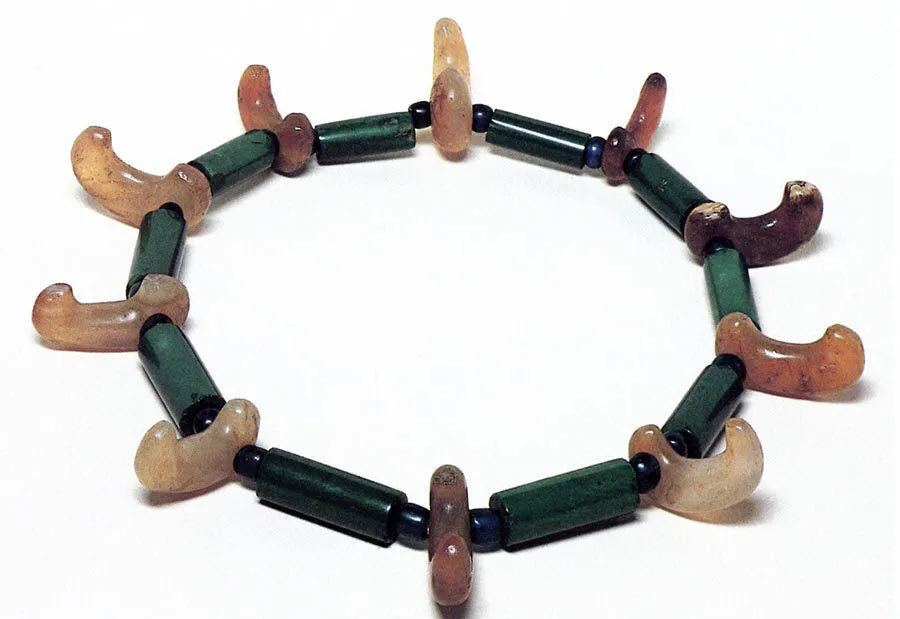
The third of the imperial regalia is the Yasakani-no-Magatama (八坂瓊曲玉) — a large magatama jewel. Magatama appear in Japanese burial mounds as far back as the Final Jōmon period (roughly 1000 BCE), placed with the dead as objects of spiritual power. Their curved form has been interpreted as representing a soul, a fetus, a water droplet, or the crescent moon — the ambiguity being part of their force.
Shrines associated with fertility, childbirth, and vital force frequently enshrine magatama as shintai.
When the Sacred Object Is a Mountain
Not all shintai are human-made. Mountains, rocks, and ancient trees can themselves serve as shintai — and in Japan’s oldest shrines, this is the norm, not the exception.
Ōmiwa Shrine and Mount Miwa
Ōmiwa-jinja (大神神社) in Sakurai, Nara Prefecture, is one of Japan’s oldest shrines. It has no honden — no inner sanctuary building.
The reason is simple: Mount Miwa (三輪山), rising directly behind the shrine, is itself the shintai.
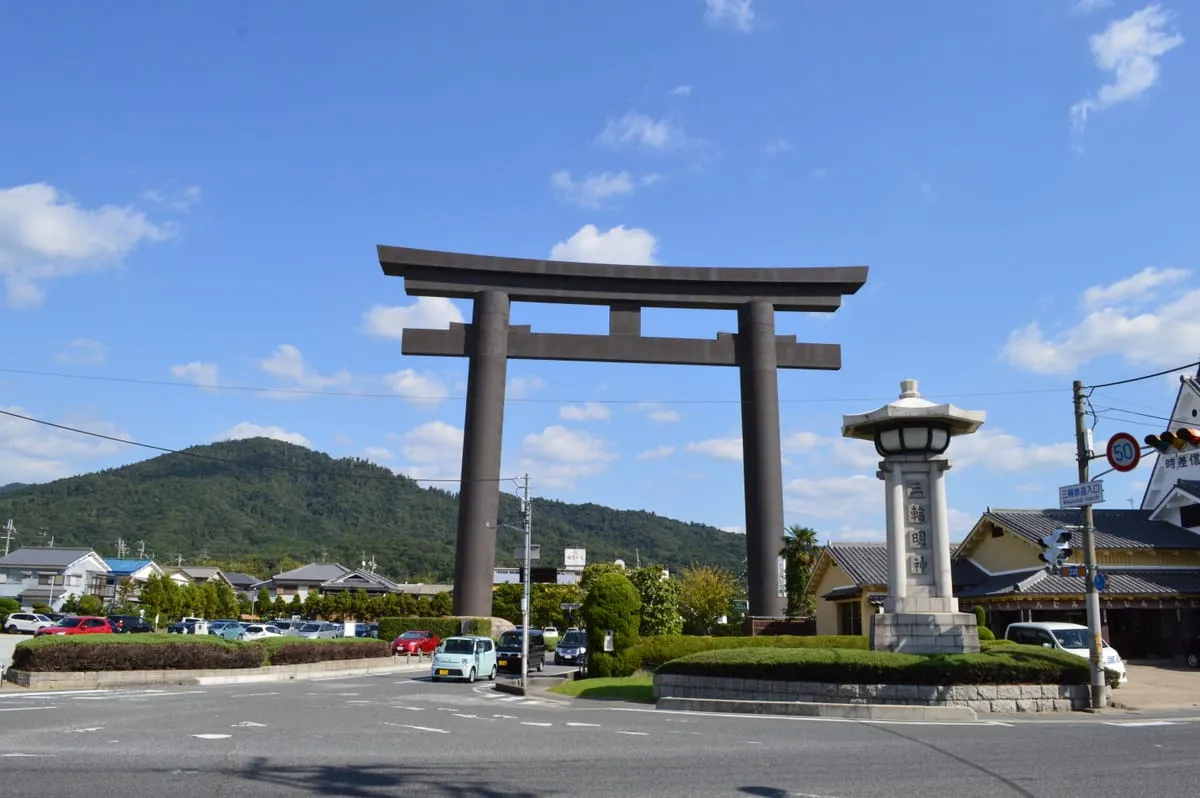
Worshippers face the mountain from the worship hall, directing their prayers up its forested slopes. The mountain is a restricted sacred space (kinsokkichi): visitors may apply for permission to enter, but must follow strict rules — no food or drink, no photography, no turning back once you start. The mountain itself receives this reverence.
This concept — a mountain as the perpetual dwelling of a divine presence — is called kannabi (神奈備), and it represents one of the most archaic layers of Shinto. Before there were buildings, before there were carved statues or cast mirrors, there was the mountain.
Sacred Rocks and Sacred Trees
Iwakura (磐座, “seat of rock”) are boulders where kami were understood to descend and reside. Many ancient shrines developed around a central iwakura, which predates any architecture on the site. Shimenawa rope is wrapped around these rocks, demarcating them as sacred space.
Shinboku (神木, “divine trees”) are ancient trees — often centuries or millennia old — understood to house kami. The great cryptomeria of Izumo Taisha, the ancient camphor tree of Atsuta Shrine, the cedars of Kasuga Taisha: these trees exist in a kind of continuous sacredness, their age itself read as evidence of divine indwelling.
Why the Shintai Stays Hidden
The invisibility of the shintai is a deliberate theological choice.
Shinto aesthetics are built on the concept of kakushi — hidden things. A partially obscured view is considered more beautiful and more charged with meaning than a fully revealed one. Applied to the divine, this principle becomes: the kami is more powerfully present when veiled than when exposed.
This is why shrine architecture layers space: torii gates mark transitions, the sandō path leads gradually inward, the haiden stands before the honden, and the honden conceals the shintai behind curtains and locked doors. Each layer is a deepening threshold. The worshipper never reaches the center — and that incompletion is the point.
“We cannot see it” is not a limitation. It is the condition under which the sacred functions.
Shintai and Goshuin
For goshuin collectors, the shintai of a shrine adds a layer of meaning to the stamp received there.
When you receive a goshuin at Ōmiwa Shrine, you’re taking away the seal of a shrine whose kami resides in a mountain you just faced in prayer. At Atsuta Shrine, the goshuin connects to a place that houses one of Japan’s three imperial treasures — a sword no living person has ever seen. At shrines with iwakura as their shintai, the stamp commemorates a site where rock and kami are the same thing.
Many shrines offer designs that incorporate the shintai’s form — mirror roundels, jewel curves, mountain silhouettes — into the goshuin artwork. Recognizing these motifs transforms the stamp from a souvenir into a legible record of what you encountered.
Related Articles
- Sacred Trees and Shimenawa: The Symbols of the Shrine’s Holy Precincts
- Honden Architecture: The Forms of the Inner Sanctuary
- An Introduction to the Kami of Shinto
Image Credits
- Bronze mirror, Treasure Hall, Itsukushima Shrine, Miyajima: Daderot, CC0 1.0 Public Domain, via Wikimedia Commons
- 7th-century magatama necklace, Metropolitan Museum of Art: Metropolitan Museum of Art, CC0 1.0 Public Domain, via Wikimedia Commons
- Great torii gate, Ōmiwa Shrine, Nara Prefecture: Saigen Jiro, CC0 1.0 Public Domain, via Wikimedia Commons