
When you decide to start collecting goshuin — those beautifully hand-written seal stamps from Japanese shrines and temples — one question comes first.
Which goshuincho should I get?
Walk into a stationery store and you’ll find rows of plain ones at modest prices. Step into a shrine’s stamp office and there’s a luxurious silk-covered book with the shrine’s crest embroidered in gold thread. The range of sizes, materials, and designs is overwhelming, and for a first-time collector, the sheer variety can stall the whole endeavor before it even begins.
This guide cuts through the confusion. We’ll walk through every aspect of choosing a goshuincho — from fundamental size differences to the age-old question of whether to use separate books for shrines and temples — so you can find the right one and start collecting.
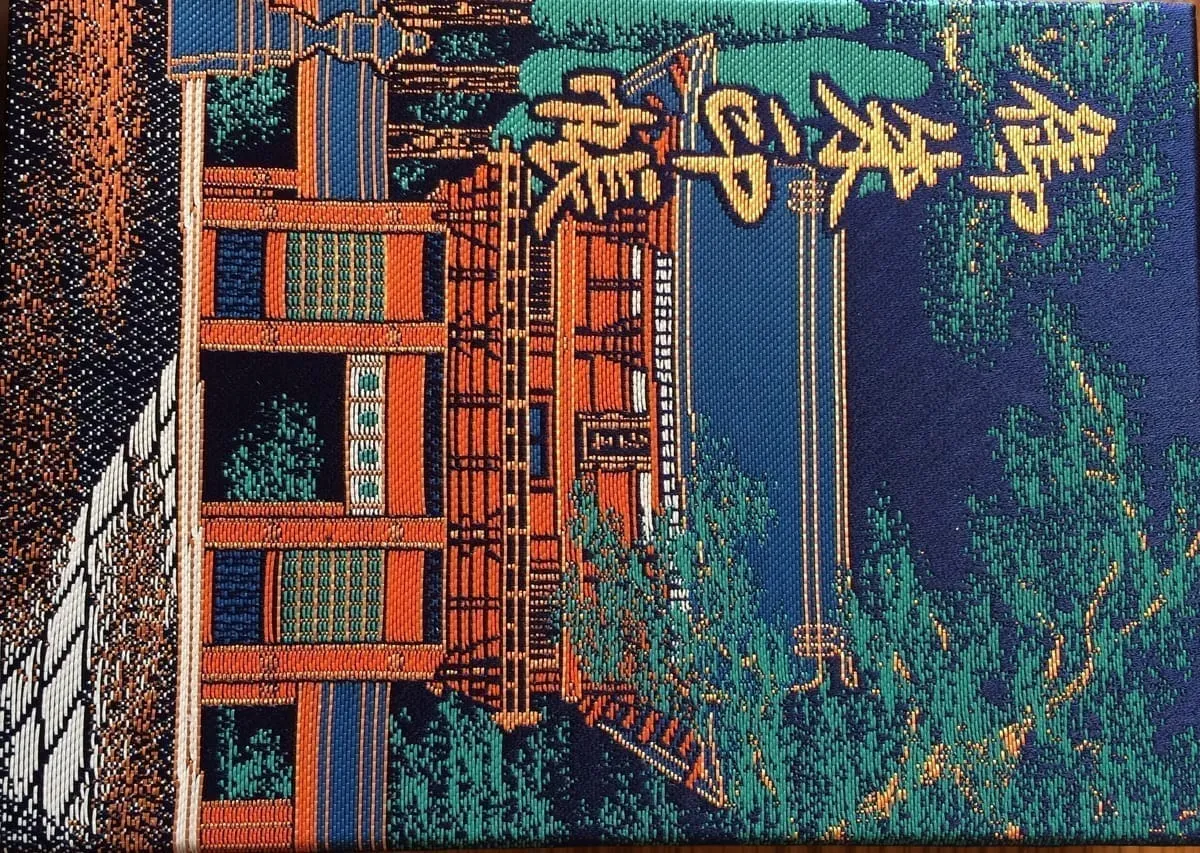
What Is a Goshuincho?
A goshuincho (御朱印帳, goshuin-chō) is a dedicated booklet used to collect goshuin — the hand-written, stamped seals given to worshippers at Shinto shrines and Buddhist temples throughout Japan.
Each goshuin typically combines an ink stamp with calligraphic brushwork: the name of the deity or temple, the date of your visit, and often a central seal in red ink. These are written directly into your goshuincho on the spot, turning each page into a unique piece of calligraphy tied to a specific place and moment.
Most goshuincho use a accordion-fold (accordion/concertina) format called jyabara (蛇腹), where sheets of washi paper are folded back and forth like a fan. Open it fully and it extends into a single long scroll of pages, each carrying the marks of a shrine or temple you’ve visited.
A completed goshuincho isn’t just a stamp collection — it’s a record of your travels and your relationship with Japan’s sacred places. Many collectors keep their finished booklets for decades, returning to them like a personal pilgrimage journal.
Historical Roots
The goshuincho evolved from the nokyocho (納経帳), a booklet used by Buddhist pilgrims who would copy sutras at each temple along a circuit and receive a red seal as proof of offering. Over centuries, the written copy requirement was simplified, and the red seal practice continued and spread. By the Edo period, collecting stamped booklets from shrines and temples had become widespread among ordinary Japanese travelers — a tradition now embraced by millions.
Size: The Most Important Decision
Goshuincho come in two main sizes. This is the first and most practical decision to make.
Large Format (大判, daiban)
Dimensions: approximately 18cm × 12cm (about 7 × 4.7 inches), close to B6 size.
The large format is the standard for most shrine-original and temple-original goshuincho. The wider page gives calligraphers more room to work, and the extra space lets stamps breathe rather than crowding the edges. Artistically bold goshuin — with large central seals and sweeping brushwork — look their best at this size.
Advantages:
- Better visual impact for goshuin
- Most shrine-exclusive designs are in this format
- Wide availability
Disadvantages:
- Takes more bag space
- Slightly harder to carry on multi-shrine days
Small Format (小判, koban)
Dimensions: approximately 15cm × 11cm (about 6 × 4.3 inches), close to bunko paperback size.
The small format trades visual space for portability. It slips into a jacket pocket or small shoulder bag and barely registers in a day pack. For collectors who visit multiple shrines in a single outing, the compact size is a genuine convenience.
Advantages:
- Easy to carry
- Lightweight, fits in small bags
Disadvantages:
- Some goshuin designs feel cramped at this size
- Fewer shrine-original designs available in small format
- Rare cases where a shrine’s staff prefers not to write in a very small book
Recommendation for First-Timers
Start with the large format. The visual payoff is significantly better, and since most shrine-original designs are large format, you’ll have more to choose from when you visit. Once you have a feel for how you collect — how many shrines per day, how often you travel — you can decide whether adding a small format makes sense.
Page Count
Both sizes come in varying page counts — typically 40, 48, 60, or 80 pages. More pages mean more goshuin before you need a new book, but also more thickness and weight.
For a first goshuincho, 40–48 pages is plenty. It’s enough to fill at a comfortable pace without feeling like the book will never end. Once you know how quickly you collect, you can size up for your next one.
Materials and Binding
The cover and pages of a goshuincho vary significantly in material and quality. Here’s what to look for.
Cover Materials
Nishijin Silk and Brocade (西陣織)
The classic choice for higher-quality goshuincho. Nishijin is a district in Kyoto famous for its silk weaving, and goshuincho made with Nishijin fabric are woven with shrine crests, seasonal motifs, or sacred imagery. The texture is distinctive — smooth to the touch with a subtle sheen — and the covers age beautifully.
These run 2,000–5,000 yen or more, but they feel like objects worth keeping.
Plain Washi Paper Covers
Simple, elegant, and affordable. White or pale indigo washi covers are workmanlike and let the goshuin inside take center stage. These are excellent first goshuincho: they don’t compete visually with the stamps, and they cost 800–1,500 yen.
Vinyl and Protective Covers
Practical for outdoor use in rain. Less beautiful, but functional. Some goshuincho come with a detachable cover — you get the fabric look with better water resistance.
Page Materials
Standard Washi (Japanese Paper)
All goshuincho use washi for pages, but quality varies. Thin washi is budget-friendly but prone to ink bleed-through (urasuke) when a calligrapher uses heavy brushwork. If you plan to use both sides of every page, thicker washi matters.
Hosho Paper (奉書紙)
High-quality washi used for formal documents and calligraphy. Absorbent in the right way — ink sits cleanly without bleeding through, and brushwork looks distinctly sharp and alive. Goshuincho made with hosho paper cost more, but the finished result is noticeably better. If you care about how your collection looks in twenty years, this is worth the upgrade.
Accordion Format vs. Bound Format
Accordion (Jyabara)
The overwhelming majority of goshuincho use this format. Pages fold back and forth; when you open the book, they fan out in sequence. Both the front and back of each fold can receive goshuin, doubling your capacity.
The trade-off: ink from heavy brushwork can bleed through to the back of the same page. Many collectors handle this by only using the front side of each panel, or by reserving the back for slip-in sheets (kakikomi / kakioki) rather than direct writing.
Stab-Bound (和綴じ)
Stitched or stab-bound goshuincho resemble traditional Japanese books and don’t fold accordion-style. Pages lie flat when open, which is more comfortable to write in, and bleed-through is less of an issue since each page is separate.
The downside: the stitched binding doesn’t lie perfectly flat, and some shrine staff find it slightly awkward to write in. Less common, but a good option if ink bleed-through bothers you.
Shrine Book vs. Temple Book: Should You Separate Them?
This is the most hotly debated question in goshuincho culture. The answer depends on how strictly you want to follow tradition — and where you plan to visit.
Why Some People Separate
The Meiji government’s 1868 shinbutsu bunri edict formally separated Shinto and Buddhism after centuries of overlap. The tradition of keeping separate goshuincho for shrines and temples grew from this. At some traditional shrines — particularly Grand Shrines (jingū) and formally ranked ichinomiya — staff occasionally decline to write in a goshuincho that already contains Buddhist temple stamps.
This is uncommon, but real. Having separate books eliminates the awkward moment entirely. It also keeps the record coherent: a shrine-only book tells one story; a temple-only book tells another.
Why Many People Don’t Bother
Japan’s religious culture is syncretic. Most Japanese people visit both shrines and temples without theological distinction. The vast majority of sacred sites accept mixed goshuincho without comment. For first-time collectors: don’t let this question delay starting. Use one book, and separate later if your visiting habits call for it.
Shrine-Original Goshuincho: The Special Case
Many shrines and temples produce their own goshuincho. These are different from general-purpose books and deserve special consideration.
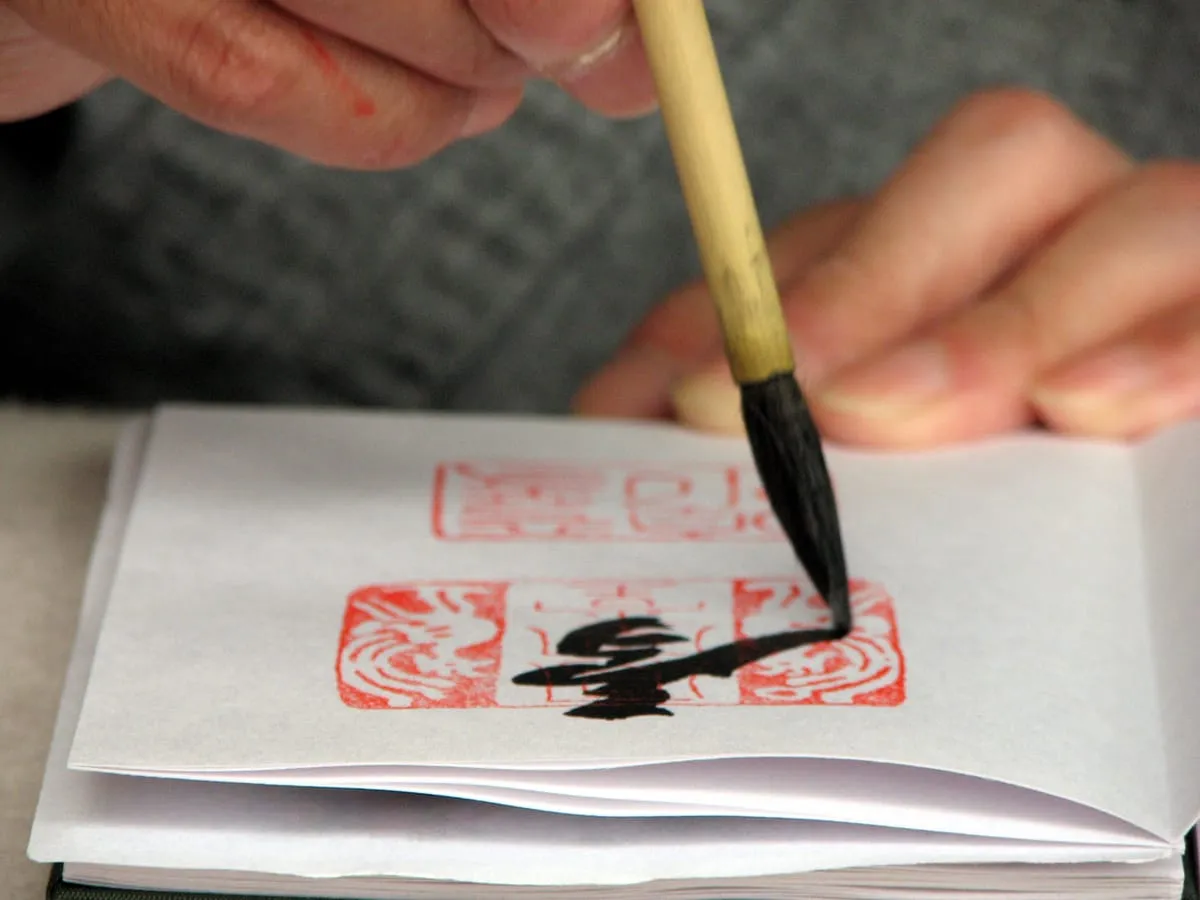
Why They Matter
A shrine-original goshuincho is an artifact of that specific place. The cover might display the shrine’s kamonshō (family crest), the weaving pattern of its festival banners, or a scene from the myth connected to its enshrined deity. Opening such a book in that shrine’s stamp office and having it receive the first impression there — it’s a different kind of moment than using a blank book you bought at a stationery store.
Many collectors deliberately purchase goshuincho at places that feel significant to them: their first major shrine visit, a pilgrimage milestone, a place they return to yearly.
Examples of Notable Shrine-Original Designs
| Shrine / Temple | Design Character |
|---|---|
| Ise Jingu (Inner and Outer Shrines) | White cover, imperial chrysanthemum crest |
| Izumo Taisha | Double-turtle-shell crest pattern |
| Kasuga Taisha | Wisteria motif, deer imagery |
| Todai-ji | Gold cover with Great Buddha motif |
| Kiyomizudera | Vermilion cloth with Otowa waterfall imagery |
These examples barely scratch the surface. Virtually every major shrine and temple in Japan produces its own goshuincho, and many smaller ones do too. Discovering the design when you arrive is part of the experience.
Limited Editions
Some shrines release seasonal or anniversary editions — cut-paper (kirie) covers, gold-foil designs, or hand-dyed fabric. These blur the line between goshuincho and art object. Some collectors use them; others display them without writing a single page. Both are valid.
Where to Buy a Goshuincho
At the Shrine or Temple
The most natural option. Most shrines and temples sell goshuincho at their stamp office. Buying there and receiving your first goshuin in the same visit gives that first page an immediate story. If you arrive without one, ask at the counter — staff are generally happy to sell you a book and write your first entry on the spot.
Stationery and Lifestyle Stores
Tokyu Hands, Loft, and larger stationery stores carry a range of goshuincho you can compare side by side. Plain washi books run ¥800–1,500; fabric-covered ones run ¥2,000–4,000.
Online
Amazon Japan, Rakuten, and craft marketplaces carry wide selections. Useful for accessing shrine-original designs from places you haven’t visited yet — but you lose the ability to feel the paper before committing.
Price Guide
| Type | Price Range |
|---|---|
| Plain washi cover | ¥600–1,200 |
| Standard fabric cover | ¥1,500–3,000 |
| Shrine-original (standard) | ¥1,000–2,000 |
| High-quality brocade | ¥3,000–5,000 |
| Limited / craft edition | ¥5,000–10,000+ |
For a first goshuincho, ¥1,500–2,500 is a practical sweet spot — good quality without feeling like you’re over-committing before you know your own preferences.
How to Use and Care for Your Goshuincho
The First Page Tradition
A widely observed custom holds that the first page should be left open for Ise Jingu — the Grand Shrine of Ise, considered the apex of Japan’s shrine system. The idea is that Ise’s goshuin belongs at the front as a mark of respect.
This is a custom, not a rule. Many collectors observe it; many don’t. The practical implication: if you plan to visit Ise, holding the first page is a meaningful gesture. If Ise isn’t on your near-term itinerary, starting with the shrine most important to you personally is equally fine.
Write Your Name Inside
Write your name and contact information on the inside front or back cover. Goshuincho left at stamp offices for collection are sometimes forgotten — having your name inside dramatically increases the chances of it being returned if lost.
Carry It in a Protective Bag
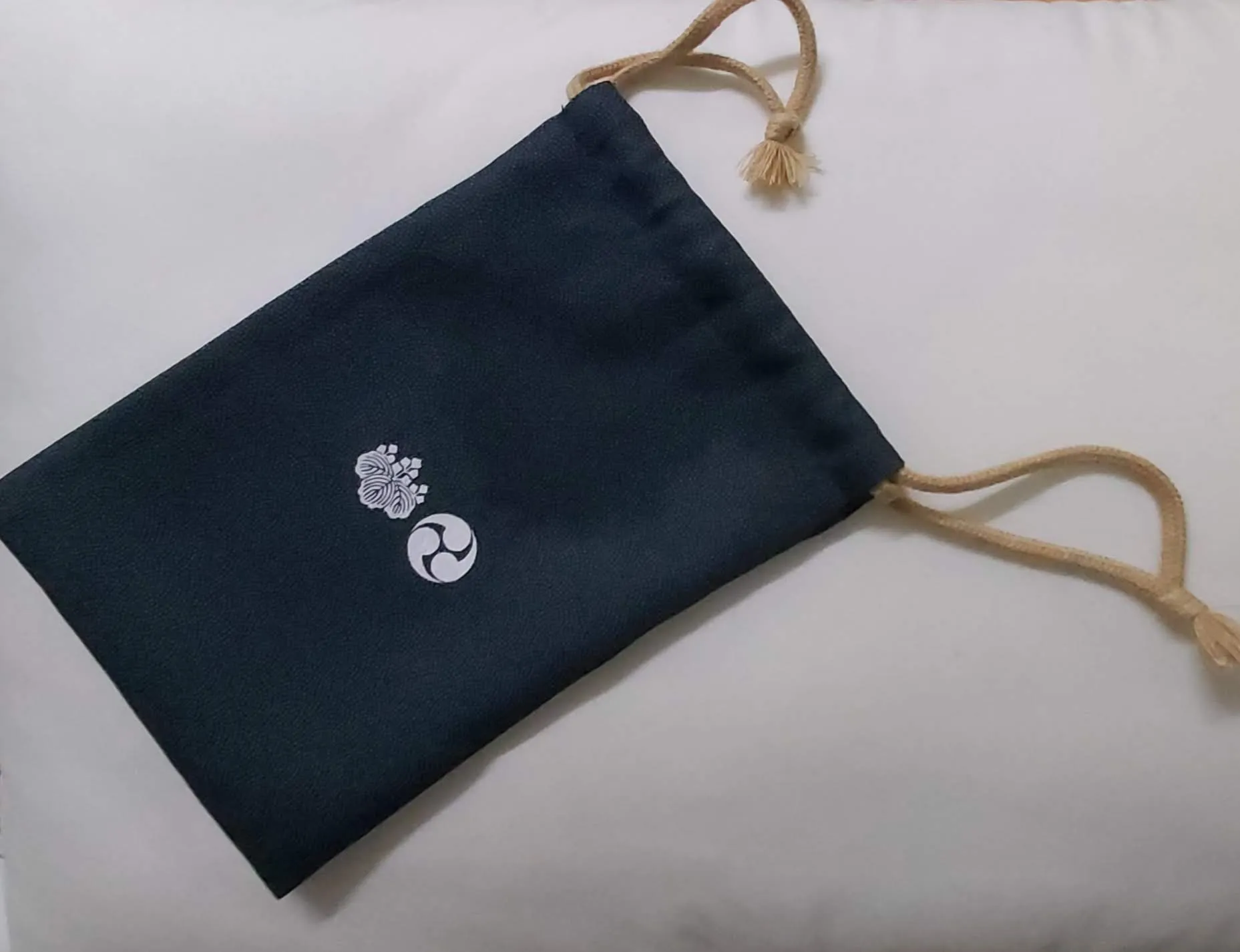
A dedicated drawstring bag (kinchaku-bukuro) protects your goshuincho from scratching, moisture, and wear. Most shrine gift shops sell them alongside the books themselves for ¥500–1,500. The red bag in the photograph is a kinchaku-bukuro from Koyasan — a fitting companion for a temple-focused collection.
Receiving Your Goshuin: The Proper Way
When the calligrapher hands back your completed goshuincho, receive it with both hands. This isn’t theatrical — it’s a natural expression of care and acknowledgment. The goshuin took time and attention to create. Two hands say: I received this.
Don’t hover or rush while waiting. Watching the brushwork happen is part of the experience, but give the calligrapher space to work without feeling observed. At busy shrines, you may leave your book and return in 15–30 minutes; at quieter ones, you’ll wait on the spot for a few minutes.
Long-Term Storage
Finished goshuincho deserve careful keeping. Store them away from humidity — use silica gel packets in a closed box. Don’t stack books directly; pressure transfers ink between pages. Keep them out of direct sunlight, which fades both the black ink and the red seals over time. A yearly airing prevents mustiness.
Well-maintained goshuincho last decades. The ink darkens slightly, the red softens to a burnished orange-brown, and the whole book takes on the dignified patina of a genuine record.
Frequently Asked Questions
Do I have to leave the first page for Ise Jingu?
No — it’s a tradition, not a rule. Start wherever feels right.
Can I buy a goshuincho anywhere?
Anywhere that sells them is fine. The meaning comes from how you use it.
Is it okay to mix shrines and temples in one book?
For most purposes, yes. A small number of traditional shrines decline mixed books; when in doubt, ask politely at the stamp office first.
What do I do when it’s full?
Start a new one. Keep the filled book. Some shrines offer otakiage (ceremonial burning) for finished religious items — this is optional.
How do I attach a kakioki (pre-written stamp on paper)?
Use a glue stick, double-sided tape, or paste (nori) — anything that bonds without warping the washi. Avoid wet liquid glue. Some goshuincho have pocket pages designed for kakioki.
Can I use a digital app instead?
Apps complement but don’t replace the physical book for most collectors. The physical record stays primary; the app adds search and mapping on top.
Summary
Choosing a goshuincho doesn’t have to be complicated. Here’s the short version:
- Size: Start large. The goshuin looks better, and more designs are available
- Cover: Simple washi or fabric. Match it to where you’re starting — at a shrine, buy theirs
- Pages: Hosho paper if you care about quality. Standard washi is fine for starting out
- Shrine vs. temple: Separate if you visit traditional formal shrines often; one book is fine for general collecting
- Price: ¥1,500–2,500 covers a quality, durable first goshuincho
- Care: Protective bag while traveling; humidity control in storage
A goshuincho is more than a stamp collection. Each page holds a specific moment — the creak of a wooden gate, the sound of a bell, the smell of incense — that no photograph quite captures. The seals and calligraphy are traces of an encounter with a place and its history.
The best goshuincho is the one that gets started. Pick one up, head to a nearby shrine, and begin.
Image Licenses
- goshuincho-kashima.jpg: “鹿島神宮・御朱印帳” by Alpharigid, CC BY-SA 4.0, via Wikimedia Commons
- byodoin-calligrapher.jpg: “Byodoin calligrapher close” by Chris Gladis (MShades), CC BY 2.0, via Wikimedia Commons
- goshuincho-bag.jpg: “Red stamp book drawstring bag” by Haziq Faruqi, CC BY-SA 4.0, via Wikimedia Commons


