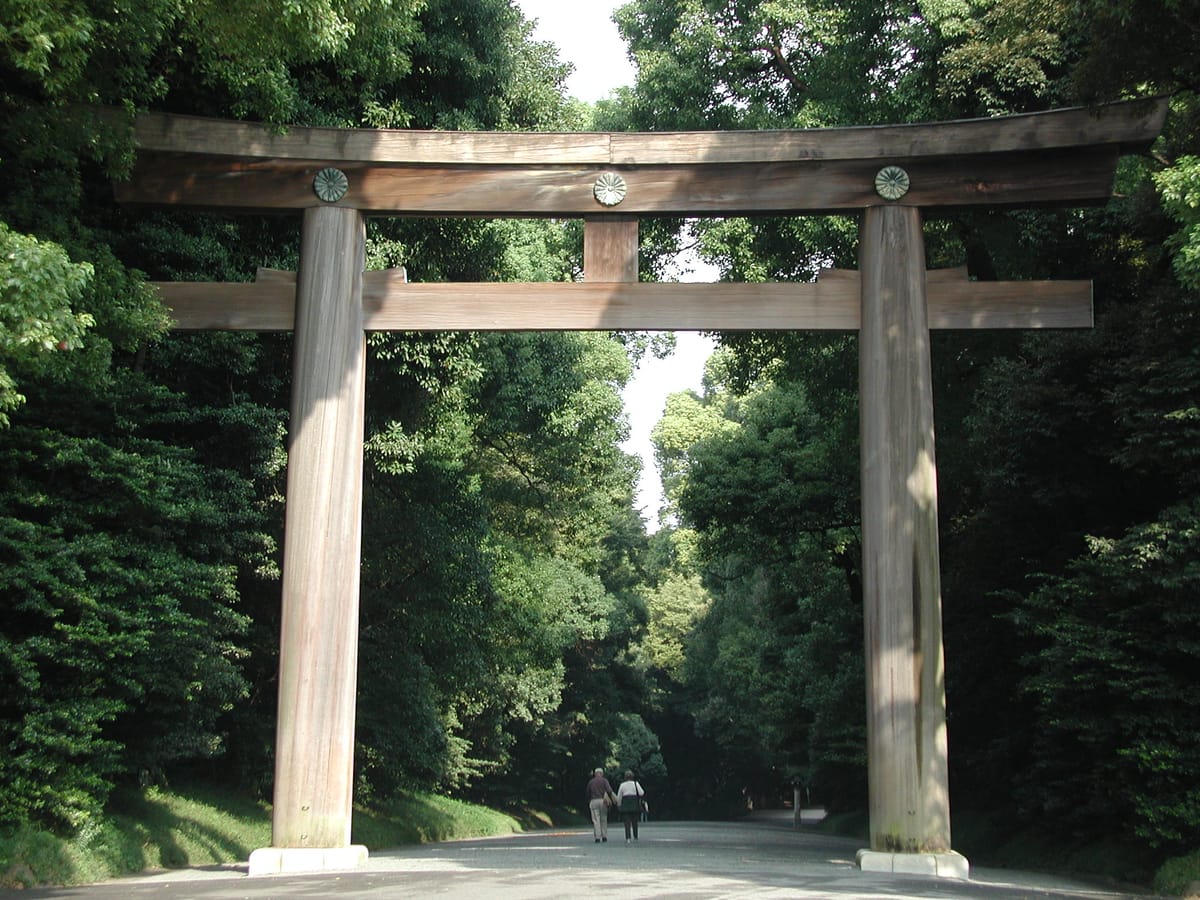
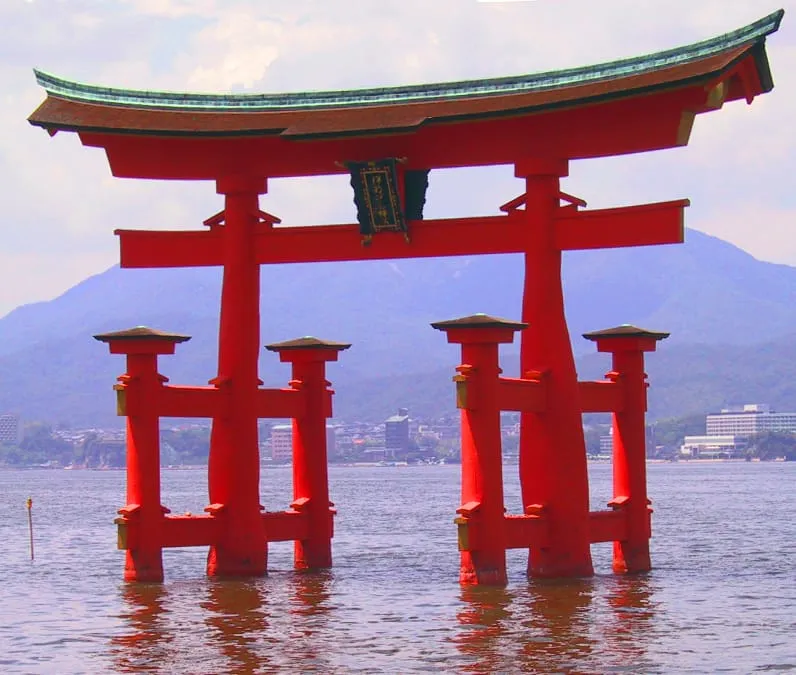
Hiroshima Prefecture is one of Japan’s most layered destinations for shrine visitors. At one end of the spectrum stands Itsukushima Shrine on Miyajima — a UNESCO World Heritage site where a 16-meter torii gate appears to float in the Seto Inland Sea at high tide. At the other end, in the heart of the city, a single pillar of a torii gate still stands where the atomic bomb stripped away everything else at Sanno Jinja in 1945. Between these two poles lies a remarkably diverse collection of sacred sites: ancient shrines from the age of myth, a sake-town shrine surrounded by cedar trees, a water-navy shrine on a Seto island, and quiet neighborhood shrines that have outlasted two centuries of modern history. This guide covers 15 shrines where you can receive goshuin in Hiroshima Prefecture, with notes on access and what makes each one worth visiting.
1. Itsukushima Jinja (厳島神社) — Hatsukaichi City, Miyajima Island
Enshrined deities: Ichikishima-hime-no-Mikoto, Tagori-hime-no-Mikoto, Tagitsu-hime-no-Mikoto (the three Munakata goddesses)
According to tradition, a local chieftain named Saeki Kuramoto received a divine revelation in 593 CE and built the first shrine here on Itsukushima (Miyajima). The current vermilion-lacquered complex, with its long covered corridors extending over the tidal flats, was reconstructed in its present form by Taira no Kiyomori in the late Heian period (12th century). The shrine was inscribed as a UNESCO World Heritage Site in 1996. The great torii standing in the sea — 16 meters tall, built from camphor wood — is Japan’s most photographed religious structure. At high tide, the gate appears to float; at low tide, visitors can walk around its base.
- Goshuin style: The shrine’s formal stamp reading “Itsukushima Jinja” with the Munakata goddess seal. Bold, unhurried, and unmistakably fitting for Japan’s most iconic shrine
- Fee: ¥300
- Access: Ferry from JR “Miyajima-guchi Station” (~10 min); from Miyajima pier, walk ~15 min
Goshuin Info
| Item | Details |
|---|---|
| Hours | 6:30–17:30 (separate entry fee to the shrine grounds) |
| Location | Goshuin counter within the shrine corridor |
| Direct writing / pre-written | Direct writing |
| Limited editions | Yes (New Year, Kangensai festival in summer) |
2. Hiroshima Gokoku Jinja (広島護国神社) — Naka-ku, Hiroshima
Enshrined: Spirits of approximately 92,000 war dead from Hiroshima Prefecture, from the Meiji period through World War II
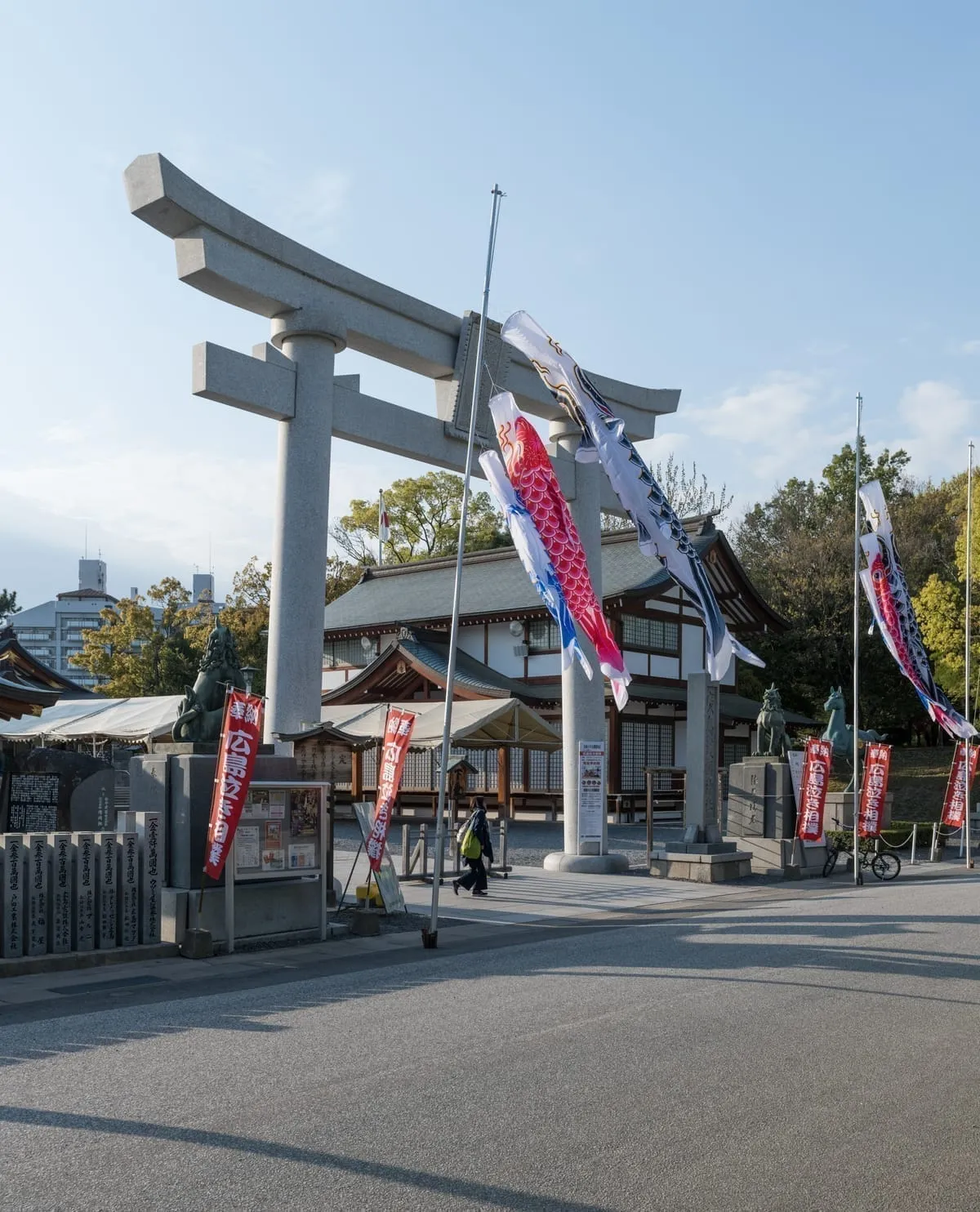
Founded in 1877 to honor Hiroshima soldiers killed in the Satsuma Rebellion, the shrine now occupies the former main enclosure (honmaru) of Hiroshima Castle, where the castle keep once stood before 1945. The contrast between the ancient stone walls and the vermilion torii is arresting. On August 6th each year, the shrine holds a Peace Memorial Festival that draws many visitors alongside the larger Peace Memorial Park ceremonies nearby. Combining a visit here with the Hiroshima Castle Museum (immediately adjacent) makes for an efficient morning.
- Goshuin style: Commanding calligraphy for “Hiroshima Gokoku Jinja” with the imperial chrysanthemum. Sober and purposeful — the shrine’s weight is carried in the simplicity of the design
- Fee: ¥500
- Access: 10-min walk from Hiroshima Electric Railway “Kamiya-cho Higashi” stop
Goshuin Info
| Item | Details |
|---|---|
| Hours | 9:00–17:00 |
| Location | Shamusho |
| Direct writing / pre-written | Direct writing |
| Limited editions | Yes (monthly seasonal designs, special festivals) |
3. Hayatani Jinja (速谷神社) — Hatsukaichi City
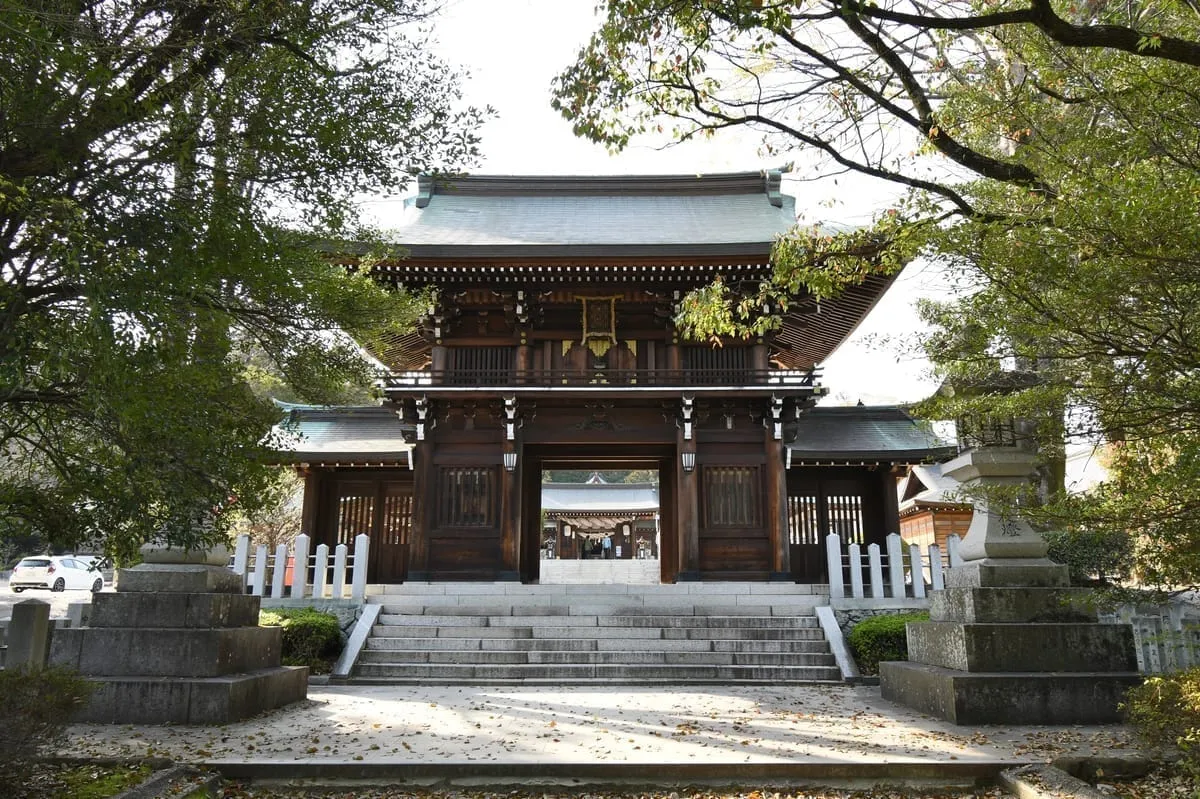
Enshrined deity: Take-Hayasusanoo-no-Mikoto (a fierce form of Susanoo)
One of the oldest shrines in Hiroshima Prefecture, traditionally said to date to the reign of Emperor Sujin (around 2,000 years ago). Listed in the Engishiki (a 10th-century government compendium) as a Myojin Taisha — a shrine of the highest ritual rank in ancient Japan. The magnificent two-story rōmon gate, designated an Important Cultural Property, was built under the patronage of Hiroshima domain lord Asano Mitsushige in the Edo period. The shrine is well-known as a guardian of safe travel and traffic; an area for blessing vehicles sits within the grounds. Located just a few kilometers from Miyajima, it pairs naturally with a Miyajima pilgrimage.
- Goshuin style: Flowing calligraphy for “Hayatani Jinja.” Ancient and authoritative — the stamp of Aki Province’s second-ranked shrine
- Fee: ¥500
- Access: 20-min walk from JR “Miyauchi-Kushiro Station,” or bus from Hiroden “Hatsukaichi” stop
Goshuin Info
| Item | Details |
|---|---|
| Hours | 9:00–16:30 |
| Location | Shamusho |
| Direct writing / pre-written | Direct writing |
| Limited editions | Yes (seasonal) |
4. Sanno Jinja (山王神社) — Naka-ku, Hiroshima
Enshrined deities: Oyamakui-no-Mikoto, Okuninushi-no-Mikoto, Susanoo-no-Mikoto
About 900 meters from ground zero on August 6, 1945, Sanno Jinja had two stone torii gates. The atomic bomb’s shockwave destroyed one and sheared off one leg of the other — leaving a single upright pillar still standing. That lone pillar remains on the grounds today, preserved exactly as the bomb left it: a burned, tilted monolith called the katashi torii (one-legged torii). Unlike most peace memorials in Hiroshima, this one is encountered unexpectedly, in the middle of an ordinary neighborhood shrine, which makes it hit differently. The main shrine continues to function as a local place of worship. The goshuin here carries a specific gravity that no other stamp in your collection will have.
- Goshuin style: Quiet calligraphy for “Sanno Jinja.” Understated — the site does the speaking, not the stamp
- Fee: ¥500
- Access: 5-min walk from Hiroden “Chuden-mae” stop
Goshuin Info
| Item | Details |
|---|---|
| Hours | 9:00–16:30 (confirm in advance) |
| Location | Shamusho |
| Direct writing / pre-written | Pre-written slip (confirm availability) |
| Limited editions | Yes (special edition on August 6) |
5. Tage Jinja (多家神社) — Fuchu-cho, Aki District
Enshrined deities: Emperor Jinmu, Akitsu-hiko-no-Kami, Hayaakitsu-hime-no-Kami
The ancient chronicles record that Emperor Jinmu (the legendary first emperor of Japan) established a temporary palace in Aki Province during his eastward campaign to found the nation. This shrine marks that site — known in ancient texts as Enomiya (埃宮). In modern terms it sits in Fuchu-cho, a town essentially surrounded by Hiroshima City’s eastern wards. The main hall and worship hall date from the mid-Edo period, built with the patronage of the Asano domain. As one of Aki Province’s senior shrines with direct connections to the founding myth of Japan, it holds a weight that its modest surroundings don’t quite prepare you for.
- Goshuin style: Formal calligraphy for “Tage Jinja.” The gravity of the founding legend in a quiet stamp
- Fee: ¥500
- Access: 20-min walk from JR “Tengawa Station,” or 15-min walk from JR “Mukaiyama Station”
Goshuin Info
| Item | Details |
|---|---|
| Hours | 9:00–17:00 |
| Location | Shamusho |
| Direct writing / pre-written | Direct writing |
| Limited editions | Yes (grand festival editions) |
6. Ebisu Taisha / Goisu Jinja (胡子大社) — Naka-ku, Hiroshima
Enshrined deity: Kotoshiro-nushi-no-Kami (Ebisu, god of commerce and good fortune)
The neighborhood of Ebisu-cho (胡町) in central Hiroshima takes its name directly from this shrine, which has served as the guardian of the city’s merchant district since the castle town was established in the early 17th century. The shrine’s annual Ebisu Festival (えびす講) in November draws hundreds of thousands of visitors over three days — one of Hiroshima’s largest traditional events. The Okonomi-yaki (savory pancake) district is minutes away, making this an easy stop on any Hiroshima food tour.
- Goshuin style: Lively calligraphy for “Goisu Taisha” (the shrine’s formal reading of the name). The commercial vitality of Hiroshima’s center, in stamp form
- Fee: ¥500
- Access: Immediately adjacent to Hiroden “Ebisu-cho” stop
Goshuin Info
| Item | Details |
|---|---|
| Hours | 9:00–17:00 |
| Location | Shamusho |
| Direct writing / pre-written | Direct writing |
| Limited editions | Yes (Ebisu Festival period) |
7. Shiro Jinja (白神社) — Naka-ku, Hiroshima
Enshrined deities: Shirasuna-okina-no-Kami, Shirasuna-hime-no-Kami
Known affectionately as “Shiro-san” by Hiroshima residents, this small shrine has protected the castle town’s center since the Mori clan established the city in the 1590s. The white-themed aesthetic — white paper, white sand, subtle silver-and-white designs — stands out among Hiroshima shrines. Monthly limited-edition goshuin with intricate brushwork designs have developed a following among collectors; the shrine has become something of a destination among those who prioritize visual quality in their goshuin.
- Goshuin style: Clean calligraphy with careful design work. Among the most visually refined goshuin in Hiroshima city — the white-themed aesthetic is consistent and considered
- Fee: ¥500
- Access: 5-min walk from Hiroden “Kamiya-cho Nishi” stop
Goshuin Info
| Item | Details |
|---|---|
| Hours | 10:00–16:00 |
| Location | Shamusho |
| Direct writing / pre-written | Both (depending on season and congestion) |
| Limited editions | Yes (monthly designs, seasonal editions) |
8. Sumiyoshi Jinja (住吉神社) — Naka-ku, Hiroshima
Enshrined deities: Sokotsu-watatsumi, Nakatsutsu-o-no-Mikoto, Uwatutsu-o-no-Mikoto, Empress Jingu
One of the most important shrines in early Hiroshima City, founded in 1619 when the first Hiroshima domain lord, Asano Nagaakira, invited the Sumiyoshi deities from the great Sumiyoshi Taisha in Osaka. The shrine sits near the Motoyasu River in central Hiroshima — within walking distance of the Peace Memorial Park and the Atomic Bomb Dome. The Sumiyoshi deities are guardians of seafarers and maritime commerce, appropriate patrons for a city whose rise was built on Seto Inland Sea trade.
- Goshuin style: Traditional calligraphy for “Sumiyoshi Jinja” with the triple-swirl (mitsu-tomoe) seal. Maritime and composed
- Fee: ¥500
- Access: 5-min walk from Hiroden “Chuden-mae” stop; 10-min walk from the Peace Memorial Park
Goshuin Info
| Item | Details |
|---|---|
| Hours | 9:00–17:00 |
| Location | Shamusho |
| Direct writing / pre-written | Direct writing |
| Limited editions | Yes |
9. Kameyama Jinja (亀山神社) — Kure City
Enshrined deities: Emperor Chuai, Empress Jingu, Emperor Ojin (Hachiman deities)
The principal shrine of Kure City, the naval port south of Hiroshima. From the shrine’s hillside precinct, the view across Kure Harbour to the shipyards and Etajima Island reminds you precisely what kind of city this is. The Yamato Museum (commemorating the battleship built in Kure) and the JMSDF Museum are a 10-minute walk away — combining the visit is the obvious move. The shrine has strong historical ties to the Imperial Japanese Navy, and naval votive offerings remain in the precinct.
- Goshuin style: Strong calligraphy for “Kameyama Jinja” with the Hachiman seal. Naval force and harbor air
- Fee: ¥500
- Access: 15-min walk from JR Kure Line “Kure Station”
Goshuin Info
| Item | Details |
|---|---|
| Hours | 9:00–17:00 |
| Location | Shamusho |
| Direct writing / pre-written | Direct writing |
| Limited editions | Yes (Navy Memorial, grand festival) |
10. Kamo-wakeikazuchi Jinja (賀茂別雷神社) — Higashihiroshima City
Enshrined deity: Kamo-wakeikazuchi-no-Okami (thunder god, same deity as Kyoto’s Kamigamo Shrine)
Established as a branch shrine of Kyoto’s famous Kamigamo Shrine (Upper Kamo Shrine), this shrine sits at the center of Saijo — Japan’s sake country. Higashihiroshima’s Saijo district is home to eight major sake breweries (sakagura), and the annual Sake Festival in October transforms the old brewery streets into one of Japan’s great open-air drinking events. A cluster of camphor trees several hundred years old shades the precinct. The葵 (hollyhock) crest — the Kamo family mon — appears on the goshuin.
- Goshuin style: Refined calligraphy for “Kamo-wakeikazuchi Jinja.” Clear and composed — the thunder god’s shrine in sake country
- Fee: ¥500
- Access: 10-min walk from JR “Saijo Station”
Goshuin Info
| Item | Details |
|---|---|
| Hours | 9:00–16:30 |
| Location | Shamusho |
| Direct writing / pre-written | Direct writing |
| Limited editions | Yes (Sake Festival period, seasonal) |
11. Ushitora Jinja (艮神社) — Onomichi City
Enshrined deity: Susanoo-no-Mikoto
Onomichi’s oldest shrine, traditionally dated to the founding year of 806 CE, sitting partway up the hillside that the city climbs. A camphor tree in the precinct is said to be over 1,000 years old, its roots lifting and contorting around ancient stones in a way that makes it difficult to photograph and impossible to forget. Director Nobuhiko Obayashi used this shrine as a filming location for his 1983 film The Girl Who Leapt Through Time — a piece of pop culture history woven into a genuinely ancient place. The goshuin here is quiet but the setting makes the visit.
- Goshuin style: Unassuming calligraphy for “Ushitora Jinja.” The stamp of a very old shrine in a hill town — modest but with deep roots
- Fee: ¥300–500
- Access: 15-min walk from JR “Onomichi Station” (involves climbing steps and lanes on the hillside)
Goshuin Info
| Item | Details |
|---|---|
| Hours | 9:00–17:00 (confirm in advance) |
| Location | Shamusho |
| Direct writing / pre-written | Both available |
| Limited editions | Yes |
12. Oyama Jinja (大山神社) — Innoshima, Onomichi City
Enshrined deities: Oyamatsumi-no-Kami, Hayaakitsu-hime-no-Kami
On Innoshima — one of the Seto Inland Sea islands now connected to the mainland by the Shimanami Kaido cycling route — this shrine served as the spiritual anchor for the Innoshima Murakami Suigun (pirates/navy) who controlled sea lanes here during the Sengoku period. The shrine enshrines Oyamatsumi, the great mountain-and-sea deity whose primary shrine is Oyamazumi Jinja on nearby Omishima Island. Votive offerings from the Murakami navy families remain in the precinct. The view of Innoshima Bridge from the hillside is one of the better angles on the Shimanami Kaido.
- Goshuin style: Bold calligraphy for “Oyama Jinja.” Sea power and island air — the stamp of a pirate navy’s patron deity
- Fee: ¥500
- Access: Bus from Onomichi to Innoshima “Tsuchiki” terminal (~40 min), then walk; or by bicycle along the Shimanami Kaido
Goshuin Info
| Item | Details |
|---|---|
| Hours | 9:00–17:00 (confirm in advance) |
| Location | Shamusho |
| Direct writing / pre-written | Pre-written slip (confirm) |
| Limited editions | Yes (summer festival) |
13. Susanoo Jinja (素盞嗚神社) — Fuchu City
Enshrined deities: Susanoo-no-Mikoto, Inadahime-no-Mikoto
Fuchu City (in Hiroshima Prefecture — not to be confused with Fuchu City in Tokyo) is an old provincial capital town with a textile tradition (Bingo-gasuri indigo cloth). Susanoo Jinja has been the town’s protector shrine since the days when Fuchu served as the seat of Bingo Province’s government. The main hall dates to the mid-Edo period, built in the elegant three-bay nagare-zukuri style. Worth visiting if you’re exploring Hiroshima’s inland historic towns — Fuchu has a quiet, preserved quality unusual in modern Japan.
- Goshuin style: Clean calligraphy for “Susanoo Jinja.” The stamp of an old provincial-capital town — dignified and straightforward
- Fee: ¥500
- Access: 15-min walk from JR Fukuen Line “Fuchu Station”
Goshuin Info
| Item | Details |
|---|---|
| Hours | 9:00–16:30 (confirm in advance) |
| Location | Shamusho |
| Direct writing / pre-written | Both available |
| Limited editions | Yes (grand festival) |
14. Hibayama Kume Jinja (比婆山久米神社) — Shobara City
Enshrined deity: Izanami-no-Mikoto
The Kojiki (Japan’s oldest chronicle, 712 CE) records that when Izanagi buried his wife Izanami — who died giving birth to the fire god — he placed her in a mountain called Hiba-no-yama. That mountain is identified with the 1,264-meter Hibayama peak in what is now Shobara City, a remote town in the Chugoku Mountains of northern Hiroshima Prefecture. The national historic site “Hibayama Imperial Mausoleum” preserves the ancient megalithic formation on the summit said to be Izanami’s resting place. The shrine at the mountain’s foot allows you to register your intention to climb the sacred mountain; the summit path leads to the ancient stones through old-growth forest. For visitors interested in the oldest strata of Japanese myth, this is one of the few places where the landscape and the story fully align.
- Goshuin style: Formal calligraphy for “Hibayama Kume Jinja.” Rare — this is one of very few shrines where you can receive a goshuin at the foot of a mythological site from the Kojiki
- Fee: ¥500
- Access: By car: ~20 min from “Tojo IC” on the Chugoku Expressway. Public transport is extremely limited; a car is essentially required
Goshuin Info
| Item | Details |
|---|---|
| Hours | 9:00–16:00 (confirm in advance) |
| Location | Shamusho |
| Direct writing / pre-written | Pre-written slip (confirm) |
| Limited editions | Yes (spring grand festival) |
15. Hijiyama Jinja (比治山神社) — Minami-ku, Hiroshima
Enshrined deity: Hiko-hohodemi-no-Mikoto (grandson of Amaterasu; ancestor of the imperial line)
Set near the summit of Hijiyama Park — a forested hill rising above Hiroshima’s southern wards — this shrine has an unusual claim on local history. When the atomic bomb detonated on August 6, 1945, Hijiyama’s bulk stood between the blast and this part of the city, reducing the damage compared to areas in the direct line of sight. Many survivors sought refuge on the hillside. Today the hill is home to the Hiroshima City Museum of Contemporary Art and the Radiation Effects Research Foundation, and the shrine occupies a quiet corner of the park with a citywide view. Less visited than the downtown shrines but worth the climb.
- Goshuin style: Quiet calligraphy for “Hijiyama Jinja.” A shrine that sheltered a city — the stamp is understated and the site carries the rest
- Fee: ¥500
- Access: 10-min walk from Hiroden “Hijiyama-bashi” stop (involves climbing the hill path)
Goshuin Info
| Item | Details |
|---|---|
| Hours | 9:00–17:00 (confirm in advance) |
| Location | Shamusho |
| Direct writing / pre-written | Pre-written slip (confirm) |
| Limited editions | Yes |
Suggested Itineraries
Half Day: Central Hiroshima (4 shrines)
Sumiyoshi Jinja → Sanno Jinja (one-legged torii) → Shiro Jinja → Goisu Taisha
All walkable from the Hiroden tram network. Combine with Peace Memorial Park and the Atomic Bomb Dome.
One Day: Miyajima + Hatsukaichi (3 shrines)
Hayatani Jinja (morning) → ferry → Itsukushima Jinja (with time to walk the island)
Hayatani is a 20-minute walk from the station closest to the ferry terminal, making it a natural first stop. Itsukushima can easily fill three or four hours with the main shrine and its subsidiary shrines.
One Day: Kure + Saijo (2 shrines)
Kameyama Jinja (Kure, with Yamato Museum) → Kamo-wakeikazuchi Jinja (Saijo, with sake brewery walk)
Onomichi & Islands (2–3 shrines)
Ushitora Jinja (Onomichi hill walk) → Oyama Jinja (Innoshima, by ferry or bicycle)
The Shimanami Kaido cycling route connects Innoshima to the mainland — this pairing works especially well for cyclists.
Practical Notes for Hiroshima Goshuin Collectors
Getting to Hiroshima: Shinkansen from Tokyo (~4 hours on Nozomi), Osaka (~1.5 hours), or Fukuoka (~50 min). Hiroshima Airport also receives domestic flights.
Getting around the city: Hiroshima Electric Railway (streetcar/tram) covers most central shrines efficiently. The Peace Memorial Park, Hiroshima Castle, Kamiya-cho, and the Ebisu-cho entertainment district are all within a compact walkable zone.
Miyajima: The island has multiple subsidiary shrines within the Itsukushima complex (Marodo Jinja, Okusha, etc.) that each offer their own goshuin. If you want to maximize your count from a single Miyajima visit, plan 4–5 hours and wear comfortable shoes.
Crowds at Itsukushima: The island receives approximately 4 million visitors per year. Peak times (Golden Week, Obon, autumn leaf season) bring long queues at the goshuin counter. Weekday mornings, especially in February–March and June, are the quietest.
Remote shrines: Hibayama Kume Jinja requires a car and planning — it’s a 1.5–2 hour drive from central Hiroshima into mountain terrain. If you go, combine it with a hike to the summit to see the ancient megalithic mausoleum itself. No public transport serves the area reliably.
Hiroshima offers something that few other prefectures can: a goshuin itinerary where the stamps connect not just to ancient mythology and architectural history, but to a very specific, very recent, and very unresolved chapter of modern history. The one-legged pillar at Sanno Jinja does not ask for anything from you. But standing next to it, stamp in hand, is an experience that sits differently from any other in your goshuincho.
Photo credits: All images are from Wikimedia Commons under Creative Commons licenses.
Itsukushima torii by Rdsmith4, CC BY-SA 2.5, Wikimedia Commons
Hiroshima Gokoku Shrine torii by DXR, CC BY-SA 4.0, Wikimedia Commons
Hayatani Jinja rōmon by Saigen Jiro, CC0 1.0 (Public Domain), Wikimedia Commons