Ise Jingu is the highest-ranking shrine complex in Japan — the spiritual center of Shinto and the home of Amaterasu Omikami, the sun goddess from whom the imperial family traces its descent. Formally known simply as “Jingu” (神宮), it encompasses 125 separate shrine buildings spread across Ise City, Shima City, and Taiki-cho in Mie Prefecture. This guide covers 10 key sites where you can receive goshuin — from the two main shrines to remote mountain outposts — along with the traditional etiquette and practical details for making the most of your pilgrimage.
1. Geku — Toyouke Daijingu (外宮・豊受大神宮)
Enshrined deity: Toyouke-no-Omikami (goddess of food, agriculture, and industry)
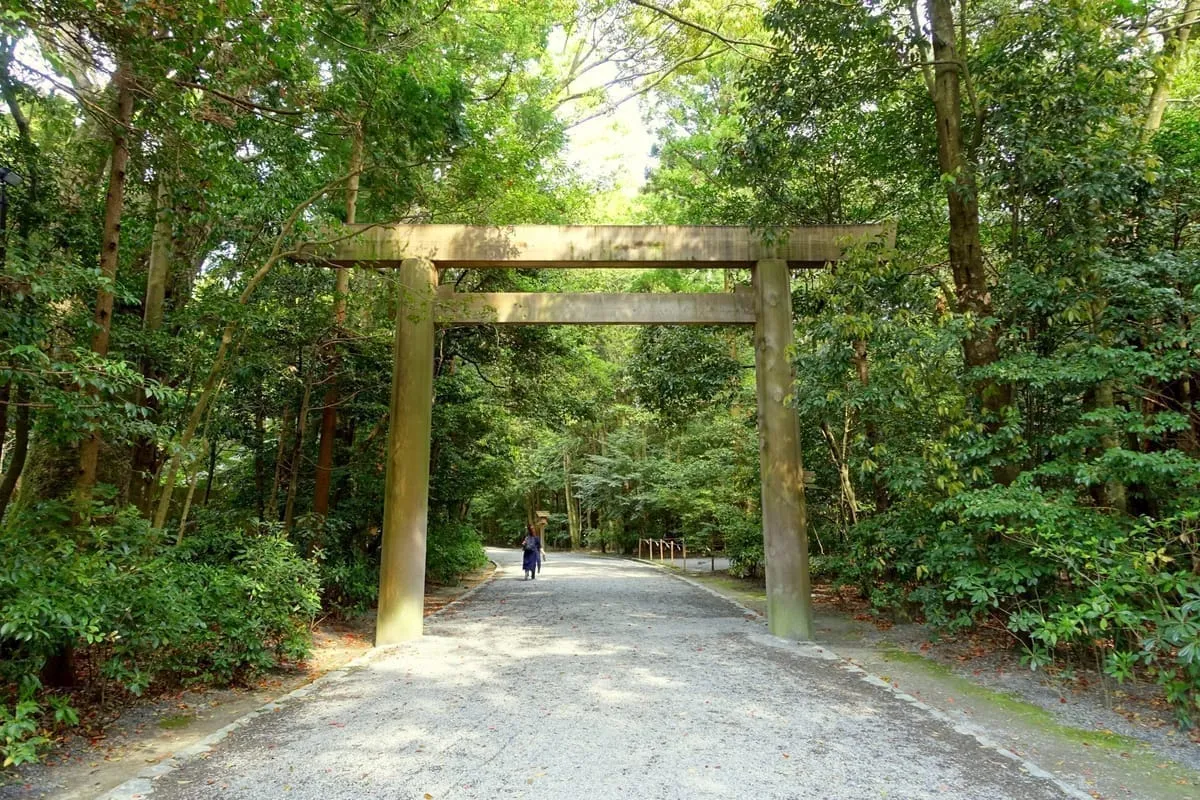
Tradition dictates starting your Ise pilgrimage here, at the Outer Shrine. Toyouke-no-Omikami was summoned to Ise from Tamba Province in 478 CE — according to legend, at the request of Amaterasu herself, who wanted a deity nearby to prepare sacred food offerings. The cedar-shaded grounds feel deliberately plain compared to the ornate grandeur of shrines like Toshogu: Ise’s aesthetic is one of refined simplicity, where each unpainted wooden beam and precisely raked gravel path speaks of an ancient and unbroken ritual tradition.
- Goshuin style: Bold calligraphy reading “Toyouke Daijingu” with the Jingu seal. Formal and commanding — the fitting opening stamp of any Ise pilgrimage
- Fee: ¥300
- Access: 5-min walk from JR/Kintetsu “Ise-shi Station”
Goshuin Info
| Item | Details |
|---|---|
| Hours | 5:00–18:00 (seasonal variation: until 16:00 Oct–Dec, until 17:00 Jan–Apr & Sept) |
| Location | Kaguraden (神楽殿) inside the first torii |
| Direct writing / pre-written | Direct writing |
| Limited editions | None (one standard design year-round) |
2. Naiku — Kotai Jingu (内宮・皇大神宮)
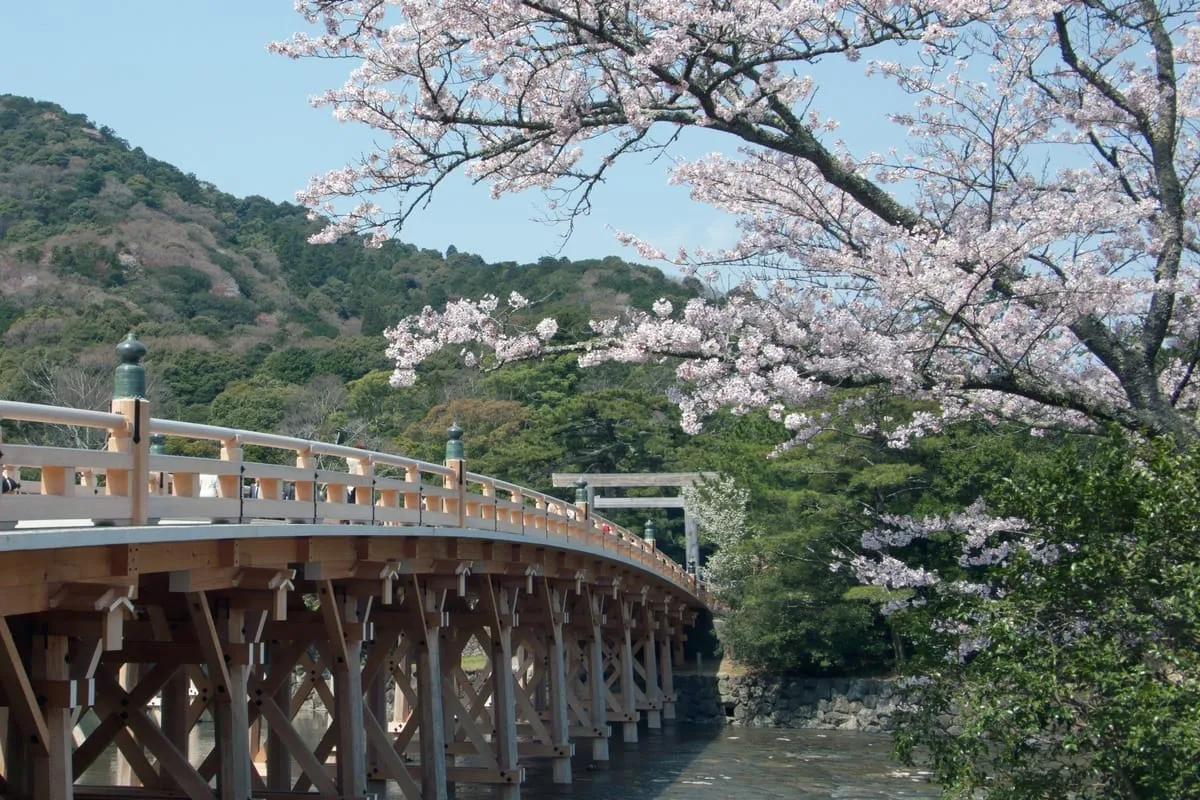
Enshrined deity: Amaterasu Omikami (the sun goddess; ancestral deity of the imperial family)
Japan’s most sacred shrine. The Inner Shrine has been at this location for over 2,000 years, and the moment you step onto the vermilion-railed Uji Bridge over the Isuzu River, you feel the shift — the air changes, the noise of the world fades, and the atmosphere becomes something entirely different from any ordinary shrine visit. The wooden bridge, rebuilt every 20 years as part of the Shikinen Sengu cycle of ritual renewal, leads to an avenue of towering ancient cedars and, eventually, to the thatched-roof main sanctuary that no visitor may enter.
The Inner Shrine complex also contains smaller sub-shrines (shogu and betsugu) within its precincts, including the important Aramatsuri-no-miya (荒祭宮) dedicated to Amaterasu’s more assertive spiritual aspect.
- Goshuin style: Stately calligraphy reading “Kotai Jingu” with the Jingu seal. Quiet authority — the most revered goshuin in Japan
- Fee: ¥300
- Access: Bus from Kintetsu “Ise-shi” or “Uji-Yamada Station” to “Naiku-mae” stop (~15–20 min)
Goshuin Info
| Item | Details |
|---|---|
| Hours | 5:00–18:00 (same seasonal variations as Geku) |
| Location | Kaguraden (神楽殿) near the inner precinct |
| Direct writing / pre-written | Direct writing |
| Limited editions | None (one standard design year-round) |
3. Tsukiyomi-no-miya (月夜見宮) — Geku Betsugu
Enshrined deity: Tsukuyomi-no-Mikoto and Tsukuyomi-no-Mikoto Aramitama (two forms of the moon deity)
A 5-minute walk north of Geku’s rear gate brings you to this quiet branch shrine dedicated to the moon god. Tsukuyomi is Amaterasu’s sibling but, according to mythology, has been separated from her since antiquity (explaining why day and night do not share the sky). The path between the rear gate of Geku and this shrine is called the “Kamiji-dori,” lined with old buildings that preserve a sense of pre-modern Ise. A natural addition to a Geku visit.
- Goshuin style: Clean calligraphy for “Tsukiyomi-no-miya.” Light and composed — the moon’s quiet companion to Geku’s solar energy
- Fee: ¥300
- Access: 10-min walk from Geku (via the north rear gate)
Goshuin Info
| Item | Details |
|---|---|
| Hours | 9:00–16:00 (confirm in advance) |
| Location | Shamusho |
| Direct writing / pre-written | Pre-written slip (direct writing may be available at the Kaguraden) |
| Limited editions | None |
4. Yamato-hime-no-miya (倭姫宮) — Naiku Betsugu
Enshrined deity: Yamatohime-no-Mikoto
Princess Yamato-hime was the fourth-generation imperial princess tasked with finding the perfect resting place for Amaterasu’s sacred mirror. She traveled for 20 years through Yamato, Omi, Mino, Owari, and finally arrived at Ise — and declared: “Here the divine wind of Ise blows, where the waves return to the shore. This is a beautiful land.” This shrine, founded relatively recently (1923) compared to other shrines in the complex, honors the woman who established Ise Jingu. The adjacent Jingu Museum (神宮徴古館) is worth visiting.
- Goshuin style: Elegant calligraphy for “Yamato-hime-no-miya.” Refined and purposeful — the stamp of the shrine’s founding spirit
- Fee: ¥300
- Access: 15-min walk from Kintetsu “Isuzugawa Station,” or bus from Naiku-mae to “Jingu Chokokan-mae”
Goshuin Info
| Item | Details |
|---|---|
| Hours | 9:00–16:00 (confirm in advance) |
| Location | Shamusho |
| Direct writing / pre-written | Pre-written slip |
| Limited editions | None |
5. Tsukiyomi-no-miya (月読宮) — Naiku Betsugu (4 shrines)
Enshrined deities: Tsukiyomi-no-Mikoto, Tsukiyomi-no-Mikoto Aramitama, Izanagi-no-Mikoto, Izanami-no-Mikoto
An unusual compound: four separate shrines stand in a single precinct, each with its own small main hall, each offering its own goshuin. The moon god’s two aspects — gentle and powerful — are enshrined here, alongside the primal creative couple Izanagi and Izanami. Collecting all four goshuin takes some time but offers a meditative experience of moving slowly through a quiet forest precinct.
- Goshuin style: Four individual stamps: “Tsukiyomi-no-miya,” “Tsukiyomi-no-miya Aramitama,” “Izanagi-no-miya,” and “Izanami-no-miya.” Understated and ancient — among the quietest goshuin in Ise
- Fee: ¥300 each (¥1,200 total for all four)
- Access: 10-min walk from Kintetsu “Isuzugawa Station”
Goshuin Info
| Item | Details |
|---|---|
| Hours | 9:00–16:00 (confirm in advance) |
| Location | Shamusho |
| Direct writing / pre-written | Pre-written slips (four sheets) |
| Limited editions | None |
6. Sarutahiko Jinja (猿田彦神社)
Enshrined deities: Sarutahiko Omikami, Ame-no-Uzume-no-Mikoto
A 3-minute walk from the Naiku entrance, this independent shrine is dedicated to Sarutahiko — the towering, long-nosed earth deity who guided the heavenly descent (tenson korin) and is revered as the god of pathfinding, direction, and safe travel. The round “Takaramono-ishi” stone in the precinct changes color as the seasons shift — locals say it holds good fortune. The shrine also enshrines Ame-no-Uzume at the subsidiary Saru-me-sha, making this a rare combined site for both deities.
- Goshuin style: Strong, assertive calligraphy for “Sarutahiko Jinja.” The guide-god’s stamp — a bold presence in any goshuincho
- Fee: ¥500
- Access: 3-min walk from the Naiku bus stop
Goshuin Info
| Item | Details |
|---|---|
| Hours | 9:00–17:00 |
| Location | Shamusho |
| Direct writing / pre-written | Direct writing |
| Limited editions | Yes (monthly designs, festival editions) |
7. Futami Okitama Jinja (二見興玉神社)
Enshrined deities: Sarutahiko Omikami, Uga-no-Mitama-no-Kami
The shrine of the Meoto Iwa — the “Wedded Rocks” joined by a sacred rope in the sea off Futami. The larger rock (8.7m) bears a small torii gate, and the pair face each other across a sacred submerged stone said to be Sarutahiko’s resting place. In ancient times, Ise pilgrims would begin at Futami, purify themselves in the sea (hamamairi), and only then proceed inland to the main shrines. At the summer solstice, the sun rises precisely between the two rocks — one of Japan’s iconic sunrise photographs.
- Goshuin style: Calligraphy for “Futami Okitama Jinja” with the wedded rocks seal. Salt-air clarity and oceanic power in a single stamp
- Fee: ¥500
- Access: 15-min walk from JR “Futaminoura Station”
Goshuin Info
| Item | Details |
|---|---|
| Hours | 9:00–17:00 |
| Location | Shamusho |
| Direct writing / pre-written | Direct writing |
| Limited editions | Yes (summer solstice, seasonal events) |
8. Izawa-no-miya (伊雑宮) — Naiku Betsugu, Shima City
Enshrined deity: Amaterasu Omikami Mitama
Set among the rice paddies and pine forests of the Oshibe Peninsula in Shima City, this remote branch shrine is one of the most spiritually significant in the entire Jingu complex. Its annual Ota-ue festival (御田植式, June 24) — in which pilgrims compete to grab bamboo poles planted in a sacred rice field while performers dance on a bamboo raft — is designated an Important Intangible Folk Cultural Property. Yamatohime-no-Mikoto herself is said to have designated this site as a branch of the Inner Shrine.
- Goshuin style: Understated calligraphy for “Izawa-no-miya.” A quiet, rural counterpoint to the grandeur of Naiku — rice field air in stamp form
- Fee: ¥300
- Access: 3-min walk from Kintetsu “Kamigo Station”
Goshuin Info
| Item | Details |
|---|---|
| Hours | 9:00–16:00 (confirm in advance) |
| Location | Shamusho |
| Direct writing / pre-written | Pre-written slip |
| Limited editions | None |
9. Takihara-no-miya (瀧原宮) — Naiku Betsugu, Taiki-cho
Enshrined deity: Amaterasu Omikami Mitama (two halls: Takihara-no-miya and Takihara-narabishino-miya)
The “distant shrine” — a 40-minute drive south of central Ise, hidden in a mountain valley carved by a clear tributary of the Miya River. This is believed to be one of the potential original resting places of Amaterasu before Yamatohime found the current Naiku site — making it, in some interpretations, an older and arguably wilder form of the same sacred presence. The approach through giant cryptomeria cedars — some over 300 years old — is one of the most atmospheric walks at any Jingu site.
- Goshuin style: Two stamps for the two adjacent halls. Ancient forest calm — these feel like the oldest pieces of paper in your goshuincho
- Fee: ¥300 each
- Access: 30-min walk from JR “Ouchi-yama Station,” or by car (~40 min from Ise)
Goshuin Info
| Item | Details |
|---|---|
| Hours | 9:00–16:00 (confirm in advance) |
| Location | Sangosho (参籠所) on the precinct grounds |
| Direct writing / pre-written | Pre-written slip |
| Limited editions | None |
10. Asamagawa Jinja / Mt. Asama (朝熊神社・朝熊岳)
Enshrined deity: Ukemochi-no-Kami
The old proverb says: “If you visit Ise but skip Mt. Asama, it’s only half a pilgrimage.” Standing at 555 meters above Ise Bay, this Naiku末社 (末社, minor shrine) on the summit of Mt. Asama served as Ise’s spiritual guardian from the northeast — the direction from which misfortune was believed to approach. Historically, pilgrims climbed the Asama-dake-do trail after visiting the main shrines, completing their pilgrimage with a descent into the mountain’s protective embrace. The view of Ise Bay from the summit on a clear day is extraordinary.
- Goshuin style: Simple, mountain-summit calligraphy for “Asamagawa Jinja.” The stamp that completes the pilgrimage — modest, earned, whole
- Fee: ¥300
- Access: 90-min hike up the Asama-dake-do trail from the trailhead near Naiku, or drive the Ise-Shima Skyline (toll road)
Goshuin Info
| Item | Details |
|---|---|
| Hours | 9:00–16:00 (confirm in advance) |
| Location | Summit shamusho |
| Direct writing / pre-written | Pre-written slip (limited direct writing) |
| Limited editions | Yes (grand festival) |
Suggested Itineraries
One Day: Core Ise Pilgrimage
Geku → Kamiji-dori stroll → Tsukiyomi-no-miya → bus/taxi → Naiku → Sarutahiko Jinja
Start at Geku when it opens. Naiku gets very crowded after 10 AM. Sarutahiko is a 3-minute walk from the Naiku bus stop — easy to combine.
Two Days: Complete Ise
Day 1: Futami Okitama Jinja (morning, sea purification) → Geku → Tsukiyomi-no-miya → Naiku → Sarutahiko Jinja Day 2: Yamato-hime-no-miya → Tsukiyomi-no-miya (Naiku, 4 stamps) → Izawa-no-miya (Shima) or Takihara-no-miya (Taiki-cho) → Mt. Asama
One-Day Express
Geku → Naiku → Sarutahiko Jinja — three goshuin, achievable in half a day
Practical Tips for Ise Goshuin Collectors
Getting there: The fastest route from Nagoya is Kintetsu Limited Express (about 75 min to Iseshi Station). From Osaka-Namba, Kintetsu runs directly (about 2 hours). JR is also possible from Nagoya via the Mie/Kisei Line.
Between Geku and Naiku: The “Geku-Naiku shuttle bus” (外宮・内宮循環バス) runs frequently. The Okage Yokocho / Oharai-machi stretch is a 15-minute walk from Naiku bus stop — the classic post-shrine snack street.
Goshuin note: Unlike most shrines, Ise Jingu shrines charge ¥300 (not ¥500) and typically offer only one standard design year-round. The focus is on the spiritual weight of the stamp, not visual variety. Independent shrines like Sarutahiko and Futami Okitama charge ¥500 and offer seasonal limited editions.
Crowds: Over 8 million visitors per year. New Year’s week (Jan 1–3) sees millions; Golden Week and Obon are extremely busy. The quietest times are weekday mornings in February–March, June, and early November.
The Shikinen Sengu: Every 20 years, the main hall of both Geku and Naiku (and all betsugu) are completely rebuilt in their adjacent empty plot. The next Sengu is in 2033. When the old hall is ceremonially retired, the empty plot beside each shrine becomes the “future site” for another 20 years — a living system of renewal unique in world religious architecture.
Ise is not a place you rush. The goshuin here carry the weight of a tradition that has been renewed, without interruption, for two millennia. Whether you collect all 10 stamps in a single ambitious pilgrimage or spread your visits across many years, each slip of paper from this mountain-forest-sea complex is something genuinely unlike any other goshuin in Japan.
Photo credits: All images are from Wikimedia Commons under Creative Commons licenses. Geku first torii by Daderot, CC0 1.0 (Public Domain), Wikimedia Commons Uji Bridge at Naiku by N yotarou, CC BY-SA 4.0, Wikimedia Commons