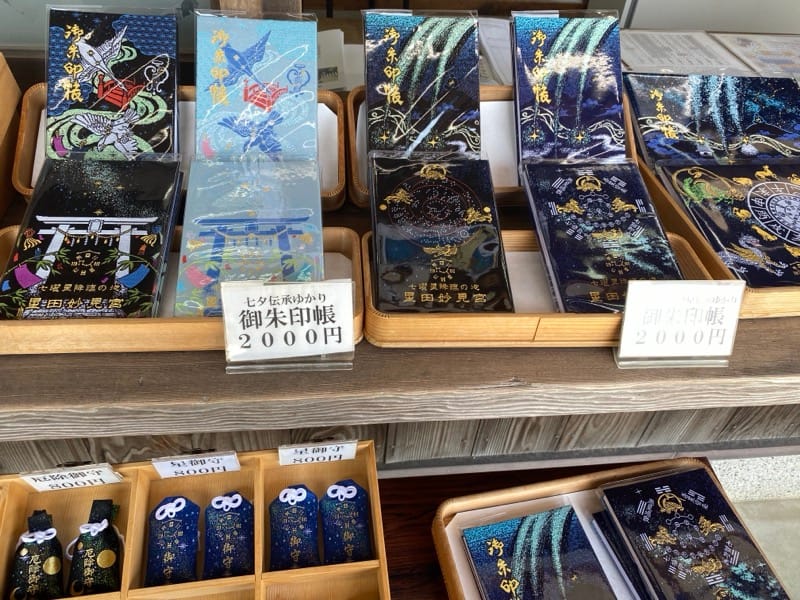
If you’re building a Japan trip around goshuin collecting, the routing matters more than most people expect.
The goal isn’t just to visit famous shrines — it’s to visit the right shrines in the right order, at the right time of day, without burning yourself out on transit. This 7-day plan covers Tokyo (3 nights), Kyoto (2 nights), and Hiroshima (1 night), moving in one direction and ending near departure airports. It’s been designed for first-time visitors who want both efficiency and depth.
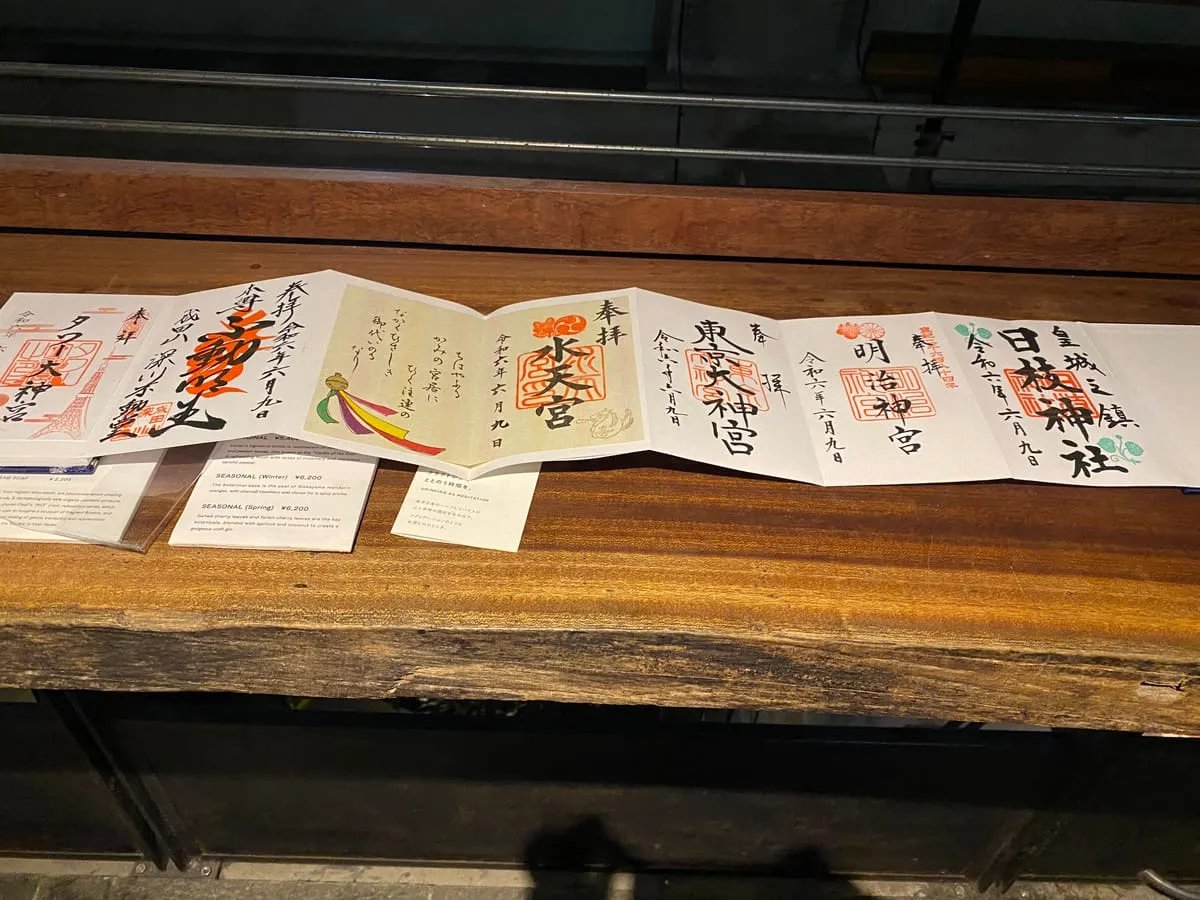
What Makes This Itinerary Different
- Stamp variety: Urban shrines, forest shrines, World Heritage sites — each with distinct goshuin styles
- One-direction routing: Tokyo → Kyoto → Hiroshima, no backtracking
- Beginner-friendly: Prioritizes shrines with reliable reception hours and English signage
- Crowd awareness: Morning-first scheduling to beat queues at popular sites
What to Bring
| Item | Notes |
|---|---|
| Goshuincho (stamp book) | 2 recommended — one for shrines, one for temples |
| Small change | 20+ ¥100 coins (most goshuin cost ¥300–500) |
| Kakioki sleeve/folder | A5-size for storing loose pre-written stamps |
| Goshuin app | To photograph and catalog each stamp as you go |
Day 1 (Tokyo): Meiji Shrine & Nezu Shrine
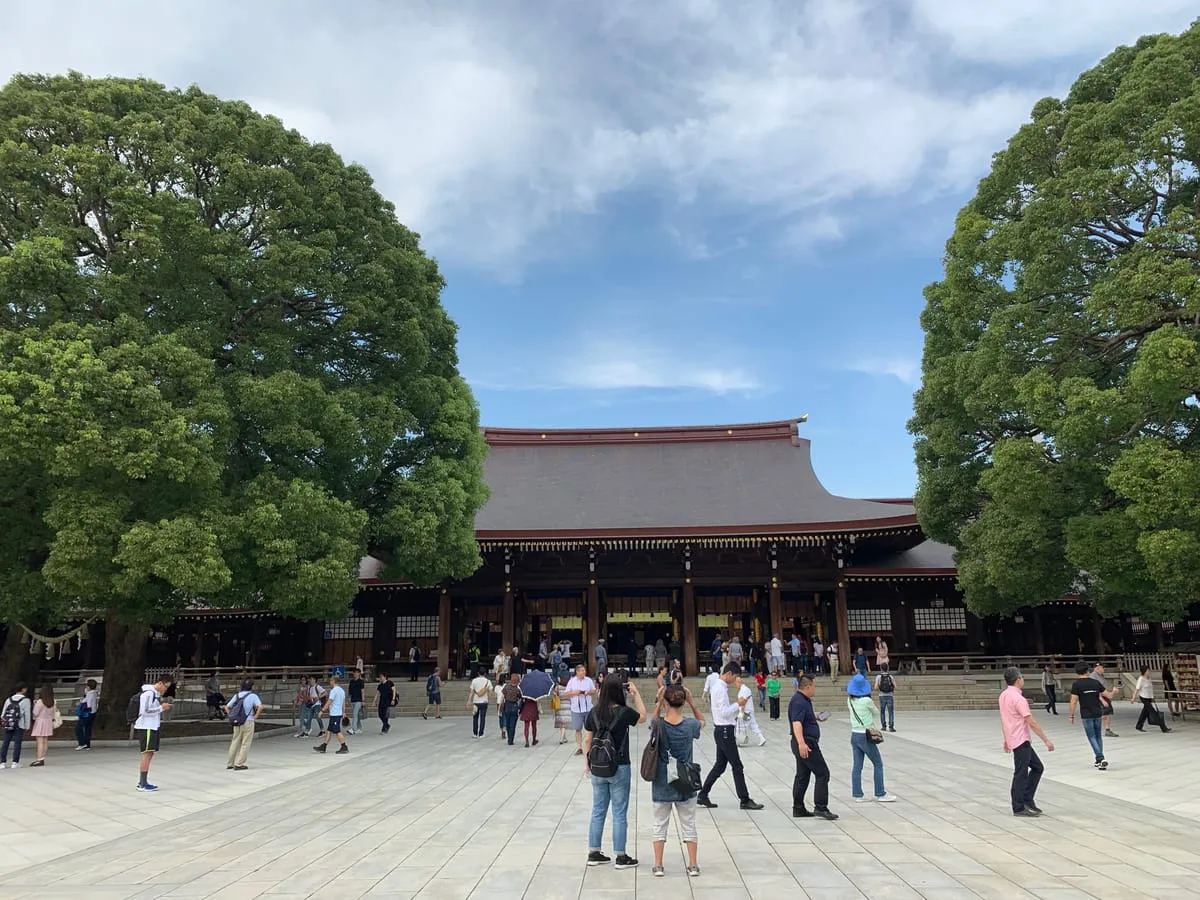
Meiji Jingu (Shibuya)
One of Tokyo’s most important shrines, dedicated to Emperor Meiji and Empress Shoken.
- Goshuin: One standard stamp — simple but deeply dignified
- Reception hours: Sunrise to sunset
- Fee: ¥500
- Access: 1-minute walk from JR Harajuku Station
The 1.3km forest path from the southern entrance is the best way to arrive. Don’t rush it. The canopy of trees is a deliberate transition — from city to sacred space. Arrive at opening to beat tour groups.
Nezu Shrine (Bunkyo)
One of Tokyo’s Ten Shrines, and less crowded than it deserves to be.
- Goshuin: Standard version plus monthly rotating designs
- Reception hours: 9:00–17:00
- Fee: ¥500+
- Access: 5-minute walk from Tokyo Metro Nezu Station
Famous for azalea season in April–May, but worth visiting year-round. The monthly goshuin designs are among the most artistically refined in Tokyo — a consistent favorite among collectors.
Day 2 (Tokyo): Asakusa Shrine & Yasukuni Shrine
Asakusa Shrine (Taito)
Stands beside Senso-ji temple, dedicated to the three men who founded the famous Buddhist site.
- Goshuin: Standard version plus seasonal designs
- Reception hours: 9:00–17:00
- Fee: ¥500
- Access: 7-minute walk from Toei Asakusa Station
Note that Asakusa Shrine (Shinto) and Senso-ji Temple (Buddhist) are neighbors but separate. If you’re using different goshuincho for shrines and temples, you’ll want both books for this visit. Arrive at 9:00 sharp to avoid the Nakamise shopping street crowds.
Yasukuni Shrine (Chiyoda)
Founded in 1869, enshrining 2.46 million war dead.
- Goshuin: Standard version plus monthly rotating designs
- Reception hours: 9:00–17:00
- Fee: ¥300
- Access: 10-minute walk from JR Ichigaya Station
Known for cherry blossoms in spring and chrysanthemum displays in autumn. The goshuin reception moves quickly — wait times are usually short. If time allows, the Yushukan museum (paid entry) provides meaningful context for the shrine.
Day 3 (Transit Day — Tokyo to Kyoto): Fushimi Inari
Shinkansen from Tokyo to Kyoto takes about 2 hours 15 minutes on the Nozomi. Check in, then head straight to Fushimi Inari for the afternoon.
Fushimi Inari Taisha (Fushimi, Kyoto)
The head shrine of all 30,000 Inari shrines in Japan. Famous worldwide for its thousands of vermilion torii gates.
- Goshuin: Two stamps — one at the main hall, one at Okusha (the inner shrine, partway up the mountain)
- Reception hours: Open 24 hours; goshuin reception approximately 8:30–16:30
- Fee: ¥300 each
- Access: 1-minute walk from JR Inari Station
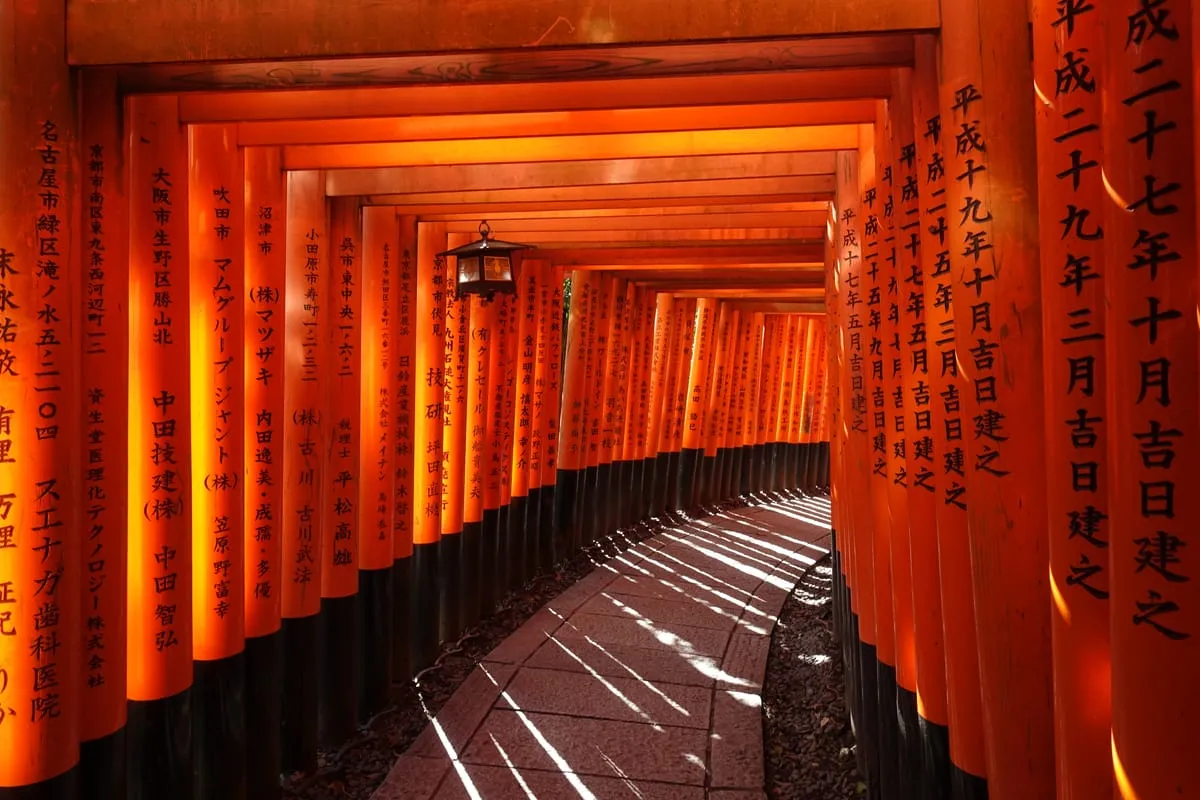
The full trail to the summit takes 2–3 hours round trip. Even if you don’t summit, reach Okusha — that’s where the second goshuin lives, and it’s worth the climb. The light changes dramatically at dusk; the torii shift from bright orange to deep copper.
Day 4 (Kyoto): Shimogamo Shrine & Kamigamo Shrine
A classic Kyoto pairing — both are World Heritage sites, and both are less crowded than the city’s famous temples.
Shimogamo Shrine (Kamomioya-jinja)
Ancient shrine surrounded by Tadasu no Mori, a forest that has been documented since the 8th century.
- Goshuin: 2 types (main hall + kotasha)
- Reception hours: 6:30–17:00
- Fee: ¥500
- Access: 12-minute walk from Keihan Demachiyanagi Station
The forest path to the shrine is one of the quietest walks in central Kyoto. The seasonal goshuin designs — cherry blossoms in spring, autumn leaves in fall — are consistently beautiful.
Kamigamo Shrine (Kamowakeikazuchi-jinja)
The counterpart to Shimogamo, also a World Heritage site.
- Goshuin: 1 type (elegant, understated design)
- Reception hours: 8:00–17:00 (weekdays); until 16:30 on weekends/holidays
- Fee: ¥500
- Access: City bus to Kamigamo Shrine stop
The conical tatezuna sand sculptures in the inner courtyard are unique in Japan. Both shrines can be done in a single day by city bus — leave Shimogamo by noon to allow enough time.
Day 5 (Kyoto to Hiroshima): Nishiki Tenmangu & Itsukushima Shrine
Nishiki Tenmangu (Nakagyo, Kyoto)
A Tenmangu shrine tucked inside the Nishiki market arcade — unusual in the best way.
- Goshuin: Standard plus monthly rotation
- Reception hours: 8:00–20:00 (verify in advance)
- Fee: ¥500
- Access: 3-minute walk from Hankyu Karasuma Station
Visit before catching the shinkansen. The market opens early and the shrine is easy to reach from Kyoto Station by subway. Hiroshima is 45 minutes from Kyoto on the Nozomi.
Itsukushima Shrine (Miyajima Island, Hiroshima)
A World Heritage shrine built on tidal flats, with its great torii gate appearing to float at high tide.
- Goshuin: 1 type — bold, simple, unforgettable
- Reception hours: 6:30–18:00 (seasonal variation)
- Fee: ¥300
- Access: Hiroshima Station → Miyajimaguchi → JR/Matsudai ferry → Miyajima Island (approx. 1 hour total)
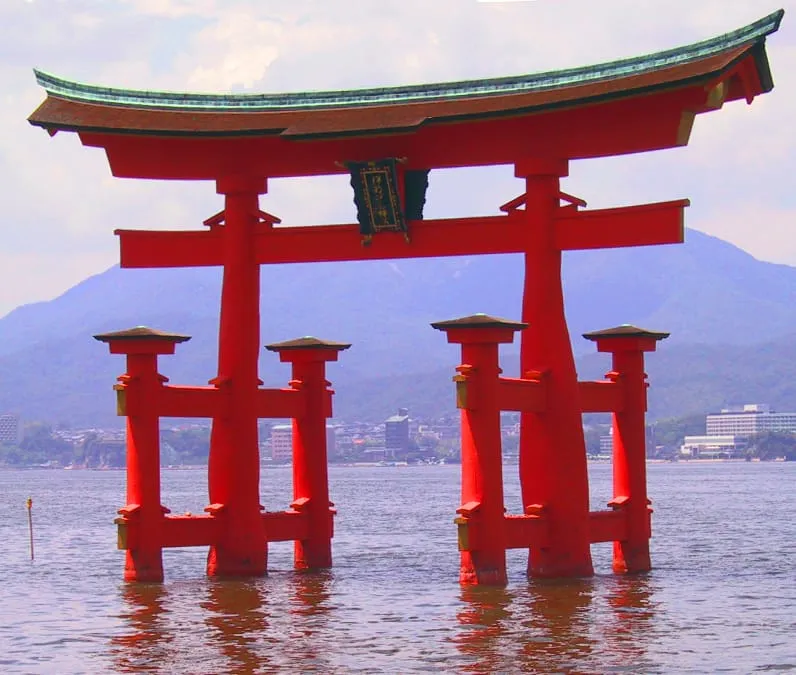
Check the tidal schedule before you go. High tide is when the gate appears to float — that’s the iconic image. Low tide lets you walk to the gate. Both are worth seeing; plan accordingly. The island has hotels if you want to stay for the sunrise.
Day 6 (Hiroshima): Hiroshima Gokoku Shrine
Hiroshima Gokoku Shrine (within Hiroshima Castle grounds)
A護国神社 (gokoku shrine), dedicated to those from Hiroshima Prefecture who died in military service.
- Goshuin: Standard plus monthly designs
- Reception hours: 9:00–17:00
- Fee: ¥500
- Access: 10-minute walk from Hiroshima Electric Railway Kamiyacho Higashi stop
Often visited alongside Hiroshima Peace Memorial Park. The monthly goshuin designs are notably artistic — among the better examples of modern goshuin design outside major cities. Combine with Hiroshima Castle (adjacent) for a half-day visit.
Day 7 (Departure): Optional Add-ons
Depending on your return route:
- Via Osaka: Sumiyoshi Taisha — head shrine of all 2,300 Sumiyoshi shrines in Japan
- Via Nagoya: Atsuta Jingu — one of Japan’s most sacred shrines, enshrining the Kusanagi sword
- Back to Tokyo: Naritasan Shinshoji Temple — a Buddhist temple popular with departing travelers (note: temple, not shrine)
Goshuin Count by Day
| Day | Shrine / Temple | Stamps |
|---|---|---|
| Day 1 | Meiji Jingu + Nezu Shrine | 2–3 |
| Day 2 | Asakusa Shrine + Yasukuni Shrine | 2–3 |
| Day 3 | Fushimi Inari Taisha | 2 |
| Day 4 | Shimogamo + Kamigamo | 3 |
| Day 5 | Nishiki Tenmangu + Itsukushima | 2 |
| Day 6 | Hiroshima Gokoku Shrine | 1–2 |
| Day 7 | Optional | 1–2 |
| Total | 13–17 |
A standard goshuincho holds 24–30 two-page spreads — more than enough for this trip. Still, bring a kakioki folder for loose pre-written stamps at busy shrines.
Pre-Trip Checklist
- Follow shrines on social media: Limited-edition goshuin are announced via X and Instagram — sometimes just a few days in advance
- Verify reception hours: Shrine hours shift for festivals, ceremonies, and seasons
- Prepare cash: Most shrines accept only cash for goshuin
- Separate goshuincho: Some shrines prefer you not mix shrine and temple stamps in the same book
- Download a goshuin app: Photographing each stamp as you receive it builds a searchable, geo-tagged collection
The Core Principle
Seven days, seventeen stamps, three cities.
But goshuin travel isn’t about the count. Each stamp represents a moment of actual presence at an actual place. The itinerary is just the scaffold — what you carry home in the goshuincho is yours alone.
Start at Meiji Jingu in the morning quiet. End at Itsukushima as the tide comes in. Everything in between will take care of itself.
Image Credits
- goshuincho-open.jpg: “Displayed Goshuinchō” by Immanuelle, CC BY 4.0, via Wikimedia Commons
- meiji-shrine.jpg: “Meiji Jingu Shrine Tokyo Japan” by MediaByPanda, CC BY-SA 4.0, via Wikimedia Commons
- fushimi-inari-torii.jpg: “Fushimi-Inari-Shrine-Senbon-Torii-2018” by Luka Peternel (Path-x21), CC BY-SA 4.0, via Wikimedia Commons
- itsukushima-torii.jpg: “Itsukushima torii angle” by Rdsmith4, CC BY-SA 2.5, via Wikimedia Commons