
Kamakura is one of the great pilgrim cities of East Asia. For a brief but momentous window in the thirteenth century it was the seat of Japan’s warrior government — the Kamakura shogunate — and the ruling Hojo clan poured their wealth and spiritual ambition into the Zen temples that still crown every valley in the city. Kencho-ji and Engaku-ji anchor the Five Mountains (Kamakura Gozan) at the northern end; further south, the great bronze Amida Buddha sits in the open air at Kotoku-in; and in the narrow valleys (yatsu) that cut into the surrounding hills, smaller Zen and Nichiren temples offer an intimacy that the famous landmarks cannot. Whether you collect goshuin for the bold Sanskrit seed syllables of Zen abbeys or the thunderous brushwork of Nichiren temples, Kamakura delivers a range unmatched in a single day’s walk. This guide covers 15 of the best temples for goshuin, with practical details for every visit.
1. Kencho-ji (Kita-Kamakura)
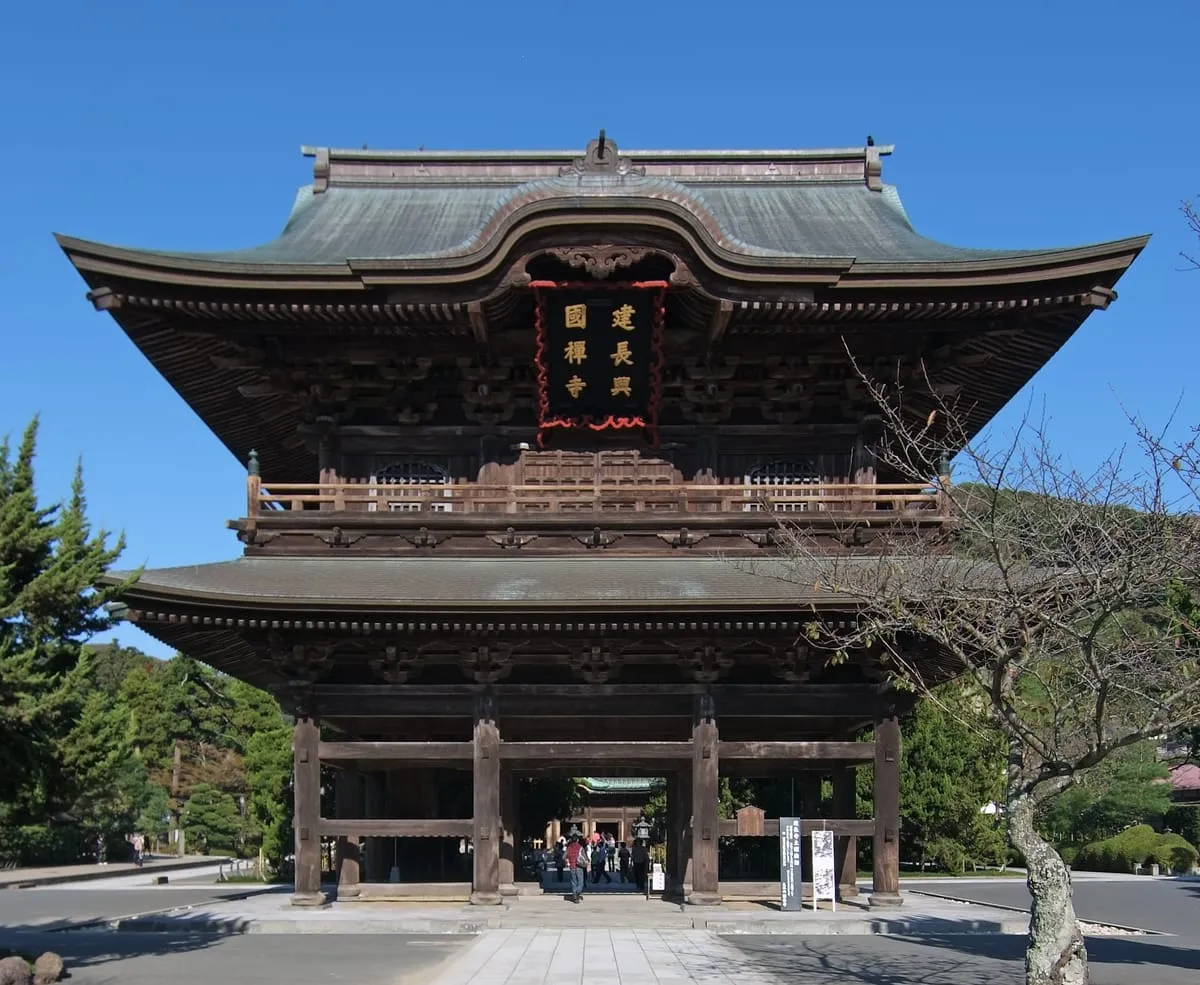
Denomination: Rinzai (Kencho-ji school, head temple) | Founded: 1253 CE
Japan’s first Zen monastery stands at the head of the Gozan rankings — a distinction it has held for seven and a half centuries. The founder, the Chinese monk Rankei Doryu (Lan-Qi Dao-Long), arrived from Hangzhou at the invitation of the fifth Hojo regent, and the complex he built reproduced the Song-dynasty Zen architecture of his homeland. Walk the central axis from Sanmon gate through the Butsuden (Buddha hall) to the Hatto (lecture hall) and you are treading a path designed to strip away the secular world with each step. The Hatto’s ceiling bears a vast dragon painting — a twentieth-century work by Koizumi Junsaku — but the scale of it stops most visitors cold. Behind the Hojo (abbot’s quarters) a dry-landscape garden leads to a wooded hillside trail with views over Sagami Bay. Folklore links the temple to the origin of kenchinjiru, a hearty vegetarian soup — the name supposedly a corruption of “Kencho soup.”
- Goshuin highlights: “Namu Jizo Bosatsu” (南無地蔵菩薩) at the main hall; “Daikaku Zenji” for the founding abbot available at the Hatto
- Fee: ¥300
- Access: 15-min walk from Kita-Kamakura Station (JR Yokosuka Line); or bus from Kamakura Station
- Don’t miss: The early-morning zazen session open to the public — check the temple schedule in advance
Goshuin Info
| Details | |
|---|---|
| Hours | 8:30–16:30 |
| Handwritten/Pre-made | Handwritten |
| Limited editions | Yes (seasonal, events) |
2. Engaku-ji (Kita-Kamakura)
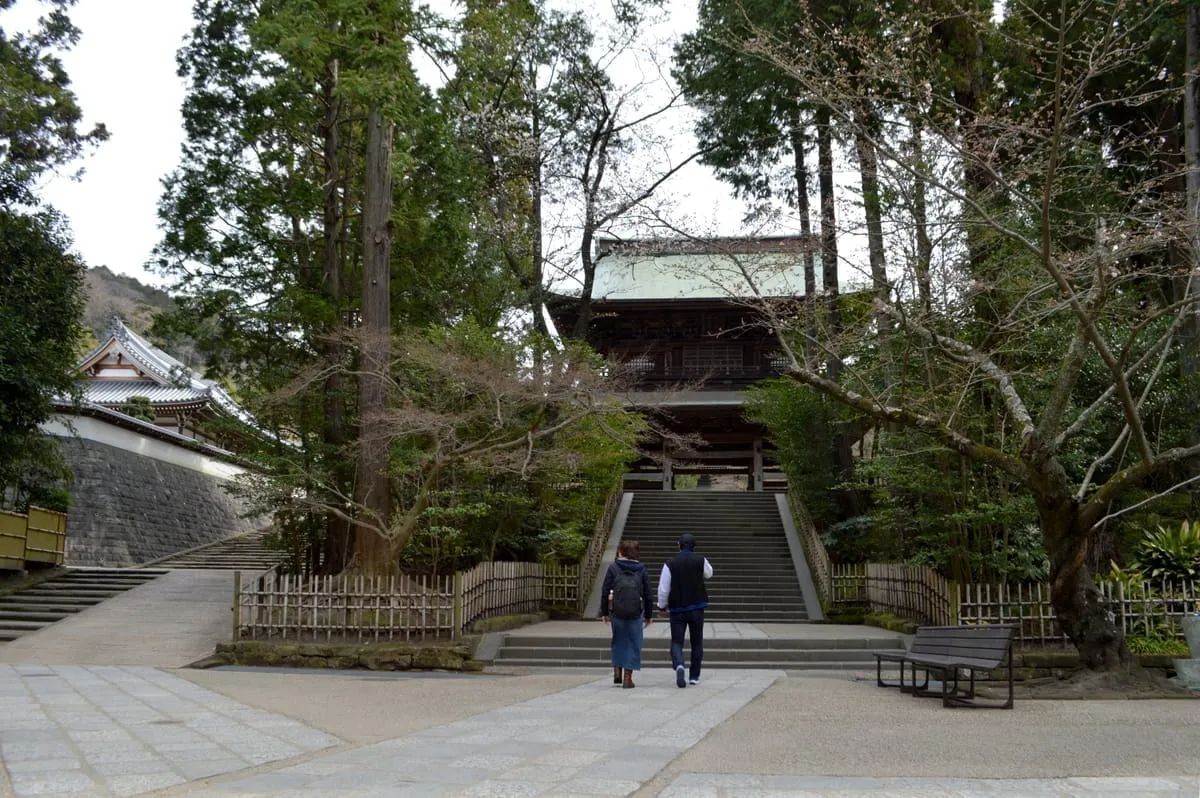
Denomination: Rinzai (Engaku-ji school, head temple) | Founded: 1282 CE
The second-ranked of the Gozan, Engaku-ji was built by the eighth Hojo regent Tokimune to pray for all those killed in the Mongol invasions of 1274 and 1281 — enemies and allies alike. The founding abbot, the Chinese monk Mugaku Sogen (Wu-Xue Zu-Yuan), gave Tokimune the phrase Maku bonno (“Don’t trouble yourself with delusions”) that became the regent’s personal motto. The complex contains more than a dozen sub-temples (tatchū), some of which open to the public on rotating schedules and offer their own goshuin. The temple’s greatest treasure, the Shariden (reliquary hall), is Japan’s only surviving Song-dynasty Zen hall design — a national treasure rarely opened but visible through the locked gate. Natsume Soseki’s 1910 novel Mon (The Gate) describes its protagonist making a Zen retreat here, and the temple remains a literary landmark as well as a religious one.
- Goshuin highlights: “Busshin” (佛心) or “Daikōmyō” (大光明) — multiple varieties; sub-temples offer their own versions when open
- Fee: ¥500 entry; goshuin ¥300
- Access: 2-min walk from Kita-Kamakura Station — the mountain gate is visible from the ticket gate
- Don’t miss: Zazen sessions (sōdō) open to non-members on weekend mornings
Goshuin Info
| Details | |
|---|---|
| Hours | 8:00–16:30 (–16:00, Nov–Mar) |
| Handwritten/Pre-made | Handwritten |
| Limited editions | Yes (when sub-temples open) |
3. Hase-dera (Hase)
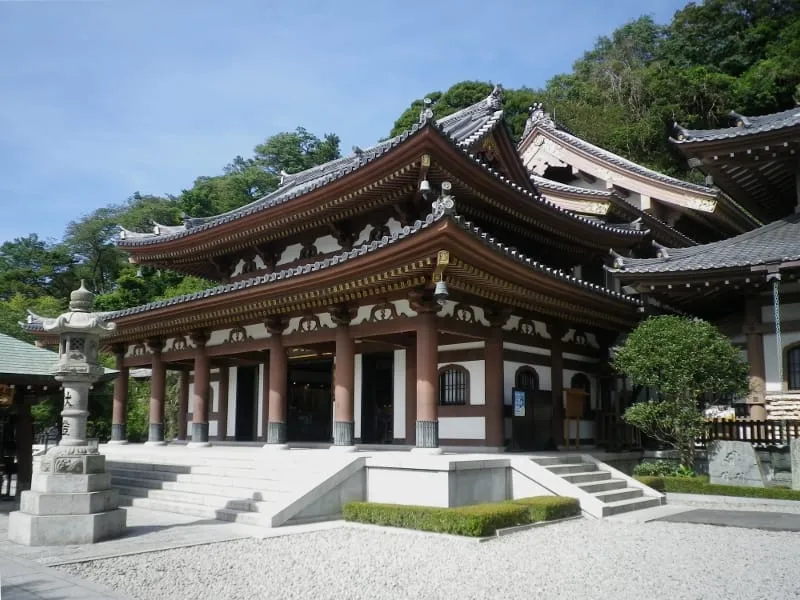
Denomination: Jōdo-shu related (independent) | Founded: 736 CE (traditional)
Hase-dera holds Kamakura’s largest wooden sculpture: a gilded eleven-faced Kannon (Eleven-Headed Kanzeon Bosatsu) standing 9.18 metres — reportedly the largest wooden icon in Japan. The hall that houses it sits on a terrace from which the entire sweep of Yuigahama beach unrolls below, a view that gives the temple a lightness and openness rare among Kamakura’s mountain-hemmed Zen monasteries. In the rainy season (mid-June to early July) the hillside terraces fill with some 2,500 hydrangeas in multiple varieties, and the temple controls crowds with timed-entry tickets. The ground floor “Kannon Museum” displays two more Kannon statues of similar antiquity to the main icon, plus Buddhist art spanning the Heian to Kamakura periods. The Jizo-do on the grounds is the city’s major site for mizuko (fetal memorial) rites, rows of small Jizo statues in red bibs lending the courtyard a quietly moving quality.
- Goshuin highlights: “Daihiden” (大悲殿) at the main hall; separate stamps at the Jizo-do and Bententen cave
- Fee: ¥300 (museum ¥300 extra)
- Access: 5-min walk from Hase Station (Enoden Line)
- Don’t miss: Arrive at opening (8 a.m.) to beat the crowds and catch the early light on the sea view
Goshuin Info
| Details | |
|---|---|
| Hours | 8:00–17:00 (–16:30, Oct–Feb) |
| Handwritten/Pre-made | Handwritten |
| Limited editions | Yes (hydrangea season, autumn, New Year) |
4. Kotoku-in — The Great Buddha (Hase)
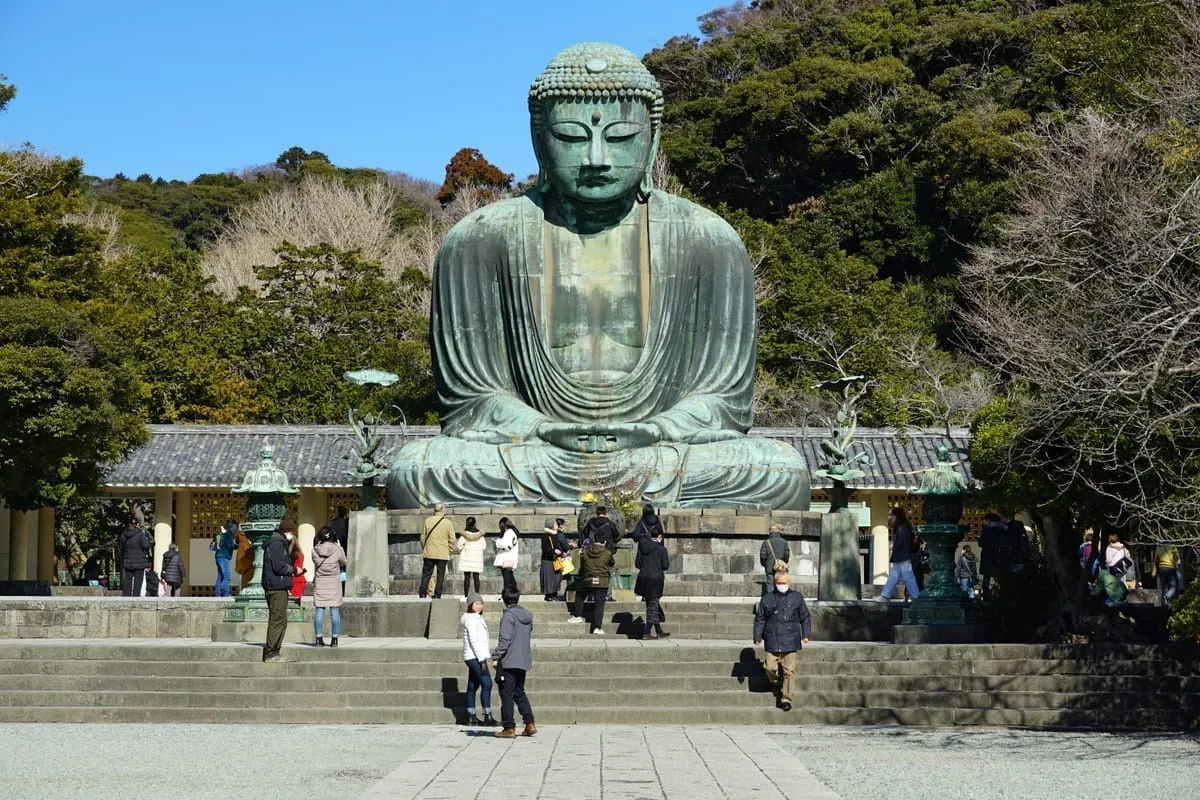
Denomination: Jōdo-shu | Founded: 1252 CE (bronze casting completed)
The seated bronze Amida Nyorai at Kotoku-in is Kamakura’s most iconic image: 11.3 metres tall, weighing 121 tonnes, a national treasure that has sat in the open air for nearly six centuries. There was once a great wooden hall around it, but a series of typhoons and a tsunami in the early Muromachi period destroyed the structure, and the decision was made to leave the Buddha roofless. You can pay a small additional fee to enter the statue’s hollow interior through doors in its back — the bronze is about 8 cm thick, the interior dimly lit and surprisingly spacious. Two round windows cut into the back shoulders were ventilation holes in the original design; they remain open and frame patches of sky. Emperor Meiji visited in 1893; Emperor Taisho visited in 1918. Today it draws more international visitors than any other site in Kamakura.
- Goshuin highlights: “Amida Nyorai” in measured brushwork, with the Kotoku-in seal — simple and serene
- Fee: ¥300; interior ¥50 extra
- Access: 10-min walk from Hase Station (Enoden Line)
- Don’t miss: The early morning light before tour groups arrive — the Buddha faces east and catches the rising sun beautifully
Goshuin Info
| Details | |
|---|---|
| Hours | 8:00–17:30 (–17:00, Oct–Mar) |
| Handwritten/Pre-made | Handwritten |
| Limited editions | None |
5. Hokoku-ji — The Bamboo Temple (Nikaido)
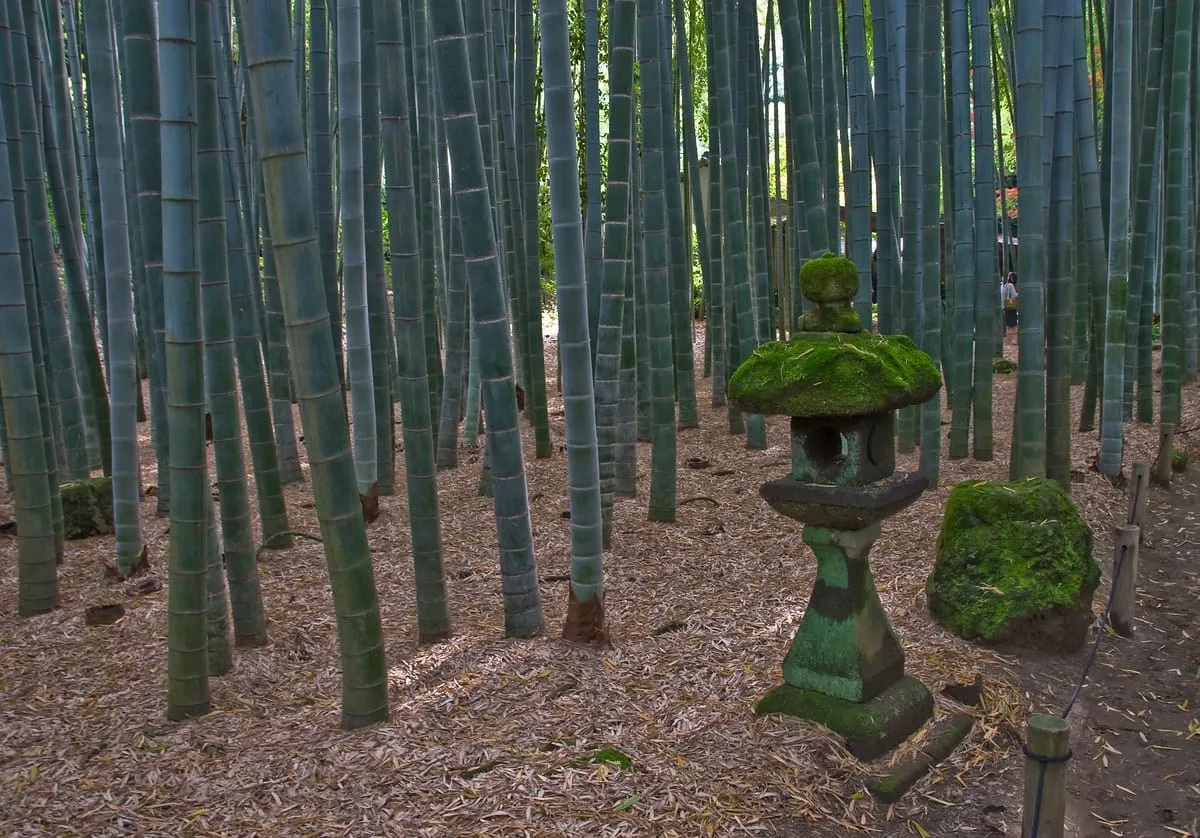
Denomination: Rinzai (Kencho-ji school) | Founded: 1334 CE (traditionally)
Hokoku-ji’s bamboo grove is one of the most photographed spaces in Kamakura: around 2,000 moso bamboo stems rise from a carpet of moss and filtered green light, creating a visual axis that leads the eye upward and inward simultaneously. At the far end, the kyūkō-an (休耕庵) teahouse serves matcha in bowls that carry the green reflection of the bamboo — a bowl of tea here, surrounded by the swaying culms and the faint creak of stems, is one of those Kamakura experiences that lodge in the memory permanently. The goshuin issued here often features a bamboo motif unique to the temple. The temple has documented connections to the Ashikaga clan (the family from which the Muromachi shogunate emerged), and an important five-ring pagoda group stands on the grounds as evidence of that patronage.
- Goshuin highlights: “Kashōson” (迦葉尊者) with bamboo motif; seasonal limited designs available
- Fee: ¥300 temple entry; bamboo garden ¥500 extra; matcha set ¥600 (includes garden)
- Access: Bus from Kamakura Station East Exit to Daitoryu (大塔宮 terminus), 8-min walk; or taxi from Kamakura Station (10 min)
- Don’t miss: Weekday mornings in autumn or late spring — the fewest visitors, the best light
Goshuin Info
| Details | |
|---|---|
| Hours | 9:00–15:30 |
| Handwritten/Pre-made | Pre-made (written in advance) |
| Limited editions | Yes (seasonal) |
6. Tokei-ji (Kita-Kamakura)
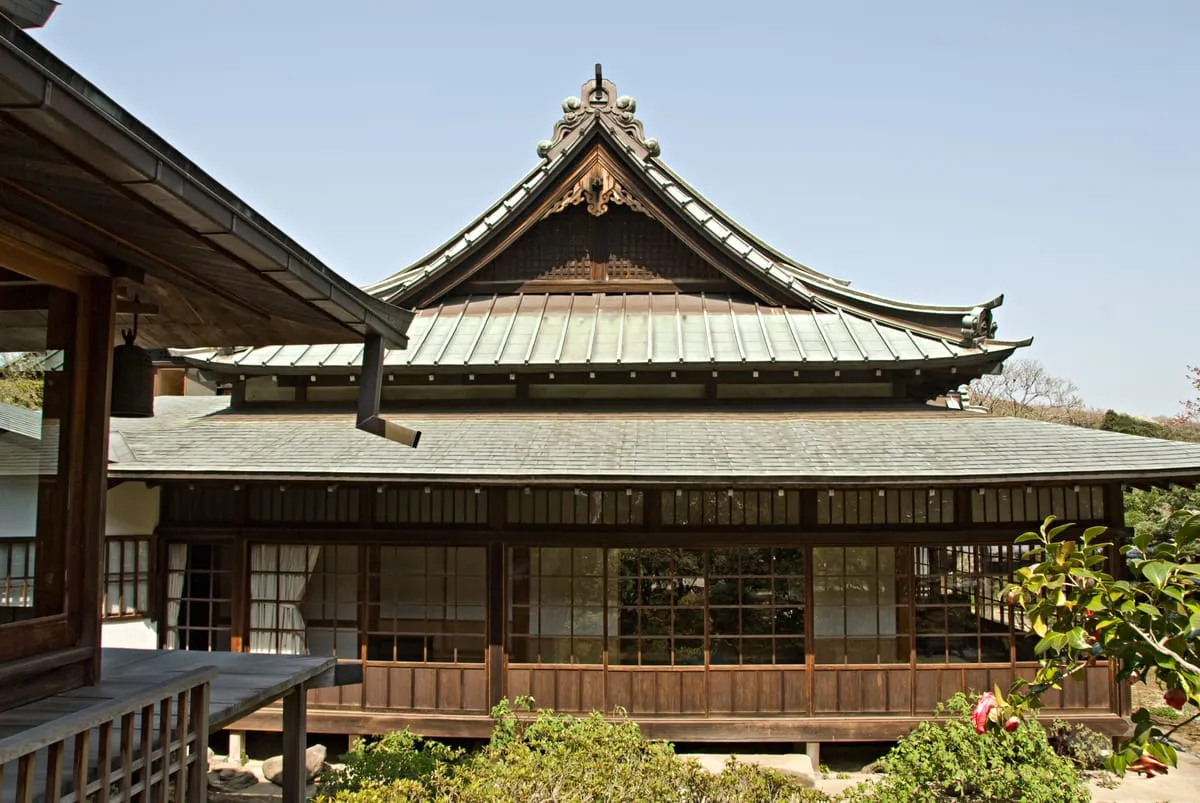
Denomination: Rinzai (Engaku-ji school) | Founded: 1285 CE
Tokei-ji’s reputation rests on a remarkable legal history: for over six hundred years during the Edo period, it was one of only two temples in Japan where a woman could obtain a legal divorce without her husband’s consent. A wife who fled here, completed a period of temple service (typically two to three years), and obtained certification from the abbess could claim her dissolution of marriage recognized by the shogunate. The temple maintained this privilege until 1902, when the Meiji Civil Code finally gave women other avenues. Today Tokei-ji is known as a “flower temple” — plum in February, katakuri (dogtooth violet) in March, iwagara (Japanese climbing hydrangea) in May, hydrangeas in June — and the grave markers in its cemetery include those of the philosopher Kitaro Nishida and the Zen scholar D.T. Suzuki, who introduced Zen to the twentieth-century Western world.
- Goshuin highlights: “Engakuzan Tokei-ji” (円覚山東慶寺) stamp reflecting the temple’s historic name
- Fee: ¥200
- Access: 3-min walk from Kita-Kamakura Station
- Don’t miss: The museum-quality collection of Buddhist sculpture, ceramics, and calligraphy in the small treasure hall on grounds
Goshuin Info
| Details | |
|---|---|
| Hours | 9:30–15:30 |
| Handwritten/Pre-made | Pre-made only (no handwriting) |
| Limited editions | Yes (flower seasons) |
7. Jochi-ji (Kita-Kamakura)
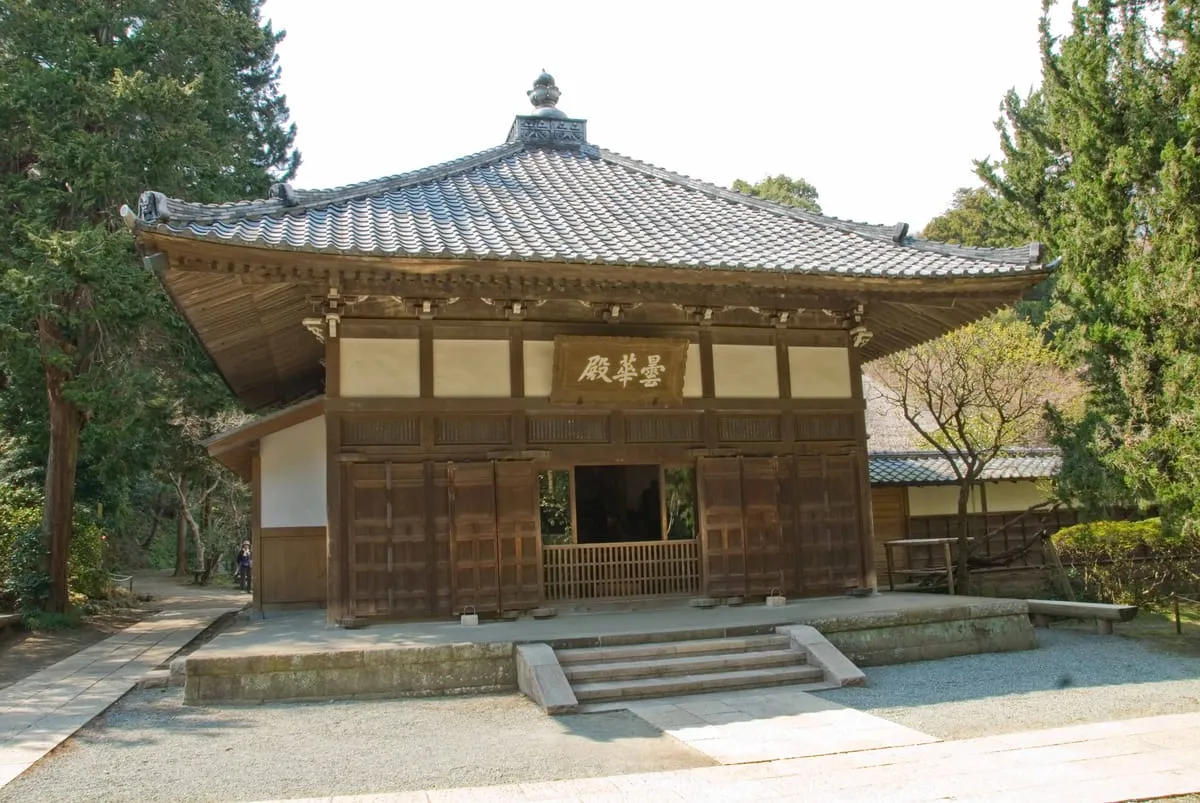
Denomination: Rinzai (Engaku-ji school) | Founded: 1281 CE
The fourth of the Kamakura Gozan (Five Mountains) and the most intimate. Jochi-ji’s kara-mon (Chinese-style gate, also called Kanro-mon, “Sweet Dew Gate”) is its architectural signature — a carved wooden structure in continental Kamakura Zen style that frames the entry perfectly. The main hall enshrines three Buddhas representing past, present, and future, an arrangement uncommon among the Zen Gozan and one that gives the temple a distinctive theological gravity. The grounds are quieter than Kencho-ji or Engaku-ji even on weekends, and the path from the gate through dark bamboo to the main hall has a forest-path quality that the bigger temples can’t replicate. In one corner of the grounds stands a stone Hotei (Laughing Buddha) associated with one of the Kamakura Seven Lucky Gods (Shichifukujin) — pilgrims on the seven-gods circuit make this a mandatory stop.
- Goshuin highlights: “Sanze Butsu” (三世佛) for the three-Buddhas enshrining; Hotei stamp for the Seven Lucky Gods circuit
- Fee: ¥200
- Access: 8-min walk from Kita-Kamakura Station
- Don’t miss: The carved detail on the Kanro-mon gate — each panel tells part of the Zen tradition in woodwork
Goshuin Info
| Details | |
|---|---|
| Hours | 9:00–16:30 |
| Handwritten/Pre-made | Handwritten |
| Limited editions | None |
8. Komyo-ji (Zaimokuza)
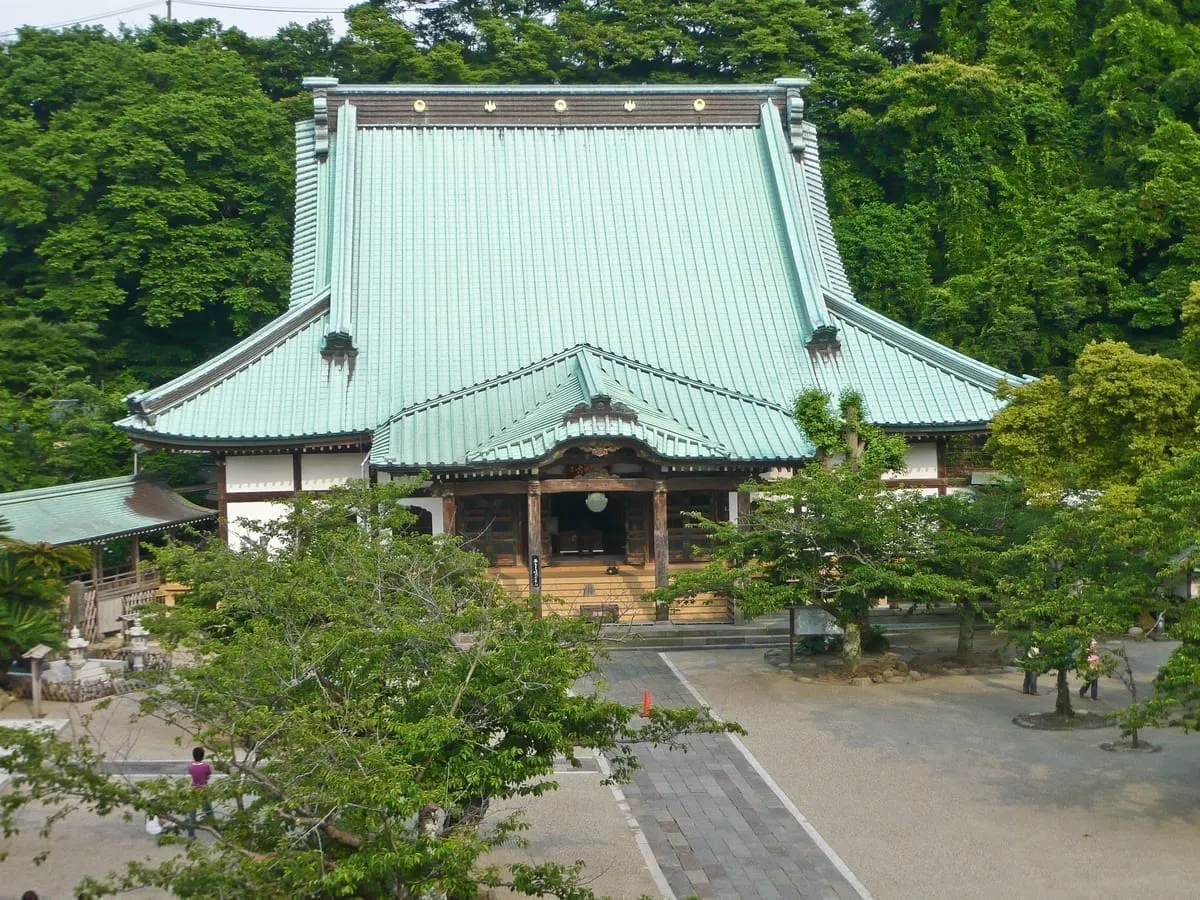
Denomination: Jōdo-shu (head temple for the Kanto region) | Founded: 1240 CE
The largest temple gate in Kamakura belongs to Komyo-ji — the “Sangedatsumon” (Gate of the Three Liberations) towers over the surrounding neighborhood in a way that announces the temple’s status as the Jōdo school’s headquarters for eastern Japan. The Jōdo (“Pure Land”) school holds that sincere recitation of “Namu Amida Butsu” is the single sufficient act of salvation — a message that spread through the warrior class and ordinary people of medieval Japan with remarkable speed. Komyo-ji was founded by Ryochu, a disciple of the Jōdo patriarch Honen, and received Tokugawa patronage in the Edo period. The annual O-Juya (Ten Nights) nembutsu ceremony in October draws worshippers from across Kanto for ten days and nights of chanting — a rare living remnant of medieval Pure Land practice. The grounds include a contemplative karesansui garden beside the main hall and a pleasant garden with a pond.
- Goshuin highlights: Stamps for “Zendoji Daihonzan Komyo-ji” (善導大師) and sub-halls
- Fee: Free entry; goshuin ¥300
- Access: Bus from Kamakura Station East Exit to “Komyoji” stop
- Don’t miss: If visiting in October, check the O-Juya schedule — the drum and chanting echo through the grounds at dusk
Goshuin Info
| Details | |
|---|---|
| Hours | 9:00–16:00 |
| Handwritten/Pre-made | Handwritten |
| Limited editions | Yes (O-Juya, New Year) |
9. Zuisen-ji (Nikaido)
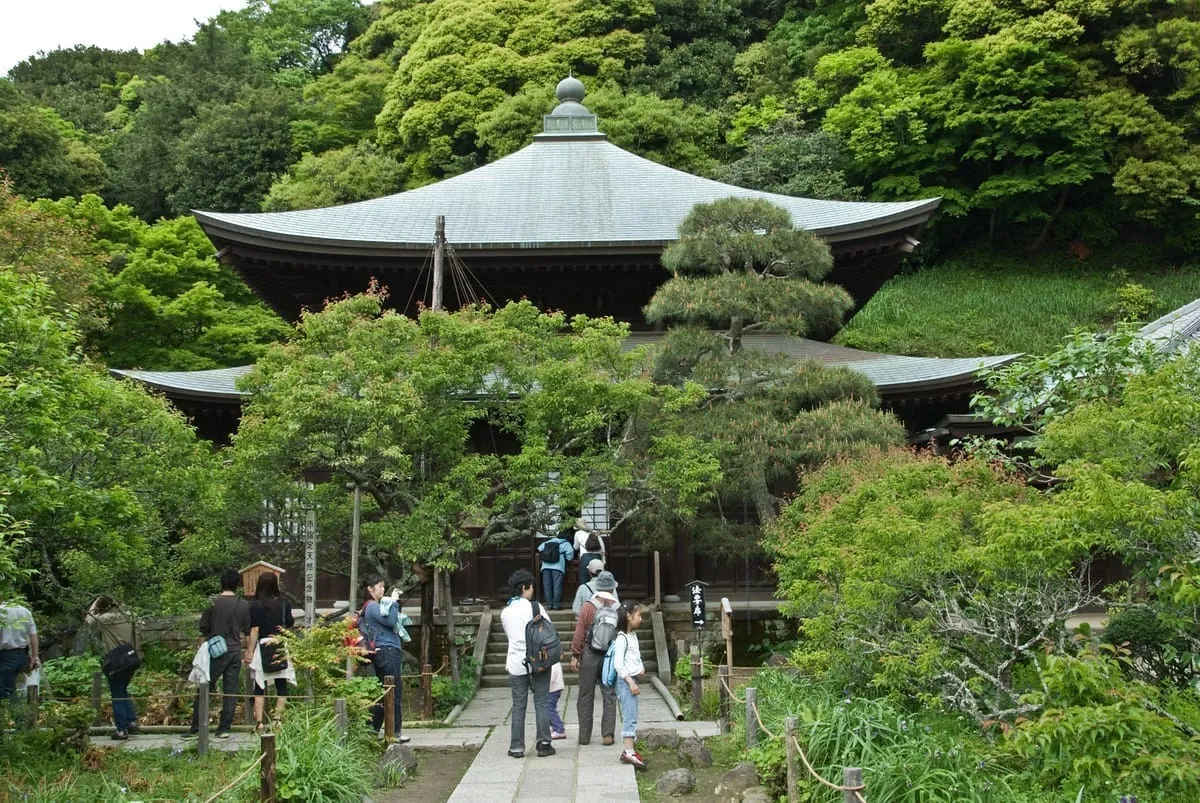
Denomination: Rinzai (Engaku-ji school) | Founded: 1327 CE
The garden at Zuisen-ji is the reason to make the long walk (or bus-plus-walk) from central Kamakura: a cliff face of living rock, cut and shaped by the founding abbot Muso Soseki into the “Kinhei-sansui” (Brocade Screen Landscape) — a dry-landscape garden chiselled directly into bedrock, designated a national Place of Scenic Beauty. Muso Soseki was the most celebrated Zen monk of the Muromachi period: garden designer, calligrapher, and the man who convinced the Ashikaga shogunate to establish Zen temples across every province. At Zuisen-ji you encounter him at his most personal. The rest of the grounds are a seasonal flower paradise — narcissus and plum in late winter, iris and water lilies in early summer, bush clover in September — so there is always a reason to visit. The deep valley location means fewer visitors than any comparably important temple in the city.
- Goshuin highlights: “Zuisenji” and “Muso Kokushi” (夢窓国師) for the founding abbot
- Fee: ¥200
- Access: Bus from Kamakura Station East Exit to Daitoryu (大塔宮 terminus), then 15-min walk
- Don’t miss: The carved rock garden — nothing else in Kamakura looks quite like it
Goshuin Info
| Details | |
|---|---|
| Hours | 9:00–16:30 |
| Handwritten/Pre-made | Handwritten |
| Limited editions | Yes (plum season, flower seasons) |
10. Eishoji (Ogigayatsu)
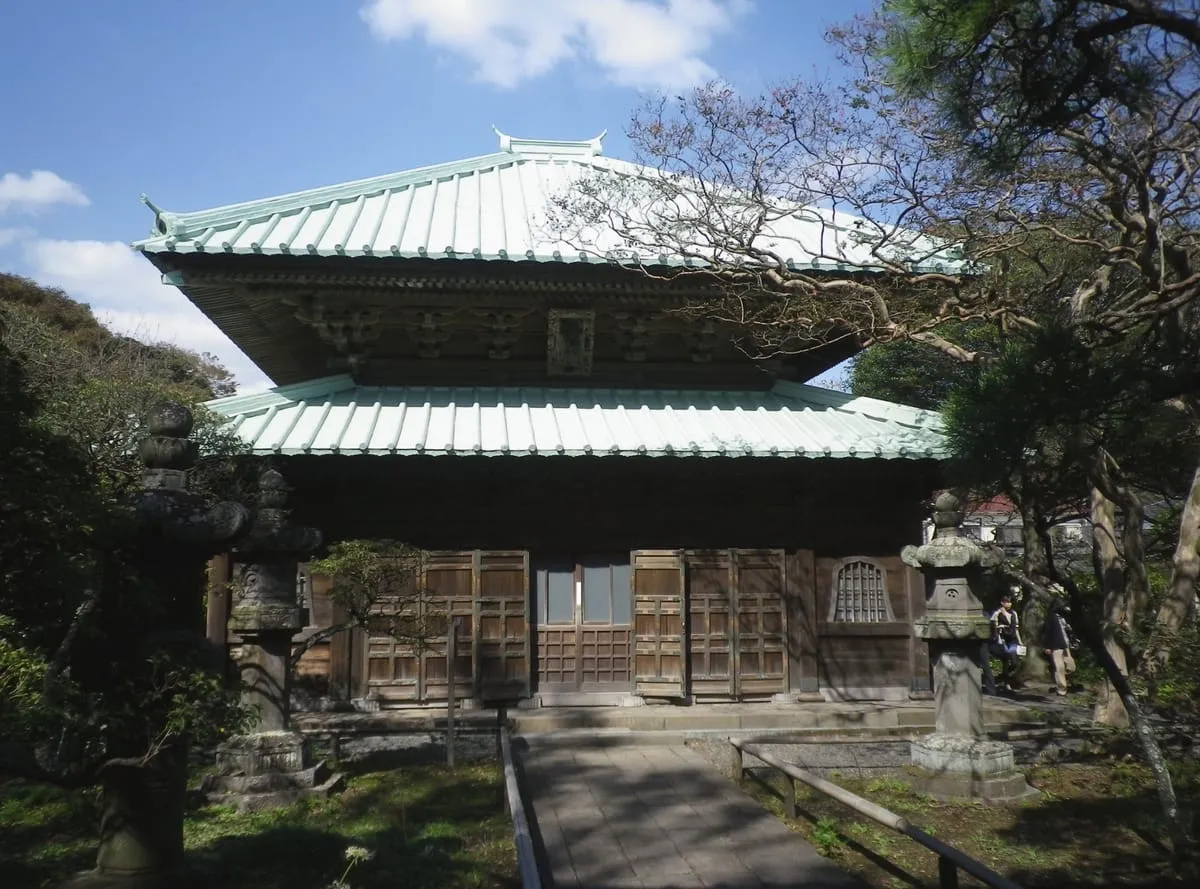
Denomination: Jōdo-shu | Founded: 1636 CE
Kamakura’s only remaining active convent, Eishoji was founded by Eikatsu-in, a lady-in-waiting of Tokugawa Ieyasu who took vows after Ieyasu’s death. For two and a half centuries it was presided over by successive abbesses from the Mito Tokugawa branch of the clan, giving it an aristocratic gravity uncommon in the Jōdo school. The main hall, shrine hall, small bell tower, and bamboo grove are preserved together as a national historic site — one of Kamakura’s few coherent early Edo ensembles. The convent atmosphere is tangible: grounds are tended with a precision and quietness that distinguishes the place from the busier tourist temples nearby. Eishoji’s location on the western approach to Kamakura Station, near Kaizo-ji and the Ogigayatsu valley, makes it a natural anchor for a western Kamakura itinerary.
- Goshuin highlights: “Eishoji” in elegant brushwork reflecting the convent’s feminine tradition
- Fee: ¥200
- Access: 15-min walk from Kamakura Station West Exit
- Don’t miss: The stone lanterns lining the approach through the bamboo — quiet and beautiful in early morning light
Goshuin Info
| Details | |
|---|---|
| Hours | 9:00–16:00 (some days closed) |
| Handwritten/Pre-made | Handwritten |
| Limited editions | None |
11. Myoho-ji (Omachi)
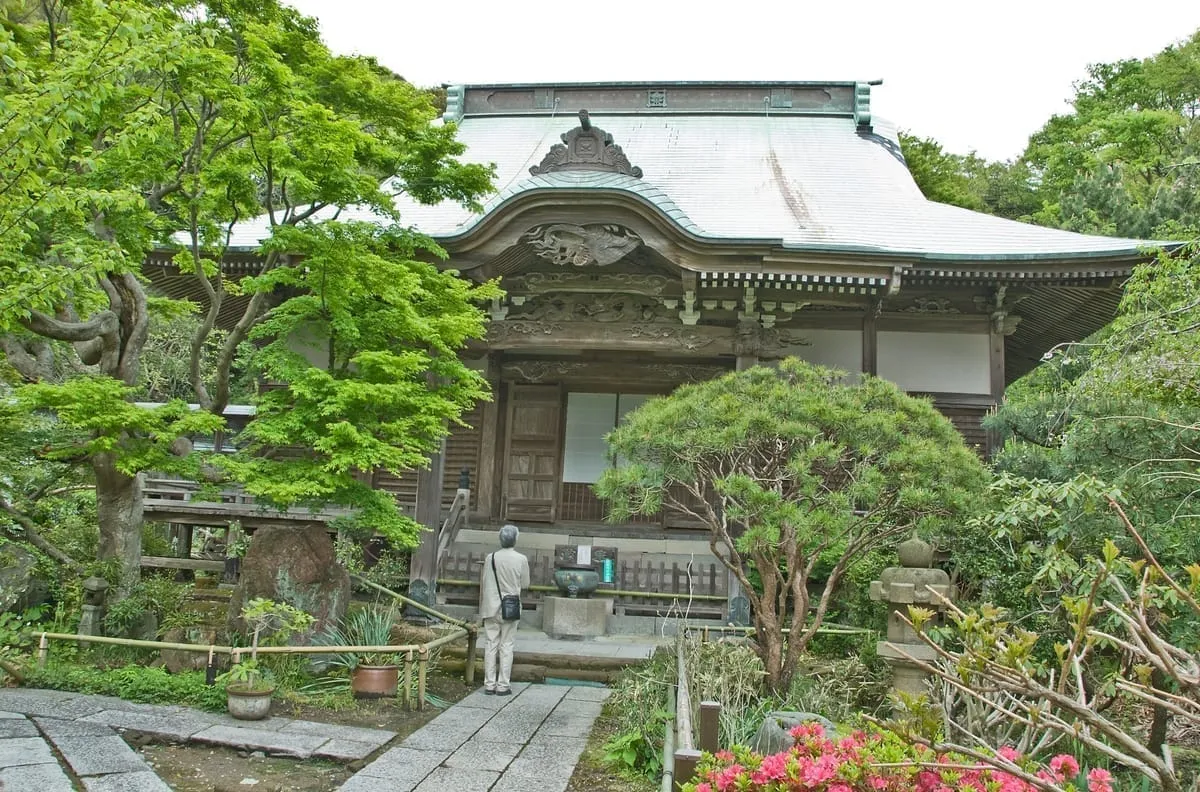
Denomination: Nichiren-shu (grand head temple) | Founded: 1260 CE
Myoho-ji occupies the Matsubagayatsu valley — the very site where Nichiren first set up his grass hut when he arrived in Kamakura in 1253. Nichiren, the firebrand monk who believed the Lotus Sutra alone held the truth of Buddhism, chose this spot to begin his campaign to convert the Kamakura government. The Soshi-do (祖師堂) main hall enshrines a wooden portrait of Nichiren, and the temple’s status as a “grand head temple” (daihonzan) reflects its origin-point significance in the sect. The hillside cemetery contains the tomb of Daitonom’ya Morinaga Shinno (Prince Morinaga, son of Emperor Go-Daigo), a reminder of the political turbulence that swept fourteenth-century Kamakura. The main hall is approached by mossy stone steps under tall cryptomeria trees — a dark, atmospheric climb that prepares the mind for the thunderous daimoku (南無妙法蓮華経) chanted within.
- Goshuin highlights: “Namu Myoho Renge Kyo” (南無妙法蓮華経) in powerful Nichiren-school brushwork — the daimoku fills the page with intention
- Fee: ¥200
- Access: 8-min walk from Kamakura Station East Exit
- Don’t miss: The mossy approach — a classic Kamakura yatsu (narrow-valley) atmosphere at its best
Goshuin Info
| Details | |
|---|---|
| Hours | 9:00–16:30 |
| Handwritten/Pre-made | Handwritten |
| Limited editions | Yes (seasonal) |
12. Jomyo-ji (Jomyoji)
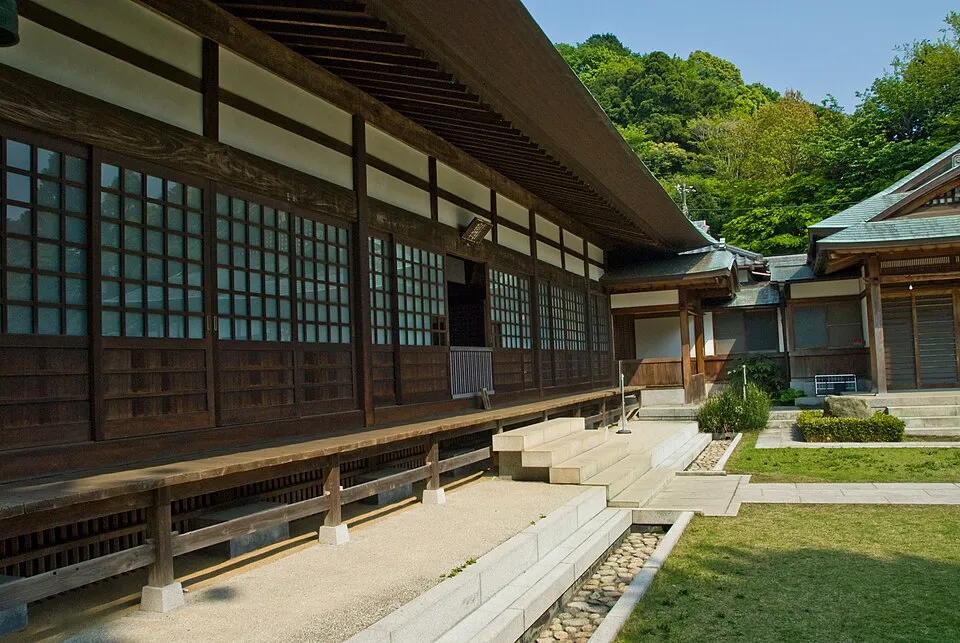
Denomination: Rinzai (Kencho-ji school) | Founded: 1188 CE
The fifth and oldest of the Kamakura Gozan, Jomyo-ji was originally a Pure Land temple before being absorbed into the Zen tradition. Its founder, the monk Taikyo Gyoyu (退耕行勇), was a Pure Land master who guided the first Kamakura shogun Yoritomo’s devotion; the temple subsequently became the burial place of Ashikaga Sadauji and Ashikaga Takauji, the grandfather and father of the Muromachi shogunate. The Kisen-an (喜泉庵) main hall is a thatched-roof structure of rare calm, and the property’s most talked-about feature today is the “Stone Oven Garden Terrace” (石窯ガーデンテラス) — a European-style tearoom in a stone building on the hillside within the grounds, oddly perfect for a post-goshuin coffee. Jomyo-ji anchors the eastern cluster of temples (Hokoku-ji and Zuisen-ji nearby), making it a natural first or last stop on the “eastern Kamakura” circuit.
- Goshuin highlights: “Inariyama Jomyo-ji” (稲荷山浄妙寺) seal with elegant calligraphy
- Fee: ¥200
- Access: Bus from Kamakura Station East Exit to “Jomyoji” stop, 3-min walk
- Don’t miss: Pair the temple with Hokoku-ji (10-min walk) — the two form Kamakura’s finest single half-day combination
Goshuin Info
| Details | |
|---|---|
| Hours | 9:00–16:30 |
| Handwritten/Pre-made | Handwritten |
| Limited editions | None |
13. Ankokuron-ji (Omachi)
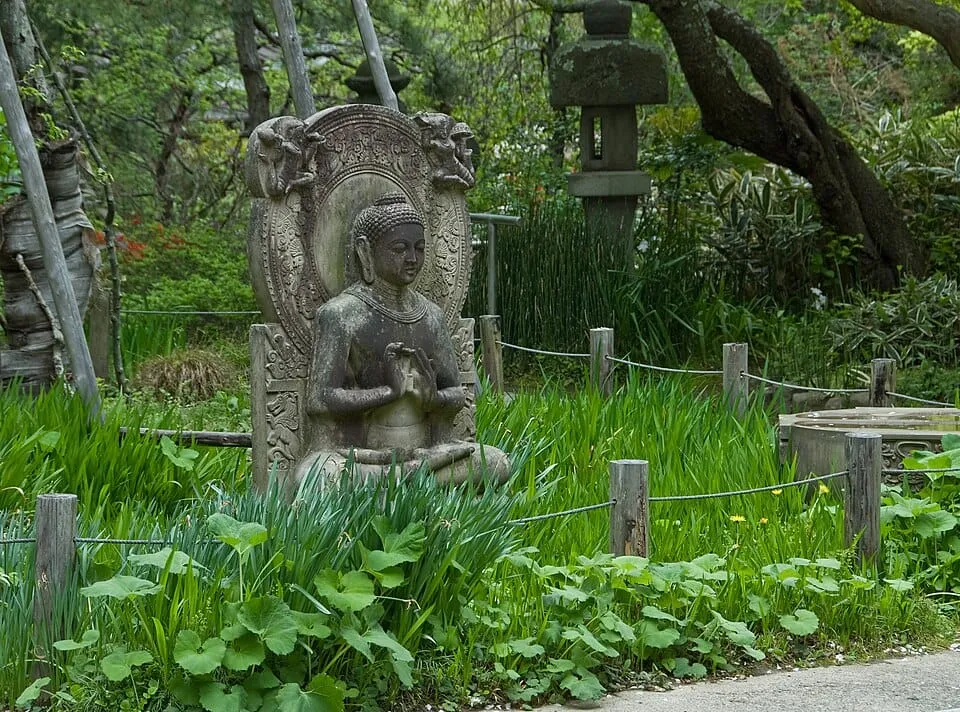
Denomination: Nichiren-shu | Founded: 1253 CE
The name says it all: Ankoku Ron (立正安国論) is the treatise Nichiren wrote while living in this valley in 1260 and presented to the Hojo regent as a warning that Japan faced divine punishment if it continued to embrace other Buddhist schools. The document predicted invasion from without and civil war within — the Mongol invasions and the subsequent internal strife seemed to many to vindicate the prophecy. A rocky cave called the Gohōkutsu (御法窟) on the grounds is identified as the hermitage from which Nichiren worked. The altar faces Mount Fuji — Nichiren’s reverence for Fuji as the site where the Lotus Sutra’s truth would ultimately be recognized is encoded in this orientation. Several stone Buddhas and a chain of stone lanterns give the compact grounds a quiet documentary quality: this is where the argument began.
- Goshuin highlights: “Namu Myoho Renge Kyo” daimoku with the temple’s distinctive mountain-name seal
- Fee: ¥200
- Access: 12-min walk from Kamakura Station East Exit
- Don’t miss: The Gohōkutsu cave — small but powerfully atmospheric
Goshuin Info
| Details | |
|---|---|
| Hours | 9:00–17:00 |
| Handwritten/Pre-made | Handwritten |
| Limited editions | Yes (seasonal) |
14. Ryuko-ji (Fujisawa / Enoshima)
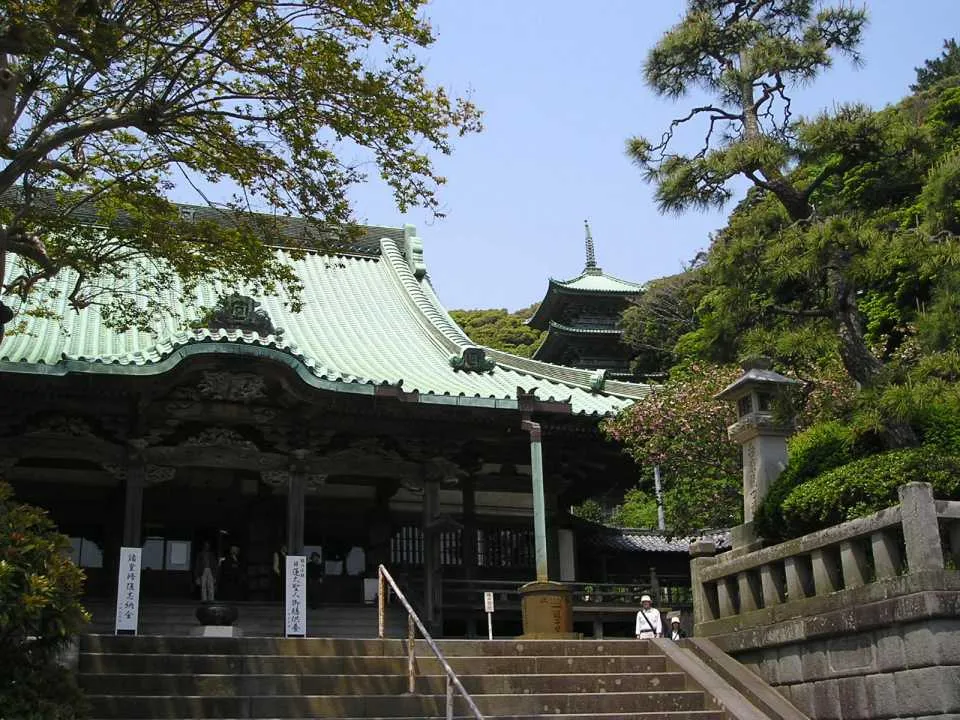
Denomination: Nichiren-shu | Founded: 1337 CE
Ryuko-ji stands on the site of an execution ground where, in 1271, Nichiren was brought in chains to be beheaded. According to Nichiren tradition, at the moment the executioner’s sword fell a streak of light burst across the sky, the sword shattered, and the execution was aborted — an event recorded as the “Tatsunokuchi Persecution” (龍ノ口法難). Whether miracle or political reprieve (the regent’s son Tokimune may have intervened), Nichiren was exiled to Sado Island rather than executed, and the experience transformed his certainty in his own mission. The temple built to commemorate the event features a five-story pagoda (erected 1910) and an elaborate relic hall (shariden). Strictly speaking, Ryuko-ji is in Fujisawa city rather than Kamakura, but it stands a one-minute walk from Enoshima Station on the Enoden Line — making it a natural addition to any Kamakura goshuin circuit that ends at Enoshima.
- Goshuin highlights: “Risshō Daishi” and “Namu Myoho Renge Kyo” — multiple options
- Fee: Free
- Access: 1-min walk from Enoshima Station (Enoden Line)
- Don’t miss: The execution site stele in the grounds — a place where history feels immediate
Goshuin Info
| Details | |
|---|---|
| Hours | 9:00–16:30 |
| Handwritten/Pre-made | Handwritten |
| Limited editions | Yes (events, seasons) |
15. Kaizo-ji (Ogigayatsu)
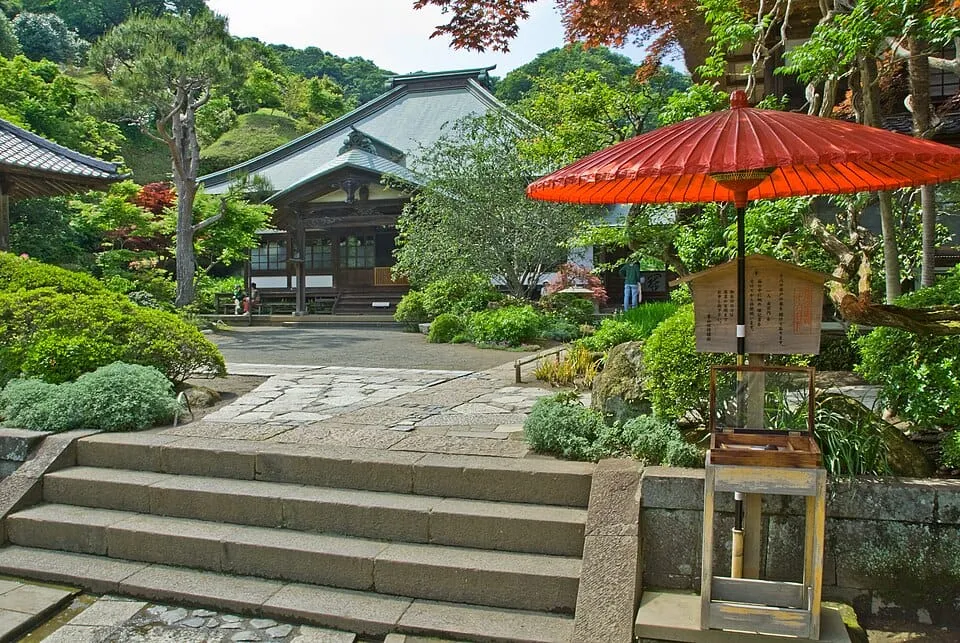
Denomination: Rinzai (Kencho-ji school) | Founded: 1394 CE
Kaizo-ji sits at the far end of the Ogigayatsu valley, behind the small neighborhood shrine and along a path that most visitors to Kamakura never walk. That obscurity is its virtue. The grounds are quiet in a way the main-line Zen temples can no longer be, and two unusual rock features make the detour worthwhile. The “Jurokuno-i” (十六ノ井) is a cave carved into the tuff with sixteen round wells cut into its floor, each filled with water from an underground spring — an eerie, dim chamber with no clear analogue anywhere else in Kamakura. The “Sokonu-ki no I” (底脱ノ井) is a Zen anecdote cast in stone: a well associated with the abbess Mugai Nyodai, who legend says attained enlightenment when the bottom of her water bucket fell out and reflected the moon in the rising water. The grounds bloom with kaido (flowering crabapple) in early April — small, bright-pink blossoms above the moss.
- Goshuin highlights: “Yakushi Nyorai” (薬師如来) in refined brushwork — one of Kamakura’s most elegantly written goshuin
- Fee: ¥200
- Access: 20-min walk from Kamakura Station West Exit; or 5-min walk from Eishoji
- Don’t miss: The Jurokuno-i cave — bring a small light and duck through the low entrance to see the sixteen wells
Goshuin Info
| Details | |
|---|---|
| Hours | 9:30–15:30 |
| Handwritten/Pre-made | Handwritten |
| Limited editions | Yes (flower seasons) |
Planning Your Kamakura Temple Circuit
Fifteen temples in a single day is an aggressive goal; the terrain works against you. Kamakura’s characteristic yatsu (shallow valleys cut by streams into the surrounding hills) means that every temple sits at the end of a short but genuine walk, and the hills between valleys add real elevation gain. Plan by zone rather than by count.
Kita-Kamakura Zone (Kencho-ji, Engaku-ji, Tokei-ji, Jochi-ji): Use Kita-Kamakura Station as your base. Engaku-ji is literally outside the ticket gate; the others are 3–15 minutes by foot. Half a day covers all four; a full day covers four temples plus the zazen session and a hike up Kencho-ji’s rear mountain trail.
Hase Zone (Hase-dera, Kotoku-in): Enoden Line from Kamakura Station to Hase Station (3 stops). The Great Buddha and Hase-dera are ten minutes apart on foot. Morning entry (8 a.m.) avoids the mid-day crowds substantially; goshuin waiting times can exceed an hour at peak.
Eastern Zone (Hokoku-ji, Jomyo-ji, Zuisen-ji): Bus or rental bicycle from Kamakura Station East Exit. An e-bike is ideal for this circuit — the valley roads are narrow and the distances between temples average about 1 km. Budget two to three hours for all three, plus tea at Hokoku-ji’s bamboo grove.
Downtown / Omachi Zone (Myoho-ji, Ankokuron-ji): Walking distance from Kamakura Station East Exit. These Nichiren temples receive far fewer visitors than the Zen Gozan and issue goshuin without a wait on most days. The daimoku brushwork is visually distinct from anything you will receive at a Zen or Pure Land temple — a different calligraphic tradition, worth including for contrast.
Western / Ogigayatsu Zone (Eishoji, Kaizo-ji): Accessible on foot from Kamakura Station West Exit, or by bicycle. These two temples are rarely mentioned in tourist guides and rarely crowded. An afternoon visit pairs well with a morning spent at Hase-dera and the Great Buddha.
Linton at Enoshima (Ryuko-ji): If you are taking the Enoden Line back to Fujisawa, Ryuko-ji is a 1-minute walk from Enoshima Station. It adds minimal time and is one of Nichiren Buddhism’s most historically significant sites.
Goshuin Logistics in Kamakura
Temple goshuin tend to use Sanskrit bīja characters (seed syllables), the names of the principal deity in classical brushwork, and the temple seal. At Nichiren temples, the daimoku (南無妙法蓮華経) dominates the page in powerful, vertical strokes — some collectors keep a separate notebook for Nichiren temples precisely because the visual register is so different. Most Kamakura temples accept both direct (handwritten in your book) and pre-made (paper slip) goshuin; during peak seasons (Golden Week, hydrangea season, autumn leaves) several switch to pre-made only — check individual temple social media before visiting.
Image Credits
All images sourced from Wikimedia Commons.
| Temple | Filename | License |
|---|---|---|
| Kencho-ji | Kenchoji_Sanmon_2009.jpg | CC BY-SA 3.0 |
| Engaku-ji | Stairs_to_Sanmon,_Engaku-ji.jpg | CC0 |
| Hase-dera | HasederaKannondo20120716.jpg | CC BY-SA 3.0 |
| Kotoku-in (Great Buddha) | 230128_Kamakura_Daibutsu_Japan04s3.jpg | CC BY-SA 4.0 |
| Hokoku-ji | Hokokuji_Bamboo_Forest_Kamakura.jpg | Public domain |
| Tokei-ji | Tokei-ji_Kita-kamakura_2.jpg | Public domain |
| Jochi-ji | Jochiji_Main_Hall_Kamakura.jpg | Public domain |
| Komyo-ji | Komyo-ji_Main_Hall.jpg | Public domain |
| Zuisen-ji | Zuisenji_Main_Hall_Kamakura.jpg | Public domain |
| Eishoji | Eishoji20121008.jpg | CC BY-SA 3.0 |
| Myoho-ji | Myoho-ji_Main_Hall_Kamakura.jpg | Public domain |
| Jomyo-ji | Jomyoji_Main_Hall_Hondou.jpg | Public domain |
| Ankokuron-ji | Ankokuron-ji-Kamakura-Buddha2.jpg | Public domain |
| Ryuko-ji | Ryukoji01.jpg | CC BY-SA 3.0 |
| Kaizo-ji | Kaizo-ji_Kamakura_Main_Hall.jpg | Public domain |


