
Tokyo’s reputation as a city of shrines can overshadow its equally compelling temple scene. From the ancient halls of Senso-ji to the hillside hermitage of Meguro Fudo, from the austere Confucian dignity of Sengaku-ji to the raucous festival energy of Shibamata’s Taishakuten, the city offers goshuin pilgrims an astonishing range of Buddhist experience. Temple goshuin tend to look and feel different from shrine stamps: expect bold Sanskrit seed syllables (bija), the names of principal deities in classic brushwork, and occasionally the signature of a senior monk. This guide covers 15 of the best Tokyo temples for goshuin, with practical details for every visit.
1. Senso-ji (Taito Ward)
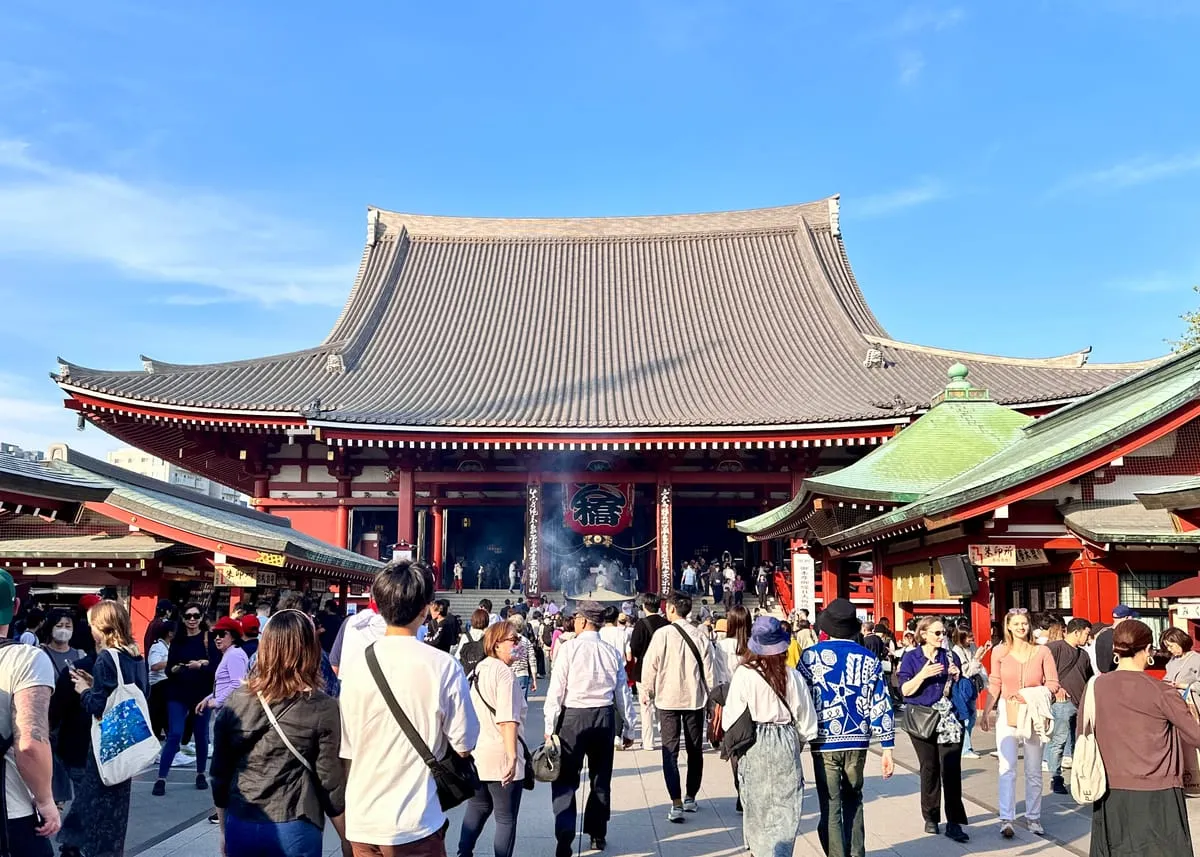
Denomination: Shodo Kannon-shu (independent) | Founded: 628 CE
Tokyo’s oldest temple and its most visited — over 30 million people pass through each year. The long approach from Kaminarimon (Thunder Gate) to the main hall is itself a pilgrimage corridor: beneath the enormous paper lantern of Kaminarimon, along Nakamise shopping street, through the Hozomon (Treasure Gate), and finally to the main hall enshrining the secret principal deity, the Shodo Kannon (Holy Kannon). The five-storey pagoda visible from most of the grounds was reconstructed in 1973 after wartime bombing destroyed the prewar structure. Within the main hall and on the grounds, Asakusa’s sub-temples — Kageido, Awashima-do — each issue their own distinct goshuin. Come at 6 a.m. sharp when the gates open and the incense smoke rises into an unhurried dawn.
- Goshuin highlights: “Namu Kanzeon Bosatsu” (南無観世音菩薩) in powerful brushwork at the main hall; sub-temples offer additional varieties
- Fee: ¥300
- Access: 5-min walk from Asakusa Station (Tokyo Metro Ginza Line / Tobu Skytree Line / Asakusa Line)
- Don’t miss: Sanja Matsuri in May — one of Tokyo’s three great festivals
Goshuin Info
| Details | |
|---|---|
| Hours | 6:00–17:00 (6:30 from Oct–Mar) |
| Handwritten/Pre-made | Handwritten |
| Limited editions | Yes (festivals, seasonal) |
2. Zojo-ji (Minato Ward)
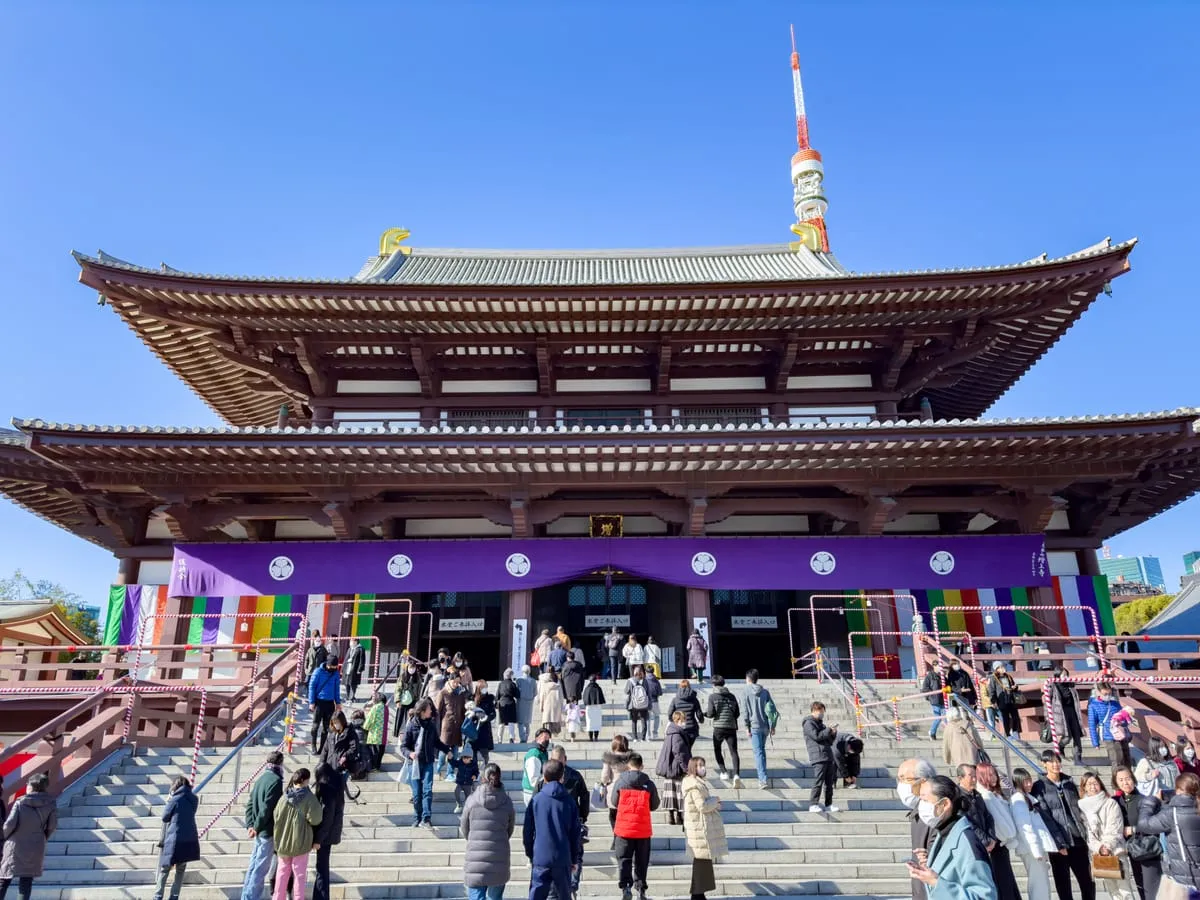
Denomination: Jodo-shu (head temple) | Founded: 1393 CE
The spiritual headquarters of the Jodo (“Pure Land”) school in the Kanto region, and the official temple of the Tokugawa shogunal family. Six of the fifteen Tokugawa shoguns are interred here — their ornate mausoleums are a UNESCO Tentative Site and open for special viewing. The “Sangedatsumon” (Three-Gates of Liberation), built in 1622, is one of Tokyo’s oldest surviving wooden structures. The view from the grounds — the black timber gate framing Tokyo Tower in the background — has become one of the city’s iconic images and a favourite among photographers at dusk and in snow. The main hall (Daiden) houses a 1.5-metre Amida Nyorai statue flanked by guardian figures, and the Anraku-den (Peace and Tranquility Hall) at the rear serves as a second goshuin location.
- Goshuin highlights: “Namu Amida Butsu” (南無阿弥陀仏) at the main hall; “Kodo-in Daihonzan Zojo-ji” (功徳院大本山増上寺) at Anraku-den
- Fee: ¥300
- Access: 3-min walk from Onarimon Station (Toei Mita Line); 10-min walk from Hamamatsucho Station (JR)
- Don’t miss: New Year’s Eve countdown beneath Tokyo Tower — Zojo-ji hosts one of Tokyo’s most photographed year-end ceremonies
Goshuin Info
| Details | |
|---|---|
| Hours | 9:00–17:00 |
| Handwritten/Pre-made | Handwritten |
| Limited editions | Yes (seasonal, memorial days) |
3. Kan’ei-ji (Taito Ward / Ueno)
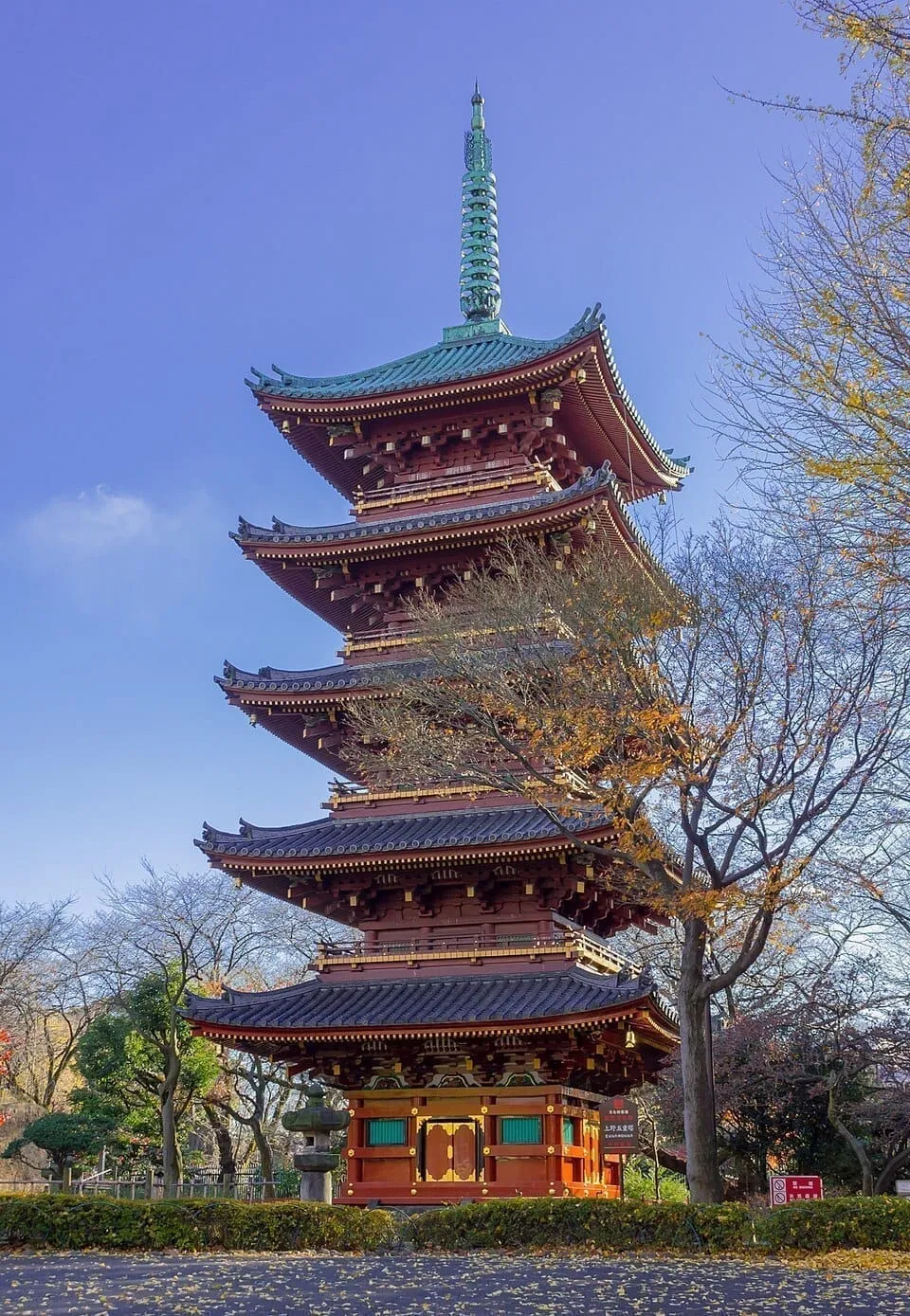
Denomination: Tendai (head temple in Kanto) | Founded: 1625 CE (by Tenkai Sozo)
In 1625, the brilliant Tendai monk Tenkai convinced the third Tokugawa shogun Iemitsu to fund a great temple complex on the hill north of Edo Castle — the direction of evil (kimon, 鬼門) in Chinese geomancy. The plan was deliberate: Kan’ei-ji was modelled on the layout of Enryaku-ji on Mt. Hiei, which guards Kyoto to the northeast, effectively making Ueno Hill the protector of Edo. At its zenith, Kan’ei-ji’s grounds extended across most of what is now Ueno Park — the grounds included the National Museum site, Tokyo University of the Arts, and even the area now occupied by Ueno Zoo. The 1868 Battle of Ueno, when Meiji imperial forces crushed the last shogunal loyalists (Shogitai) in a day-long battle, destroyed most of the complex. What survives: the Konpon Chudo main hall (relocated from a sub-temple), a two-storey bell tower, and the famous five-storey pagoda now enclosed within Ueno Zoo and visible through the fence from the park side.
- Goshuin highlights: “Toeizan Kan’ei-ji” (東叡山寛永寺) in stately brushwork; “Jigen Daishi Tenkai” (慈眼大師天海) for the founding abbot
- Fee: ¥300
- Access: 10-min walk from JR Ueno Station (Koen Exit); 8-min walk from Tokyo Metro Ueno Station
- Don’t miss: The pagoda exterior visible from Ueno Park — best seen in early spring with cherry blossoms
Goshuin Info
| Details | |
|---|---|
| Hours | 9:00–16:00 |
| Handwritten/Pre-made | Handwritten |
| Limited editions | Yes |
4. Gokoku-ji (Bunkyo Ward)
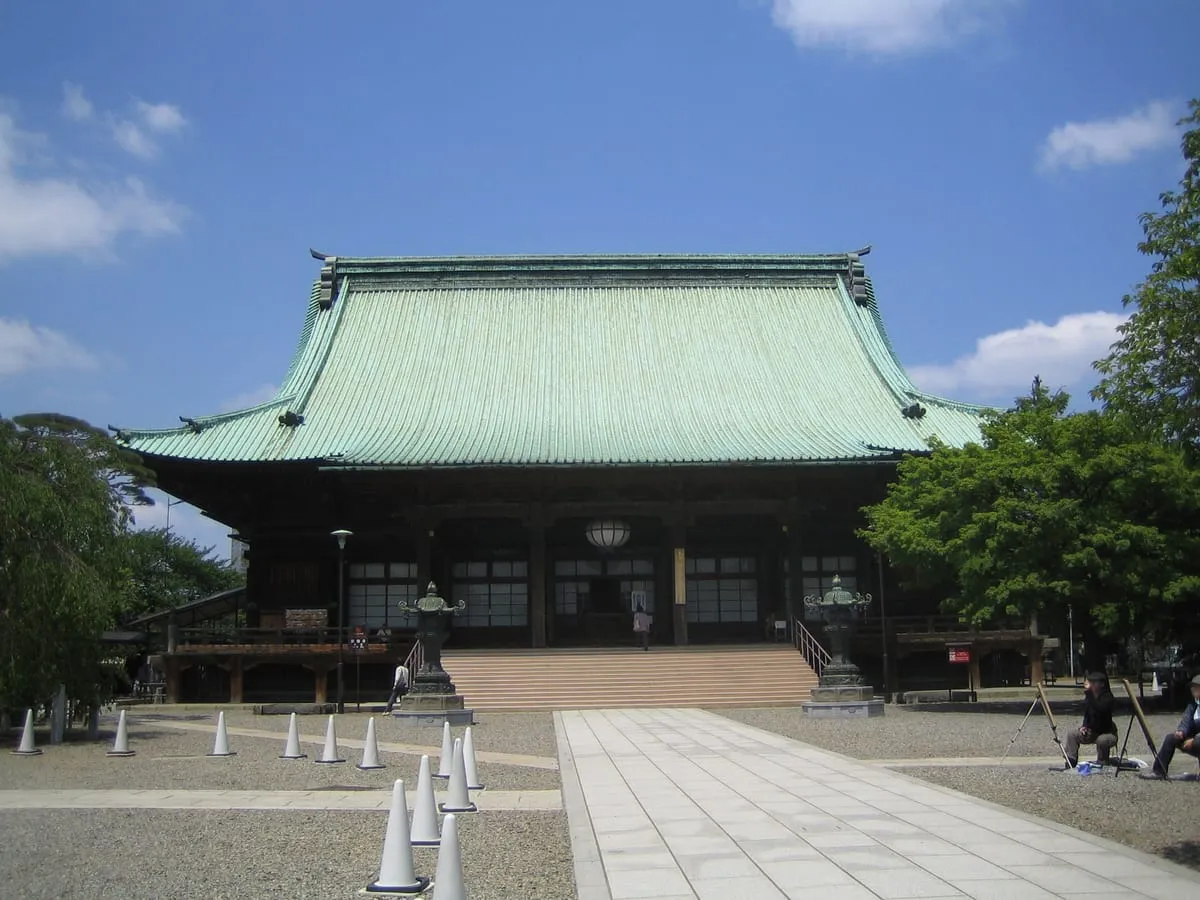
Denomination: Shingon-shu Buzan-ha (head temple) | Founded: 1681 CE
Tokugawa Tsunayoshi, the fifth shogun, founded this temple in 1681 at the wish of his mother Keishoin, whose devotion to the Kanzeon (Kannon) was deep. Tsunayoshi commissioned the high monk Ryoken to serve as founding abbot, and the temple was built on the site of Keishoin’s villa. The main hall (Garan), completed in 1697, is the largest surviving Buddhist hall in Tokyo — an Important Cultural Property that has never burned. Inside, the principal deity Nyoirin Kanzeon Bosatsu (Wish-fulfilling Kannon) is enshrined in an interior that has changed little in 300 years. The grounds also contain a multistory pagoda (1703), a moon-viewing hall (Gekko-den), and a Niomon gate through which generations of aristocrats, feudal lords, and cabinet ministers have passed — the famous Otomeyama Cemetery, which covers the hill behind the temple, contains the graves of Yamagata Aritomo, Okuma Shigenobu, and dozens of Meiji oligarchs.
- Goshuin highlights: “Nyoirin Kanzeon” (如意輪観世音) in the main hall; elegant secondary stamps from the moon hall
- Fee: ¥300
- Access: 1-min walk from Gokokuji Station (Tokyo Metro Yurakucho Line)
- Don’t miss: The rarely-visited multistory pagoda — one of the most intact Edo-period temple towers in Tokyo
Goshuin Info
| Details | |
|---|---|
| Hours | 9:00–16:00 |
| Handwritten/Pre-made | Handwritten |
| Limited editions | Yes (monthly ceremonies) |
5. Jindai-ji (Chofu City)
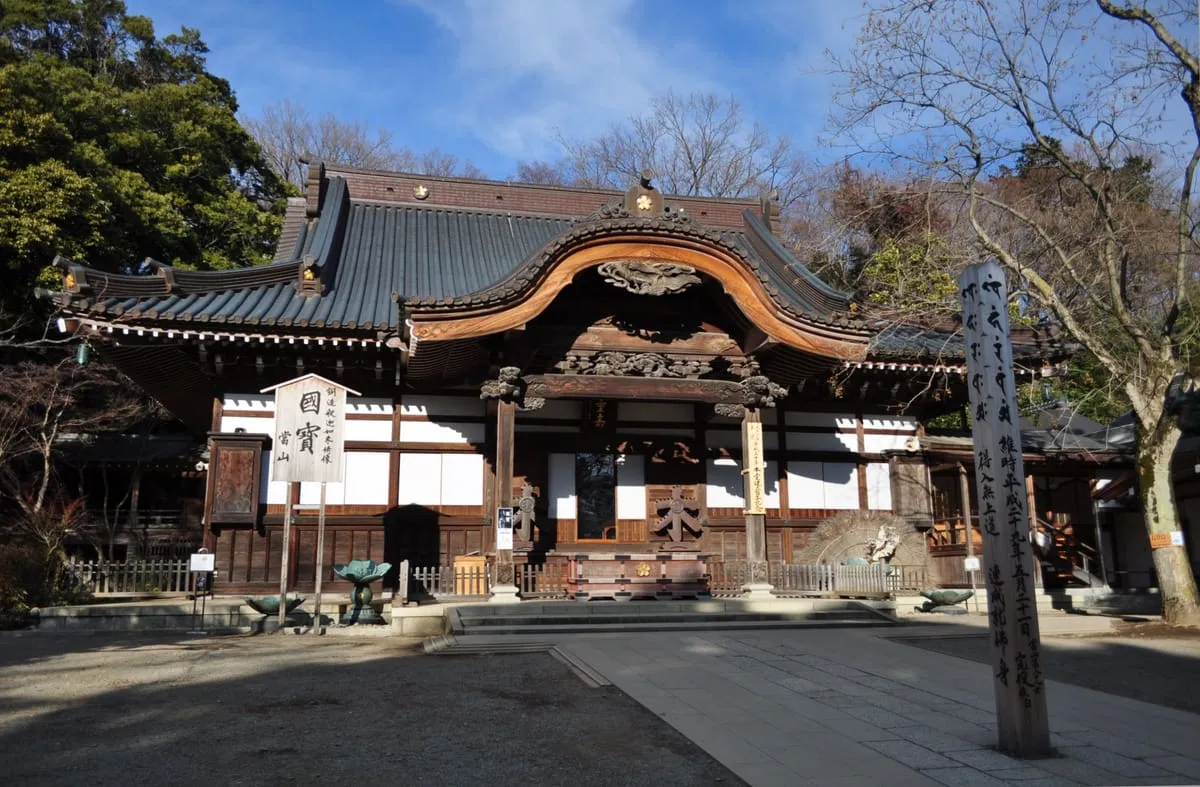
Denomination: Tendai | Founded: 733 CE (by Manku Shonin)
Tokyo’s second-oldest temple, founded in the late Nara period by a monk named Manku on the banks of the Nogawa River. The name “Jindai” comes from “Jindaigi” (水神) — a water deity — suggesting the site’s original role as a place of water worship. The principal treasure is a 7th-century bronze Shakyamuni Buddha in the “White Phoenix” (Hakuho) style — widely considered a national cultural masterpiece and likely to be designated a National Treasure. Adjacent to the temple, the Shinkyo Botanical Garden provides 60,000 plants in 48 zones, making Jindai-ji an ideal destination for those who want to combine temple pilgrimage with garden walking. The temple is also the birthplace of Jindai-ji soba — buckwheat noodles made by temple monks that became the signature local cuisine and spawned the ring of soba restaurants that surrounds the grounds today.
- Goshuin highlights: “Ganzan Daishi” (元三大師) at the Daishi-do; “Shakyamuni Nyorai” (釈迦如来) at the main hall; special stamps during the Daruma Fair in March
- Fee: ¥300
- Access: Bus from Keio Line Tsutsuji-gaoka or Chofu Station to Jindai-ji bus stop (last stop), 3-min walk
- Don’t miss: The daruma market on March 3–4 — a spring tradition dating back over 300 years
Goshuin Info
| Details | |
|---|---|
| Hours | 9:00–17:00 |
| Handwritten/Pre-made | Handwritten |
| Limited editions | Yes (Daruma Fair, seasonal) |
6. Meguro Fudo-son / Ryusen-ji (Meguro Ward)
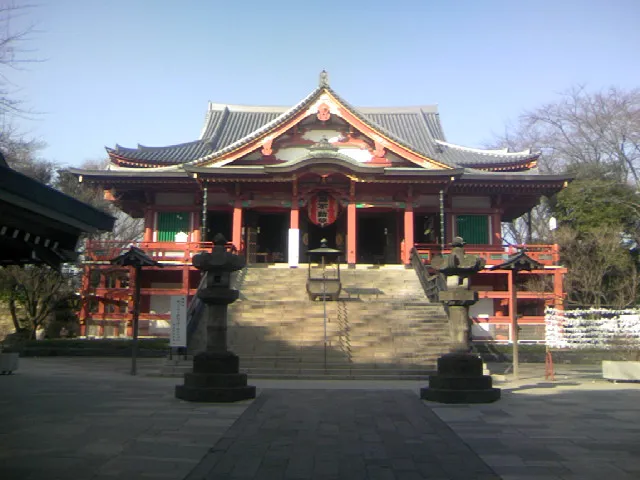
Denomination: Tendai | Founded: 808 CE (attributed to Ennin)
The lead temple among the legendary “Three Great Fudo of Edo” — Meguro, Mejiro, and Meaka — Ryusen-ji has drawn the prayers of the city’s residents for over 1,200 years. The principal deity is Fudo Myo-o (Acalanatha), the fierce, unmoving king of wisdom who cuts through delusion with his sword and binds evil with his rope. Behind the main hall, stone steps climb past lanterns to the Maefudo-do (front Fudo hall), where a waterfall — the “Kanro no Ido” (Sweet Dew Well) — flows from rock and is considered sacred healing water. On the 28th of every month (縁日, Fudo’s sacred day), the grounds fill with vendors, food stalls, and worshippers conducting the ancient fudo-son ritual. The place name “Meguro” itself derives from “Mefudo” (目不動), a contracted form of this temple’s historical name.
- Goshuin highlights: “Meguro Fudo-son” (目黒不動尊) in bold, practised brushwork; special stamps on the 28th
- Fee: ¥300
- Access: 8-min walk from Fudo-mae Station (Tokyu Meguro Line); 20-min walk from Meguro Station (JR / Tokyo Metro)
- Don’t miss: The sacred waterfall and the stone-carved Buddha figures lining the hillside approach
Goshuin Info
| Details | |
|---|---|
| Hours | 9:00–17:00 |
| Handwritten/Pre-made | Handwritten |
| Limited editions | Yes (28th of each month) |
7. Nishi-Arai Daishi — Sojiji (Adachi Ward)
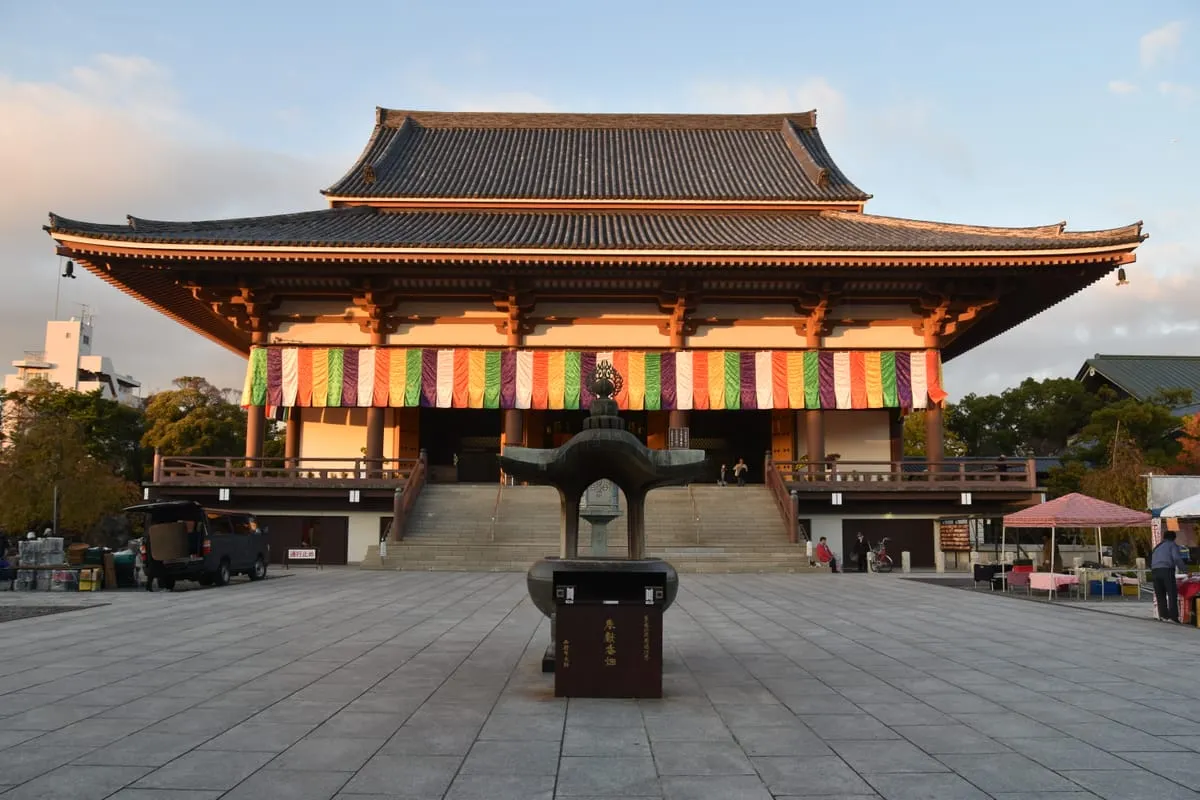
Denomination: Shingon-shu Buzan-ha | Founded: 826 CE (attributed to Kukai / Kobo Daishi)
One of the “Three Great Yakuyoke (Evil-warding) Daishi of the Kanto region,” alongside Kawasaki Daishi (Kanagawa) and Kanfuku-ji (Chiba). The legend holds that Kukai himself erected this temple after his prayers halted a plague epidemic that was devastating the area in the mid-9th century. That legacy of protective intercession still draws millions — during the New Year’s first three days (hatsumode), the temple receives hundreds of thousands of worshippers seeking protection for the year ahead, and the queue can stretch for hundreds of metres into the surrounding streets. Within the spacious grounds, a pond garden, a Benzaiten island shrine, and a complete Shikoku 88-temple pilgrimage course (in miniature) make the complex worth extended exploration. The seasonal goshuin programme at Nishi-Arai Daishi is among Tokyo’s most diverse — new designs appear monthly and are eagerly sought by collectors.
- Goshuin highlights: “Daishi” (大師) in strong calligraphy; seasonal limited designs refresh monthly, making repeat visits rewarding
- Fee: ¥300
- Access: 3-min walk from Daishi-mae Station (Tobu Daishi Line)
- Don’t miss: The miniature 88-temple pilgrimage path — walk the complete circuit in under an hour
Goshuin Info
| Details | |
|---|---|
| Hours | 8:00–17:00 |
| Handwritten/Pre-made | Both (varies by design) |
| Limited editions | Yes (extensive monthly rotation) |
8. Takahata Fudo-son — Kongoji (Hino City)
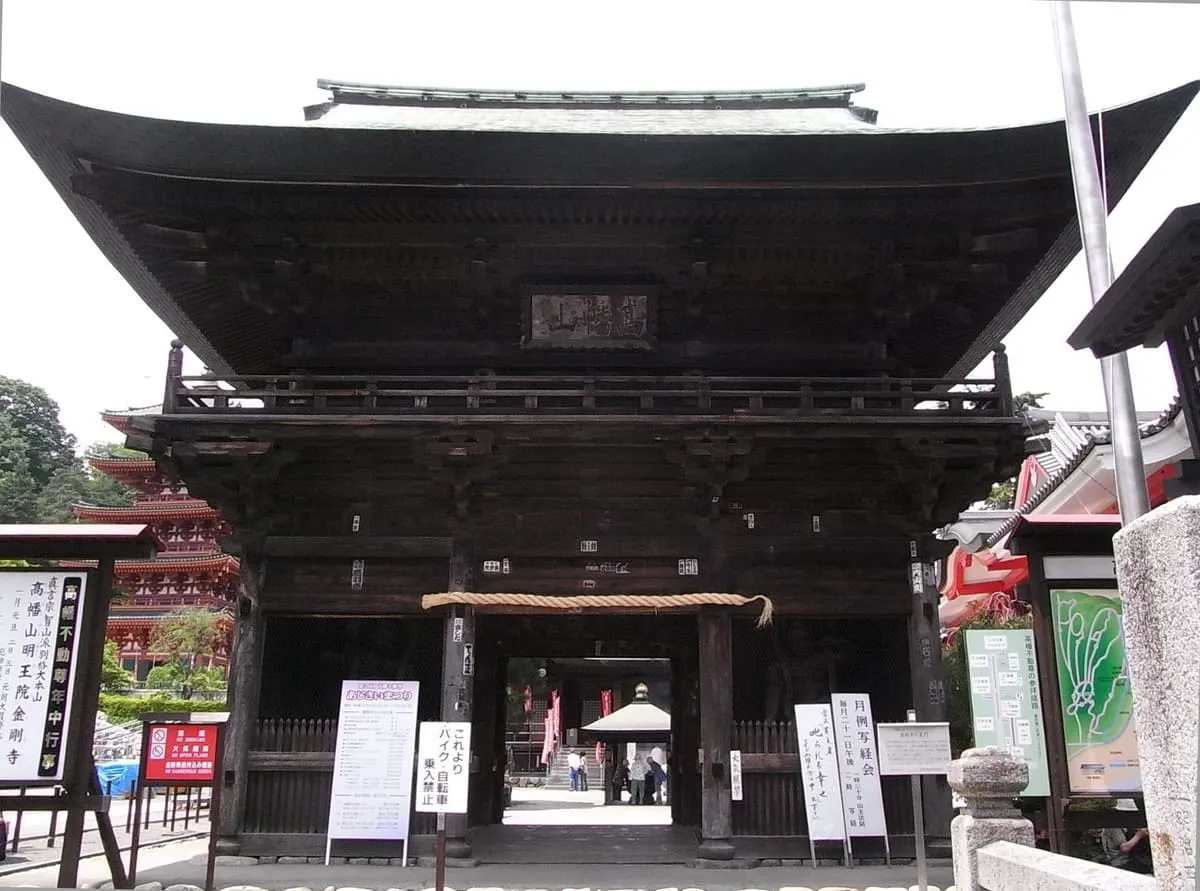
Denomination: Shingon-shu Chisan-ha (head temple) | Founded: 9th century
One of the three great Fudo temples of the Kanto region, Kongoji sits on a forested hillside in Hino City at the edge of the Tama plateau. The principal statue, a Triad of Fudo Myo-o in “Jorokusun” scale (about 2.8 metres tall), is a nationally designated Important Cultural Property and ranks among the largest wooden Fudo statues in eastern Japan. Beyond the main hall, a mountain trail weaves among 88 stone Shikoku pilgrimage figures, offering a meditative walk in a surprising natural setting just 30 minutes from Shinjuku. Kongoji is also historically significant as the family temple (bodaiji) of Hijikata Toshizo, the vice-commander of the Shinsengumi — the shogunate’s last police force, which fought and died resisting the Meiji restoration. The temple holds ceremonies honoring Hijikata in May and November, drawing thousands of Shinsengumi enthusiasts. A specially designed “Hijikata Toshizo” commemorative goshuin is available year-round.
- Goshuin highlights: “Takahata Fudo-son” (高幡不動尊); “Hijikata Toshizo” limited commemorative stamp; seasonal limited editions available in abundance
- Fee: ¥300–500
- Access: 5-min walk from Takahata-Fudo Station (Keio Line / Tama Toshi Monorail)
- Don’t miss: Hydrangea season (June–July) and autumn foliage — the hillside temple glows with colour
Goshuin Info
| Details | |
|---|---|
| Hours | 9:00–16:30 |
| Handwritten/Pre-made | Handwritten |
| Limited editions | Yes (many; Shinsengumi, seasonal) |
9. Ikegami Honmon-ji (Ota Ward)
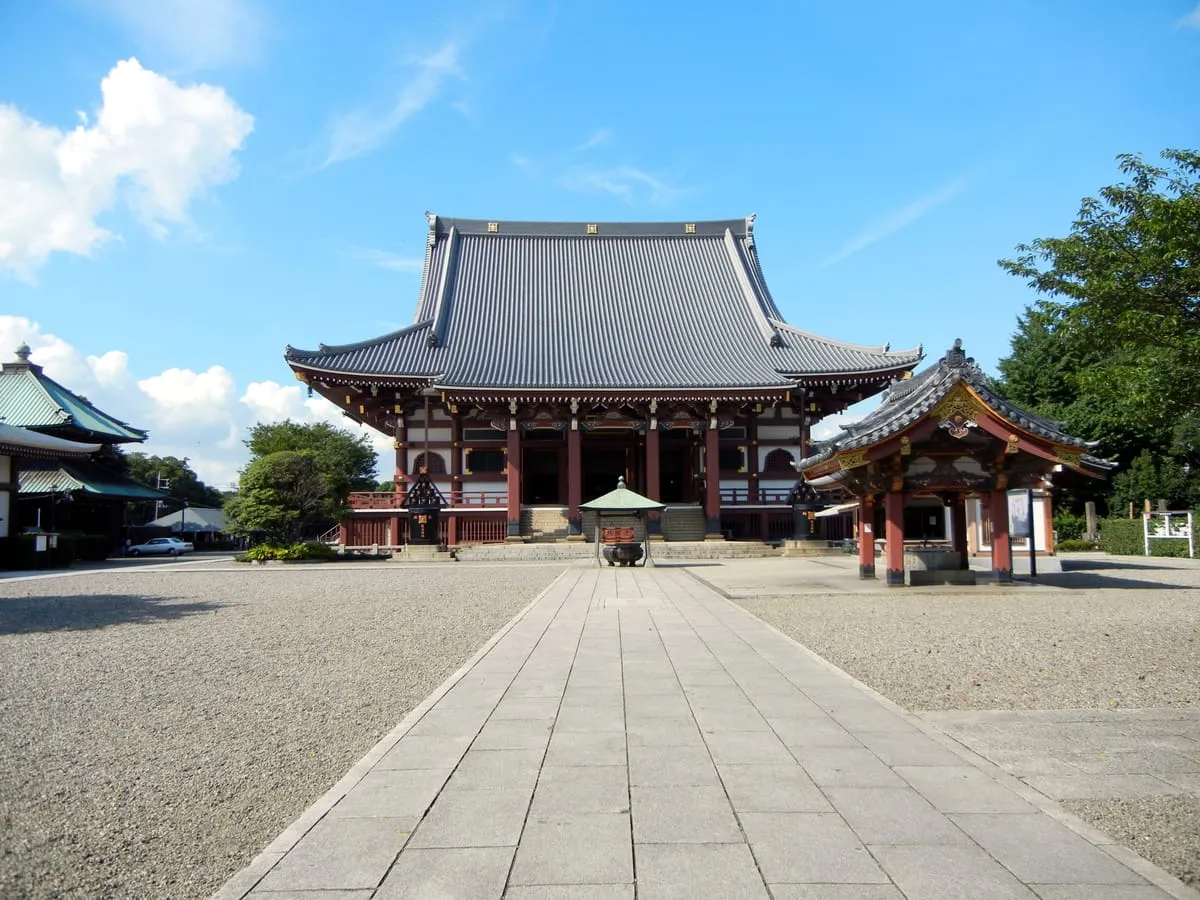
Denomination: Nichiren-shu (head temple) | Founded: 1282 CE
On October 13, 1282, Nichiren — the fiery monk who spent his life insisting that the Lotus Sutra alone contained Japan’s salvation — died at the residence of a supporter named Ikegami Munenaka. The temple complex that rose around the site became the head temple of one of the Nichiren school’s principal branches, and the spot where Nichiren drew his last breath has been venerated for over 700 years. The precincts contain a five-storey pagoda (built 1608, one of Tokyo’s oldest wooden structures), a Niomon gate, and a Soshido (founders hall) housing portraits of successive abbots. The annual “Oeshiki” ceremony, held October 12–13, is Tokyo’s most spectacular Buddhist festival: approximately one million participants converge on the surrounding streets, and thousands of lantern-bearing processions (mantou) illuminate the night, re-enacting the scene of monks gathering to attend Nichiren’s passing.
- Goshuin highlights: “Namu Myoho Renge Kyo” (南無妙法蓮華経) — the title of the Lotus Sutra, core of Nichiren faith; “Daihonzan Ikegami Honmon-ji” at the secondary hall
- Fee: ¥300–500
- Access: 10-min walk from Ikegami Station (Tokyu Ikegami Line)
- Don’t miss: The Oeshiki on October 12–13 — one of the most atmospheric Buddhist spectacles in Japan
Goshuin Info
| Details | |
|---|---|
| Hours | 9:00–16:00 |
| Handwritten/Pre-made | Handwritten |
| Limited editions | Yes (Oeshiki period, others) |
10. Shibamata Taishakuten — Daikyo-ji (Katsushika Ward)
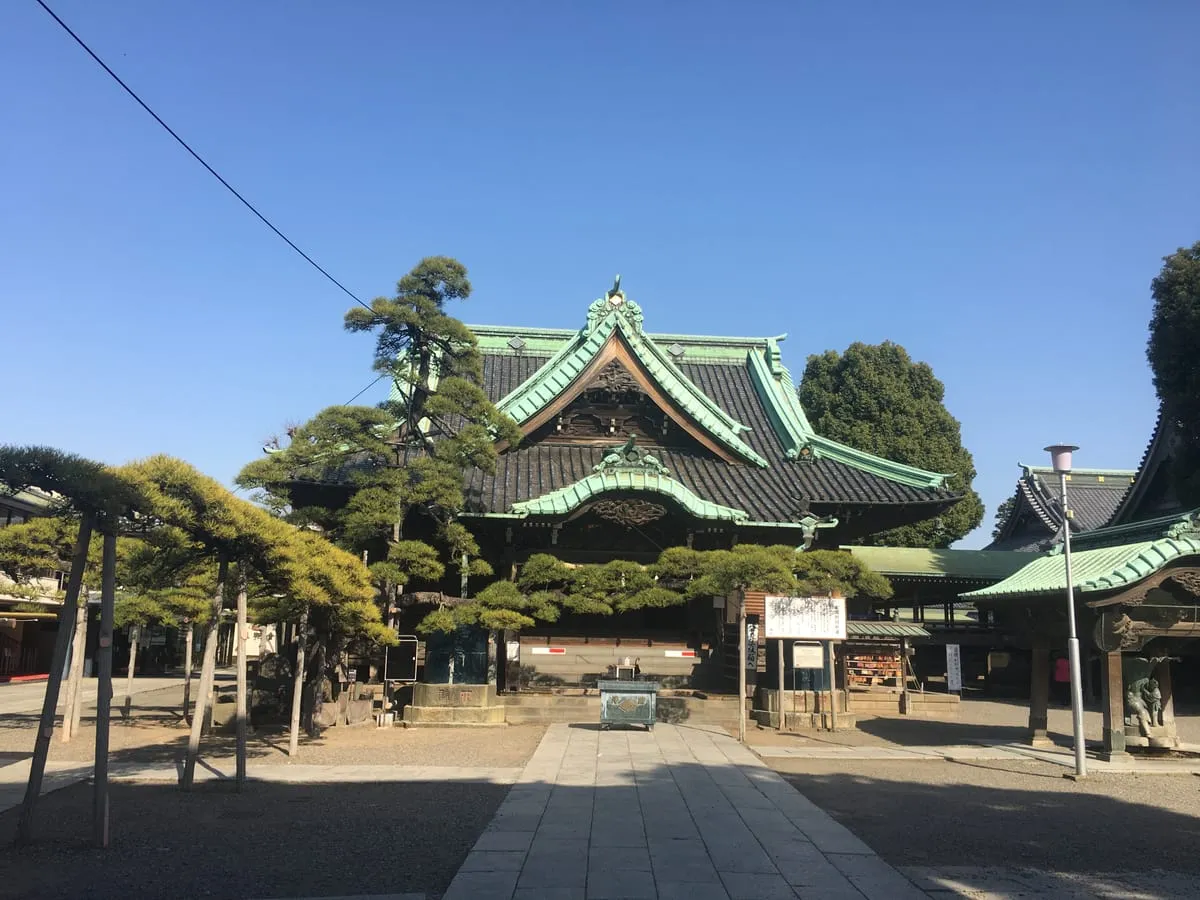
Denomination: Nichiren-shu | Founded: 1629 CE
Known to the world through the 48-film “Tora-san” (Otoko wa Tsurai yo) series, in which Shibamata is the hero’s always-welcoming home neighbourhood. Long before cinema, the temple drew ordinary Edo citizens who called the deity simply “Taishakuten-sama” (Lord Taishakuten) and came to pray for relief from illness, business hardship, and family trouble. The Taishakudo hall — the inner sanctum — is wrapped in ten panels of extraordinary wood carving, each depicting a chapter of the Lotus Sutra in meticulous detail. The carvings took a team of master craftsmen over 30 years (1920–1964) to complete, and constitute one of the finest achievements of Japanese decorative woodcarving. A small but beautiful Japanese garden occupies the rear of the grounds. The approach street (sando) that leads from Shibamata Station is lined with shops selling kusa dango (herb rice dumplings), freshwater fish, and senbei crackers — unchanged in character from a century ago.
- Goshuin highlights: “Taishakuten” (帝釈天) in strong characters; pre-stamped sheets are the standard format here; seasonal limited editions available at the office window
- Fee: ¥300
- Access: 3-min walk from Shibamata Station (Keisei Kanamachi Line)
- Don’t miss: “Yagiri no Watashi” — a hand-oared river ferry across the Edogawa River, operating since the Edo period
Goshuin Info
| Details | |
|---|---|
| Hours | 9:00–16:30 |
| Handwritten/Pre-made | Pre-stamped (primarily) |
| Limited editions | Yes (seasonal, festival days) |
11. Fukagawa Fudo-do (Koto Ward)
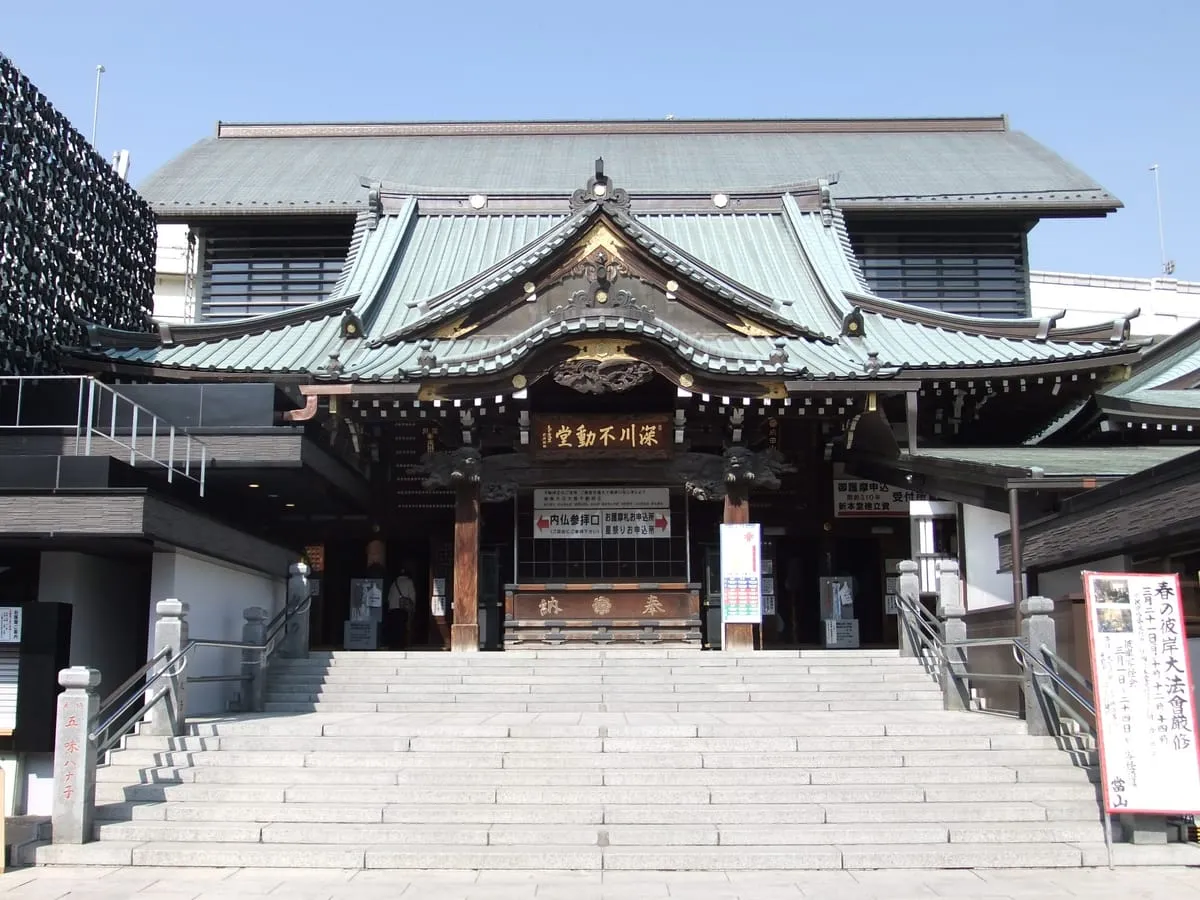
Denomination: Shingon-shu Chisan-ha (Tokyo branch of Naritasan Shinshoji) | Established: 1703 CE (first public exhibition), branch temple: 1881 CE
The Tokyo branch of Naritasan Shinshoji in Chiba, one of Japan’s most visited temples. When Naritasan first transported its Fudo Myo-o statue to Fukagawa for a public exhibition (kaichō) in 1703, the sheer number of Edo citizens who came to worship was extraordinary — and the tradition continued on a rotating basis for centuries, cementing Fukagawa’s identity as a place of Fudo faith. The permanent branch temple was established in 1881, and the current complex includes a striking new main hall (2011) whose exterior walls are densely inscribed with Sanskrit mantras, creating an almost architectural mandala. The goma fire ritual — performed four times daily at 9:00, 11:00, 13:00, and 15:00 — is the centrepiece of the experience: chanting monks, blazing sacred fire, drums, and conch shells combine into a multi-sensory ceremony open to all. Fukagawa is also one of the seven temples in the “Fukagawa Shichifukujin” (Seven Lucky Gods) pilgrimage, playing the role of Ebisu.
- Goshuin highlights: “Namu Daishō Fudō Myōō” (南無大聖不動明王); goma-prayer timing goshuin is available for those who attend a ceremony
- Fee: ¥300
- Access: 3-min walk from Monzen-Nakacho Station (Toei Oedo Line / Tokyo Metro Tozai Line)
- Don’t miss: The goma fire ritual — arrive 10 minutes early for a front seat; entirely free of charge
Goshuin Info
| Details | |
|---|---|
| Hours | 8:00–18:00 |
| Handwritten/Pre-made | Handwritten |
| Limited editions | Yes (monthly, seasonal) |
12. Todoroki Fudo-son — Myo-o-in (Setagaya Ward)
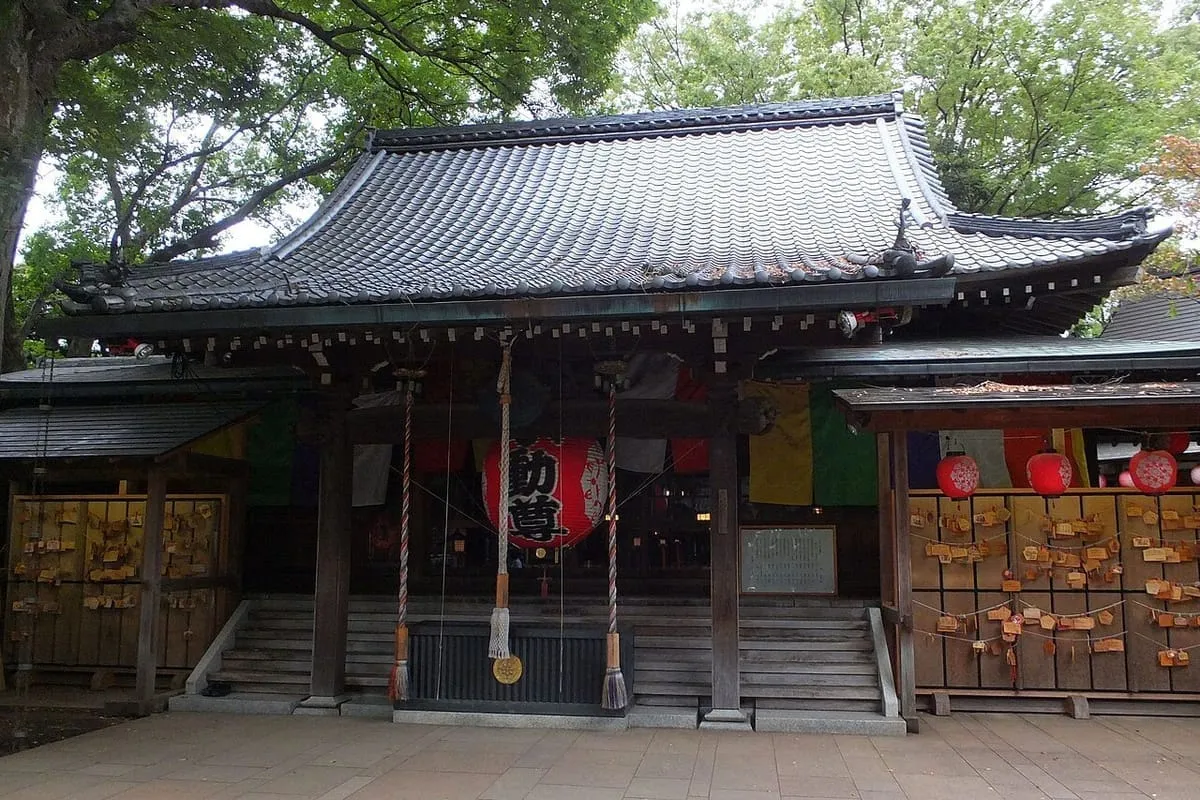
Denomination: Shingon-shu | Founded: Heian period (traditional)
Myo-o-in stands at the top of Todoroki Ravine — Tokyo’s only surviving riverside gorge, carved by a small stream through the city’s clay bluffs. The ravine, declared a natural monument, is only about 1 kilometre long but feels entirely separate from the surrounding residential sprawl. The approach is through the ravine’s walking trail: follow the moss-covered stone path between fern-draped walls, past the “Fudo no Taki” waterfall (about 3 metres tall) where monks once performed ablutions, and up stone stairs to the small but atmospherically situated main hall. Below the temple, a Benzaiten shrine sits on a small island in the stream, accessible by a stone bridge. An excavated burial mound (kofun) from the 5th–6th centuries is visible in the ravine wall. The entire experience — arriving through a hidden gorge, climbing to a cliff-top Fudo hall — is unlike any other in the 23 wards.
- Goshuin highlights: “Todoroki Fudo-son” (等々力不動尊) in honest, unhurried brushwork — a quiet counterpoint to the busier city temples
- Fee: ¥300
- Access: 5-min walk from Todoroki Station (Tokyu Oimachi Line)
- Don’t miss: The ravine walk itself — take the steps down from the station and follow the stream path to the temple
Goshuin Info
| Details | |
|---|---|
| Hours | 9:00–16:30 |
| Handwritten/Pre-made | Handwritten |
| Limited editions | None |
13. Kuhonbutsu Joshin-ji (Setagaya Ward)
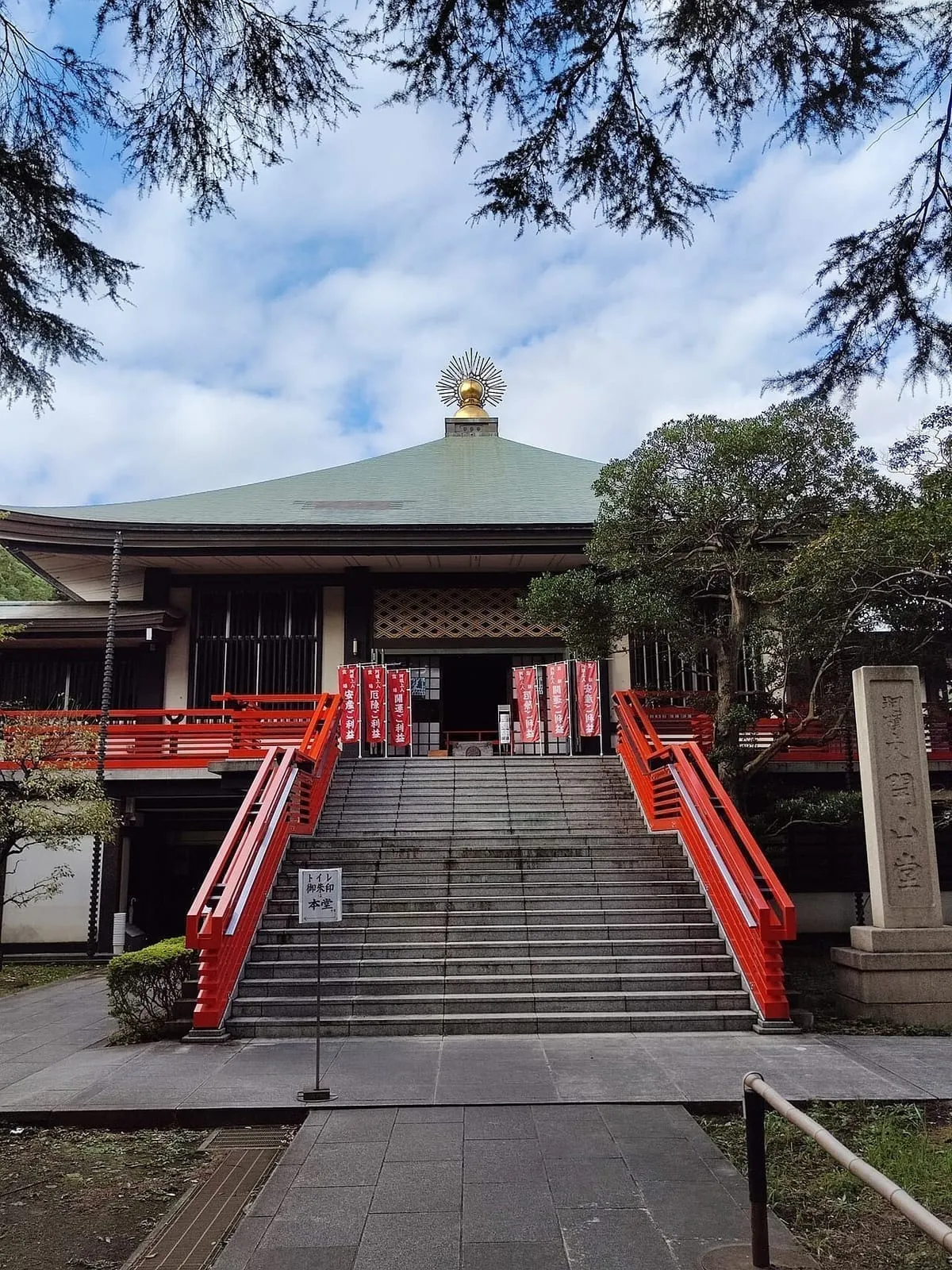
Denomination: Jodo-shu | Founded: 1678 CE (by Kaseki Shonin)
“Kuhonbutsu” means “Nine-form Buddha” — a reference to the Jodo school’s doctrine that the Amida Buddha receives all beings into the Pure Land in nine distinct ways, corresponding to the nine levels of human spiritual capacity. The temple makes this theology visible: three separate halls (Jōbon-dō, Chūbon-dō, Gebon-dō) each house three Amida statues, each in a different posture — seated, standing, and reclining — totalling nine. Walking from hall to hall and examining the subtle differences between each figure is itself a form of meditation on the Jodo concept of universal salvation. The grounds are spacious and tree-shaded; autumn colour from the ginkgo and maple trees is considered among the finest in Setagaya Ward. The name of the nearest station — “Kuhonbutsu” on the Tokyu Oimachi Line — comes directly from this temple, one of only a handful of Tokyo stations named for a Buddhist institution.
- Goshuin highlights: “Kuhonbutsu” (九品仏) in serene, measured brushwork — a goshuin that reflects the temple’s contemplative atmosphere
- Fee: ¥300
- Access: 3-min walk from Kuhonbutsu Station (Tokyu Oimachi Line)
- Don’t miss: November autumn foliage — the three Amida halls framed in gold and crimson maple
Goshuin Info
| Details | |
|---|---|
| Hours | 9:00–16:00 |
| Handwritten/Pre-made | Handwritten |
| Limited editions | Yes (autumn, spring) |
14. Sengaku-ji (Minato Ward)
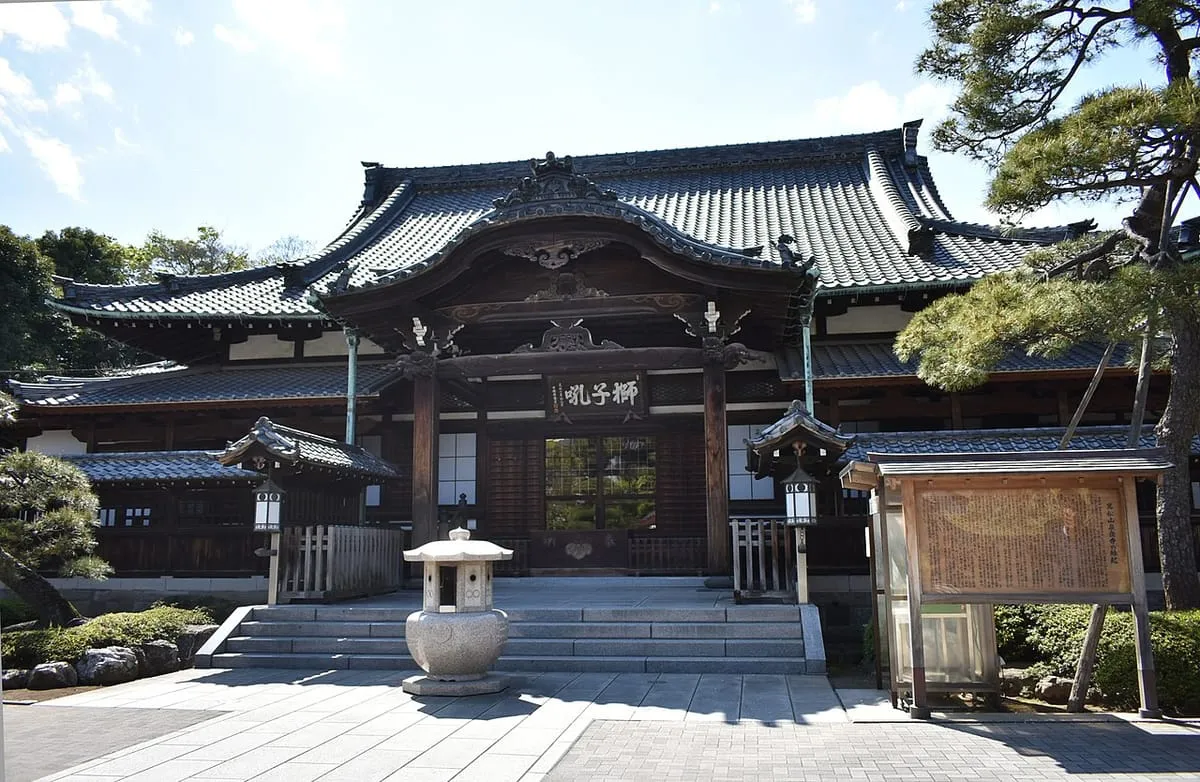
Denomination: Soto Zen | Founded: 1612 CE (by Tokugawa Ieyasu)
Sengaku-ji’s fame rests entirely on one event: the vendetta of December 14, 1702. On that night, 47 retainers of the deceased lord Asano Naganori — whose enforced suicide (seppuku) by the shogunate they considered unjust — stormed the mansion of Kira Yoshinaka, killed him, brought his head to their lord’s grave at Sengaku-ji, and then surrendered to the authorities. The shogunate debated for months; in the end it ordered the 47 to commit suicide. They are buried here, alongside their lord. The grave enclosure has been continuously tended by anonymous hands since 1703, and today the stone memorial tombs are surrounded by a near-constant thin haze of incense smoke. Each December 14th, the “Gishi-sai” (Loyal Retainers’ Festival) draws thousands: a procession in period armour, memorial ceremonies, and the kind of devotion to the “47 ronin” story that shows no sign of fading after three centuries. The small Ako Gishi Memorial Museum on the grounds displays armour, weapons, and letters belonging to the 47.
- Goshuin highlights: “Sengaku-ji” (泉岳寺) in practiced Soto Zen brushwork; “Gishi no Tera” (義士の寺 — Temple of the Loyal Retainers) stamp available
- Fee: ¥300
- Access: 2-min walk from Sengakuji Station (Toei Asakusa Line)
- Don’t miss: The grave precinct — bring incense and observe the attendants who maintain the stones in rain and shine
Goshuin Info
| Details | |
|---|---|
| Hours | 9:00–17:00 |
| Handwritten/Pre-made | Handwritten |
| Limited editions | Yes (December 14th Gishi-sai, others) |
15. Honsen-ji / Shinagawa-dera (Shinagawa Ward)
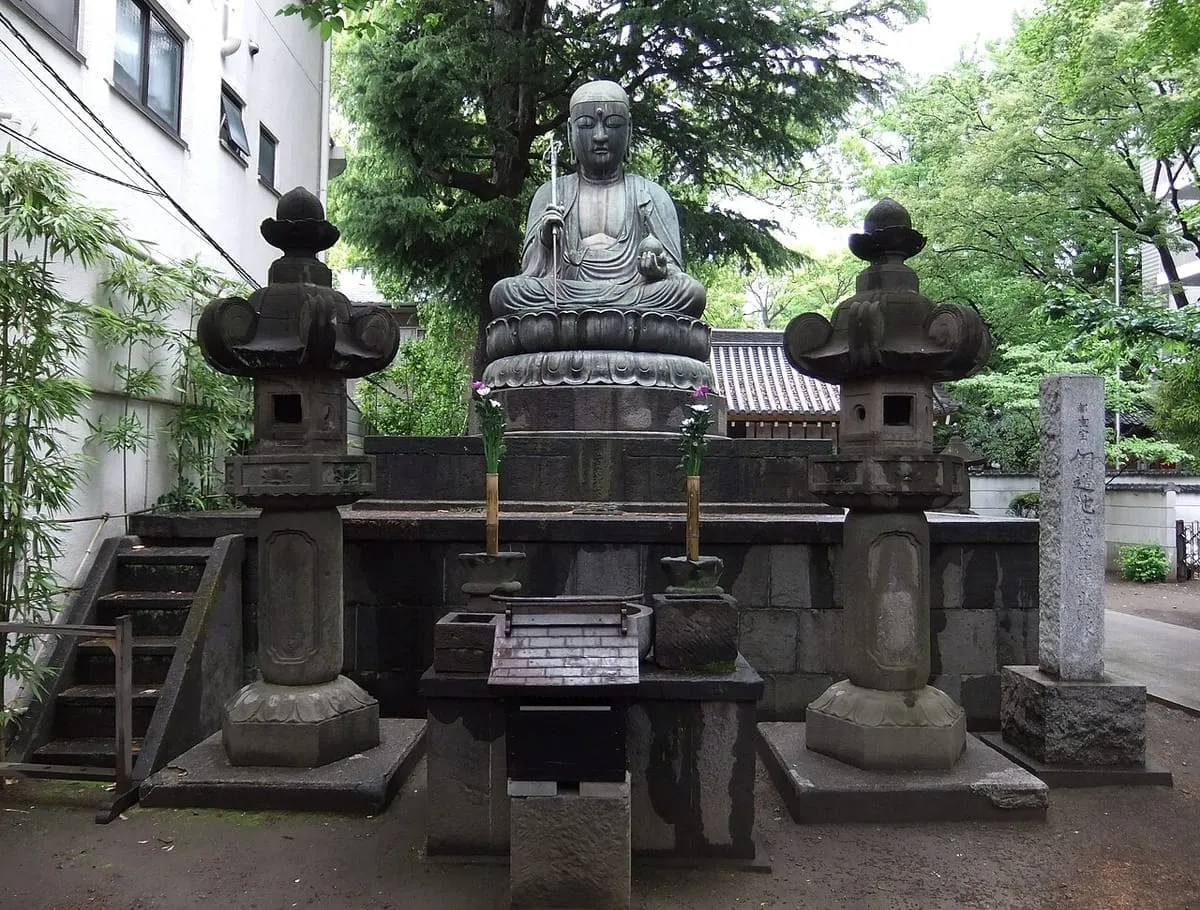
Denomination: Shingon-shu Daigo-ha | Founded: 8th century (attributed to Gyoki)
The official name is Honsen-ji (品川寺), but the old pronunciation “Shinagawa-dera” has stuck in local memory. Located in the heart of Shinagawa-juku — the first post town on the Edo-period Tokaido Road — this temple has watched over travellers for over 1,000 years. The most celebrated object in the precinct is the bronze seated Jizo Bosatsu statue (cast 1708, height about 2.7 metres) — one of the six great Jizo statues that Edo’s residents erected along the city’s exit roads, known as the “Edo Rokujizo.” This particular Jizo faces the old Tokaido, and was cast in gratitude for safe journeys and prayers for safe returns. The temple carries a remarkable modern footnote: a French bell acquired by the Meiji government for the 1867 Paris Exposition was held at Honsen-ji after its return to Japan, where it lingered in storage for decades until it was rediscovered. Restoration work has been underway to preserve this Edo-era international artifact.
- Goshuin highlights: “Kobo Daishi” (弘法大師); “Hozon Jizo Bosatsu” (本尊地蔵菩薩) — reflecting the dual Shingon and Jizo-faith heritage of the temple
- Fee: ¥300
- Access: 5-min walk from Kita-Shinagawa Station (Keikyu Main Line)
- Don’t miss: The Edo Rokujizo Jizo statue — one of a chain of six that once formed a spiritual perimeter around historic Edo
Goshuin Info
| Details | |
|---|---|
| Hours | 9:00–17:00 |
| Handwritten/Pre-made | Handwritten |
| Limited editions | None |
Planning Your Tokyo Temple Goshuin Route
Attempting all 15 temples in a single day is inadvisable — better to organise by area and denomination.
Central / Yamanote Loop (Senso-ji, Zojo-ji, Gokoku-ji, Kan’ei-ji, Sengaku-ji, Honsen-ji): These six have excellent access to major train lines. Two to three full days would allow unhurried visits with travel time. The denominational range — Tendai, Jodo, Shingon, Soto Zen — gives a good cross-section of Japanese Buddhist tradition.
Western Tama / Keio Line (Jindai-ji, Takahata Fudo-son): Take the Keio Line west from Shinjuku. Jindai-ji (Chofu) and Takahata Fudo (Hino) can be combined in a half-day trip through the greener outskirts of the metropolis.
Shitamachi / East Tokyo (Fukagawa Fudo-do, Shibamata Taishakuten, Ikegami Honmon-ji): Fukagawa pairs perfectly with the Tomioka Hachimangu shrine next door. Shibamata is a full excursion to the northeast corner of the city. Ikegami is southwest — hard to combine with the others, but worth a dedicated trip for Nichiren faith devotees.
Minami / South Ward (Meguro Fudo, Todoroki Fudo, Kuhonbutsu Joshinji, Nishi-Arai Daishi, Zojo-ji): The Tokyu Oimachi Line links Todoroki and Kuhonbutsu conveniently. Meguro Fudo is a short taxi or walk from Meguro Station. Nishi-Arai Daishi in Adachi Ward is geographically distant — plan as a standalone excursion.
Denomination pairing for goshuin collectors: If you enjoy seeing how the same brush tradition differs across temples, try pairing Zojo-ji with Kuhonbutsu Joshinji for a Jodo-shu comparison, or Kongoji (Takahata) with Nishi-Arai Daishi and Gokoku-ji for a Shingon Buzan-ha versus Chisan-ha contrast. The differences in brushwork style, stamp design, and ritual context make the comparison instructive.
Image Credits
All images sourced from Wikimedia Commons.
| Temple | Filename | License |
|---|---|---|
| Senso-ji | Sensoji_2023.jpg | CC0 1.0 |
| Zojo-ji | Zojoji_Temple_(53081602655).jpg | CC BY 2.0 |
| Kan’ei-ji | Five-storied_Pagoda_-_Kan’ei-ji.jpg | CC BY-SA 4.0 |
| Gokoku-ji | Gokoku-ji_(main_hall).jpg | CC BY 2.5 |
| Jindai-ji | Jindaiji-4.jpg | CC BY-SA 4.0 |
| Meguro Fudo | Meguro-fudou-hondou.jpg | GFDL 1.2 |
| Nishi-Arai Daishi | Nishiarai_Daishi.jpg | CC BY-SA 4.0 |
| Takahata Fudo | Kongoji1.jpg | CC BY-SA 4.0 |
| Ikegami Honmon-ji | Ikegami_Honmon-ji_precincts.jpg | CC BY 2.5 |
| Shibamata Taishakuten | Shibamata_Taishakuten_March_11_2021_various_20_44_16_882000.jpeg | CC BY 4.0 |
| Fukagawa Fudo-do | Fukagawa_Fudodo_Old_Main_Hall.jpg | CC BY-SA 3.0 |
| Todoroki Fudo-son | Todoroki_Fudo-son_201710a.jpg | CC BY-SA 3.0 |
| Kuhonbutsu Joshin-ji | Kaizan-do_Hall_of_the_Founder_(Joshin-ji).jpg | CC BY-SA 4.0 |
| Sengaku-ji | Sengakuji_201904d2.jpg | CC BY-SA 4.0 |
| Honsen-ji | Shinagawa_Honsen-ji_01.JPG | CC BY-SA 3.0 |


