The name “Kobe” (神戸) derives from “kanbe” — the families appointed as servants to Ikuta Shrine’s deity in ancient Japan. That thread connects a modern port city of 1.5 million to a network of shrines accumulating prayers and goshuin ink for centuries. This guide presents 10 carefully selected shrines in Kobe where you can receive goshuin, covering the full breadth of the city — from central Sannomiya to coastal Tarumi, from working-class Nagata to the sake-brewing country of Higashinada.
1. Ikuta Shrine (Chuo Ward, Shimoyamatedori)
Enshrined Deity: Wakahirume-no-Mikoto
Ikuta Shrine gave Kobe its name. When Empress Jingu returned from her Korean campaign (claimed 201 CE), the deity Wakahirume-no-Mikoto delivered an oracle here; the servant families (kanbe) appointed to tend the shrine gave the land its name, which evolved into “Kobe.” Despite this ancient heritage, the grounds sit just five minutes from Sannomiya Station. Pass through the vermilion rōmon gate and the city noise disappears, replaced by a dense chinju no mori (guardian grove). Ikuta is beloved for matchmaking — ema boards carry wishes in dozens of languages — and was rebuilt after severe 1995 earthquake damage.
- Goshuin Features: Bold calligraphy reading “Ikuta Shrine” with the chrysanthemum divine crest — dignified and warm, reflecting the shrine’s ancient significance and role as deity of matchmaking
- Fee: 500 yen
- Access: 5-minute walk from JR Sannomiya, Hankyu Kobe-Sannomiya, or Hanshin Sannomiya Station
- Highlights: Sacred guardian grove, multilingual ema boards, vermilion rōmon gate, cherry blossoms and autumn foliage
Goshuin Information
| Item | Details |
|---|---|
| Hours | 7:00–17:00 |
| Location | Shrine office right of the main hall |
| Handwritten/Pre-written | Handwritten (pre-written during busy periods) |
| Limited Editions | Available (seasonal and festival editions) |
2. Minatogawa Shrine (Chuo Ward, Tamonodori)
Enshrined Deity: Kusunoki Masashige
Known as “Nankō-san” by generations of Kobe residents, this shrine honors the medieval warrior Kusunoki Masashige (1294–1336), who refused retreat at the 1336 Battle of Minatogawa and died here. His vow of “shichisei hōkoku” — rebirth seven times to serve the nation — became one of Japan’s defining expressions of loyalty. Established by imperial decree in 1872, the grounds include his mausoleum marker, a stone monument erected by Tokugawa Mitsukuni of Mito, and a bronze statue in full armor standing composed and resolute near the main hall. Camphor trees (kusunoki — sharing characters with the warrior’s name) line the entire approach.
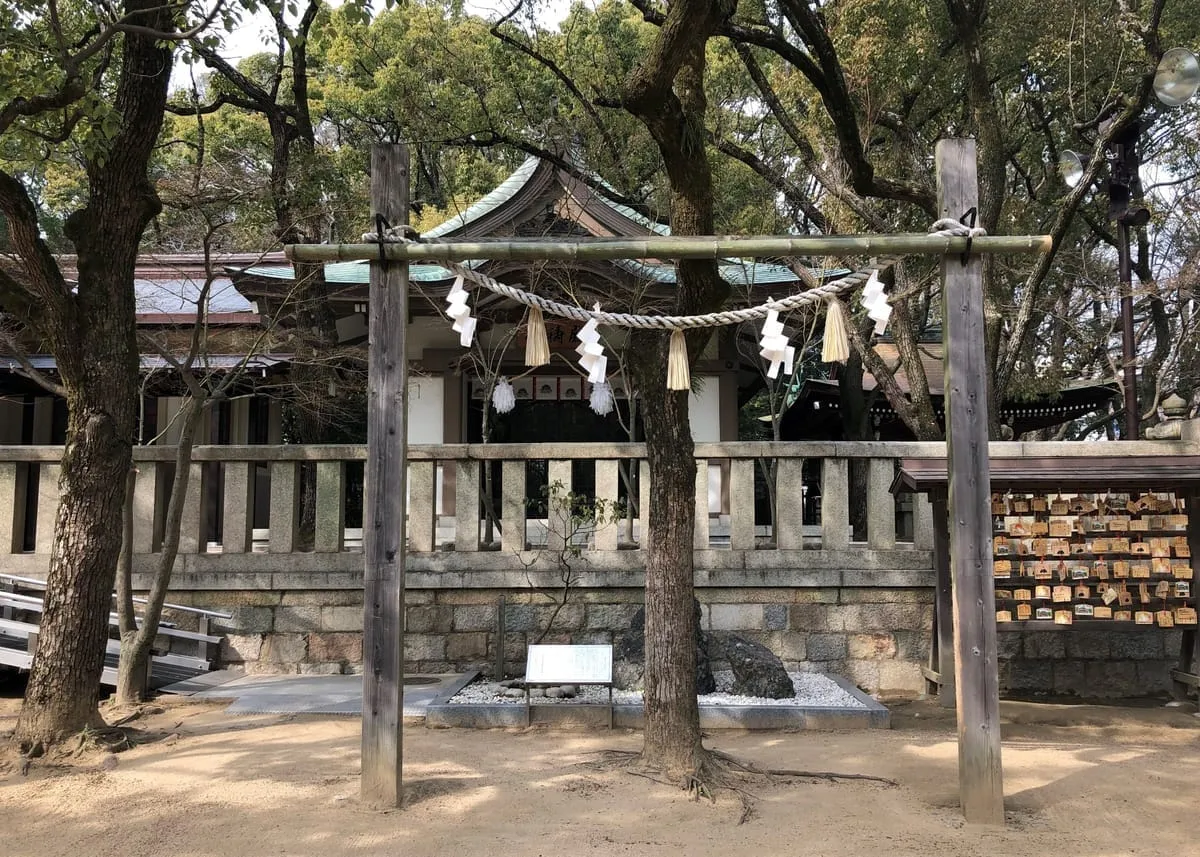
- Goshuin Features: Powerful calligraphy reading “Minatogawa Shrine” with the imperial chrysanthemum — bold strokes reflecting the indomitable warrior spirit
- Fee: 500 yen
- Access: 3-minute walk from Subway “Minatogawa-koen” Station; 5-minute from Hanshin/Hankyu “Kōsoku-Kobe” Station
- Highlights: Kusunoki’s mausoleum marker, Mitsukuni stone monument, bronze statue, treasure hall, camphor grove
Goshuin Information
| Item | Details |
|---|---|
| Hours | 9:00–17:00 |
| Location | Shrine office |
| Handwritten/Pre-written | Handwritten |
| Limited Editions | Available (seasonal and festival editions) |
3. Nagata Shrine (Nagata Ward, Nagatachō)
Enshrined Deity: Kotoshironushi-no-kami
One of the Three Shrines of Kobe (Kōbe Sanza) with over 1,700 years of history, Nagata Shrine enshrines Kotoshironushi-no-kami — a deity of fortune and commerce related to Ebisu — who has drawn merchants throughout Kobe’s history. The shrine was devastated by the 1995 earthquake fires but rebuilt through community effort; today its grounds and shopping street embody the recovery story. The autumn danjiri festival (October) brings elaborately carved floats in procession through the neighborhood each year.
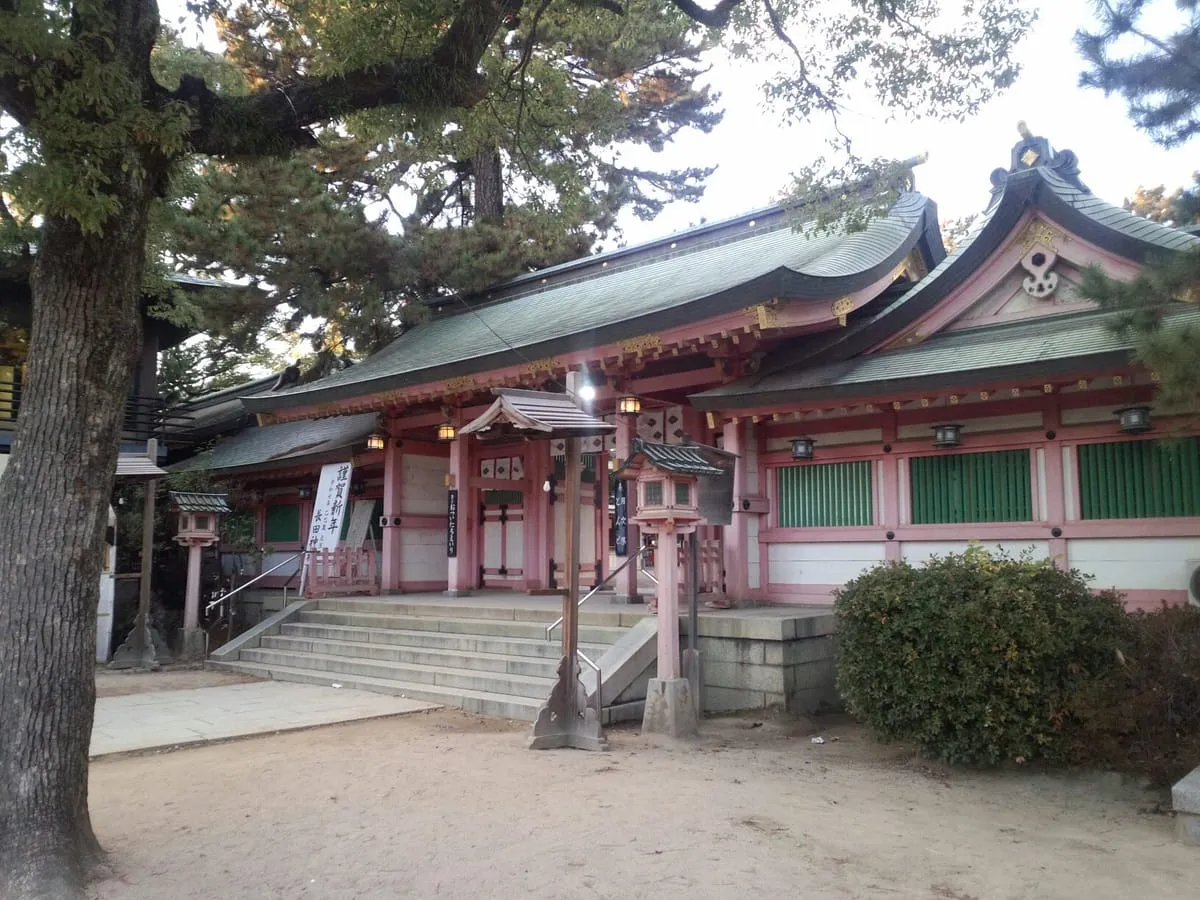
- Goshuin Features: Flowing calligraphy reading “Nagata Shrine” with the sea bream (tai) crest — an auspicious Ebisu-style symbol of commercial prosperity
- Fee: 500 yen
- Access: 3-minute walk from Subway “Nagata” Station
- Highlights: Earthquake recovery history, danjiri festival (October), Ebisu deity statue, surrounding shopping street
Goshuin Information
| Item | Details |
|---|---|
| Hours | 9:00–17:00 |
| Location | Shrine office |
| Handwritten/Pre-written | Handwritten |
| Limited Editions | Available (autumn festival and New Year editions) |
4. Yuzuruha Shrine (Higashinada Ward, Mikage Gunge)
Enshrined Deities: Takehayasusanoo-no-Mikoto, Inadahime-no-Mikoto, and others
“Yuzuruha” — the feathered nock of an arrow — reflects this shrine’s traditional connection to martial excellence. The shrine gained global attention when figure skater Yuzuru Hanyu, whose name uses the same characters, won consecutive Olympic gold medals in 2014 and 2018. Ema boards now carry messages in dozens of languages. A white hawk (shirataka) venerated as a divine messenger and the focus on athletic victory draw both competitive athletes and dedicated fans.
- Goshuin Features: Elegant calligraphy reading “Yuzuruha Shrine” with hawk motif — martial grace and athletic dedication in a single design
- Fee: 500 yen
- Access: 10-minute walk from Hankyu “Mikage” Station; 15-minute walk from JR “Sumiyoshi” Station
- Highlights: International ema boards from global fans, white hawk veneration, athletic victory prayers, tranquil shrine forest
Goshuin Information
| Item | Details |
|---|---|
| Hours | 9:00–17:00 |
| Location | Shrine office |
| Handwritten/Pre-written | Handwritten |
| Limited Editions | Available (festival editions) |
5. Tsunashiki Tenmangū (Suma Ward, Tenjinchō)
Enshrined Deity: Sugawara no Michizane
In 901 CE, Sugawara no Michizane — exiled to Dazaifu — came ashore at Suma when storms halted his voyage. He rested here on a circular seat (tsuna-shiki) woven from mooring rope, giving the shrine its name. Michizane died in exile; his posthumous deification as Tenjin-sama, patron of learning, produced shrines across Japan — Tsunashiki marks the ground he actually stood on. The Suma coastal location adds literary depth: The Tale of Genji places Prince Genji’s own exile here.
- Goshuin Features: Precise scholarly calligraphy reading “Tsunashiki Tenmangū” with the plum blossom crest — elegant and dignified, befitting the patron of learning
- Fee: 500 yen
- Access: 5-minute walk from Sanyo Electric Railway “Suma-ura-kōen”; 15-minute walk from JR “Suma” Station
- Highlights: Plum tree attributed to Michizane, plum blossom festival (February), literary Suma coastal setting, exam success prayers
Goshuin Information
| Item | Details |
|---|---|
| Hours | 9:00–17:00 |
| Location | Shrine office |
| Handwritten/Pre-written | Handwritten |
| Limited Editions | Available (plum blossom festival special edition) |
6. Watatsumi Shrine (Tarumi Ward, Miyamotochō)
Enshrined Deities: Watatsumi Three Sea Deities
Watatsumi — the three ocean-ruling deities of Japanese mythology — are documented in the tenth-century Engishiki at this site, confirming over a millennium of recognized status. From the main hall steps, the Akashi Kaikyo Bridge — the world’s longest suspension bridge — spans the same strait ancient fishermen crossed without it. The annual Grand Festival in July includes a kaijō tōgyo: the portable shrine carried onto the water in a ceremony maintained for centuries.
- Goshuin Features: Commanding calligraphy reading “Watatsumi Shrine” — oceanic depth matches the primordial character of the enshrined deities
- Fee: 500 yen
- Access: 5-minute walk from JR or Sanyo Electric Railway “Tarumi” Station
- Highlights: Akashi Kaikyo Bridge panorama, Grand Festival sea procession (July), Engishiki historical designation
Goshuin Information
| Item | Details |
|---|---|
| Hours | 9:00–17:00 |
| Location | Shrine office |
| Handwritten/Pre-written | Handwritten |
| Limited Editions | Available (summer Grand Festival edition) |
7. Suwa Shrine (Nagata Ward, Ikedagō)
Enshrined Deities: Takeminakata-no-kami, Yasakatome-no-kami
A branch of the great Suwa Taisha of Nagano, Nagata’s Suwa Shrine occupies a hillside above the urban fabric of Nagata Ward. Stone steps lead to a precinct of old-growth trees; a panorama over the neighborhood opens at the top. The autumn grand festival brings kagura (sacred dance) performances, reflecting centuries of community presence.
- Goshuin Features: Crisp calligraphy reading “Suwa Shrine” with the traditional kaji-no-ha crest — martial clarity in every stroke
- Fee: 500 yen
- Access: 10-minute walk from Subway “Nagata” Station
- Highlights: Hillside panorama over Nagata, autumn grand festival with kagura, stone lanterns and subsidiary shrines
Goshuin Information
| Item | Details |
|---|---|
| Hours | 9:00–17:00 |
| Location | Shrine office |
| Handwritten/Pre-written | Handwritten |
| Limited Editions | Available (grand festival edition) |
8. Yanagihara Hiruko Shrine (Hyogo Ward, Nishi-Yanagiwara-chō)
Enshrined Deity: Hiruko-no-Mikoto (Ebisu)
The “Tōka Ebisu” festival held here each January 9th–11th is one of Kobe’s most joyful annual events: “fuku-musume” (fortune maidens) distribute lucky bamboo branches (fukusasa) in the distinctly Osaka-Kobe style of commercial celebration. Ebisu — the bearded fisherman deity of good fortune — is the presiding spirit, and the Hyogo district’s long maritime and mercantile history gives the cult deep local roots.
- Goshuin Features: Accomplished calligraphy reading “Yanagihara Hiruko Shrine” with Ebisu emblems — warmth and prosperity in every character
- Fee: 500 yen
- Access: 10-minute walk from JR “Hyogo” Station
- Highlights: Tōka Ebisu festival (January 9–11), fortune maidens with lucky bamboo, historic Hyogo port neighborhood atmosphere
Goshuin Information
| Item | Details |
|---|---|
| Hours | 9:00–17:00 |
| Location | Shrine office |
| Handwritten/Pre-written | Handwritten |
| Limited Editions | Available (Tōka Ebisu special edition) |
9. Sumiyoshi Shrine (Higashinada Ward, Sumiyoshi Miyamachi)
Enshrined Deities: The Sumiyoshi Three Deities
An affiliate of Sumiyoshi Taisha in Osaka, this shrine serves eastern Kobe while maintaining its parent’s maritime traditions. The Higashinada area is “Nada no Go-gō,” Japan’s premier sake-brewing region — Sumiyoshi Shrine has long been included in brewers’ fermentation prayers. The grounds carry a quiet dignity characteristic of shrines that have never needed to advertise their importance.
- Goshuin Features: Elegant calligraphy reading “Sumiyoshi Shrine” with the three-star Sumiyoshi crest — maritime purity and brewing heritage in quiet harmony
- Fee: 500 yen
- Access: 5-minute walk from Hanshin “Sumiyoshi” Station; 8-minute walk from JR “Sumiyoshi” Station
- Highlights: Sacred grove, Nada sake-brewing heritage connection, autumn grand festival, maritime safety traditions
Goshuin Information
| Item | Details |
|---|---|
| Hours | 9:00–17:00 |
| Location | Shrine office |
| Handwritten/Pre-written | Handwritten |
| Limited Editions | Available (grand festival edition) |
10. The Kobe Eight Shrines Pilgrimage (Chuo and Hyogo Wards)
Shrines: Ichinomiya through Hachinomiya (First through Eighth Shrines)
The “Kobe Hassya” (神戸八社) — eight shrines numbered in sequence across central Kobe — represent a pilgrimage circuit unique to this city. Tradition holds that Empress Jingu established them as guardian shrines radiating from Ikuta Shrine. Collecting all eight goshuin in a single day combines a circuit challenge with traditional pilgrimage rhythm, yielding eight different designs from eight distinct neighborhood shrines. The full circuit takes four to six hours and approximately 4,000 yen.
| Shrine | Principal Deity |
|---|---|
| Ichinomiya (Chuo Ward, Kitanochō) | Iwasaku-no-kami, Nesaku-no-kami |
| Ninomiya (Chuo Ward, Ninomiyachō) | Amaterasu Omikami |
| Sannomiya (Chuo Ward, Sannomiyachō) | Tagitsu-hime-no-Mikoto |
| Shinomiya/Kobe Shrine (Chuo Ward) | Ichikishimahime-no-Mikoto |
| Gonomiya (Hyogo Ward, Gonomiyachō) | Ninigi-no-Mikoto |
| Rokunomiya (Hyogo Ward) | Amatsuhikone-no-Mikoto |
| Shichinomiya (Hyogo Ward) | Ōnamuchi-no-Mikoto |
| Hachinomiya (Chuo Ward, Kusunokichō) | Kumano-Kusubi-no-Mikoto |
- Goshuin Features: Eight unique designs — the circuit’s reward is both artistic variety and the satisfaction of completion
- Fee: 500 yen per shrine (4,000 yen total)
- Access: Begin near JR Sannomiya Station; complete by subway, bus, and walking
- Hours: Generally 9:00–17:00 (some smaller shrines occasionally unstaffed)
Recommended Routes
Central Kobe Classic (Half Day)
Ikuta Shrine → Sannomiya Shrine → Minatogawa Shrine
The shrine that named the city, one of the Eight, and the loyalist warrior’s memorial — two to three hours from Sannomiya Station.
Eight Shrines Circuit (Full Day)
Ichinomiya → Ninomiya → Sannomiya → Shinomiya → Gonomiya → Rokunomiya → Shichinomiya → Hachinomiya
Four to six hours. Prepare 4,000 yen in 500-yen coins.
Western Coastal Course (Half Day)
Watatsumi Shrine → Tsunashiki Tenmangū
Sea deity and the Akashi Strait, then Michizane’s melancholy shore. JR or Sanyo Electric Railway.
Nagata District Course (Half Day)
Nagata Shrine → Suwa Shrine → Yanagihara Hiruko Shrine
Earthquake recovery, warrior tradition, and the commerce deity — Kobe’s industrial heartland.
Higashinada Course (Half Day)
Yuzuruha Shrine → Sumiyoshi Shrine
Athlete shrine plus sake district guardian; extend with the Nada breweries.
Practical Notes
Goshuin Basics
- Pray first — Bow twice, clap twice, bow once before the goshuin desk
- Bring your goshuinchō — Several Kobe shrines sell original designs
- Prepare 500-yen coins — 4,000 yen for the Eight Shrine circuit
- Check staffing — Some Eight Shrine locations are occasionally unattended
Best Seasons
- Spring (Mar–May): Cherry blossoms at Ikuta and Nagata; pleasant coastal weather
- Summer (Jun–Aug): Watatsumi Grand Festival sea procession (July)
- Autumn (Sep–Nov): Festival season; Minatogawa’s camphor grove turns golden
- Winter (Dec–Jan): Tōka Ebisu at Yanagihara Hiruko (January 9–11); New Year special goshuin
The name Kobe began with an act of devotion — a decision that this coastal ground deserved dedicated servants — and that decision set in motion a sequence of prayers and stories still continuing today. The goshuin you receive at each shrine is a thread in that sequence, your presence woven into the story of a place that has been sacred for a very long time.
Image Credits
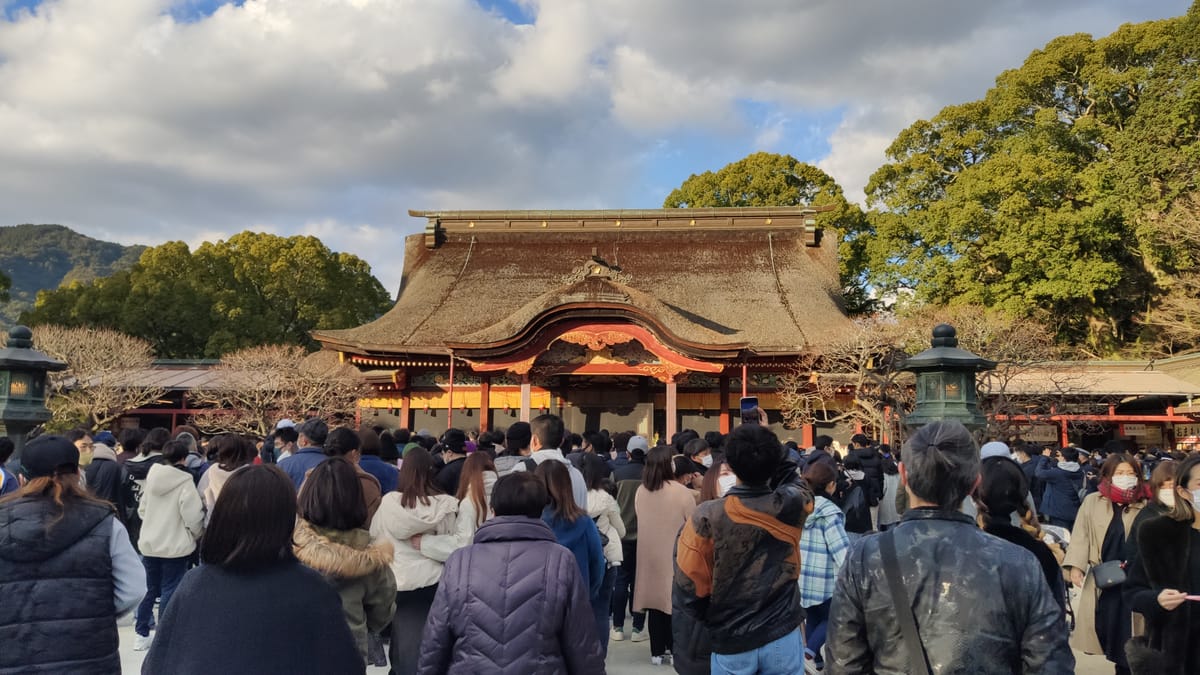
- Hero image (Ikuta Shrine haiden): Saigen Jiro, CC0 1.0 Universal Public Domain Dedication, via Wikimedia Commons
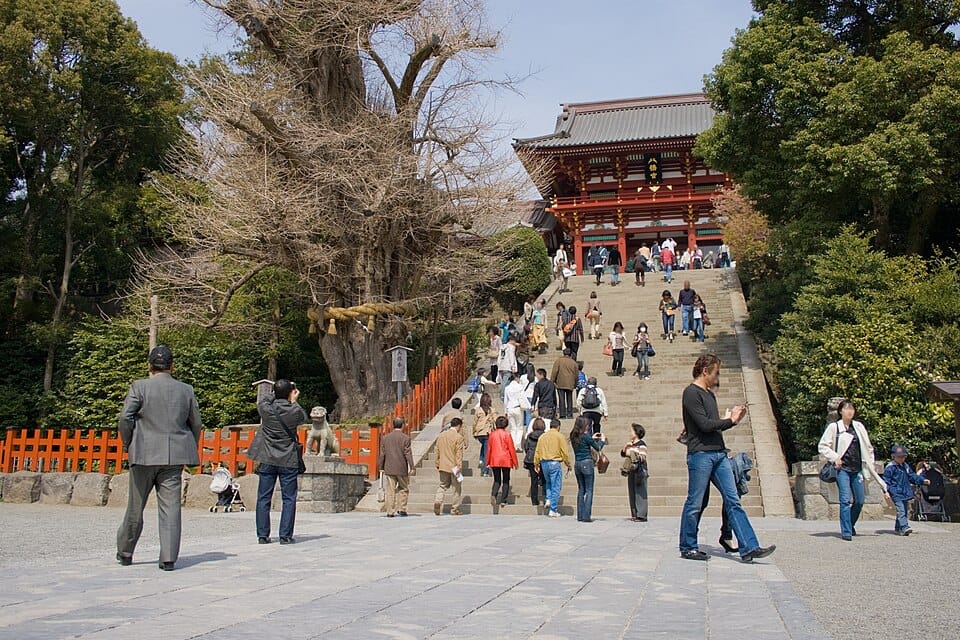
- Minatogawa Shrine Prayer Hall: KishujiRapid, CC BY-SA 4.0, via Wikimedia Commons
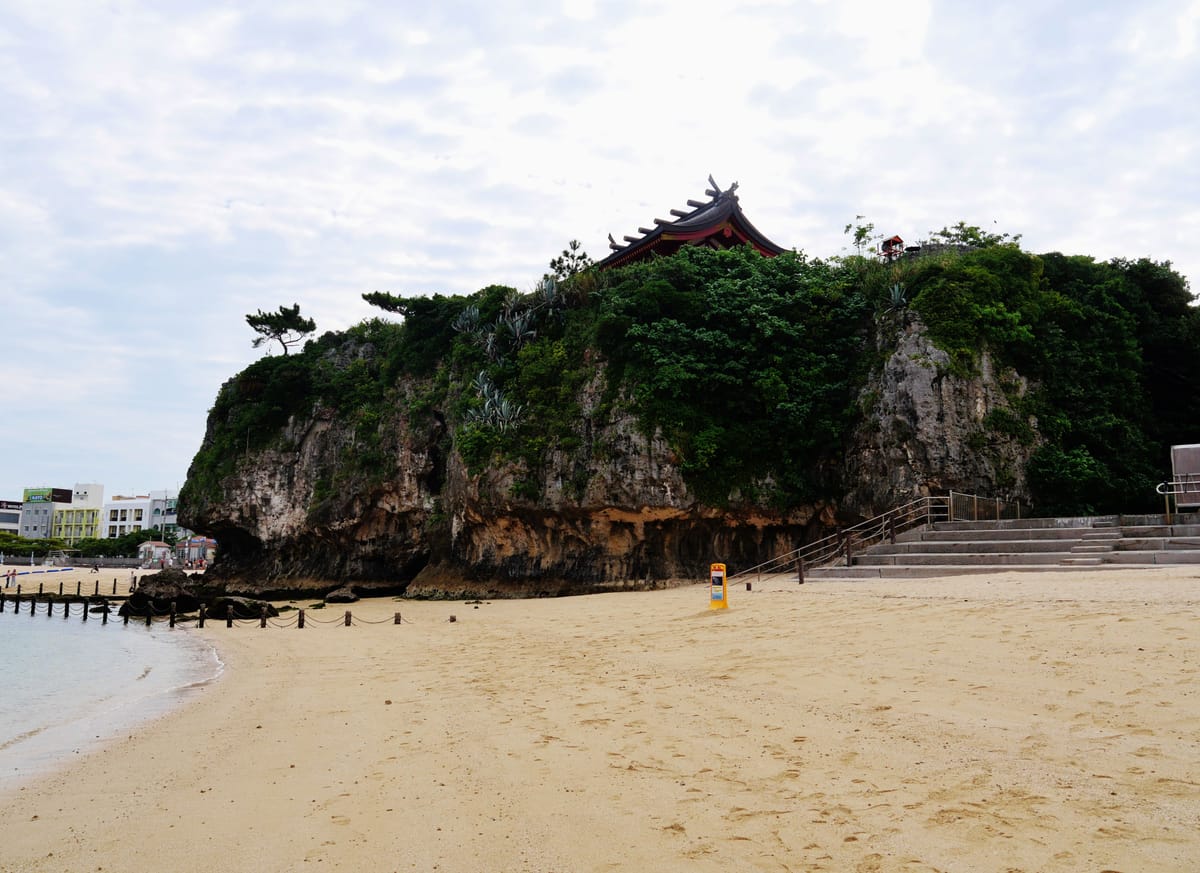
- Nagata Shrine: k_tweet, CC0 1.0 Universal Public Domain Dedication, via Wikimedia Commons