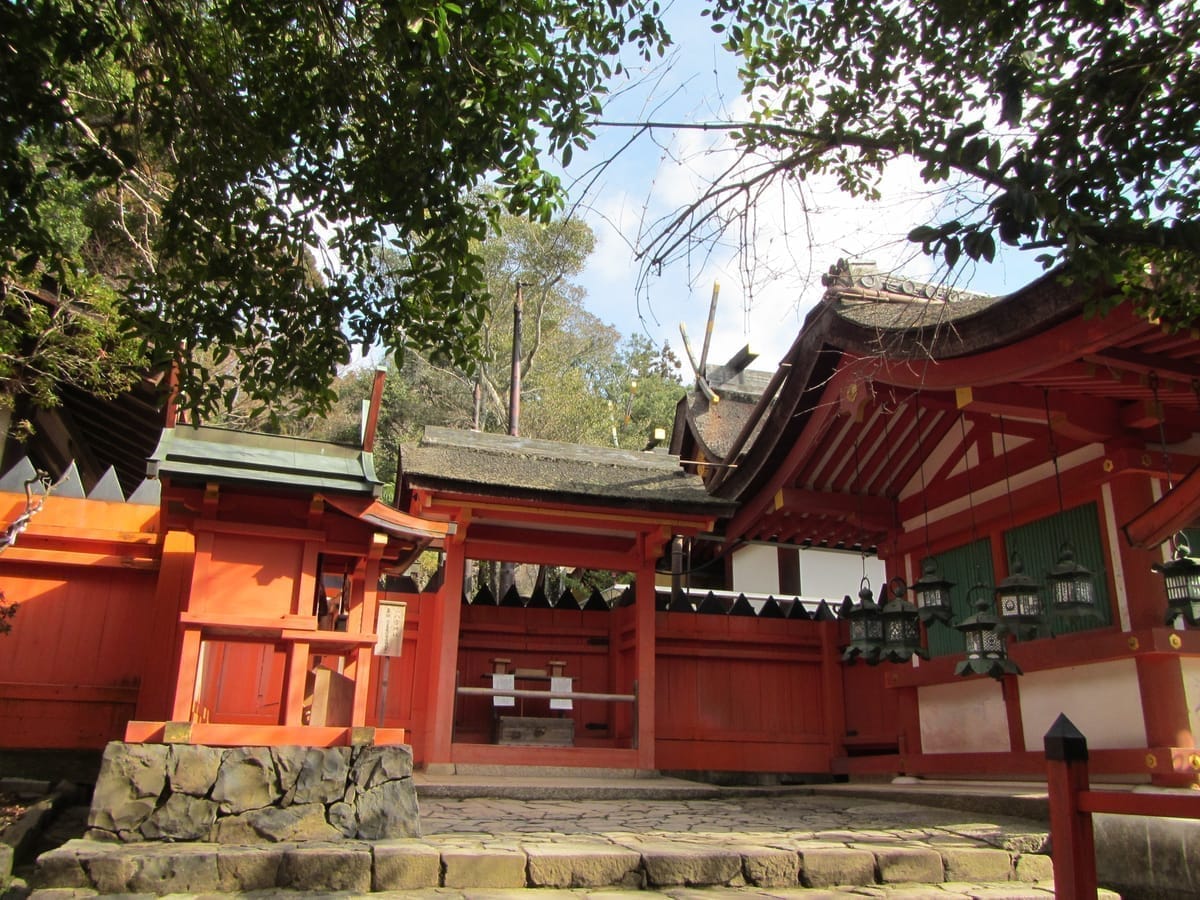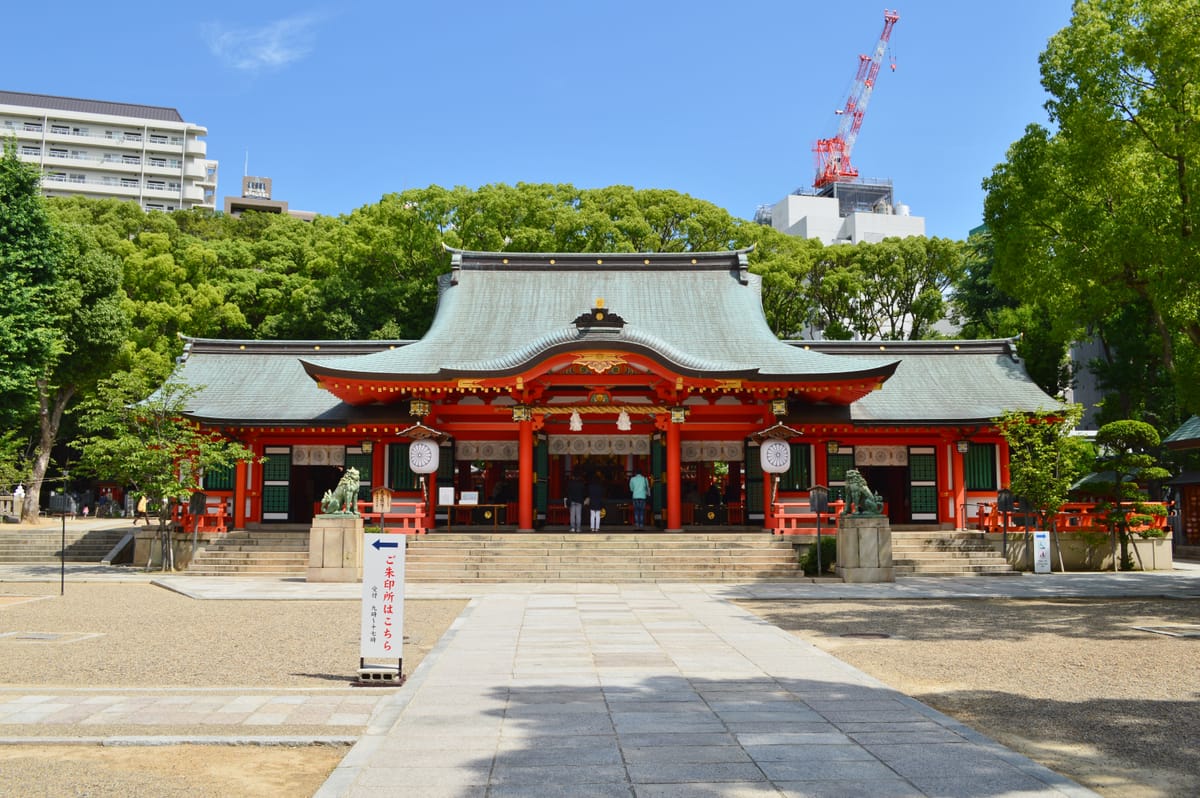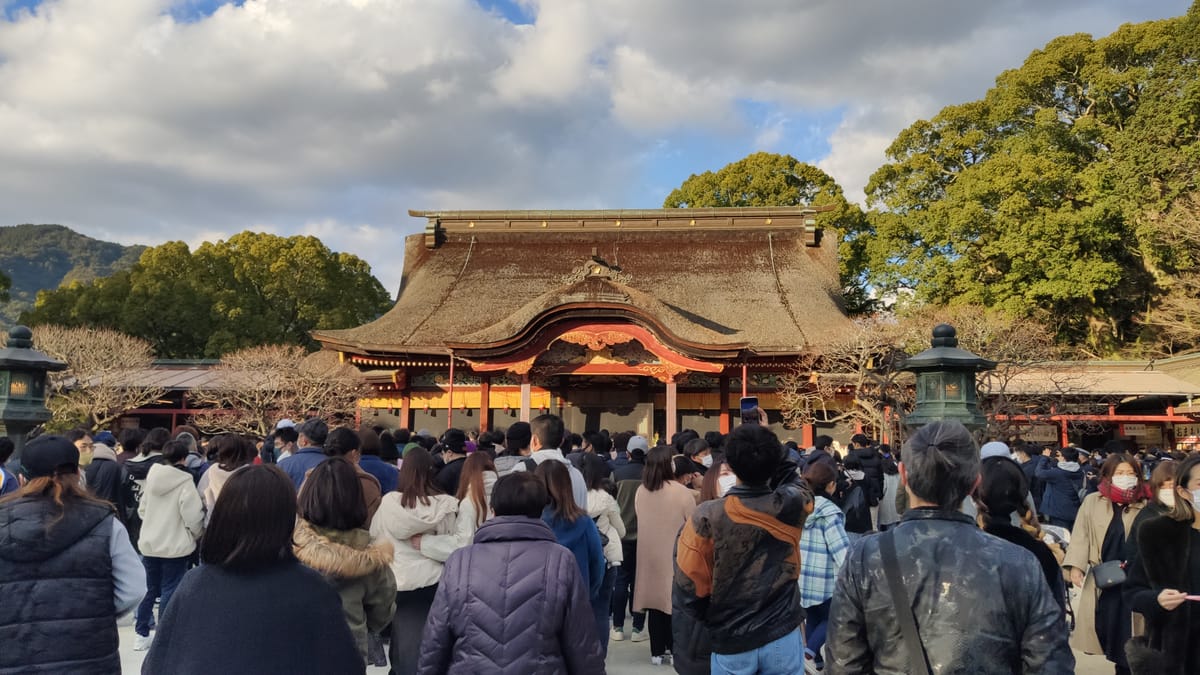
Okinawa’s shrines are unlike any others in Japan. Stand at the edge of the cliff at Naminoue-gu and look down at the turquoise sea crashing below — the sacred and the sublime blurred together in a way that feels distinctly Okinawan. Step into the limestone cave beneath Futenma-gu, where ancient stalactites hang above centuries-old altars, and you’ll sense that these shrines weren’t built on top of sacred places; they grew out of them.
Before Japanese Shinto took root in the Ryukyu Islands, a distinct indigenous religious culture already flourished here. Sacred groves and rock formations called utaki (御嶽) were tended by female ritual specialists known as noro (ノロ), who served as intermediaries between the human and divine worlds. When the Ryukyu Kingdom fell under Satsuma Domain control in 1609 and later was incorporated into Meiji Japan, Shinto shrines were established — but the ancient Ryukyuan soul never fully disappeared. It seeped into the caves, the limestone cliffs, and the tropical forests that now surround these shrines, creating a spiritual landscape found nowhere else in Japan.
This guide covers 10 shrines in Okinawa where you can collect goshuin (御朱印) — the unique calligraphic stamp-certificates that serve as both a spiritual receipt and a work of art. Whether you’re making a dedicated shrine-hopping pilgrimage or weaving shrine visits into a broader Okinawa trip, you’ll find detailed practical information on visiting hours, access, and what makes each shrine worth the journey.
The Ryukyu Eight Shrines (琉球八社)
The Ryukyu Hachisha (琉球八社) — the “Eight Shrines of the Ryukyus” — are the eight most important Shinto shrines of the former Ryukyu Kingdom. Established and supported by the Ryukyu royal government, they functioned as state shrines during the kingdom era and continue to hold religious and cultural significance today.
| Shrine | Location |
|---|---|
| Naminoue-gu (波上宮) | Naha City |
| Oki-miya (沖宮) | Naha City |
| Shikina-gu (識名宮) | Naha City |
| Futenma-gu (普天間宮) | Ginowan City |
| Asato Hachimangu (安里八幡宮) | Naha City |
| Sueyoshi-gu (末吉宮) | Naha City |
| Ameku-gu (天久宮) | Naha City |
| Kin-gu (金武宮) | Kin Town |
Seven of the eight are located in or near Naha, Okinawa’s capital. Using Naha as a base, it’s possible to visit most of them in a single dedicated day — a rare opportunity to collect an entire set of regional shrine goshuin in one trip.
1. Naminoue-gu (波上宮) — Naha City
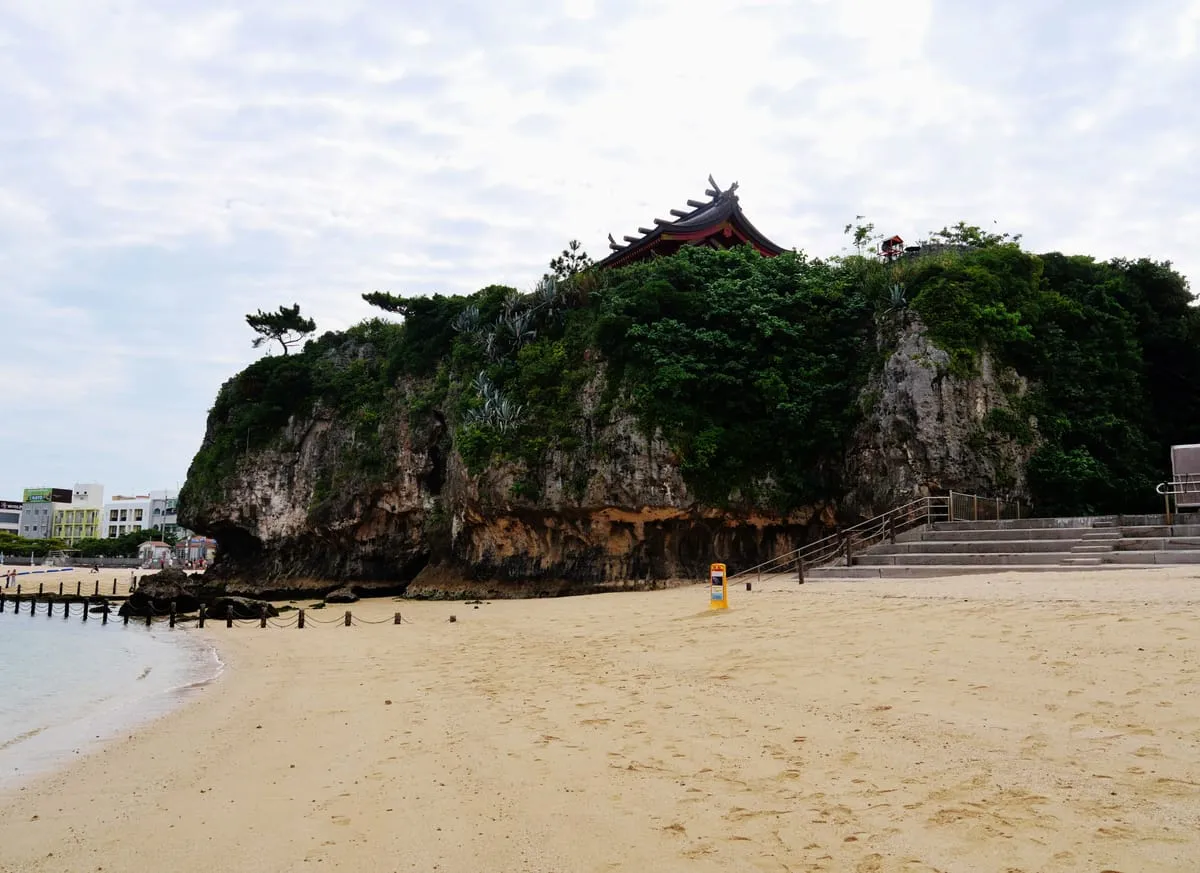
Enshrined Deities: Izanami-no-mikoto, Hayatamao-no-mikoto, Kotosakanoo-no-mikoto (the Kumano Three Gods)
Naminoue-gu is the premier shrine of Okinawa and the head of the Ryukyu Eight Shrines. It stands on a dramatic promontory of Ryukyuan limestone jutting out over the sea in the Wakasa district of Naha, with Naminoue Beach stretching out below. The shrine’s name — “above the waves” — perfectly describes its setting. Legend holds that in the 14th century, a wooden divine image washed ashore from the sea and was enshrined here at the direction of a local deity.
During the Ryukyu Kingdom era, Naminoue-gu was the site of state prayers for maritime safety and the protection of the kingdom. Successive Ryukyu kings came here to worship. Today, it remains Okinawa’s most-visited shrine during New Year’s (hatsumode), when long queues form throughout the night of December 31st.
The shrine grounds have a compact, well-maintained quality, with the main hall (honden) sitting at the cliff edge and a view of the sea visible through the torii gates. The contrast between the bright vermillion woodwork, the pale Ryukyuan limestone, and the deep blue ocean beyond is a visual that stays with you.
- Goshuin Features: Dignified calligraphy reading “Naminoue-gu” with a wave motif stamp. As the head shrine of the Ryukyu Eight, it carries a weightiness that suits the occasion
- Fee: 500 yen
- Access: Bus from Naha Bus Terminal to “Naminoue-gu Mae” stop. About 15 minutes on foot from Yui Rail Asahibashi Station
Goshuin Information
| Item | Details |
|---|---|
| Available Hours | 9:00–17:00 |
| Location | Shrine office (shamusho) |
| Handwritten/Pre-written | Handwritten (pre-written during peak periods) |
| Limited Goshuin | Yes (New Year’s, summer purification, etc.) |
2. Oki-miya (沖宮) — Naha City
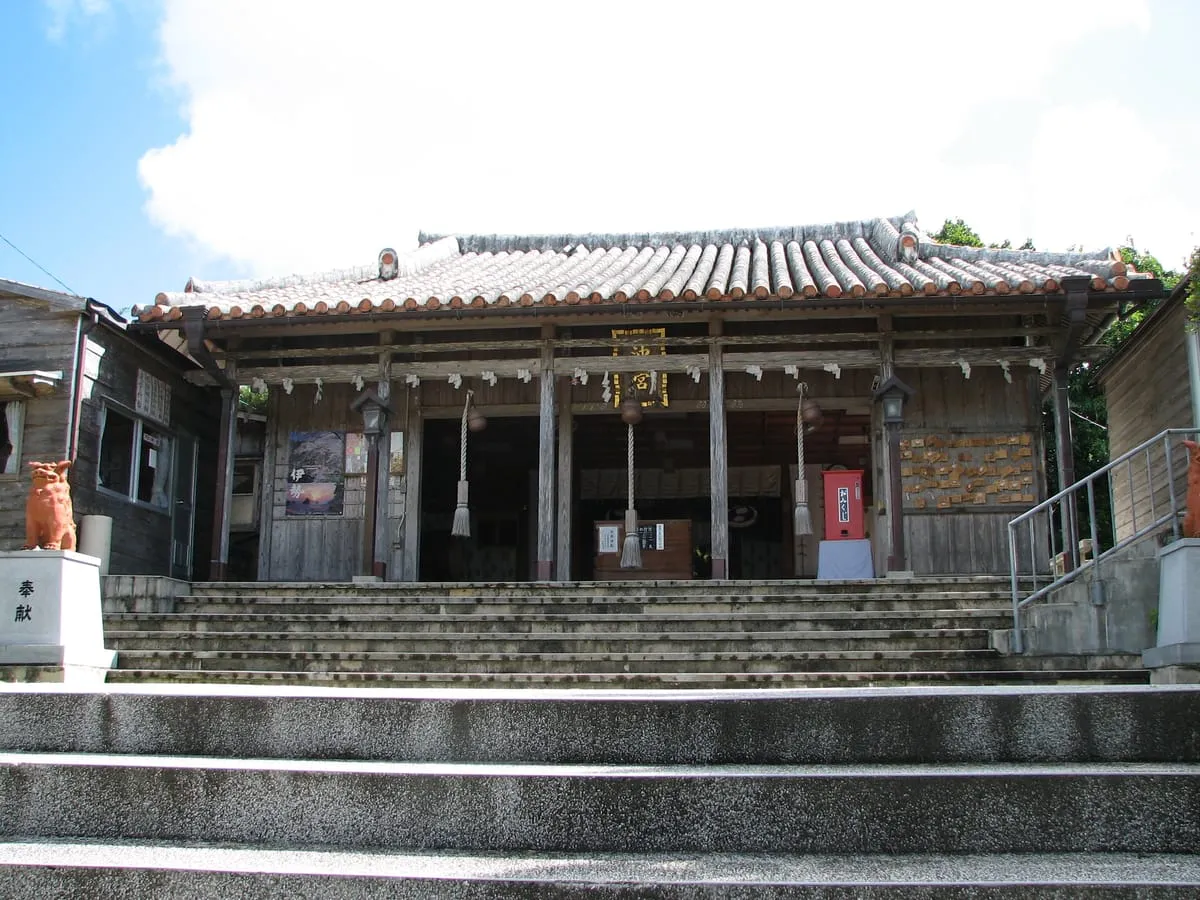
Enshrined Deity: Tensuju Ryugu-o-kami (a deity who received a divine edict from Amaterasu)
Oki-miya is one of the Ryukyu Eight Shrines, located within the expansive Onoyama Park in Naha, adjacent to Okinawa Gokoku Shrine. It sits amid lush tropical greenery in one of the city’s most pleasant green spaces. The shrine’s origins trace to the 14th–15th century, when it served as a guardian deity for the Ryukyu Kingdom.
What makes Oki-miya especially notable among Okinawa’s shrines today is its goshuin. The priests here — including the head priest — produce some of the most artistically distinctive goshuin in all of Okinawa, with vibrant colors and original designs that change by season and festival. If you’re interested in goshuin as art objects rather than just sacred stamps, Oki-miya should be high on your list.
On the grounds, look for the “Dragon God Sacred Spring Water” (龍神の御神水), a well from which devotees draw ceremonially purified water.
- Goshuin Features: Vivid colors and original motifs that change frequently. Among the most artistically creative goshuin in Okinawa; highly prized by collectors
- Fee: 500 yen and up (varies by design)
- Access: 5 minutes on foot from Yui Rail Onoyama-koen Station
Goshuin Information
| Item | Details |
|---|---|
| Available Hours | 9:00–17:00 |
| Location | Shrine office |
| Handwritten/Pre-written | Both available |
| Limited Goshuin | Yes (monthly designs, seasonal specials — extensive selection) |
3. Shikina-gu (識名宮) — Naha City
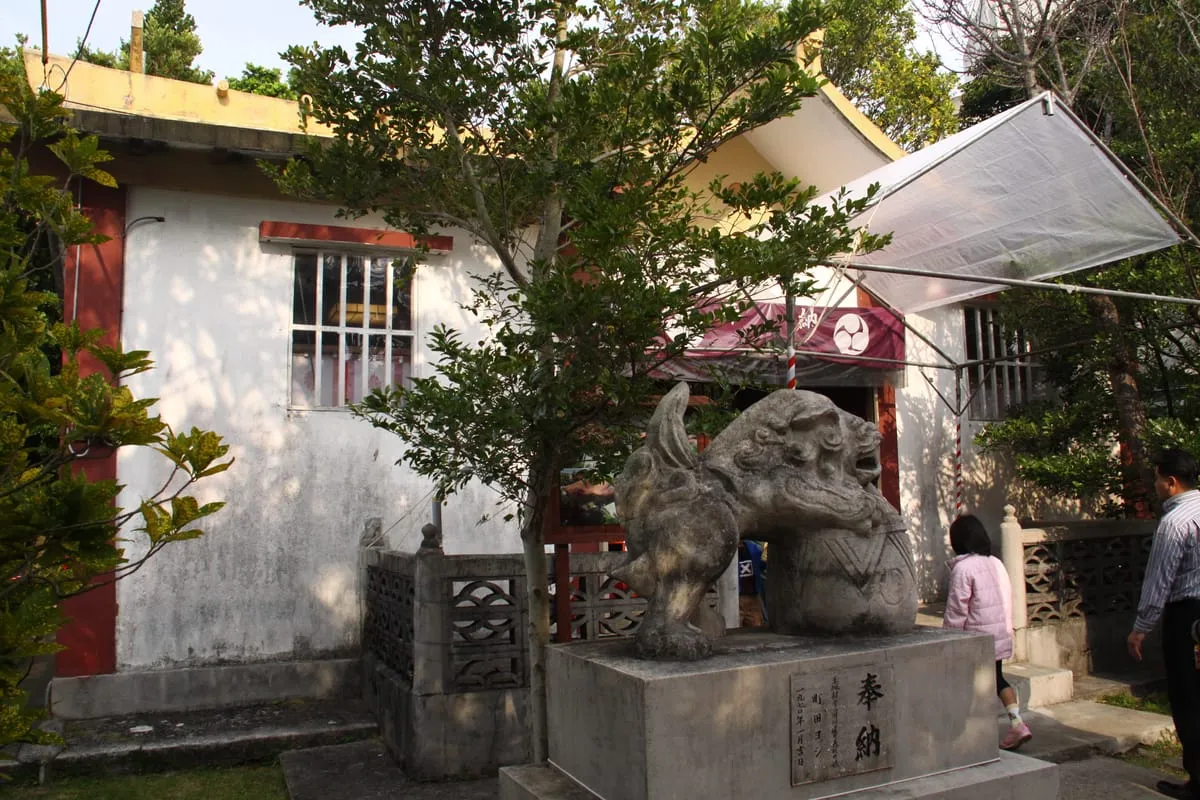
Enshrined Deities: Izanami-no-mikoto, Hayatamao-no-mikoto, Kotosakanoo-no-mikoto, Tsukitatsufunado-no-kami
Shikina-gu is one of the Ryukyu Eight Shrines, located in the Shikina district of Naha near the UNESCO World Heritage site of Shikinaen Garden (識名園). The garden was built in the late 18th century as a royal summer retreat for the Ryukyu kings and is one of the finest examples of Ryukyuan garden design. Combining a visit to Shikinaen with Shikina-gu makes for an excellent cultural half-day.
The shrine itself sits quietly in a residential neighborhood, with a modest but dignified presence — limestone walls, a small torii gate, and a compact honden. In contrast to the more famous Naminoue-gu and the artistically flamboyant Oki-miya, Shikina-gu has a restrained, contemplative quality. For those who prefer shrines that haven’t been heavily touristed, this is a good choice.
The deities enshrined here include the Kumano Three Gods — the same divine assembly found at Naminoue-gu — plus a water and maritime deity, reflecting Okinawa’s deep relationship with the sea.
- Goshuin Features: Understated, refined calligraphy reading “Shikina-gu.” A quiet dignity that matches the shrine’s personality
- Fee: 500 yen
- Access: Bus from Naha Bus Terminal to “Shikinaen Mae” stop, then 5 minutes on foot
Goshuin Information
| Item | Details |
|---|---|
| Available Hours | 9:00–16:00 |
| Location | Shrine office |
| Handwritten/Pre-written | Handwritten (pre-written when priest is absent) |
| Limited Goshuin | Yes (major festivals, New Year’s) |
4. Futenma-gu (普天間宮) — Ginowan City
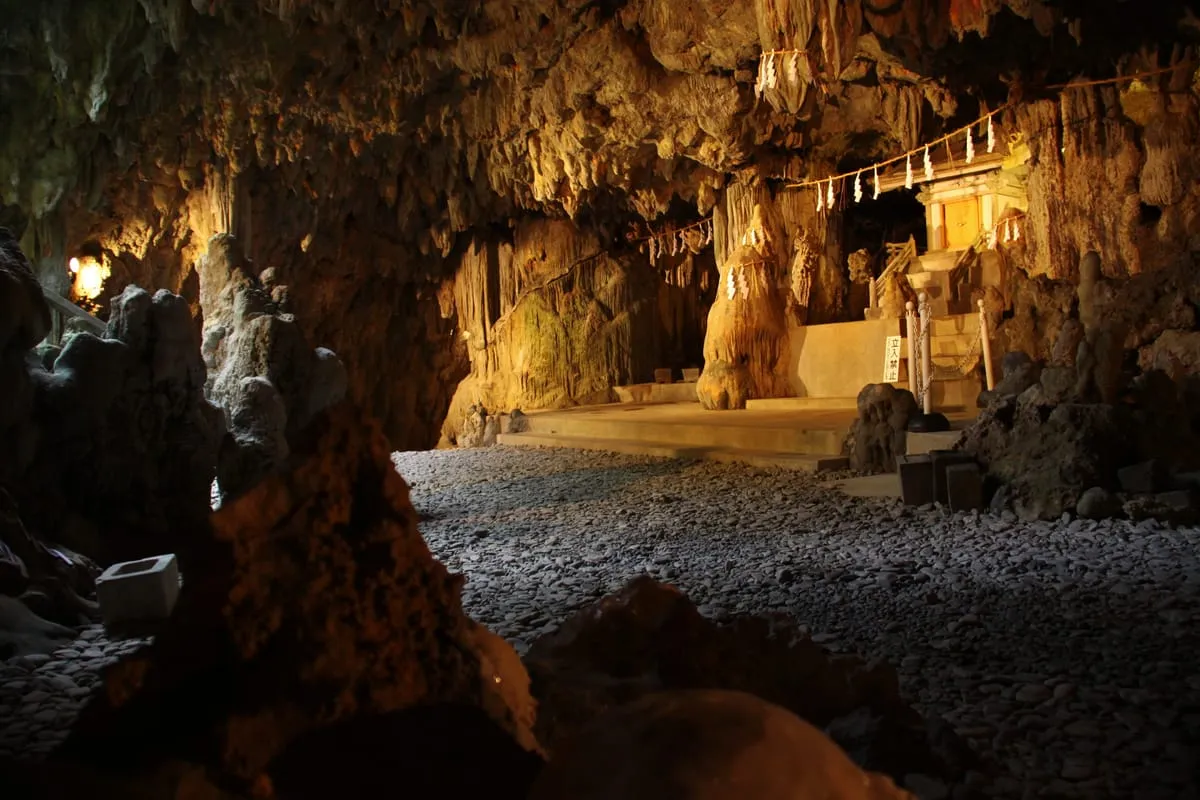
Enshrined Deities: Multiple deities of Ryukyuan ancient Shinto, including the Kumano Three Gods
Futenma-gu is one of the most unusual shrines in all of Japan: a Shinto shrine built over a vast limestone cave. Located in central Ginowan City, the shrine’s sacred cave (gama) extends approximately 280 meters underground, filled with stalactites, sacred altars, and the lingering weight of history.
The cave has been revered as sacred since long before the arrival of Japanese Shinto — it is, in essence, an ancient Ryukyuan utaki that was later formally incorporated into the shrine system. During the Battle of Okinawa in 1945, residents and soldiers took shelter in this cave; a memorial stone inside acknowledges this tragic chapter. Entering the cave, which visitors can do freely as part of a shrine visit, is a genuinely moving experience: the air is cool and damp, the formations overhead are millennia in the making, and the sense of humans seeking refuge — both spiritual and physical — in this stone womb is palpable.
The goshuin here typically incorporates a cave or stalactite motif, making it one of the most distinctive designs in Okinawa’s shrine goshuin offerings.
- Goshuin Features: Incorporates a limestone cave motif — a design available nowhere else. A true keepsake of Okinawa’s layered spiritual history
- Fee: 500 yen
- Access: About 30 minutes by bus or car from Naha. 5 minutes on foot from Ginowan City Hall
Goshuin Information
| Item | Details |
|---|---|
| Available Hours | 9:00–17:00 |
| Location | Shrine office |
| Handwritten/Pre-written | Handwritten |
| Limited Goshuin | Yes (monthly designs, special cave visit goshuin, etc.) |
5. Asato Hachimangu (安里八幡宮) — Naha City
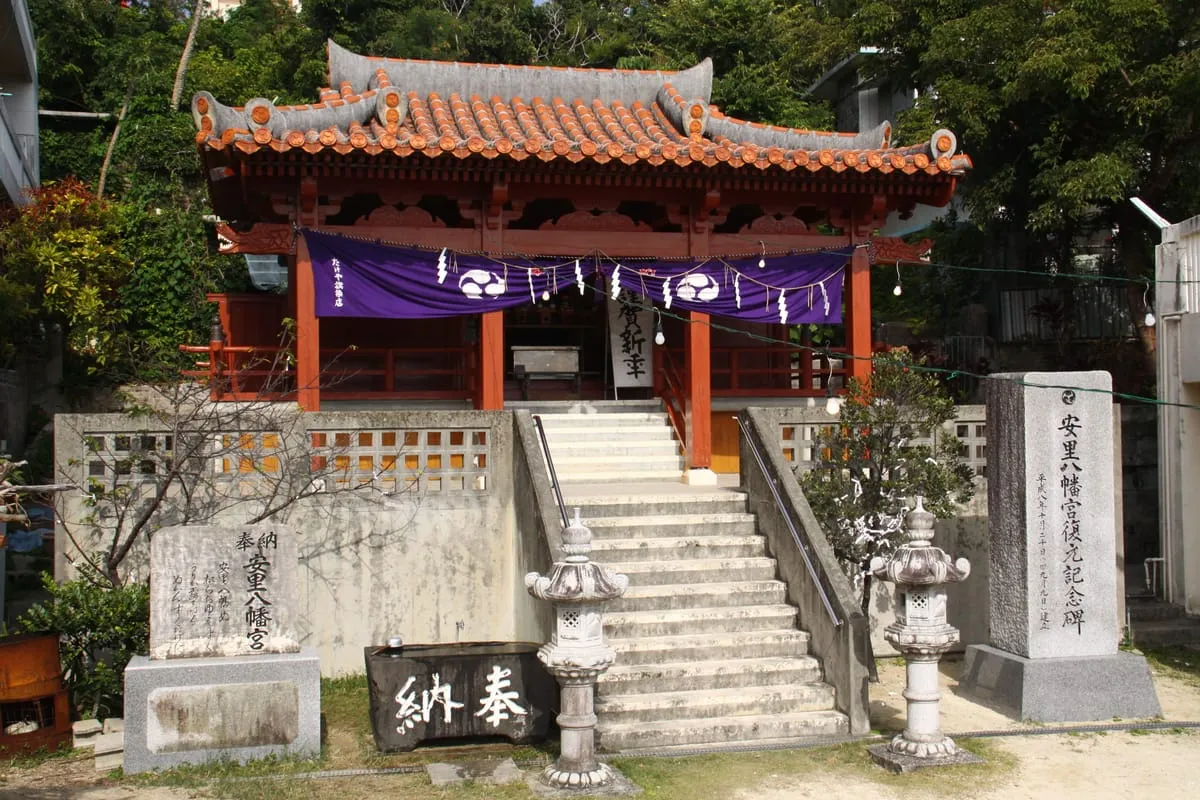
Enshrined Deities: Homudawake-no-mikoto (Emperor Ojin), Tarashiuanaka-hiko-no-mikoto, Okinanaga-tarashi-hime-no-mikoto
Asato Hachimangu is the oldest Hachimangu shrine in Okinawa, established in 1427 by King Sho Hashi — the monarch who unified the three Ryukyu kingdoms into one. It was built as a guardian shrine for the unified Ryukyu Kingdom and to express gratitude for the successful unification.
Hachimangu shrines are one of Japan’s most widespread shrine types, dedicated to Hachiman — a deity associated with warriors, craftsmen, and the protection of the nation. Okinawa’s oldest example is naturally a significant historical site. The shrine sits in the Asato district of Naha, within easy walking distance of the Yui Rail Asato Station. Its grounds are modest in scale but carefully tended, with stone lanterns and a small, atmospheric approach that makes for a peaceful break from the bustle of central Naha.
- Goshuin Features: Bold calligraphy of “Asato Hachimangu” with a dove stamp — the dove being the sacred messenger of Hachiman. The gravity of Okinawa’s oldest Hachimangu comes through in the composition
- Fee: 500 yen
- Access: 5 minutes on foot from Yui Rail Asato Station
Goshuin Information
| Item | Details |
|---|---|
| Available Hours | 9:00–17:00 |
| Location | Shrine office |
| Handwritten/Pre-written | Handwritten |
| Limited Goshuin | Yes (major festivals) |
6. Sueyoshi-gu (末吉宮) — Naha City
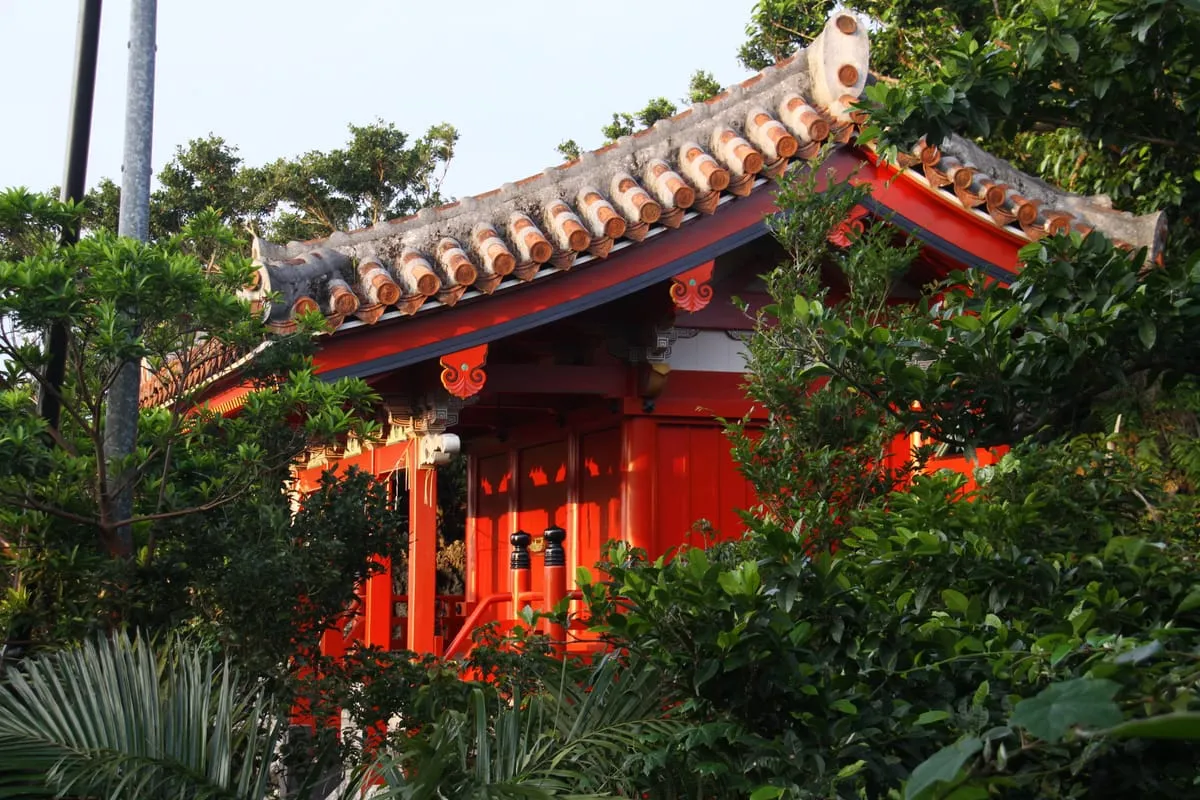
Enshrined Deities: Izanagi-no-mikoto, Izanami-no-mikoto, the Sumiyoshi Three Gods
Sueyoshi-gu is one of the Ryukyu Eight Shrines, located on a wooded hillside in the Sueyoshi district of Naha within Sueyoshi Park. To reach the main hall, you climb a steep flight of stone steps through dense subtropical forest — a journey that feels like leaving the city behind entirely, even though you’re still within Naha’s boundaries.
The shrine’s origins include a fascinating detail: in the 15th century, a Korean feng shui expert reportedly designated this hilltop as an auspicious location, recommending it to the Ryukyu royal court. The shrine thus embeds not only Ryukyuan and Japanese religious traditions but also traces of Korean geomantic thinking — a reminder of how the Ryukyu Kingdom functioned as a cultural crossroads between Japan, China, and the Korean peninsula.
Behind the main hall is a small limestone cave (gama), adding yet another example of Okinawa’s distinctive fusion of natural cave-worship and formal Shinto architecture. The cave is small and accessible, and standing at its entrance you can feel the cool air drifting out — a natural sensation that ancient people would have easily interpreted as the breath of the divine.
- Goshuin Features: Clean, elegant calligraphy of “Sueyoshi-gu.” The quiet forest setting infuses this goshuin with a particular stillness
- Fee: 500 yen
- Access: About 20 minutes on foot from Yui Rail Furushima Station, or by bus to Sueyoshi Park entrance
Goshuin Information
| Item | Details |
|---|---|
| Available Hours | 9:00–16:00 |
| Location | Shrine office |
| Handwritten/Pre-written | Handwritten (pre-written when priest is absent) |
| Limited Goshuin | Yes (major festivals, New Year’s) |
7. Kin-gu (金武宮) — Kin Town
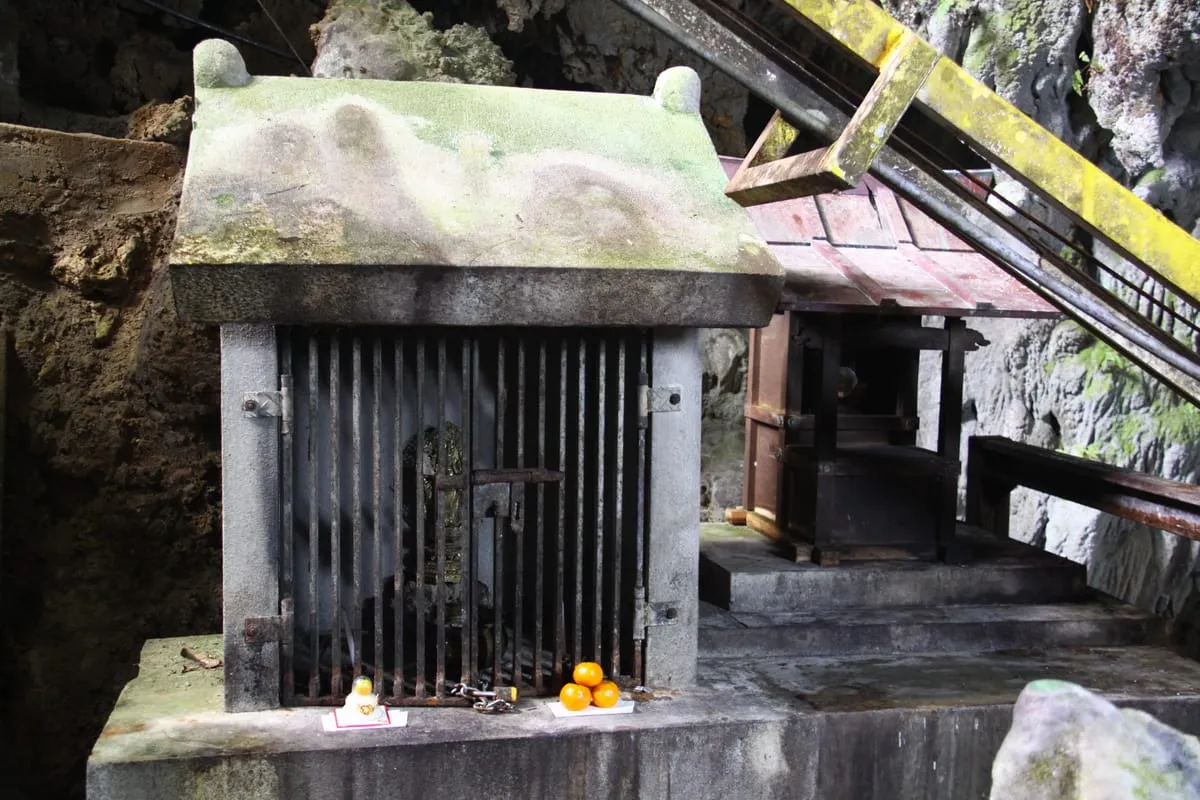
Enshrined Deities: Nisshu Shonin (日秀上人), Kurikara Dairy-o, and others
Kin-gu is the northernmost of the Ryukyu Eight Shrines, located in Kin Town on Okinawa’s central-northern coast. Like Futenma-gu, it is built within a limestone cave — but Kin-gu’s cave is even more dramatically integrated into the religious experience. The cave enshrines a complex layering of Buddhist, Shinto, and indigenous Ryukyuan religious elements: a Buddhist Kannon statue, a dragon king altar, and Shinto shrines all occupy the same cavern.
The shrine’s origin story centers on a monk named Nisshu Shonin, who arrived from Satsuma (present-day Kagoshima) in the late 15th century. He is said to have discovered this cave and established a sacred site here. The result is a religious space that genuinely defies easy categorization — neither purely Buddhist, nor purely Shinto, nor purely Ryukyuan, but all three at once.
Outside the cave, Kin Town is famous throughout Japan as the birthplace of taco rice (タコライス) — a local fusion dish combining Mexican taco fillings with Japanese rice, invented here in the 1980s to cater to American military base workers. Combining the cave shrine pilgrimage with a bowl of taco rice at one of the original restaurants nearby has become a beloved local ritual for visitors.
- Goshuin Features: Powerful calligraphy with a dragon stamp. Collected after standing inside a living cave-shrine, this goshuin carries a unique weight of place
- Fee: 500 yen
- Access: Express bus from Naha Bus Terminal to “Kin” stop, then 5 minutes on foot. By car: about 45 minutes from Naha via Okinawa Expressway, exit at Kin IC
Goshuin Information
| Item | Details |
|---|---|
| Available Hours | 9:00–17:00 |
| Location | Shrine office |
| Handwritten/Pre-written | Handwritten |
| Limited Goshuin | Yes (New Year’s, summer events) |
8. Ameku-gu (天久宮) — Naha City
Enshrined Deities: Tensuju Ryugu-o-kami, Ten-ryu Okami, Tempi Okami, Shingon Okami
The eighth of the Ryukyu Eight Shrines, Ameku-gu sits quietly in the Tomari district of Naha, close to the busy Tomari Port. Like several of its counterparts, it has a small limestone cave (gama) on the grounds, inside which a subsidiary altar is maintained — a characteristic that links it directly to the pre-Shinto cave-worship traditions of the Ryukyus.
Ameku-gu is often the least-visited of the Ryukyu Eight in terms of tourist attention, which is actually an attraction in its own right. The shrine has a genuinely unpretentious neighborhood feel: local residents come to pray here, the office staff know the regular visitors by name, and the pace of things is unhurried. For travelers trying to collect all eight goshuin, Ameku-gu fits naturally into a Naha itinerary alongside Naminoue-gu, Asato Hachimangu, and Oki-miya.
- Goshuin Features: Stately calligraphy of “Ameku-gu” with the shrine’s distinctive seal. A quietly dignified piece
- Fee: 500 yen
- Access: Bus from Naha Bus Terminal to “Tomari Koko Mae” stop, then 5 minutes on foot. About 15 minutes on foot from Yui Rail Miebashi Station
Goshuin Information
| Item | Details |
|---|---|
| Available Hours | 9:00–16:00 |
| Location | Shrine office |
| Handwritten/Pre-written | Pre-written (call ahead to confirm) |
| Limited Goshuin | Yes (New Year’s and others) |
9. Shuri Tenmangu (首里天満宮) — Naha City
Enshrined Deity: Sugawara Michizane (菅原道真)
Located in the Shuri district of Naha, in the shadow of the UNESCO World Heritage Shurijo Castle (首里城), Shuri Tenmangu is a Shinto shrine dedicated to the spirit of Sugawara Michizane — Japan’s “god of learning.” The same deity is enshrined at the famous Dazaifu Tenmangu in Fukuoka and Kitano Tenmangu in Kyoto, but this Okinawan incarnation has its own character: it took root within the Ryukyuan cultural environment of Shuri, the ancient royal capital.
Tenmangu shrines are traditionally associated with plum blossoms — Michizane’s beloved flower — and small plum trees grow in the precincts here, providing a seasonal counterpoint to Okinawa’s predominantly tropical flora. The shrine is a popular destination for students seeking divine assistance with examinations, continuing Tenmangu’s centuries-old role as a patron of scholarship.
For visitors, the main draw is combining a Shuri Tenmangu visit with exploration of Shurijo Castle Park: they’re within 5 minutes of each other on foot, and the castle’s burnt-orange walls against the deep blue Okinawan sky make for an unforgettable backdrop to a day of cultural exploration.
- Goshuin Features: Refined calligraphy of “Shuri Tenmangu” with a plum and Michizane stamp. Popular as a keepsake of a Shurijo Castle visit
- Fee: 500 yen
- Access: About 10 minutes on foot from Yui Rail Shuri Station. 5 minutes on foot from Shurijo Castle Park entrance
Goshuin Information
| Item | Details |
|---|---|
| Available Hours | 9:00–17:00 |
| Location | Shrine office |
| Handwritten/Pre-written | Both available |
| Limited Goshuin | Yes (Tenjin Festival, plum season, etc.) |
10. Okinawa Gokoku Shrine (沖縄縣護国神社) — Naha City
Enshrined Deities: The war dead of Okinawa Prefecture (approximately 190,000 souls)
Okinawa Gokoku Shrine stands in Onoyama Park in Naha, adjacent to Oki-miya, and enshrines the souls of approximately 190,000 people from Okinawa who died in wars — the overwhelming majority in the Battle of Okinawa in 1945. Like Gokoku shrines throughout Japan, it serves as a place of remembrance and prayer for the war dead, but Okinawa’s shrine carries a unique weight given the island’s experience as the only Japanese prefecture to become a major land battlefield during World War II.
Over a quarter of Okinawa’s civilian population died during the 1945 battle. June 23rd — the date of the formal end of organized Japanese resistance in Okinawa — is observed as Irei no Hi (慰霊の日, Day of Memorial), a public holiday unique to Okinawa prefecture. On this day, the shrine holds a solemn memorial ceremony. Visiting around this time, or simply knowing this history when you collect the goshuin, adds a layer of meaning that goes beyond the usual shrine-hopping experience.
The shrine shares Onoyama Park with Oki-miya, making it easy to visit both in a single trip. The contrast between Oki-miya’s colorful artistic goshuin and Gokoku’s more somber, dignified stamp creates an interesting juxtaposition within the same park visit.
- Goshuin Features: Weighty, dignified calligraphy of “Okinawa-ken Gokoku Jinja.” A stamp that invites reflection
- Fee: 500 yen
- Access: 5 minutes on foot from Yui Rail Onoyama-koen Station
Goshuin Information
| Item | Details |
|---|---|
| Available Hours | 9:00–17:00 |
| Location | Shrine office |
| Handwritten/Pre-written | Handwritten |
| Limited Goshuin | Yes (Irei no Hi, New Year’s) |
Practical Guide: Planning Your Okinawa Shrine Pilgrimage
Sample 1-Day Naha Itinerary (Transit-Based)
Seven of the eight Ryukyu Shrines are within Naha and its immediate vicinity. Using the Yui Rail monorail and local buses, most can be reached without a car.
Morning
- 9:00 — Naminoue-gu (15 min walk from Asahibashi Station)
- 10:30 — Ameku-gu (bus from Tomari area)
- 11:30 — Asato Hachimangu (Yui Rail to Asato Station)
Afternoon
- 13:00 — Shikina-gu (bus to Shikinaen area, can combine with Shikinaen Garden)
- 14:30 — Shuri Tenmangu + Shurijo Castle Park (Yui Rail to Shuri Station)
- 16:30 — Okinawa Gokoku Shrine + Oki-miya (Yui Rail to Onoyama-koen Station)
Sueyoshi-gu’s steep stone steps make it better suited as a separate morning outing, ideally before the heat of the day.
Sample 2-Day Full Circuit
Day 1: Complete the Naha itinerary above, plus Sueyoshi-gu in the morning.
Day 2: Futenma-gu in Ginowan City (30 min by bus/car from Naha) + Kin-gu in Kin Town (45 min by car from Naha, or express bus).
With this 2-day plan, you can collect goshuin from all ten shrines in this guide, including all eight of the Ryukyu Eight.
Understanding Okinawa’s Unique Religious Landscape
What Are Utaki (御嶽)?
Before engaging with Okinawa’s shrines, it helps to understand the island’s indigenous religious tradition. Utaki are sacred sites — often a forest grove, a cliff edge, or a rocky promontory — that have been venerated by local communities as the dwelling places of ancestral spirits and divine presences called kaminchu or seid.
The greatest of Okinawa’s utaki is Sefa Utaki (斎場御嶽) in Nanjo City, a UNESCO World Heritage site that was the most sacred prayer site of the Ryukyu Kingdom. Unlike Japanese Shinto shrines, Sefa Utaki has no constructed buildings — the sacred space is defined entirely by the natural limestone formations. Standing within its triangular rock arch and looking out over the sea toward Kudaka Island (itself considered the original sacred island of Ryukyu), you’re standing in the physical heart of a religious tradition that predates Japanese Shinto on these islands by centuries.
The utaki tradition hasn’t disappeared. It lives on in the limestone caves beneath Futenma-gu and Kin-gu, in the ritual practices of local noro priests who still maintain certain shrines, and in the broader cultural fabric of Okinawan life.
Noro and the Female Priesthood
The noro (ノロ) were female religious specialists, appointed by the Ryukyu royal government, who performed ritual functions at utaki and later at the Ryukyu Eight Shrines. They occupied a socially elevated position, functioning as the primary conduit between the community and the divine. The Ryukyuan worldview placed women — particularly older women — as naturally closer to the spirit world, a belief system that gave rise to the female-dominated priesthood.
While the formal noro system faded after the Meiji Restoration, elements of this tradition persist. Okinawa’s yuta (ユタ) — shamanistic ritual specialists, predominantly female — continue to provide spiritual guidance in some communities, and their existence is a living reminder that Okinawa’s religious culture cannot be fully understood through a mainland Japanese Shinto framework alone.
Ryukyu Shinkoku (琉球神国)
The Ryukyu Kingdom developed its own concept of divine nationhood, sometimes called Ryukyu Shinkoku — the idea that the Ryukyu Islands were themselves a sacred realm under divine protection. This framing elevated the spiritual significance of its shrines and sacred sites, and it helps explain why so many of Okinawa’s sacred places are so dramatically located: on sea cliffs, in limestone caves, on forested hilltops. The sacred was not separate from the natural landscape; it was expressed through it.
Seasonal Considerations
New Year’s (January 1–3)
Naminoue-gu and Okinawa Gokoku Shrine are the primary destinations for Okinawa’s hatsumode (first shrine visit of the year). Queues at Naminoue-gu can stretch back from midnight on New Year’s Eve. Limited goshuin designs are usually available.
Irei no Hi (June 23)
The Day of Memorial is Okinawa’s most solemn public holiday. Okinawa Gokoku Shrine holds the main memorial ceremony. If you visit on this day, approach with appropriate solemnity.
Lunar Calendar Festivals
Okinawa maintains a stronger connection to the traditional lunar calendar than mainland Japan. Some shrines hold festivals timed to the old calendar rather than the modern one. Oki-miya in particular issues a rotating series of limited goshuin tied to the lunar calendar’s seasonal nodes.
Summer (July–August)
The subtropical heat can be intense, particularly for shrines with steep approaches like Sueyoshi-gu. Early morning visits (opening time, 9:00 AM) are strongly recommended. Bring water.
Frequently Asked Questions
Q. Do I need a separate goshuincho for temple vs. shrine goshuin in Okinawa?
A. The same etiquette debate that applies throughout Japan applies in Okinawa: some traditionalists maintain separate goshuincho for shrines and temples; others use a single book. Okinawa’s religious sites add an extra layer of complexity since sites like Kin-gu genuinely blend Buddhist and Shinto elements in a single space. Most shrine offices will stamp any goshuincho presented to them. Use your own judgment, or ask the shrine office directly.
Q. Can I get goshuin on Ishigaki or Miyako Island?
A. Yes. Yaeyama Jinja (八重山神社) on Ishigaki Island and Miyako Jinja (宮古神社) on Miyako Island both issue goshuin. These are excellent additions if your Okinawa trip includes the outer islands, but hours can be irregular — contact the shrines in advance before making a special trip.
Q. Are the shrines accessible without Japanese language ability?
A. Major shrines like Naminoue-gu, Oki-miya, and Futenma-gu are increasingly tourist-friendly, with some English signage and staff who have experience with international visitors. The goshuin itself is in Japanese calligraphy regardless — but the act of receiving it needs no language: hand over your goshuincho, indicate (by gesture if needed) that you’d like a goshuin, and the priest will handle the rest.
Q. How much should I budget for goshuin in Okinawa?
A. Standard goshuin are typically 500 yen each. Oki-miya’s seasonal limited designs may cost more (600–800 yen). Collecting goshuin at all ten shrines in this guide would cost roughly 5,000–6,000 yen in goshuin fees alone, not counting transport or a new goshuincho if you need one.
Making the Most of Your Okinawa Shrine Visit
Okinawa’s shrines reward curiosity. The more you know about the Ryukyuan history and indigenous religious traditions that underlie them, the more resonant the experience becomes. A limestone cave isn’t just a scenic backdrop — it’s evidence of a pre-Shinto sacred tradition that survived the absorption of the Ryukyu Kingdom into Meiji Japan. A modest neighborhood shrine isn’t just a photo opportunity — it might be the site where Ryukyu’s first unified king came to pray for his kingdom’s protection.
Collecting goshuin here is different from collecting them at a mainland Japanese shrine. The stamps are the same ritual act — a record of your visit, a work of calligraphy, a physical connection to a place and its history — but the history they connect you to is Okinawa’s own.
The Goshuin Meguri app can help you track your Okinawa shrine visits and save goshuin photos, while Byakko narrates each shrine’s story in its own voice. Whether you’re researching a site beforehand or recording your experiences in real time, the app is a useful companion for making sense of Okinawa’s layered spiritual landscape.
Image Credits
- Naminoue-gu: Zairon, CC BY 4.0, via Wikimedia Commons
- Oki-miya: Nnh, Public Domain, via Wikimedia Commons
- Shikina-gu: ChiefHira, CC BY-SA 3.0, via Wikimedia Commons
- Futenma-gu: ChiefHira, CC BY-SA 3.0, via Wikimedia Commons
- Asato Hachimangu: ChiefHira, CC BY-SA 3.0, via Wikimedia Commons
- Sueyoshi-gu: ChiefHira, CC BY-SA 3.0, via Wikimedia Commons
- Kin-gu: ChiefHira, CC BY-SA 3.0, via Wikimedia Commons