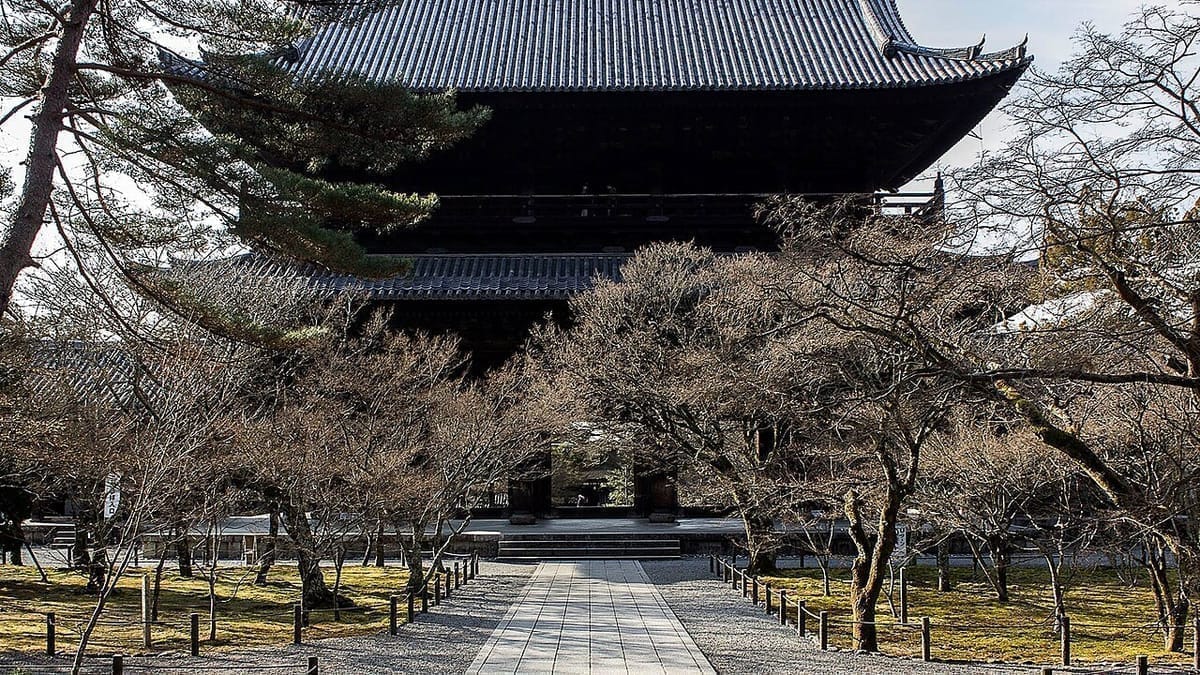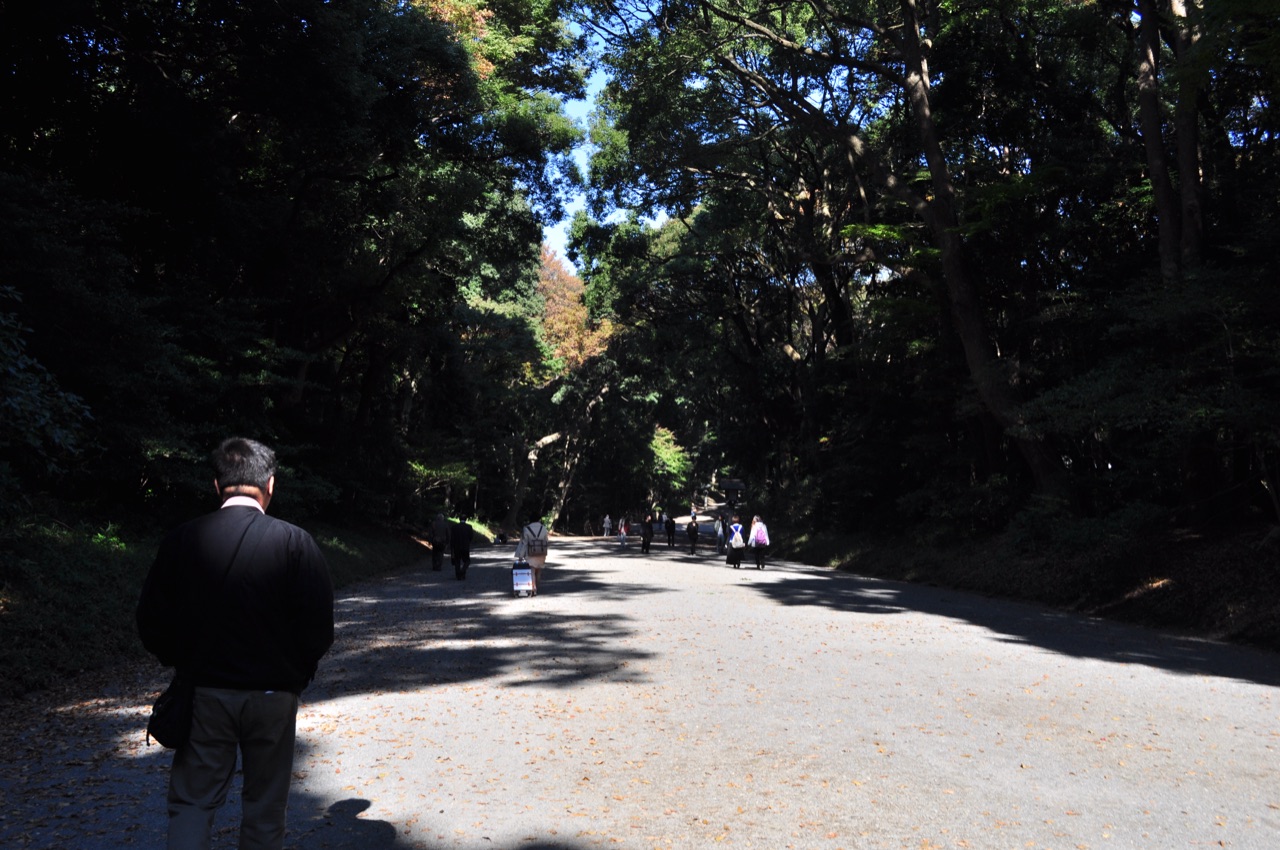
Japan is home to more than 77,000 Buddhist temples. From Senso-ji in Asakusa to Zenkoji in Nagano and Todaiji in Nara, these ancient places of worship draw millions of visitors every year. Yet for many travelers — and even some Japanese people — the question remains: how exactly do you behave at a Buddhist temple?
Shrines and temples are often lumped together, but they represent two distinct religions with different rituals, different architecture, and a completely different atmosphere. Knowing the difference transforms a visit from a quick photo stop into a genuine encounter with over 1,400 years of Japanese spiritual culture.
Shrine vs. Temple: The Core Difference
Before diving into temple etiquette specifically, it helps to understand why temples and shrines require different behavior.
| Temple (Tera / Ji) | Shrine (Jinja / Taisha) | |
|---|---|---|
| Religion | Buddhism | Shinto |
| Entrance | Sanmon gate (large wooden gate) | Torii gate (vermillion gate) |
| How to pray | Silent gassho — palms together, no clapping | Two bows, two claps, one bow |
| Clergy | Buddhist monks, head priest | Shinto priests, shrine maidens |
| What’s enshrined | Buddha images (Nyorai, Bosatsu, etc.) | Kami (Japanese gods) |
| Name endings | -ji, -dera, -in, -do | -jinja, -jingu, -taisha |
| Origins | India → China → Japan (6th century CE) | Ancient Japan (indigenous) |
The single most important rule: at temples, you do not clap your hands. Clapping is central to Shinto shrine worship. Buddhist prayer is silent, with palms pressed together. Clapping at a temple is the most common mistake visitors make — and it’s immediately noticeable.
Japan’s Layered Religious History
For most of Japanese history, Buddhism and Shinto were not kept separate. Under a practice called shinbutsu shugo (神仏習合), the two religions coexisted for over a thousand years. This fusion was officially dismantled in 1868, but many sites still contain both a shrine and a temple within the same precinct. At these places, you’ll need to switch between two sets of etiquette as you move through the grounds.
1. Entering Through the Sanmon Gate
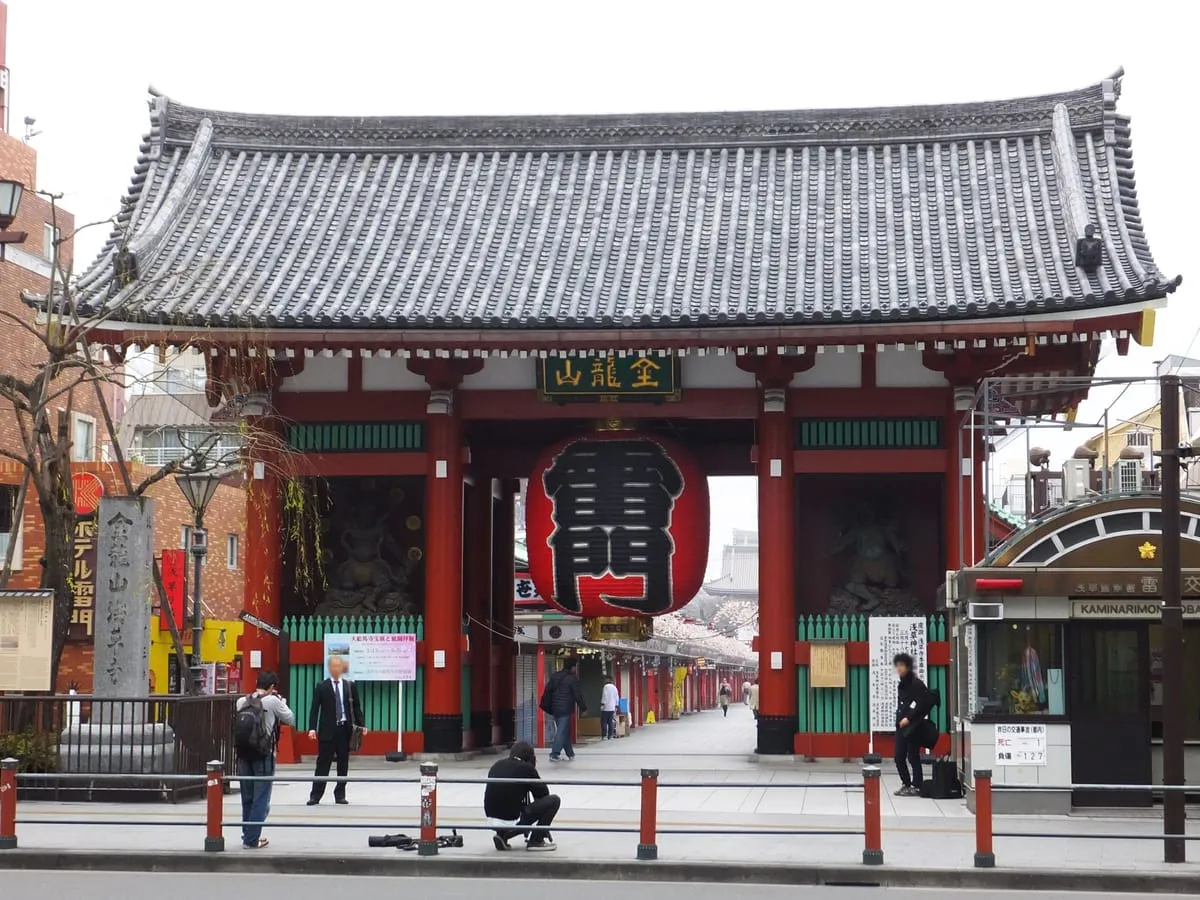
Every Buddhist temple is entered through a gate called the sanmon (三門 or 山門). The three-character version refers to the “Three Gates of Liberation” in Buddhist thought: ku (emptiness), musō (formlessness), and musagan (non-attachment). Passing through is meant to be a symbolic act — you’re leaving the ordinary world behind.
What to Do at the Gate
- Stop and bow lightly before passing through
- Don’t step on the threshold — the wooden beam at the bottom of the gate frame is a sacred boundary. Step over it
- Look to either side for Niō statues (仁王像) — powerful guardian figures standing in pairs, one with an open mouth (agyō) and one closed (ungyō). A brief moment of acknowledgment is appropriate
- Bow again when leaving — turn back before exiting and bow
Large temple complexes often have multiple gates in sequence. At Senso-ji, you pass through the Kaminarimon (outer gate), through the Nakamise arcade, then through the Hozomon (inner gate) before reaching the main hall. Bow at each.
Fun fact: Senso-ji’s Kaminarimon (formally Fūraijinmon, “Gate of Wind and Thunder Gods”) is the most photographed gate in Japan. Chion-in in Kyoto houses the largest wooden sanmon gate in Japan — two stories tall, with multiple rooms inside.
2. Lighting Incense at the Incense Burner
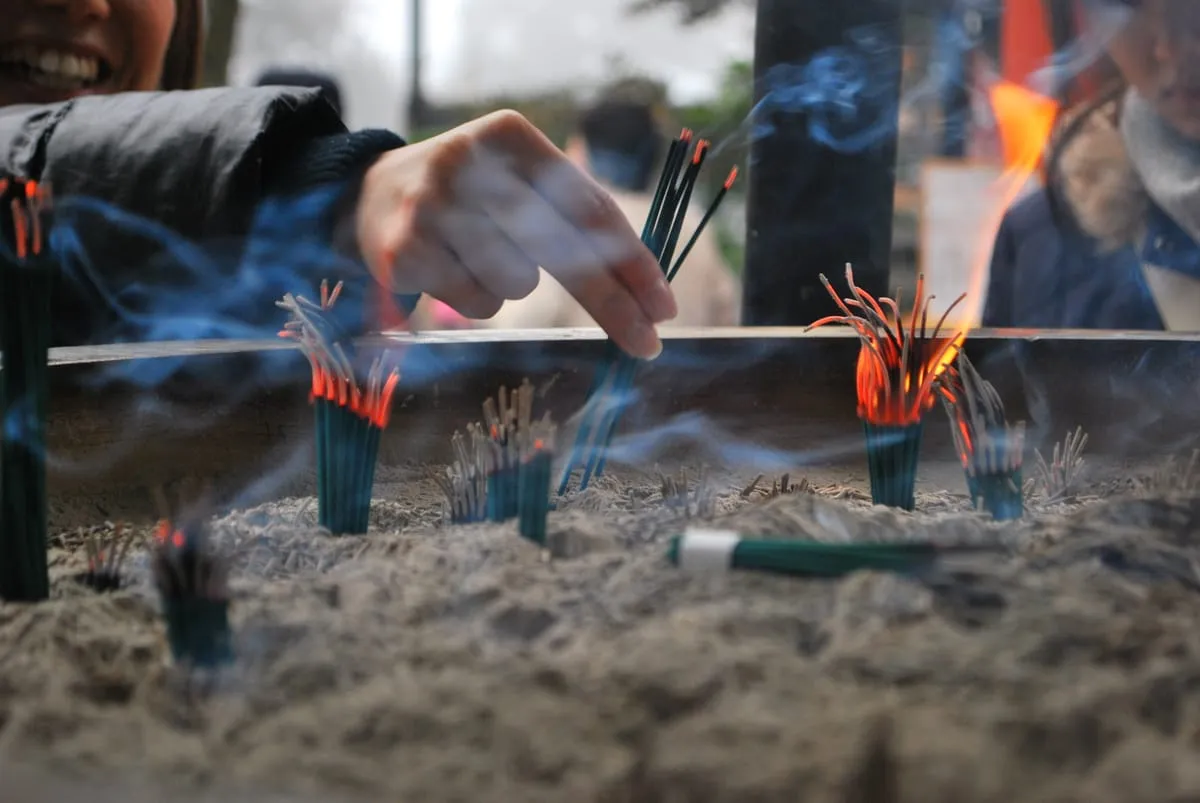
Between the gate and the main hall, you’ll find a large bronze or stone incense burner called a koro (香炉). Swirling smoke, clusters of incense sticks, people cupping smoke toward their bodies — this is one of the most distinctively Buddhist scenes in Japan.
Why Incense?
In Buddhist practice, incense serves multiple purposes: the rising smoke is understood as an offering to the Buddha, and it simultaneously purifies the body and mind before prayer — functioning like the hand-washing ritual at Shinto shrines, but through scent and smoke rather than water.
Many Japanese temples also practice kemuri-abi (煙浴び, “smoke bathing”): holding parts of your body — your head, shoulders, an aching knee — in the smoke as a folk healing practice. At Senso-ji, you’ll see people cupping smoke toward their eyes, their backs, their hands, with total seriousness. It’s not a formal Buddhist doctrine, but a deeply rooted popular tradition.
How to Offer Incense
- Purchase incense sticks at a nearby stall (typically 100–200 yen) or use those provided
- Light your incense using the candles kept nearby — transferring from an already-burning candle is more respectful than using a lighter directly
- Do not blow the flame out with your mouth. In Buddhist thought, human breath carries impurities. Wave the stick gently through the air until the flame goes out naturally
- Place the stick upright in the sand of the incense burner
- Cup your hands and draw the smoke toward yourself — toward your head, face, or wherever you need it
3. The Atmosphere of Smoke at Famous Temples
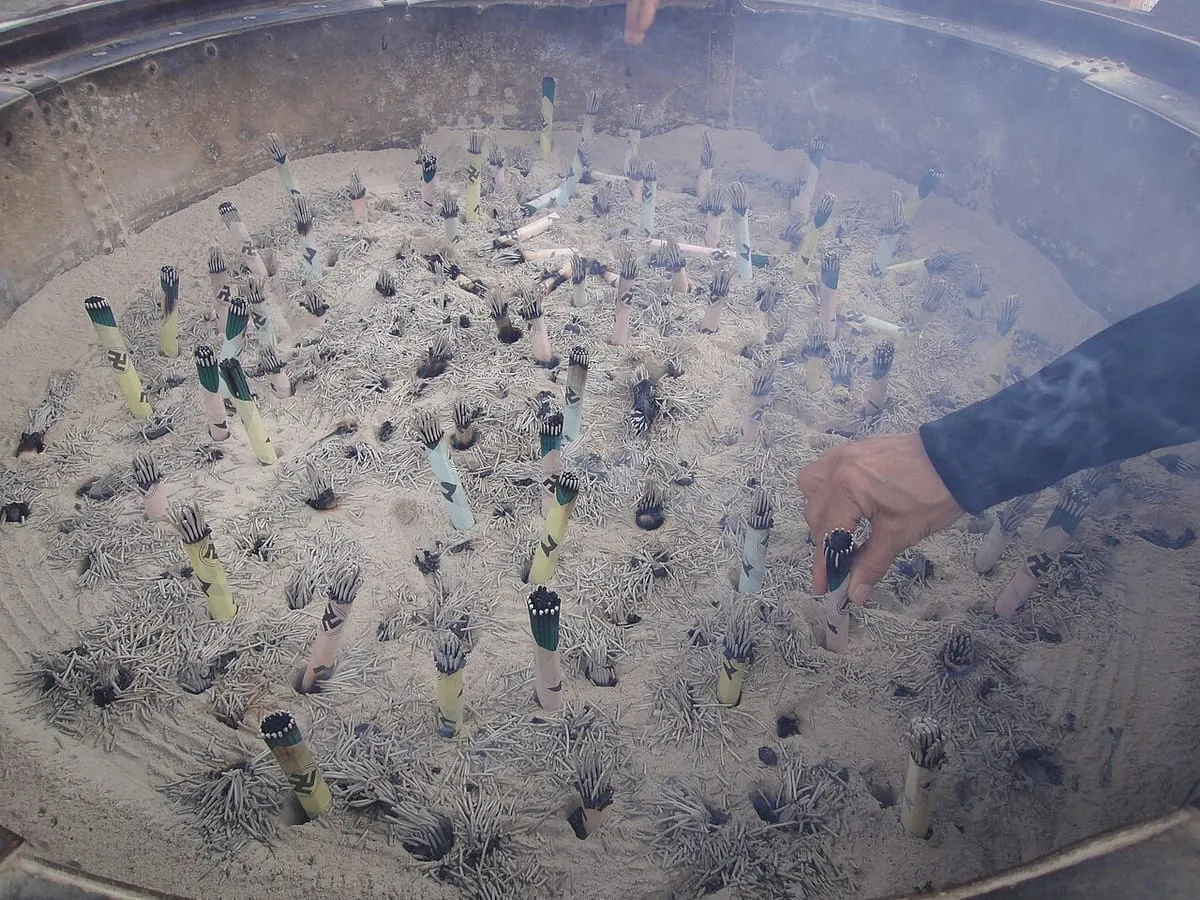
Senso-ji’s main incense burner sits directly in front of the main hall, always surrounded by visitors bathing in smoke. What looks like a casual crowd is actually a quiet, purposeful ritual: each person focused on drawing the smoke to where they need it most.
This is a side of Japan that photographs rarely capture — not the visual spectacle, but the unself-conscious sincerity of everyday faith practiced in the middle of one of the world’s most visited tourist sites.
4. Worshipping at the Main Hall
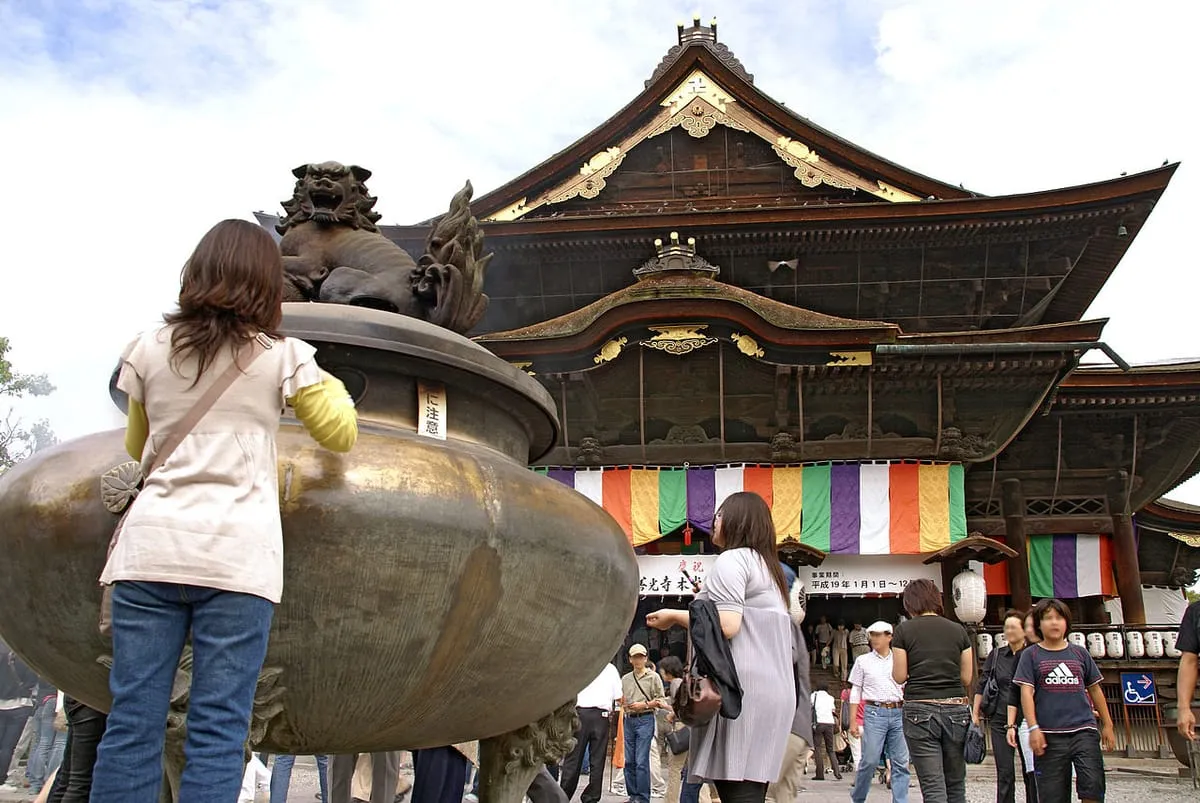
After incense, you approach the hondo (本堂) — the main hall where the central Buddha statue, the honzon (本尊), is enshrined.
Making an Offering
Drop a coin into the saisen-bako (offering box) in front of the hall. Any denomination is fine — sincerity matters more than amount. Lower the coin gently rather than throwing it.
The Waniguchi and the Bonsho
Many main halls have a large, flat, disc-shaped bronze instrument hanging by a cord — the waniguchi (鰐口, “crocodile mouth”). Strike the rope against it to announce your arrival to the Buddha. This serves the same function as the bell rope at Shinto shrines.
The bonsho (梵鐘) — the large bell in the temple’s bell tower — is different. Famous as the bell rung 108 times on New Year’s Eve to dispel the 108 earthly desires of Buddhist teaching, it’s generally rung by monks, though some temples offer the experience to visitors.
The Gassho Prayer Gesture
This is the heart of Buddhist temple worship — and what distinguishes it from shrine worship.
How to do it:
- Stand upright, posture collected, facing the offering box
- Bring both hands together at chest height, fingers pointing upward, palms flat against each other
- Bow forward slightly while holding this gassho position
- Hold gassho while you pray silently — express gratitude, make a wish, or simply stand in stillness
- Bow once more with hands still together, then lower your hands
In Buddhist thought, the right hand represents the realm of Buddha (purity, enlightenment), and the left hand represents the human world (attachment, desire). Pressing them together symbolizes the union of practitioner with the Buddha — not supplication before a deity, but recognition of Buddha-nature within oneself.
This gesture originated in India (namaste is its linguistic cousin), spread through Buddhist Asia, and in Japan appears even in secular life: the itadakimasu gesture before meals — pressing the hands together before eating — is a direct descendant of Buddhist gassho practice.
What About Sutras and Chanting?
At some temples you may hear monks chanting sutras or worshippers reciting the nembutsu. Here’s what you might hear:
| Sect | Chant |
|---|---|
| Pure Land (Jodo-shu / Jodo Shinshu) | Namu Amida Butsu |
| Shingon | Various Sanskrit mantras |
| Zen (Soto / Rinzai) | No fixed chant; silent zazen |
| Nichiren | Namu Myoho Renge Kyo |
You don’t need to chant anything. Gassho and a moment of sincere quiet is all that’s required of a visitor.
5. Receiving a Temple Goshuin Seal
Buddhist temples offer goshuin (御朱印) — stamped calligraphy seals as a record of your visit. Temple goshuin differ from shrine goshuin in a few notable ways.
Temple vs. Shrine Goshuin
| Temple Goshuin | Shrine Goshuin | |
|---|---|---|
| Characters | Name of the main Buddha, sect terms | Shrine name, deity name |
| Special elements | Sanskrit bonji characters (梵字) | Clan crests, seasonal motifs |
| Where to get it | Nōkyōsho (納経所) or temple office | Juyosho (授与所) |
| Typical fee | 300–500 yen | 300–500 yen |
The bonji (梵字) — Sanskrit characters in calligraphic form — are a striking feature of temple goshuin. Each major Buddha has an associated Sanskrit syllable: “A” represents Dainichi Nyorai (the Cosmic Buddha of Shingon); “Ka” represents Jizo Bosatsu; “Sa” represents Kannon (Bodhisattva of Compassion). Learning to recognize these adds another layer of meaning to your collection.
How to Receive One
- Pray first. The word goshuin is connected to nōkyō (納経, “sutra offering”) — historically, pilgrims submitted a hand-copied sutra at each temple, and the temple stamped it as receipt. Getting a seal without praying undermines this tradition
- Find the nōkyōsho (納経所), goshuinsho (御朱印所), or jimusho (寺務所, temple office)
- Say “Goshuin o onegaishimasu” and hand over your goshuincho opened to the next blank page
- Pay the fee (typically 300–500 yen) when your book is returned
- Wait quietly — a carefully written goshuin can take several minutes
Should you use separate books for temples and shrines? There’s no universal requirement. However, a minority of Shinto shrines will decline to write in a book that contains temple goshuin (and vice versa). Keeping two books — one for shrines, one for temples — eliminates any awkwardness.
6. Photography Etiquette
Generally Permitted
- Exterior architecture: gates, main halls, pagodas, garden structures
- Gardens, ponds, seasonal flowers
- General views of the precinct
Generally Restricted or Prohibited
- Interior of the main hall — most temples prohibit indoor photography. Look for 撮影禁止 (satsue-kinshi) or 写真撮影はご遠慮ください signs
- National Treasure Buddha statues — often off-limits to any photography
- Monks during ceremonies — treat any active ritual as a private event, not a photo opportunity
- People in prayer — never photograph someone worshipping
7. What to Wear and How to Behave
No strict dress code applies to casual temple visitors. Standard tourist clothing is fine. However:
- For zazen experiences: loose, neutral clothing; some Zen temples prohibit shorts in the meditation hall
- Speak quietly — temples are active places of worship, not just sightseeing destinations
- Don’t interrupt ceremonies — if you encounter monks chanting or a memorial service in progress, maintain a respectful distance
- Take your trash with you — most temple precincts have few or no public trash bins
- Touch only what you’re meant to touch. Some statues — like the Binzuru figure at Zenkoji, believed to heal ailments when its corresponding body part is rubbed — are specifically meant to be touched. Others should be left alone
8. Buddhist Sects: Key Differences
Japan has 13 main Buddhist sects. Basic etiquette applies across all of them, but a few sect-specific differences are worth knowing.
Zen (Soto / Rinzai) — Austere, quiet aesthetic. Famous for karesansui (dry landscape gardens). Many offer zazen experiences for the public. No fixed chant; practice centers on silent seated meditation.
Pure Land (Jodo-shu / Jodo Shinshu) — Worship centers on reciting Namu Amida Butsu. Important distinction: Jodo Shinshu does not use upright incense sticks. Instead, incense is broken and laid horizontally in the censer — one of the most counterintuitive differences you’ll encounter.
Shingon (Esoteric Buddhism) — Founded by Kobo Daishi (Kukai). Known for goma fire ritual, elaborate Sanskrit mantras, and the Shikoku Pilgrimage (88 temples). Headquarters at Koyasan (Mt. Koya) in Wakayama.
Nichiren — Characterized by the chant Namu Myoho Renge Kyo and the distinctive rhythm of uchiwa-daiko (fan drums) beaten during worship.
9. Common Questions
Can non-Buddhists participate fully? Yes. Gassho and quiet respect are all that’s asked. Many Japanese people who identify as non-religious still participate in temple rituals as cultural practice.
Do I need to remove my shoes? Outdoors, no. If invited inside the main hall, yes — you’ll see shoes lined up at the entrance.
Can I get a goshuin without speaking Japanese? Absolutely. Show your goshuincho and say “goshuin, please” — staff at tourist temples understand this immediately.
Is it rude to visit a temple that’s hosting a funeral? Just maintain your distance and don’t enter the main hall during the ceremony.
What’s the best time to visit? Early morning — most large temples open at sunrise, and the crowds arrive hours later. The atmosphere before 9 AM at places like Senso-ji or Kinkakuji is incomparable.
Quick Reference: Temple Visit Flow
| Step | What to do | Key rule |
|---|---|---|
| 1. Sanmon gate | Bow lightly, then enter | Don’t step on the threshold |
| 2. Incense | Light, wave out the flame, place upright | Don’t blow the flame out with your mouth |
| 3. Smoke bathing | Cup smoke toward your body | Optional |
| 4. Main hall | Waniguchi → offer coin | Gently |
| 5. Prayer | Gassho + bow → pray silently → bow | No clapping |
| 6. Goshuin | Find nōkyōsho, hand over goshuincho | Pray before you request the seal |
| 7. Exit | Bow at the gate as you leave | Mirror your entry |
Closing Thoughts
The rituals described in this guide — the bow at the gate, the rising smoke, the pressed palms — each carry centuries of accumulated meaning. Learning what they represent doesn’t make you a Buddhist. It makes you a more attentive visitor.
When you press your palms together in front of an ancient hall and bow your head, you’re participating in a gesture that connects you backward through time to the generations who stood in the same spot, reaching for something beyond the reach of words.
That’s worth knowing before you lift your hands.
Use the Goshuin Meguri app to record your temple visits on a map, photograph and catalog your goshuin seals, and discover new temples nearby — whether you’re traveling in Japan or planning your next trip.
Image credits: Senso-ji Kaminarimon gate — Tak1701d (CC BY-SA 3.0) / Incense burner at Yakuo-in, Mount Takao — nakimusi (CC BY 2.0) / Senso-ji great incense burner — Dick Thomas Johnson (CC BY 2.0) / Zenkoji main hall — 663highland (CC BY-SA 3.0). All images from Wikimedia Commons.