
Somewhere in the precincts of almost every Buddhist temple in Japan, there’s a small counter with a sign reading 御朱印所 (goshuinsho) or 納経所 (nokyosho) — the temple’s stamp office. Step up, hand over your stamp book, and a few minutes later you’ll receive a page filled with bold brushwork, red seals, and occasionally Sanskrit characters that belong to a tradition far older than Japan itself.
This is the temple goshuin — one of the most intimate ways to engage with Japan’s Buddhist heritage.
If you’ve already received goshuin at Shinto shrines, you might assume the process is the same. It mostly is — but the differences matter. Temple goshuin have a longer history, a distinct visual vocabulary, different etiquette at the prayer hall, and surprising variation across Buddhist sects. Understanding these differences transforms the act from a souvenir hunt into a genuine encounter with over a thousand years of living tradition.
A Brief History: The Original Sacred Stamp
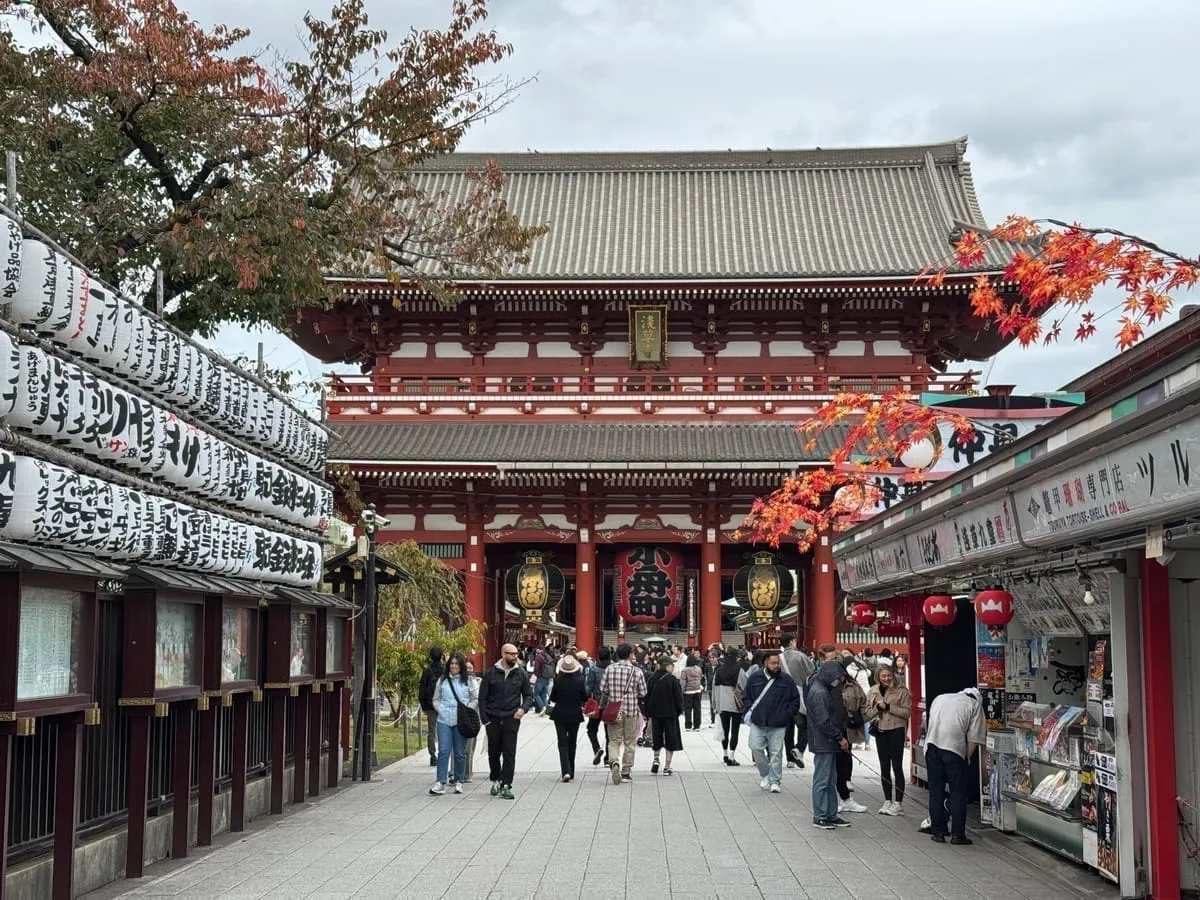
The goshuin did not originate at Shinto shrines — it originated at Buddhist temples, and not as a souvenir, but as a receipt for devotion.
In its earliest form, the goshuin was a nokyoin (納経印), a seal given to pilgrims who had hand-copied a Buddhist sutra and submitted it to a temple as a meritorious act. The practice took root during the Heian period (794–1185) and flourished during the Kamakura period (1185–1333), when great pilgrimage routes were established across Japan.
The most famous of these is the Shikoku Pilgrimage — an approximately 1,200-kilometer circuit of 88 temples associated with the monk Kūkai (Kōbō Daishi), who founded Shingon Buddhism in Japan. Pilgrims dressed in white robes, carried handwritten sutras to each temple, and received a seal as proof of submission. The stamp was not a souvenir: it was a sacred transaction between the pilgrim’s effort and the temple’s recognition.
Over the centuries, the requirement to submit a sutra relaxed at most temples. Today, goshuin are offered to anyone who visits, with or without a sutra. But the word nokyosho — “sutra-submission office” — still marks the counter at many temples, quietly preserving the original meaning.
Shrine goshuin came later. After the Meiji government separated Buddhism and Shinto in 1868, shrines developed their own stamp culture. The modern goshuin boom of the 2010s brought both traditions into the same popular conversation, though their histories remain distinct.
Temple Goshuin vs. Shrine Goshuin: What’s Different
At a glance, temple and shrine goshuin look similar: brushwork calligraphy, red seals, a handwritten date. Look closer and the distinctions emerge.
What’s Written
Shrine goshuin typically show the shrine’s name, the date, and the deity’s name (kami) or the phrase hōhai (奉拝, “reverently visited”).
Temple goshuin add several unique elements:
-
The honzon’s name: Rather than just the temple’s name, you’ll often see the name of the principal Buddha or bodhisattva enshrined there — Amida Nyorai, Kannon Bosatsu, Yakushi Nyorai, etc. The goshuin identifies the temple’s spiritual focus.
-
Sanskrit seed syllables (bonji, 梵字): In Shingon and Tendai temples, you’ll often see Sanskrit characters representing the principal deity. The syllable A (ア) represents Mahavairocana; Hrīḥ (キリーク) represents Amida Buddha. These characters trace Japanese Buddhism’s roots to Sanskrit-based esoteric traditions.
-
Multiple goshuin per temple: Large temples with multiple halls often offer separate goshuin for each significant building. At Tōdai-ji in Nara, goshuin are available at the Great Buddha Hall, Nigatsu-dō, Sangatsudō, and Kaidansho. Ask at each hall.
Visual Style by Sect
| Sect | Typical Goshuin Style |
|---|---|
| Pure Land (Jōdo / Jōdo Shinshū) | Bold Namu Amida Butsu calligraphy, warm and clear |
| Zen (Sōtō / Rinzai) | Minimal brushwork, expansive white space |
| Shingon | Sanskrit seed syllables prominently displayed |
| Tendai | Varied and ornate; many halls, many stamps |
Pricing
The standard offering is 300–500 yen. Special or seasonal designs may be 500–1,500 yen. Most windows post the price; asking directly is fine.
What You Need: The Goshuinchō
To receive a goshuin, you need a goshuinchō (御朱印帳) — a dedicated accordion-fold book. These are available at temples themselves, stationery stores, and online. Prices typically range from 1,000 to 3,000 yen.
For your first book, consider purchasing one at the temple where you start your collection. Most major temples sell distinctive designs in their precincts — the cover then documents where your journey began.
On size: Books come in large format (ōban, roughly A5, 18×12cm) and small format (kobukuro, roughly 16×9cm). Many calligraphers find larger books more comfortable to write in, often producing more expressive brushwork. Large format is a safe default for a first book.
One Book or Two?
The question of whether to keep separate books for shrines and temples generates endless debate. The short answer: there is no strict rule.
For much of Japanese history, Buddhism and Shinto were deeply intertwined under shinbutsu shūgō (神仏習合). When the Meiji government separated them in 1868, it introduced the assumption that they should be kept apart — and some collectors carry this into their stamp practice.
But most temples and shrines will tell you the same thing when asked: either approach is fine. The large majority of collectors use a single book for both.
The one genuine exception: formal pilgrimage routes like the Shikoku 88 Temples or the Saigoku 33 Temples have their own dedicated nokyochō (pilgrimage ledgers). If you’re walking a pilgrimage circuit, use the dedicated book — it’s part of the tradition.
Step-by-Step: How to Receive a Temple Goshuin
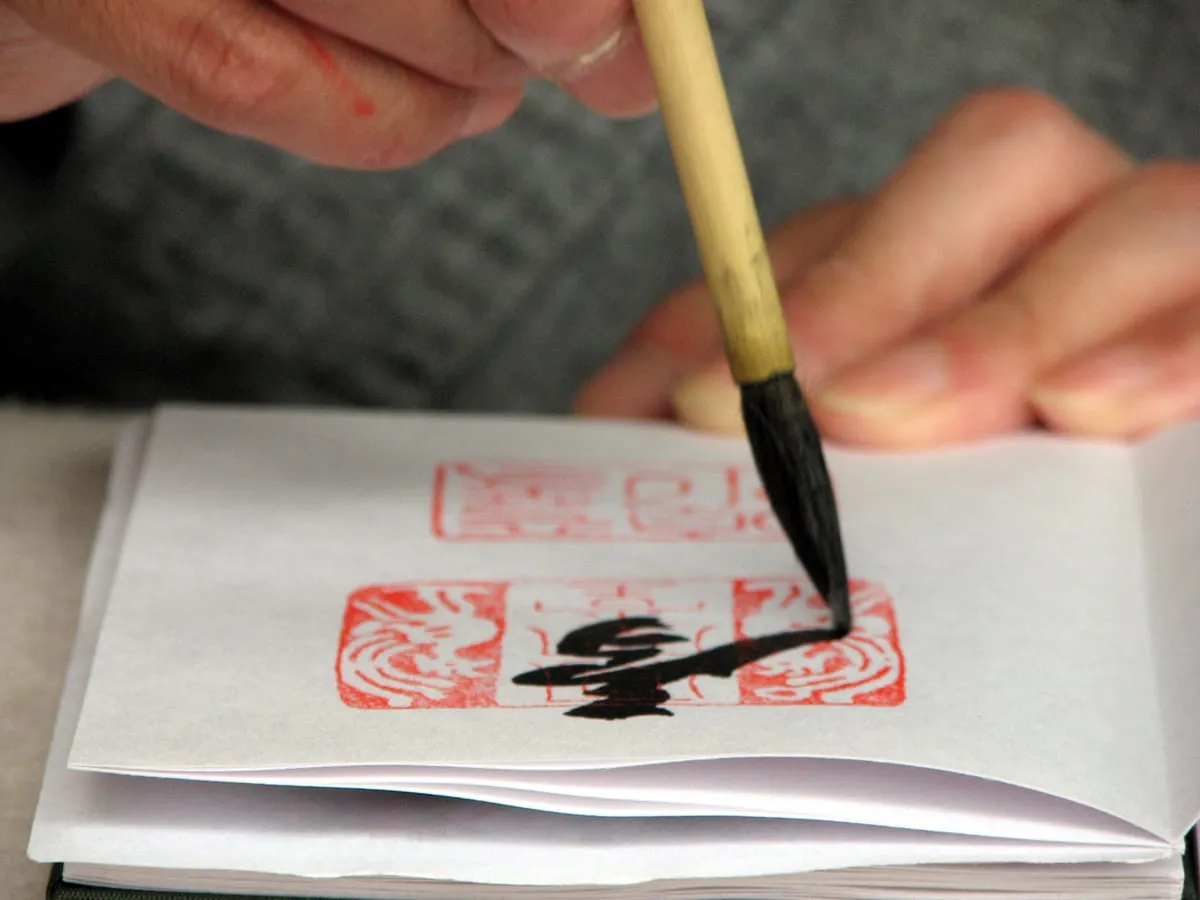
1. Enter Through the Sanmon Gate
Every Buddhist temple is entered through a gate called the sanmon (三門 or 山門). The three-character version references the Three Gates of Liberation in Buddhist thought. Crossing the threshold is symbolic — you’re leaving the ordinary world behind.
Stop in front of the gate and bow lightly before passing through. Don’t step on the wooden threshold — step over it. On your way out, turn back and bow again before leaving.
2. Purify at the Water Basin
If there’s a water basin (temizuya or chōzuya), pause to purify your hands before approaching the main hall. The steps are the same as at shrines: right hand first, left hand, then rinse your mouth from your cupped palm. If there’s no basin, proceed.
3. Light Incense at the Kōro
Most major temples have an incense burner (kōro) in front of the main hall. Light one to three sticks, wave out the flame (don’t blow — blowing is considered disrespectful), and stand them upright in the ash. Fan the smoke toward your body with both hands. Incense is usually sold nearby for 50–100 yen.
4. Pray at the Main Hall
This is where temple etiquette most clearly diverges from shrine etiquette. At temples, you do not clap your hands. Clapping is Shinto practice. Buddhist prayer is silent, performed with palms pressed together in gassho.
- Drop a coin in the offertory box (optional)
- Ring the hanging bell if present
- Press palms together and bow
- Hold the prayer quietly. You may recite the honzon’s name silently: Namu Amida Butsu for Amida temples, Namu Kanzeon Bosatsu for Kannon temples
- Bow again and step back
5. Find the Stamp Counter
After praying, find the goshuin counter. The stamp documents a completed visit — receiving it before praying reverses the correct order.
Look for signs reading 御朱印所, 納経所, or 朱印. At large temples these are well marked; at smaller temples the counter may be beside the main hall or at the entrance to the kuri (住職の生活区域 — living quarters). If you can’t find it, ask: “御朱印はどちらですか?” (“Where can I receive a goshuin?“)
6. Receive Your Stamp
Open your goshuinchō to the target page and hand it to the person at the counter. Say:
“御朱印をお願いします。” “I’d like a goshuin, please.”
If multiple goshuin are available, you may be asked which you’d like. “本堂のをお願いします” (“The one for the main hall”) works as a default.
Direct writing (jikigaki) vs. pre-written slips (kakioki): The most prized form is direct writing — the calligrapher writes into your open book in real time. During busy periods or when the head priest is unavailable, you’ll receive a pre-written slip on washi paper (kakioki). Both are valid. Paste kakioki into your book later with a glue stick, smoothing carefully to avoid wrinkles.
When your book is returned, receive it with both hands and a quiet “ありがとうございます.”
Buddhist Sects and Their Goshuin
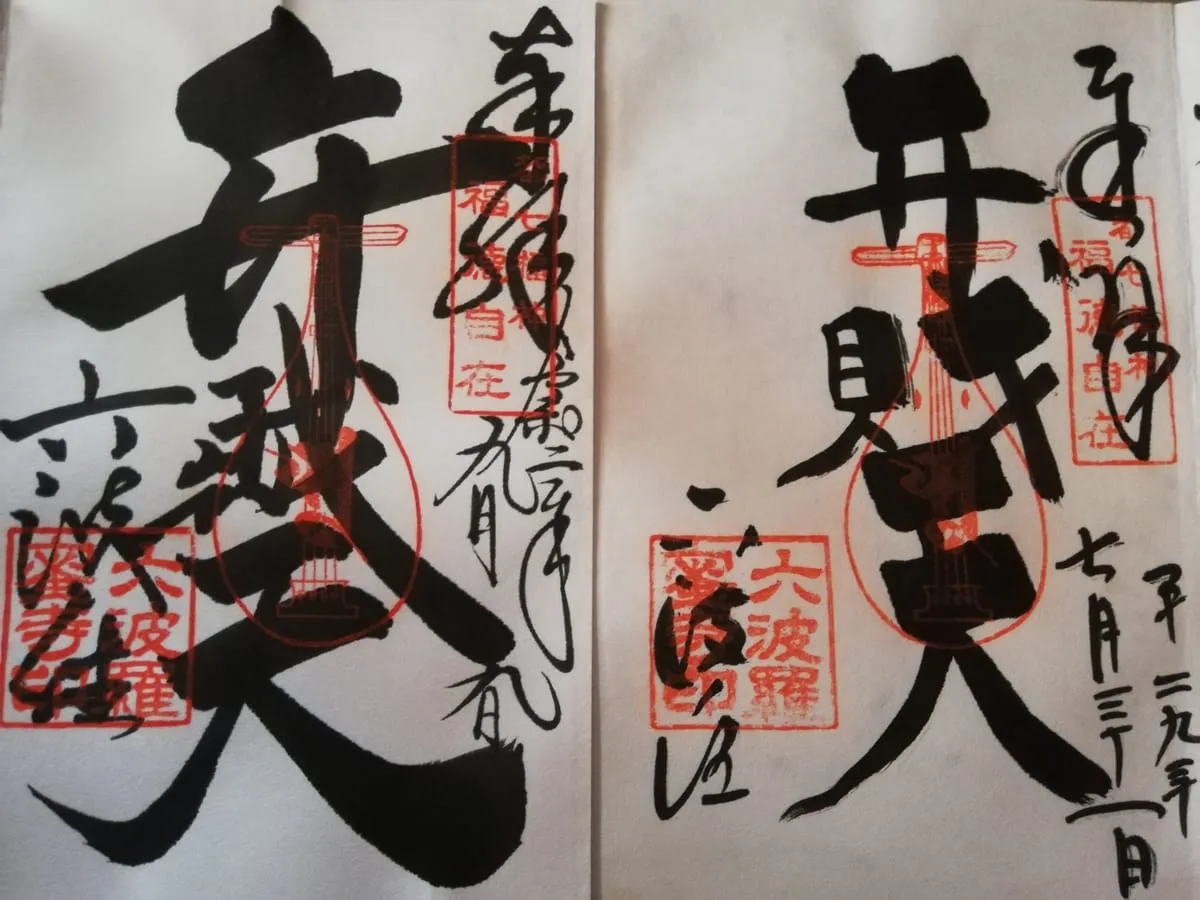
Japan’s major Buddhist schools each leave their imprint on goshuin design.
Jōdo (Pure Land): Bold brushwork featuring Namu Amida Butsu (南無阿弥陀仏). Warm and direct, reflecting a theology of accessible salvation. Key temples: Chion-in, Zōjō-ji.
Jōdo Shinshū (True Pure Land): Similar calligraphic style. The school once resisted goshuin on theological grounds but now offers them at most temples. Key temples: Nishi Honganji, Higashi Honganji.
Zen (Sōtō and Rinzai): The most visually minimalist goshuin. A single column of characters floats on expansive white space. Often features Zen phrases (nengebishō, ichigi, etc.) or figures like Daruma. Key temples: Eiheiji, Kenchoji, Nanzenji.
Shingon: Immediately recognizable by Sanskrit seed syllables (shuji) placed prominently at center. The A character for Dainichi Nyorai, the Hrīḥ for Amida — each syllable encapsulates a deity. Four-country pilgrimage goshuin (Shikoku 88) are the most elaborate in Japan. Key temples: Kōyasan, Tō-ji, Rokuharamitsu-ji.
Tendai: Varied and ornate; the syncretic nature of the school means every temple is different. Multiple halls mean multiple goshuin. Key temples: Enryaku-ji, Senso-ji, Rinnoji.
Goshuin at Famous Temples
Senso-ji (Tokyo): Japan’s most visited temple. The main goshuin honors Kannon Bosatsu. Subsidiary halls in the Okuyama area offer additional stamps. Kakioki are common during peak hours. Excellent selection of goshuinchō on sale — a good place to start your first book.
Tōdai-ji (Nara): Four separate goshuin locations: Great Buddha Hall, Nigatsu-dō, Sangatsudō, and Kaidansho. Budget three hours to collect all four — the grounds are vast and Nigatsu-dō requires a steep climb.
Zenkoji (Nagano): One of Japan’s most egalitarian temples, welcoming all sects. The main goshuin is for the Hidden Principal Image (never publicly displayed). Known for beautifully designed goshuinchō with the temple’s distinctive pigeon motif.
Kōyasan (Wakayama): Not one temple but an entire sacred mountain. Collect goshuin at Kongōbu-ji, Okunoin, the Danjo Garan complex, and individual sub-temples. The Okunoin goshuin — received after walking through thousands of lanterns and centuries-old tombstones — is among the most memorable in Japan.
Chion-in (Kyoto): Headquarters of Jōdo Buddhism. Goshuin centered on Hōnen Shōnin, the school’s founder. The temple’s Sanmon gate — the largest wooden gate in Japan — deserves a long pause on arrival.
Caring for Your Goshuinchō
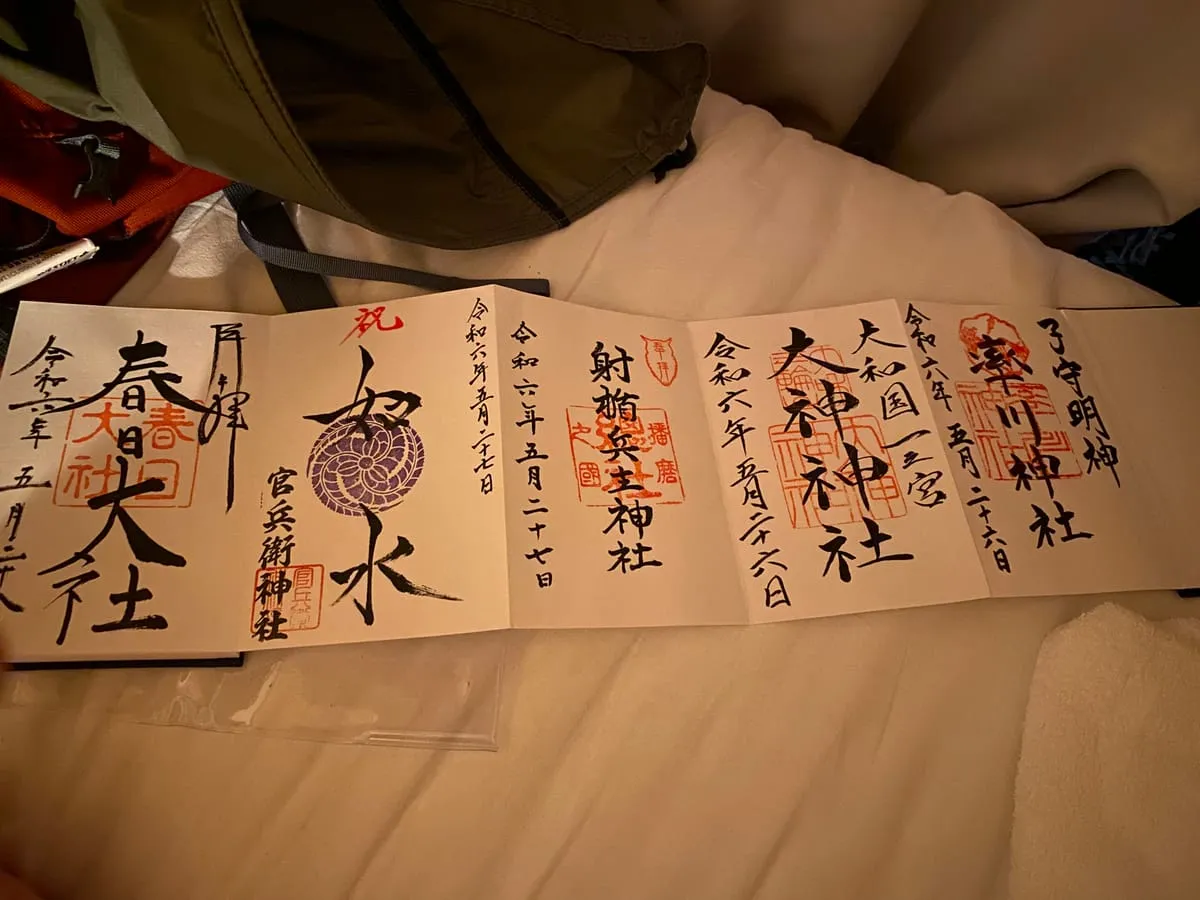
The accordion-fold structure is elegant but fragile. Don’t force it open flat or bend it against the fold. Store it in a cloth wrapper if one came with it; temple-sold fabric pouches are worth the small investment.
As pages fill, some ink may bleed through to the reverse side. This is why most collectors write on one face only. When you reach the end, start a new book rather than writing on the back of used pages.
What to do with a completed book: A filled goshuinchō is not trash. Many temples offer otakiage (お焚き上げ) — ritual burning of sacred items. You can bring completed books to a temple for this service. Alternatively, keep them. Many collectors fill shelf after shelf with books; looking back through years of stamps becomes its own kind of pilgrimage.
Frequently Asked Questions
Do I need to submit a handwritten sutra to receive a goshuin?
No — at the vast majority of temples, the sutra requirement has been relaxed entirely. Some temples offer structured shakyo (写経) programs where you copy a sutra and then receive a special goshuin for it, but this is a voluntary program, not a gate.
What if I’m not Buddhist?
No religious commitment is required. Temple etiquette — bowing, pressing palms together, lighting incense — is a form of respectful engagement available to everyone.
What hours are goshuin available?
Generally 9:00 a.m. to 4:00–5:00 p.m. The stamp counter may close earlier than general temple hours. During religious ceremonies, it may be closed entirely. Check the temple’s website before traveling specifically for a goshuin.
What if I forgot my goshuinchō?
Most temples can provide a pre-written kakioki slip. Don’t let a forgotten book stop you from visiting.
Is it rude to collect goshuin “just for the stamps”?
Most temple staff will tell you that visitors are welcome regardless of their level of faith, as long as they actually pray before requesting the stamp. Many people find that what starts as aesthetic curiosity deepens over time into genuine interest in the temples and their traditions.
Tracking Your Collection
As your collection grows, a goshuin app helps you photograph and log each stamp, map everywhere you’ve visited, and discover temples nearby. Keeping a digital record alongside your physical book also provides a backup — if the book is damaged or lost, your photographic archive remains.
Scrolling back through months or years of stamps connects the visual record to specific memories: the smell of incense at a mountain Shingon temple, the sound of monks chanting in a Zen monastery, the silence of an early-morning visit to a garden temple. The stamp is a door. The memory is what lies behind it.
Final Thoughts
The temple goshuin asks only one thing: arrive with intention. Bow at the gate, light incense if there is any, press palms together at the main hall without clapping, and make your way to the stamp counter only after you’ve prayed.
The rest — sect history, Sanskrit syllables, pilgrimage traditions — opens up gradually as you visit more temples. Some collectors go years without decoding everything in their books. Others find themselves drawn into Buddhist thought they never expected to care about. Either path is valid.
The stamp is just the beginning.
Photo Credits
- Senso-ji Temple, Asakusa: © Joli Rumi, CC BY-SA 4.0, via Wikimedia Commons
- Calligrapher at Byōdō-in: © Chris Gladis (MShades), CC BY 2.0, via Wikimedia Commons
- Goshuin from Rokuharamitsu-ji: © 先従隗始, CC0 1.0, via Wikimedia Commons
- Goshuincho with five stamps: © Immanuelle, CC BY 4.0, via Wikimedia Commons


