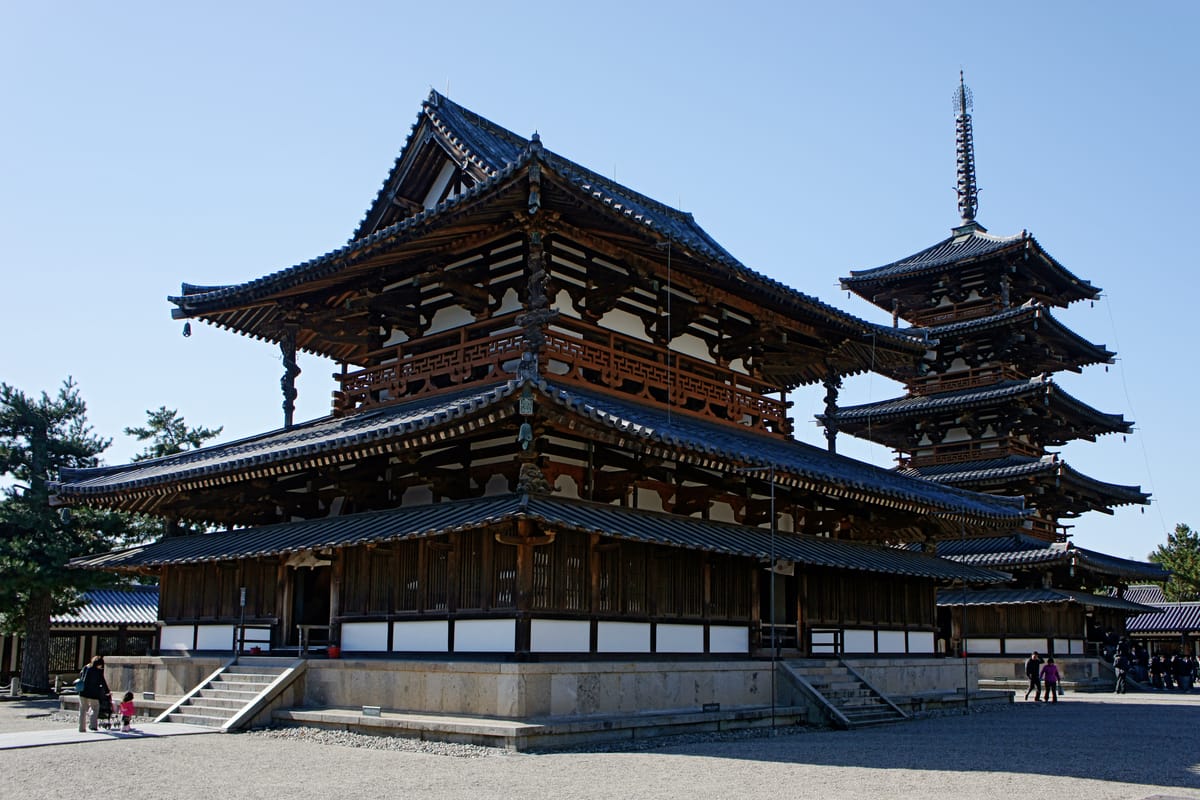
Among the Buddhist reformers who transformed Japanese religion in the thirteenth century, Dōgen (1200–1253) stands in a singular position. Hōnen said “Call the name of Amida Buddha.” Shinran said “Evil persons are precisely those who are saved.” Nichiren said “Believe in the Lotus Sūtra.” But what Dōgen said was something more fundamental than any of these: “Just sit.”
Shikantaza (只管打坐) — just sitting, wholeheartedly, without goal or agenda. Not as a technique for attaining enlightenment, but as the expression of enlightenment itself. The teaching that practice and awakening are not two separate things — that sitting is the realization, not a means toward it — is what Dōgen brought back from China and spent his life articulating.
The Sōtō school Dōgen established is today one of Japan’s largest Buddhist denominations, with approximately 15,000 temples across the country. Its head monastery, Eiheiji (永平寺) in the mountains of Fukui Prefecture, draws hundreds of thousands of visitors each year and continues to train resident monks in the rigorous practice Dōgen set down eight centuries ago. When you receive a goshuin at a Sōtō temple and sit for zazen in the meditation hall, knowing the story behind shikantaza — the questions Dōgen wrestled with, the crossing to China, the single moment of realization — gives the silence of the hall an entirely different weight.
Birth — Aristocratic Kyoto, and Early Loss
Dōgen was born in 1200 in Kyoto into the milieu of the Heian aristocracy. His father, identified by most sources as a high court official of the Murakami Genji lineage, died when Dōgen was three (1202). His mother died when he was eight (1207).
At his mother’s deathbed, according to the tradition preserved in his biography, Dōgen watched incense smoke rising and was struck by the reality of mujō — impermanence, the relentless flux of all things. The early experience of impermanence would become a thread running through everything he later wrote. In the Shōbōgenzō, Dōgen returns to impermanence repeatedly, insisting on its radical scope: “Mountains, rivers, the great earth — all are the manifestation of the Way of the ancient Buddhas.” And yet: all are impermanent. Nothing holds its shape.
His mother’s dying words, as transmitted in the tradition, were: “Become a monk, and practice for the sake of all beings.” After her death, Dōgen was taken in by a maternal relative who tried to raise him in the aristocratic world. Dōgen had other intentions.
Mt. Hiei — Ordination and a Fundamental Question
At thirteen (1213), Dōgen climbed Mt. Hiei and was ordained as a Tendai monk, with Kōin (公胤) as his teacher. Mt. Hiei was the preeminent center of Japanese Buddhist learning — Hōnen and Shinran had both trained there. Dōgen entered a tradition that was intellectually formidable, studying the vast Tendai curriculum of Lotus Sūtra, esoteric Buddhism, and meditational theory.
But the more Dōgen studied, the more insistently one question pressed itself upon him. Tendai doctrine taught that all sentient beings inherently possess Buddha-nature — honshō (本証), original enlightenment. If all beings are already fundamentally awakened, why is practice necessary at all?
This question — later termed the honshō myōshu problem — is not merely logical. It touches the foundations of Buddhist soteriology. If practice is a method for attaining something not yet possessed, then the doctrine of universal inherent Buddha-nature becomes incoherent. Dōgen pressed his teachers on this point and found no satisfying answer.
The question drove him out of the Mt. Hiei establishment. He traveled to Kennin-ji (建仁寺) in Kyoto and took instruction from the monk Myōzen (明全), a disciple of Eisai. In Myōzen, versed in both Rinzai Zen and Tendai, Dōgen deepened his zazen practice. Myōzen would later accompany Dōgen to China. But even at Kennin-ji, the fundamental question remained unanswered.
The Voyage to China — Searching for the Answer
In 1223, Dōgen sailed to Song-dynasty China with his teacher Myōzen. He was twenty-three.
An early encounter — recorded in the Tenzō Kyōkun (“Instructions for the Cook”) — offered a preview of where his thinking was heading. Shortly after arriving, still aboard ship in the harbor, Dōgen met an elderly temple cook who had rowed out to buy dried mushrooms. Dōgen asked why the old monk hadn’t sent someone younger. The cook laughed: “Young man from abroad, you don’t yet understand what practice is.” Every action — cooking, cleaning, buying mushrooms — is practice.
The decisive encounter came in 1225, when Dōgen met Rujing (如浄, 1163–1228), the abbot of Tiantong Monastery (天童山景徳禅寺) near present-day Ningbo. Rujing stood against the prevailing currents of Song Chan: in a period when the tradition was diversifying and merging with Pure Land practice, he insisted on a return to shikantaza — just sitting, without admixture. His own schedule was severe: he sat through the night in the meditation hall and was not gentle with monks who fell asleep.
Body and Mind Dropping Away — The Moment of Realization
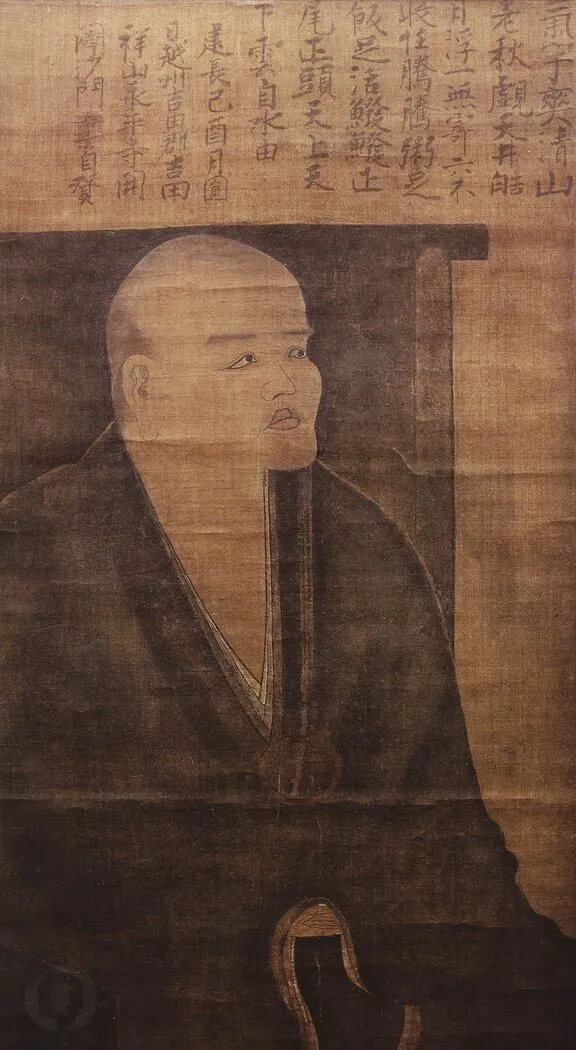
Dōgen’s awakening is described using a phrase that became one of the most discussed terms in Japanese Buddhist thought: shinjin datsuraku (身心脱落) — “body and mind dropping away.”
The account preserved in Dōgen’s writings describes an early morning zazen session. A monk beside Dōgen had fallen asleep. Rujing struck the hall with a sharp rebuke: “Zazen must be the dropping away of body and mind — what are you doing sleeping?” At that moment, something shifted in Dōgen.
Dōgen went to Rujing’s room, lit incense, and made a formal bow. Rujing asked what the bow was for. Dōgen said: “Body and mind have dropped away” (shinjin datsuraku sōrai). Rujing confirmed: “Body and mind dropping away, dropping away of body and mind” (shinjin datsuraku, datsuraku shinjin).
What Dōgen took from this experience was the answer to the question haunting him since Mt. Hiei. “If all beings inherently possess Buddha-nature, why is practice necessary?” The answer is not that practice is unnecessary. The answer is that practice is the expression of Buddha-nature. Original enlightenment (honshō) appears as practice (myōshu). Sitting does not lead to awakening; sitting is awakening expressing itself. This is shusshō ittō (修証一等) — practice and realization are one.
Return to Japan — Bringing “Just Sit” Home
Dōgen returned to Japan in 1227, at twenty-seven. His teacher Myōzen had died in China; Dōgen carried his remains home.
Back at Kennin-ji, Dōgen began to write. In 1231, he composed the Fukan Zazengi (普勧坐禅儀) — “Universal Promotion of the Principles of Zazen.”
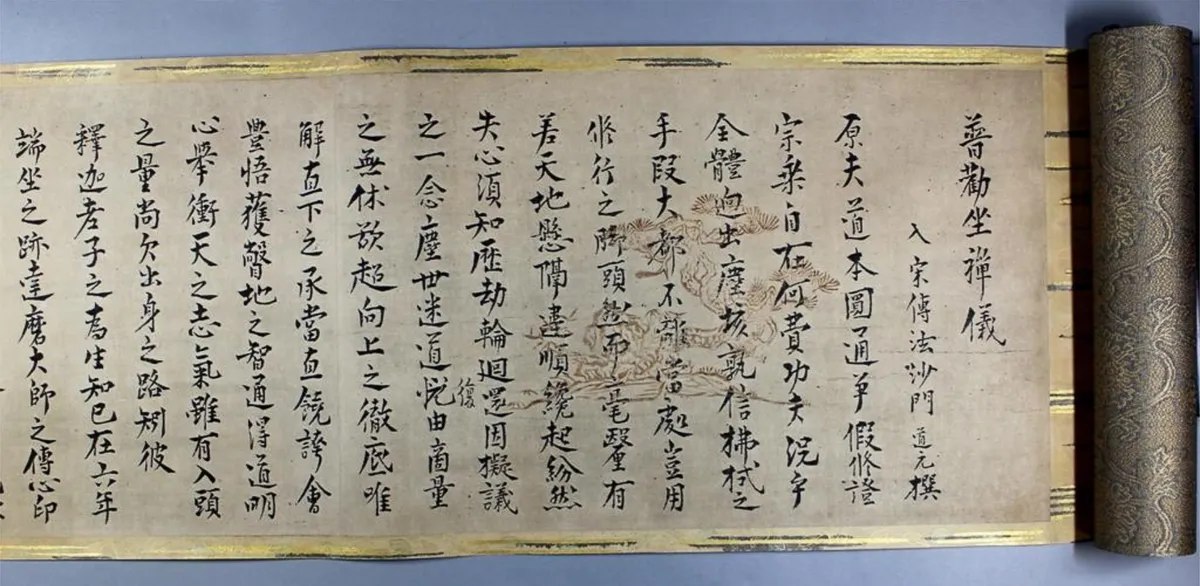
The Fukan Zazengi combines practical instruction — how to sit, hold the eyes, breathe, position the hands — with the philosophical core of shikantaza:
Think of not-thinking. How do you think of not-thinking? Non-thinking.
The passage is precise. “Thinking” (shiryō) is normal consciousness — naming, categorizing, judging. “Not-thinking” (fushiryō) is deliberate suppression of thought, which is still shiryō. “Non-thinking” (hishiryō) is what happens when the distinction itself is left behind. The aim of zazen cannot be achieved by either method, only by their abandonment.
What Dōgen brought back from Song China was not a new sūtra or institutional structure. He brought back a way of sitting — and the conviction that this way of sitting was all of Buddhist practice in concentrated form.
Eiheiji — Taking Root in the Mountains
In 1233, Dōgen founded Kōshōji (興聖寺) in Fukakusa, south of Kyoto — the first independent Zen training monastery in Japan. Pressure from the Tendai establishment on Mt. Hiei eventually made the location untenable.
In 1243, Dōgen moved to Echizen Province (present-day Fukui Prefecture) at the invitation of a local lord, Hatano Yoshishige (波多野義重). In 1244, Dōgen established Eiheiji — “Temple of Eternal Peace.” The name honors the Tang-dynasty Chinese temple where Buddhism was said to have been first officially established in China, while marking Dōgen’s own rootedness in the Chinese Chan he had received from Rujing.
The choice of mountains was deliberate. In the Shōbōgenzō fascicle “Sansuikyō” (山水経, “Mountains and Waters Sutra”), Dōgen writes: “The mountains and rivers of the present moment are the manifestation of the Way of the ancient Buddhas.” The monastery in the mountains is itself a site of dharma — to sit in those mountains is to sit within the buddha-field.
At Eiheiji, Dōgen continued writing the Shōbōgenzō. This vast, unfinished text — 95 fascicles in its largest compilation — ranges from philosophical treatments of Buddha-nature, time, and self to detailed accounts of how to wash your face and make rice porridge. The range reflects Dōgen’s fundamental position: there is no part of life that is not dharma. The daily schedule at Eiheiji was demanding: pre-dawn zazen, meals taken in meditation posture, assigned chores conducted in silence, evening zazen. In the Tenzō Kyōkun (“Instructions for the Cook”), Dōgen makes explicit that the cook’s work is not a break from practice — it is practice. Enlightenment is not reserved for special states.
Shikantaza — The Philosophy of Just Sitting
Dōgen’s core teaching is shikantaza (只管打坐). Shikan means “nothing but” or “just, wholeheartedly.” Taza means to do zazen. The compound describes zazen as a complete, goalless, absorptive practice — not a method for gaining something, but a mode of being that is already what it seeks.
The Genjōkōan (現成公案), perhaps the most widely read fascicle of the Shōbōgenzō, unfolds this logic:
To carry the self forward and illuminate the ten thousand dharmas is delusion. That the ten thousand dharmas advance and illuminate the self is awakening.
In ordinary practice, the practitioner is the active agent who applies effort to a resistant object. In shikantaza, this structure inverts: the practitioner sits still, and the dharma meets him. “To study the self is to forget the self. To forget the self is to be verified by the ten thousand dharmas” — shinjin datsuraku — body and mind dropping away — is not a one-time event but the ongoing movement of shikantaza itself.
This philosophy gave Dōgen his answer to the Mt. Hiei question. If practice and realization are one (shusshō ittō), and if original awakening expresses itself as practice (honshō myōshu), then the question “why practice if we’re already awake?” dissolves. We practice because awakening is practice. The zazen hall is not a place where unawakened people go to become awakened; it is the place where awakening takes the form of a human body, seated, upright, still.
Sōtō centers in Europe and North America now teach “just sitting” using Dōgen’s formulations directly. Dōgen, who never intended to found a mass movement, has become one of the most widely read figures in global Zen literature.
Later Life and Death
In 1247, the regent Hōjō Tokiyori invited Dōgen to Kamakura. Dōgen went, spent several months in meetings with the shogunate, and then returned to the mountains. He had no interest in becoming a court teacher; his monastery was not to be used as an institution of political legitimation.
By 1253, Dōgen was seriously ill. His disciples urged him to come to Kyoto for treatment. He arrived in the capital in the summer of 1253 and died there on August 28, at fifty-four.
Fifty-four years is a short life. But what Dōgen left behind — the Shōbōgenzō alone, which has occupied generations of scholars and continues to generate new interpretations — suggests a degree of concentrated intellectual and spiritual effort that makes the number feel almost irrelevant.
After Dōgen, his disciple Koun Ejō (孤雲懐奘) maintained Eiheiji in the austere mode Dōgen had established. The expansion of Sōtō Zen to become a mass denomination was primarily the work of a later figure: Keizan Jōkin (瑩山紹瑾, 1268–1325), who founded Sōjiji in Noto Province and proved willing to integrate folk Buddhist practices and lay devotion. Where Dōgen concentrated on training monks in deep mountain monasteries, Keizan actively sought the participation of townspeople and farmers. Sōtō Zen honors both: Dōgen as Kōso (High Ancestor) and Keizan as Taiso (Great Ancestor).
Visiting Sōtō Zen Temples for Goshuin
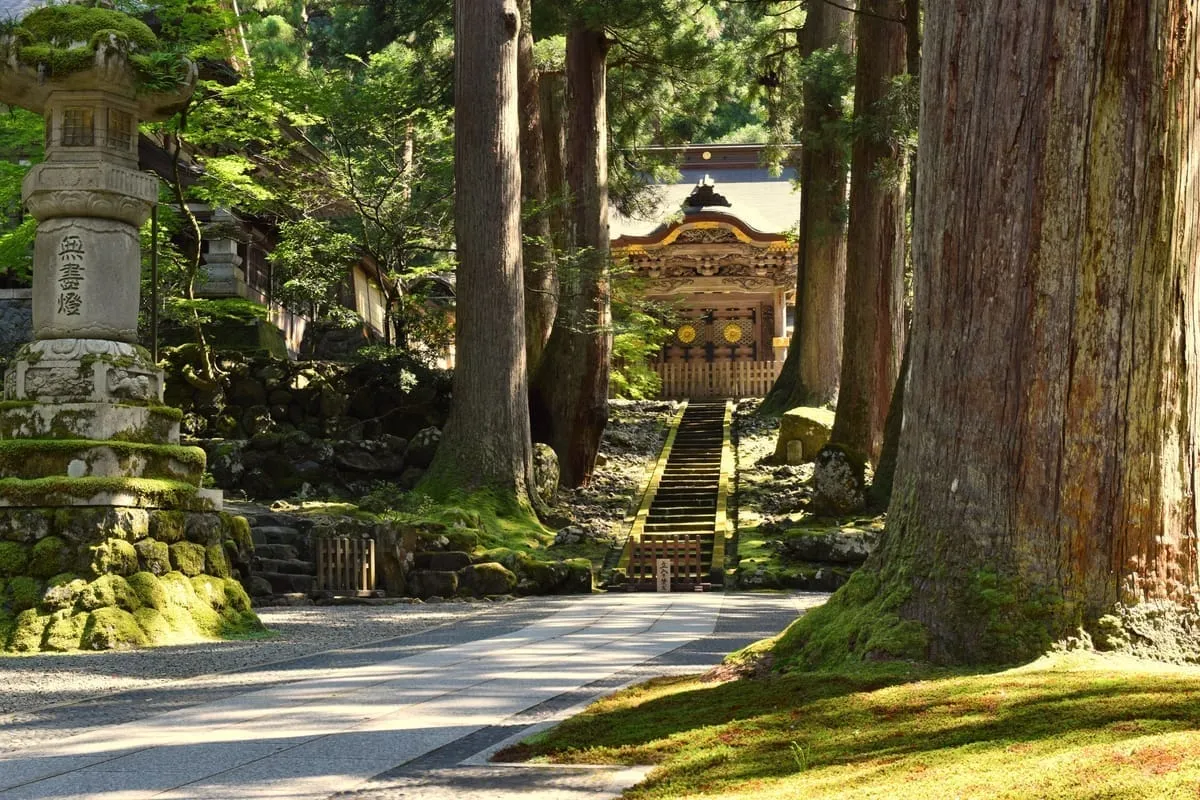
Eiheiji (永平寺, Fukui Prefecture) The head monastery of Sōtō Zen, founded by Dōgen in 1244. More than seventy buildings — meditation halls, shrines, kitchen, bathhouse — climb the mountainside, connected by covered wooden walkways. Approximately 150 training monks live here year-round. Visitors can walk the corridors and enter the main halls; zazen programs and multi-day practice retreats are available by advance reservation. Goshuin often feature Busshō (佛心, “Buddha-mind”) or Nenge mishō (拈華微笑, “Holding a flower, subtle smile”) — the latter evoking the wordless transmission of enlightenment from Śākyamuni Buddha to his disciple Mahākāśyapa.
Sōjiji (總持寺, Yokohama, Kanagawa Prefecture) The co-head monastery of Sōtō Zen, established by Keizan in 1321 and relocated to Yokohama in 1898. Its vast grounds in Tsurumi accommodate multiple training halls and a large zendō. Regular zazen sessions are open to the public. Goshuin feature Busshō and Dōgen Zenji in the calligraphy.
Kōshōji (興聖寺, Uji, Kyoto Prefecture) Dōgen’s original monastery, relocated here from Fukakusa. A maple-lined stone stairway called Kotosaka leads to the main hall. This is the site where Dōgen first established independent Zen training in Japan — the institutional beginning of what became Sōtō Zen.
Eiheiji Tokyo Betsuin (永平寺東京別院, Minato, Tokyo) The Tokyo branch of Eiheiji, where regular zazen sessions are held and goshuin identical to those at the head temple can be received. For those who cannot travel to Fukui, this is the closest point of contact with the Eiheiji lineage in the capital.
In most Sōtō temples, goshuin calligraphy tends toward bold, direct brushwork — fitting for a tradition centered on the directness of shikantaza. Receiving a goshuin after sitting zazen, even briefly, connects the physical act of sitting with the written mark that acknowledges it.
What did Dōgen give Japanese Buddhism? In one phrase: the philosophy of just sitting. Not a new Buddha to supplicate, not a new mantra to recite, not a new doctrine to believe — but a way of being present in the body, on the cushion, that is simultaneously the simplest and most demanding thing imaginable.
Dōgen died at fifty-four, having spent his adult life alternating between zazen and writing about zazen. The Shōbōgenzō is the record of that alternation — not a systematic theology but the ongoing attempt to articulate, in Japanese prose, what happens when body and mind drop away.
The mountains of Echizen, where Eiheiji still stands, are what Dōgen chose over the capital. The choice was consistent. Practice over politics. Depth over breadth. The question he carried from Mt. Hiei — why must we practice if we are already awake? — found its answer not in a text or a doctrine but in a posture: the human body seated, upright, still, in a mountain monastery, for as long as it takes to stop asking.
Image Credits
- Portrait of Dōgen Zenji (Dogen.jpg): Unknown artist, Public Domain, via Wikimedia Commons
- Fukan Zazengi, 1233 manuscript (Fukan-Zazengi-Instructions-for-Zazen-1233.png): Dōgen, 1233, Public Domain, via Wikimedia Commons
- Eiheiji Temple, Fukui Prefecture (Eihei-ji Temple, Fukui Prefecture; September 2019 (01).jpg): 雷太 (Raita), CC BY 2.0, via Wikimedia Commons