Approaching the shrine office to request a goshuin for the first time, most visitors face the same quiet uncertainty: How much should I pay? Do I need exact change? What do I even say? These are perfectly reasonable questions, and they rarely come with clear answers on the day itself.
The answer, as it turns out, is simpler than it looks — but understanding the context behind it makes the whole experience better. This guide covers everything you need to know about hatsuhoryo (初穂料), the traditional donation given when receiving a goshuin at a Japanese shrine or temple: what it means, how much to pay, how to hand it over properly, and how to handle common situations that catch first-time visitors off guard.
What Is Hatsuhoryo?
Hatsuhoryo (初穂料) literally means “first-ear-of-rice fee.” The word traces back to ancient Japan, when farmers would offer the first-harvested stalks of rice (hatsuhо̄, 初穂) to the gods as an act of gratitude. Rice wasn’t merely food — it was the medium through which humans communicated with the divine. Presenting the first fruits of the harvest was the highest form of thanks a farming community could offer.
As Japan shifted to a monetary economy, cash donations gradually replaced actual rice. Yet the name stuck. Today, hatsuhoryo refers broadly to the monetary offerings given at Shinto shrines for goshuin stamps, protective charms (omamori), votive tablets (ema), formal prayers (gokito), and other ritual services.
At Buddhist temples, the equivalent term is more often o-fuse (お布施), shinokin (志納金) (literally “will-offering money”), or simply kokoro-zashi (志) (goodwill). The word fuse comes from the Sanskrit “dāna,” one of the six perfections in Buddhist practice — the virtue of generosity. In practical terms the words are interchangeable in daily life, and many temples also use hatsuhoryo without issue.
Goshuin and the Donation: What You’re Really Paying For
Goshuin is not merchandise. You don’t “buy” it; you “receive” it (in Japanese: itadaku, いただく). The hatsuhoryo is not a price tag — it’s an offering that acknowledges the sacred act of recording your visit.
What that offering supports:
- The calligrapher’s time and skill
- Ink, brushes, stamp pads, and paper
- Maintenance of the shrine office
- The broader upkeep of the shrine or temple
At busy shrines, multiple staff members may work the goshuin counter full-time. The fees, in aggregate, help sustain not just goshuin services but the shrine’s ongoing ritual life. Knowing this doesn’t change how much you pay, but it shifts the framing from “transaction” to “offering” — and that shift, over time, changes how the experience feels.
How Much Should You Pay?
Standard Goshuin: 300–500 yen
For most shrines and temples across Japan, the standard hatsuhoryo for a single goshuin is 300 to 500 yen. Five hundred yen is currently the most common amount, with 300 yen a close second. The rate varies by region and institution size — major urban shrines tend toward 500 yen, while smaller rural shrines or lesser-known temples may charge 300 yen or even less.
These amounts have gradually standardized over the past few decades as goshuin collecting has grown in popularity. Previously, many shrines simply said “as you feel fit” (okimochi de, お気持ちで), but the surge in visitors made clear pricing practical for both sides.
Special and Limited Edition Goshuin: 700–2,000+ yen
The past decade has seen an explosion of artistically elaborate goshuin — cut-paper designs, gold foil, hand-coloring, double-page spreads, and collaborations with calligraphers and illustrators. These cost more to produce, and the hatsuhoryo reflects that.
Common price ranges:
- Kirigami (cut-paper) goshuin: 700–1,200 yen
- Double-page (mi-hiraki) goshuin: 1,000–2,000 yen
- Gold/silver foil goshuin: 1,500–3,000 yen
- Limited festival editions: 800–1,500 yen
Before visiting, check the shrine’s official Instagram or website. Limited goshuin are usually announced in advance with pricing, so you can prepare the right amount.
Budget-Friendly Options: 200–300 yen
Smaller neighborhood shrines, particularly those in rural areas or with a primarily local congregation, sometimes charge 200 or 300 yen. A handful still operate on the “as you feel fit” model. In these cases, 300–500 yen is a reasonable and respectful default.
Free Goshuin
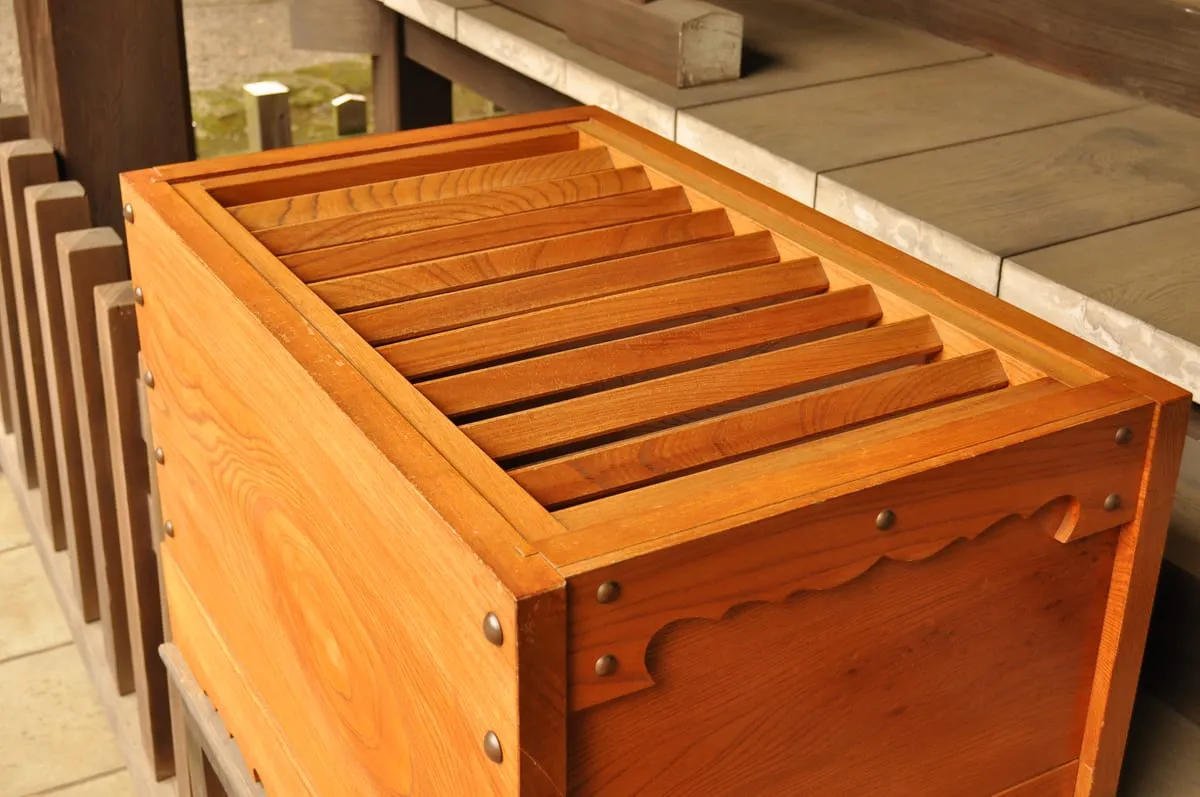
Some shrines and temples offer goshuin at no charge. This is the exception, not the rule, and it doesn’t mean the visit carries less weight — it’s worth expressing gratitude through a coin offering in the saisen box (offertory box) near the main hall.
Proper Etiquette for Handing Over Hatsuhoryo
Prepare Exact Change (or Close to It)
This is the single most practically useful tip: bring coins. Most shrine offices don’t have a cash register and maintaining a change float takes effort. On busy days — New Year, Golden Week, major festivals — change shortages are common.
Before a day of shrine-hopping:
- Load up on 500-yen coins (10–15 is a good buffer)
- Keep a stash of 100-yen coins for exact-change situations
- Carry a few 1,000-yen notes for special goshuin or goshuincho purchases
Convenience stores, vending machines, and ATMs are reliable ways to get smaller coins. Many experienced visitors keep a dedicated small coin purse for goshuin pilgrimages — it keeps the transaction smooth and feels appropriately intentional.
If you genuinely don’t have change, it’s completely acceptable to ask: “O-tsuri wo itadakemasu ka?” (お釣りをいただけますか?) — “Could I have change, please?” Most staff handle it graciously.
What to Say
When you arrive at the goshuin counter, open your goshuincho to the page where you want the stamp and hand it over with both hands. One phrase is all you need:
“Goshuin wo onegai shimasu.” (御朱印をお願いします。) — “I’d like a goshuin, please.”
Or more simply: “Goshuin, onegai shimasu.”
That’s it. No elaborate explanation needed. The staff will take it from there and either ask clarifying questions (direct writing vs. pre-written, which page, etc.) or get to work immediately.
If you want a specific type — “I’d like the limited seasonal one” — you can say: “Kisetsu-gentei no goshuin wo onegaishimasu.” But pointing to an example on display works just as well.
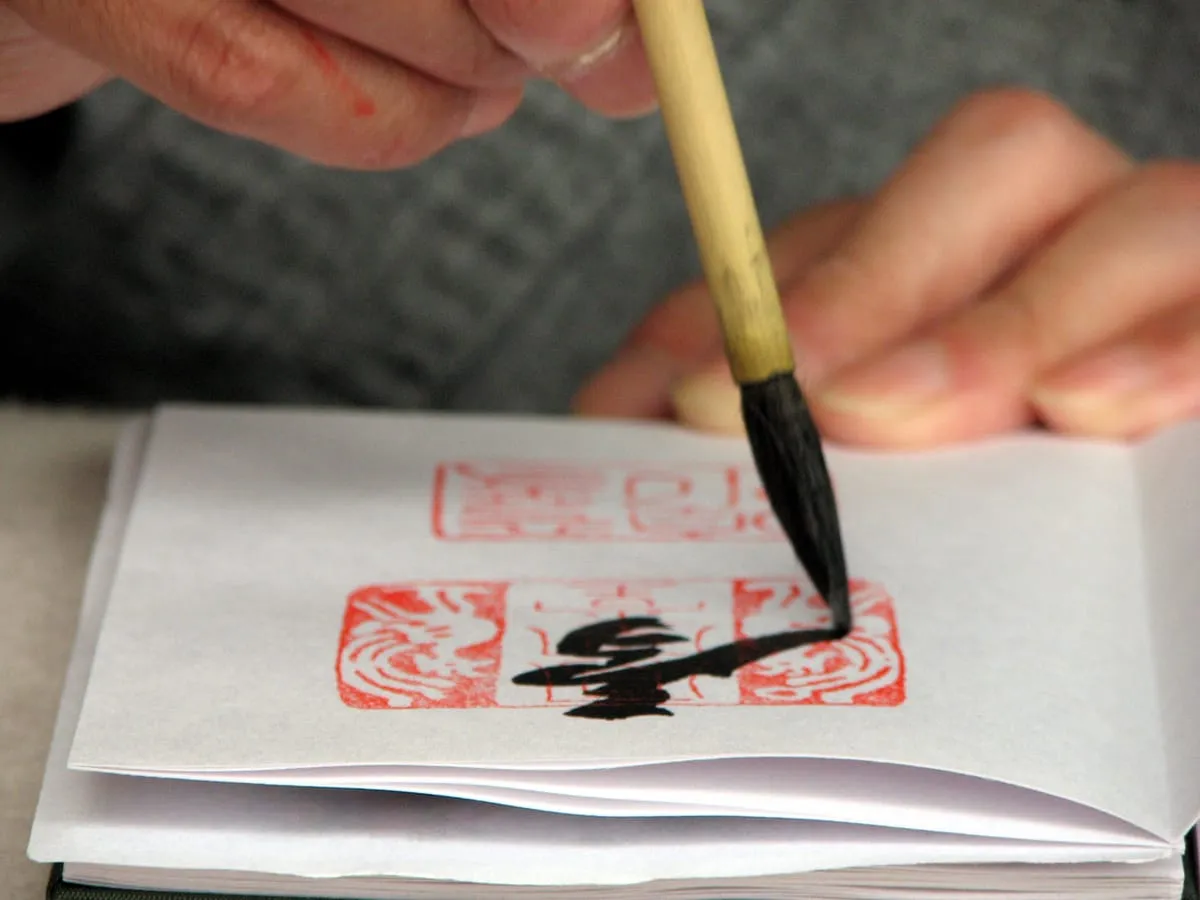
When to Pay
Timing varies by shrine:
- Pay upfront: You hand over both the goshuincho and the hatsuhoryo at the same time.
- Pay when you receive it: You get the completed goshuin and pay then.
- Pay at a separate window: Some larger shrines have a payment booth apart from the writing area.
There’s no wrong answer here — just follow the staff’s lead. If you’re unsure, watch how the person ahead of you does it, or simply hold the coins ready and wait for a natural opening.
Use Both Hands
When handing over the goshuincho or receiving it back, use both hands. The same applies when presenting coins — offer them on an open palm or small tray, not tossed across the counter. If a small reception tray (obon, お盆) is placed in front of you, set the coins on it rather than directly in the staff member’s hand.
This isn’t rigid ceremony — it’s the ambient courtesy of a sacred space. Both-handed exchanges signal that you understand you’re in a particular kind of place.
The Complete Step-by-Step Flow
- Visit the main hall first. Purify your hands at the chozuya (water basin), approach the main hall, bow twice, clap twice, offer a silent prayer, bow once more. Goshuin comes after worship, not before.
- Locate the goshuin counter. Look for signs reading 御朱印所 (goshuin-jo), 朱印所 (shuin-jo), or 社務所 (shamusho) at shrines; 朱印所 or 寺務所 (jimusho) at temples.
- Open your goshuincho to the right page and present it with both hands.
- State your request: “Goshuin, onegai shimasu.”
- Pay the hatsuhoryo at the moment the staff indicates.
- Wait quietly. Avoid making noise or using your phone conspicuously.
- Receive your goshuincho with both hands and say “Arigatou gozaimasu” (Thank you very much).
If there’s a waiting period (common at busy shrines), you may be given a number tag and told to return in a set time. Use that time to explore the shrine grounds rather than waiting idly at the counter.
Frequently Asked Questions
Can I ask for change?
Yes, absolutely. The idea that you must give exact change and never request change back is a cultural misunderstanding that gets passed around. It’s a preference, not a rule — preparing coins in advance is considerate, but asking for change is completely acceptable. Shrine staff will give it without any issue.
Can I pay by card or digital wallet?
Increasingly, yes. Cashless payment has expanded rapidly at large shrines and tourist temples, with many now accepting IC cards (Suica, Pasmo), PayPay, and major credit cards. However, smaller local shrines and unstaffed sacred sites remain cash-only.
When in doubt: bring cash. You can always check the shrine’s website or Instagram for payment information before going.
Is the hatsuhoryo included when I buy a goshuincho?
Sometimes. Many shrines include the first goshuin entry as part of the goshuincho purchase (typically 1,000–2,500 yen for the book). Others charge separately. When purchasing a goshuincho at the shrine office, it’s fine to ask: “Goshuin no hatsuhoryo wa betsu ni hitsuyou desu ka?” (御朱印の初穂料は別に必要ですか?) — “Is the hatsuhoryo for the goshuin separate?”
At Ise Jingu (Ise Grand Shrine), for example, the first goshuin is typically recorded in the book at the time of purchase.
What if the price isn’t listed?
If the shrine says “okimochi de” (as you feel fit), default to 300–500 yen. If you’re genuinely uncertain, it’s perfectly fine to ask: “Hatsuhoryo wa ikura desu ka?” (初穂料はいくらですか?) — “How much is the donation?” No one will think less of you for asking.
Why does a limited goshuin cost so much?
Because it takes more to make. A standard goshuin involves a stamp and calligraphy. A kirigami (paper-cut) goshuin requires cutting and assembling each one by hand. Double-page designs involve specialized materials and multiple steps. The hatsuhoryo reflects that labor and material cost directly. If a price feels high for your budget, you’re free to decline — but expressing displeasure at the counter would be out of place.
Is it okay to ask for a goshuin if I’m not religious?
Yes. Goshuin collecting is widely practiced as a cultural and travel activity. Shrines and temples understand this, and most welcome respectful visitors regardless of belief. The key is following the proper form: visit the main hall first, behave with decorum, and treat the goshuin for what it is — a record of your visit, not a product to grab on the way out.
What if the goshuin office is closed or unstaffed?
This happens, especially at smaller shrines. Common situations:
- “Honshamusho fuzai”: The main priest is away; come another day.
- During ceremonies or festivals: The counter may pause during major rituals.
- Written notice of hours: Some shrines post specific hours and are simply closed outside them.
Arrive earlier in the day to reduce the chances of finding things closed. If you’ve traveled far for a specific goshuin, calling ahead is never wrong.
Can I request a goshuin for a friend?
Many shrines allow receiving multiple goshuin (one per page in separate goshuincho) on behalf of others. Bring the goshuincho and the hatsuhoryo for each. This practice is common for people purchasing goshuin for elderly relatives who cannot travel. Some shrines prefer that each goshuin be for the person physically present — if uncertain, ask when handing over the books.
For International Visitors: Useful Phrases
Most major shrines near tourist areas have at least some English capability. Don’t hesitate to use simple English, a translation app, or these Japanese phrases:
| Situation | Japanese | Reading |
|---|---|---|
| Requesting a goshuin | 御朱印をお願いします | Goshuin wo onegai shimasu |
| Asking the price | 初穂料はいくらですか? | Hatsuhoryo wa ikura desu ka? |
| Asking for change | お釣りをいただけますか? | O-tsuri wo itadakemasu ka? |
| Is cashless payment OK? | カード払いはできますか? | Kaado barai wa dekimasu ka? |
| Is a pre-written version available? | 書き置きはありますか? | Kakioki wa arimasu ka? |
Most counters display the hatsuhoryo amount on a small board or laminated card, so even without language, the numbers will guide you. Pointing, smiling, and offering the correct coins covers most situations.
Note for visitors used to “souvenir stands”: the atmosphere at a shrine goshuin counter is more deliberate than a shop. Moving slowly and quietly, waiting your turn without crowding, and not rushing the calligrapher are all part of the etiquette.
Hatsuhoryo vs. Temple Admission: An Important Distinction
At many of Japan’s famous temples — Kinkakuji, Kiyomizudera, Sensoji — you pay an admission fee (nyūjōryō, 入場料) to enter the temple grounds. This is separate from the hatsuhoryo for a goshuin.
In practice:
- Admission fee: 300–1,000 yen typically, paid at the entrance gate
- Goshuin hatsuhoryo: 300–500 yen additional, paid at the goshuin counter inside
Budget accordingly. At some temples, admission includes access to the goshuin counter with no additional charge — others require both separately.
Hatsuhoryo vs. Gokito Fee: Don’t Confuse the Two
Hatsuhoryo is also the term used for formal prayers (gokito, ご祈祷) — but the amounts are very different. If you see “hatsuhoryo” on a formal prayer application form, expect:
- Standard prayer ceremony: 5,000–10,000 yen
- Special prayers (omiyamairi, shichi-go-san, yaku-yoke): often 7,000–30,000 yen
- Written on noshi bags (formal donation envelopes)
This is a completely different transaction from the 500-yen goshuin hatsuhoryo. If you’re attending a formal ceremony, the shrine will provide guidance on the proper amount and envelope.
The Deeper Meaning Behind the Exchange
The ancient practice of offering the first harvest — the most precious thing you produced — is the root of all this. What survived into modernity is not the rice or even the money, but the gesture itself: bringing something of value and presenting it intentionally.
When experienced pilgrims talk about what changed for them over years of goshuin collecting, many describe a similar shift. The initial fascination with collecting gives way to something quieter — the act of visiting, the standing before the hall, the moment of stillness. The hatsuhoryo becomes part of that act: a small, intentional gesture at the end of a visit that says, in its own wordless way, that the visit mattered.
Knowing the price and etiquette lets you move through the counter without distraction. Once that’s routine, you stop thinking about it — and the attention goes back to the shrine itself, which is where it was always supposed to be.
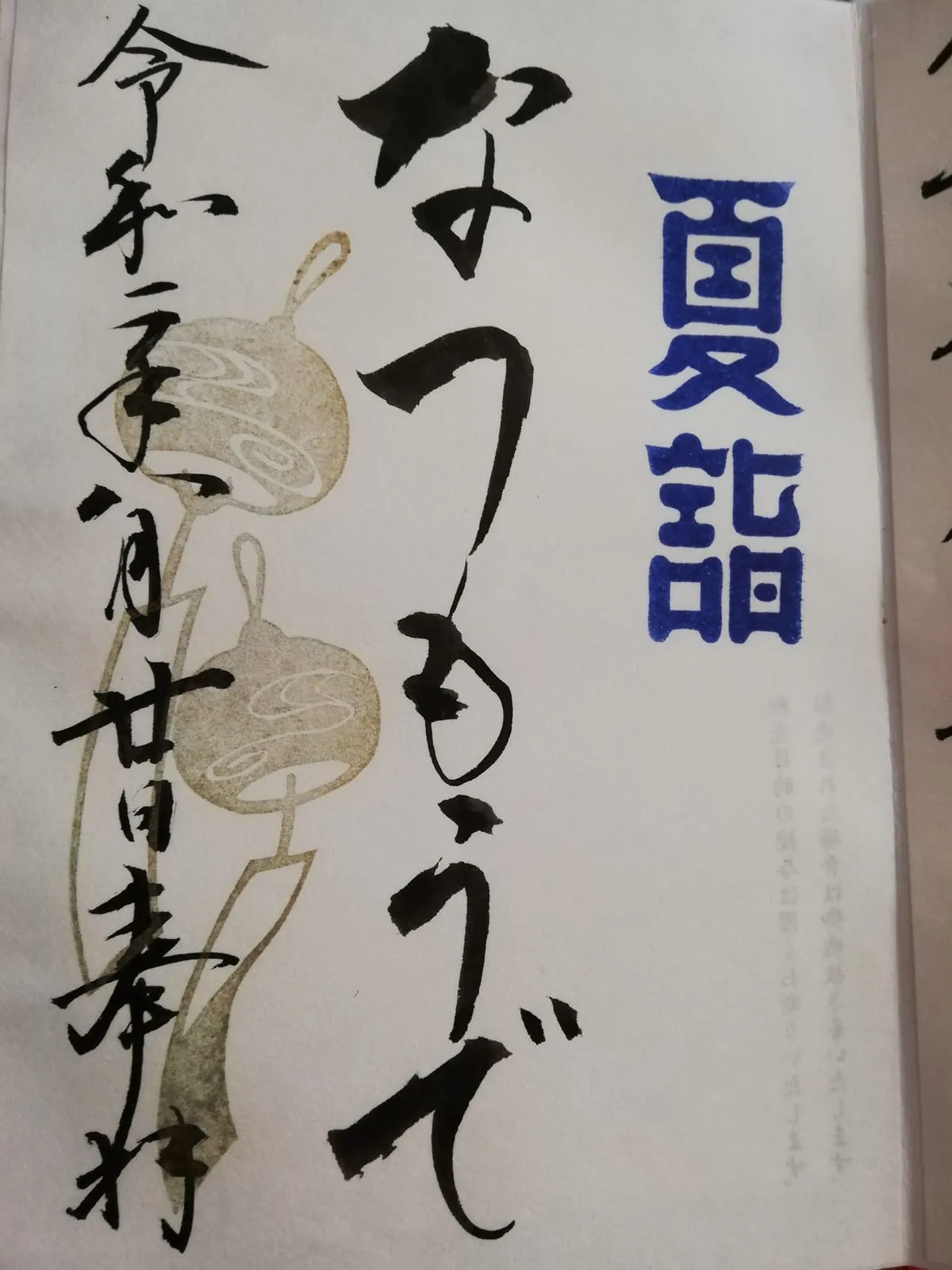
Quick Reference Summary
| Item | Details |
|---|---|
| Standard price | 300–500 yen (500 yen most common) |
| Special/limited goshuin | 700–2,000+ yen depending on design |
| Payment method | Cash primarily; cashless growing at major shrines |
| Exact change required? | Preferred but not mandatory; change is available |
| How to hand it over | Both hands, at the moment indicated by staff |
| What to say | ”Goshuin, onegai shimasu” |
| Do you need an envelope? | No — cash directly is fine |
| Is it a purchase? | No — it’s a donation received in exchange for the stamp |
License Attribution
- Saisenbako photo: “Typical saisenbako” by Ocdp, CC BY-SA 3.0, via Wikimedia Commons
- Calligrapher photo: “Byodoin calligrapher close” by Chris Gladis (MShades), CC BY 2.0, via Wikimedia Commons
- Goshuin photo: “Ishiura Shrine Goshuin 20200820” by 先従隗始, CC BY-SA 4.0, via Wikimedia Commons