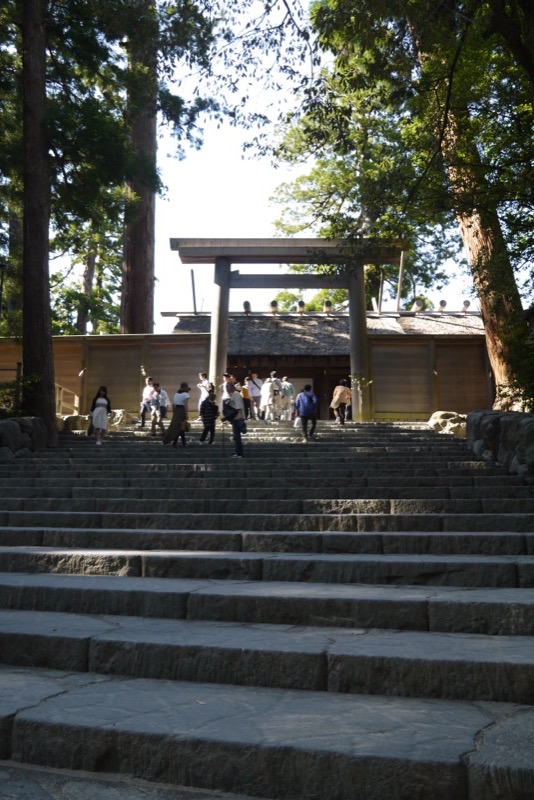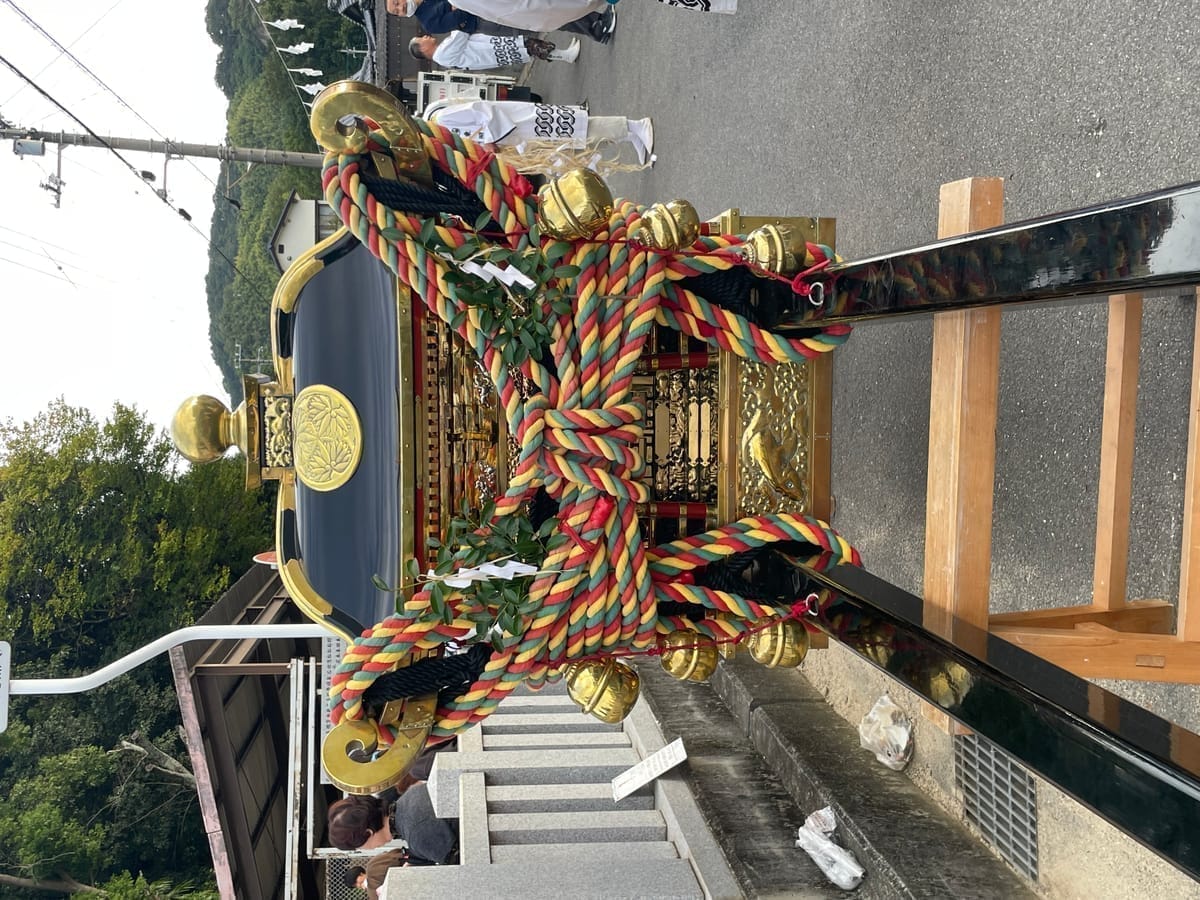
Walk through the shrine gate, follow the stone path, and you’ll arrive at a large, roofed building directly ahead. This is where you ring the bell, toss the coin, bow twice, clap twice, and bow once more. It’s where every visitor does the thing they came to do.
This building is the haiden (拝殿) — the oratory, or worship hall. Most visitors experience Shinto through this single structure without knowing what it is or what it’s designed to do. Once you understand it, every shrine visit changes.
What Is the Haiden?
The haiden is the building where visitors worship. It stands in front of the honden (本殿) — the innermost hall where the kami’s spirit resides — serving as the architectural threshold between the human world and the divine.
The honden is the kami’s home. In most shrines, visitors cannot enter it — it is a restricted sacred space accessible only to priests, housing the shintai (御神体): a mirror, sword, or jewel in which the deity’s spirit dwells.
The haiden stands before it, creating a space of structured encounter. Worshippers face toward the honden, address the deity, and offer their respect. The haiden mediates this relationship: it allows proximity without intrusion. It holds the human side of the divine conversation.
In English translations, the haiden appears as “oratory,” “prayer hall,” or “worship hall.” None is quite accurate. It is a place of prayer, yes — but also the stage for formal ceremonies, ritual offerings, and sacred performances.
Functions of the Haiden
Worship and Prayer
The most visible function. Visitors approach the front of the haiden, pull the rope (suzuo) to ring the bell above, drop a coin into the offering box, and perform the bow-clap-bow sequence. The large wooden board bearing the shrine’s name (hengaku) hangs above them. The entire experience is designed around this moment of facing the deity.
Ritual Ceremonies
Private ceremonies and major religious observances take place inside the haiden. The seven-five-three festival (Shichi-Go-San), protective prayers for newborns, weddings, and purification rites (yakuharai) are all conducted within its interior space. Visitors sit or kneel while priests recite formal Shinto prayers (norito) aloud. In these moments, the haiden functions as a ceremonial hall rather than a reception area.
Sacred Performance
In some shrines, the haiden or an attached stage (maiden) hosts sacred music and dance (kagura). These performances are offerings to the kami — not entertainment, but worship through artistic form. Visitors observing them are witnessing the kami being honored.
Architectural Relationship to the Honden
The haiden’s relationship to the honden behind it varies considerably across Japan’s shrine traditions.
Freestanding Separation
The oldest arrangement: haiden and honden are independent structures with open space between them. Visitors at the haiden look toward the honden from a distance. Many ancient shrines maintain this separation.
Three-Building Sequence
Haiden → Heiden (幣殿, offering hall) → Honden: three buildings in a straight axis. The heiden is an intermediate hall where priests place formal offerings. This arrangement is common in large, formally structured shrines.
Gongen-zukuri (権現造)
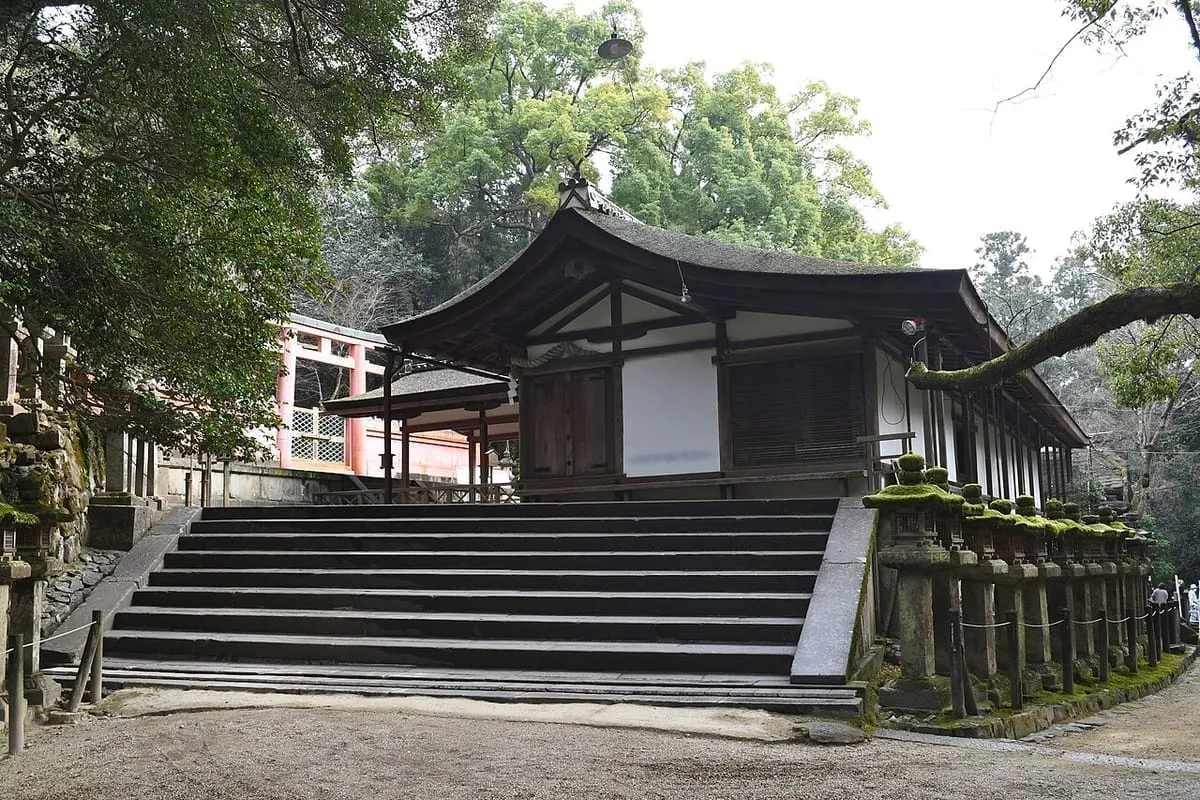
The haiden and honden are joined by a low connecting corridor (ishi-no-ma, literally “stone room”), creating a unified architectural body. Viewed from above, the combined roof reads as an H- or I-shape. Nikkō Tōshōgū, Kitano Tenmangu in Kyoto, and Dewa Sanzan Shrine are major examples. The physical connection implies a continuity of sacred space — the human side and the divine side no longer separated by open air, but linked.
Extended-Eave Connection
Some shrines extend the honden’s roof forward over a vestibule, effectively incorporating the worship area under a single continuous roof. This creates intimacy but blurs the architectural boundary.
Interior Elements
Walking into a haiden’s interior, you encounter several consistent elements.
Bell and Rope (suzuo)
The thick woven rope hanging from the ceiling, attached to a large metal bell overhead. Ringing it before prayer is said to alert the kami to your presence and ward off malevolent influences. The sound — deep and resonant — sets the transition from ordinary to sacred.
Offering Box (saisenbako)
The large wooden box in front of the haiden where coins are placed. The character sai (賽) in saisen means “to repay a deity for favors received.” Originally, offerings were agricultural produce; as Japan monetized, coins replaced them. The offering box is typically positioned so that the coin lands directly in front of the honden axis.
Name Board (hengaku)
A large wooden board, hung under the gable or on the interior beams, bearing the shrine’s name in formal calligraphy. Many hengaku are themselves works of considerable artistic value, donated by nobles, priests, or celebrated calligraphers over centuries.
Mirror (kagami)
In the interior rear of the haiden, facing the honden, a mirror is frequently mounted. Mirrors are among the most sacred symbols in Shinto — one of the three imperial treasures — and their presence in the haiden creates a visual axis from worshipper through mirror toward the deity beyond.
Notable Haiden in Japan
Izumo Taisha (Shimane Prefecture)
One of Japan’s most ancient and significant shrines, Izumo Taisha maintains clear separation between haiden and honden. The honden is built in taisha-zukuri — the oldest surviving shrine architectural style — and stands behind multiple gates, invisible to most visitors. The haiden, with its enormous shimenawa rope, is where the encounter happens. The god of marriage (en-musubi) is worshipped here, and the haiden’s atmosphere — dark, enormous, weighted — reflects the depth of that significance.
Meiji Jingu (Tokyo)
The haiden at Meiji Jingu stands at the end of a forested approach that takes fifteen minutes to walk. Built in shinmei-zukuri style from Japanese cypress with copper roofing, its scale and restraint mark it immediately as belonging to the highest rank of Shinto architecture. Over three million people visit during the New Year period — nearly all of them stand before this haiden.
Kitano Tenmangu (Kyoto)
The haiden here is part of a gongen-zukuri complex designated as a National Treasure. Haiden, stone room, and honden form a continuous sacred body, completed in 1607 under the patronage of Toyotomi Hideyori. The shrine enshrines Sugawara no Michizane, the patron of learning. During exam season, the haiden receives more visitors than almost any other shrine in the country.
Munakata Taisha (Fukuoka Prefecture)
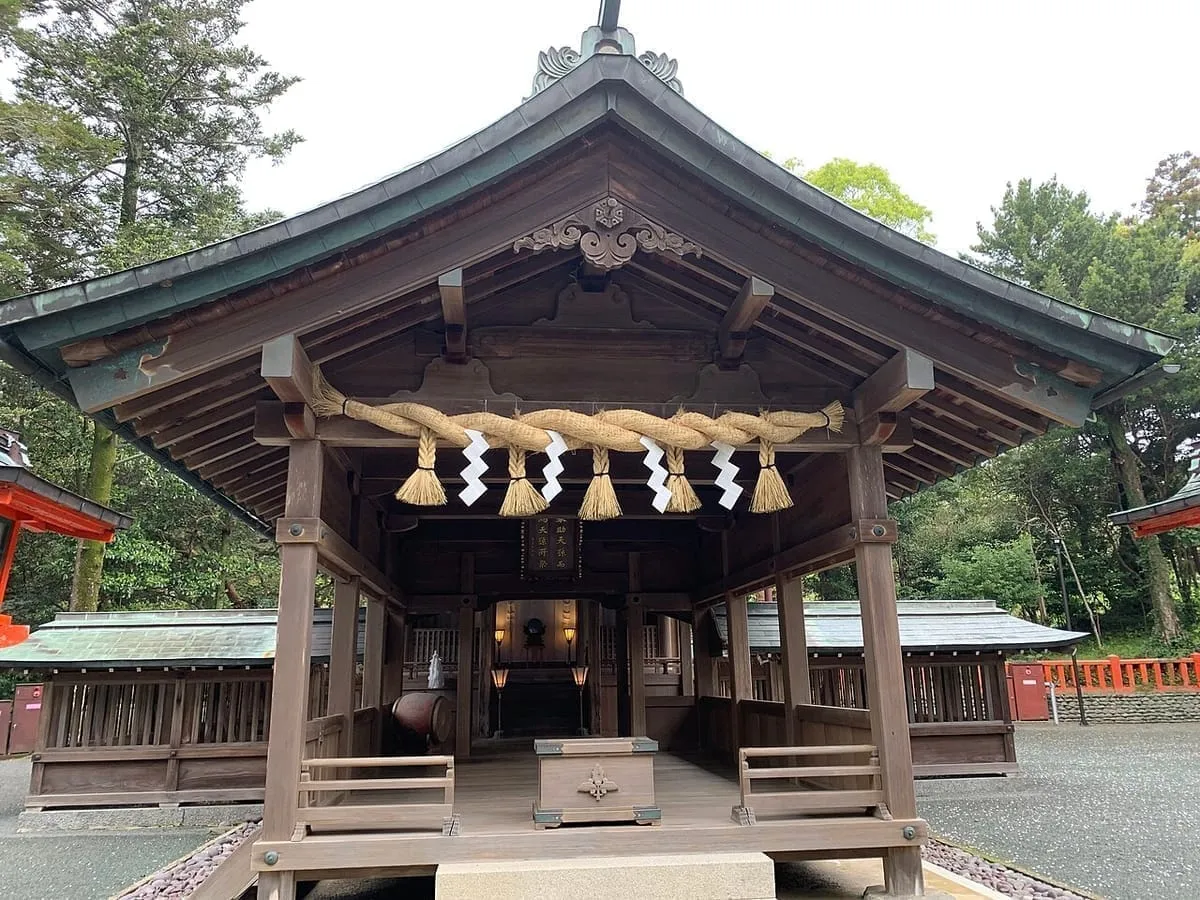
The three shrines of Munakata Taisha — Okitsu Miya on the open ocean island of Okinoshima, Nakatsu Miya on Oshima Island, and Hetsu Miya on the Kyushu mainland — each have distinct haiden. The complex as a whole was designated a UNESCO World Heritage Site in 2017. The haiden of Nakatsu Miya, shown here, reflects the quiet scale of island-shrine architecture.
Reading Haiden Roof Architecture
The roof style of a haiden communicates information about the shrine’s tradition and period of construction.
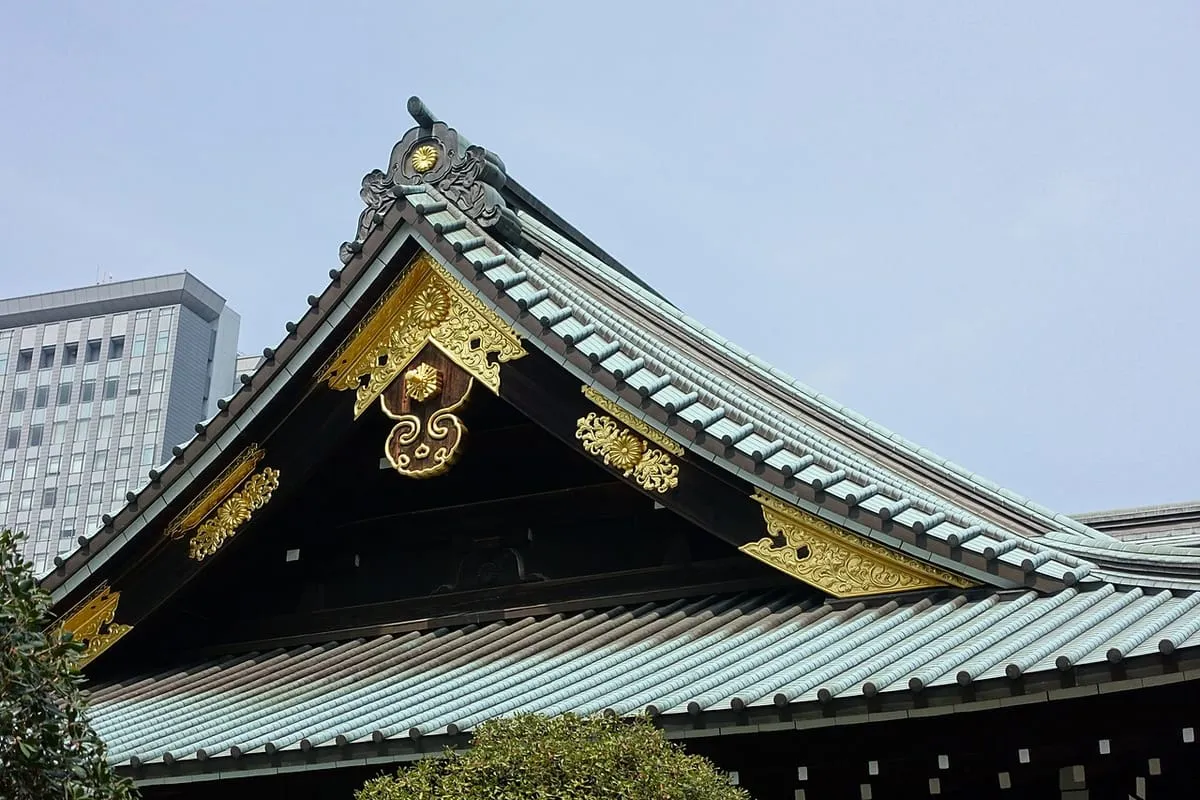
Irimoya-zukuri (入母屋造): The most common. A hip-and-gable roof combining a triangular gable with four sloping planes. This form signals classical elegance and appears on haiden from the Heian period onward.
Kirizuma-zukuri (切妻造): A simple gabled roof. Depending on orientation — tsuma-iri (gable face forward) or hira-iri (gable face to side) — it produces different visual impressions. Older and smaller shrines often use this form.
Yosemune-zukuri (寄棟造): A hipped roof without gables. Common in regions with heavy rainfall.
Roofing materials vary: kayabuki (thatched reed) at Izumo, hiwada-buki (cypress bark) at imperial-affiliated shrines, copper plate at large modern shrines, and ceramic tile at many neighborhood shrines. Each material carries associations of regional tradition and rank.
Haiden and Goshuin
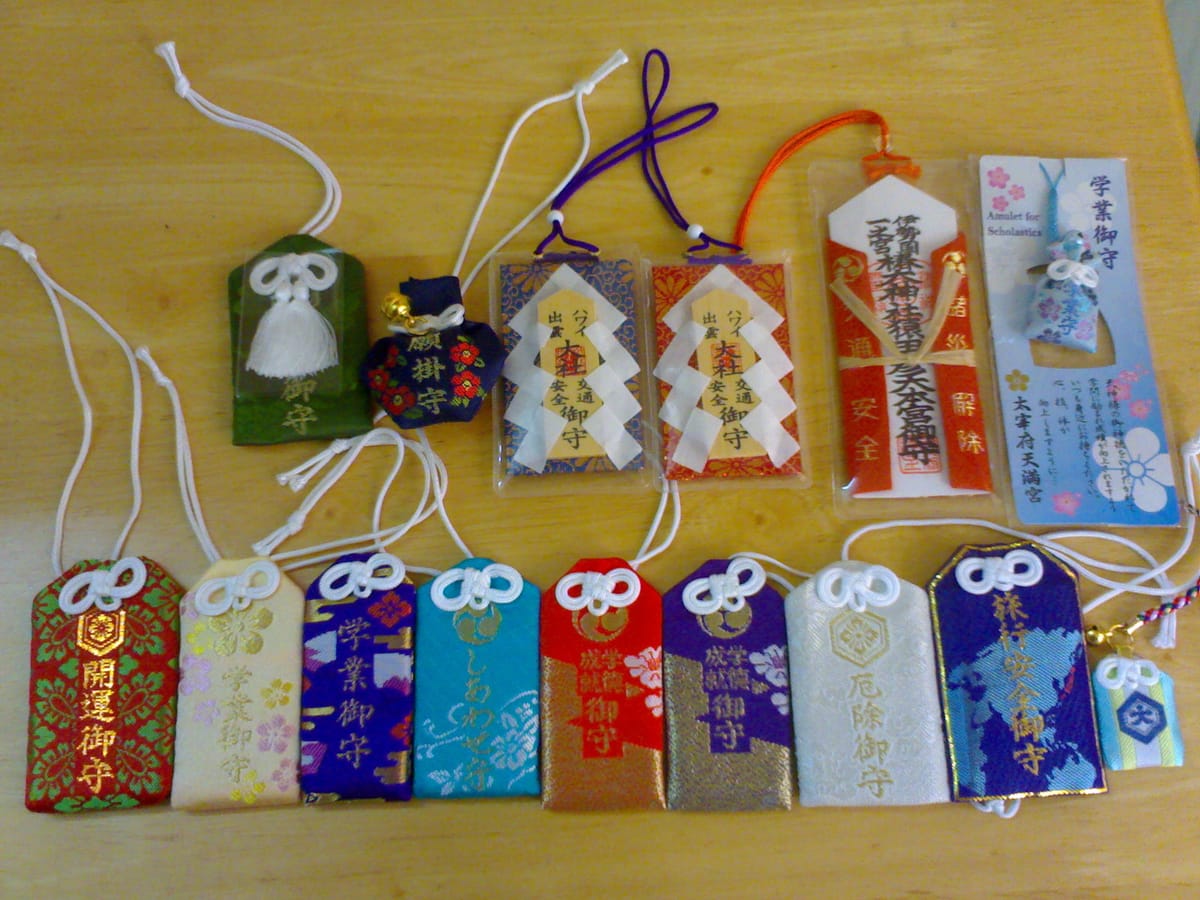
The goshuin reception desk (juyo-sho) is almost always adjacent to the haiden — typically the shrine office (shamusho) to the side, or a dedicated counter. The standard sequence: enter the grounds, purify at the chozuya, approach the haiden, worship, then receive your goshuin.
This sequencing is intentional. The goshuin is a record of worship completed, not merely a visit made. The haiden visit is the act that the goshuin commemorates.
Some goshuin designs incorporate the haiden’s architectural features: roof silhouettes, gable ornaments, the name board’s calligraphy. These designs are not decoration — they are a record of standing before that specific building, in that specific place, facing that specific kami.
Every time you stand before a haiden, you are standing at the architectural point a society built, over centuries, to make human proximity to the divine structurally possible. The building does not simply contain a ritual — the building is the ritual’s form.
Related Articles
- A Map of the Shrine Grounds: Every Building from the Sandō to the Honden
- Honden Architectural Styles: Comparing Shinmei, Taisha, Nagare, and Kasuga
- The Kaguraden and Sacred Dance: Architecture of Ritual Performance