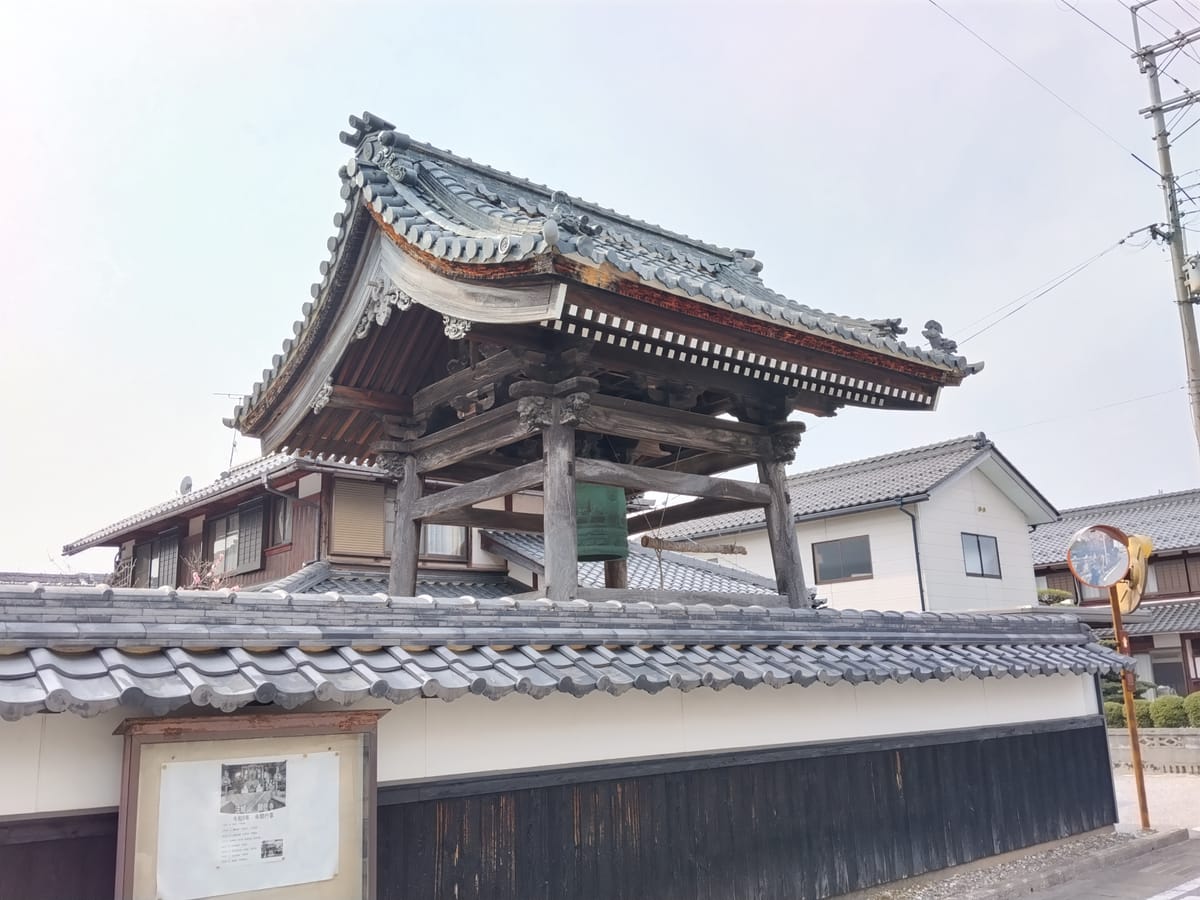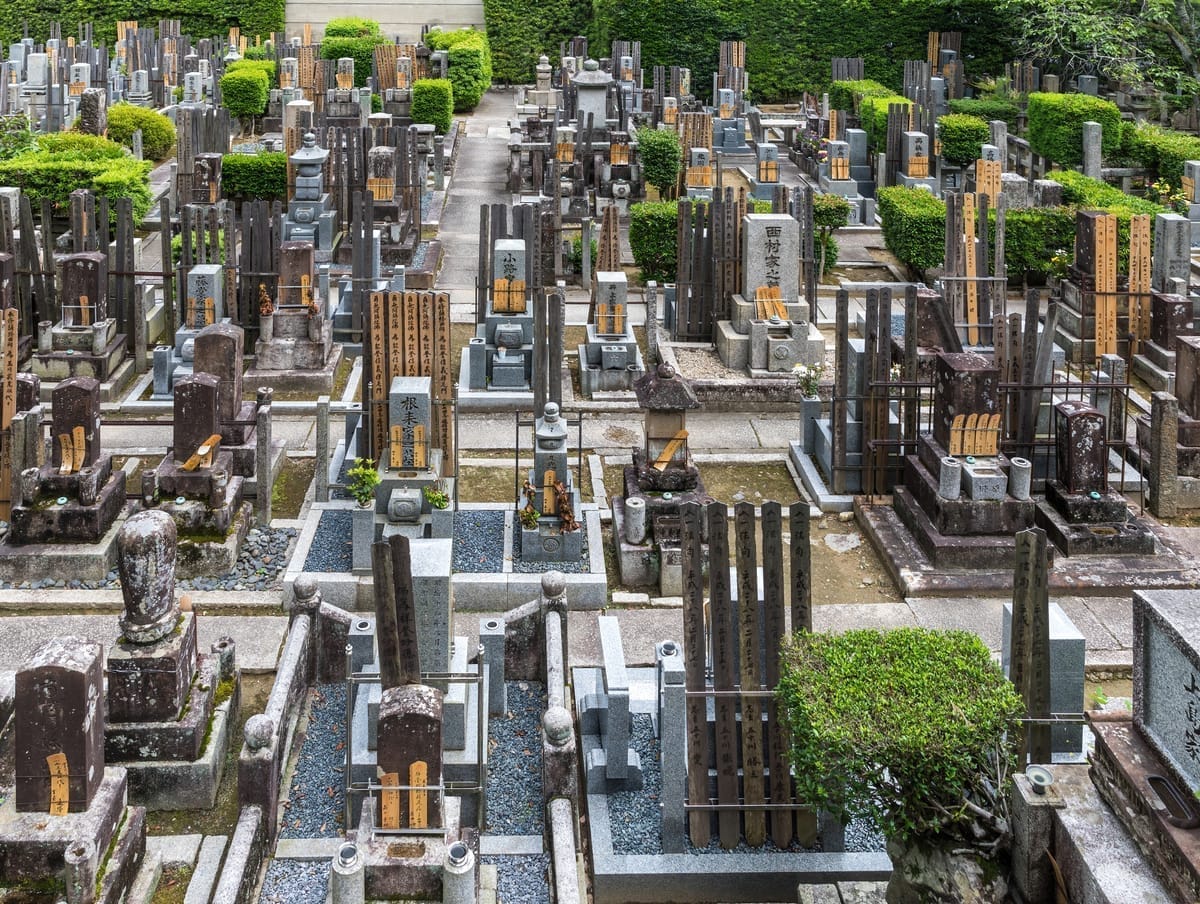
Every Japanese Buddhist temple has at least one gate. In many cases it is enormous — a two-story wooden structure rising above trees and garden walls, its roof curving upward at the edges in the way that seems to belong only to traditional Japanese architecture. This gate is called a sanmon (山門 or 三門), and it is far more than an entrance.
Two Names, One Gate
The gate goes by two different written forms, each with its own meaning.
山門 (sanmon, “mountain gate”) reflects the historical reality that Japanese Buddhist monasteries were typically built in mountains. Enryakuji on Mount Hiei, Koyasan in the mountains of Wakayama, Eiheiji in the forests of Fukui — these great institutions existed in landscapes where the approach itself was a journey away from ordinary life. The gate at the edge of the mountain settlement was literally the “mountain gate,” and the term stuck even as temples moved into cities.
三門 (sanmon, “three-gate”) points to a philosophical concept: the sangedatsumon (三解脱門), or “Gate of the Three Liberations.” The three liberations are states of realization that lead beyond suffering:
- Kū (空, emptiness): understanding that no thing possesses a fixed, independent self
- Musō (無相, formlessness): understanding that phenomena have no inherent characteristics
- Mugan (無願, desirelessness): releasing attachment to outcomes and goals
To pass through the gate is, symbolically, to pass through these three recognitions. The architectural form usually literalizes this: the gate has three openings — a large central bay and two smaller side bays — corresponding to the three liberations.
What the Gate Looks Like
The most prestigious form of sanmon is the two-story gate (nijūmon or rōmon-shiki). The structure has two full floors, separated by a roof between them and covered by a large roof at the top. The overall silhouette — double-eaved, with multiple layers of bracketing holding up each roof — is one of the most distinctive shapes in Japanese architecture.
Ground floor: The passage through which visitors walk. Often flanked by guardian statues called niō (仁王, Benevolent Kings) or shitennō (四天王, Four Heavenly Kings), who protect the temple from evil.
Upper floor (rōjō): A sacred space containing Buddhist images, paintings, and ritual objects. Usually not accessible to visitors on ordinary days, though special openings are held at major temples in spring and autumn. If you do get inside, the combination of ancient statuary and the view out over the temple compound below is extraordinary.
The roofing style is typically irimoya-zukuri — a complex form that combines a gabled central section with hip roofs on the sides, creating the graceful multi-directional eaves associated with Japanese temple architecture. The sheer weight of these structures requires massive timber columns and intricate bracketing (tokyō) to distribute the load.
Tofukuji: Japan’s Oldest Surviving Zen Sanmon
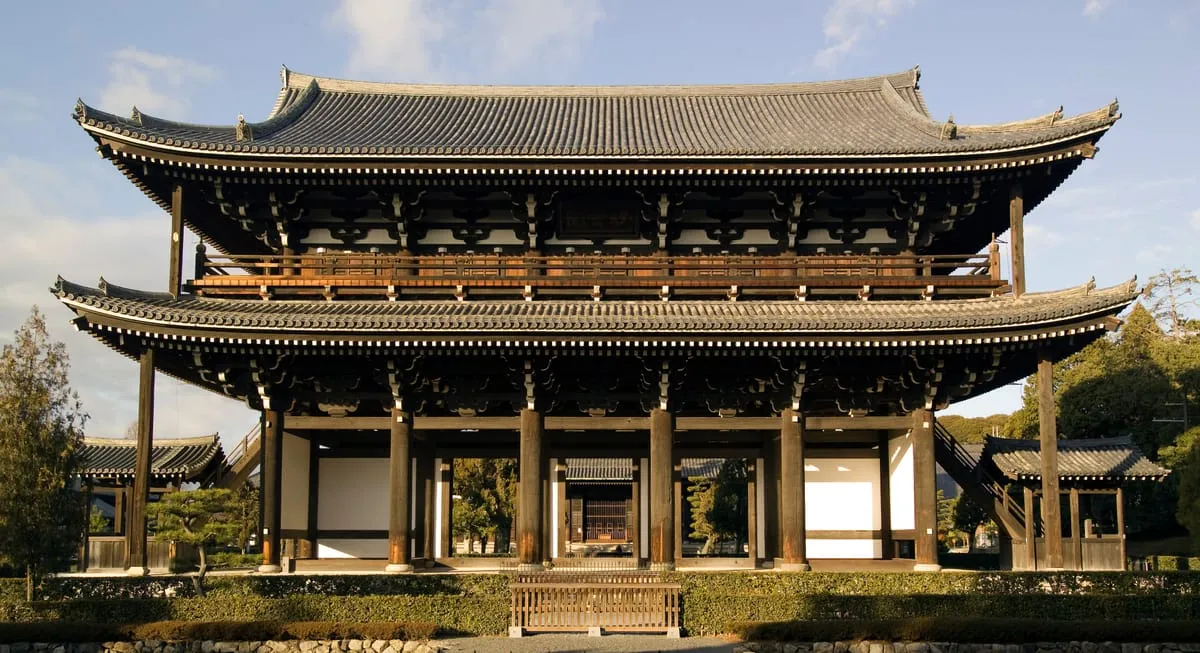
The sanmon of Tofukuji (東福寺) in Kyoto is the oldest surviving gate of any Zen Buddhist temple in Japan — a National Treasure (国宝) that has stood since its reconstruction in 1405.
Tofukuji was founded in 1236 by regent Kujō Michiie as one of the great Rinzai Zen monasteries of medieval Kyoto. The gate that survived fires and centuries of weathering has a front width of five bays, a depth of two bays, and rises approximately 22 meters. The first floor opens onto three passages; the upper floor houses a seated Śākyamuni Buddha flanked by sixteen Rakan (arhats).
What strikes first-time visitors is the texture of the wood — massive timbers darkened by six centuries of incense smoke, rain, and light. The craftsmanship that has kept this structure standing through everything Japan’s history has thrown at it is quietly astonishing.
Tofukuji is famous throughout Japan for autumn foliage, and the sanmon stands as the focal point of the season’s most photographed views: the gate framed by hundreds of maples turning crimson and gold simultaneously.
Chion-in: Japan’s Largest Temple Gate
If Tofukuji is Japan’s oldest Zen sanmon, Chion-in (知恩院) in Kyoto holds an entirely different record: its sanmon is the largest wooden gate in Japan.
Chion-in is the head temple of the Jōdo (Pure Land) sect, founded around the place where the great monk Hōnen (法然, 1133–1212) spent his final years. The sanmon standing today was rebuilt in 1621 under the patronage of shogun Tokugawa Hidetada. Its dimensions are staggering: 50 meters wide, 24 meters tall, with more than 70,000 roof tiles covering its surface. Estimated total weight exceeds 2,000 tonnes.
The upper floor is an active ritual space. The central altar contains statues of Śākyamuni, the Chinese Pure Land patriarch Shandao (善導大師), and Hōnen himself. Surrounding wall paintings show celestial beings in vivid color — a sharp contrast to the weathered exterior.
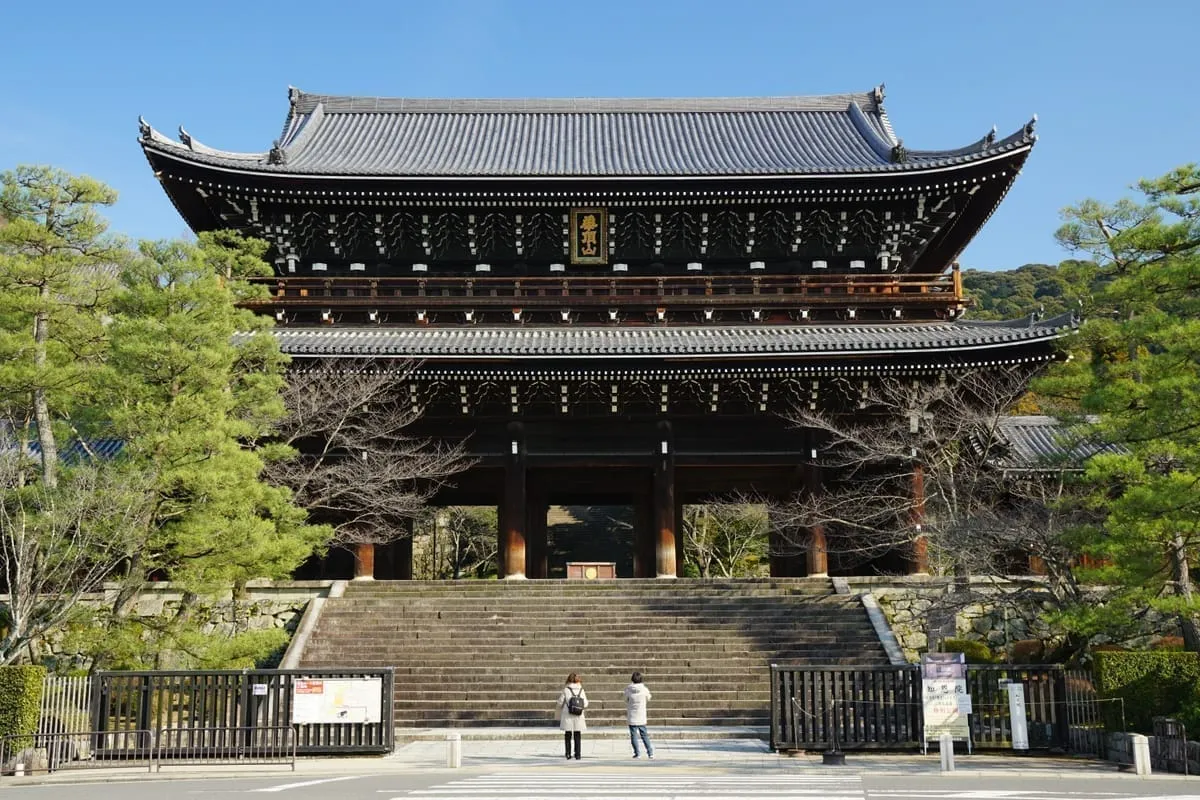
The gate carries a story. According to legend, the master carpenter Hidari Jingorō — credited with incredible skills across many of Japan’s greatest buildings — left a single umbrella inside the roof when construction was complete. The umbrella, said to still be there, has attracted varied interpretations: a charm against evil, a structural device to detect building movement, or a deliberate “flaw” introduced so the work wouldn’t be seen as claiming perfection beyond human reach. Whatever the truth, the story captures something about how the Japanese have always related to great buildings — as things inhabited by intention even after their makers are gone.
Nanzenji: The Gate of the “Magnificent View”
“Zekka kana, zekka kana” — “What a magnificent view, what a magnificent view.”
This line, spoken by the legendary outlaw Ishikawa Goemon as he reclines atop the sanmon of Nanzenji surveying spring Kyoto, is one of the most famous moments in Japanese kabuki theater. The play is fictional, Goemon may be legendary, but the gate is entirely real.
Nanzenji (南禅寺) is the head temple of the Nanzenji branch of Rinzai Zen and occupies a privileged position at the foot of the Higashiyama mountains in eastern Kyoto. Its sanmon, rebuilt in 1628 and donated by the daimyo Tōdō Takatora in memory of soldiers lost in the Siege of Osaka, is known by the epithet “Tenka Ryūmon” — the Dragon Gate Under Heaven.
The gate is open for visitors to climb (¥600 as of recent years). From the upper floor, the view sweeps across a vast compound of ancient trees, the terracotta rooftops of the sub-temples, and beyond to the Higashiyama hills. On a clear day in autumn, the colors justify every theatrical description ever written about them.
The gate also benefits from its surroundings. Just beyond it, a Roman-style brick aqueduct — the Suirokaku, built in 1890 to carry water from Lake Biwa — cuts through the compound’s southern edge. The juxtaposition of Meiji-era engineering and Edo-period timber architecture is one of Kyoto’s more unusual pleasures.
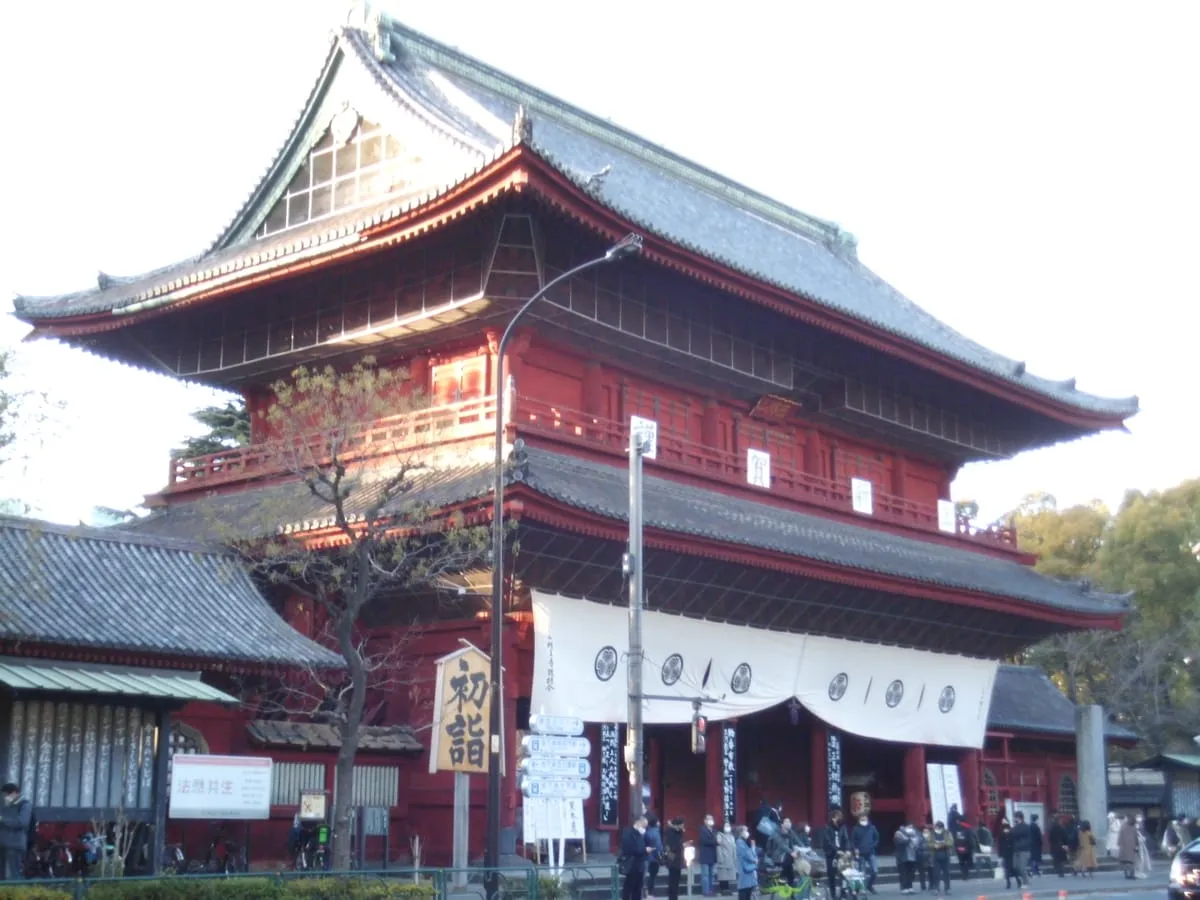
Zojoji: An Edo Gate in a Modern City
Tokyo’s most significant surviving sanmon stands at Zojoji (増上寺) in the Shiba district of Minato Ward — a short walk from Tokyo Tower, which appears directly behind the gate in photographs.
Zojoji was the Tokugawa shogunate’s official funerary temple for the Jōdo sect, and six of the fifteen Tokugawa shoguns are buried in its precincts. The gate, formally called the Sangedatsu-mon (三解脱門, “Gate of the Three Liberations”), was built in 1622 and is one of the oldest surviving wooden structures in central Tokyo. It holds Important Cultural Property (重要文化財) status.
The gate’s three-bay, double-story form is structurally similar to Kyoto’s great sanmon, though scaled more modestly. What makes it remarkable today is its context: a wood-and-tile structure from the Edo period set against one of the world’s densest urban skylines. When snow falls on the gate’s roof and Tokyo Tower glows red behind it, the image captures something genuinely unusual about the city — ancient and modern, temple and television tower, occupying the same improbable frame.
How Gates Differ by Buddhist Sect
The sanmon appears across all major Buddhist traditions in Japan, but the way each sect interprets and uses the structure reflects its particular theology.
Zen sects (Rinzai, Sōtō, Ōbaku) place the highest ritual importance on the sanmon. In Zen monasteries, the gate is not merely an entrance but a station in the monk’s spiritual discipline. The formal Zen monastic complex (sōrin) designates the sanmon as one of the “seven halls” (shichidō garan) essential to a proper institution. Zen gates often replace the niō guardian statues with the Four Heavenly Kings, or omit guardian figures entirely. The upper floors at Zen temples like Tofukuji function as spaces for Zen ceremony and image veneration.
Jōdo and Jōdo Shinshū (Pure Land sects) interpret the sanmon as a threshold between the defiled world and Amida Buddha’s Pure Land. Chion-in’s gate, built with Tokugawa money at Tokugawa scale, demonstrates how Pure Land temples used architecture to manifest the overwhelming power and grace associated with Amida’s vow.
Shingon and Tendai temples often have multiple gates arranged in sequence — the sanmon may be followed by an inner gate (naidaimon), a gatehouse for the main hall, or a special gate for the worship hall. The layered approach creates an experience of progressive sanctification.
In every tradition, the gate functions as a symbolic and physical threshold: the moment of crossing it marks the transition from ordinary space to consecrated ground.
Visiting: What to Know
Bow before entering. The gesture of pausing before the gate and offering a slight bow is common courtesy — equivalent to the bow before crossing a Shinto torii. It acknowledges the threshold you’re crossing.
Walk to the side, not the center. The central axis of the gate and pathway (seichū) is traditionally considered the path of the enshrined deity or Buddha. Stepping to one side shows awareness of this convention, though few temples enforce it explicitly.
Upper floors: remove your shoes. If the upper floor is open for a special viewing, footwear must come off before ascending. The space is a sanctuary, not a viewing platform.
Photography inside. The gate exterior may be photographed freely. The interior, especially any enshrined statues, often has restrictions. Check posted signs before raising your camera.
Gate hours differ from temple hours. Some gates close before or after the main compound opens and closes. If you want the gate in early-morning light without the crowds, check whether it’s accessible at your target hour.
Sanmon and Goshuin
The sanmon does not itself issue goshuin, but it begins the encounter that leads to one. Walking through a great gate — whether Tofukuji’s ancient columns or Chion-in’s overwhelming scale — orients the body differently than walking through a shopping mall entrance or a hotel lobby. There’s a transition that happens, not quite conscious, between the outside and inside.
At major temples, the goshuin received at the main hall carries the memory of everything experienced from the gate forward: the garden, the incense, the sound of distant sutras, the quality of light. Some temples issue goshuin specifically connected to the sanmon — a seal that records not just the temple’s name but this particular structure’s centuries of standing at the boundary between worlds.
When you walk back through the gate at the end of a visit and turn to look at it from outside, the scale reads differently. On the way in, you’re adjusting; on the way out, you’ve already been inside. The gate looks smaller, or perhaps the world it opens onto looks larger.
Related Articles
- Buddhism in Japan: A Complete Introduction
- Types of Buddhist Statues: Nyorai, Bosatsu, Myōō, and Ten Explained
- Temple Precincts: A Map of the Seven Essential Halls
Image Credits
- Sanmon of Tōfuku-ji, Kyoto (December 27, 2008): Fg2, Public domain, via Wikimedia Commons
- Sanmon of Chion-in, Kyoto (February 16, 2017): 663highland, CC BY-SA 4.0, via Wikimedia Commons
- Sangedatsu-mon of Zōjō-ji, Tokyo (January 3, 2021): Indiana jo, CC BY-SA 4.0, via Wikimedia Commons
- Sanmon of Nanzenji, Kyoto: Daderot, Public domain, via Wikimedia Commons