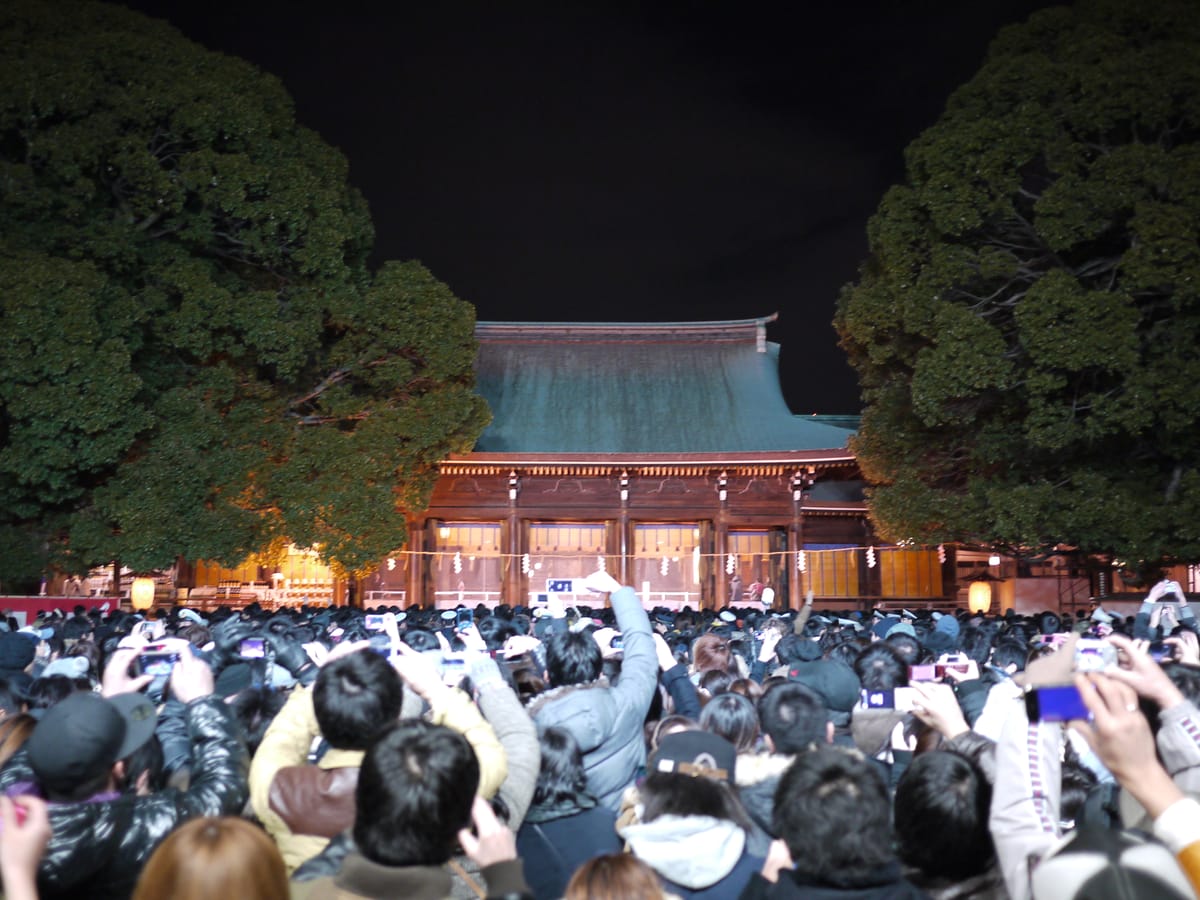
A Shinto shrine is not a place you visit only when you need something.
In spring, people pray for abundant harvests. In summer, they purify accumulated impurities. In autumn, they give thanks for the harvest. In winter, they reflect on the year and prepare for the next. These annual rituals — called nenjū gyōji (年中行事) — have shaped the rhythm of Japanese life for over a thousand years.
This guide walks you through the major shrine festivals season by season, explaining their origins, significance, and how to participate. We also cover seasonal limited-edition goshuin, so you can plan your visits accordingly.
Winter: Beginning the Year and Driving Out Evil
Hatsumōde (初詣) | January 1–3
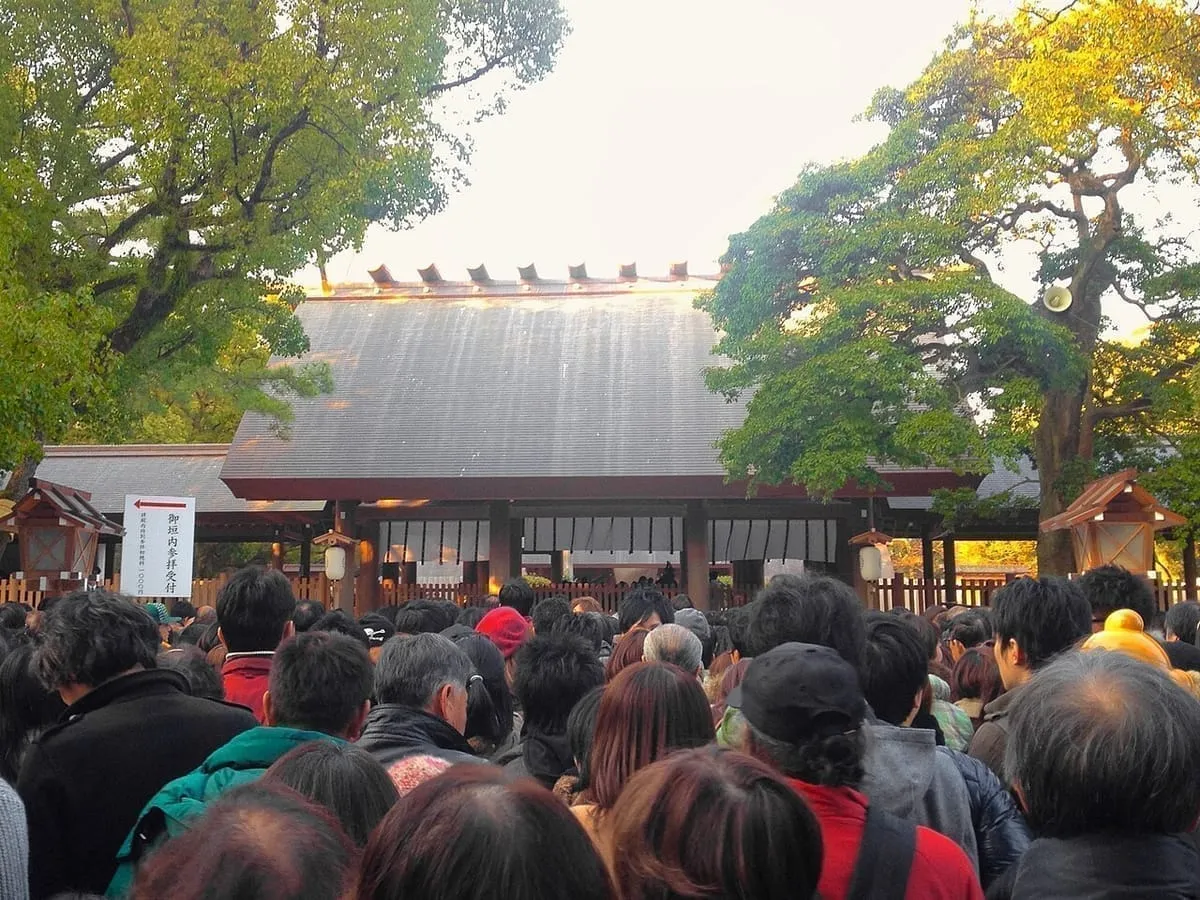
Hatsumōde is the first shrine or temple visit of the new year. The busiest days are January 1 through 3 (called sanganichi), but visits through matsu no uchi — January 7 in eastern Japan, January 15 in western Japan — are generally considered hatsumōde.
Origins: The practice traces back to toshigomori in the Heian period (794–1185), when people would spend the night at their local shrine from New Year’s Eve through New Year’s morning, praying for safety in the coming year. Over time, this evolved into the daytime visit we know today.
What to do:
- Toss a coin into the offering box and pray with two bows, two claps, one bow
- Draw an omikuji fortune slip to see your luck for the year
- Purchase hamaya (demon-breaking arrows), amulets, or other lucky charms
- Return last year’s amulets and ofuda for ritual burning (otakiage)
Goshuin tip: Many shrines offer New Year’s limited goshuin with gold ink, zodiac animal designs, or special celebratory stamps. Arriving early in the morning or after January 4 helps you avoid the worst crowds.
Setsubun (節分) | Around February 3
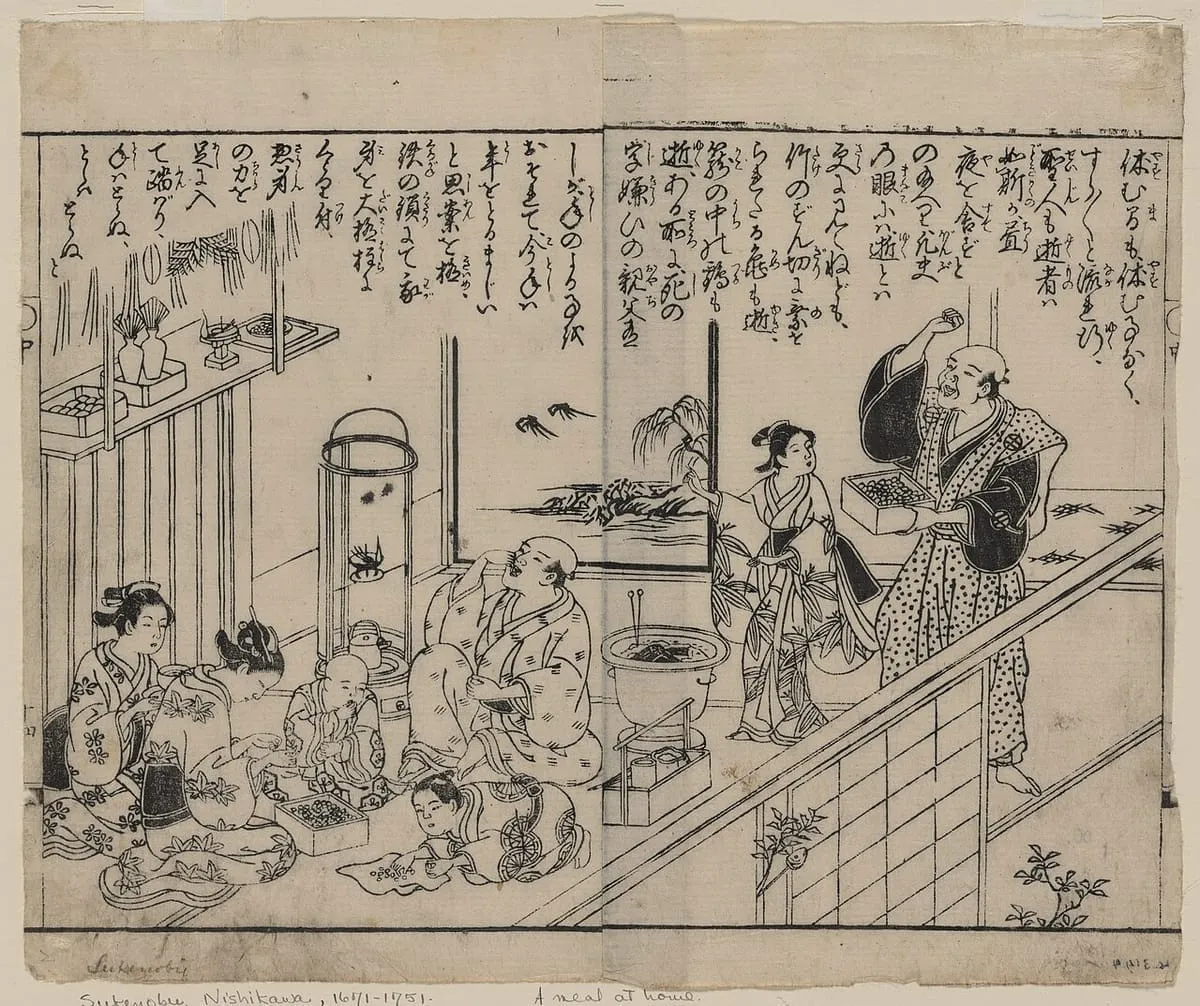
Setsubun literally means “dividing the seasons.” Originally it referred to the eve of each seasonal turning point, but today it specifically means the day before the start of spring (risshun), usually February 3. In the old lunar calendar, this was close to the turn of the year itself.
Origins: The Chinese court ritual of tsuina (追儺) — driving out demons — arrived in Japan during the Nara period (710–794) and became an established palace ceremony in the Heian period. It eventually spread to the general population, evolving into today’s mamemaki.
What to do:
- Mamemaki (bean throwing): Scatter roasted soybeans while shouting “Oni wa soto! Fuku wa uchi!” (“Demons out! Fortune in!”)
- Ehōmaki: Eat an uncut sushi roll while facing the year’s lucky direction, in silence
- At major shrines, celebrities and sumo wrestlers join the bean-throwing, drawing enormous crowds
Goshuin tip: Setsubun goshuin often feature illustrations of oni (demons) or the character for “fuku” (fortune). Famous setsubun events include Naritasan Shinshōji, Sensōji, and Yoshida Shrine in Kyoto.
Spring: New Life and Prayers for Harvest
Kinen-sai (祈年祭) | February 17
Read as “toshigoi no matsuri,” this is one of Shinto’s most important rituals — a prayer for abundant grain harvests in the coming year. Most shrines, including Ise Jingū, hold it on February 17.
The Japanese word for “year” (年, toshi) may derive from “rice ripening” (稲年, inatoshi), making kinen-sai literally a “festival praying for a good rice year.” It forms a pair with the autumn Niiname-sai (harvest thanksgiving).
Tip: Some shrines allow public attendance. The solemn atmosphere offers a rare glimpse into formal Shinto ritual.
Spring Festivals (春祭り) | March–April
A broad category of festivals welcoming the deity of the rice paddies and praying for safe fieldwork and bountiful crops, often timed to cherry blossom season.
Notable spring festivals:
- Kasuga Matsuri at Kasuga Taisha (March 13): One of Japan’s three Imperial festivals, with an envoy sent by the Emperor
- Sannō Matsuri at Hie Shrine: Held in even-numbered years in June, but preparations begin in spring
- Cherry blossom festivals: Shrines with famous sakura host food stalls and evening viewing events
Goshuin tip: More shrines now offer hanami (cherry blossom) goshuin or spring-limited designs on pink paper, sometimes with pressed cherry petals. These are among the most visually striking goshuin of the year.
Summer: Purification and Warding Off Plague
Nagoshi no Ōharae (夏越の大祓) | June 30
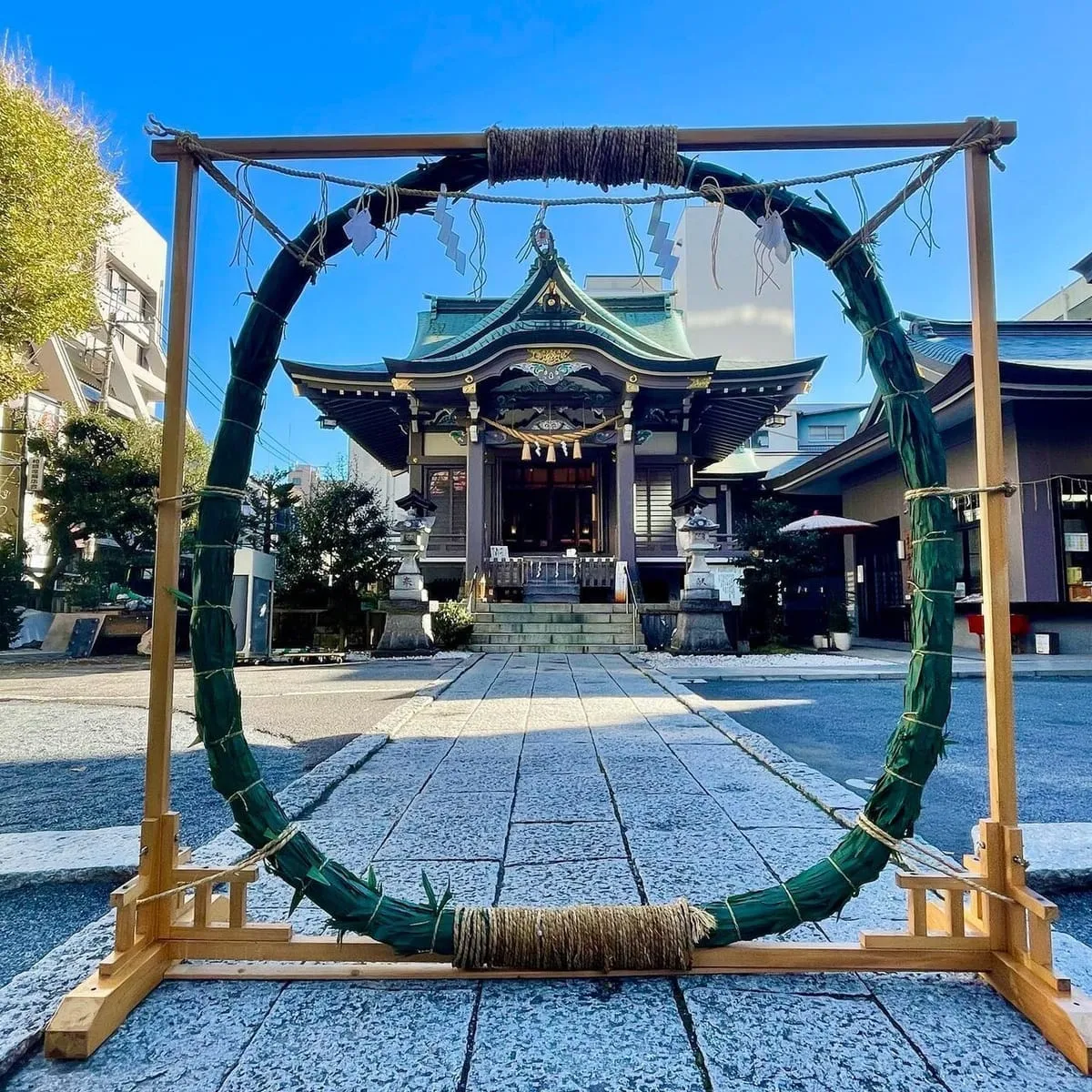
At the exact midpoint of the year, shrines across Japan hold the Great Purification to cleanse the sins and impurities that have unknowingly accumulated over the past six months.
The iconic ritual is chinowa kuguri — walking through a large ring made of miscanthus grass (kaya), approximately two meters in diameter. You pass through it three times in a figure-eight pattern: left, then right, then left again.
Origins: The legend of Somin Shōrai from the Bingo no Kuni Fudoki tells how Susanoo-no-Mikoto, traveling in disguise, was hosted by a poor man named Somin Shōrai. In gratitude, Susanoo gave him a ring of kaya grass that would protect his family from plague.
What to do:
- Walk through the chinowa ring
- Write your name and age on a paper hitogata (human-shaped cutout), rub it against your body to transfer impurities, then submit it at the shrine for ritual disposal
- In the Kyoto area, eat minazuki — a triangular wagashi (sweet) topped with red beans
Goshuin tip: Nagoshi no Ōharae goshuin are especially popular, often featuring chinowa designs in cool blue tones. Use the Goshuin Meguri app to find nearby shrines offering chinowa kuguri.
Summer Festivals and Rei-taisai | July–August
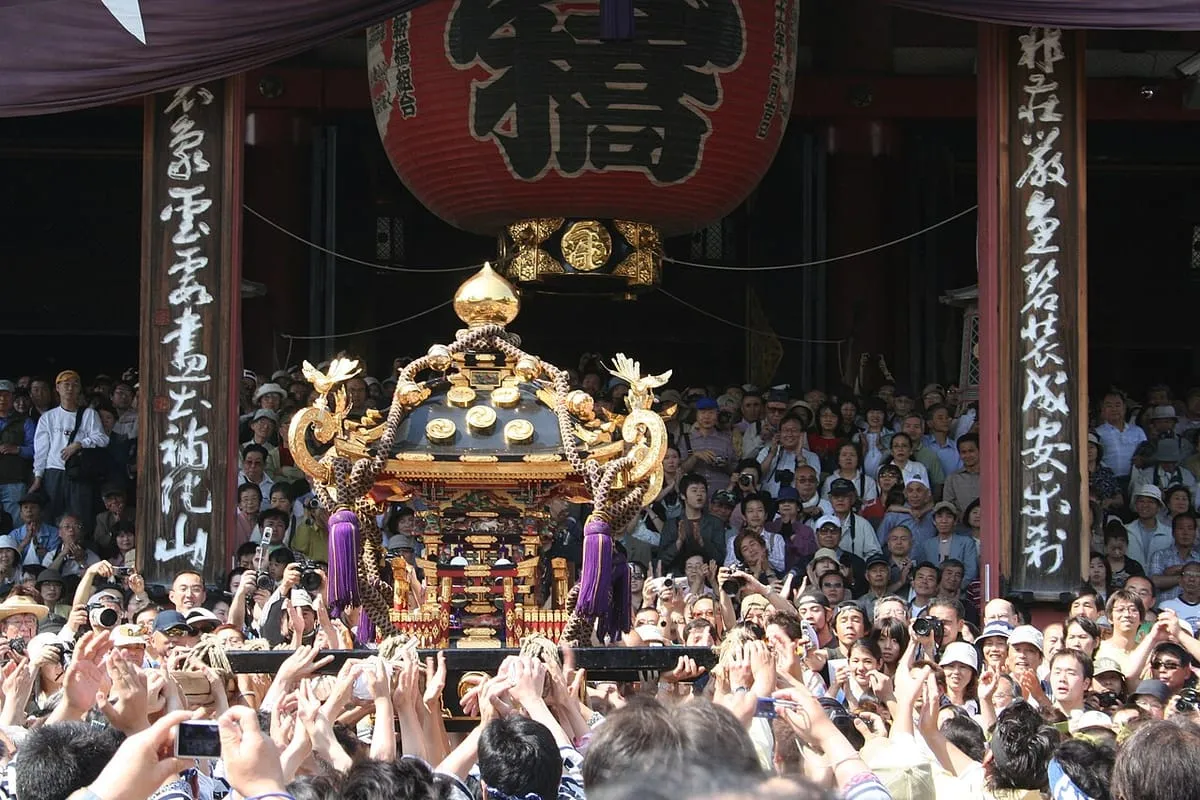
Summer is festival season. Gion-style festivals praying for the end of epidemics and each shrine’s rei-taisai (most important annual festival) are concentrated in this period.
A rei-taisai is the single most important festival at a given shrine, usually held on a date connected to the enshrined deity or the shrine’s founding.
Major summer festivals:
- Gion Matsuri (July, Yasaka Shrine, Kyoto): One of Japan’s three great festivals, spanning an entire month
- Tenjin Matsuri (July 24–25, Osaka Tenmangu): Famous for its boat procession and fireworks
- Kanda Matsuri (May, Kanda Myōjin, Tokyo): Held in odd-numbered years; one of Edo’s three great festivals
- Sanja Matsuri (May, Asakusa Shrine, Tokyo): Over 100 mikoshi parade through the streets of Asakusa
The mikoshi (portable shrine) is the star of any matsuri. It is the palanquin in which the deity rides, carried through the neighborhood by shrine parishioners shouting “Wasshoi!” The procession allows the deity to survey the community and bestow blessings.
Goshuin tip: Festival-limited goshuin tied to rei-taisai are one-of-a-kind souvenirs available only at that shrine during the event. They often feature gold mikoshi or festival crests. Check dates in advance and arrive early.
Autumn: Giving Thanks for the Harvest
Autumn Festivals | September–November
Autumn is the season of gratitude. Communities report back to the gods that the abundant harvest prayed for in spring has been realized.
Notable autumn festivals:
- Iwashimizu Festival (September 15, Iwashimizu Hachimangū): One of the three Imperial festivals, held from midnight to dawn in an atmosphere of deep mystery
- Jidai Matsuri (October 22, Heian Jingū, Kyoto): One of Kyoto’s three great festivals, featuring a historical costume procession through the city
- Shichi-Go-San (November 15): Families celebrate children aged 3, 5, and 7, dressing them in formal kimono for a shrine visit
Niiname-sai (新嘗祭) | November 23
The harvest thanksgiving festival, in which newly harvested grain is offered to the gods in gratitude for the year’s bounty. It is the origin of Japan’s current national holiday, Labor Thanksgiving Day.
At the core of this observance is an Imperial ceremony: the Emperor offers new rice to Amaterasu Ōmikami and partakes of it himself. The first niiname-sai performed after an Emperor’s enthronement is called the Daijō-sai (Great Thanksgiving Ceremony), one of the most sacred rites of succession.
Niiname-sai is also held at shrines nationwide, where parishioners bring offerings of new rice and vegetables. Praying in spring (kinen-sai) and giving thanks in autumn (niiname-sai) — this paired structure is the backbone of the Shinto ritual year.
Winter: Closing the Year
Toshikoshi no Ōharae (年越の大祓) | December 31
The counterpart to June’s Nagoshi no Ōharae. On New Year’s Eve, shrines hold purification rites to cleanse the sins and impurities of the entire year, so that worshippers can greet the new year with a clean body and mind.
As with the summer purification, hitogata paper cutouts are used. Some shrines erect a chinowa ring for the year-end as well, though many reserve it for the summer rite only.
After the Joya-sai (year-end ceremony), the clock strikes midnight and the Saitan-sai (New Year’s dawn ceremony) begins, welcoming the new year. It’s a different experience from the Buddhist temple bells of joya no kane — quieter, more solemn, distinctly Shinto.
Goshuin tip: Some shrines offer year-end goshuin dated December 31 — your final goshuin of the year, carrying special meaning for collectors.
Festivals and Goshuin: Collecting the Seasons
Following the annual festival calendar adds a whole new dimension to goshuin collecting.
Limited Goshuin Calendar
| Season | Festival | Typical Design Features |
|---|---|---|
| January | Hatsumōde | Gold ink, zodiac animals, celebratory stamps |
| February | Setsubun | Oni illustrations, “fuku” character, bean motifs |
| March–April | Spring festivals | Cherry blossom designs, pink specialty paper |
| June | Nagoshi no Ōharae | Chinowa ring designs, cool blue palette |
| July–August | Summer festivals | Mikoshi, festival crests, gold leaf |
| September–November | Autumn festivals | Maple leaf designs, harvest motifs |
| November | Shichi-Go-San | Chitose-ame candy, celebration stamps |
| December | Toshikoshi no Ōharae | Year-end designs, next year’s zodiac |
Using the Goshuin Meguri App
Advance research is essential to avoid missing seasonal goshuin. The Goshuin Meguri app lets you search for nearby shrines and manage your visit records by date and location. Plan your visits around festival dates and build a goshuin collection that tells the story of a full year.
Etiquette for Festival Participation
Basic Manners
- Dress code: Casual clothing is fine, but avoid overly revealing outfits. For formal festivals like rei-taisai, slightly dressy attire is appreciated
- Photography: Photographing the ritual itself is often prohibited. Check beforehand, and even where photography is allowed, avoid using flash
- Worship procedure: The basics don’t change on festival days — purify your hands at the temizu basin, then bow twice, clap twice, bow once
Getting the Most from Festival Visits
- Yatai (food stalls): Major festivals line the approach path with stalls selling yakisoba, takoyaki, candy apples, and kingyo-sukui (goldfish scooping) — an essential part of Japanese festival culture
- Omiki (sacred sake): Sometimes distributed at festivals. This is sake that was first offered to the deity, then shared with worshippers. Accept it with gratitude
- Watching the mikoshi: Even just watching is thrilling. Find a spot that won’t obstruct the bearers
- Night festivals: Shrines lit by lanterns and bonfires take on an entirely different, almost otherworldly atmosphere after dark
In Summary: Walking with the Shrine Through the Year
The annual rituals of Shinto shrines are the crystallized wisdom of a people who have lived in harmony with nature’s rhythms.
- Spring to pray, summer to purify, autumn to give thanks, winter to close the circle
Simply being aware of this cycle transforms the shrine from “a place I visit on New Year’s Day” into a companion for every season.
Visit for each festival. Collect the seasonal goshuin. Breathe in the local air. This isn’t tourism — it’s participation in Japan’s living faith and culture.
When is the next festival? Grab your goshuin book and go find out.
Image Credits
- Hatsumōde at Atsuta Shrine: KKPCW (Kyu3), CC BY-SA 4.0, Wikimedia Commons
- Setsubun mamemaki woodblock print: Library of Congress, Public Domain, Wikimedia Commons
- Chinowa at Kashiwa Shrine: ivva イワヲ, CC BY-SA 2.0, Wikimedia Commons
- Mikoshi at Sanja Matsuri, Asakusa: Eckhard Pecher, CC BY 2.5, Wikimedia Commons