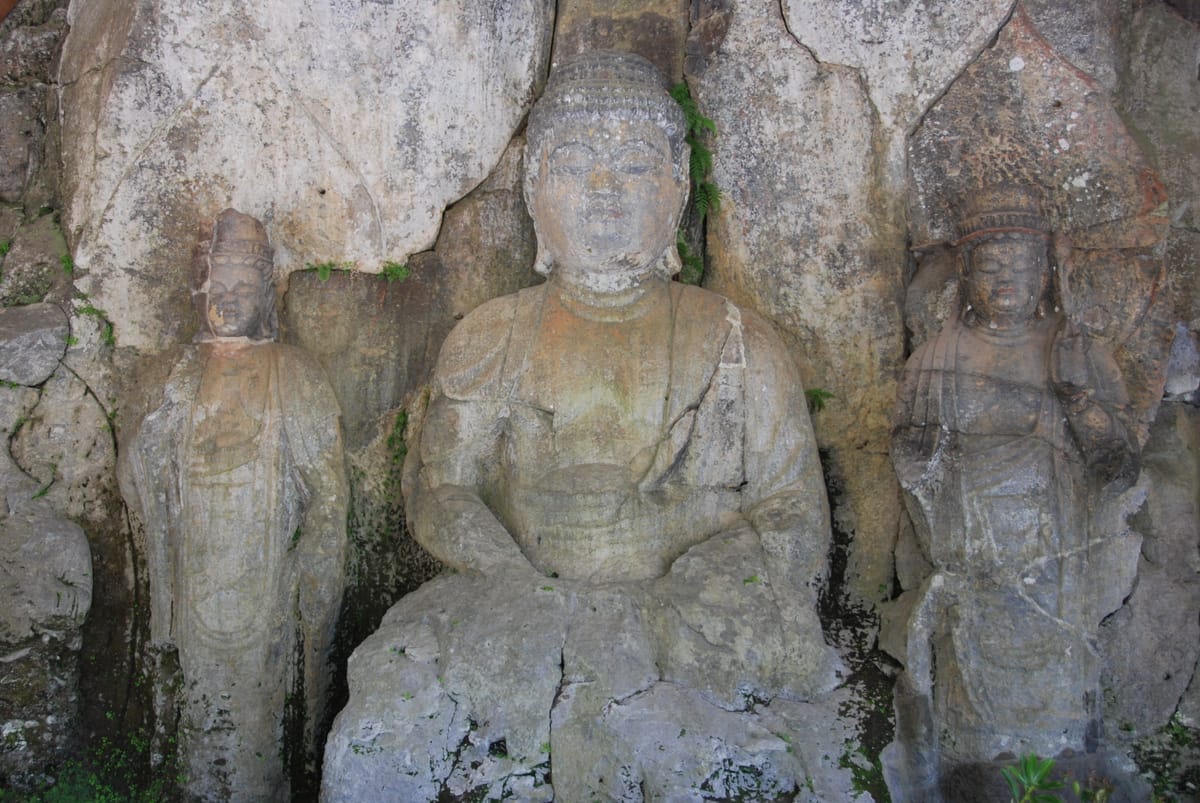
Walk into any major Japanese Buddhist temple and you will find multiple structures standing within the grounds: a great gate, a main hall, a lecture hall, a bell tower, subsidiary shrines. The arrangement can feel overwhelming — or, if you know what you are looking at, deeply intentional. Japan’s most historically significant temples follow a centuries-old design philosophy called shichidō garan (七堂伽藍), the Seven-Hall Compound, in which seven specific types of structure together constitute a fully functioning monastic community.
Understanding this concept transforms the experience of visiting a temple, especially when collecting goshuin (calligraphy seals). The buildings stop being scenery and start being architecture that means something.
What Is Shichidō Garan?
The word garan (伽藍) comes from the Sanskrit Saṃghārāma — “a place where monks live.” It came to refer to the temple complex as a whole. Shichidō means “seven halls.” Together, shichidō garan describes the ideal set of seven buildings a complete Buddhist monastic compound should contain.
The most commonly cited version comes from Zen Buddhism (Sōtō and Rinzai schools), which arrived from China during the Kamakura period (1185–1333). The Zen shichidō garan consists of:
- Sanmon (山門) — the main gate
- Butsuden (仏殿) — the Buddha hall, housing the primary image
- Hattō (法堂) — the dharma hall, where the abbot delivers teachings
- Sōdō (僧堂) — the monks’ hall, used for meditation, eating, and sleeping
- Kuri (庫裡) — the kitchen and administrative quarters
- Yokushitsu (浴室) — the bathhouse
- Tōsu (東司) — the toilet
The inclusion of a bathhouse and toilet in this list surprises many visitors. The answer reveals something central to Zen philosophy: enlightenment is not reserved for formal meditation but embedded in every act of daily life. Eating, bathing, and attending to bodily functions are all, when performed with the right awareness, forms of practice. The shichidō garan is not merely an architectural arrangement; it is a spatial map of the Zen claim that all of life is practice.
Origins: From India Through China to Japan
The concept of garan traces to India, where Buddhist monastic communities needed places to live, practice, and gather. As Buddhism spread into China during the Han dynasty, monastic architecture absorbed Chinese principles of symmetry, central axes, and clearly defined compounds.
Buddhism arrived in Japan in the mid-sixth century. The earliest Japanese monasteries were modeled on continental designs. Hōryū-ji (traditionally dated 607 CE, Nara Prefecture) preserves the oldest surviving example: its Western Precinct features a kondō (golden hall) and five-story pagoda arranged side by side within a covered cloister — showing Chinese symmetry combined with Japanese adaptation.
The explicit seven-hall framework arrived with Zen. When monks Eisai (1141–1215) and Dōgen (1200–1253) studied in Song-dynasty China and returned to Japan, they brought not only Zen teachings but the Chinese monastic blueprint, including the systematic seven-hall arrangement. Kenchō-ji in Kamakura (founded 1253) became the first monastery in Japan to be formally organized around this framework.
Each of the Seven Halls
Sanmon — The Gate of Three Liberations
The sanmon’s formal name is sangedatsumon (三解脱門), “gate of three liberations.” Its three openings correspond to three modes of Buddhist awareness — emptiness, formlessness, and wishlessness — that free the mind from suffering. Passing through the gate’s three bays symbolizes traversing these three liberations.
The gate’s imposing scale also marks the boundary between the ordinary world and the sacred compound within. The largest surviving examples, such as the sanmon of Tōfuku-ji (rebuilt 1405, national treasure) and the great gate of Chion-in (1619, national treasure), are two-story structures visible from great distances.
Butsuden — The House of the Buddha
The butsuden is the temple’s heart, positioned on the central axis directly beyond the sanmon. It houses the primary Buddha image — usually Śākyamuni in Zen temples — on a shumidan (須弥壇), an altar platform symbolizing Mount Sumeru, the center of the Buddhist universe.
Zen butsuden tend to be relatively austere: open wooden floors suitable for meditation, minimal decoration. This reflects Zen’s emphasis on direct experience over ritual elaboration. The goshuin received at Zen temples frequently names the main image enshrined in the butsuden.
Hattō — Where the Dharma Is Spoken
The hattō is where the abbot formally teaches. The abbot ascends a kōza (high seat) while monks gather on the hall’s broad floor. This dedicated teaching space distinguishes Zen temples from those of other Buddhist schools, which typically conduct teachings within the main hall.
Hattō are famous for their ceiling paintings: enormous dragon-and-cloud compositions (unryūzu) by celebrated artists. Kennin-ji in Kyoto (painted 2002 by Koizumi Junsaku) and Myōshin-ji (attributed to Kanō Tan’yū, 1599) are among the most visited. Visitors can often lie on the floor to look up at these paintings.
Sōdō — The Total Practice Space
The sōdō is the most conceptually radical building in the compound. Monks sleep, eat, and meditate in the same room — each assigned to a narrow wooden platform called a tan (単). During meditation periods, monks sit on their tan. During formal meals, they eat there in silence from nested lacquer bowls (ōryōki). At night, they sleep there.
The design embodies the Zen principle that eating and sleeping are not interruptions to practice; they are practice. The sōdō refuses to separate life-functions into different rooms, making the non-separation of daily life and dharma practice visible in architecture. The sōdō was also one of three “silent practice places” (sanmoku dōjō) where private conversation was prohibited.
Kuri — The Kitchen as Sacred Space
The kuri houses the kitchen and serves as the monastery’s administrative center. The tenzo (典座) — the monk responsible for cooking — holds one of the highest positions in the Zen hierarchy. Dōgen wrote an entire treatise on this subject, the Tenzo Kyōkun (典座教訓), arguing that preparing food is an act of manifesting the dharma and that the attention a tenzo brings to selecting ingredients is identical in quality to meditation.
Kuri buildings often feature prominent smoke outlets (en-dashi) in the roof — a visual signal that the kitchen occupies a place of consequence. In many working Zen temples, the temple office where goshuin are issued is located adjacent to or within the kuri.
Yokushitsu and Tōsu — Purification and Presence
The bathhouse and toilet complete the philosophical argument.
The yokushitsu (bathhouse) was historically used on prescribed days, preceded by specific verses recited before bathing. Washing the body was treated as a purification equivalent in spirit to purifying the mind, and conversation was prohibited.
The tōsu (toilet) houses an image of Ususama Myōō (烏枢沙摩明王), a fierce wisdom king who transforms impurity into purity. Monks bow to this image before and after each use. Nothing is excluded from practice. Nothing is too low or too biological to be transformed by awareness.
Variations by Buddhist Sect
The Zen shichidō garan is the most systematically documented layout, but other schools have their own characteristic arrangements.
Esoteric temples (Tendai, Shingon) — Built on mountainous terrain, these temples eschew strict axial layouts in favor of dispersed compounds where multiple halls enshrine different aspects of the esoteric mandala universe. Kōya-san (Wakayama) and Mt. Hiei (Shiga) are the foremost examples, with buildings distributed across plateaus or slopes rather than along a single central axis.
Pure Land temples (Jōdo-shū, Jōdo Shinshū) — These schools developed a characteristic two-hall arrangement: an amidadō (阿弥陀堂) housing the Amitābha Buddha image, and a mieidō (御影堂) enshrining the school’s founder. At Chion-in in Kyoto (Jōdo headquarters), the mieidō — enshrining Hōnen — is one of the largest wooden structures in Japan.
Ancient temples (Nara period) — Before the Zen reformation, the pagoda occupied the center of the compound rather than the butsuden. In the oldest temples, the pagoda and kondō were of equal prominence, with the pagoda containing Buddhist relics (the Buddha’s physical presence on earth). Hōryū-ji’s Western Precinct preserves this arrangement: the five-story pagoda and kondō stand side by side within a rectangular cloister.
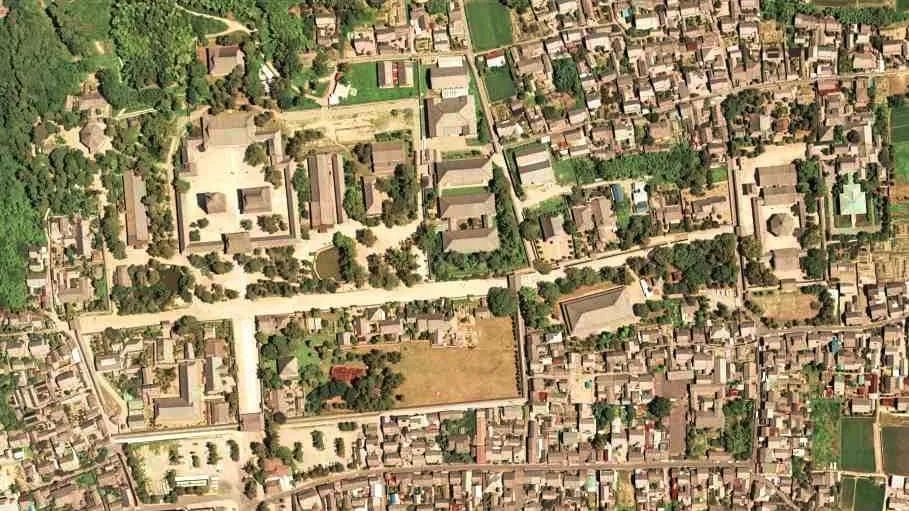
Over time, the pagoda moved from the central axis to peripheral positions, replaced by the butsuden as the primary focus.
The Five Mountains and Architectural Patronage
During the Kamakura and Muromachi periods, the shogunate established the gozan (五山) system — “Five Mountains” — a formal ranking of Zen monasteries tied to military patronage. Top-ranked temples received shogunal funding, enabling them to build and maintain the complete shichidō garan at grand scale.
The Kamakura Five Mountains centered on Kenchō-ji; the Kyoto Five Mountains were led by Nanzen-ji (special grade, above the system). Lower-ranked temples often had to combine functions into fewer buildings.
The disparity is still visible. Kenchō-ji in Kamakura shows a clearly legible sanmon-butsuden-hattō axis. A smaller regional temple of real historical importance may have only a main hall and a gate, with all other functions consolidated. The number of buildings you see is partly a measure of how much historical patronage the temple attracted.
Famous Temples to Experience the Shichidō Garan
Eiheiji (永平寺, Fukui) — A Living Seven-Hall Monastery
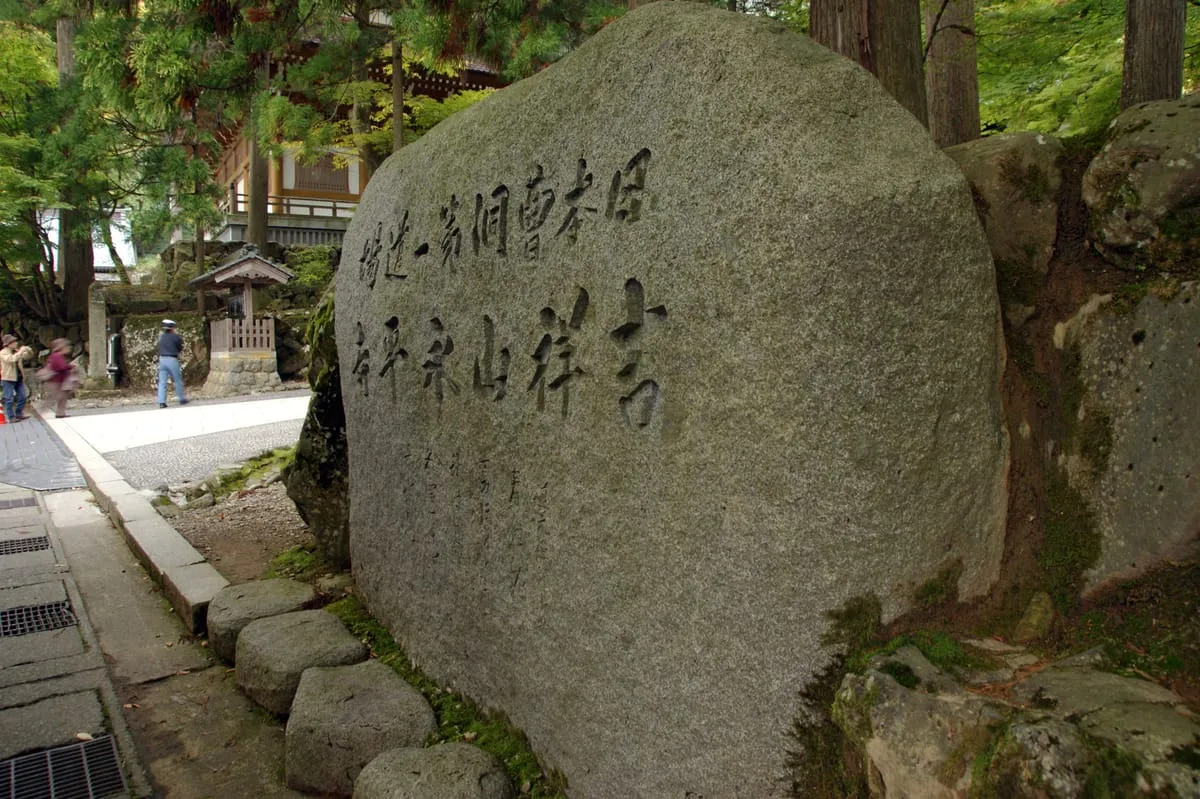
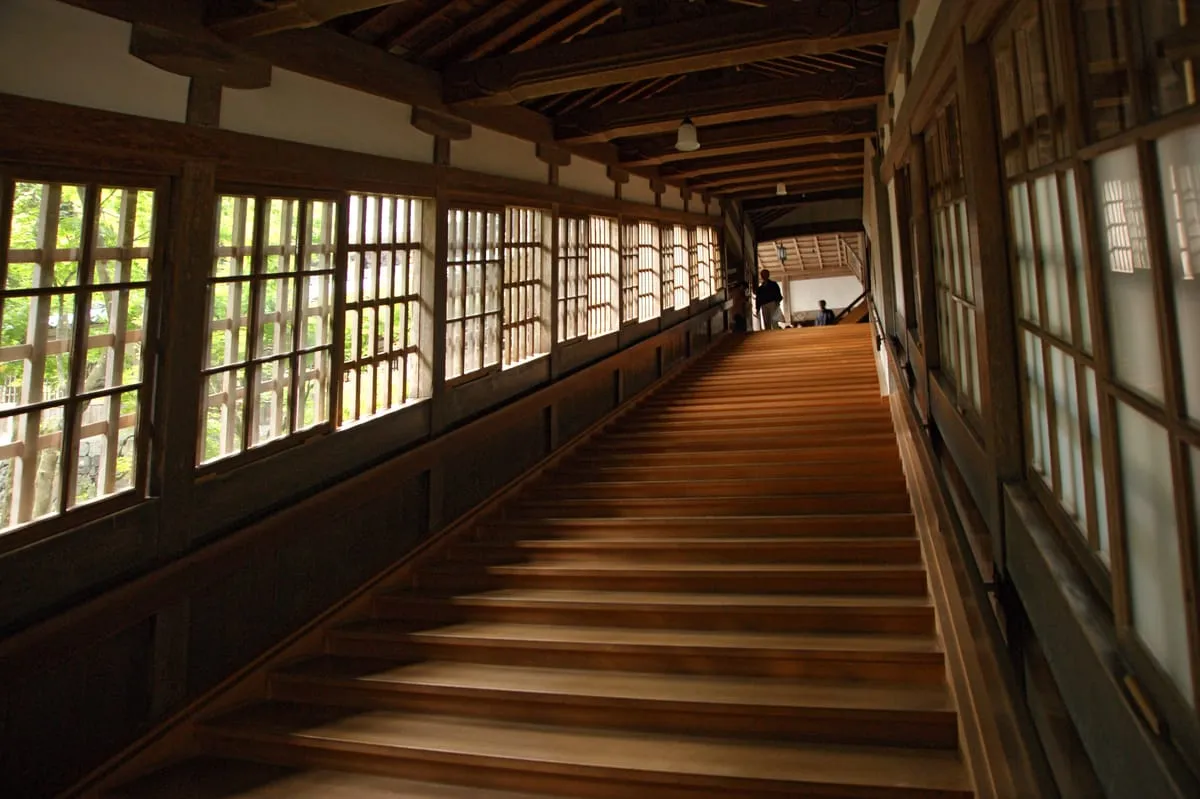
Founded by Dōgen in 1243, Eiheiji is the most complete functioning shichidō garan in existence. All seven halls are operational: monks meditate in the sōdō, the kuri cooks daily meals, and the covered corridors (kairo) connecting buildings are walked in practice silence. Built on a steep hillside, the compound’s interconnected corridors allow movement through the monastery in all weather.
Visitors can tour a significant portion of the grounds. Walking the dark, aged corridors while hearing distant chanting provides an immediate sense of how the seven halls function as an integrated environment. The goshuin at Eiheiji — bearing the seal of “Sōtō Daihonzan Eiheiji” — is widely regarded as one of the most spiritually resonant goshuin available at any Japanese temple.
Kenchō-ji (建長寺, Kamakura) — Japan’s First Rinzai Training Monastery
Founded in 1253, Kenchō-ji was Japan’s first purpose-built Rinzai training monastery. Its alignment of sōmon (outer gate), sanmon, butsuden, and hattō along a central axis is the most clearly legible Zen layout in the Kantō region. The butsuden enshrines Jizō Bosatsu — unusual for Zen, where Śākyamuni is standard — because the site had previously served as an execution ground, and Jizō was enshrined to comfort those souls.
The hattō ceiling features a cloud-dragon painting by Koizumi Junsaku (2003). Visitors can enter and look up at it from the floor.
Tōfuku-ji (東福寺, Kyoto) — The Complete Kamakura Zen Compound
Founded in 1236, Tōfuku-ji houses Japan’s oldest surviving Zen sanmon (rebuilt 1405, national treasure) and the largest hattō by floor area (rebuilt 1890). The Tsūtenkyō (通天橋), a covered bridge spanning a wooded ravine, is the compound’s most photographed feature — a functional monastic corridor that became a celebrated landscape element, particularly in autumn foliage season.
Visiting for Goshuin: Practical Notes
Visit the butsuden first. Goshuin is understood as a record of having paid respects to the enshrined Buddha, not simply a souvenir. The correct sequence is to offer respect at the main hall before requesting the goshuin. Approaching the desk first inverts the meaning.
One hall, one goshuin. Major temples offer distinct goshuin for different halls. At Kenchō-ji, there are separate goshuin for the butsuden (Jizō) and the hattō (Kannon). At Eiheiji, standard and special goshuinchō (bound books) are available. Visiting each hall before requesting its corresponding goshuin is both polite and most meaningful.
Find the kuri or jimushō. In working monasteries, goshuin are issued from the temple office (jimushō), usually adjacent to the kuri. You may find yourself standing at the operational heart of an active Zen monastery when collecting your goshuin — a context worth a moment of awareness.
Check the temple calendar. Hattō are the venue for major dharma assemblies and ceremonial events. Special goshuin connected to these events may only be available on specific days.
Reading Any Temple’s Grounds
The complete seven-hall monastery exists at only a handful of places in Japan. But the framework remains useful even when halls are missing.
Look for the central axis: the line running from the sanmon through the most imposing building. In Zen temples this axis is explicit; in Pure Land and esoteric temples it is looser. Find the most elaborate roof in the compound and work backward toward the gate. Note which buildings are connected by covered corridors — these connections suggest a unified spatial system. Note where decorative carving is concentrated and where it is absent.
Ask what is missing. A temple without a hattō may never have had a resident abbot giving formal teachings. One without a sōdō may not have had resident monks at all. The gaps tell a history.
The shichidō garan is a seven-part answer to a persistent monastic question: how do you design a life given entirely over to practice? The answer: design the space so there is nowhere to escape from practice. Not the gate, not the kitchen, not the bathroom, not sleep. Every room is a practice room. Every act of daily life, performed with awareness, is the dharma.
Image Licenses
- Eiheiji compound © 663highland / Wikimedia Commons — CC BY-SA 3.0
- Hōryū-ji aerial photograph © Ministry of Land, Infrastructure, Transport and Tourism, Japan / Wikimedia Commons — Based on National Land Image Information (Color Aerial Photographs)
- Eiheiji corridors © 663highland / Wikimedia Commons — CC BY-SA 3.0