At the start of the new year, a Japanese person might check a small chart posted at a local shrine or temple and discover that this is their yakudoshi — their unlucky year.
It’s not a curse. It’s not a prediction. But it is, for many people, a reason to visit a shrine and ask the priests to perform a purification ceremony.
This is yakubarai — the ritual removal of misfortune — and it is one of the most common reasons ordinary Japanese people visit shrines outside of the usual festival seasons.
What Is Yakudoshi?
Yakudoshi (厄年) literally means “calamity year” — a specific age, determined by traditional reckoning, when a person is thought to be especially vulnerable to misfortune, illness, or upheaval.
The concept doesn’t come from Shinto doctrine alone. It blends with older Chinese divination traditions and folk belief, and has been refined over centuries into the ages now commonly observed.
Men’s yakudoshi ages (by traditional counting):
| Age | Type |
|---|---|
| 25 | Minor unlucky year |
| 42 | Daiyaku (大厄) — the major unlucky year |
| 61 | Minor unlucky year |
Women’s yakudoshi ages:
| Age | Type |
|---|---|
| 19 | Minor unlucky year |
| 33 | Daiyaku (大厄) — the major unlucky year |
| 37 | Minor unlucky year |
These ages are counted in the traditional Japanese system (kazoedoshi), which adds one year to a person’s age at birth and another at each New Year’s Day. In practice, it runs one or two years ahead of the Western age system — so a 41-year-old (Western) is often counted as 42 in the traditional system.
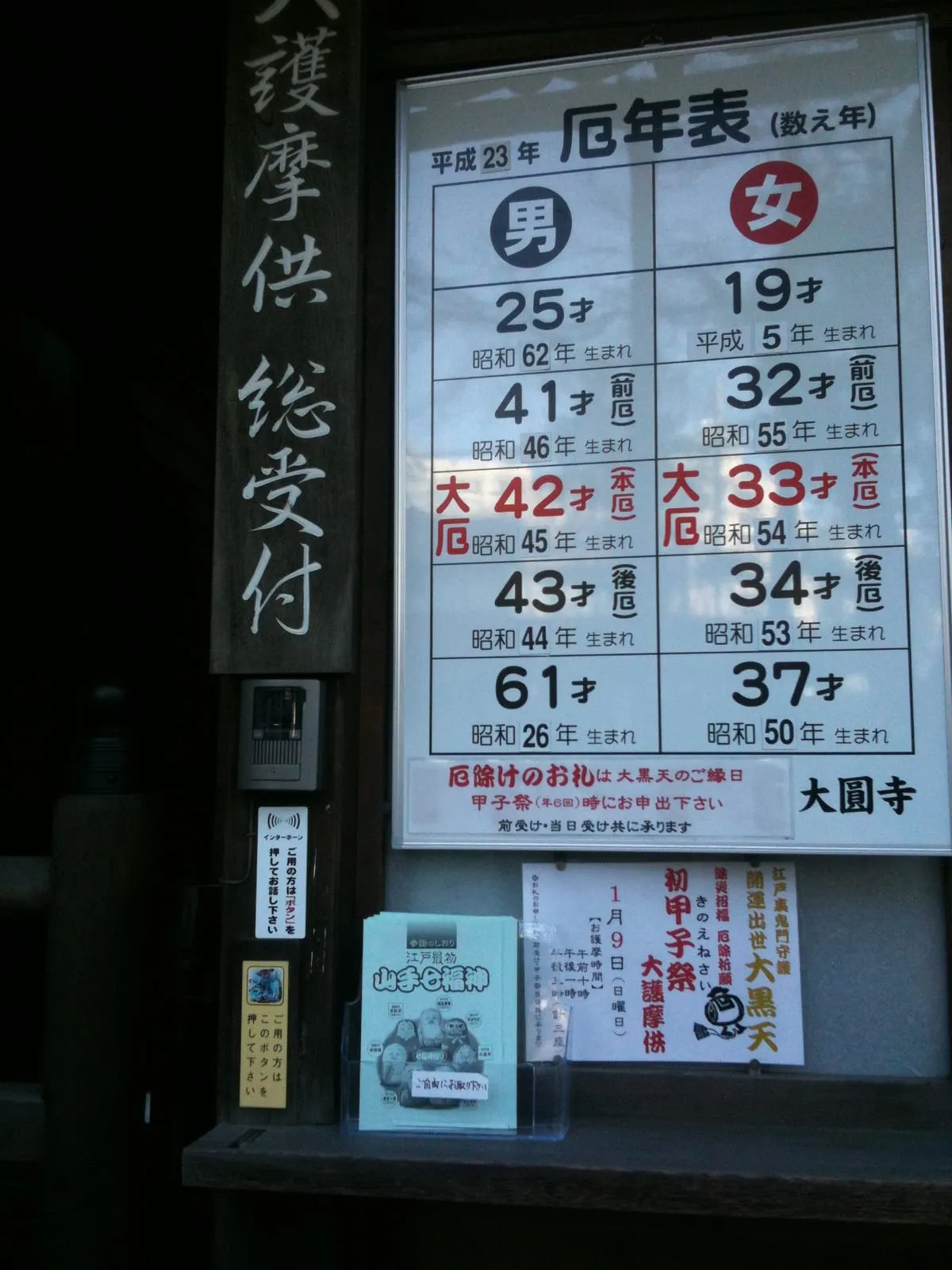
The year before the unlucky year is maeyaku (前厄, “pre-unlucky year”) and the year after is atoyaku (後厄, “post-unlucky year”). Most people who observe the tradition treat all three years as worth paying attention to. The daiyaku year — 42 for men, 33 for women — receives the most attention.
Yakubarai vs. Yakuyoke: What’s the Difference?
Two terms get mixed up constantly: yakubarai (厄払い) and yakuyoke (厄除け). The distinction is subtle but real.
Yakubarai means “sweeping away misfortune” — it’s a removal ceremony. The shrine priest performs a ritual purification to clear away bad luck that might have already accumulated.
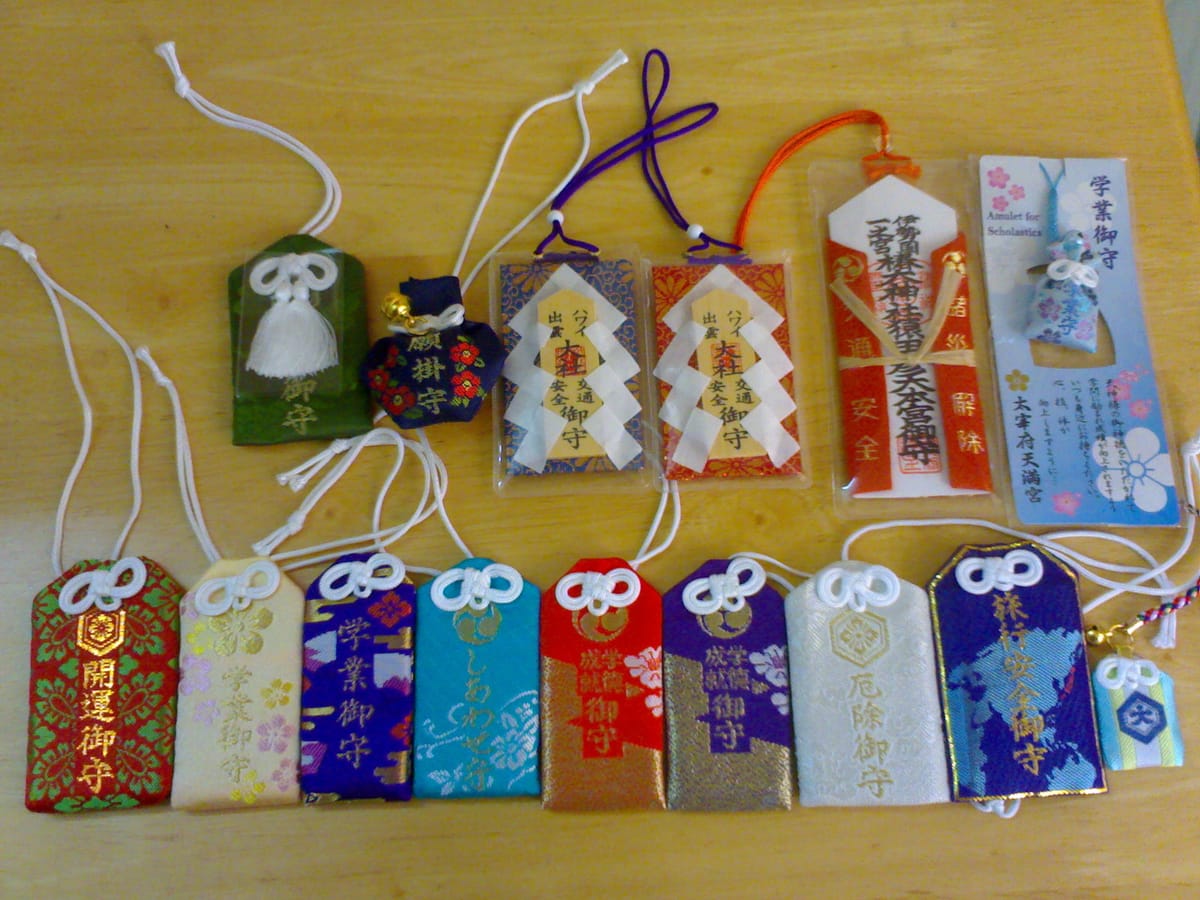
Yakuyoke means “warding off misfortune” — it’s preventive. Protective amulets (omamori) that claim to keep misfortune away are examples of yakuyoke thinking.
In practice, most shrine purification ceremonies blend both concepts, and you’ll see shrines advertise both words for the same ceremony. The meaningful choice isn’t between the two words — it’s between attending or not attending.
When to Go
There’s no rule about timing. The most common choice is January or early February, treating the new year as the beginning of the unlucky period. Some people go on their birthday. Some go on Setsubun (the traditional end-of-winter day, around February 3), when many shrines hold special yakubarai events.
If the year has already advanced and you haven’t gone yet: go when you can. The ceremony doesn’t expire. Some people have yakubarai ceremonies held mid-year with no issue.
How to Receive Yakubarai at a Shrine
1. Find the Right Shrine
Any Shinto shrine can perform purification ceremonies. For yakubarai specifically, shrines known for their purification efficacy draw larger crowds — Naritasan Shinshoji Temple, Kawasaki Daishi, and Nishiarai Daishi are among the most famous in the Kanto region for yakuyoke (these are actually Buddhist temples, technically, but perform the same function in practice).
For Shinto shrines: your local ujigami shrine (the shrine geographically connected to your neighborhood) is entirely appropriate. So is any shrine with which you have a personal connection.
2. Go to the Shamusho (Administration Office)
At the shrine, find the shamusho (社務所) — the administration office, usually near the main hall. Tell the staff you’d like to receive kitou (祈祷, a formal prayer ceremony) or specifically yakubarai or yakuyoke. They’ll hand you an application form.
Fill in your name, address, date of birth, and the purpose of the prayer (厄払い or 厄除け). This information is read aloud by the priest during the ceremony.
3. Pay the Offering (Hatsuhoryo)
The fee for yakubarai is called hatsuhoryou (初穂料) or tamagushiryou (玉串料) — ritual offerings, in the form of money.
The typical range is ¥5,000 to ¥10,000, varying by shrine. Larger, more famous shrines may have higher minimums; some shrines offer tiered amounts with corresponding levels of service.
The formal way to pay is in a noshi envelope (a special offering envelope), written with 「初穂料」 or 「玉串料」 on the front and your name below. Many shrines today accept direct payment in a plain envelope, or even cash without an envelope — check the shrine’s website or call ahead if you want to be certain.
4. Wait in the Waiting Room
Once registered, you’ll be guided to a waiting area near the prayer hall (kitouden or haiden). Groups of visitors are often called in together. Dress modestly — clean, understated clothing is appropriate. Formal clothing (suit, or kimono) is common at major shrines.
5. The Ceremony
The ceremony itself typically follows this structure:
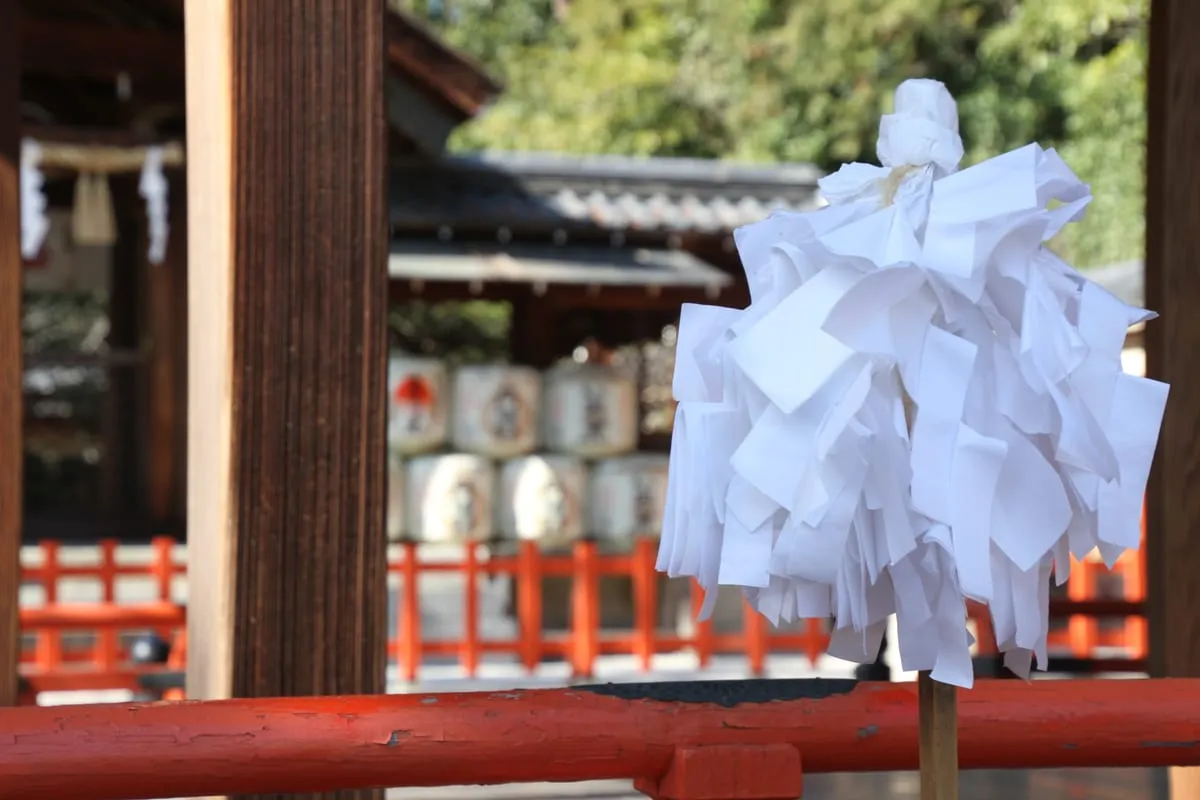
- Shubatsu (修祓): The priest waves a large purification wand (haraigushi or oomusha) over the assembled participants, symbolically sweeping away impurities. You bow your head when the wand passes.
- Norito (祝詞): The priest chants a formal prayer, reciting the names and particulars of each participant before the kami. This is why your name and address matter — they’re literally addressed to the deity.
- Tamagushi houten (玉串奉奠): In some ceremonies, participants offer a sprig of sacred sakaki tree to the altar.
- Kagura (神楽): Some shrines include a short ritual dance performance.
The full ceremony takes 15 to 30 minutes, depending on the shrine and the number of participants.
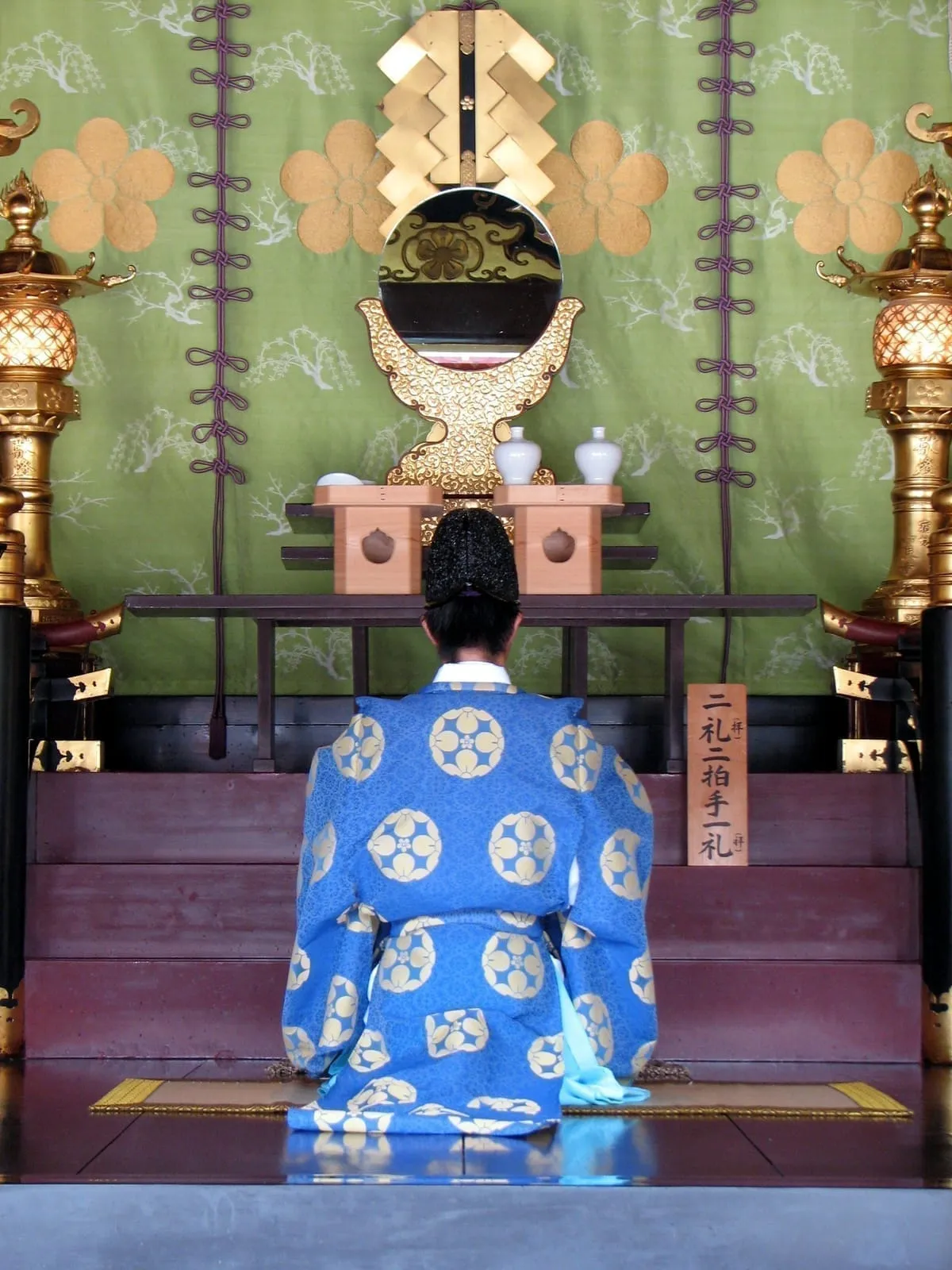
If you don’t know when to bow or stand, follow the lead of the shrine staff or the other participants. No one expects visitors to know every detail.
6. Receive the Offerings
After the ceremony, the staff distributes osagari — gifts that have been presented before the altar and are now given to participants. These often include a protective talisman (ofuda), a small bottle of sacred sake (omiki), or regional food items.
Bring a bag. Take the gifts home and treat them respectfully.
How to Spend the Year
Receiving yakubarai doesn’t mean misfortune is impossible for the rest of the year. What it does — or rather, what the tradition is designed to do — is shift your attention.
Yakudoshi ages cluster around genuine life transitions: the late twenties (career consolidation, relationship decisions), the early forties (midlife health changes, family pressures), the mid-thirties for women (similar transitions). These are genuinely more turbulent periods for many people, independent of any spiritual framework.
The traditional advice for a yakudoshi year:
- Avoid impulsive major decisions: sudden job changes, large purchases, new ventures that aren’t thought through
- Attend to health: sleep, diet, regular checkups
- Maintain relationships: don’t withdraw, stay connected to people who matter
None of this is mystical. It’s the kind of advice that’s useful in any year, but especially in years when things are already changing around you.
On Multiple Ceremonies
Some people go to several shrines for yakubarai in the same year. There’s no problem with that — the same kami receives prayers from multiple directions. But if the impulse comes from anxiety rather than gratitude, more ceremonies won’t necessarily help. One sincere visit tends to be more meaningful than many anxious ones.
The ceremony is not a transaction. It’s a structure for paying attention to a transition — marking it, acknowledging it, and committing to care.
Related Articles
Image Credits
- Yakudoshi age chart at Daienji Temple, Meguro, Tokyo: geraldford, CC BY-SA 2.0, via Wikimedia Commons
- Haraigushi at Kenkun Shrine, Kyoto: Hyppolyte de Saint-Rambert, CC BY-SA 4.0, via Wikimedia Commons
- Shinto priest at Dazaifu Tenmangu Shrine: Chris 73, CC BY-SA 3.0, via Wikimedia Commons