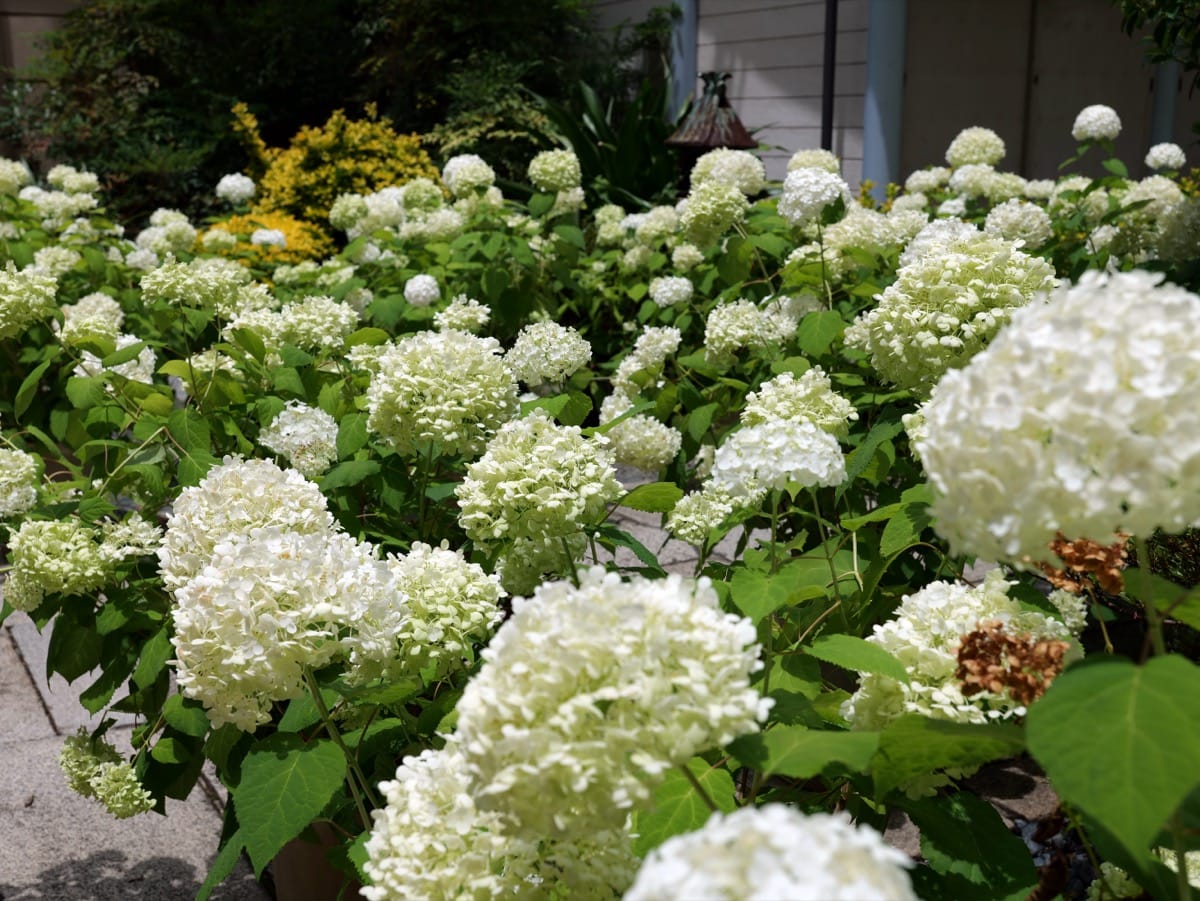
As the rainy season arrives and hydrangeas begin to bloom, shrines and temples across Japan start offering “ajisai goshuin” — hydrangea-themed limited-edition goshuin. At first glance it might seem like a simple seasonal design, but the relationship between hydrangeas and sacred spaces runs surprisingly deep.
Shrines and Hydrangeas — A Combination That Isn’t Actually Ancient
Hydrangeas (ajisai) are native to Japan, but for much of history they were not actively planted in shrine or temple precincts. They had a reputation as “unlucky flowers that carry poison.”
Their leaves contain cyanogenic glycosides, and in rural areas they were known as plants that must not be fed to livestock. The flower’s tendency to change color — known as “shichihenge” (seven transformations) — was also seen as inauspicious, associated with fickleness and a changeable heart. The Man’yoshu poetry collection includes a handful of poems about hydrangeas, but each is tinged with lamentation over their transience rather than admiration for their beauty.
Yet today, some of the most celebrated hydrangea viewing spots in Japan are shrine and temple precincts. Two forces drove this shift.
The first was the spread of Western cultivated varieties (Hydrangea) from the Meiji period onward. Large-flowered hydrangeas brought from the West create a uniquely refined atmosphere when paired with traditional Japanese precincts. The second was demand for a tourist draw during the quiet rainy season — a reason to bring people into the grounds. In tandem with the growing “hana-chozubachi” (flower water basin) culture, the hydrangea has become the face of early-summer shrine visits.
The Month Name “Minazuki” and the Gods of Rain
June’s old Japanese name is “Minazuki” (水無月). Read literally, it suggests “the month without water” — yet June falls in the heart of the rainy season.
The etymology is debated. Some trace it to “the month of water,” others to the practice of channeling water into rice paddies. The most widely accepted interpretation holds that the character 無 here functions as the classical particle “no” (meaning “of”), making “Minazuki” essentially “the month of water” — a more fitting reading given the season.
Rain-governing deities are enshrined across Japan as dragon gods (ryujin) and water gods (mizugami). Among the most famous is Niukawakami Shrine in Yamato (Nara Prefecture), where, according to the Nihon Shoki, black horses were offered to pray for rain during drought, and white horses to pray for rain to stop. Visiting a shrine during the rainy season naturally calls to mind these ancient connections to the gods of water.
Shrines and Temples with Hydrangea Goshuin to Visit in June 2026
Ikasuri Shrine (Chuo Ward, Osaka City)
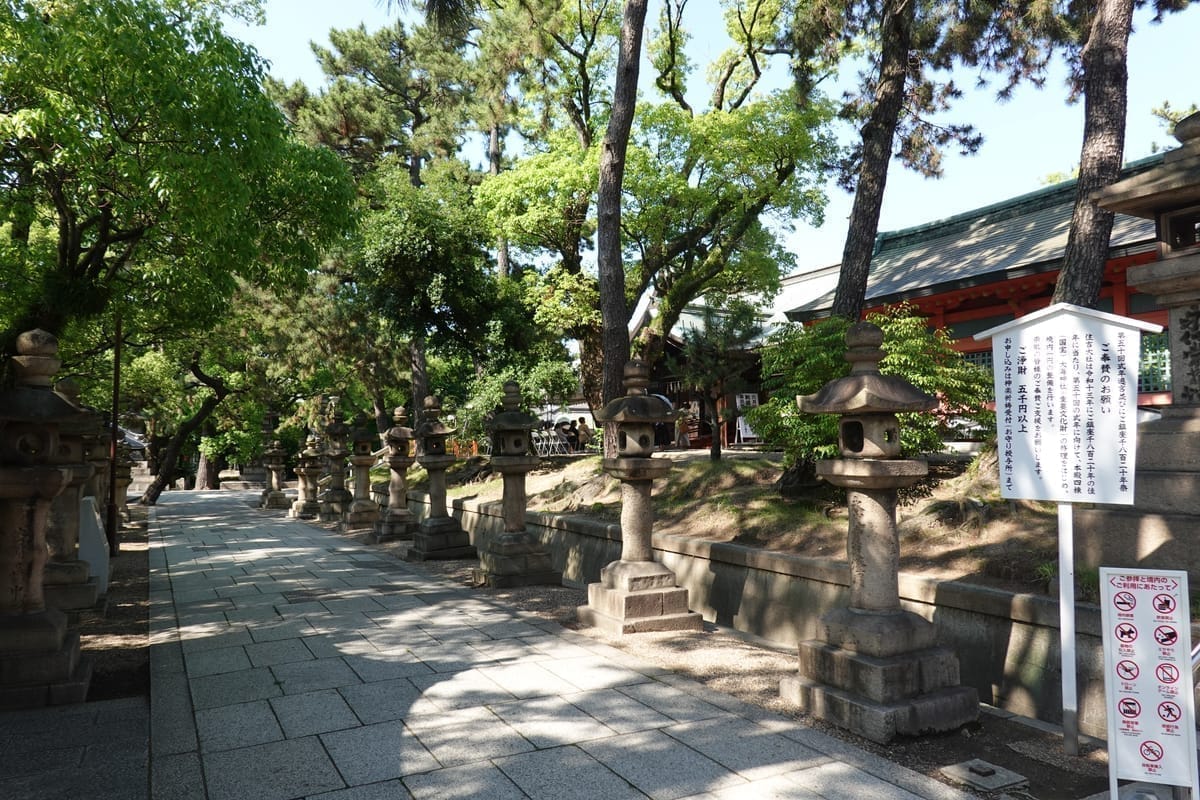
Read as “Ikasuri,” this is an ancient shrine at the heart of Osaka. Known as one of the ichinomiya (first-ranked shrines) of Settsu Province, it is said to have been founded by Empress Jingu on her return from the Three Han campaigns. Wild-type small-flowered hydrangeas bloom quietly in the precinct during the rainy season, creating a moment of stillness amid the urban bustle. Well worth visiting alongside the June limited-edition goshuin.
Fujinomori Shrine (Fushimi Ward, Kyoto City)
Fujinomori Shrine, known as the deity of martial arts and horses, is also famous for its “Ajisai-en” (hydrangea garden). The garden — home to more than 1,500 hydrangea plants — opens to the public in early June, and on the occasion of the “Ajisai Matsuri” (Hydrangea Festival) on June 15, two types of limited hydrangea goshuin (red and blue) are offered (limited quantities, while supplies last). The coexistence of horses and hydrangeas in the precinct feels especially fitting in 2026, the Year of the Horse.
Temples in Mie Prefecture (Including Shitenno-ji in the Province of Ise)
Several temples in Mie Prefecture offer limited goshuin themed “Hydrangeas and Kannon” from June 1 through June 30. Designs range from charming illustrations pairing frogs with hydrangeas to refined woodblock-print-style depictions of lacecap hydrangeas (gaku-ajisai). Mail-order options are available at some.
Kushima Shrine (Kushima City, Miyazaki Prefecture)
Kushima Shrine in southern Kyushu offers a “Minazuki Special Goshuin — Ajisai” edition. The design features large, vivid hydrangea blooms combined with water droplets, capturing the moment when raindrops catch the light — an evocative image of the rainy season.
The Evolution of Hydrangea Goshuin Design
Limited goshuin design has evolved considerably in recent years.
Early seasonal goshuin often amounted to little more than adding a single seasonal stamp to an existing design. Today they have expanded to include:
- Gradient-printed kirigami (cut-paper) goshuin (layering cut-paper designs over multi-color gradients)
- Foil stamping (gold, silver, holographic)
- Designs that use the translucent patterns of washi paper
- Coordination with hana-chozubachi (offering goshuin and flower-water-basin photos together)
Goshuin themselves have entered the territory of “portable craftwork.”
For hydrangea designs specifically, printed goshuin that use the blue-to-purple-to-pink gradient of the flower’s petals are common, with considerable craft put into faithfully recreating the look of the real flower. Watercolor depictions of raindrops are also frequently seen — imagery perfectly suited to the emotional atmosphere of the rainy season.
Tips for Obtaining Them
Hydrangea limited goshuin typically end by the close of June.
- Weekday mornings are less crowded — popular shrines can have lines on weekends, especially on Saturdays and Sundays that overlap with peak bloom (mid-to-late June in the Kanto region)
- Check for mail-order availability — an increasing number of shrines, even distant ones, now offer pre-written slip goshuin by mail. Check their official SNS accounts or website
- Watch for quantity limits — at shrines that advertise “limited to X copies” or “while supplies last,” arriving early in the morning on the day of the Ajisai Matsuri may be necessary
For a full seasonal overview of goshuin offerings throughout the year, see our Seasonal Goshuin Calendar — Annual Schedule and Highlights.
Sources:
- 2025 National Edition: 45 Selected June Limited Goshuin – Hotokami
- Kanto Summary: June Limited Goshuin – Kaiun Sentai Goshuinja
- Fujinomori Shrine Ajisai-en Opening – Totteoki Kyoto Project
Image credit: Hydrangea serratophylla at Ikasuri Jinja - Zama Shrine, Osaka — Hyppolyte de Saint-Rambert, CC BY 4.0, via Wikimedia Commons
Information in this article is current as of May 19, 2026. Please check each shrine or temple’s official website or SNS for current goshuin availability.