June 30 is Nagoshi no Oharae (the Great Purification of Summer’s End).
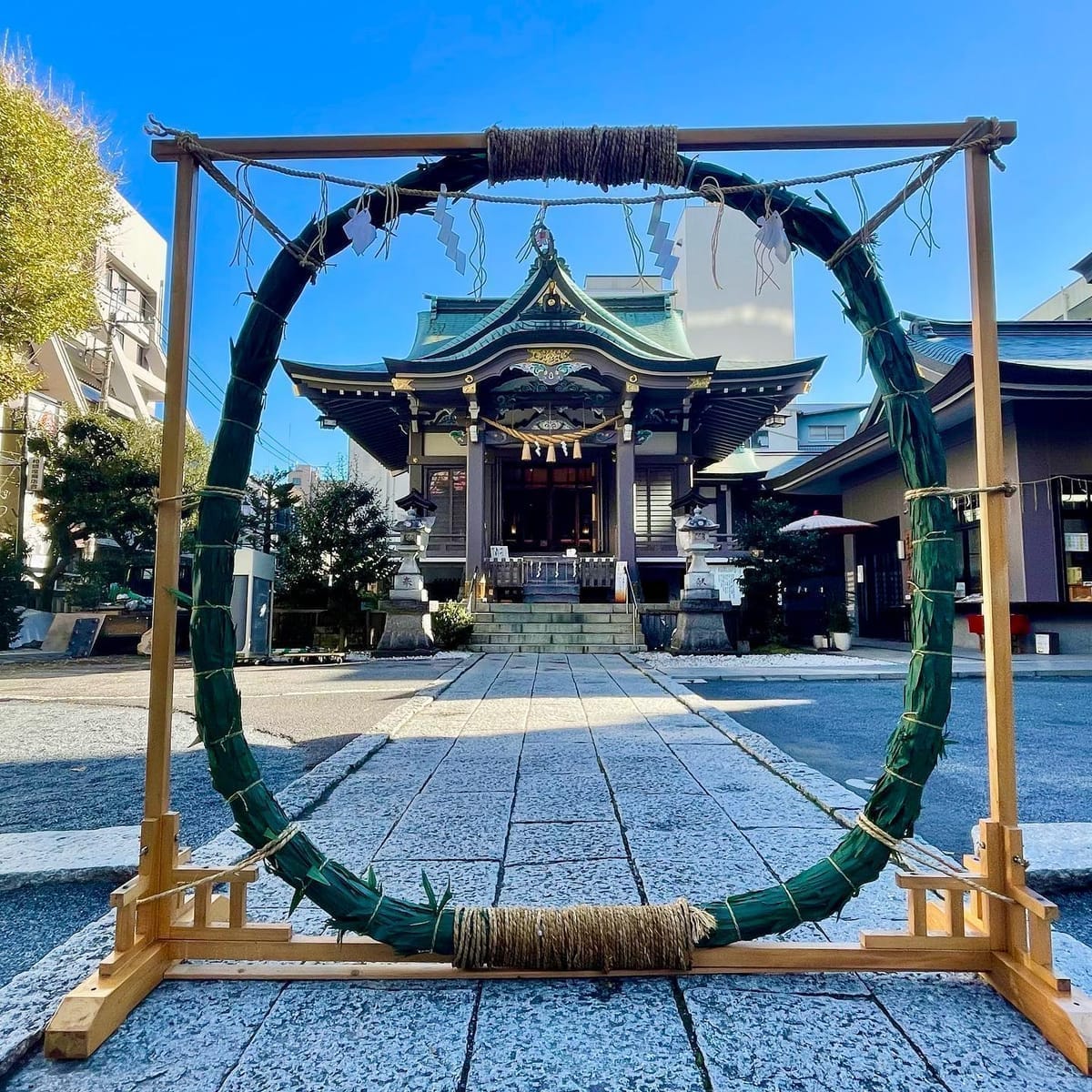
On this day — the midpoint of the year — shrines across Japan hold the “Oharae-shiki” purification ceremony. A large ring woven from miscanthus reeds (chinowa) is set up in the precinct, and visitors pass through it to purify the sins and spiritual impurities accumulated in the first half of the year. This is called “chinowa kuguri” (passing through the chinowa ring).
For goshuin collectors, this is becoming an unmissable occasion. Many shrines offer special limited-edition goshuin tied to the Oharae period, with designs quite different from their usual offerings.
A Ritual with 1,300 Years of Continuity
The Oharae ceremony has been performed at the imperial court and shrines across the country since it was codified in the Taiho Code (701 CE). It occurs twice a year — the “Nagoshi no Oharae” in June and the “Toshikoshi no Oharae” (or “Shiwasu no Oharae”) in December — but the summer version draws particularly large numbers of visitors as a significant seasonal milestone.
The chinowa ring traces its origins to mythology. The deity Susanoo-no-Mikoto, traveling on a journey, asked a man named Somin Shorai for a night’s lodging. The next morning, the deity told Somin Shorai: “If your descendants wear a chinowa ring at their waist, they will be protected from plague for generations.” From this legend, a ring woven from chigaya (miscanthus reeds) became a symbol of protection from misfortune.
How to Pass Through the Chinowa Ring
The chinowa ring is placed at the torii gate or in front of the main hall. It is a large ring, roughly 2–3 meters in diameter, woven from chigaya reeds.
The proper way to pass through:
- Stand in front of the ring, step out with your left foot, and pass through
- Circle around to the left (outside) and return to the front
- Step out with your right foot and pass through
- Circle around to the right (outside) and return to the front
- Step out with your left foot once more, pass through, and proceed straight toward the main hall
The path traces the shape of an ”∞” (infinity symbol), passing through the ring a total of three times. Some shrines encourage visitors to recite the old poem silently as they pass through: “Minazuki no nagoshi no harae suru hito wa, chitose no inochi nobuto iu nari” (“Those who perform the summer purification of the sixth month are said to live a thousand years”).
Notable Nagoshi no Oharae Events in 2026
Major Kyoto Shrines
| Shrine | Chinowa Installation Period | Oharae Ceremony |
|---|---|---|
| Kamigamo Shrine | June 30 | 10:00 & 20:00 (twice) |
| Kitano Tenmangu | From June 25 | June 30 |
| Heian Jingu | From June 15 | June 30, 16:00 |
| Kurumazaki Shrine | June 1–30 | June 30 |
| Yasaka Shrine | June 30 | June 30, 15:00 |
| Fushimi Inari Taisha | June 30 | June 30, 15:00 |
| Jonangu | June 25–30 | June 30 (+ car chinowa kuguri July 1–7) |
| Matsunoo Taisha | June 28–30 | June 30 |
| Kifune Shrine | June 30 | June 30, 15:00 (advance registration required, ¥200) |
Jonangu’s “car chinowa kuguri” — driving a vehicle through the chinowa ring to pray for traffic safety — is a rare event found almost nowhere else in Japan. It takes place July 1–7.
Tokyo and Kanto Shrines
In Tokyo, many shrines set up the chinowa ring from mid-June through the 30th.
Major shrines such as Hie Shrine (Nagatacho), Kanda Myojin (Kanda), Yasukuni Shrine (Kudanshita), Kameido Tenjin (Kameido), and Hikawa Shrine (Omiya) hold large-scale Oharae ceremonies, and June 30 sees a steady stream of visitors.
Limited Goshuin for Oharae
More and more shrines are offering limited-edition goshuin around the time of Nagoshi no Oharae. Common design motifs include the chinowa ring, hemp, paper dolls (hitogata), and water.
The offering period varies by shrine, but most are centered on the late June period through June 30, the day of the Oharae ceremony. Some shrines begin distributing them as early as June 1.
Tips for visiting with goshuin in mind:
- The ceremony itself gets crowded. Lines form at the offering station immediately before and after the ceremony
- Some shrines use hitogata paper dolls. Advance registration may be required
- The chinowa ring is often taken down after the ceremony. Arrive early to be sure to see it
About Hitogata (Paper Dolls)
Often performed alongside the chinowa ring ceremony is the offering of “hitogata” paper dolls.
A piece of paper cut into a human shape — the hitogata — is inscribed with the visitor’s name and age. The visitor then rubs it over their body and breathes on it, symbolically transferring their sins and impurities into the paper. The hitogata is then offered at the shrine, where it is later floated on a river or sea, or burned.
Some shrines place a hitogata offering box in the precinct, allowing visitors to participate even without bringing their own. A few shrines also accept hitogata sent in advance by mail.
The Connection to Minazuki
The Japanese name for June is “Minazuki” (水無月). On June 30 — the day of Nagoshi no Oharae — there is a custom in Kyoto of eating a confection also called “Minazuki.”
It is a triangular sweet made of white uiro (a steamed rice flour cake) topped with red azuki beans, which carry a meaning of warding off evil. It is said to represent a piece of ice from the imperial icehouse. Kyoto confectionery shops begin displaying minazuki at the start of June — a perfect stop before or after a shrine visit.
Planning Your Visit
Nagoshi no Oharae falls on June 30 each year. This year, June 30 is a Tuesday.
Being a weekday, crowds may be lighter than in typical years — though it is also likely that commuters will gather at the evening ceremonies after work.
Many Kyoto shrines hold their Oharae ceremonies at 3:00 or 4:00 PM, so a realistic plan is to arrive in the early afternoon. In Tokyo, evening ceremonies are also common.
For the most accurate details, check each shrine’s official website after June begins.
Sources:
- 2026 Kyoto Nagoshi no Harae / Chinowa Kuguri Listings | Kyoto City Official Tourism Site
- Kanda Myojin Annual Events – Nagoshi no Oharae
- Hie Shrine – Oharae
Image credit: Chinowa ring at Kashiwa Shrine, Chiba — ivva, CC BY-SA 2.0, via Wikimedia Commons
Information in this article is current as of May 11, 2026. For ceremony schedules and goshuin availability, please check each shrine’s official website after June begins.