Sunday, June 14, 2026, from 1:00 PM, Sumiyoshi Taisha in Osaka will hold the “Otaue Shinji” (sacred rice-planting ritual).
Alongside the Otaue Shinji at Ise Jingu and at Katori Jingu in Chiba, this ranks as one of Japan’s Three Great Rice-Planting Festivals. Designated a national Important Intangible Folk Cultural Property in 1979 (Showa 54), its gravity and completeness reach far beyond the shrine grounds. If you have any plans to visit Osaka in June, there’s no reason to miss this day.
What Is the Otaue Shinji?
Rice cultivation is inseparable from Japanese ritual. Rice was not only food — it was an offering to the gods, and in an era when harvest yields directly determined national power, these prayers continue to live on.
The origins of Sumiyoshi Taisha’s Otaue Shinji run deep. According to tradition, when Empress Jingu enshrined the Sumiyoshi deities (around 211 CE by legend), she designated a sacred rice field — a “mita” — to be offered to the gods, and summoned “ueme” (planting women) from Nagato Province (present-day Yamaguchi Prefecture) to plant the rice.
Approximately 1,800 years.
Even today, an actual “mita” of about 20 ares (roughly 600 tsubo) exists within the shrine precinct, where the full cycle from planting to harvest is carried out each year. Among all shrines in Japan, very few maintain an actual rice field in the middle of a city and continue agricultural rituals in the same ancient form.
Day of Events
Morning — Participants Prepare Their Regalia
The first half of the ritual begins with ceremonies at a place called the “Kotachi” (sacred hall).
- Fundaishiki (Face-Painting Ceremony): The planting women, sacred children, and mitoshime (sacred women) apply white powder and don their formal dress before the deity
- Taihaishibiki (Sacred Cup Ceremony): They receive sacred sake
- All participants undergo shubatsu (ritual purification) on the stone stage
- Hokokusei (a ceremony announcing the day’s rituals to the deity) is held at the First Main Shrine
1:00 PM — Procession to the Sacred Field
Musicians, the eight shrine maidens (yaotome), mitoshime, planting women, substitute planting women, sacred children, warrior procession participants, and Sumiyoshi Odori dancers line up and proceed to the mita.
After the four corners of the sacred field are purified with sacred water, the young rice seedlings received from before the deity are passed from the planting women to the substitute planting women, and the planting begins.
Ritual Arts Offered at the Stage in the Sacred Field
Alongside the rice planting, four forms of ritual performance are presented on the stage.
| Performance | Description |
|---|---|
| Yaotome-mai (Tamai Dance) | Eight shrine maidens perform the tamai and shinden-mai |
| Furyu Musha Gyoji (Warrior Procession) | Armored warriors split into red and white teams and battle with six-foot staffs amid drums, kettledrums, and conch shells |
| Taue Odori (Rice-Planting Dance) | About 150 local elementary and middle school girls perform |
| Sumiyoshi Odori | Children in kasa hats and monk-style dress wave fans around a lead dancer with an open umbrella, tracing the character for “heart” (心) |
The Sumiyoshi Odori is distinctive for its gesture of tracing the character “心” (heart/mind). Rather than elaborate choreography, the repetition of simple movements carries an archaic, incantatory quality.
About Sumiyoshi Taisha
Sumiyoshi Taisha is located in Sumiyoshi Ward, Osaka, and serves as the head shrine of approximately 2,300 Sumiyoshi shrines across Japan. Its founding is traditionally dated to 211 CE (the 11th year of Empress Jingu). The four main shrine buildings in the distinctive “Sumiyoshi-zukuri” architectural style are designated National Treasures.
Enshrined Deities
| Deity | Reading | Nature |
|---|---|---|
| Sokotsutsu-no-o-no-mikoto | そこつつのおのみこと | Sea deity guarding the depths; god of maritime navigation |
| Nakatsutsu-no-o-no-mikoto | なかつつのおのみこと | Sea deity guarding the middle depths; god of maritime navigation |
| Uwatsutsu-no-o-no-mikoto | うわつつのおのみこと | Sea deity guarding the surface; god of maritime navigation |
| Empress Jingu | じんぐうこうごう | Legendary empress of the Three Kingdoms campaign; enshrined in the Fourth Main Shrine |
Venerated as gods of maritime navigation and fishing, they also embody aspects of agriculture and waka poetry. The Otaue Shinji most clearly expresses the agricultural dimension of these deities.
Sumiyoshi-zukuri Architecture
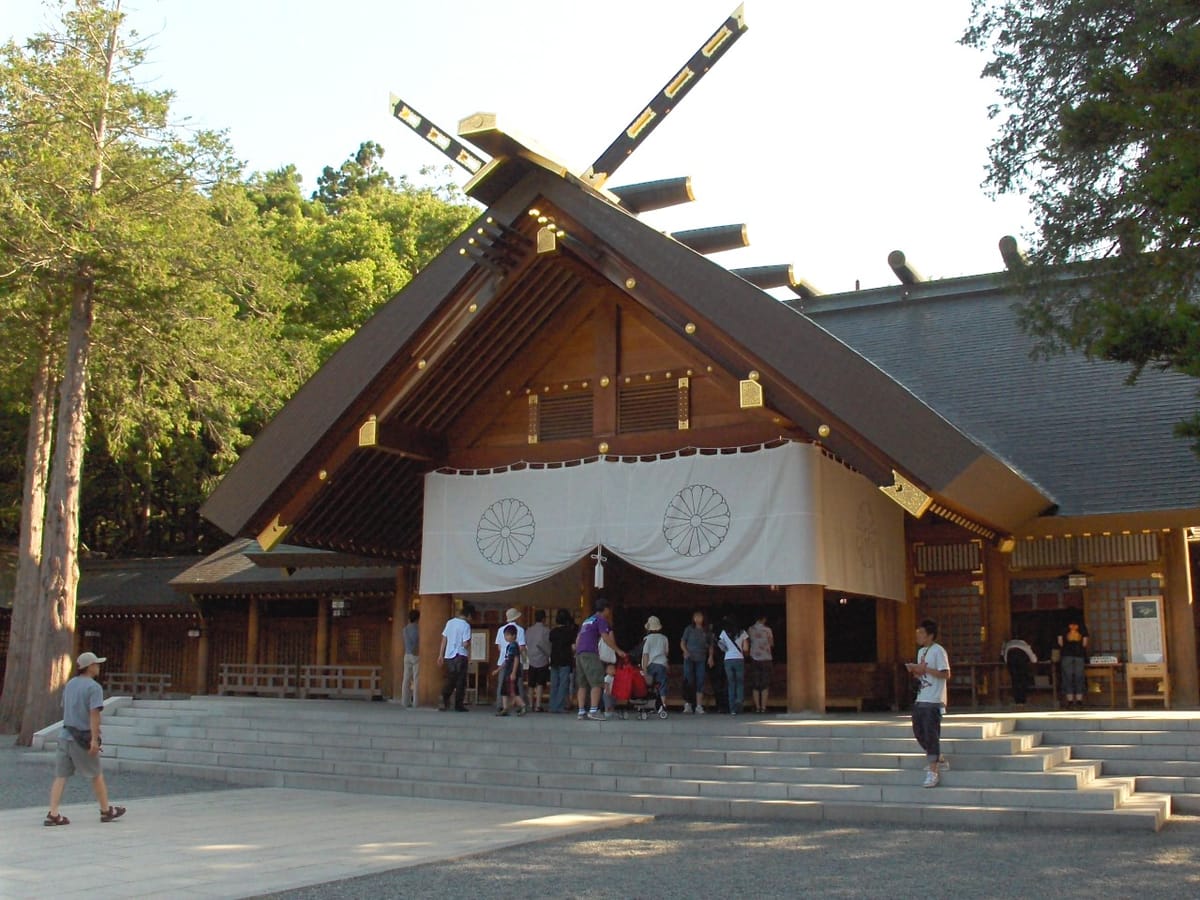
The main shrines are built in the “Sumiyoshi-zukuri” style, unique to this shrine — characterized by a gabled roof, a front-facing entrance (tsuma-iri), and straight-line structure. Together with the Shinmei-zukuri of Ise Jingu and the Taisha-zukuri of Izumo Taisha, it is recognized as one of the three ancient forms of shrine architecture. If you have any interest in architecture, the day of the Otaue Shinji is worth spending extra time in front of the main shrines.
About the Goshuin
Standard Goshuin
Sumiyoshi Taisha’s standard goshuin is available year-round at the goshuin counter (9:00–17:00). Fee: ¥500.
Beyond the main shrine, goshuin from several subsidiary shrines are also available. Tanenokashi-sha, Asazawa-sha, and Otoshi-sha, among others, are known for offering special goshuin on the first “Tatsu no Hi” (Day of the Dragon) of each month, called “Hatatsu-nichi.”
Monthly Limited Goshuin
Monthly limited goshuin using embroidery or paper-cutting techniques are also available, priced at around ¥1,000. As quantities are limited, visiting the counter early in the day for the June edition is advisable.
Special Goshuin on the Day of the Otaue Shinji
For any special goshuin exclusive to June 14, check the official website and social media accounts in advance. In past years, specially designed goshuin have been offered to coincide with the ritual.
Why Is “Rice Planting” a Sacred Ritual?
To modern sensibilities, connecting rice planting with religious ceremony might seem unusual. But in ancient society, the success of the rice harvest was literally a matter of life and death.
The planting season was never merely an agricultural milestone. The moment the field filled with water and seedlings were set into the earth — that was when land, water, and human prayer converged. That sense of convergence gave rise to the idea that song and dance could rouse the spirit of the rice.
The presence of “dance” and “warrior events” within the Otaue Shinji is no mere entertainment. It reflects an ancient cosmology in which human movement and sound awakened the land’s divine spirit.
After 1,800 years, Sumiyoshi Taisha’s Otaue Shinji — said to maintain the exact same formality as antiquity, without abbreviating a single ritual — is a living specimen of that worldview.
Osaka Shrines Worth Visiting Alongside the Goshuin Pilgrimage
The area around Sumiyoshi Taisha and greater Osaka is home to many shrines offering distinctive goshuin. For an overview of major Osaka shrines, see the Osaka Shrine and Goshuin Guide.
For checking Sumiyoshi Taisha’s goshuin details and other visitors’ real-time records before your trip, a goshuin app can be helpful. See the Goshuin App Comparison Guide to find one that suits your pilgrimage style.
Access
Sumiyoshi Taisha
- Address: 2-9-89 Sumiyoshi, Sumiyoshi Ward, Osaka
- Phone: 06-6672-0753
- Access:
- 3-min walk from “Sumiyoshi Taisha” Station (Nankai Main Line / Nankai Koya Line)
- Immediately from “Sumiyoshi Taisha-mae” stop (Hankai Tramway)
- Approx. 15-min walk from “Abiko” Station (Osaka Metro Midosuji Line)
- On the day of the ritual: Road closures and congestion may occur nearby. Public transportation is strongly recommended.
- Goshuin counter: Goshuin-sho (goshuin reception) next to the goshuin-jo (9:00–17:00)
Sources:
- June Events | Sumiyoshi Taisha Official Website
- Sumiyoshi Otaue | Wikipedia
- Sumiyoshi Taisha “Otaue” Ritual | imidas
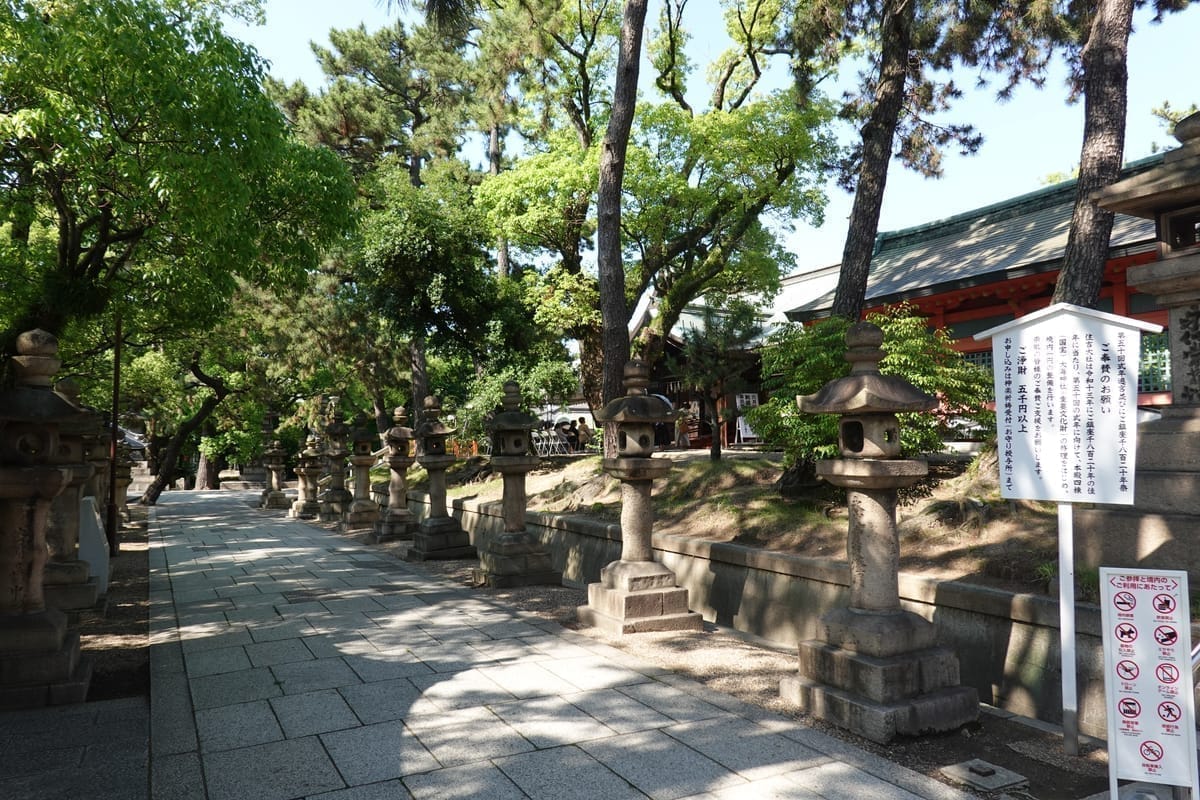
Image: Sumiyoshi Taisha (Wikimedia Commons / Smiley.toerist / CC BY-SA 4.0)
Information in this article is current as of May 18, 2026. Please verify details on the Sumiyoshi Taisha official website.