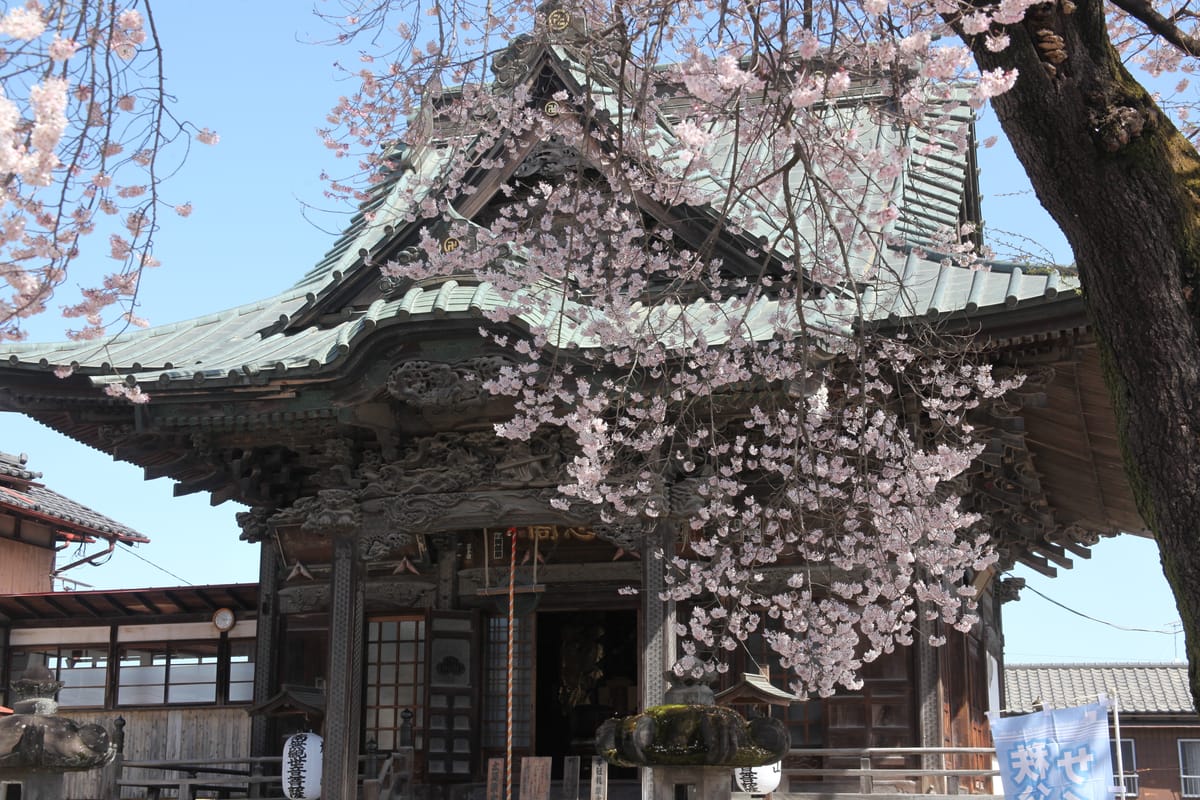
From Wednesday, March 18 through Monday, November 30, 2026, all 34 temples of the Chichibu Fudasho pilgrimage are holding their once-in-12-years “Uma-doshi Soukaicho” (Great Unveiling). Secret Buddhas — Kannon figures normally kept in closed inner shrines — are simultaneously revealed, and THE ALFEE collaboration “uta-shuin” (song goshuin) is on sale at all 34 temples.
The Rarity of Once-in-12-Years — Why the Year of the Horse?
The Chichibu Fudasho Soukaicho traces its origin to the founding of the pilgrimage in the year Kinoe-Uma (甲午, 1234, Bunryaku 1). Because the horse is an attendant deity (kenzoku) of Kannon Bosatsu, the Year of the Horse has been designated as a special year, and the Great Unveiling has been held every 12 years since. The previous soukaicho was in 2014; the next will be in 2038. Miss this one and the next opportunity is 12 years away.
During the soukaicho, the secret Kannon figures — ordinarily enshrined deep inside their altar cabinets — are specially unveiled. Having all 34 sacred sites of a Kannon pilgrimage simultaneously reveal their secret Buddhas is truly a once-in-12-years event. Special ceremonies are also conducted at each temple, allowing for a deeper devotional experience.
The full Chichibu Fudasho circuit covers approximately 100 km, but during the soukaicho period, special pilgrimage buses and guided tours are in operation, making it accessible even for first-time visitors.
The Uma-doshi Soukaicho, held once every twelve years, will take place from Wednesday, March 18 through Monday, November 30, Reiwa 8 (2026). The secret Kannon figures at all 34 sacred sites will be specially unveiled.
The Unexpected THE ALFEE Collaboration — “Uta-shuin” as New Territory
The most talked-about element of this soukaicho is the collaboration with THE ALFEE. These “uta-shuin” (song goshuin), sold at all 34 temples, represent an unexpected fusion of a rock band and Buddhist culture. The connection reportedly came from a phrase in THE ALFEE’s song “Hoshizora no Distance” — “praying to the starry sky” — resonating with the spirit of Kannon devotion.
Limited collaboration merchandise is sold at 7 of the 34 temples: No. 1, 10, 11, 13, 30, 32, and 33. This initiative, drawing both music fans and goshuin collectors, may fundamentally reshape what people expect from a pilgrimage.
THE ALFEE collaboration “uta-shuin” available at all 34 temples. Limited collaboration merchandise handled at temples No. 1, 10, 11, 13, 30, 32, and 33.
800 Years of Kannon Devotion
The Chichibu Fudasho is, along with the Saigoku Sanjusansho and the Bando Sanjusansho, one of the pilgrimage circuits that together make up the “Japan 100 Kannon.” Since its founding in 1234, it has welcomed pilgrims for approximately 800 years. Particularly during the Edo period, it was known as “the inner sanctum of Edo” and drew widespread popular devotion.
Each of the 34 temples has its own character, ranging from tranquil mountain temples to lively temples in town centers. The final temple, No. 34 Mizukuri-ji, is known for its connection to water — the Kannon Pond in its grounds is said to hold blessings for healing illness.
For first-time visitors, the recommended approach is “junuchi” — following the temples in order from No. 1 Shibubu-ji. Once comfortable, you can try “sakauchi” (in reverse order) or “midareuchi” (starting wherever you like). On foot, the full circuit takes about 7 days; by car, 2–3 days.
Chichibu Beyond the Pilgrimage
Chichibu has much more to offer than the temple circuit. The December “Chichibu Yomatsuri” (night festival) is registered as a UNESCO Intangible Cultural Heritage and is one of Japan’s three great float festivals. Visit during the soukaicho period and you may also catch glimpses of preparations or float exhibitions.
The natural landscape is equally compelling. The mountains of Okuchchibu, centered on Mt. Buko, are prime hiking and trekking territory. The rock formations at Nagatoro, fall foliage at Chichibu Lake, and seasonal scenery throughout the year add to the appeal. Hot springs are abundant as well — perfect for recovering from a day of pilgrimage.
For food, local specialties like Chichibu soba, miso potatoes (miso-potato), and waraji katsu-don offer flavors you won’t find elsewhere. The restaurants you stop at along the way are part of the journey.
Basic Information and Pilgrimage Plans
Dates: Wednesday, March 18 – Monday, November 30, 2026
Sites: All 34 Chichibu Fudasho temples
Special programs: THE ALFEE collaboration “uta-shuin,” limited merchandise
Official website: https://chichibufudasho.com/soukaicho/
Suggested Itineraries
- Beginner course: Visit temples 1–5 in a single day (approx. 15 km)
- Overnight course: Stay near Chichibu Station and split into two halves
- Complete circuit: 3–4 days covering all 34 temples
- By car: 2–3 days visiting all temples efficiently
Access
- Train: Seibu Ikebukuro Line limited express — Ikebukuro to Seibu-Chichibu Station, approx. 1 hour 20 minutes
- By car: Kan-etsu Expressway Hanazono IC → approx. 30 minutes
- Pilgrimage bus: Special pilgrimage buses operate during the soukaicho period (reservation required)
Recommended to Bring
-納経帳 (nōkyōchō) stamp book (¥300 at each temple)
- White pilgrim’s robe or pilgrimage gear (optional)
- Comfortable walking shoes and a towel
- Camera (check in advance whether photography of the unveiled secret Buddhas is permitted)
The once-in-12-years Chichibu Fudasho Uma-doshi Soukaicho is a special event where deep devotional tradition and contemporary entertainment come together. Including the unexpected THE ALFEE collaboration, this is an experience that challenges conventional ideas of what a pilgrimage looks like. The rare opportunity of seeing secret Buddhas unveiled should not be missed — take in the full richness of Chichibu’s culture and nature along the way.
Information in this article is current as of March 15, 2026. Please check the official websites for the latest details.
Image: Chichibu Fudasho No. 13 Jigen-ji Kannonodo (Wikimedia Commons / Alujiotto / CC BY-SA 4.0)