Kanazawa is one of Japan’s best-preserved castle towns, and its shrine culture runs as deep as its lacquerware and gold-leaf traditions. The city’s most photographed shrine — Oyama Jinja — is dedicated not to a deity but to the feudal lord Maeda Toshiie, and its gate fuses Japanese, Chinese, and Western architecture in a way found nowhere else in Japan. A few hundred meters away, Ishiura Jinja holds the title of Kanazawa’s oldest shrine and has built a modern following through strikingly colorful monthly goshuin. Further into the city, Kanazawa Shrine sits just outside the Kenroku-en garden walls beside a sacred spring said to be the origin of the city’s name. And for those willing to travel 50 minutes by train, Shirayamahime Jinja in nearby Hakusan is the headquarters of over 2,700 White Mountain shrines across Japan, enshrining a deity whose name appears in the Nihon Shoki. This guide covers 10 shrines where you can receive goshuin in and around Kanazawa, with practical access details and tips.
1. Oyama Jinja (尾山神社) — Oyama-cho, Kanazawa
Enshrined deity: Lord Maeda Toshiie and his wife, Lady Matsu (Hoshunin)
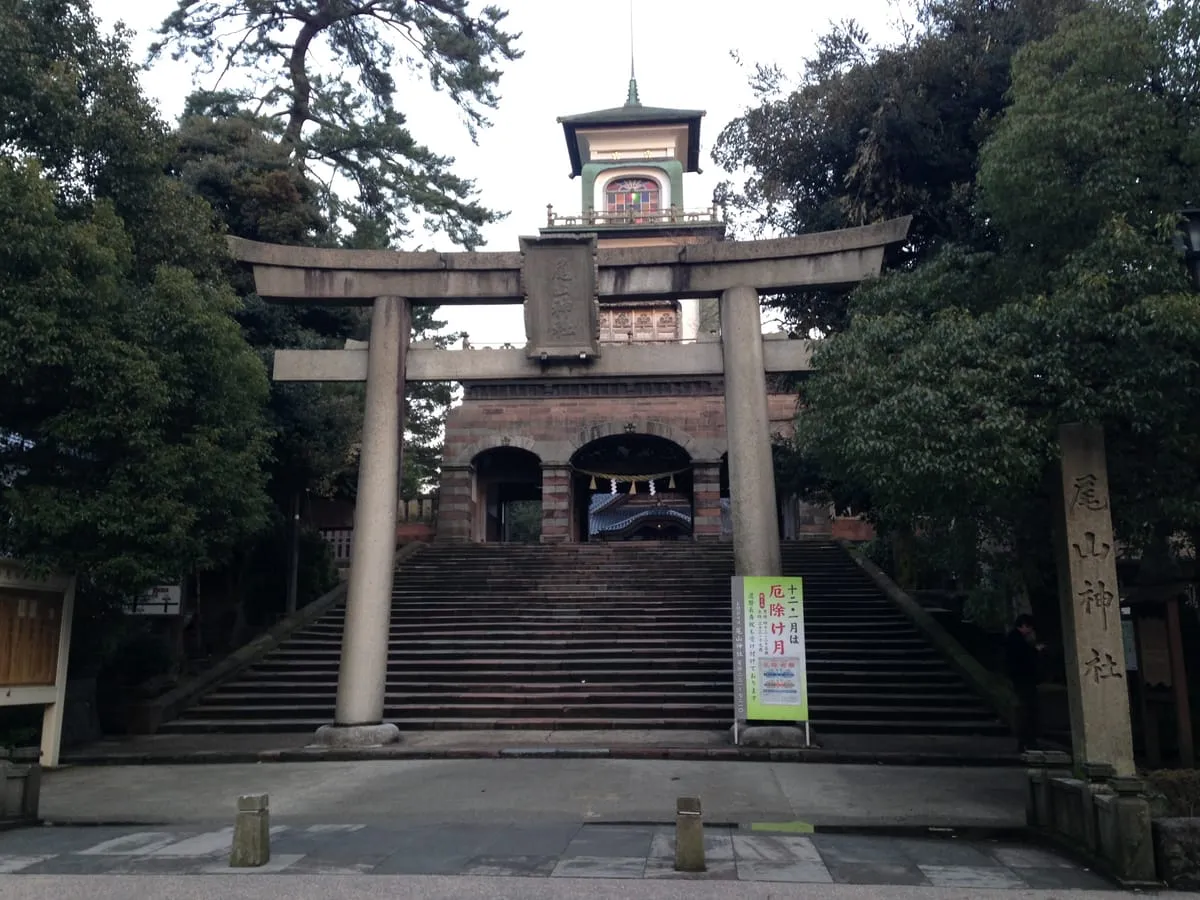
Founded in 1873, Oyama Jinja is dedicated to Maeda Toshiie, the first lord of the Kaga Domain, and his formidable wife Matsu, who played a significant political role during the turbulent years after Toshiie’s death. The shrine’s defining feature is the “Shinmon” (神門) gate — a three-story structure designated as an Important Cultural Property that combines Japanese shrine architecture, Chinese decorative elements, and Western Neo-Gothic windows filled with 16-colored stained glass panels. At night the gate glows from within, casting colored light across the courtyard. The combination is jarring and completely deliberate: the gate was designed in the early Meiji era as a statement of Japan’s openness to foreign culture while maintaining its own traditions. The shrine sits near Kanazawa Castle Park, making it a natural start to a day of historical sightseeing.
- Goshuin style: Bold calligraphy reading “Oyama Jinja” paired with the Maeda family crest — a stylized plum blossom (ume bachi). Dignified and representative of the Kaga domain’s legacy
- Fee: ¥500
- Access: 10-min bus from Kanazawa Station East Exit, alight at “Minami-machi / Oyama Jinja” stop
Goshuin Info
| Item | Details |
|---|---|
| Hours | 9:00–17:00 |
| Location | Shamusho (shrine office) |
| Direct writing / pre-written | Direct writing (pre-written during busy periods) |
| Limited editions | Yes (monthly, annual festivals) |
2. Ishiura Jinja (石浦神社) — Honda-machi, Kanazawa
Enshrined deities: Seven deities including Ōmononushi, Ōyamakui, Kikurihime, Amaterasu, Ame-no-Koyane, Ichikishimahime, and Ōjin
Kanazawa’s oldest shrine, with records indicating a foundation before 702 CE. The seven enshrined deities collectively cover an impressive range of blessings: matchmaking, childbirth, protection, scholarship, purification, and prosperity. In recent years the shrine has gained national attention for its monthly rotating goshuin — each month a new design is released, featuring seasonal motifs in vivid colors that feel closer to contemporary graphic design than traditional calligraphy. The shrine sits immediately adjacent to the main entrance of Kenroku-en garden, and a gentle stone-paved approach (the “Mayumizaka”) winds up to the main hall. The demographic of worshippers skews young, particularly women, drawn by the shrine’s association with romantic luck and the aesthetic appeal of its limited goshuin.
- Goshuin style: Monthly-changing designs in vivid colors; standard versions with “縁むすび” (matchmaking) or “子宝” (childbirth blessing) themes; classic direct-written versions also available year-round
- Fee: ¥500–800
- Access: Hokuriku Tetsudo bus to “Kenroku-en-shita / Kanazawa 21st Century Museum,” 3-min walk
Goshuin Info
| Item | Details |
|---|---|
| Hours | 9:00–17:00 |
| Location | Juyusho (授与所) |
| Direct writing / pre-written | Monthly limited editions pre-written; standard direct writing available |
| Limited editions | Yes (new design each month) |
3. Kanazawa Shrine (金沢神社) — Kenroku-cho, Kanazawa
Enshrined deities: Sugawara no Michizane, Lord Maeda Nariyuki, Lord Maeda Nariyasu, and the Spirit of Kinjoreitaku
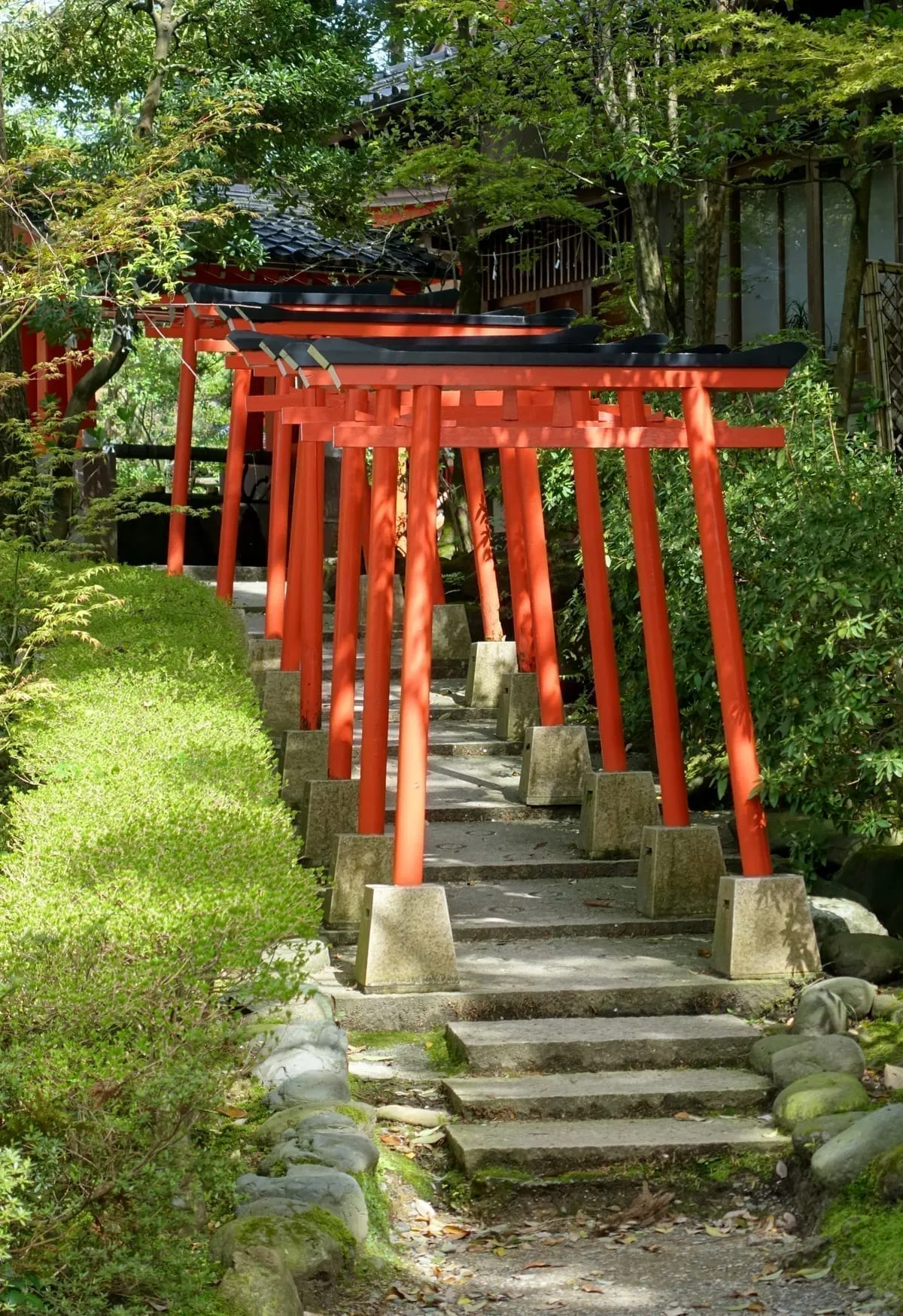
Established in 1794 by the 11th lord of the Kaga Domain, Maeda Harusada, to enshrine Sugawara no Michizane — Japan’s patron deity of scholarship — alongside the spirits of the domain’s founders. Within the precinct stands the “Kinjoreitaku” (金城霊澤), a sacred spring said to have once shimmered with particles of gold. According to tradition, this spring is why the city is called Kanazawa (金沢 = “gold marsh”). Together with Shirayamahime Jinja and Utasu Jinja, Kanazawa Shrine is considered one of the three great shrines of Kaga. The precinct connects directly to the outer areas of Kenroku-en, so visitors to the garden can easily slip across to the shrine without additional transit.
- Goshuin style: Formal calligraphy reading “金澤神社” with a distinctive official seal and a secondary stamp referencing the Kinjoreitaku spring. Scholarly in character, befitting a shrine founded for academic excellence
- Fee: ¥500
- Access: Hokuriku Tetsudo bus to “Kenroku-en-shita / Kanazawa 21st Century Museum,” 5-min walk
Goshuin Info
| Item | Details |
|---|---|
| Hours | 9:00–17:00 |
| Location | Shamusho |
| Direct writing / pre-written | Direct writing |
| Limited editions | Yes (seasonal, exam season) |
4. Utasu Jinja (宇多須神社) — Higashi-yama, Kanazawa
Enshrined deities: The protective spirits of Kaga Province and Utasu-no-Okami (various traditions)
Tucked behind the famous geisha district of Higashi Chaya-gai (the “East Teahouse Quarter”), Utasu Jinja has guarded Kanazawa’s eastern quarter since well before the Edo period. The shrine sits a short walk from the Asano River, in a neighborhood where the stone-paved alleyways and latticed ochaya (teahouse) facades have changed little since the 19th century. Visiting in the early morning, before the teahouse district fills with tourists, offers an unusually quiet and atmospheric experience. The shrine does not have the name recognition of Oyama or Ishiura, but it anchors the cultural landscape of Kanazawa’s historic east — making it essential for visitors who want to understand the city beyond its garden.
- Goshuin style: Careful calligraphy reading “宇多須神社.” Refined and unadorned — appropriate for a shrine embedded in a district where subtlety is a form of elegance
- Fee: ¥500
- Access: Hokuriku Tetsudo bus to “Hashiba-cho (Higashi / Kazuemachi Chaya-gai),” 5-min walk
Goshuin Info
| Item | Details |
|---|---|
| Hours | 9:00–17:00 (confirm in advance) |
| Location | Shamusho |
| Direct writing / pre-written | Pre-written primarily |
| Limited editions | Yes (grand festivals) |
5. Tsubakihara Tenmangu (椿原天満宮) — Tenjin-cho, Kanazawa
Enshrined deity: Sugawara no Michizane
Founded in 1546 by Maeda Toshikazu, father of Kaga Domain founder Maeda Toshiie, making this shrine older than the domain itself. It stands on Tsubakiyama hill — a low wooded rise northwest of Kanazawa Castle — and is approached via a steep stone stairway flanked by ancient trees. The Maeda lords maintained close ties with this shrine throughout the domain’s history, treating it as the family’s primary shrine for literary and scholastic prayer. The grounds are compact but the atmosphere is markedly different from the tourist-facing shrines closer to Kenroku-en: quieter, more overgrown, with the feeling of a place that has not needed to announce itself for four centuries.
- Goshuin style: Precise calligraphy reading “椿原天満宮.” Reserved and academic in character — the Maeda family’s connection to scholarship is visible in the goshuin’s restraint
- Fee: ¥500
- Access: Hokuriku Tetsudo bus to “Musashiga-tsuji / Omicho Market,” 15-min walk; or 10-min walk from Kanazawa Castle Park
Goshuin Info
| Item | Details |
|---|---|
| Hours | 9:00–16:30 |
| Location | Shamusho |
| Direct writing / pre-written | Direct writing |
| Limited editions | Yes (exam season, plum blossom festival) |
6. Yasue Hachimangu (安江八幡宮) — Konohana-cho, Kanazawa
Enshrined deities: Emperor Ōjin, Empress Jingū, Himegami
A venerable Hachimangu shrine in the northern part of Kanazawa, near what was historically the Yasue post-town district. During the Edo period it functioned as a tutelary shrine for Kanazawa’s merchants and craftspeople, and its proximity to Omicho Market — Japan’s oldest operating market, established in the early 18th century — reflects this commercial heritage. The shrine is also associated with the protection of Kaga silk (Kaga-kinu), one of the region’s traditional luxury textiles, and offerings from the textile trade are part of its historical record. The precinct is more workaday than scenic, but this directness has its own appeal for visitors interested in shrines that have served a living community rather than a tourist corridor.
- Goshuin style: Substantial calligraphy reading “安江八幡宮” with the Hachiman seal. The goshuin carries the weight of a merchant district shrine — dependable and unembellished
- Fee: ¥500
- Access: Hokuriku Tetsudo bus to “Musashiga-tsuji / Omicho Market,” 5-min walk
Goshuin Info
| Item | Details |
|---|---|
| Hours | 9:00–16:30 (confirm in advance) |
| Location | Shamusho |
| Direct writing / pre-written | Both available |
| Limited editions | Yes (grand festivals) |
7. Taga Jinja (多賀神社) — Nomachi, Kanazawa
Enshrined deities: Izanagi-no-Mikoto and Izanami-no-Mikoto
Established in 1639 when the third lord of the Kaga Domain, Maeda Toshitsune, transferred the sacred spirit from Taga Taisha in Shiga Prefecture. The parent shrine, Taga Taisha, is one of Japan’s most important shrines dedicated to Izanagi and Izanami — the creator couple who gave birth to the islands of Japan according to Shinto cosmology. This Kanazawa branch carries the same association with longevity and conjugal harmony. The tradition of offering wooden rice ladles (shamoji) as a prayer for long life is practiced here as at the parent shrine. The shrine sits in the Nomachi neighborhood, slightly removed from the main tourist areas, giving it a local character that distinguishes it from more visited sites.
- Goshuin style: Careful calligraphy reading “多賀神社” with a stamp referencing the ladle (shamoji) tradition. Warm in character, befitting a shrine of longevity and family bonds
- Fee: ¥500
- Access: Hokuriku Tetsudo bus to “Nomachi-Hiroko-ji,” 10-min walk
Goshuin Info
| Item | Details |
|---|---|
| Hours | 9:00–16:30 (confirm in advance) |
| Location | Shamusho |
| Direct writing / pre-written | Pre-written primarily |
| Limited editions | Yes (Longevity Day, annual festivals) |
8. Hiyoshi Jinja (日吉神社) — Kami-Omicho, Kanazawa
Enshrined deities: Ōyamakui-no-Kami and Ōkuninushi-no-Mikoto
Part of the nationwide Hiyoshi/Sanno shrine network centered on Hiyoshi Taisha at the foot of Mt. Hiei in Shiga. These shrines are characterized by the sacred monkey (shinsho) as their divine messenger, and by a deep historical connection to Enryaku-ji temple on Mt. Hiei — the Buddhist institution that shaped Japanese religious culture for over a millennium. In Kanazawa, the Hiyoshi Jinja served the spiritual needs of a city that was simultaneously one of Japan’s major Buddhist centers (home to the Nishi Hongan-ji affiliated Higashi Hongan-ji Kanazawa Betsuin) and a Shinto domain. The precinct is quiet and compact, suited for a reflective pause rather than a sightseeing stop.
- Goshuin style: Understated calligraphy reading “日吉神社” with the Sanno (Mountain King) seal. Quiet and precise, reflecting the contemplative character of this network of shrines
- Fee: ¥300–500
- Access: Hokuriku Tetsudo bus to “Musashiga-tsuji / Omicho Market,” 10-min walk
Goshuin Info
| Item | Details |
|---|---|
| Hours | 9:00–16:00 (confirm in advance) |
| Location | Shamusho |
| Direct writing / pre-written | Pre-written |
| Limited editions | Yes (annual festivals) |
9. Hashikami Jinja (波自加彌神社) — Horikawa Shinmachi, Kanazawa
Enshrined deity: Hashikami-no-Mikoto (波自加彌命)
Listed in the Engishiki — the 10th-century governmental register of officially recognized shrines — and the only shrine in Japan dedicated to the deity of ginger (hashikami). In classical Japanese, “hashikami” referred collectively to ginger and Japanese pepper (sansho), both used as food, medicine, and ritual offerings. The shrine maintains this identity actively: fresh ginger is offered at the altar, and each September the precinct hosts the “Hashikami Taisai” (Ginger Festival), which draws representatives from food and agriculture industries across Japan. The goshuin features a ginger motif alongside the shrine’s name — immediately distinctive and sought after by collectors looking for something outside the visual conventions of traditional shrine stamps.
- Goshuin style: Simple calligraphy reading “波自加彌神社” with a ginger-motif stamp. Unique in all of Japan — no other shrine offers a ginger deity goshuin
- Fee: ¥500
- Access: 15-min walk from Kanazawa Station East Exit; or Hokuriku Tetsudo bus to “Horikawa Shinmachi”
Goshuin Info
| Item | Details |
|---|---|
| Hours | 9:00–16:30 (confirm in advance) |
| Location | Shamusho |
| Direct writing / pre-written | Pre-written primarily |
| Limited editions | Yes (September Ginger Festival) |
10. Shirayamahime Jinja (白山比咩神社) — Sanmiya-cho, Hakusan City
Enshrined deities: Shirayamahime-no-Okami (Kukurihime-no-Kami), Izanagi-no-Mikoto, Izanami-no-Mikoto
Technically located in Hakusan City rather than Kanazawa, but this is the spiritual centerpiece of Ishikawa Prefecture and the headquarters of over 2,700 Shirayama (White Mountain) shrines across Japan. The mountain itself — Mt. Hakusan (2,702 m) — is the object of worship, and the tradition of climbing it as an act of religious pilgrimage stretches back at least to the 8th century. The principal deity Kukurihime-no-Kami appears in the Nihon Shoki (720 CE) in a cryptic passage where her words “mediate” between Izanagi and Izanami after Izanami’s death — a role that has been interpreted as symbolic of divine reconciliation, giving rise to beliefs in blessings for love, marriage, and safe childbirth. The shrine’s large forested precinct, the sound of the Tedori River, and the visible white peak of Hakusan on clear days create an environment unlike anything in Kanazawa’s city center.
- Goshuin style: Authoritative calligraphy reading “白山比咩神社” with the official seal of the total headquarters shrine. One of the most formally significant goshuin in Hokuriku — the weight of 2,700 affiliated shrines is present in the stamp
- Fee: ¥500
- Access: Hokuriku Tetsudo Ishikawa Line from Kanazawa, alight at “Tsurugi Station,” 15-min walk; or direct bus from Kanazawa Station (~50 min)
Goshuin Info
| Item | Details |
|---|---|
| Hours | 8:30–17:00 |
| Location | Juyo-sho (授与所) |
| Direct writing / pre-written | Direct writing |
| Limited editions | Yes (Hakusan mountain opening, grand festivals, monthly seasonal) |
Area-Based Tour Itineraries
Castle Town Circuit — Half Day (3–4 shrines)
Oyama Jinja → Tsubakihara Tenmangu → Yasue Hachimangu → (optional) Hashikami Jinja
Walk north from the castle through Kanazawa’s historic commercial core. All Maeda-patronized shrines, readable as a continuous narrative about the domain’s relationship with its deities.
Kenroku-en Circuit (2–3 shrines)
Ishiura Jinja → Kanazawa Shrine → (20-min walk) Utasu Jinja
Begin at the Kenroku-en lower gate, cross the garden to exit near Kanazawa Shrine, then follow the Asano River east to the geisha district. This route combines Japan’s most celebrated landscape garden with three distinct shrine characters.
Higashi Chaya Early Morning (1 shrine)
Utasu Jinja
Before the teahouse district opens. Stone alleys, crow calls, no crowds.
Mt. Hakusan Day Trip
Shirayamahime Jinja
A full or half-day from Kanazawa. Best combined with a walk along the Tedori River gorge in autumn or a Hakusan flower trail visit in late spring.
Practical Tips for Kanazawa
- Oyama Jinja gate photography: The Shinmon is most striking at dusk when the stained glass is backlit. Arrive around 16:30 in summer for the best natural and artificial light combination
- Ishiura monthly goshuin sellout: Limited-edition monthly designs often run out before the end of the month. Check the shrine’s Instagram (active and frequently updated) for real-time availability before making a trip specifically for a monthly design
- Kanazawa Shrine and Kenroku-en ticket: The Kanazawa Shrine precinct is accessible free of charge through a side path from the Kenroku-en outer grounds — you do not need a garden entrance ticket to reach the shrine
- Shirayamahime Jinja bus schedule: The bus from Kanazawa runs every 1–2 hours. Download the timetable before you go and budget at least 30–60 minutes for the shrine visit itself
What Kanazawa’s Shrines Say About the City
Kanazawa was spared wartime bombing, which means its shrine culture has a continuity rare in Japan’s larger cities. The shrines here are not rebuilds or postwar relocations — they occupy ground the Maeda lords walked, carry records going back to the Engishiki, and maintain traditions (the Ginger Festival, the shamoji offering, the white-mountain pilgrimage) that were not invented for tourism. Goshuin collecting in Kanazawa means participating in that continuity. Bring a new goshuincho, or bring the one you’ve been filling for years. Either feels right here.
Photo credits: All images are from Wikimedia Commons under Creative Commons licenses.
Oyama Jinja Shinmon gate by そらみみ, CC BY-SA 4.0, Wikimedia Commons
Kanazawa Shrine torii by Daderot, CC0 Public Domain, Wikimedia Commons