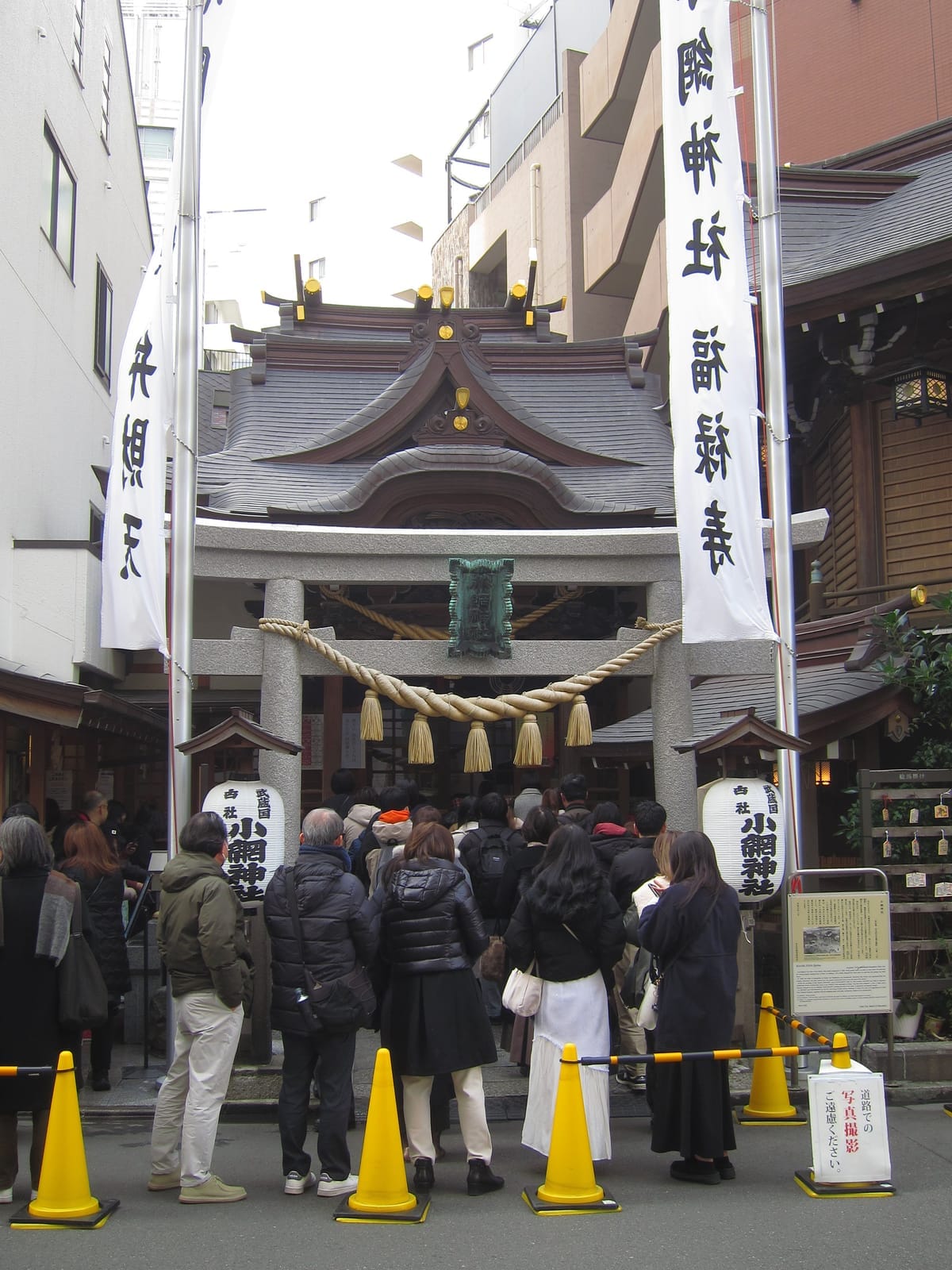
Koami Shrine (小網神社) in Nihonbashi Ningyocho, Tokyo reaches its 560th year of enshrinement in 2026.
A commemorative grand festival will be held over three days, May 28 (Thu) through May 30 (Sat). Two highlights define this year’s event: the return of the five-yearly mikoshi procession, and a special cut-paper goshuin marking the 560th anniversary.
560 Years Ago: A Rice Stalk in the Net
In the first year of Bunsei (1466), an epidemic was spreading along the banks of the Nihonbashi River.
An elderly fisherman pulled in his net and found rice stalks caught in it. He brought them to a nearby hermitage and spent several days with the hermit who lived there. One night, the hermit dreamed of Genshin (Eshin Sozu), who told him: “Enshrine this old man as the god of Inari and the plague will end.” The next morning, the fisherman was gone.
A small shrine was built, and the epidemic subsided. This is said to be the founding of Koami Shrine.
The place name “Koami” — meaning “small net” — derives from this story of the fisherman’s net. It is a rare case where a shrine name and a neighborhood name share the same origin.
A Shrine That Survived the War
Koami Shrine’s reputation for “exceptional fortune and protection from misfortune” is rooted in two wartime stories.
The first: at a ceremony to pray for soldiers departing for the Pacific War, all parishioners who received a protective charm are said to have returned safely. The second: on March 10, 1945, during the Tokyo air raids, the surrounding shitamachi neighborhoods were reduced to ash — yet the shrine buildings, including the main hall, survived intact.
There is no rational explanation for why the wooden structure was spared. What remains as fact is that it was, and it still stands today among Nihonbashi’s modern office towers.
The Mikoshi Procession — Back After 10 Years
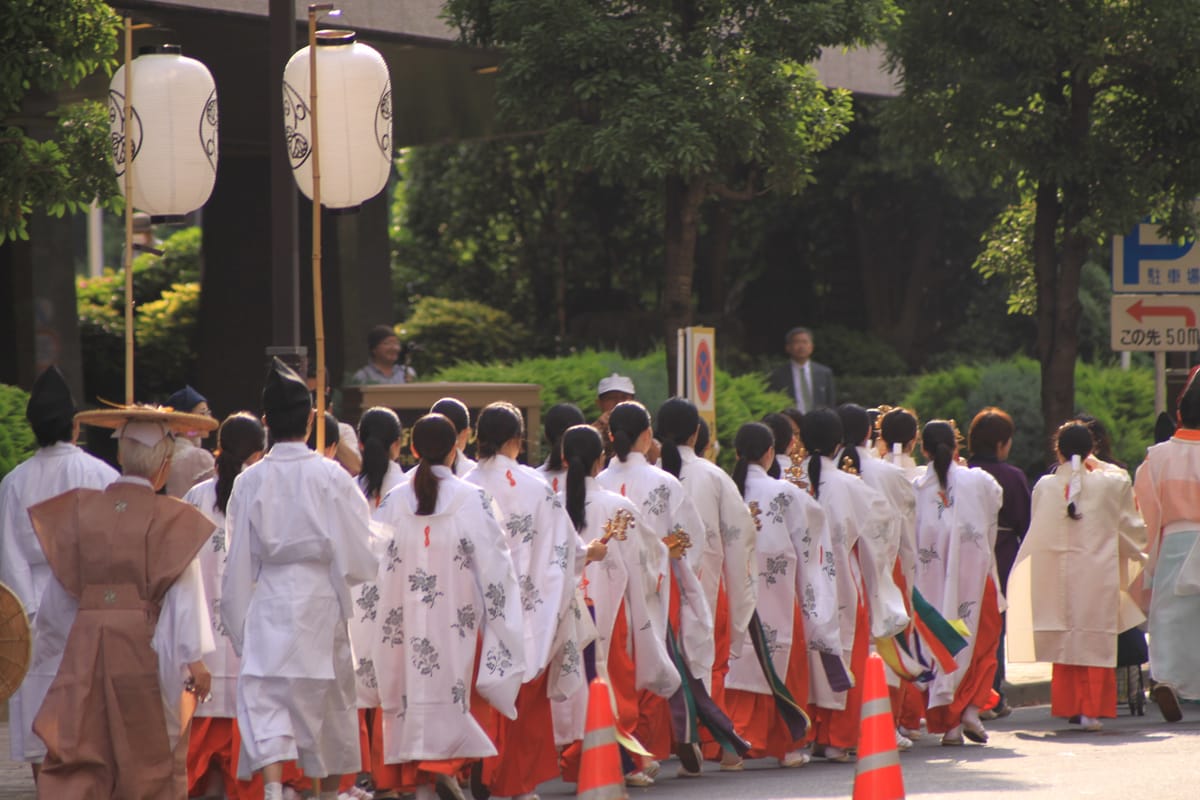
The main event of the commemorative festival is the mikoshi procession on Saturday, May 30.
Koami Shrine holds its mikoshi procession on a five-year cycle. The previous scheduled procession in 2021 was cancelled due to COVID-19. Before that, 2016. This means 2026 marks what is effectively the first procession in approximately 10 years.
- Departure (Miya-dashi): 13:00
- Return (Miya-iri): 18:00
- Route: The parishioner district around Nihonbashi Koamimachi
Full schedule:
| Date | Event |
|---|---|
| May 28 (Thu) | Grand festival ceremony (no limited items distributed) |
| May 29 (Fri) | Eve festival and sacred spirit transfer ritual (closed to general visitors) |
| May 30 (Sat) | Mikoshi procession — departs 13:00, returns 18:00 |
560th Anniversary Commemorative Cut-Paper Goshuin
To mark the grand festival, a 560th Anniversary Commemorative Cut-Paper Goshuin will be offered.
- May 28–30: Offered regardless of quantity (while supplies last)
- May 31 onward: Continued while remaining stock lasts; ends when sold out
Cut-paper goshuin are crafted by intricately cutting washi paper, giving them a layered, three-dimensional quality distinct from standard ink calligraphy. The 560th anniversary design is expected to incorporate motifs tied to the shrine’s origins — the fisherman’s net and rice stalks — though the exact design will draw attention from goshuin collectors.
Regular goshuin are offered 9:00–17:00. Expect significant crowds during the festival period.
The Nihonbashi Setting
Koami Shrine sits in Nihonbashi Koamimachi, Chuo Ward, Tokyo. Within walking distance are the Tokyo Stock Exchange, Mitsukoshi’s main store, and the Coredo Muromachi commercial complex — the financial and commercial core of the city.
It follows that this shrine has long drawn merchants, Edo-era and modern alike, seeking its renowned good fortune. Lines form even on weekday mornings. During the festival, crowds will be larger still. To watch the May 30 mikoshi procession, plan to arrive well before noon.
Access
- Address: 16-23 Nihonbashi Koamimachi, Chuo Ward, Tokyo
- Nearest stations: Tokyo Metro Hibiya Line / Toei Asakusa Line “Ningyocho” — 5 min walk / Tokyo Metro Hanzomon Line “Suitengumae” — 7 min walk
- Official website: Koami Shrine
Sources:
- Koami Shrine Annual Festival | Chuo Tourism Association
- Koami Shrine | Goshuin & Shrine Notes
- Koami Shrine – Wikipedia
Image credit: Koami Shrine, Nihonbashi-Koamichō, Tokyo — Ken Marshall, CC BY 4.0, via Wikimedia Commons
Information in this article is current as of May 7, 2026. Goshuin availability and festival schedule are subject to change. Please confirm with Koami Shrine’s official website or social media.