From Saturday, May 9, 2026, through Saturday, June 13, the Okihiki festival takes place every Friday, Saturday, and Sunday at Ise Jingu’s Geku (Outer Shrine, Toyouke Daijingu).
A Folk Ritual That Comes Only Once Every 20 Years
The Okihiki festival (literally “timber-pulling ceremony”) is a ritual in which the sacred timber (御用材,御yōzai — cypress logs for construction) is drawn into the shrine precincts in the same manner as ancient times.
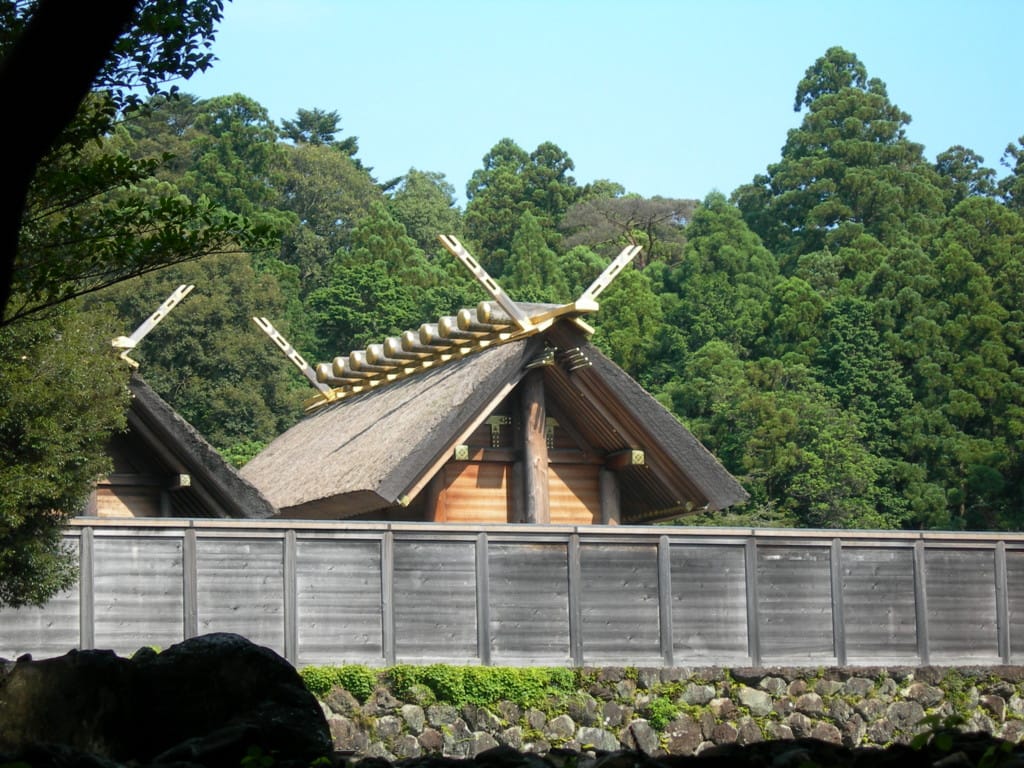
The Shikinen Sengu at Ise Jingu is a ceremony performed every 20 years in which all shrine buildings are rebuilt from scratch, and the great deity is welcomed into a new residence. The next, 63rd Shikinen Sengu is scheduled for autumn 2033, and the 2026 Okihiki marks the beginning of its preparatory events.
How many times can one witness this in a lifetime? Someone who sees it in their twenties won’t see it again until their forties. For most people, this is a two-or-three-times-in-a-lifetime opportunity.
The Philosophy of Permanence Through Destruction and Renewal
When people talk about the Shikinen Sengu, a common reaction is “what a waste” — tearing down perfectly usable buildings just to rebuild them.
But the essence of the Sengu is not destruction. It is the renewal of craft and memory.
Each time the shrine buildings are rebuilt, artisans across many disciplines — carpenters, lacquerers, metalworkers, weavers — transmit their skills to the next generation through the actual work itself. Not through manuals, but through the body. The 20-year cycle is also a carefully calibrated interval: long enough for a single craftsperson to experience both “learning as an apprentice” and “teaching as a master.”
The Okihiki is the first step in that process. Approximately 10,000 cypress logs harvested from the mountains of Kiso (Nagano and Gifu prefectures) are pulled in by the people of Ise and devotees from across Japan — not by machines, but by rope and human effort. This is not a choice of inefficiency. It comes from the belief that the act of human involvement itself is an offering.
Geku Okihiki Festival Overview
This year’s event at Geku (Toyouke Daijingu) is called the land-pulling (okabiki).
| Item | Details |
|---|---|
| Period | Saturday, May 9 – Saturday, June 13, 2026 |
| Days | Every Friday, Saturday, and Sunday |
| Route | Near Miyakawa / Wataraibridge → Geku North Gate (approx. 2.2 km) |
| Organizer | Ise Jingu / City of Ise |
| Admission | Free (can be viewed from the roadside) |
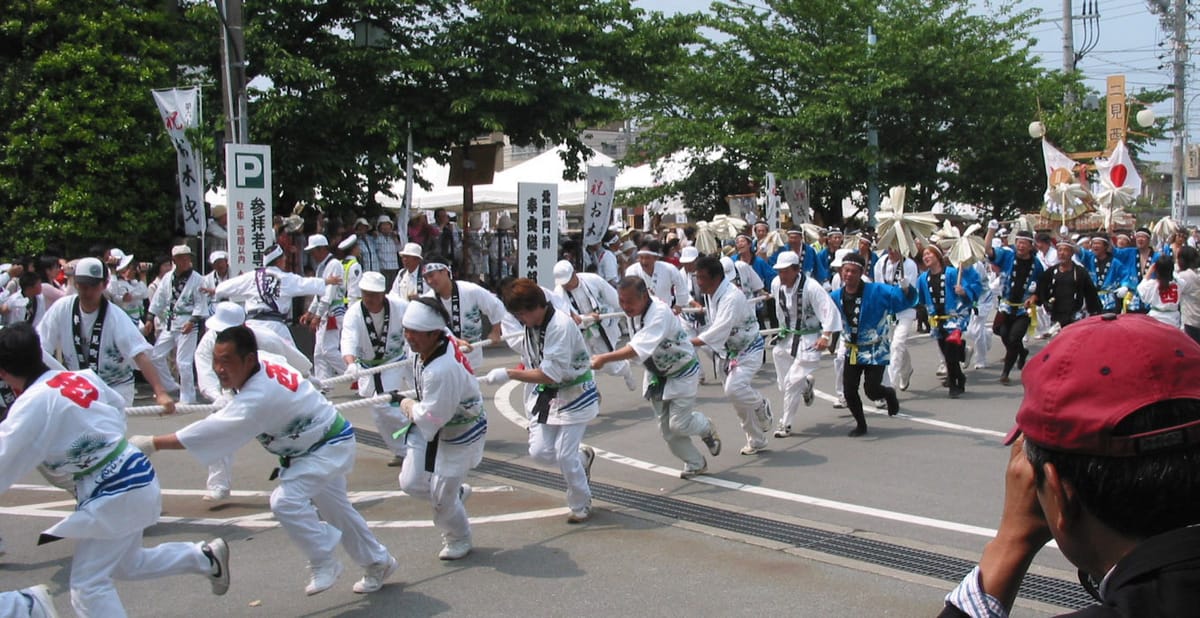
In the scene known as “Enya-biki,” teams dressed in happi coats pull enormous timber-carrying carts while chanting “Enya, enya.” Ropes are strung across the shopping street lanes, and the creaking of wheels and the sound of timber-pulling songs fill the streets.
The Inner Shrine (Kotai Jingu) river-pulling (kawabiki) is scheduled for July 25 to August 2, when the sacred timber is carried through the waters of the Isuzu River — a sight of an entirely different kind of grandeur.
History: A Folk Tradition Over 500 Years Old
The Sengu itself traces back to the reign of Empress Jito (690 CE), but records of the Okihiki festival go back to the Muromachi period — meaning the event has continued for more than 500 years.
It is currently designated as a national “intangible folk cultural property subject to documentation measures,” and also as an intangible folk cultural property of Ise City.
Originally, it was a form of compulsory labor — the delivery of timber for the shrine. Over time it became an offering, then a ritual, then a source of pride. The motivation for the people of Ise to participate is not obligation, but something closer to a desire to inscribe the time of the Shikinen Sengu into the span of their own lives.
Kari Mitorishiroki Bassai-shiki — Sacred Wood Felling Ceremony (May 17, Agematsu, Nagano)
On Sunday, May 17, at 10:00 AM, the “Kari Mitorishiroki Bassai-shiki” (provisional sacred timber felling ceremony) will be held in Agematsu, Kiso-gun, Nagano Prefecture.
The Mitorishiroki (御樋代木) is a special tree used to enshrine the divine spirit of the deity — it holds a particularly sacred position among all the timber needed for the Sengu, and is cut from the imperial forest in Kiso. The felling ceremony itself is conducted by shrine priests, but knowing that this “beginning of the timber’s journey” is quietly taking place deep in the mountains gives the Okihiki festival a deeper meaning.
The entire process of bringing the timber to Ise is, from the very start, already a sacred ritual.
On Visiting Ise During This Period
The Okihiki festival is open to viewing by all, but participation (joining an奉曳団, timber-pulling team) requires prior registration. Teams are organized by local Ise neighborhood associations and devotee groups from across Japan. The experience of gripping the end of a rope and pulling is something entirely different from ordinary sightseeing.
Even as a spectator, it is well worth attending. On Fridays, Saturdays, and Sundays, the air along the Geku approach and the Miyakawa riverbank carries something distinctly different from Ise on an ordinary day.
About goshuin: The goshuin at Geku (Toyouke Daijingu) is available year-round at the offering station. No special Okihiki edition has been announced, but a goshuin received in 2026 — the year of Sengu preparation — carries a quiet significance. Visiting the Naiku (Inner Shrine) and Geku, plus the auxiliary shrines — Tsukiyomi-no-miya, Takihara-no-miya, Izawa-no-miya, Yamatohime-no-miya, and Tsukiyomi-no-miya (Geku) — makes for a collection of 7 goshuin in total.
Access
| Item | Details |
|---|---|
| Geku (Toyouke Daijingu) | 279 Toyokawa-cho, Ise City, Mie Prefecture |
| Nearest station | 5-minute walk from JR/Kintetsu “Ise-shi Station” |
| Geku visiting hours | May–Aug: 5:00–18:00 |
| Official site | Ise Jingu Official |
Detailed schedules for the Okihiki festival are updated regularly at the Ise Sengu Committee website (isesengu.jp).
Image: Enya-biki at Geku (Geku Okihiki Festival, North Gate) — Tawashi2006, CC BY-SA 3.0, via Wikimedia Commons
Sources: Ise Jingu Ritual Calendar / Ise Sengu Committee / Skyticket Tourism Guide
Information in this article is current as of May 5, 2026. Please confirm event details on the organizer’s official website.